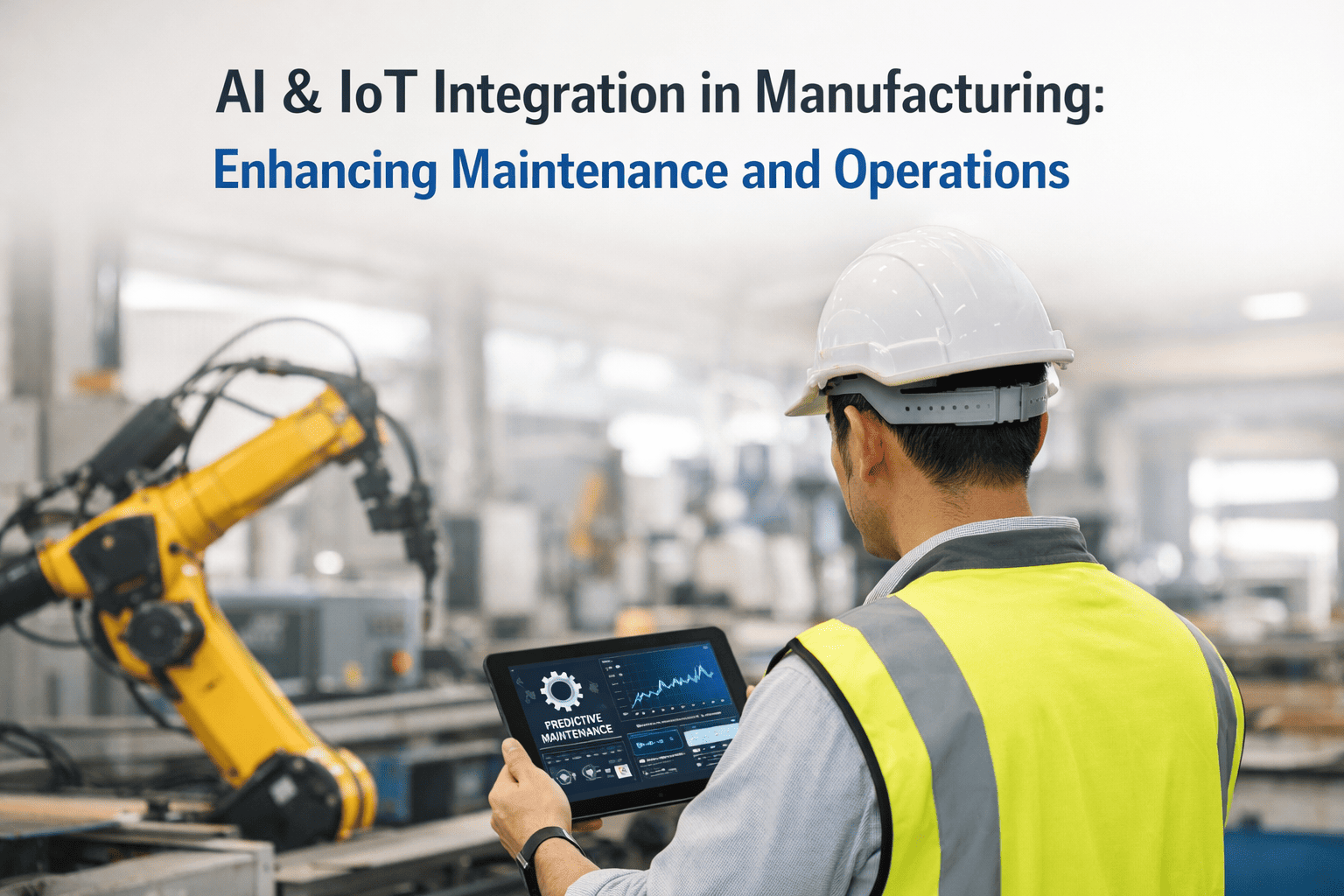
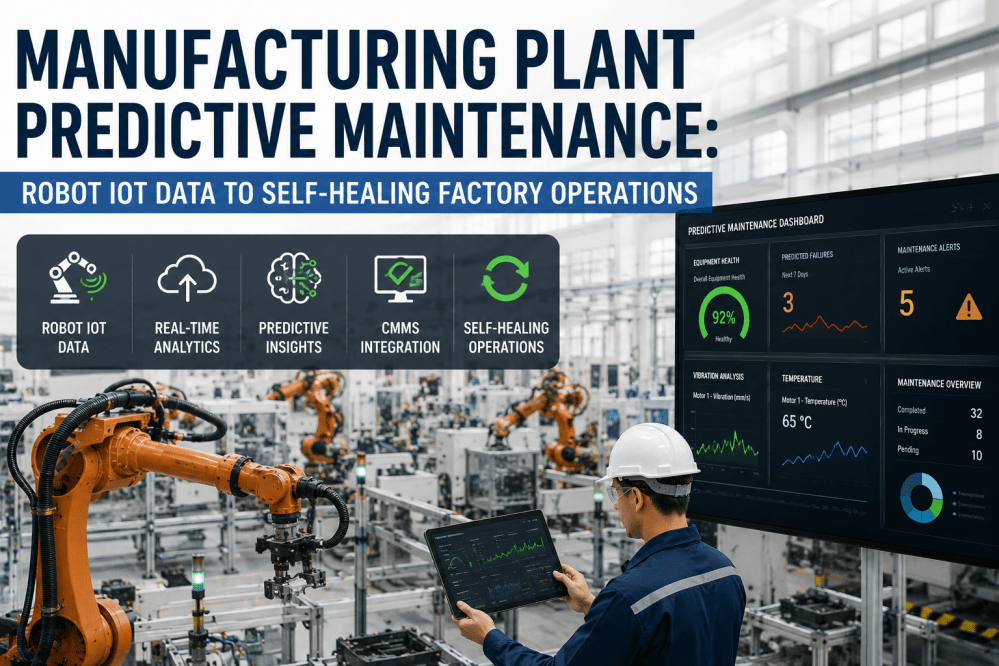
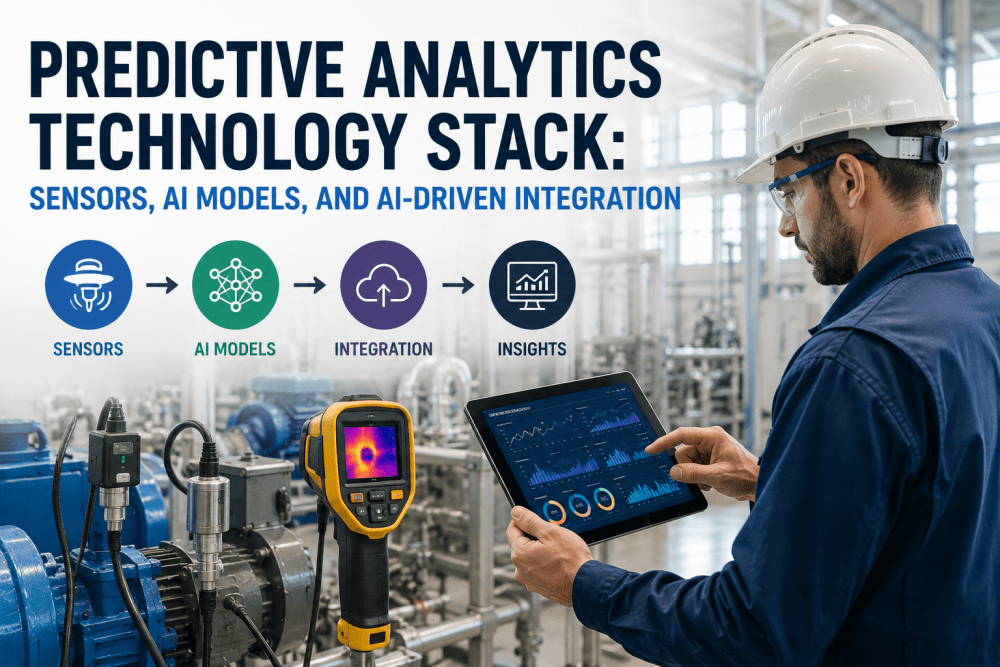
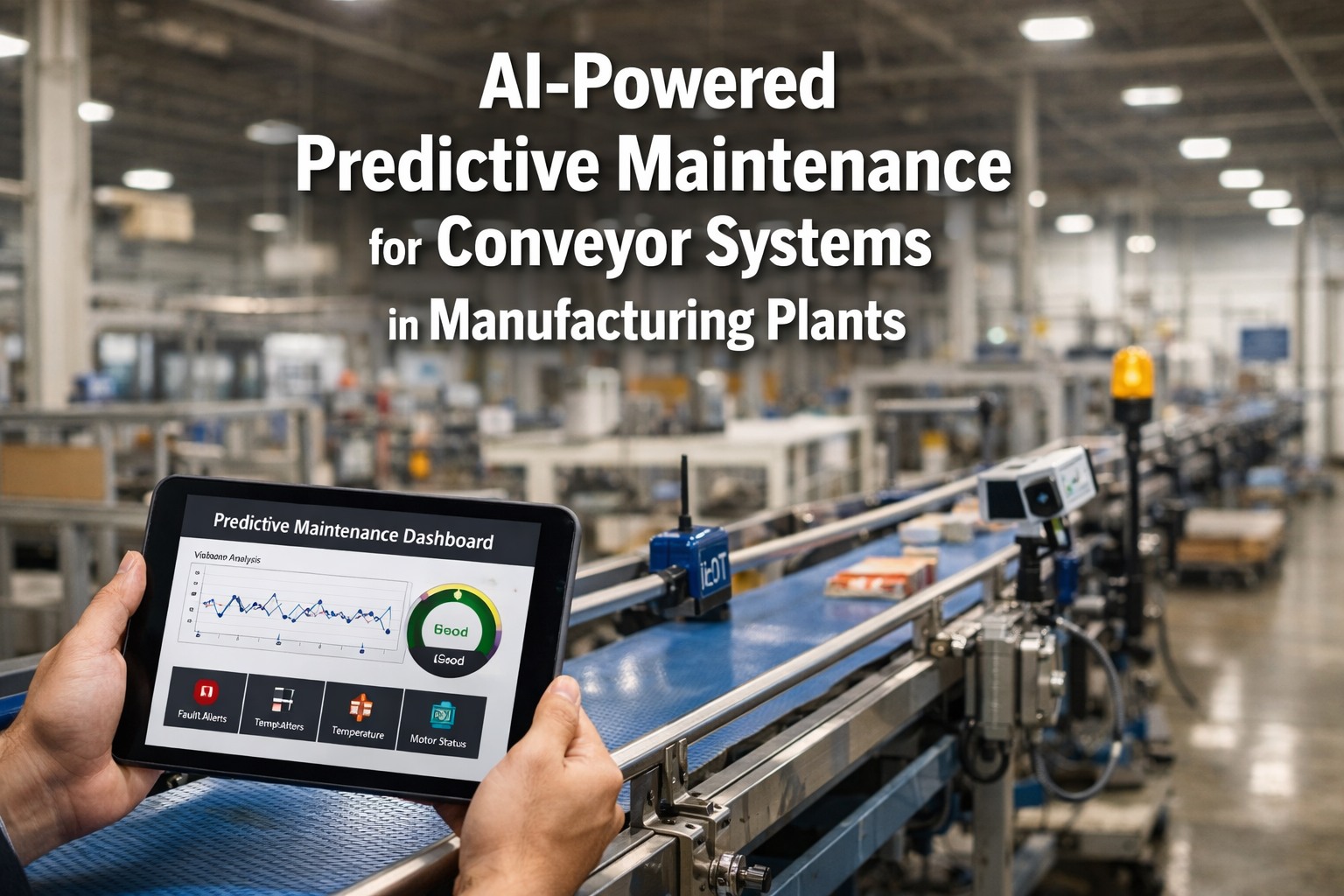
Manufacturing has entered the era of intelligent operations. As factories generate millions of data points from connected machines every day, the challenge is no longer data collection—it is turning that data into real-time decisions that prevent failures, optimize throughput, and extend asset life. The fusion of Artificial Intelligence with Industrial IoT is making this possible at scale, enabling manufacturers to shift from reactive firefighting to proactive, data-driven maintenance and operations management. Book a demo to explore how AI-powered IoT intelligence can reshape your manufacturing operations.
The Smart Factory Imperative: Why Connected Intelligence Matters Now
Global manufacturers lose an estimated $50 billion annually to unplanned downtime. At the same time, the industrial automation market is projected to exceed $378 billion by 2030, driven by AI, IoT, and edge computing adoption. The message is clear: factories that fail to connect their machines, analyze their data, and automate their responses will fall behind competitors who do. AI and IoT integration is not a future concept—it is the operational backbone of every competitive manufacturing facility today.
$50B
Annual cost of unplanned downtime across global manufacturing
71%
Of industrial organizations now use AIoT for predictive maintenance
30B+
Connected IoT devices expected worldwide, fueling the data revolution
From Raw Sensor Data to Predictive Action: How the AI-IoT Pipeline Works
Understanding the data flow from shop floor sensors to AI-driven maintenance decisions is essential for any manufacturer evaluating smart factory investments. Each layer of the pipeline adds intelligence, transforming raw vibration readings and temperature logs into precise failure predictions and automated work orders.
Layer 1
Physical Sensing Layer
Vibration accelerometers, infrared temperature probes, ultrasonic leak detectors, current transformers, and pressure transducers are installed on critical rotating and static equipment. These sensors capture machine health signals at frequencies ranging from once per second to thousands of readings per second—creating a continuous digital pulse for every monitored asset.
Layer 2
Edge Processing and Filtering
Industrial edge gateways aggregate, filter, and pre-process sensor streams locally—performing initial anomaly detection in under 50 milliseconds. This ensures time-critical alerts reach operators instantly, even during network interruptions, while reducing cloud bandwidth requirements by up to 90%.
Layer 3
AI and Machine Learning Analysis
Cloud-based and hybrid ML models trained on historical failure data analyze incoming sensor patterns against known degradation signatures. Deep learning algorithms detect subtle deviations—bearing wear, insulation breakdown, seal degradation—weeks before conventional threshold alarms would trigger, achieving prediction accuracy rates above 90%.
Layer 4
Automated Operational Response
AI insights feed directly into CMMS, ERP, and SCADA systems—automatically generating maintenance work orders, adjusting machine parameters, scheduling spare parts, and notifying the right technicians with precise diagnostic context.
Get Support for iFactory to unify AI-IoT intelligence across your plant systems.
See how sensor data flows from your machines to AI-predicted failures in real time. Schedule a live walkthrough where we map your critical assets to this exact pipeline—and show you the maintenance alerts your team would receive before breakdowns happen.
Book a Demo
Six High-Impact Use Cases Driving Factory ROI
AI-IoT integration is not a single application—it is a platform that powers dozens of operational improvements simultaneously. The following use cases represent the highest-ROI applications that manufacturers deploy first when building their connected factory strategy.
01
Predictive Equipment Maintenance
ML models analyze vibration spectra, thermal signatures, and power consumption patterns to forecast bearing failures, motor degradation, and pump cavitation 30 to 90 days before breakdown. Maintenance shifts from calendar-based scheduling to condition-driven precision—eliminating both unnecessary service stops and surprise failures.
02
Automated Quality Inspection
Computer vision systems powered by deep learning inspect products at line speed, detecting surface defects, dimensional deviations, and assembly errors invisible to human inspectors. Defect classification happens in real time, with automatic rejection and process parameter adjustment to prevent recurrence across entire production batches.
03
Energy Consumption Optimization
IoT power meters combined with AI analytics identify energy waste across individual machines and entire production lines. Load-balancing algorithms schedule energy-intensive operations during off-peak periods, while anomaly detection flags motors and compressors consuming excess power due to mechanical degradation.
04
Digital Twin Simulation
Virtual replicas of physical assets and production lines mirror real-time equipment behavior using live IoT data feeds. Engineers test process changes, maintenance scenarios, and production schedules in a risk-free digital environment before implementing changes on the factory floor—reducing trial-and-error costs dramatically.
05
Environmental and Safety Monitoring
Networked gas detectors, noise monitors, temperature sensors, and air quality analyzers feed AI models that predict hazardous conditions before they endanger workers. Automated alerts and ventilation system adjustments maintain compliance with OSHA, EPA, and ISO 45001 requirements continuously.
06
Production Throughput Optimization
AI correlates data from every machine in a production line to identify bottlenecks, balance workloads, and optimize cycle times dynamically. Real-time OEE dashboards give operators and managers instant visibility into availability, performance, and quality metrics across every line and shift.
Choosing the Right IoT Sensors for Your Manufacturing Environment
The foundation of every AI-IoT system is the sensor network. Selecting the right sensors for the right assets determines how accurately your AI models can predict failures, how quickly you detect anomalies, and ultimately how much downtime and cost you eliminate. The table below maps common sensor types to their manufacturing applications and the AI capabilities they unlock.
Sensor Selection Guide for Smart Manufacturing
| Sensor Category |
What It Measures |
AI Capability Enabled |
Priority Assets |
| Vibration / Accelerometer |
Acceleration, velocity, displacement across 3 axes |
Bearing fault prediction, imbalance and misalignment detection, looseness analysis |
Motors, pumps, fans, compressors, gearboxes |
| Thermal / Infrared |
Surface temperature, thermal gradients, hot spots |
Overheating prediction, electrical connection failure, friction monitoring |
Electrical panels, bearings, transformers, kilns |
| Current and Power |
Amperage draw, voltage, power factor, harmonic distortion |
Motor health trending, energy waste identification, load analysis |
Electric motors, VFDs, welders, CNC machines |
| Ultrasonic / Acoustic |
High-frequency sound emissions, leak signatures |
Compressed air leak mapping, valve health, gearbox crack detection |
Air systems, steam traps, bearings, hydraulic valves |
| Machine Vision |
Surface imagery, dimensional measurements, color analysis |
Defect classification, label verification, assembly confirmation |
Assembly lines, packaging, CNC output, painting |
| Pressure / Flow |
Static and differential pressure, volumetric flow rate |
Filter clogging prediction, pump performance decay, leak detection |
Hydraulics, pneumatics, HVAC, cooling systems |
Which sensors will deliver the fastest ROI on your production floor? Book a 30-minute equipment assessment—our engineers will identify your top downtime-cost assets and recommend the exact sensor types and placement for maximum predictive accuracy.
Book a Demo
Reactive vs. Preventive vs. AI-Predictive: A Maintenance Strategy Comparison
Most factories still operate with a mix of reactive and time-based preventive maintenance. Understanding exactly where AI-predictive maintenance outperforms these traditional approaches—and by how much—helps build the business case for IoT investment.
Reactive Maintenance
Fix it when it breaks
Equipment runs to failure with no advance warning
Emergency repairs at premium labor rates and rush-shipped parts
Cascading damage to adjacent components and systems
Safety incidents from unexpected equipment failures
$260K+
average cost per hour of unplanned downtime
Preventive Maintenance
Service on a fixed schedule
Calendar-based service regardless of actual equipment condition
Over-maintenance wastes labor, parts, and production time
Only addresses 18% of failure patterns (time-based degradation)
Misses random failure modes that cause 82% of breakdowns
30-40%
of PM tasks performed unnecessarily
AI-Predictive Maintenance
Service precisely when needed
Condition-based alerts 30-90 days before failure occurs
Maintenance scheduled during planned downtime windows only
Root cause identification through multi-sensor AI correlation
Continuous learning improves accuracy over time
50-70%
reduction in total maintenance costs
Move Beyond Scheduled Maintenance to Predictive Intelligence
iFactory connects your IoT sensor network with AI analytics to deliver condition-based maintenance, real-time asset monitoring, and automated work order generation—all from a single platform built for manufacturing operations.
AI-IoT Adoption Across Manufacturing Sectors
Every manufacturing vertical has unique equipment, failure modes, and regulatory requirements—but AI-IoT integration delivers measurable value across all of them. The specific sensors deployed, the AI models trained, and the operational workflows automated differ by industry, but the underlying platform architecture remains consistent.
Industry-Specific AI-IoT Deployment Patterns
| Manufacturing Sector |
Critical Monitored Equipment |
Primary AI Applications |
Measured Outcomes |
| Automotive Assembly |
Robotic welders, paint systems, conveyor drives |
Weld quality prediction, robot arm health, paint thickness control |
Scrap rate reduction, takt time optimization |
| Food and Beverage |
Chillers, pasteurizers, mixers, packaging lines |
Temperature compliance, batch consistency, CIP optimization |
Regulatory compliance, shelf life improvement |
| Pharmaceutical |
Cleanroom HVAC, tablet presses, filling machines |
Environmental monitoring, GMP compliance, yield optimization |
Batch rejection reduction, audit readiness |
| Heavy Metals and Mining |
Crushers, grinding mills, conveyors, haul trucks |
Liner wear prediction, conveyor belt health, fleet fuel optimization |
Extended asset life, energy cost reduction |
| Semiconductor and Electronics |
Lithography systems, ovens, pick-and-place machines |
Particle contamination detection, solder joint inspection, ESD monitoring |
Yield improvement, defect traceability |
| Chemical Processing |
Reactors, heat exchangers, pumps, agitators |
Corrosion monitoring, catalyst performance, emission prediction |
Process safety, throughput optimization |
Quantified Returns: What Manufacturers Actually Achieve
The business case for AI-IoT integration rests on hard numbers. Industry data from McKinsey, Deloitte, and real-world deployments across manufacturing sectors consistently show that connected factories outperform traditional operations across every key performance indicator.
30–50%
Reduction in unplanned machine downtime through AI-driven predictive maintenance and automated early-warning alerts
25–40%
Decrease in direct maintenance spending by eliminating unnecessary service and optimizing parts consumption
20–40%
Extension of critical equipment lifespan through timely interventions based on actual asset condition data
10–25%
Improvement in overall equipment effectiveness by correlating availability, performance, and quality data in real time
Find out how much downtime and maintenance cost your factory can save. Create your free iFactory account and our team will build a custom ROI model based on your equipment count, current failure rates, and annual maintenance budget—so you see the projected savings before committing.
Get Support
Overcoming the Biggest Barriers to Implementation
Despite compelling ROI evidence, many manufacturers hesitate to adopt AI-IoT solutions due to concerns about legacy equipment compatibility, data security, workforce readiness, and integration complexity. Each of these barriers has proven solutions based on thousands of successful industrial deployments.
Implementation Barrier Resolution Matrix
| Barrier |
Why It Concerns Manufacturers |
Proven Resolution Approach |
| Legacy equipment without built-in connectivity |
Factories have 15-30 year old machines that lack digital interfaces |
Non-invasive retrofit sensors (clamp-on vibration, surface temperature, CT current) attach externally without any machine modification |
| Cybersecurity and data protection |
Connecting OT networks to cloud analytics expands attack surface |
Zero-trust architecture, network micro-segmentation, end-to-end TLS encryption, and edge processing for sensitive data |
| Skills gap in maintenance teams |
Technicians are experienced with wrenches, not dashboards |
Intuitive mobile alerts with plain-language diagnostics, guided troubleshooting workflows, and phased training programs |
| Integration with existing CMMS, ERP, MES |
Data silos across plant systems block unified decision-making |
Open API connectors, OPC-UA and MQTT standardization, and unified data layers that aggregate across systems |
| Unclear or slow ROI realization |
Leadership needs results within budget cycles, not multi-year horizons |
Start with 5-10 critical assets, demonstrate savings in 60-90 days, then expand with validated business case |
A Phased Path to Your Connected Factory
Successful AI-IoT implementation follows a phased approach that delivers quick wins while building toward facility-wide coverage. Each phase builds on validated results from the previous stage, ensuring organizational buy-in and continuous budget justification.
Phase 1
Weeks 1–4
Assess and Prioritize
Identify top 10 critical assets by downtime cost and failure frequency
Audit existing sensor infrastructure and connectivity gaps
Define success KPIs: MTBF improvement, downtime reduction, cost savings
Phase 2
Weeks 5–8
Deploy and Connect
Install IoT sensors on priority assets with edge gateway setup
Configure data pipelines from sensors to AI analytics platform
Integrate with existing CMMS for automated work order generation
Phase 3
Weeks 9–12
Train and Validate
Feed historical failure data into ML models for baseline training
Calibrate alert thresholds to balance sensitivity with false alarm rates
Run parallel monitoring alongside existing maintenance routines
Phase 4
Ongoing
Scale and Optimize
Activate autonomous predictive alerts and automated responses
Expand sensor coverage to next tier of assets using validated ROI data
Deploy digital twins and advanced analytics for process optimization
Turn Every Machine Into an Intelligent Asset
Your factory floor is already generating the data. iFactory provides the AI intelligence layer that transforms sensor signals into predictive maintenance actions, quality insights, and operational optimizations—connecting every asset, every shift, every decision to real-time manufacturing intelligence.
Frequently Asked Questions
What is the difference between IoT monitoring and AI-powered predictive maintenance?
IoT monitoring collects and displays real-time sensor data—showing you what is happening right now. AI-powered predictive maintenance goes further by analyzing historical and real-time data patterns using machine learning to forecast what will happen next. IoT tells you a motor is running hot; AI tells you that motor will likely fail within 21 days based on its degradation trend and recommends the optimal time to service it.
Book a demo to see both capabilities in action.
Can older factory equipment be connected to an AI-IoT platform?
Yes. Legacy machines manufactured decades ago can be equipped with external, non-invasive IoT sensors such as clamp-on vibration monitors, surface temperature probes, and split-core current transformers. These retrofit sensors require no machine modification, no wiring changes, and no production interruption to install. The data they produce feeds into AI models identically to sensors on modern smart equipment.
How quickly can manufacturers expect to see return on investment?
Most manufacturers identify significant cost-saving opportunities within 30 to 60 days of sensor deployment, as AI models begin detecting anomalies and efficiency losses immediately. Full ROI—including reduced downtime, lower maintenance spend, and extended equipment life—typically materializes within 6 to 12 months. A phased pilot on 5 to 10 critical assets is the fastest path to demonstrating value.
Get Support for iFactory to start your pilot.
Is manufacturing IoT data secure in cloud-based AI platforms?
Enterprise AI-IoT platforms implement defense-in-depth security including TLS encryption in transit, AES-256 encryption at rest, role-based access controls, SOC 2 Type II compliance, and network micro-segmentation. Edge computing options process sensitive operational data on-premises, transmitting only aggregated analytics to the cloud. Multi-factor authentication and audit logging provide additional protection layers.
What team skills are needed to manage an AI-IoT maintenance system?
Modern AI-IoT platforms are designed for maintenance professionals, not data scientists. Operators interact through intuitive dashboards and mobile alerts with plain-language recommendations. No coding or ML expertise is required for day-to-day use. Most platforms include guided onboarding, and teams typically become self-sufficient within 2 to 4 weeks of initial training.
Book a demo to see the operator experience firsthand.