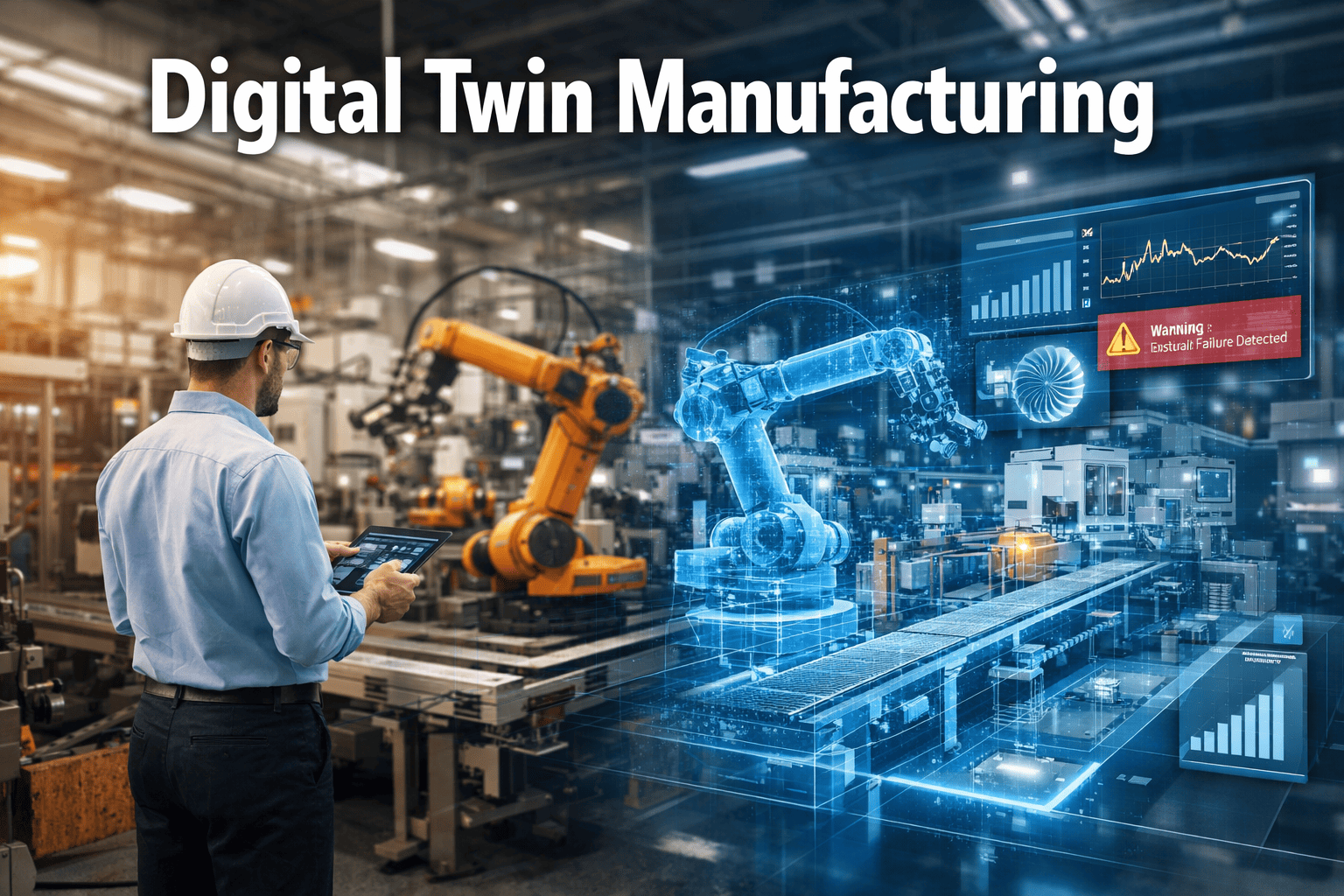
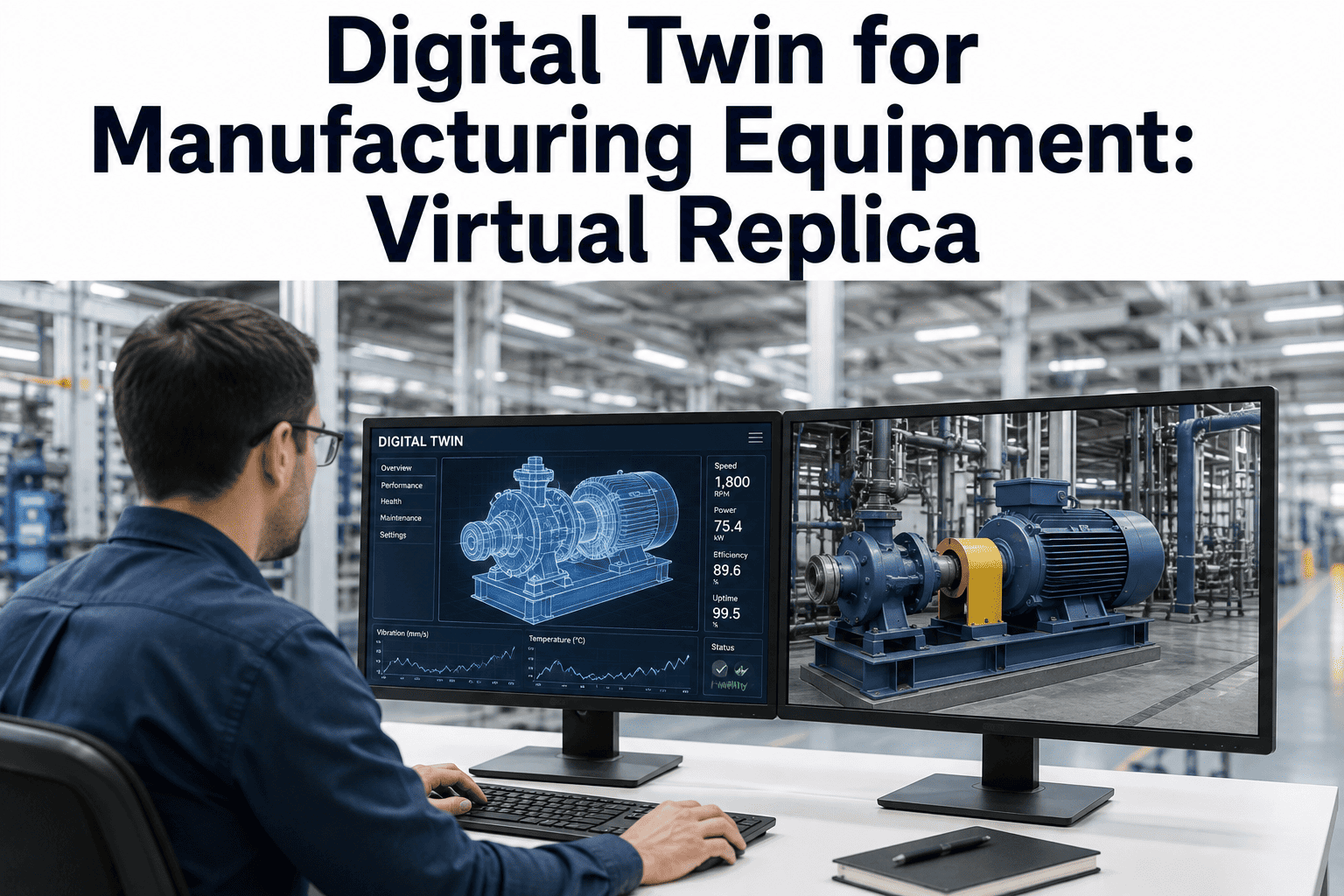
In 2024, BMW's Regensburg plant achieved something previously thought impossible: a complete digital replica of its production line running in NVIDIA Omniverse, synchronized in real-time with 400+ industrial robots on the shop floor. When engineers in Munich modified a welding sequence in the virtual twin, the physical robots adjusted their paths within 200 milliseconds. The result was a 30% reduction in line changeover time, 22% fewer quality defects, and the ability to validate every production change in simulation before a single physical robot moved. This wasn't science fiction — it was manufacturing digital twin technology connected to a coordinated robot fleet, the foundational architecture of Industry 5.0. Yet as McKinsey notes, while 86% of manufacturers see digital twins as critical to their operations, only 14% have successfully connected them to live robot fleets and MES systems. The gap between vision and execution is where most plants get stuck — and where iFactory AI's platform delivers the missing synchronization layer.
Industry 5.0 · Digital Manufacturing
When the Digital Twin and the Robot Fleet
Speak the Same Language, the Factory Wakes Up.
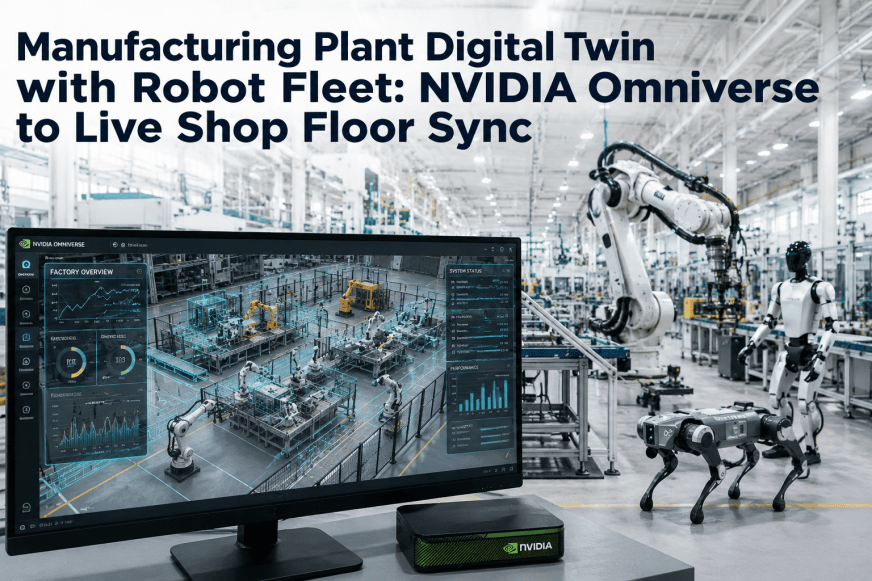
NVIDIA Omniverse, Siemens Tecnomatix, and Dassault DELMIA have proven that photorealistic plant simulation is possible. The challenge is no longer rendering the factory — it is synchronizing virtual models with humanoid and quadruped robot fleets, MES platforms, and ISA-95 control hierarchies in real time. iFactory AI is built for exactly this synchronization layer.
86%
Of manufacturers view digital twins as mission-critical
30%
Reduction in line changeover time with twin-fleet sync
200ms
Achievable virtual-to-physical sync latency via OPC UA
22%
Fewer defects when robots train in simulation first
Sources: McKinsey Manufacturing Survey 2024 · NVIDIA Omniverse Case Studies · Siemens Tecnomatix Benchmark Data
The Digital Twin Stack: From NVIDIA Omniverse to the Live Shop Floor
A manufacturing digital twin connected to a robot fleet is not a single product — it is a multi-layered stack that spans physics simulation, robotics middleware, industrial protocols, and operational software. Each layer must communicate with the next, or the twin becomes a static 3D rendering rather than a living mirror of the factory. Understanding the stack is the first step to deploying it.
05
Visualization & Decision Layer
NVIDIA Omniverse · Siemens Tecnomatix Plant Simulation · Dassault DELMIA · Rockwell Emulate3D
Photorealistic 3D rendering, what-if scenario testing, virtual commissioning, layout optimization. This is where engineers design, simulate, and validate before production.
04
Manufacturing Execution System (MES)
iFactory AI MES · ISA-95 compliant orchestration · Work order routing · Production scheduling
The MES translates production plans into robot tasks, tracks WIP, and feeds real-time execution data back into the twin. Without MES integration, the twin sees CAD, not production.
03
Industrial Communication Layer
OPC UA · MQTT broker · ISA-95 hierarchy · TSN networking · gRPC for robotics
The protocol bridge between IT and OT. OPC UA carries machine state; MQTT carries event streams; TSN guarantees deterministic timing for motion-critical robot coordination.
02
Robot Fleet Orchestration
Humanoid robots · Quadruped inspection bots · AMRs · Articulated industrial arms · ROS 2 middleware
Coordinated control of heterogeneous robot fleets. The orchestration layer assigns tasks, prevents collisions, and reports robot state back to MES and the twin simultaneously.
01
Edge & IoT Sensor Foundation
PLC sensors · AI vision cameras · Vibration · Temperature · Energy meters · Edge AI inference
The ground truth layer. Every actuator state, sensor reading, and vision frame from the physical plant flows upward — keeping the digital twin honest and the robot fleet aware.
Curious how iFactory AI bridges these five layers in a single platform? Book a demo with our digital twin architects.
How NVIDIA Omniverse, Siemens Tecnomatix, and Dassault DELMIA Compare
The visualization layer of the digital twin stack is dominated by three platforms — each with distinct strengths. Choosing the right one depends on the type of robot fleet you operate, your existing PLM environment, and how deeply you need to integrate with MES. iFactory AI integrates with all three through standardized OPC UA and MQTT bridges, so the platform choice does not lock you out of operational synchronization.
| Capability |
NVIDIA Omniverse |
Siemens Tecnomatix |
Dassault DELMIA |
Rockwell Emulate3D |
| Photorealistic Rendering |
Best in class (RTX) |
Functional 3D |
Strong (3DEXPERIENCE) |
Functional 3D |
| Robot Fleet Simulation |
Isaac Sim (humanoid + AMR) |
Process Simulate (arms) |
Robotics module |
Conveyor + arm focus |
| AI & Synthetic Data |
Native (Replicator) |
Limited |
Growing |
Limited |
| PLM Integration |
Open USD ecosystem |
Teamcenter native |
3DEXPERIENCE native |
FactoryTalk native |
| OPC UA Live Sync |
Via connector |
Native support |
Native support |
Native support |
| Best Fit Use Case |
Humanoid training, R&D |
Discrete manufacturing |
Aerospace, automotive |
Logistics, intralogistics |
The Real-Time Synchronization Workflow: Virtual to Physical in Under a Second
The defining feature of a true digital twin is bidirectional, low-latency synchronization. A static 3D model is a CAD file. A digital twin is a CAD file that breathes with the factory. Here is how iFactory AI orchestrates the round-trip between Omniverse, the MES, and a live robot fleet.
01
Engineer Modifies Sequence in Omniverse
A process engineer adjusts a welding path or pick-and-place sequence inside NVIDIA Omniverse or Siemens Tecnomatix. The change is validated against a physics simulation — checking for collisions, cycle time impact, and energy consumption.
Layer: Visualization · Validation: Collision-free, cycle-optimized
02
iFactory AI Publishes Change to MES
The validated sequence is published to iFactory AI's MES via the Omniverse connector. The MES wraps the robot instructions into a work order, attaches quality criteria, and routes it to the appropriate workcell — preserving the ISA-95 hierarchy.
Layer: MES Integration · Standard: ISA-95 Level 3
03
OPC UA & MQTT Push to Robot Fleet
The work order is decomposed into robot-level commands and pushed through OPC UA to the controllers, with MQTT carrying event streams. The humanoid, quadruped, and articulated arms receive coordinated instructions through a shared timing reference.
Layer: Industrial Comms · Protocol: OPC UA + MQTT · Latency: <200ms
04
Robots Execute, Sensors Report Back
The robot fleet executes the new sequence. Vibration, vision, force-torque, and energy sensors stream live data back through the same OPC UA and MQTT pipelines — flowing into iFactory AI's analytics engine for OEE, quality, and predictive maintenance correlation.
Layer: Edge & Sensors · Streams: 50+ data signals per second
05
Twin Reflects Live State Continuously
The Omniverse twin updates in real time — robot positions, conveyor speeds, quality alerts, energy draw all reflected in the 3D model. Engineers see exactly what is happening on the shop floor, and what the AI predicts will happen in the next 60 minutes.
Layer: Closed Loop · Refresh: Sub-second · Mode: Bidirectional
Your Digital Twin Should Drive Your Robot Fleet — Not Just Render It.
iFactory AI provides the synchronization layer that makes Omniverse, Tecnomatix, and DELMIA actionable on the shop floor — connecting humanoid robots, quadruped inspectors, AMRs, and articulated arms to your MES in real time.
Robot Fleet Coordination: Humanoids, Quadrupeds, and Articulated Arms in One Plant
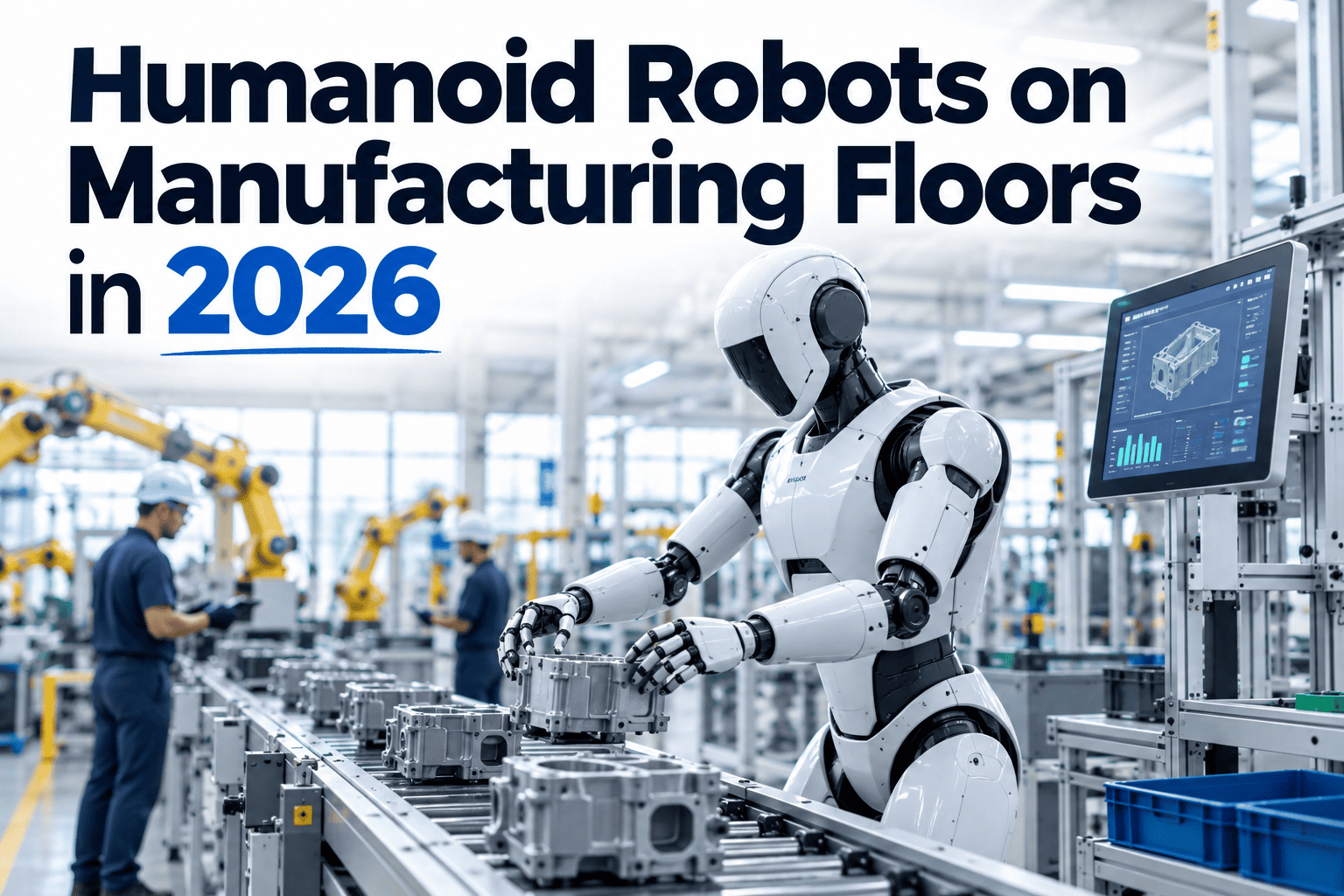
Industry 5.0 is not defined by a single robot type — it is defined by heterogeneous fleets working in coordination. A modern manufacturing plant may run 20 articulated robotic arms on the production line, 8 humanoid robots performing assembly and material handover, 4 quadruped inspection robots patrolling aisles, and 30 autonomous mobile robots (AMRs) moving WIP between cells. Each robot class speaks a slightly different language. The digital twin and MES must speak all of them.
Humanoid Robots
Assembly, Co-bot Handovers
Bipedal robots from Figure, Apptronik, and Agility Robotics handle non-fixed tasks: kitting, last-meter handoffs to humans, and flexible assembly. Trained in NVIDIA Isaac Sim before deployment, they reduce ramp-up time by 70%.
ROS 2 · gRPC · OPC UA bridge
Quadruped Inspectors
Predictive Maintenance Patrols
Boston Dynamics Spot, Unitree, and ANYmal quadrupeds patrol asset corridors carrying thermal cameras, acoustic sensors, and gas detectors. Findings stream into iFactory AI's CMMS to auto-create work orders before failures occur.
MQTT · REST API · Vision pipeline
Articulated Industrial Arms
Welding, Painting, Pick-and-Place
6-axis and 7-axis robotic arms from FANUC, ABB, KUKA, and Universal Robots remain the workhorses. The digital twin pre-validates every program change in Tecnomatix or DELMIA before downloading to the controller via OPC UA.
OPC UA · EtherNet/IP · PROFINET
Autonomous Mobile Robots
Intralogistics & Material Flow
AMRs from MiR, OTTO, and Locus move WIP, kits, and finished goods between cells. The digital twin simulates traffic patterns to optimize routing — iFactory AI's MES dispatches them dynamically based on production demand.
VDA 5050 · MQTT · Fleet Manager API
Expert Review: Why ISA-95, OPC UA, and MQTT Are the Real Unsung Heroes
In every plant where digital twin projects fail, the failure happens at the integration layer — not the visualization layer. NVIDIA Omniverse is beautiful, Tecnomatix is rigorous, DELMIA is comprehensive. But none of them deliver value if the twin cannot read the actual robot fleet state through OPC UA, route work orders through an ISA-95-compliant MES, and stream events through an MQTT broker that respects the latency budget. The plants that get this right treat the twin as the visible front-end of an integration backbone. The plants that get this wrong build expensive 3D museums.
Industrial Architecture Perspective
iFactory AI · Digital Manufacturing Practice
The point of this review is not to dismiss the visualization platforms — they are essential. The point is that buying Omniverse without an integration strategy is like buying a sports car without a road. iFactory AI's platform is purpose-built as the integration backbone: OPC UA gateways for every major PLC family, MQTT broker tuned for manufacturing event volume, ISA-95-compliant MES, ROS 2 bridges for humanoid and quadruped robots, and pre-built connectors to Omniverse, Tecnomatix, DELMIA, and Emulate3D. The twin sees the plant; iFactory AI makes the plant respond.
Wondering if your existing OPC UA infrastructure is twin-ready? Book a demo for a free integration assessment.
Industry 5.0 Outcomes: What Manufacturers Achieve With Twin-Synced Robot Fleets
Changeover Time
−30%
Virtual commissioning in Tecnomatix or Omniverse validates every changeover before robots move. Plants report reducing line transitions from hours to under 60 minutes.
Defect Rate
−22%
When robots train on synthetic data in Isaac Sim before touching real product, first-pass quality jumps. Vision AI catches what humans miss at line speed.
Unplanned Downtime
−40%
Quadruped inspection robots feeding vibration and thermal data into iFactory AI's CMMS predict failures days in advance — converting reactive downtime into scheduled maintenance.
Energy Consumption
−18%
The digital twin simulates energy load profiles and identifies off-peak scheduling for energy-intensive robots — reducing both costs and Scope 2 emissions.
New Product Ramp-Up
−50%
New SKU introductions that previously took 3 months of physical line tuning now take 6 weeks — most validation happens in simulation, not on the actual line.
OEE Improvement
+15 pts
Plants report moving baseline OEE from the high 50s to the mid 70s within 18 months of deploying a twin-synced robot fleet on iFactory AI's platform.
Conclusion: The Factory That Listens to Its Twin
For three decades, manufacturing software has been built around a one-way assumption: the plan flows down from the office to the shop floor, and the report flows back up. Digital twins connected to robot fleets break that assumption. The twin no longer just plans — it perceives, predicts, and adapts. The robots no longer just execute — they teach the twin what is actually possible at the physical limit. And the MES no longer just tracks — it becomes the bidirectional translator between human intent and autonomous action.
iFactory AI is built for this new architecture. Our platform combines an ISA-95-compliant MES, an OPC UA and MQTT communication backbone, ROS 2 bridges for humanoid and quadruped robotics, and certified connectors to NVIDIA Omniverse, Siemens Tecnomatix, Dassault DELMIA, and Rockwell Emulate3D. The result is a single operational layer where the digital twin and the robot fleet finally speak the same language — the language of real-time, closed-loop manufacturing intelligence. The factories that win the Industry 5.0 transition will not be the ones with the most robots, or the prettiest twins. They will be the ones whose twins and robots are truly synchronized.
Ready to Synchronize Your Digital Twin With Your Robot Fleet?
iFactory AI delivers the integration backbone that connects NVIDIA Omniverse, Siemens Tecnomatix, and Dassault DELMIA to humanoid, quadruped, and articulated robot fleets — through MES, OPC UA, and MQTT. One platform. Five layers. Real-time closed loop.
Frequently Asked Questions
What is the difference between a digital twin and a 3D simulation of a factory?
A 3D simulation is a static or scripted representation of a factory — it shows what could happen under defined conditions. A digital twin is bidirectionally synchronized with the physical plant: it ingests live sensor, robot, and MES data, reflects the current state of every asset in near-real-time, and pushes validated changes back to the shop floor. The differentiator is the closed loop. Without OPC UA, MQTT, and MES integration, an Omniverse or Tecnomatix model is a simulation. With those layers — as iFactory AI provides — it becomes a true digital twin capable of driving robot fleet decisions.
How does iFactory AI integrate with NVIDIA Omniverse and Siemens Tecnomatix?
iFactory AI provides certified bidirectional connectors for both platforms. For Omniverse, we use the OpenUSD framework and the NVIDIA Omniverse Connect SDK to stream live MES, OEE, and robot fleet state into the 3D scene. For Tecnomatix, we leverage Siemens' native OPC UA and Teamcenter connectors to exchange production schedules, work order status, and quality data. The same architecture extends to Dassault DELMIA via 3DEXPERIENCE web services and to Rockwell Emulate3D via FactoryTalk integration. This means manufacturers are not locked into a single visualization vendor — iFactory AI is the integration layer underneath all of them.
Can humanoid robots like Figure, Apptronik, or Agility Digit work alongside legacy industrial arms in the same digital twin?
Yes — this is the defining capability of Industry 5.0 plant orchestration. iFactory AI's robot fleet manager treats humanoid robots, quadruped inspectors, AMRs, and articulated industrial arms as a heterogeneous fleet under a single coordination layer. Each robot type communicates via its native protocol — humanoids typically through ROS 2 and gRPC, articulated arms through OPC UA or PROFINET, AMRs through VDA 5050 — and our middleware normalizes their state into a unified twin representation. Engineers see all robots in one Omniverse or Tecnomatix scene, and the MES schedules tasks across the entire fleet based on capability, availability, and physical proximity.
What is the role of ISA-95 and OPC UA in digital twin and robot fleet synchronization?
ISA-95 is the international standard that defines the hierarchy between enterprise systems (ERP at Level 4), manufacturing execution (MES at Level 3), supervisory control (SCADA at Level 2), and device control (PLCs and robots at Levels 1–0). It provides the architectural map for where the twin and robot fleet fit. OPC UA is the data exchange protocol that lets information flow vertically across those levels and horizontally across vendors. Together they form the standardized backbone that prevents vendor lock-in and ensures that a twin built today will still work when robots are replaced or MES vendors change. iFactory AI is ISA-95 compliant by design and OPC UA native at every layer.
How long does it typically take to deploy a manufacturing digital twin connected to a robot fleet?
A pilot covering a single production cell or work line typically runs 8–12 weeks with iFactory AI: 2 weeks for OPC UA gateway and MQTT broker provisioning, 3 weeks for MES configuration and ISA-95 mapping, 2 weeks for the Omniverse or Tecnomatix scene setup, and 1–3 weeks for robot fleet integration and validation. Plant-wide rollouts covering multiple lines and hundreds of robots typically span 6–9 months, depending on the heterogeneity of the existing PLC and robot population. The fastest deployments are at greenfield sites where the twin architecture is designed from day one — a scenario where iFactory AI's greenfield consulting practice can compress the timeline further.
.png)