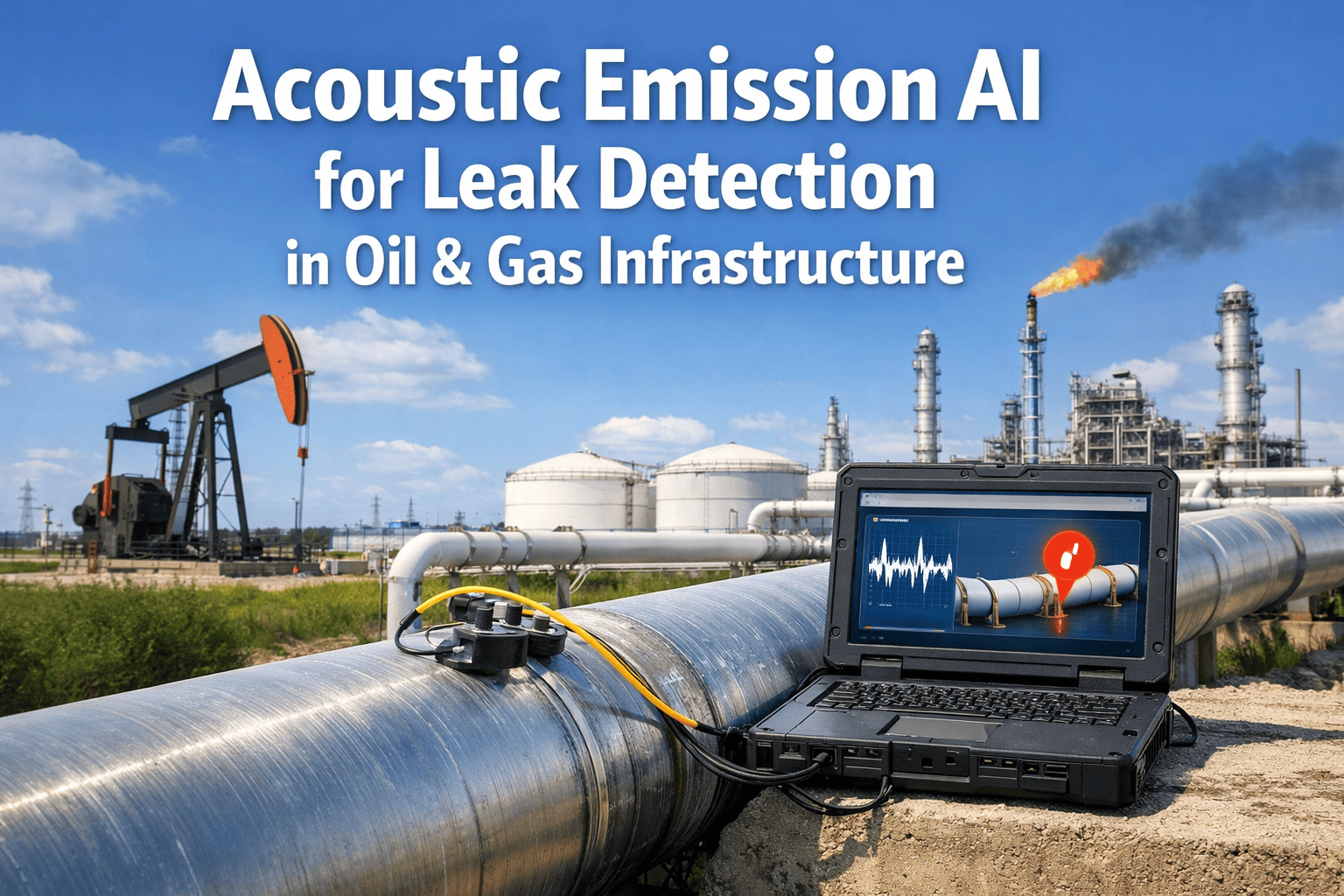
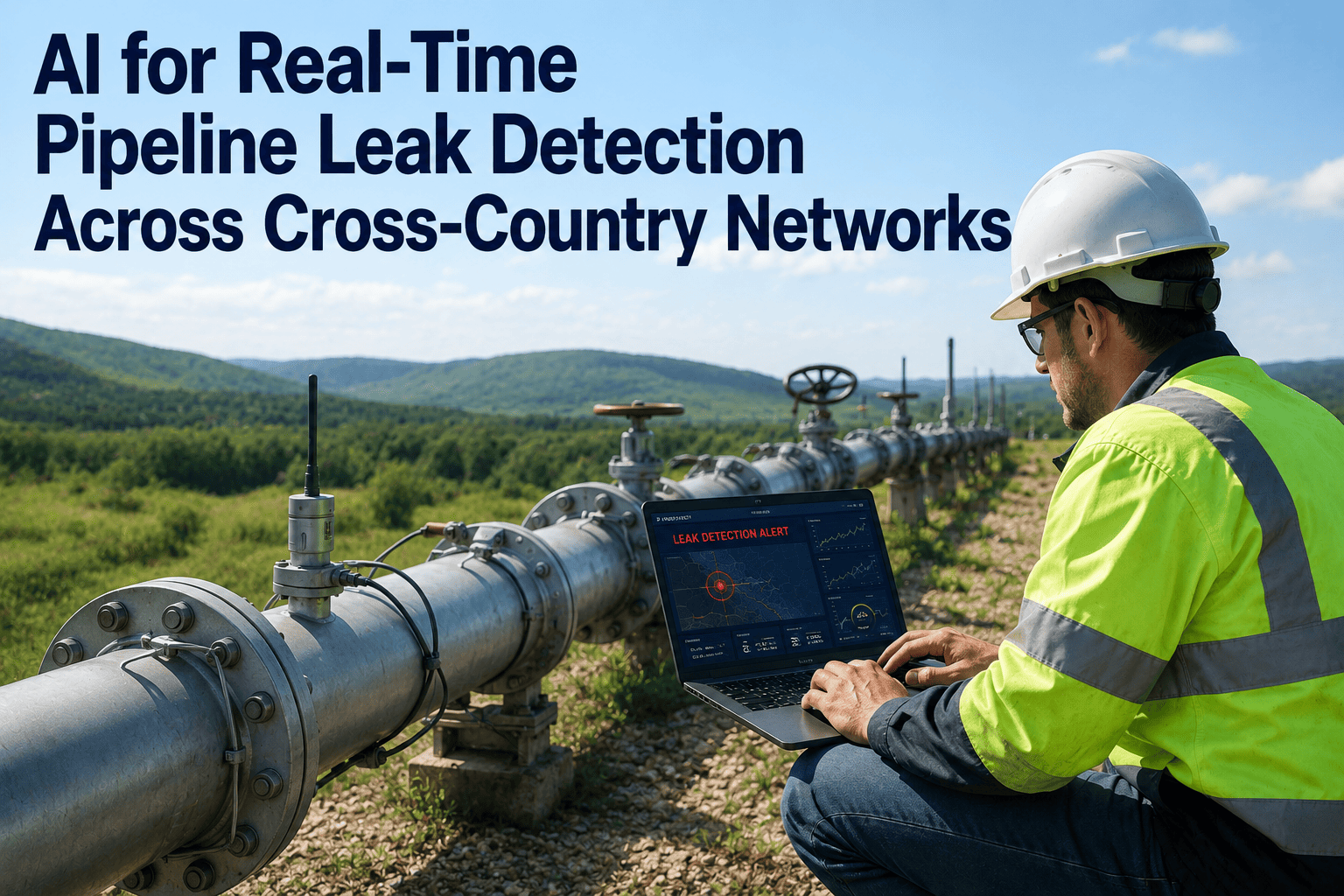
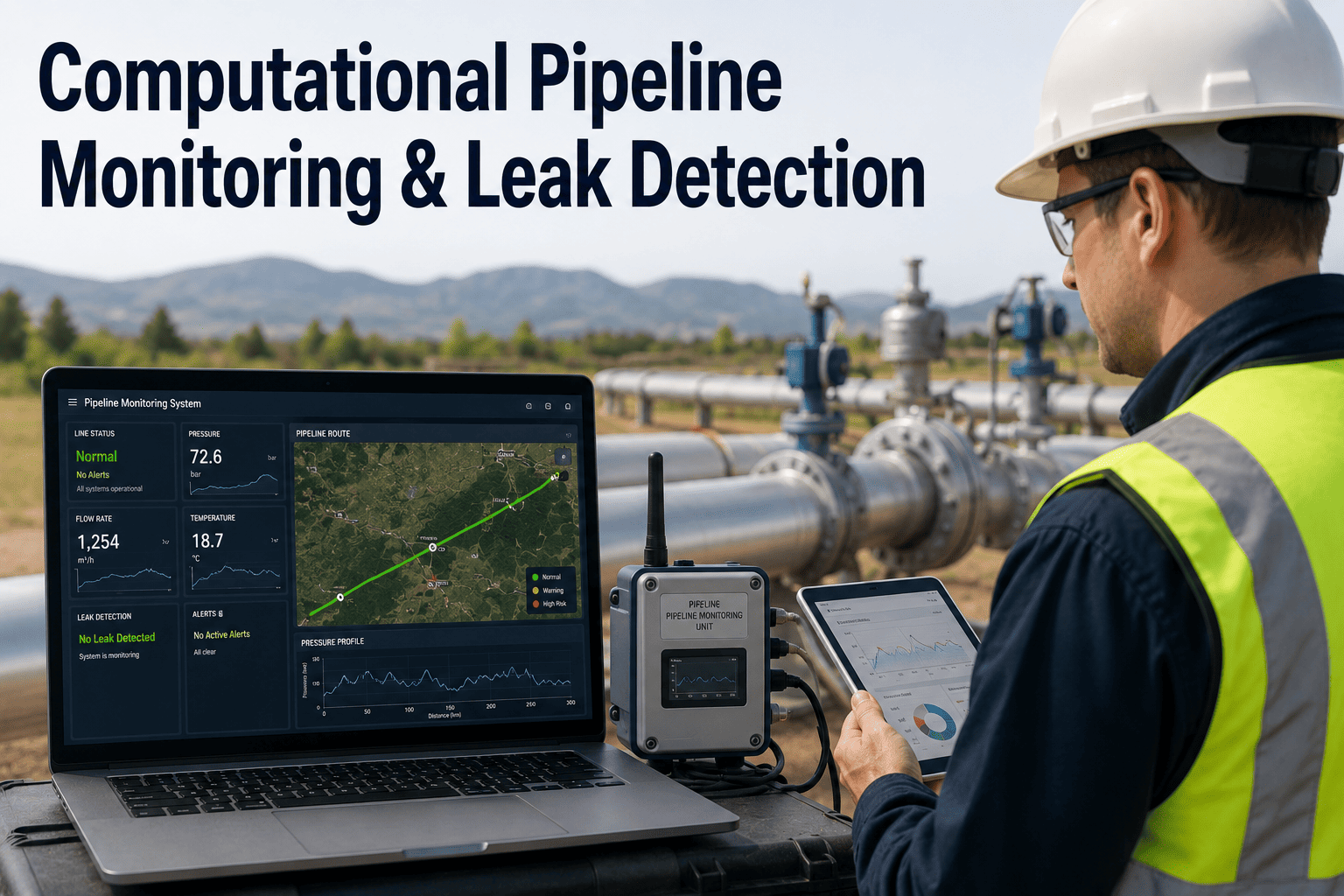
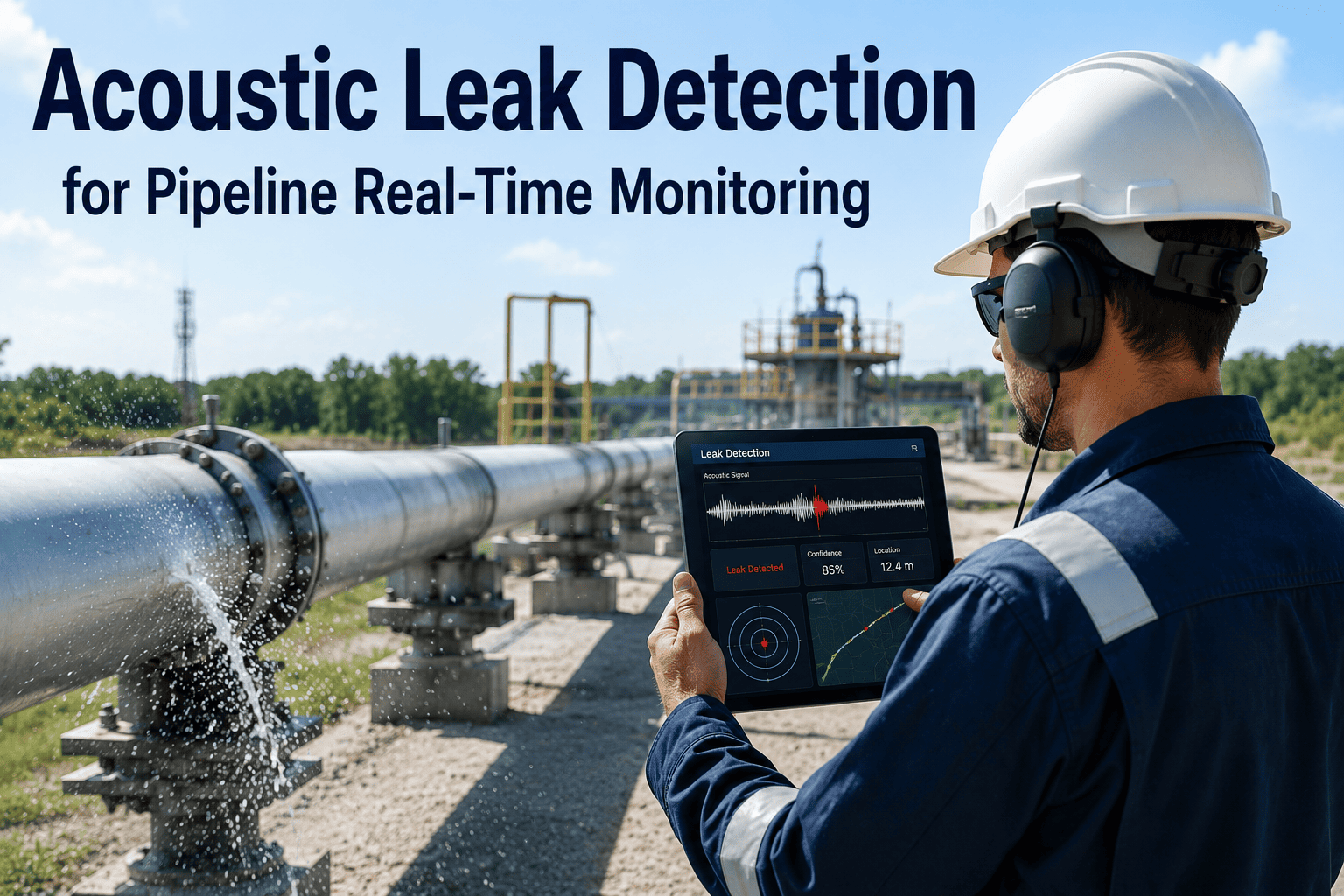
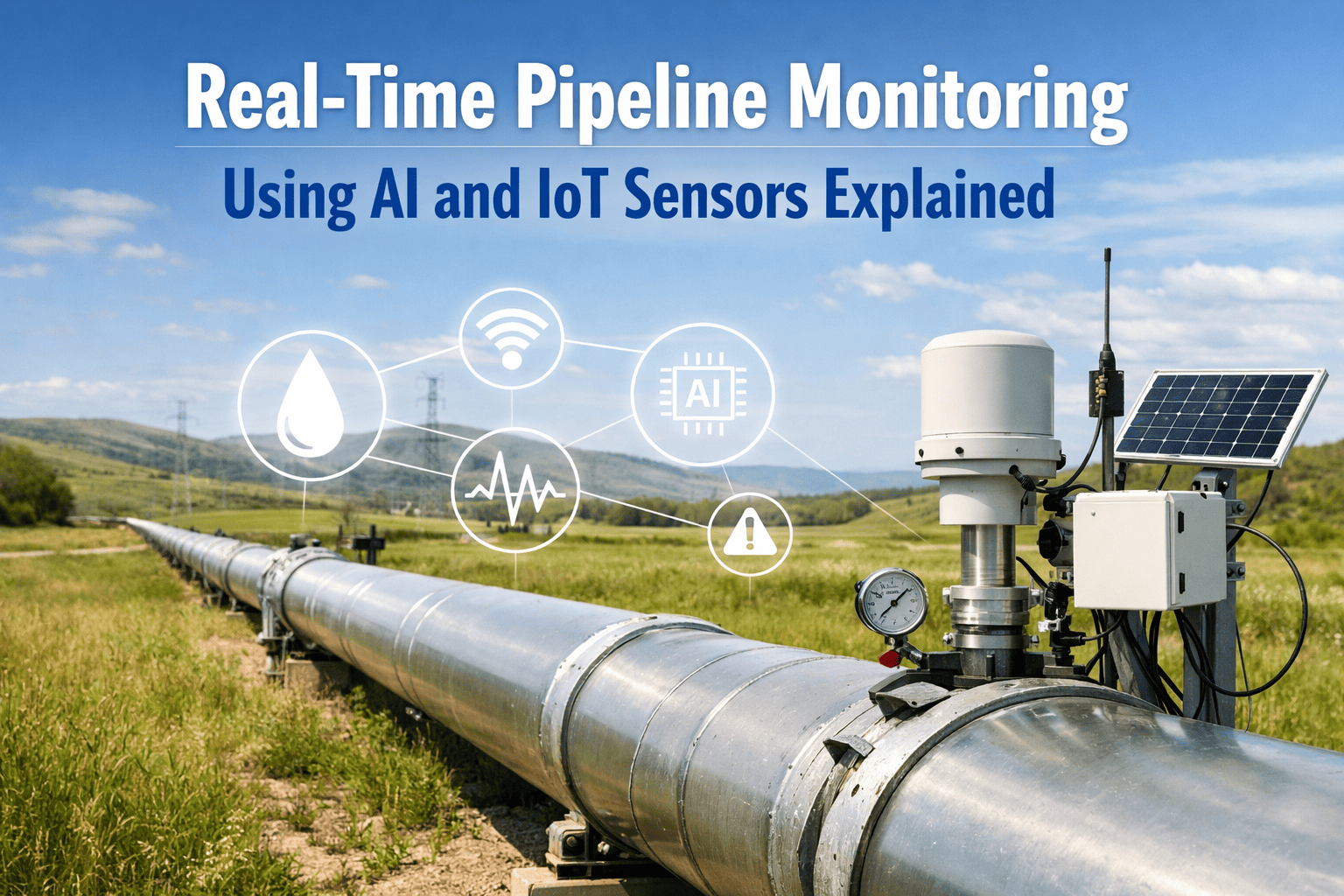
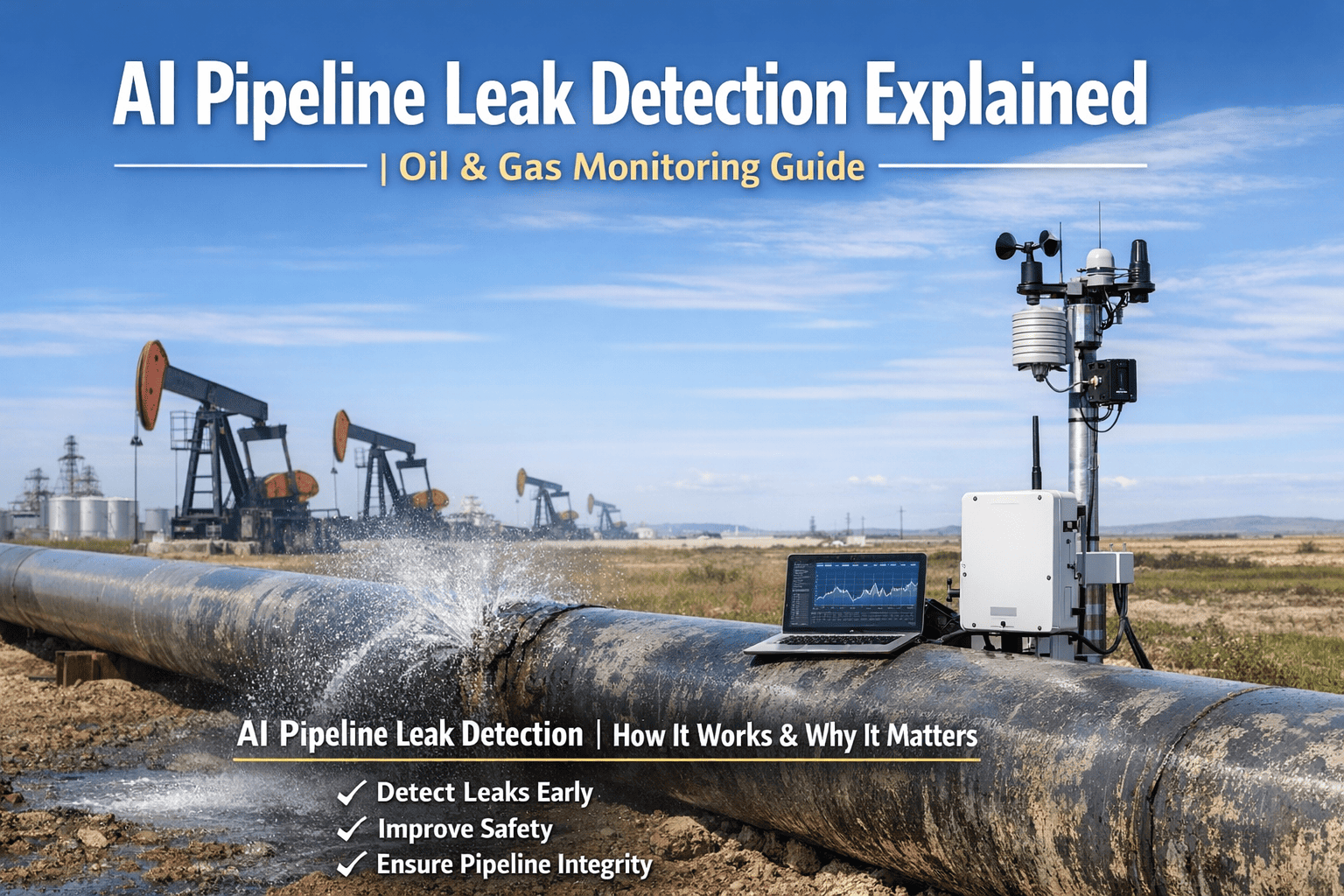
A pinhole leak releasing 2 gallons per minute of pressurized natural gas shouldn't go undetected for 14 days until field technicians smell hydrocarbons during routine inspection, triggering emergency shutdown of a 42-inch transmission pipeline serving 280,000 customers, yet that's exactly what happens when oil and gas operators rely on monthly walking surveys, quarterly aerial patrols, and annual cathodic protection readings that cannot detect small leaks developing between inspection intervals. iFactory's acoustic emission AI platform continuously monitors pipeline networks, process facilities, and equipment using distributed fiber optic sensors, ultrasonic microphones, and vibration detectors that capture acoustic signatures from leaks as small as 0.1 gallons per minute, applying machine learning trained on thousands of leak events to distinguish actual failures from mechanical noise, pinpoint leak locations within 10 feet on pipelines up to 50 miles long, and auto-generate emergency response work orders within 60 seconds of detection. The leaks costing you $4.8 million annually in lost product, environmental fines, and emergency repairs now get detected within minutes of inception, isolated before significant release volumes, and repaired during scheduled maintenance with complete regulatory documentation. Book a demo to see acoustic emission leak detection for your infrastructure.
Quick Answer
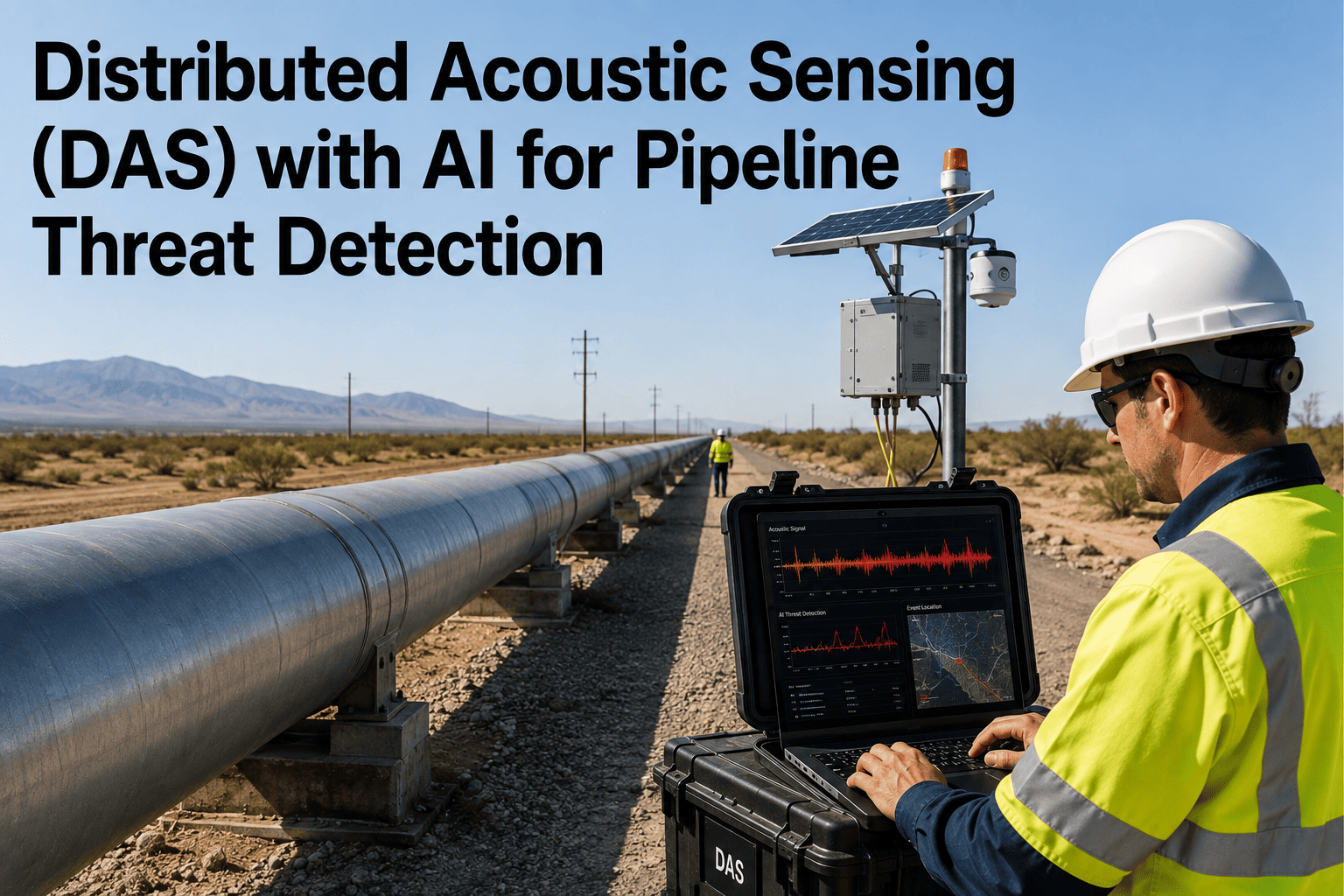
iFactory's acoustic emission AI analyzes sound waves generated by pressurized fluid escaping through cracks, holes, or component failures in pipelines, vessels, valves, and fittings. System uses distributed acoustic sensing fiber optic cables detecting vibrations along 50+ mile pipeline segments, ultrasonic sensors on critical equipment monitoring frequencies above human hearing range, and accelerometers capturing leak-induced structure vibrations. Machine learning algorithms trained on verified leak acoustic signatures filter out background noise from pumps, compressors, flow turbulence, and distinguish leak patterns from normal operations. AI pinpoints leak locations using time-of-arrival analysis from multiple sensors, calculates leak severity from acoustic intensity, and predicts failure progression. Result: Detection of 0.1 GPM leaks within 2 minutes, location accuracy within 10 feet, 96% true positive rate eliminating false alarms, complete integration with SCADA for automated emergency response.
Acoustic Emission AI for Oil & Gas
Detect Pipeline and Equipment Leaks in Real-Time Before Major Releases
iFactory's AI analyzes acoustic emissions from distributed fiber optic sensors and ultrasonic detectors to identify leaks as small as 0.1 GPM within minutes, preventing environmental incidents and product loss across pipelines and facilities.
Understanding Oil & Gas Leak Detection Challenges and Consequences
Leaks threaten safety, environmental compliance, and operational efficiency across upstream production, midstream transportation, and downstream processing. Each segment requires continuous monitoring because delayed leak detection escalates from minor seepage to catastrophic release, environmental damage, and regulatory enforcement.
Critical leak risks include wellhead valve failures, flowline pinhole corrosion, tank vapor emissions, produced water piping leaks, flange gasket failures on Christmas trees. Remote locations mean leaks continue undetected between monthly inspections. Small leaks waste production, create safety hazards from gas accumulation, cause soil contamination requiring remediation, trigger EPA/state regulatory violations with daily penalties accumulating during undetected periods.
Detection Technology: Wireless acoustic sensors on wellheads, fiber optic cables along gathering lines, SCADA pressure monitoring integration, ultrasonic gas detectors, continuous methane analyzers, AI correlation of multiple sensor inputs.
Thousands of miles of high-pressure pipelines face leak threats from external corrosion, mechanical damage, weld defects, stress corrosion cracking. Traditional SCADA leak detection using computational pipeline monitoring has 5-10% leak threshold, missing small releases that accumulate to significant environmental impact over weeks. Acoustic monitoring detects leaks below SCADA thresholds, provides precise location for excavation, prevents small leaks from growing to pipeline ruptures.
Detection Technology: Distributed acoustic sensing via fiber optic cables, permanent acoustic monitoring stations at valve sites, aerial acoustic surveys, ground microphone arrays, integration with SCADA flow/pressure data for multi-modal detection.
Refineries operate thousands of connections, valves, pumps, heat exchangers under high pressure and temperature where leaks create immediate safety hazards, air quality violations, process upsets. Valve packing leaks, flange seeps, pump seal failures, heat exchanger tube leaks require rapid detection to prevent escalation. Acoustic monitoring provides continuous coverage of entire process units, detecting leaks immediately versus quarterly LDAR surveys that allow weeks of emissions between inspections.
Detection Technology: Fixed ultrasonic sensors on critical equipment, acoustic imaging cameras for leak visualization, integration with DCS for process correlation, wireless sensor networks covering unit boundaries, acoustic emission testing on pressure vessels.
Critical Leak Scenarios Costing Operators Millions in Losses and Fines
Every leak scenario below represents real incidents that occur when detection systems cannot identify small releases developing between manual inspections. These failures persist because traditional methods have detection thresholds too high to catch leaks in early stages when repair is simple and release volumes are minimal.
Pipeline Pinhole Leaks from Internal Corrosion
Natural gas transmission pipelines develop pinhole leaks from internal corrosion at low points where water accumulates. Initial leak rate 0.5 GPM slowly increases as corrosion expands hole diameter. SCADA computational pipeline monitoring cannot detect until leak reaches 15+ GPM, weeks after inception. Product loss accumulates to $180,000-$400,000 before detection, environmental release triggers DOT investigation, repair requires emergency pipeline shutdown affecting customers. AI fix: Distributed acoustic sensing fiber optic cable detects acoustic signature from 0.1 GPM leak within minutes, AI filters background noise, pinpoints location within 10 feet enabling targeted excavation, emergency isolation limits total release to under 50 gallons preventing regulatory threshold exceedance.
Wellhead Valve Packing Leaks Releasing Methane
Production well gate valve packing deteriorates from thermal cycling and pressure fluctuations. Valve stem begins leaking methane at 2 cubic feet per hour, undetectable by monthly visual inspection. Leak rate increases to 400 CFH over 8 weeks as packing further degrades. Total methane release: 67,000 cubic feet worth $2,800 in lost product plus EPA greenhouse gas reporting violation. Remote wellsite location means no personnel present to notice leak odor. AI fix: Wireless ultrasonic sensor on valve detects leak acoustic signature immediately, AI confirms leak pattern versus valve operation sounds, auto-generates work order for packing replacement scheduled with next wellsite visit, prevents 95% of methane release and regulatory violation.
Compressor Station Flange Gasket Failures
High-pressure gas compressor discharge piping flange gasket begins seeping from bolt relaxation during thermal cycles. Initial weep rate 0.2 GPM natural gas, barely audible during station operation with compressor noise masking leak sound. Leak progresses over 6 weeks to 8 GPM steady release as gasket compression set increases. Station SCADA shows no pressure anomaly because leak is small relative to throughput. Discovery during quarterly inspection reveals $94,000 product loss, soil gas accumulation creating explosion hazard, immediate shutdown for emergency repair. AI fix: Ultrasonic sensor array monitors flange locations, AI distinguishes gasket leak acoustic signature from compressor mechanical noise, alerts within 4 hours of initial seepage when leak under 1 GPM, scheduled gasket retorquing during next planned shutdown prevents escalation.
Refinery Heat Exchanger Tube Leaks Cross-Contaminating Process Streams
Crude distillation overhead condenser develops tube leak allowing cooling water into hydrocarbon vapor stream. Leak starts as pinhole from corrosion-fatigue, releasing 0.3 GPM water into process. Water contamination causes downstream unit corrosion, product quality degradation, customer complaints about off-spec gasoline. Leak grows to 4 GPM over 12 days before process upset forces shutdown for leak location using helium testing across 8,000 tubes. Lost production: $3.2 million, emergency tube plugging, extended outage. AI fix: Acoustic emission sensors on exchanger shell detect tube leak acoustic signature distinct from normal flow noise, AI correlates with process data showing water ingress indicators, pinpoints leaking tube bundle section, enables planned shutdown with spare exchanger switchover minimizing production impact.
Storage Tank Roof Seal Vapor Leaks During Filling
Floating roof crude oil storage tank develops gap in rim seal during filling operations. Vapor space pressure forces hydrocarbon vapors through seal defect at 12 pounds per hour emission rate. Quarterly LDAR inspection using toxic vapor analyzer detects leak 74 days after development. Total VOC emissions: 22,000 pounds triggering EPA excess emissions report, potential consent decree violation, $180,000 civil penalty. Tank continues in service between quarterly inspections per regulations allowing leak to persist. AI fix: Wireless acoustic sensors around tank perimeter detect seal leak signature during fill cycle, AI recognizes emission acoustic pattern versus normal tank breathing, immediate work order generated for seal inspection and repair at next tank emptying, prevents 92% of excess emissions avoiding regulatory violation.
Produced Water Pipeline Leaks Contaminating Soil
Produced water gathering pipeline develops through-wall corrosion from internal bacteria creating pinhole leak releasing saline water at 1.5 GPM. Pipeline runs through remote area with no visual inspection access, buried 3 feet deep. Leak continues undetected for 38 days releasing 82,000 gallons of produced water into subsurface creating 40-foot diameter contamination plume. Discovery during aerial survey reveals dead vegetation, triggers state environmental emergency response, soil excavation and disposal costs $420,000, ongoing groundwater monitoring requirements. AI fix: Fiber optic acoustic sensing cable installed with pipeline detects leak inception at 0.2 GPM, AI analysis confirms leak signature versus flow noise, GPS coordinates enable emergency response within 6 hours limiting release to 1,800 gallons, excavation and repair during early stage prevents major contamination event.
The Complete AI Platform for Oil & Gas Operations
iFactory delivers unified acoustic emission monitoring, leak detection, predictive maintenance, and emergency response automation purpose-built for oil and gas infrastructure protection. AI Eyes That Detect Leaks Before They Escalate through continuous real-time acoustic surveillance across all operating segments.
Acoustic AI vs Traditional Leak Detection: Performance Comparison
Manual walking surveys and SCADA threshold monitoring cannot match continuous acoustic emission AI for detection speed, sensitivity, and location accuracy in oil and gas operations.
| Capability |
Manual Surveys |
SCADA CPM |
iFactory Acoustic AI |
| Detection Threshold |
20+ GPM (audible leaks only) |
5-10% of flow rate |
0.1 GPM minimum detection |
| Detection Speed |
Days to months (inspection interval) |
Hours to days (data analysis lag) |
Under 2 minutes real-time |
| Location Accuracy |
Walking survey area (mile segments) |
Cannot pinpoint, general area only |
Within 10 feet on 50-mile lines |
| Coverage |
Accessible areas, monthly/quarterly |
Entire pipeline, continuous |
100% coverage, 24/7 monitoring |
| False Positive Rate |
High (misidentifies sounds) |
Moderate (operational transients) |
4% with AI filtering |
| Small Leak Detection |
Cannot detect sub-audible |
Misses leaks under threshold |
Detects before SCADA threshold |
Platform Capability Comparison: Leak Detection Solutions
Purpose-built acoustic AI leak detection platforms deliver superior sensitivity and real-time response compared to traditional SCADA monitoring or periodic inspection programs.
| Capability |
iFactory |
IBM Maximo |
SAP EAM |
Oracle EAM |
QAD Redzone |
UpKeep |
| Acoustic Emission AI |
✔ ML leak pattern recognition |
✗ Not available |
✗ Not available |
✗ Not available |
✗ Not available |
✗ Not available |
| Distributed Fiber Optic Sensing |
✔ DAS integration |
✗ Not available |
✗ Not available |
✗ Not available |
✗ Not available |
✗ Not available |
| Real-Time Leak Detection |
✔ Under 2-minute alerts |
Manual sensor integration |
Alarm management |
Sensor data collection |
✗ Not available |
✗ Not available |
| Leak Location Pinpointing |
✔ 10-foot accuracy via AI |
✗ Not available |
✗ Not available |
✗ Not available |
✗ Not available |
✗ Not available |
| SCADA Integration |
✔ Multi-modal correlation |
Custom integration |
PI System integration |
Custom integration |
✗ Not available |
✗ Not available |
| False Alarm Filtering |
✔ AI noise discrimination |
Rule-based filtering |
Threshold management |
Alarm suppression |
✗ Not available |
✗ Not available |
| Oil & Gas Specialization |
✔ Pre-trained leak models |
Industry templates |
Industry solutions |
Utilities solution |
Generic manufacturing |
Generic CMMS |
Comparison based on publicly available product documentation as of April 2026. Verify capabilities with vendors.
Regional Compliance Standards for Leak Detection and Response
Oil and gas leak detection across regions requires compliance with pipeline safety regulations, environmental protection requirements, and emergency response standards. iFactory ensures automated documentation aligned with regional frameworks.
| Category |
United States |
United Kingdom |
United Arab Emirates |
Canada |
Europe |
| Safety |
PHMSA 192/195, API RP 1130 |
HSE Pipeline Safety Regs 1996 |
OSHAD, ADNOC pipeline standards |
CSA Z662, NEB regulations |
Pipeline Safety Directive, national laws |
| Environmental |
EPA Clean Air Act, OPA 90 |
Environment Act, COMAH |
Federal Law 24/1999 environment |
CEPA, Fisheries Act |
Environmental Liability Directive |
| Industrial Standards |
API 1155, ASME B31.8S |
BS EN 14161, IGEM standards |
ISO 10439, ADNOC codes |
CSA standards, API adoptions |
EN standards, CEN guidelines |
| Leak Detection Requirements |
49 CFR 195.134 leak detection |
PSR 1996 leak detection systems |
ADNOC leak detection protocols |
CSA Z662 Annex O leak detection |
National pipeline safety codes |
Regional Platform Fit: Addressing Local Leak Detection Challenges
Different regions face unique leak detection requirements based on regulatory frameworks, infrastructure characteristics, and environmental sensitivity. iFactory provides localized solutions for region-specific needs.
| Region |
Key Leak Detection Challenges |
How iFactory Solves |
| United States |
PHMSA Mega Rule leak detection requirements, aging pipeline infrastructure, methane emission regulations, DOT incident reporting obligations, liquid pipeline leak detection mandate per 49 CFR 195.134 |
Acoustic monitoring exceeding PHMSA performance standards, automated DOT F 7000-1 incident reporting with leak detection timestamps, methane quantification from acoustic signatures for EPA greenhouse gas reporting, liquid line monitoring achieving detection thresholds below regulatory minimums |
| United Arab Emirates |
ADNOC stringent leak prevention standards, extreme temperatures affecting sensor performance (50°C+), offshore pipeline monitoring in harsh marine environment, rapid infrastructure expansion requiring scalable deployment |
High-temperature rated acoustic sensors operational to 85°C, subsea distributed acoustic sensing for offshore pipelines, ADNOC compliance templates and reporting formats, rapid fiber optic deployment on new construction projects, wireless sensor networks for brownfield retrofits |
| United Kingdom |
Pipeline Safety Regulations 1996 compliance, North Sea offshore leak detection in harsh conditions, environmental sensitivity in populated areas, HSE incident notification requirements, aging onshore distribution networks |
PSR-compliant leak detection systems with documented performance verification, subsea acoustic monitoring for North Sea platforms and pipelines, rapid leak response minimizing environmental impact, automated HSE RIDDOR reporting, distributed sensing on legacy infrastructure without excavation |
| Canada |
Remote pipeline locations with limited access, extreme cold affecting electronics (down to -40°C), CSA Z662 Annex O leak detection requirements, long-distance transmission lines, First Nations consultation for incidents |
Cold-weather rated equipment operational to -50°C, satellite communication for remote monitoring, CSA compliance documentation automated, fiber optic sensing covering 50+ mile segments from single interrogator, incident documentation supporting indigenous consultation requirements |
| Europe |
Diverse national regulations, environmental liability directive compliance, carbon reduction mandates reducing leak tolerance, aging infrastructure across multiple countries, stringent emission limits |
Multi-country regulatory reporting templates, Environmental Liability Directive documentation automation, methane leak prevention supporting carbon reduction goals, retrofit solutions for aging European pipeline networks, emissions quantification for EU ETS reporting |
Proven Acoustic Leak Detection Results
96% Detection Accuracy, Under 2-Minute Response Time
See how iFactory's acoustic emission AI detects pipeline and equipment leaks as small as 0.1 GPM within minutes, preventing environmental incidents and product loss through continuous real-time monitoring across upstream, midstream, and downstream operations.
Measured Acoustic Leak Detection Results
0.1 GPM
Minimum Leak Detection
Under 2 Min
Detection Response Time
87%
Product Loss Prevention
$4.8M
Annual Incident Cost Savings
Implementation Roadmap for Acoustic Emission Leak Detection
Deploying AI-powered acoustic monitoring across oil and gas infrastructure follows structured phases delivering immediate leak detection while building comprehensive surveillance capabilities.
Sensor Deployment & Baseline Establishment
Install distributed acoustic sensing fiber optic cables on critical pipeline segments, deploy wireless ultrasonic sensors on high-risk equipment (valves, flanges, pumps), establish acoustic imaging camera locations at process units. Integrate with existing SCADA systems for multi-modal monitoring. Collect 2-4 weeks baseline acoustic data during normal operations to train AI models on facility-specific background noise patterns from compressors, pumps, flow turbulence, valve operations.
Deliverable: Acoustic sensor network operational, baseline noise profiles established, AI models trained to distinguish facility-specific sounds from leak signatures.
AI Detection Activation & Tuning
Activate machine learning leak detection algorithms trained on verified leak acoustic signatures. Configure alert thresholds balancing sensitivity versus false alarm tolerance. Implement automatic work order generation triggered by confirmed leaks with GPS location data. Set up emergency response protocols including SCADA integration for isolation valve control. Conduct controlled leak tests using calibrated gas releases to validate detection sensitivity and location accuracy.
Deliverable: Real-time leak detection active, false positive rate under 5%, location accuracy within 15 feet validated, emergency work orders auto-generated.
Full Network Deployment & Optimization
Scale acoustic monitoring to all pipeline segments, process facilities, storage areas. Deploy robotic inspection platforms with acoustic sensors for periodic verification surveys. Activate predictive maintenance models identifying equipment developing leak-prone conditions before failure. Enable automated regulatory compliance reporting with leak detection timestamps, response actions, repair verification for EPA, DOT, state agency requirements.
Deliverable: Enterprise-wide acoustic surveillance operational, 87% product loss prevention achieved, automated compliance documentation, zero undetected significant leaks.
Continuous Learning & Performance Enhancement
AI models continuously improve from every confirmed leak event, equipment repair, seasonal operating condition change. Expand acoustic signature library to detect additional failure modes (cavitation, flashing, erosion). Implement advanced location algorithms reducing pinpointing accuracy to under 10 feet. Multi-facility benchmarking identifies best practices for leak prevention. Achieve industry-leading 96% true positive detection rate while maintaining minimal false alarms.
Outcome: Self-improving leak detection approaching zero missed events, optimized emergency response, maximum product recovery, regulatory compliance excellence.
Frequently Asked Questions
QHow does acoustic emission AI distinguish actual leaks from background noise like pumps and compressors?
Machine learning models trained on thousands of verified leak events recognize unique acoustic signatures of pressurized fluid escaping through holes or cracks. AI analyzes frequency spectrum, amplitude patterns, signal duration versus cyclic equipment sounds. System learns facility-specific background noise during baseline period, then filters mechanical vibrations, flow turbulence, valve actuation to isolate leak acoustics. Multi-sensor correlation confirms leak versus transient sounds. Achieves 96% true positive rate with under 5% false alarms after tuning period.
See AI filtering demo.
QWhat size leaks can acoustic monitoring detect that SCADA computational pipeline monitoring misses?
Acoustic sensors detect leaks as small as 0.1 gallons per minute (0.014% of typical pipeline flow) versus SCADA computational methods requiring 5-10% flow changes before detection. On 10,000 barrel per day pipeline, acoustic detects 0.1 GPM while SCADA needs 350+ GPM. Early detection prevents small leaks from growing to major releases, reducing total product loss by 87% versus delayed SCADA detection. Critical for compliance with PHMSA liquid pipeline leak detection requirements.
Book demo to see sensitivity.
QHow accurately can distributed fiber optic sensing pinpoint leak locations on long pipelines?
Distributed acoustic sensing analyzes acoustic wave time-of-arrival at fiber optic cable along pipeline to triangulate leak position. Achieves 10-foot location accuracy on pipeline segments up to 50 miles from single interrogator unit. System correlates with SCADA pressure gradient analysis for confirmation. GPS coordinates automatically included in emergency work orders enabling excavation crews to target exact location, reducing repair mobilization time from days (walking surveys to locate) to hours (direct GPS response).
QDoes iFactory acoustic leak detection integrate with existing SCADA and emergency shutdown systems?
Yes. System integrates via OPC-UA or Modbus with SCADA platforms for multi-modal leak confirmation combining acoustic signatures with pressure drops, flow rate changes. Upon confirmed large leak (over threshold set by operator), system can trigger automatic isolation valve closure via SCADA interface. Emergency work orders integrate with CMMS platforms (Maximo, SAP, Oracle) including leak location, estimated severity, recommended response. All data stays within OT network security perimeter via edge deployment.
See SCADA integration.
QWhat ROI should operators expect from acoustic emission leak detection deployment?
Typical payback 12-18 months from product loss prevention (87% reduction in release volumes), avoided environmental fines (regulatory violations from undetected leaks), reduced emergency response costs (early detection enables scheduled repairs versus emergency mobilization). Additional value from methane emission reductions supporting ESG goals, insurance premium decreases, optimized inspection programs. Operators with aging infrastructure or high product value see faster payback. Total ROI reaches 450-650% over 5 years from combined benefits.
Get custom ROI analysis.
Stop Leaks in Minutes, Not Months
Detect 0.1 GPM Leaks Within 2 Minutes Across Your Entire Infrastructure
iFactory's acoustic emission AI platform monitors pipelines, equipment, and facilities 24/7 using distributed fiber optic sensors and ultrasonic arrays, detecting small leaks before they become major releases and enabling rapid emergency response across upstream, midstream, and downstream operations.