Oil and gas operators waste $850,000 to $2.4 million annually per facility on reactive maintenance strategies that repair equipment after failures occur, causing unplanned downtime averaging 15 to 22% of operating time, emergency parts procurement at 3x normal costs, and cascading production losses totaling $45,000 to $180,000 per downtime event depending on asset criticality. Traditional time-based preventive maintenance schedules replace components on fixed calendars regardless of actual condition, wasting 40 to 60% of maintenance budget on premature replacements while still missing 35% of impending failures that occur between scheduled intervals. iFactory's AI predictive maintenance platform analyzes vibration, thermal, acoustic, and performance data from compressors, pumps, turbines, and process equipment to predict failures 7 to 21 days before occurrence with 91% accuracy, reducing unplanned downtime by 72%, cutting maintenance costs by 38%, and delivering average ROI of 340% within 18 months through eliminated emergency repairs, optimized spare parts inventory, and extended equipment lifespan across upstream, midstream, and downstream operations. Book a demo to see predictive maintenance ROI calculations for your operations.
AI predictive maintenance in oil and gas delivers measurable ROI through three primary value drivers: 72% reduction in unplanned downtime (eliminating $45,000 to $180,000 per event production losses), 38% reduction in maintenance costs (preventing emergency repairs, optimizing spare parts, eliminating unnecessary preventive work), and 25% extension of equipment lifespan (condition-based replacements vs premature calendar-based changes). iFactory implementation across upstream drilling rigs, midstream pipeline compressor stations, and downstream refining units shows average payback period of 8 to 14 months with sustained annual savings of $1.2 to $4.8 million per facility depending on asset base and production value. Platform integrates with existing SCADA, DCS, historians, and IoT sensors to deliver continuous equipment health monitoring, automated work order generation, and complete compliance documentation for US OSHA PSM, UAE OSHAD, UK HSE, Canadian OH&S, and European ISO 55001 asset management standards.
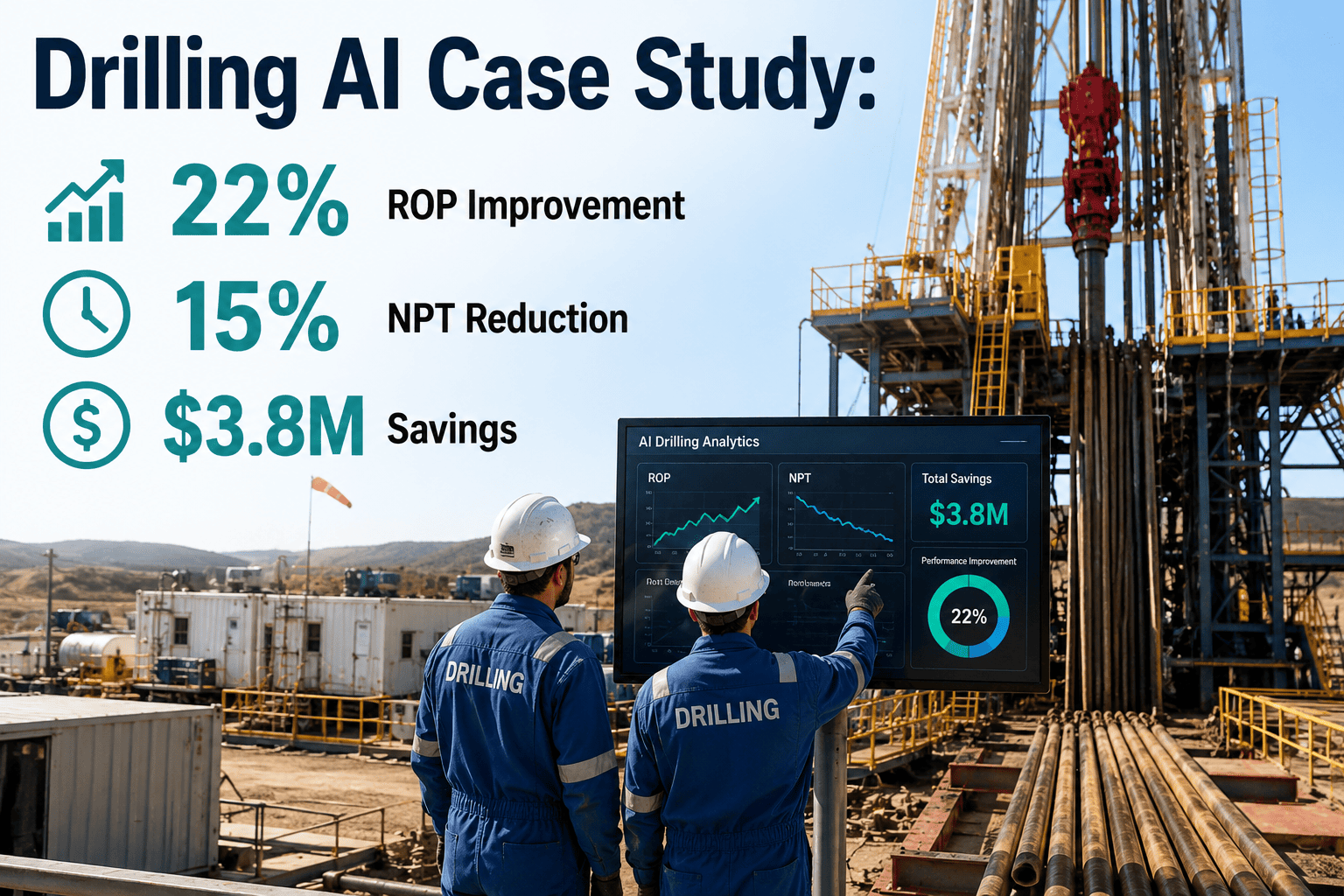
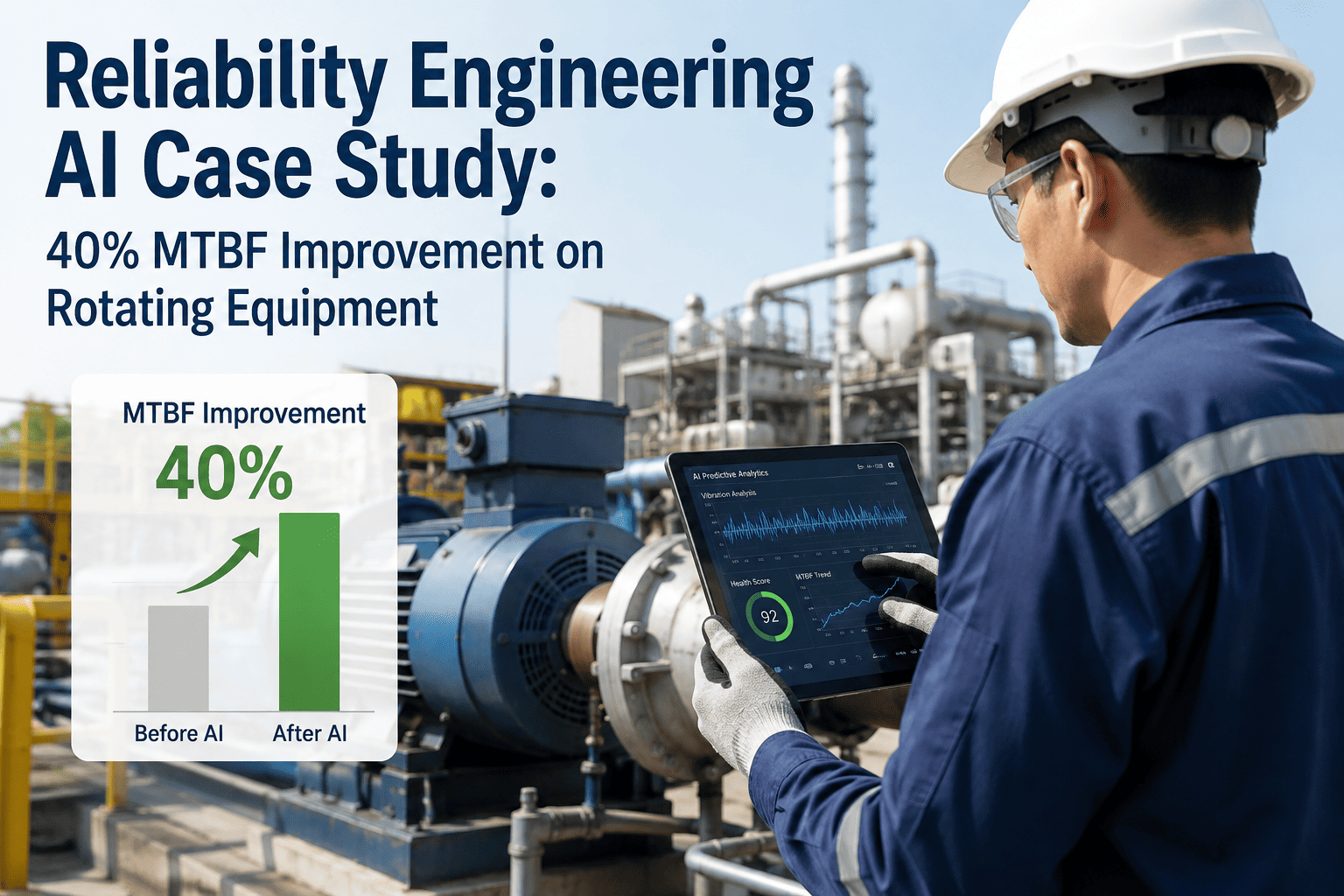
iFactory delivers measurable predictive maintenance value across upstream, midstream, and downstream operations with average 340% ROI and 8 to 14 month payback periods validated through real-world deployments.
Understanding Oil and Gas Maintenance Economics
Oil and gas operations span three distinct segments, each with unique maintenance challenges and ROI drivers. Upstream exploration and production facilities include drilling rigs, well pumps, separators, and compression equipment where equipment failures directly halt production revenue. Midstream pipeline networks, compressor stations, and storage terminals require continuous operation to meet shipper commitments and avoid penalty charges. Downstream refining and processing plants operate high-value catalytic crackers, distillation columns, and product blending systems where unplanned shutdowns trigger cascading impacts across entire refinery economics. Traditional reactive maintenance waits for equipment failures before intervention, creating catastrophic downtime costs. Time-based preventive maintenance replaces components on fixed schedules, wasting resources on healthy equipment while missing degradation between intervals. Predictive maintenance uses real-time equipment health data to forecast failures before occurrence, enabling planned interventions during scheduled shutdowns that minimize production impact and optimize maintenance spending.
Integration with Oil and Gas Operational Technology
Effective predictive maintenance requires data from multiple industrial control and monitoring systems deployed across oil and gas facilities. SCADA systems provide supervisory control and real-time visibility into process parameters including pressures, temperatures, flow rates, and equipment status across entire facilities or pipeline networks. PLCs execute local control logic for individual equipment including motor control, valve automation, and safety interlocks. DCS platforms coordinate complex refining processes including distillation, cracking, and blending operations requiring precise parameter control. Historians archive time-series data from all sensors and controllers for compliance, optimization, and analysis. IoT sensors add specialized monitoring including vibration analysis, acoustic emission detection, thermal imaging, and oil analysis that traditional process sensors miss. iFactory connects to all these systems through industry-standard protocols including OPC UA, Modbus TCP, HART, and vendor-specific APIs, creating unified equipment health visibility that enables AI-driven failure prediction impossible with siloed data sources.
Critical Maintenance Problems Destroying Oil and Gas Profitability
Equipment failures cause unplanned downtime averaging $45,000 to $180,000 per event in lost production, emergency mobilization costs, and expedited parts procurement. A single compressor failure on gas gathering system interrupts production from 20 to 100 wells simultaneously. Pipeline leaks trigger environmental incidents, regulatory penalties, and community relations damage far exceeding repair costs. Manual inspections in hazardous environments expose personnel to confined spaces, high pressures, toxic gases, and fall hazards. Disconnected systems prevent maintenance teams from correlating SCADA alarms, vibration trends, and lubrication analysis into actionable failure predictions. Lack of predictive insights means problems only detected after equipment damage already occurred, when intervention costs are highest. Compliance reporting for OSHA Process Safety Management, EPA emissions monitoring, and ISO 55001 asset management requires manual data collection across fragmented systems. Methane emissions, VOC releases, and flaring volumes lack continuous visibility needed for ESG reporting and regulatory compliance. iFactory eliminates these problems through integrated monitoring, AI-driven predictions, and automated compliance documentation.
One Platform, Every Segment: 8 AI-Powered Modules for Complete Oil and Gas Operations
iFactory provides comprehensive predictive maintenance capabilities through integrated modules covering every aspect of oil and gas asset management. AI Vision and Inspection uses computer vision to detect equipment leaks, corrosion, insulation damage, and safety violations from camera feeds deployed across facilities. Robotics Inspection deploys autonomous systems for tank inspections, pipeline surveys, and confined space assessments where human access is hazardous or impractical. Predictive Maintenance analyzes vibration, thermal, acoustic, and performance data to forecast equipment failures 7 to 21 days before occurrence. Work Order Automation generates maintenance tasks from AI predictions and routes them through approval workflows synchronized with production schedules. Asset Lifecycle Management tracks equipment from procurement through decommissioning with complete maintenance history, reliability metrics, and regulatory documentation. Pipeline Integrity Monitoring provides AI-Driven Integrity for Every Mile of Pipeline through continuous leak detection, corrosion monitoring, and inline inspection data analysis. SCADA and DCS Integration delivers seamless Connects to Your Existing DCS, SCADA, and Historians capabilities through native protocol support. Edge AI Security ensures OT Data Stays Inside Your Security Perimeter while enabling advanced analytics. ESG and Compliance Reporting automates Methane, VOC, and Flaring From Sensor to ESG Report documentation for regulatory submissions.
Real-World ROI Case Studies Across Oil and Gas Segments
Predictive Maintenance ROI Value Drivers
Predictive maintenance delivers financial returns through multiple simultaneous value streams that compound to create substantial total economic impact beyond simple maintenance cost reduction.
Predictive vs Reactive Maintenance Economics Comparison
The financial difference between predictive and reactive maintenance approaches is substantial and measurable. Real-world data from deployed facilities demonstrates consistent patterns across upstream, midstream, and downstream operations.
| Metric | iFactory Predictive | Traditional Reactive | Improvement |
|---|---|---|---|
| Unplanned downtime | 4-8% of operating time | 15-22% of operating time | 72% reduction |
| Equipment failure prediction | 7-21 days advance warning, 91% accuracy | Detected after failure occurs | Planned vs emergency repairs |
| Maintenance cost per asset | $18K-45K annually | $32K-78K annually | 38% cost reduction |
| Emergency repair frequency | 0.8-1.2 per year | 4.5-8.2 per year | 85% fewer emergencies |
| Spare parts inventory | $1.1M-3.2M tied up | $2.8M-8.4M tied up | 58% inventory reduction |
| Equipment lifespan | 12-18 years typical | 8-12 years typical | 25-35% extension |
| Annual ROI | $1.2M-$4.8M net savings | Baseline spending | 295-420% ROI typical |
Platform Capability Comparison: Predictive Maintenance Solutions
Generic CMMS platforms provide work order management without predictive analytics. Traditional condition monitoring systems collect vibration data but lack AI-driven failure prediction. iFactory differentiates through oil and gas-specific AI models, seamless SCADA integration, and comprehensive automation from prediction through work order execution. Schedule a platform comparison demonstration.
| Capability | iFactory | IBM Maximo | SAP EAM | Fiix | UpKeep |
|---|---|---|---|---|---|
| AI Predictive Capabilities | |||||
| AI failure prediction | Advanced ML, 7-21 day forecast, 91% accuracy | Basic rules, manual configuration | Limited analytics module | Not available | Not available |
| Oil and gas specialization | Upstream/midstream/downstream models | Generic industrial | Generic industrial | Manufacturing focus | Generic facilities |
| Vibration analysis integration | Native support, auto diagnostics | Third-party integration | Custom development | Not available | Not available |
| System Integration | |||||
| SCADA and DCS integration | Native OPC UA, Modbus, vendor APIs | Generic SCADA connectors | PI System integration | Limited connectivity | Manual data entry |
| Historian data access | OSIsoft PI, AspenTech IP.21 native | Custom integration | Limited support | Not available | Not available |
| Edge AI capability | Full offline operation | Cloud dependent | Cloud dependent | Cloud dependent | Cloud dependent |
| Deployment and ROI | |||||
| Ease of deployment | 3-6 weeks typical | 6-18 months | 9-24 months | 2-4 months | 1-3 months |
| Typical payback period | 8-14 months | 18-36 months | 24-48 months | No predictive ROI | No predictive ROI |
| Documented ROI case studies | 295-420% validated oil and gas | Generic industry claims | Generic industry claims | CMMS efficiency only | CMMS efficiency only |
Comparison based on publicly documented capabilities and validated customer deployments as of Q1 2025.
Regional Oil and Gas Compliance Standards
Predictive maintenance programs must align with region-specific safety, environmental, and asset management regulations. iFactory provides automated compliance tracking and documentation for all major oil and gas operating regions.
| Standard Type | United States | United Kingdom | United Arab Emirates | Canada | Europe |
|---|---|---|---|---|---|
| Safety Regulations | OSHA PSM 1910.119, API RP 580 | HSE L111, COMAH regulations | OSHAD, Federal Law 24/1999 | CSA standards, provincial OH&S | ISO 45001, Seveso III Directive |
| Environmental Standards | EPA CAA, NSPS, GHG reporting | Environment Agency permits, CRC | EAD environmental compliance | CEPA, GHG reporting program | EU ETS, IED, REACH compliance |
| Asset Management | API 580/581 RBI, ISO 55001 | PAS 55, ISO 55001, BS standards | ISO 55001, ADNOC standards | ISO 55001, CSA certifications | ISO 55001, EN standards |
| Oil and Gas Specific | API inspection intervals, PHMSA | OGA regulations, well integrity | ADNOC HSE management system | AER directives, NEB regulations | NORSOK, country-specific codes |
How iFactory Solves Regional Challenges
Different operating regions face unique economic pressures, regulatory requirements, and operational constraints that affect predictive maintenance ROI drivers and implementation priorities.
| Region | Key Challenges | How iFactory Solves |
|---|---|---|
| United States | OSHA PSM compliance burden, EPA emissions monitoring requirements, aging onshore infrastructure requiring capital efficiency, skilled labor shortages increasing maintenance costs | Automated PSM mechanical integrity documentation, continuous emissions monitoring for EPA reporting, predictive analytics extending equipment life deferring capital replacement, maintenance automation reducing labor dependency |
| United Arab Emirates | Extreme operating temperatures affecting equipment reliability, harsh desert conditions accelerating wear, OSHAD compliance requirements, maintaining uptime in high-value production environments | Thermal monitoring for desert heat impacts, equipment health tracking for harsh environment wear patterns, automated OSHAD safety documentation, failure prediction preventing costly production interruptions in high-margin operations |
| United Kingdom | Strict offshore safety regulations, aging North Sea infrastructure, HSE enforcement rigor, ESG reporting pressure from investors and regulators, mature field economics requiring cost discipline | Offshore platform equipment monitoring, predictive maintenance for aging assets extending field life, automated HSE compliance documentation, ESG reporting for emissions and safety performance, maintenance cost optimization for mature field profitability |
| Canada | Remote asset locations increasing repair costs, extreme cold weather equipment challenges, long parts procurement lead times, provincial regulatory variations, SAGD and oil sands operations complexity | Early failure prediction maximizing value of expensive remote mobilizations, cold weather equipment monitoring, advanced warning enabling parts procurement before remote inventory depletion, multi-provincial compliance tracking, thermal recovery equipment optimization |
| Europe | Stringent environmental regulations driving compliance costs, carbon reduction mandates, aging infrastructure across multiple countries, sustainability reporting requirements, energy transition pressure on traditional assets | Automated environmental compliance documentation, carbon intensity tracking for emissions reduction, predictive maintenance maximizing ROI from aging assets facing phase-out, EU taxonomy-aligned sustainability reporting, efficiency optimization reducing carbon footprint |
Measured ROI Results Across Deployed Facilities
Predictive Maintenance Implementation Roadmap
Deploying AI-powered predictive maintenance requires systematic equipment assessment, sensor deployment, baseline data collection, and AI model training. iFactory provides structured implementation that delivers measurable ROI within first year while building foundation for continuous improvement.
iFactory delivers measurable financial returns through eliminated downtime, reduced maintenance costs, and extended equipment life validated across upstream, midstream, and downstream operations with 8 to 14 month payback periods.
Frequently Asked Questions
iFactory's predictive maintenance platform delivers 340% average ROI through 72% downtime reduction, 38% maintenance cost savings, and 25% equipment lifespan extension across upstream, midstream, and downstream oil and gas operations with validated case studies and 8 to 14 month payback periods. Complete integration with existing SCADA, DCS, historians, and CMMS systems ensures seamless deployment while maintaining OT security perimeter and full compliance with US OSHA PSM, UAE OSHAD, UK HSE, Canadian OH&S, and European ISO 55001 standards.