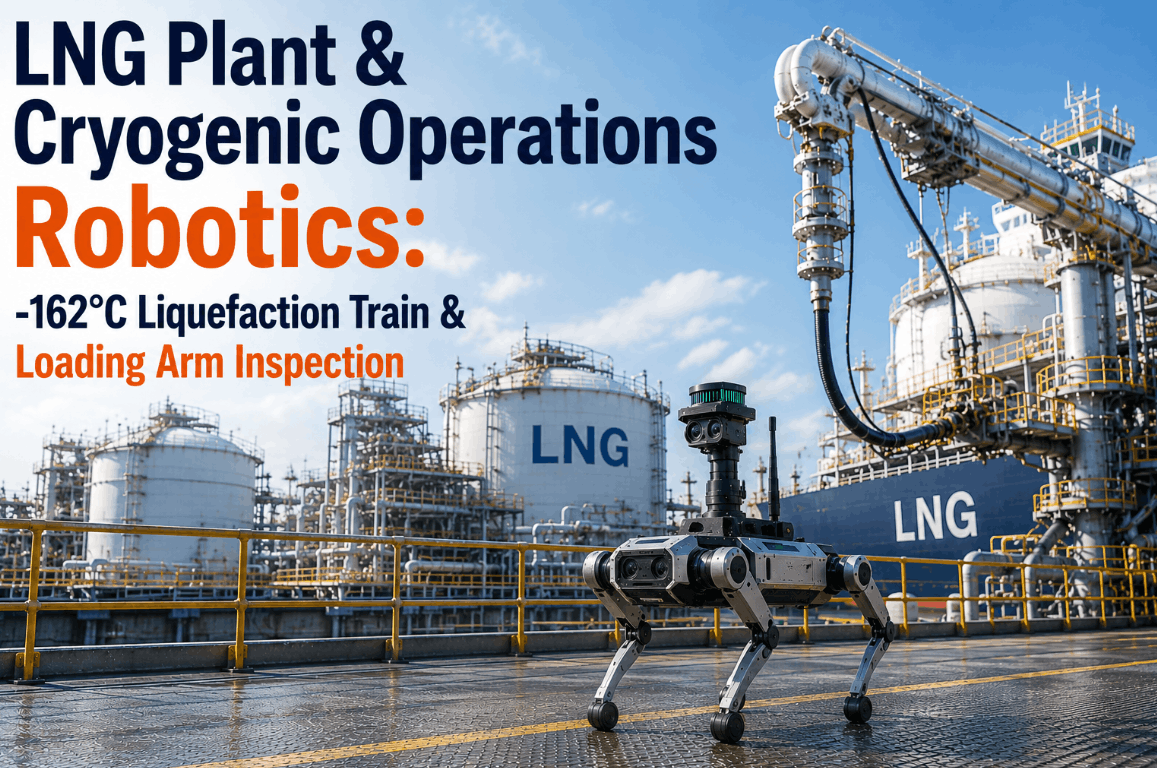
Across U.S. LNG export terminals and import regasification facilities, a new operational reality is taking shape. Robotics and AI-driven inspection platforms are replacing manual walkthroughs on liquefaction trains, loading arms, and BOG compressor decks — assets that operate continuously at -162°C under strict SIGTTO terminal protocols. For plant managers and reliability engineers, the question in 2026 is no longer whether to adopt autonomous inspection technology, but how quickly it can be integrated into existing HAZOP frameworks and CMMS workflows. iFactory's industrial AI platform delivers exactly that capability: edge-accelerated vision, digital work orders, and predictive maintenance scheduling built for the thermal and mechanical extremes of LNG operations.
Why Cryogenic LNG Assets Demand a New Inspection Standard
LNG liquefaction is among the most energy-intensive and mechanically demanding processes in the oil and gas industry. Natural gas must be cooled to approximately -162°C — reducing its volume by around 600 times — through multi-stage refrigeration cycles that stress heat exchangers, rotating compressors, and insulated piping every hour of every day. At those temperatures, standard carbon steel becomes brittle, and inspection windows using conventional human-entry methods are both dangerous and infrequent.
SIGTTO (Society of International Gas Tanker and Terminal Operators) guidelines set strict performance and safety parameters for LNG terminal operations, including marine loading arms, vapor return lines, and emergency release systems. Non-productive berth time — often caused by arm misalignment, seal degradation, or undetected BOG pressure excursions — can generate demurrage costs exceeding $80,000 per day on large-capacity vessels. Robotic inspection systems integrated with a real-time AI platform close that gap, delivering the continuous visibility that spot-check maintenance schedules simply cannot provide. Book a Demo to see how iFactory maps to your terminal's asset hierarchy.
Critical LNG Asset Classes Covered by Robotic Inspection
A fully capable LNG robotics deployment must address each major asset category in the terminal's value chain — from the liquefaction train at the upstream end to the marine loading arm at the jetty. iFactory's modular platform is structured to cover each of these asset classes with dedicated AI models and inspection workflows.
| Asset Class | Primary Failure Mode | Robotic Inspection Method | iFactory Capability |
|---|---|---|---|
| Liquefaction Train (Main Cryogenic HX) | Cold box insulation breach, refrigerant leak, tube fouling | Thermal imaging + acoustic emission sensors | Continuous edge AI thermal anomaly detection |
| LNG Loading Arm (MLA) | Swivel joint seal wear, misalignment, ERS actuator drift | Vision camera + laser displacement sensors | Real-time alignment deviation alerts, ERS readiness scoring |
| BOG Compressor | Bearing degradation, valve leakage, vibration exceedance | Vibration + ultrasonic thickness measurement | PdM scheduling via run-hour triggers and anomaly trend |
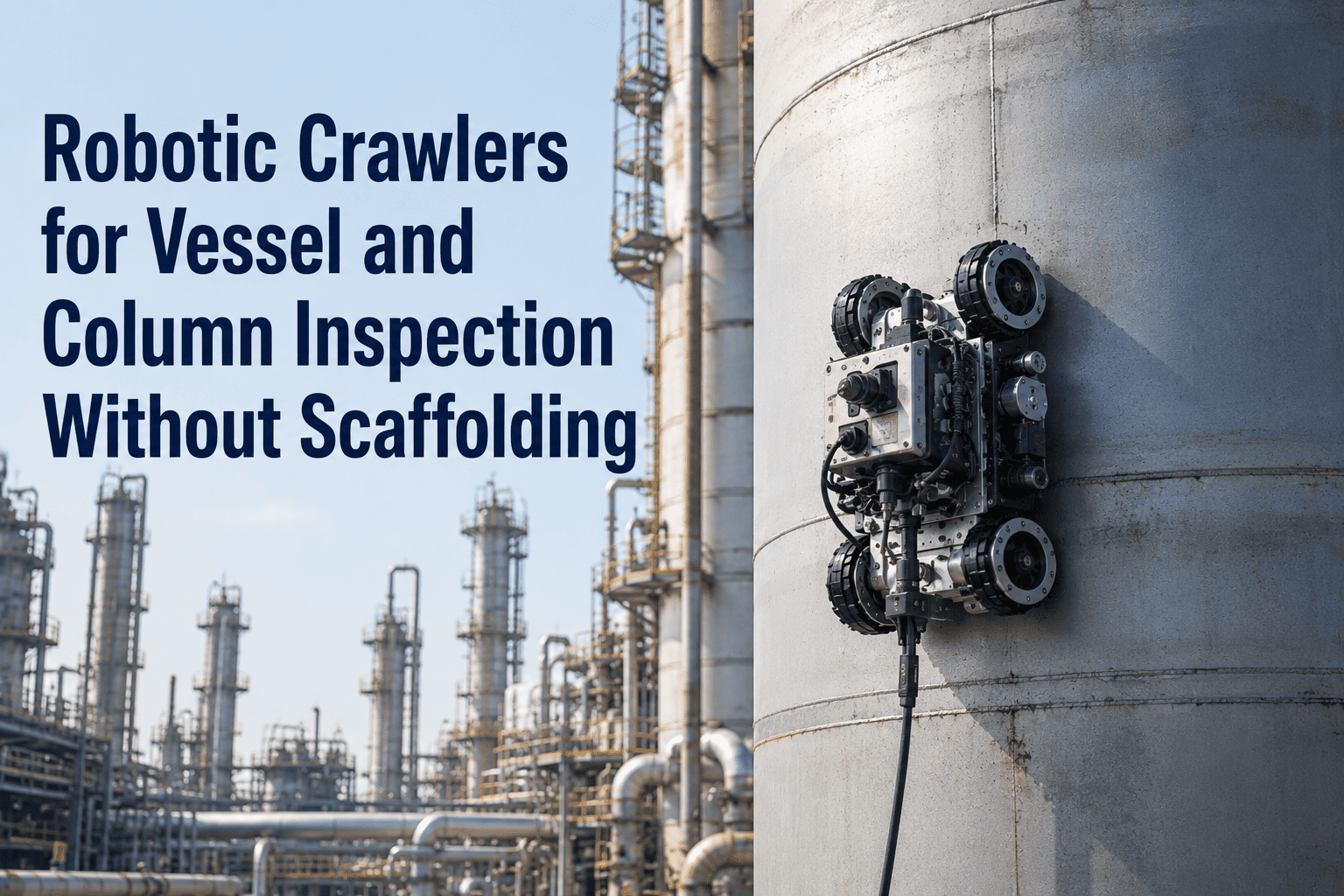
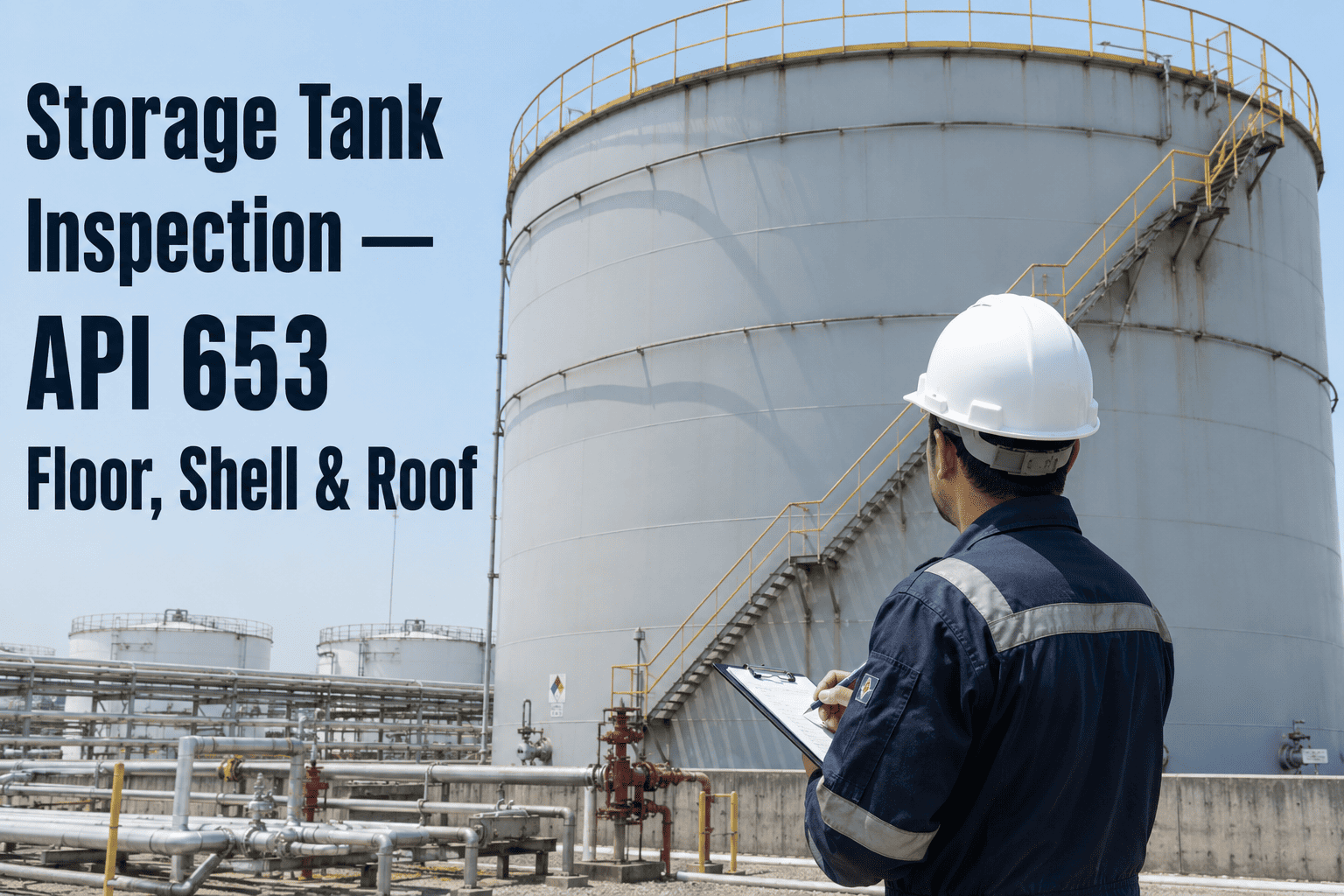
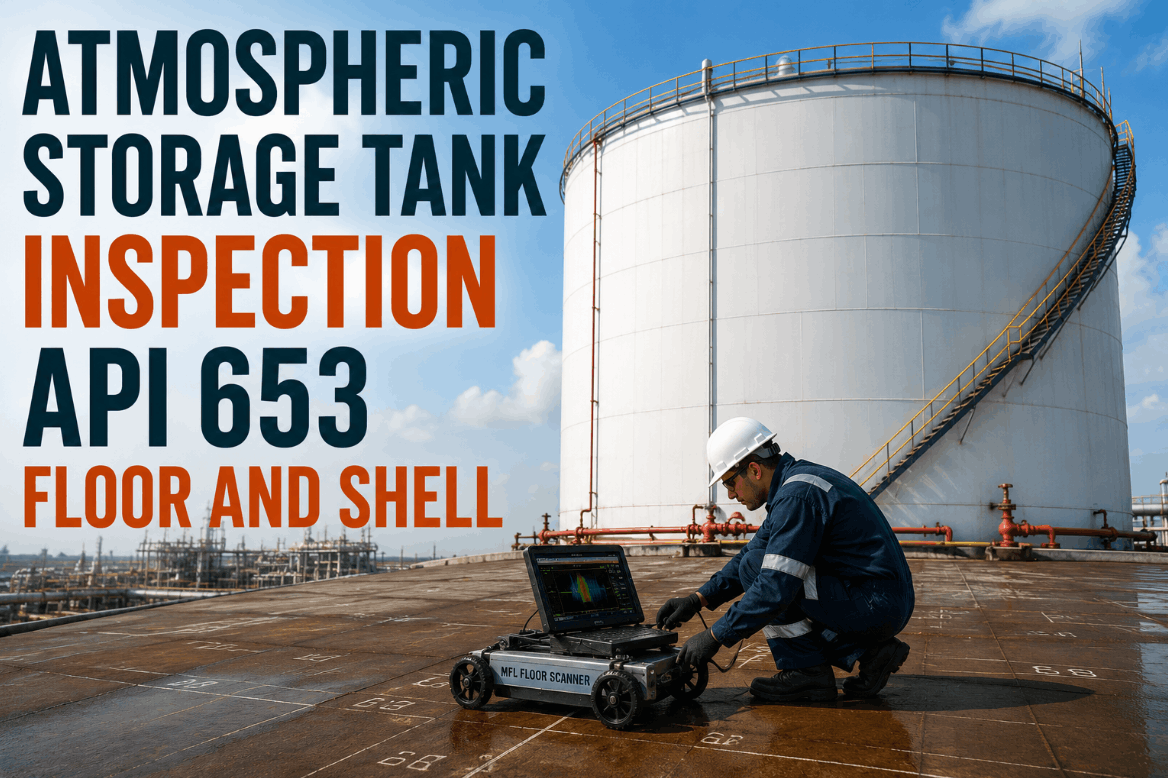
| LNG Storage Tank (Full Containment) | Annular space settlement, inner shell weld fatigue, frost heave | Drone-based UT + ground-penetrating sensor crawlers | Digital inspection records, repair work order generation |
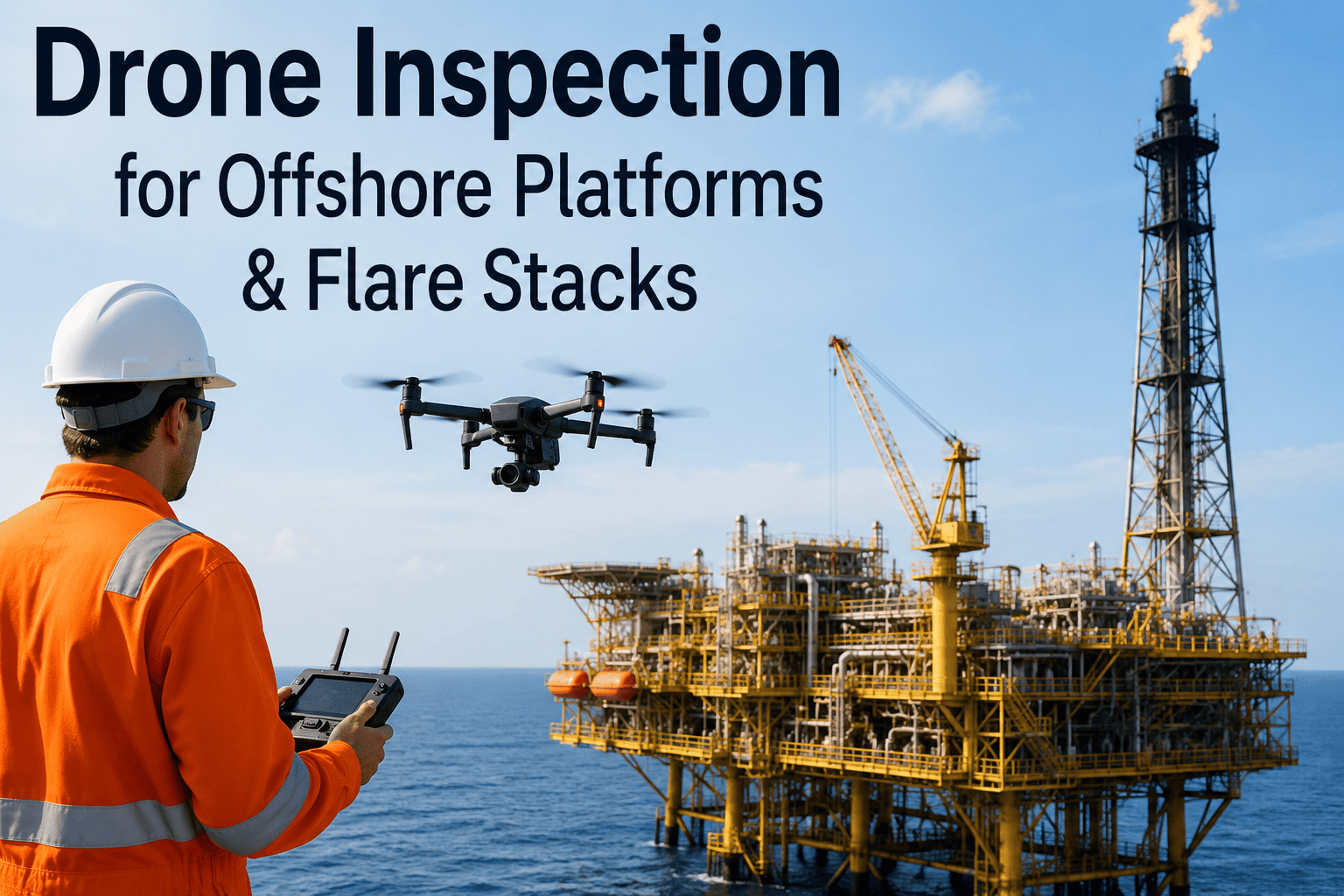
| LNG Flare System | Seal drum level drift, pilot burner failure, tip erosion | Optical gas imaging + thermal UAV pass | Automated alert routing to operations and EHS teams |
| RPTC / Vapor Return Lines | Pressure buildup, valve seat erosion, thermal cycling cracks | Pressure trend analytics + visual inspection robot | CMMS-linked corrective work order with spare parts check |
The LNG Robotics Deployment Workflow: From Cold Box to Loading Jetty
Deploying an effective robotic inspection program across an LNG terminal requires a structured, phased approach that aligns with planned shutdown windows, PSSR requirements, and existing CMMS infrastructure. iFactory's deployment methodology follows a five-phase model specifically adapted for cryogenic oil and gas environments. Book a Demo to walk through the phases specific to your terminal layout.
Asset Registry & Risk Ranking
Import your P&ID-based asset hierarchy into iFactory's EAM module. Every LNG train, compressor, tank, and arm is assigned a criticality score based on consequence of failure and inspection interval requirements. This drives inspection frequency without requiring manual scheduling.
Edge Node Deployment & Camera Positioning
NVIDIA-powered edge nodes are installed at high-priority inspection zones — cold box access corridors, loading arm platforms, and BOG compressor galleries. IP67-rated industrial cameras and thermal sensors are positioned to provide continuous coverage without requiring personnel to enter hazardous areas.
AI Model Training & Baseline Calibration
AI Vision models are trained on thermal and visual baseline images of your specific equipment in normal operating state. This allows the system to detect anomalies — hot spots, condensation patterns, displacement deviations — rather than simply flagging against static thresholds that ignore process variability.
Live OEE & Predictive Alert Routing
iFactory's real-time dashboard aggregates all sensor events into a single operator view. When the AI flags an anomaly — a BOG compressor vibration spike or loading arm swivel temperature rise — the platform auto-generates a digital work order, checks spare parts inventory, and routes the alert to the responsible technician via mobile app.
SIGTTO Compliance Reporting & Audit Readiness
Every inspection event, alert, work order, and resolution is logged with timestamp and asset ID. iFactory exports SIGTTO-aligned inspection reports, HAZOP action tracking records, and EHS audit checklists directly from the platform — eliminating paper-based compliance trails and ensuring documentation is always audit-ready.
LNG Loading Arm Monitoring: Where Robotics ROI Is Most Immediate
The marine loading arm is the single highest-consequence interface between an LNG terminal and an LNG carrier. Each articulated arm must maintain cryogenic integrity across swivel joints, vapor return connections, and emergency release couplings — all while compensating for vessel motion and tidal variation. Manual inspection of these arms is episodic at best, and misalignment or seal degradation between inspections can halt a loading operation entirely.
A conventional LNG terminal relies on operator walkthroughs and periodic third-party inspection to assess MLA condition. When a swivel joint begins to wear, early indicators — micro-vibration at connection points, slight thermal asymmetry at the flange, marginal drift in actuator positioning — go undetected until they progress to a leak or ERS actuation. iFactory's edge-mounted vision system monitors loading arm geometry and thermal state continuously during every loading operation. When deviations approach threshold, the platform alerts the control room and issues a digital inspection work order, enabling corrective action before the next vessel arrival. You can Book a Demo to see the loading arm monitoring module in live operation.
- Manual arm walkthroughs every 6–12 months
- Swivel seal wear detected only after visible leakage
- ERS actuator drift identified during pre-berthing checks
- Loading delays traced back to undocumented arm history
- Paper inspection records, no trend analysis capability
- Demurrage exposure on every vessel visit
- Continuous visual and thermal monitoring during operations
- Seal degradation flagged weeks before visible failure
- ERS actuator response time logged and trended automatically
- Full digital arm history available for vessel pre-arrival review
- Automated inspection reports with timestamped anomaly records
- Demurrage risk dramatically reduced through proactive scheduling
Mapping iFactory Capabilities to LNG Terminal Financial Outcomes
Every technology investment in an LNG facility must pass a rigorous financial justification process. The table below maps iFactory's core platform capabilities to specific, measurable financial outcomes relevant to LNG plant and terminal operations. Book a Demo for a custom ROI analysis aligned to your terminal's throughput and asset profile.
| iFactory Module | LNG Application | Financial Outcome | Stakeholder |
|---|---|---|---|
| AI Vision (Edge) | Thermal anomaly detection on cold box and loading arms | Eliminates cloud bandwidth fees; reduces manual inspection labor | Reliability & IT Directors |
| Predictive EAM | BOG compressor and refrigerant compressor PdM scheduling | Extends asset life; cuts emergency spare freight costs | CFO & Maintenance Teams |
| Digital Work Orders | Loading arm inspection, tank crawl findings, flare checks | Reduces admin labor; eliminates lost inspection records | Maintenance Directors |
| Real-Time OEE | Liquefaction train availability and loading throughput tracking | Identifies invisible micro-stops eating into LNG throughput capacity | Plant & Operations Managers |
| Smart Compliance Forms | SIGTTO checklists, HAZOP action close-outs, EHS audits | Guarantees audit readiness; reduces regulatory penalty exposure | EHS & Compliance Managers |
Expert Perspective: AI-Driven PdM in Extreme Cryogenic Environments
"The challenge with cryogenic asset inspection is not a lack of data — modern LNG trains generate enormous volumes of process signals. The challenge is converting that data into actionable maintenance intelligence before a failure event occurs. Platforms that combine edge AI processing with structured work order workflows are the first solutions I've seen that actually close the loop between detection and action in real operational time. For loading arm monitoring specifically, continuous vision-based alignment tracking addresses a gap that neither manual inspection nor PLC interlocks have historically covered. The financial case is straightforward: one prevented demurrage event at a major terminal typically pays for an entire year of platform licensing."
LNG Bunkering & Small-Scale Terminal Considerations
Beyond large-scale export terminals, robotic inspection and AI-driven maintenance platforms are increasingly relevant to LNG bunkering operations and small-scale import terminals. These facilities typically operate with leaner staffing ratios, making automated inspection coverage proportionally more valuable. iFactory's platform scales from single-train bunkering depots to multi-train baseload facilities without requiring architecture changes — the same edge nodes, the same AI models, and the same CMMS integration layer serve facilities at every scale.
LNG Bunkering Depots
Small-footprint deployments covering bunker arm alignment, cryogenic hose integrity, and ESD valve readiness. Lean staffing makes automated alerting mission-critical.
Import / Regasification Terminals
Continuous monitoring of send-out compressors, vaporizers, and high-pressure send-out metering — with inspection records mapped directly to downstream gas network commitments.
Baseload Export Terminals
Full multi-train coverage with parallel AI Vision streams, integrated SIGTTO compliance reporting, and ERP-level data push to SAP or Oracle for financial and inventory reconciliation.
Frequently Asked Questions: LNG Plant Cryogenic Robotics
Can robotic inspection systems operate reliably at -162°C LNG temperatures?
iFactory's edge nodes and sensor hardware are specified for industrial cryogenic environments, with thermal imaging and acoustic sensors capable of detecting anomalies across the full operating temperature range of LNG assets without direct cold-zone contact.
How does the platform integrate with existing SIGTTO inspection protocols?
iFactory's digital checklist and compliance module maps directly to SIGTTO terminal inspection requirements, generating timestamped audit records and reporting that satisfy regulatory and berth authority documentation standards.
Does iFactory support BOG compressor predictive maintenance scheduling?
Yes — the EAM module tracks actual run-hours and vibration trend data from BOG compressors, automatically triggering preventive work orders based on real operating conditions rather than calendar-based schedules.
How does edge AI processing reduce cloud costs in LNG Vision deployments?
By processing thermal and visual camera feeds on-premise using NVIDIA GPU nodes, iFactory sends only lightweight metadata alerts to cloud dashboards — reducing data egress fees by over 80% compared to cloud-streaming AI approaches.
Can the platform connect to legacy LNG plant control systems and PLCs?
iFactory connects to modern PLCs via OPC-UA and supports legacy analog equipment through retrofitted sensors and AI Vision-to-Digital monitoring, without requiring changes to existing DCS or safety instrumented system architectures.
Conclusion: Cryogenic Robotics Is the New Standard for LNG Plant Reliability
LNG remains one of the highest-growth segments in global energy, and every ton of production capacity depends on the continuous, reliable operation of assets that are difficult to inspect and costly to repair. Robotics and AI Vision platforms are rapidly becoming the operational standard for LNG terminals that take uptime and compliance seriously. iFactory delivers the unified platform that connects your liquefaction train, BOG compressors, loading arms, and storage tanks into a single, real-time operational intelligence layer — without replacing your existing DCS, ERP, or safety systems. The ROI case is compelling, the deployment path is structured, and the technology is proven in industrial cryogenic environments. Book a Demo and let iFactory's engineering team map a deployment plan to your terminal's specific asset profile and inspection requirements.