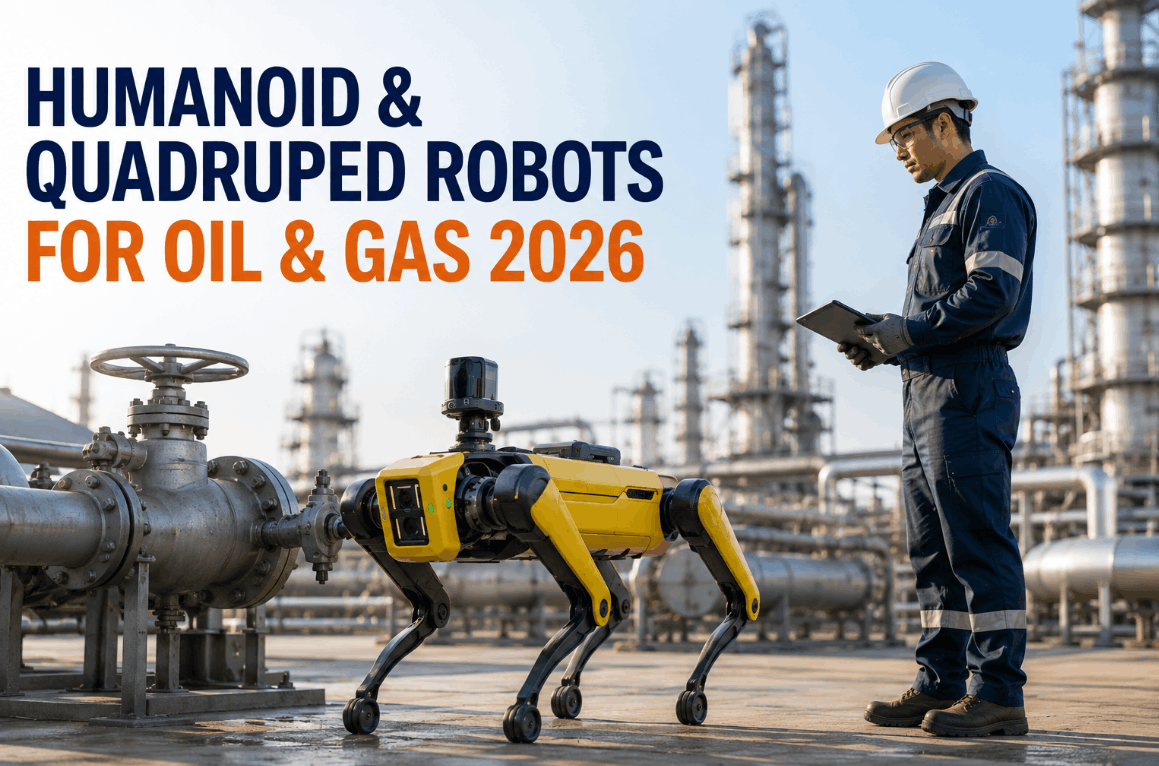
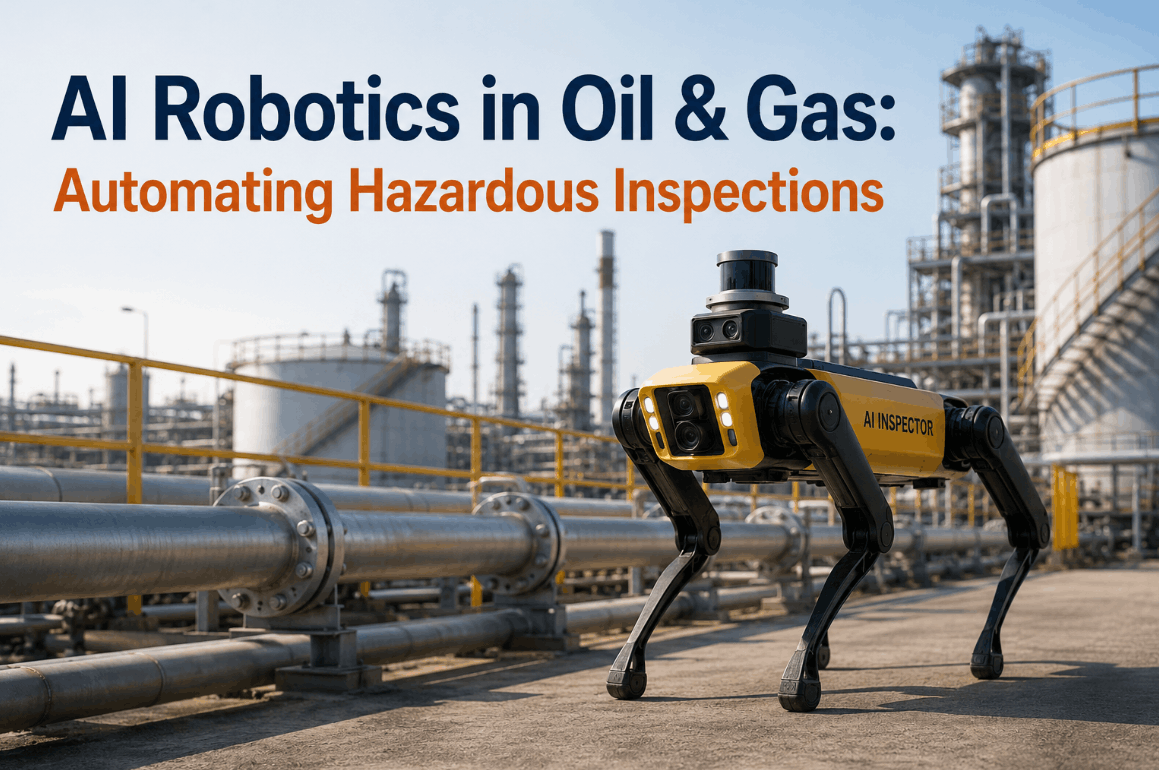
The global oil and gas industry crossed a structural threshold in 2025: robotic inspection, autonomous patrol, and AI-driven asset integrity programs moved from pilot projects to permanent capital line items at every major operator. Saudi Aramco, ADNOC, ExxonMobil, BP, Shell, TotalEnergies, and Chevron are now competing not just on reserves and refining capacity, but on the depth and maturity of their robotic deployment programs — because the operators running the most capable autonomous inspection fleets are achieving measurable advantages in safety performance, maintenance cost, and regulatory compliance that directly affect operating margins. This 2026 scorecard benchmarks each oil major's robotic deployment program across five dimensions — fleet composition, deployment scale, AI integration depth, safety ROI documentation, and operational coverage — and explains how iFactory AI's industrial intelligence platform connects these robotic assets to the performance analytics infrastructure that turns fleet investment into verified, board-ready operational outcomes. Book a Demo to see how iFactory AI structures robot fleet analytics for oil and gas operators at any scale.
Oil Major Robotics 2026: Deployment Scorecard
A cross-operator benchmarking framework comparing quadruped, drone, crawler, and AUV deployment across the world's largest oil and gas companies — and how AI fleet management platforms convert robotic data into measurable operational ROI.
Why Robot Fleet Depth Is Now a Competitive Differentiator for Oil Majors
Every oil major now operates robots. The differentiation in 2026 is not whether a company has deployed quadruped inspection platforms or inspection drones — it is how deeply those robots are integrated with AI analytics infrastructure, how comprehensively their findings feed into maintenance workflows, and whether the safety and efficiency data they generate is being structured into the kind of board-ready performance documentation that affects insurance premiums, IOGP prequalification scores, and regulatory standing. Book a Demo to see how iFactory AI closes the gap between robotic data collection and operational ROI at operating oil and gas facilities.
Safety Exposure Reduction
Operators running mature robotic programs systematically eliminate confined-space entries, rope access deployments, and manned process-area patrols — reducing TRIR by 10–30% and generating the documented exposure-hour data that underwriters and IOGP auditors require for premium and prequalification decisions.
Maintenance Cost Compression
AI-integrated robotic inspection programs shift maintenance from reactive to condition-based, avoiding the catastrophic equipment failures that cost $2M–$15M per event at offshore platforms and major refineries. The operators with the deepest AI analytics integration are achieving 15–35% reductions in unplanned maintenance expenditure.
Regulatory & Compliance Standing
Robotic inspection programs that generate audit-ready digital records — OSHA PSM compliance trails, API RP 754 process safety event logs, BSEE offshore inspection records — directly reduce regulatory penalty exposure and improve standing in national operator prequalification programs across Saudi Arabia, UAE, UK, and US jurisdictions.
Emissions Monitoring Integration
Drone and quadruped platforms equipped with methane sensors, OGI cameras, and VOC detectors are becoming the primary continuous emissions monitoring infrastructure for upstream and midstream assets — directly feeding EPA Subpart W reporting and net-zero pathway documentation with verified, timestamped measurement data.
The 2026 Oil Major Robot Fleet Scorecard
The scorecard below benchmarks seven major oil and gas operators across five deployment dimensions. Ratings reflect documented program scale, AI integration depth, and operational coverage as of mid-2026, based on publicly disclosed deployments, technology partnership announcements, and investment commitments. Book a Demo to see how iFactory AI integrates with the robotic platforms deployed by each of these operators.
| Oil Major | Primary Platforms | Key Deployment Sites | AI Integration | Fleet Scale | Scorecard Rating |
|---|---|---|---|---|---|
| Saudi Aramco | SAIR magnetic crawler, Boston Dynamics Spot, inspection drones, Micropolis patrol robots | Khurais field, Abqaiq terminal, GOSPs, tank farms, offshore platforms | EXPEC ARC AI integration, acoustic MCSA tramp detection, Vision 2030 autonomous patrol | Enterprise Scale | 9.2 / 10 |
| ADNOC | Gecko Robotics crawlers, Spot quadrupeds, heavy-duty gas plant robots, AUVs, inspection drones | Taweelah gas plant, ADNOC Gas facilities, 28 upstream producing fields, offshore assets | ENERGYai agentic AI ($340M), AIQ Cantilever platform, HSE Cockpit.ai, AiPSO production AI | Enterprise Scale | 9.0 / 10 |
| ExxonMobil | Boston Dynamics Spot, inspection drones, autonomous drilling systems | Beaumont refinery, Guyana offshore, Gulf of Mexico operations, Permian Basin | AI-powered predictive maintenance, digital twin integration, autonomous drilling optimization | Advanced Program | 8.4 / 10 |
| BP | Energy Robotics Spot deployments, inspection drones, ROV fleets, BVLOS surveys | Aberdeen North Sea platforms, Gulf of Mexico, Whiting refinery, Azerbaijan offshore | Energy Robotics AI software platform, autonomous inspection scheduling, digital twin operations | Scaling Program | 7.8 / 10 |
| Shell | ANYmal X quadrupeds, inspection drones, subsea AUVs, BVLOS pipeline survey | Pernis refinery, North Sea platforms, Nigeria onshore, LNG terminals | Energy Robotics platform, AI vision inspection, automated anomaly detection, digital twin | Scaling Program | 8.1 / 10 |
| TotalEnergies | SPICE AUV, inspection drones, Spot quadrupeds, subsea crawler systems | North Sea platforms, West Africa offshore, LNG terminals, European refineries | Autonomous subsea inspection AI, drone data analytics, Petrobras collaboration on offshore robotics | Advanced Program | 7.9 / 10 |
| Chevron | Autonomous inspection drones, robotic drilling systems, resident inspection platforms | Gulf of Mexico deep-water, Permian Basin, West Africa, Kazakhstan Tengiz | AI-driven drilling at 20,000 psi, autonomous operations program, methane detection robotics | Scaling Program | 7.6 / 10 |
Platform-by-Platform: How the Leading Fleets Stack Up
A deeper look at the robotic platform strategies, AI integration approaches, and operational outcomes at the four most advanced oil major deployments in 2026.
Saudi Aramco: The Deepest Indigenous Fleet
Aramco's robotic strategy is distinguished by indigenous technology development. The SAIR magnetic crawler — invented at KAUST and licensed to Arabian Robotics Company — conducts ultrasonic thickness gauging, visual inspection, and gas sensing on tanks, pipes, and offshore structures. Simultaneously, Aramco's EXPEC Advanced Research Center has integrated acoustic Motor Current Signature Analysis to detect tramp metal and bearing anomalies in real time. A December 2025 LOI with Micropolis and QSS Robotics outlined intent to deploy up to 500 autonomous security patrol robots across Aramco industrial zones aligned with Vision 2030 localization targets.
ADNOC: The AI-First Deployment Model
ADNOC's 2025–2026 program is the most AI-integrated robotic deployment among global oil majors. The $340 million ENERGYai agentic AI contract with AIQ covers all 28 upstream producing fields, while the November 2025 partnership between ADNOC Gas, AIQ, and Gecko Robotics integrates Gecko's crawler robots with the Cantilever AI platform to digitize the complete inspection-to-decision workflow. ADNOC's HSE Cockpit.ai has demonstrably reduced safety incidents at deployed facilities, and the group's new heavy-duty gas plant robot — rated for -20°C to 60°C operation — is targeted for full deployment before end of 2026, combining remote-controlled and fully autonomous operating modes.
ExxonMobil: Refinery and Deep-Water Integration
ExxonMobil's robotic program combines Boston Dynamics Spot deployments at the Beaumont refinery and other U.S. Gulf Coast facilities with autonomous systems in its Guyana deep-water program and Permian Basin operations. The company has integrated robotic inspection data into its digital twin infrastructure for Beaumont and has piloted AI-powered predictive maintenance across its compressor and heat exchanger asset base. ExxonMobil was also an early participant in the OOC Oil & Gas Blockchain Consortium alongside Chevron, demonstrating integration ambitions that extend beyond individual asset monitoring to supply-chain-level data integrity.
BP & Shell: The Energy Robotics Platform Approach
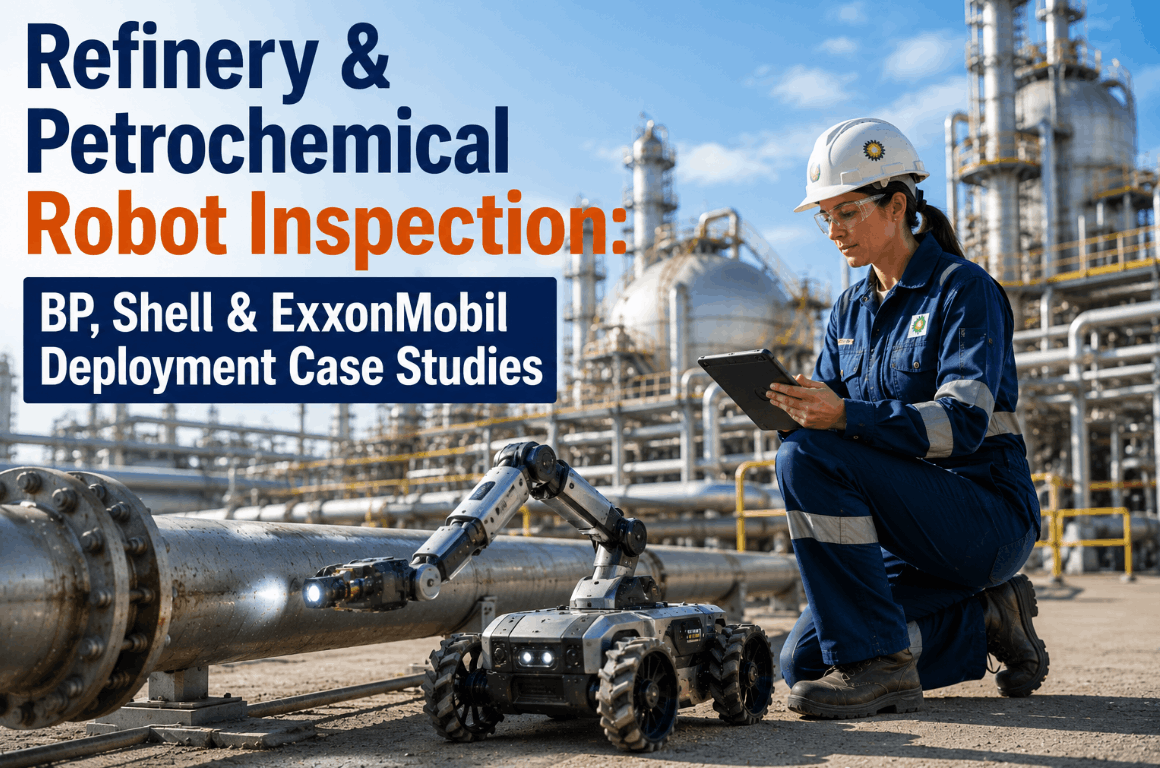
Both BP and Shell have adopted Energy Robotics' hardware-agnostic AI software platform as the intelligence layer above their physical robot fleets — enabling multi-vendor robotic assets (Spot, ANYmal X, custom inspection platforms) to feed a single autonomous inspection scheduling and anomaly detection system. Shell's ANYmal X deployments at Pernis refinery and North Sea platforms have completed over a million inspections across five continents through the Energy Robotics platform. BP's Aberdeen North Sea program has demonstrated the viability of BVLOS drone operations for offshore structural inspection. Energy Robotics secured $13.5M Series A in October 2025 specifically to scale this deployment model.
Performance Benchmarks: What Leading Robot Fleets Deliver
The operational outcomes documented across oil major robotic programs in 2025–2026 establish a performance benchmark set for operators evaluating the business case for fleet investment. These figures represent documented outcomes from publicly disclosed deployments at Aramco, ADNOC, BP, Shell, and TotalEnergies facilities.
How iFactory AI Connects Robot Fleet Data to Operational ROI
The gap that separates oil majors with world-class robotic ROI from those still treating robots as demonstration projects is not the robot hardware — it is the analytics infrastructure that converts inspection data into work orders, safety metrics into board reports, and fleet telemetry into predictive maintenance recommendations. iFactory AI provides the operational intelligence layer that makes robotic fleet investment financially measurable. Book a Demo to see how iFactory integrates with Boston Dynamics Spot, ANYmal X, Gecko Robotics crawlers, and drone fleets at oil and gas facilities.
Connect Your Robot Fleet to iFactory AI — Live in 7 Days
iFactory integrates with Boston Dynamics Spot, ANYmal X, Gecko Robotics, Energy Robotics, and custom drone and crawler platforms — connecting your robotic inspection data to automated work orders, TRIR tracking, and board-ready safety ROI documentation without replacing your existing CMMS or DCS infrastructure.
"The robotic platforms we deployed — Spot at the refinery, drones offshore, and crawlers in the tank farm — were generating inspection data that was ten times more granular than our manual rounds had ever produced. But for the first twelve months, that data was going into inspection reports that maintenance planners reviewed manually, three days after the inspection happened. When we integrated iFactory AI across the fleet, the inspection findings went directly into CMMS work orders in real time, the safety exposure hours were being logged automatically against our TRIR calculation, and our insurance underwriter received a structured safety ROI report at renewal that showed a 26% TRIR reduction attributable to specific robotic task substitutions. That documentation got us an 18% reduction in our P&C premium. The robots were always doing the work — iFactory made it financially legible."
Conclusion: Robot Fleet Scale Is the Starting Line — AI Integration Is the Finish
The 2026 oil major robot fleet scorecard makes one strategic point clearly: every major operator has crossed the deployment threshold. Aramco is running SAIR crawlers and Spot quadrupeds at GOSPs and tank farms. ADNOC has committed $340 million to agentic AI integration across 28 producing fields and signed multi-year robotics partnerships with Gecko and AIQ. ExxonMobil, BP, Shell, TotalEnergies, and Chevron all have permanent autonomous inspection programs at major facilities. The competitive question is no longer whether to deploy robots — it is whether the robotic data those programs generate is being structured into the operational intelligence, safety documentation, and predictive maintenance recommendations that convert fleet investment into measurable financial return. iFactory AI is the platform that answers that question affirmatively — connecting any robotic fleet, from any OEM, at any oil and gas facility, to the analytics infrastructure that makes robotic investment financially legible and operationally transformative.
Frequently Asked Questions
Q: Which oil major has the most advanced robotic inspection fleet in 2026?
Saudi Aramco and ADNOC lead on indigenous technology development and AI integration depth respectively, with ADNOC's $340M ENERGYai deployment and Gecko Robotics partnership representing the deepest AI-robotics integration among global operators as of mid-2026.
Q: Does iFactory AI work with Boston Dynamics Spot and ANYmal X robots already deployed at oil and gas sites?
Yes — iFactory integrates with Spot, ANYmal X, Gecko Robotics crawlers, Energy Robotics platform deployments, and inspection drone fleets through standard API and MQTT interfaces, connecting existing robotic assets to automated work order generation and safety ROI documentation without hardware replacement.
Q: How does iFactory generate TRIR documentation from robotic inspection data for insurance submissions?
iFactory logs each robotic task substitution against its manned task equivalent, timestamps exposure-hour credits, and generates a structured TRIR/LTIR trend report formatted for P&C underwriter submission at insurance renewal — the same documentation format that produced an 18% premium reduction in documented deployments.
Q: Can iFactory support multi-vendor robotic fleets running Spot, drones, and crawlers simultaneously?
Yes — iFactory's hardware-agnostic integration layer connects multi-vendor robot fleets to a single operational intelligence dashboard, matching the approach used by BP and Shell through the Energy Robotics platform and allowing cross-fleet benchmarking and unified CMMS integration.
Q: How quickly can iFactory AI be activated at a facility that already has a deployed robotic inspection fleet?
For facilities with an existing robotic fleet and a historian or CMMS system, iFactory's integration is typically live within 7 days — connecting robotic inspection logs, activating automated work order generation, and initiating TRIR tracking from historical robot data immediately.
Your Robot Fleet Is Already Generating the Data. iFactory Makes It Count.
Connect your Spot, ANYmal X, Gecko, or drone fleet to iFactory AI's industrial intelligence platform — automated work orders, TRIR documentation, predictive maintenance, and board-ready safety ROI, live in 7 days.