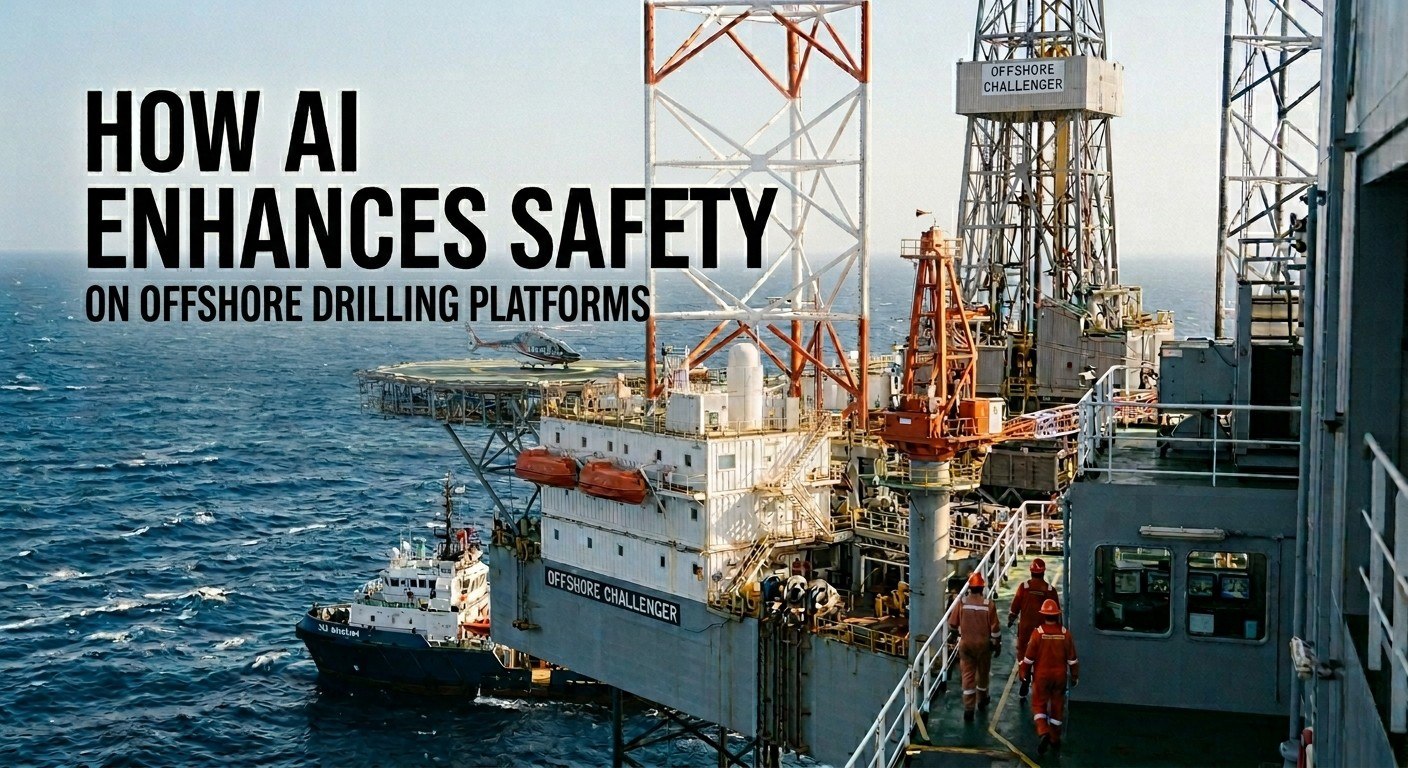
Offshore oil and gas platforms represent the highest-risk human work environment on earth — extreme weather, toxic atmospheres, confined spaces, and 24/7 production pressure combine to create an environment where robotic intervention is not a future aspiration but an operational necessity. In 2026, the deployment of coordinated humanoid and quadruped robot teams on FPSOs, fixed platforms, and semi-submersibles is redefining what marine asset maintenance looks like. Where quadruped robots patrol decks and read gauges autonomously, humanoid platforms enter confined spaces to perform valve operations and structural NDT that were previously impossible without manned entry. If your offshore operation is still sending personnel into Class 1 hazardous zones for routine inspections, you are carrying a preventable safety and cost liability. To see how iFactory's AI-driven Robotics platform is deployed on offshore assets, Book a Demo with our offshore robotics engineering team today.
Why Offshore Platforms Represent the Highest-ROI Robotic Deployment Environment
The Convergence of Risk, Remoteness, and Regulatory Pressure
No industrial environment concentrates hazard and maintenance complexity the way an offshore production platform does. Personnel transfer costs alone — helicopter and vessel logistics — can run $5,000 to $20,000 per technician visit in North Sea and Gulf of Mexico operations. When a routine inspection requires a confined-space entry team, the cost, scheduling lead time, and safety case burden multiply further. Simultaneously, aging FPSO fleets, stricter IADC and OPITO safety regulations, and the drive toward minimum-manning or unmanned platforms are forcing operators to re-examine every task that currently requires a human body on deck. The economic case for humanoid and quadruped robot teams is not marginal — it is structural. Platforms that deploy coordinated robot fleets remove the highest-frequency, highest-risk human exposures while generating continuous sensor data that a crew of engineers can never replicate.
Quadruped Robots on Offshore Decks — What They Do and Why They Excel
From Boston Dynamics Spot to ANYmal X — Proven Marine Deployments
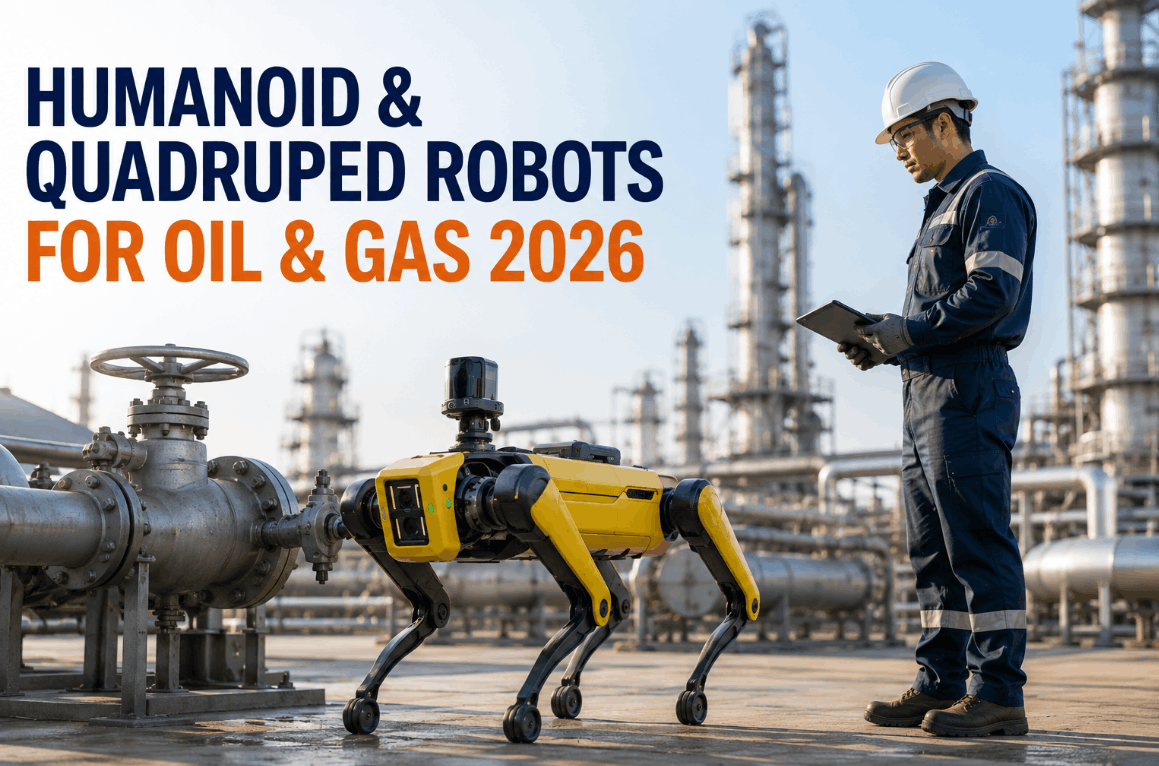
Quadruped robots have emerged as the dominant ground platform for topsides inspection because their leg-based locomotion handles the irregular geometry of offshore decks — stairs, gratings, pipe racks, and low-clearance underdeck corridors — with far greater reliability than wheeled platforms. Boston Dynamics' Spot has seen multiple offshore deployments reading gauges, detecting gas leaks, and performing acoustic anomaly detection on rotating machinery. ANYbotics' ANYmal X is currently the only ATEX-certified quadruped for Zone 1 hazardous areas, making it the standard for deployment near wellheads and process trains where explosive atmospheres are a live risk. These platforms carry visual and thermal cameras, 20x optical zoom, gas detection sensors, onboard microphones, and 3D LiDAR with SLAM navigation — generating a living digital twin of the platform with every patrol cycle. For operators who want to understand how this data feeds a predictive maintenance engine, Book a Demo to see iFactory's offshore robotics integration in action.
| Inspection / Maintenance Task | Quadruped Robot | Humanoid Robot | Primary Benefit |
|---|---|---|---|
| Topsides gauge reading and patrol | Primary Platform | Secondary | Continuous, autonomous, low-cost coverage |
| Confined-space tank entry (COT / WBT) | Not Suitable | Primary Platform | Eliminates manned confined-space entry |
| Valve actuation and isolation | Limited (Spot Arm) | Full Dexterity | Manipulation in human-engineered environments |
| Thermal and visual deck inspection | Primary Platform | Secondary | Stable multi-sensor payload on legs |
| Structural NDT (UT / wall thickness) | Limited Access | Primary Platform | Precise probe placement in tight geometries |
| Gas leak detection (Zone 1 areas) | ATEX Certified | Emerging Certification | Certified safety case compliance |
| Corrosion mapping — deck and hull | Deck Level | Multi-Angle Access | Comprehensive structural integrity data |
Humanoid Robots in Offshore Confined Spaces — The Critical Frontier
Cargo Oil Tanks, Ballast Tanks, and Furnace Basements Without Human Entry
The most dangerous maintenance tasks on an FPSO or production platform are not on the open deck — they are inside the asset. Cargo oil tank inspections, water ballast tank surveys, and riser base access have historically required confined-space entry teams with gas monitors, breathing apparatus, and rescue standby crews. Shell's FPSO Turritella demonstrated the first fully robotic cargo oil tank inspection using integrated drone and robotic platforms, winning the 2024 Craig Black Innovation and Technology Award and eliminating all manned entry for that inspection campaign. Humanoid platforms extend this capability further — their bilateral arm architecture, upright stance, and dexterous manipulation allow them to navigate human-engineered interior geometry, operate hand valves, deploy UT probes on overhead structures, and perform tasks that neither quadrupeds nor drones can complete. When corrosion data from these inspections is integrated into iFactory's digital twin, predictive maintenance decisions can be made with full structural context — not just topsides sensor readings. Operators managing aging FPSO fleets in the Gulf of Mexico or North Sea should consider how this changes the integrity management calculus significantly.
Salt Spray Durability — Engineering for the Marine Offshore Environment
Why Offshore Robot Fleets Require Purpose-Built Hardening
The iFactory Offshore Robotics Deployment Framework
A 5-Step Pathway from Pilot to Fully Autonomous Platform Operations
Failure Mode Cost Profile — Offshore Platform Without Robotic Inspection
The Annualized Risk of Reactive Maintenance on Marine Production Assets
The following table quantifies the operational cost exposure for a mid-size offshore production platform (approximately 50,000 BOE/day) operating without a robotics-assisted predictive maintenance program. These figures represent documented industry ranges for the North Sea and Gulf of Mexico operating environments.
| Failure Mode | Detection Method (Current) | Robotic Detection Capability | Annualized Cost Range |
|---|---|---|---|
| Rotating Equipment Bearing Failure | Manual Vibration Rounds | Continuous Acoustic AI Monitoring | $380K – $1.2M |
| Confined-Space Corrosion (COT / WBT) | 5-Year Classification Survey | Annual Humanoid UT Survey | $200K – $800K |
| Gas Leak in Zone 1 Area | Manual Snoop / Periodic Walkdown | Continuous ATEX Quadruped Gas Monitoring | $150K – $2.5M+ |
| Valve Seal Failure (Process) | Scheduled Maintenance Only | Thermal + Acoustic Anomaly Detection | $90K – $450K |
| Heat Exchanger Fouling (Underdeck) | Quarterly Manual Inspection | Humanoid Thermal Imaging + AI Trend | $120K – $380K |
| Hull Structural Anomaly (Undiscovered) | Dry-Dock Survey Only | In-Service ROV + Humanoid NDT | $500K – $5M+ |
Safety Case Integration — How Robot Deployments Satisfy IADC and OPITO Requirements
Regulatory Compliance as a Driver of Robotic ROI
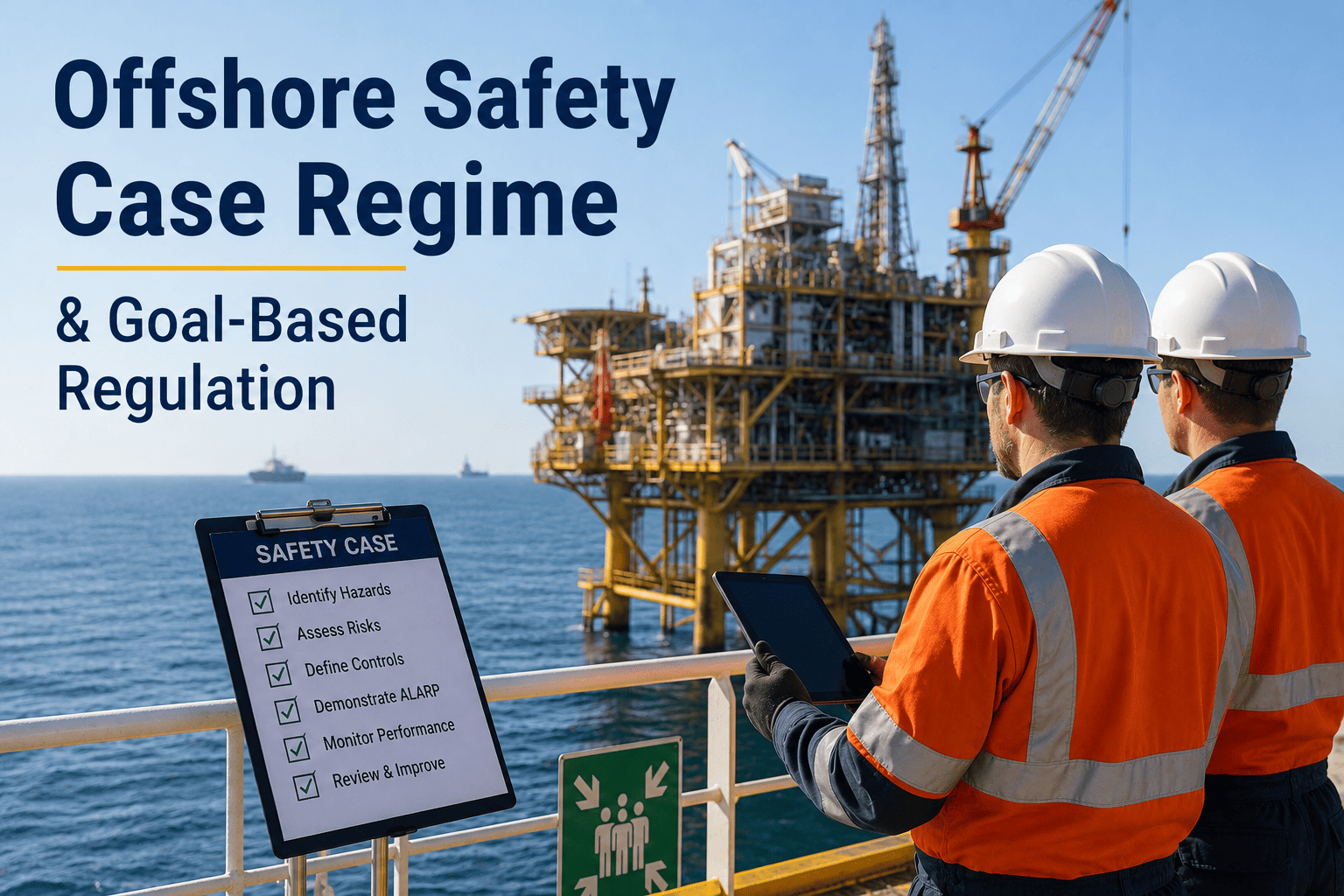
One of the most significant barriers operators cite for offshore robot deployment is the safety case and regulatory integration burden. IADC guidelines, OPITO competency frameworks, and national offshore regulatory bodies (BSEE in the US, NSTA in the UK) each require documented justification for changes to the inspection regime. iFactory's deployment methodology includes a structured Safety Case Evidence Package that maps robot-collected data against the inspection intervals and documentation requirements of the original safety case — enabling operators to formally substitute robotic inspection for manned inspection where evidence quality is equivalent or superior. In practice, robot-collected data is often more comprehensive than manual inspection records because it is timestamped, georeferenced, and delivered in structured formats compatible with integrity management systems. Operators who have integrated robotic inspection data into their safety cases have also found it streamlines regulatory audit preparation, as the unbroken, timestamped data record provides auditors with evidence that no manual inspection log can match. For a structured overview of how iFactory supports the offshore safety case process, Book a Demo with our compliance engineering team.
Frequently Asked Questions
Can quadruped robots operate autonomously on a live production platform without continuous human supervision?
Yes — platforms like ANYmal X are designed for fully autonomous patrol with onshore remote monitoring, executing pre-configured inspection waypoints without an onboard operator. iFactory's AI layer provides real-time anomaly alerting to the remote operations center when the robot detects an out-of-specification reading.
What is the typical commissioning time for a robot fleet on an offshore platform?
With a pre-built LiDAR point-cloud model of the facility, commissioning can be completed in 2 to 3 days — as demonstrated by Equinor's ANYmal deployment at their Northern Lights facility in 2024. Without a pre-built model, initial commissioning typically takes 1 to 2 weeks.
How does iFactory's platform handle data from multiple robot types — quadrupeds, humanoids, and drones — simultaneously?
iFactory's AI data fusion layer normalizes sensor streams from heterogeneous robot platforms into a unified digital twin, correlating spatial data from different asset types to build a complete picture of platform condition in real time.
Are humanoid robots certified for ATEX Zone 1 offshore hazardous areas?
Full Zone 1 ATEX certification for humanoid platforms is still in development as of 2026, with most current humanoid deployments limited to Zone 2 areas or non-hazardous confined spaces. Quadruped platforms like ANYmal X currently hold Zone 1 certification for production-area patrol.
What is the ROI timeline for an offshore platform robotic inspection program?
Most operators achieve full program ROI within 12 to 18 months, driven by avoided manned entry costs, reduced crew-change helicopter flights, and early detection of equipment failures that would otherwise result in unplanned production shutdown.
Conclusion
The deployment of coordinated humanoid and quadruped robot teams on offshore production platforms is no longer an experimental initiative reserved for major operators with large R&D budgets. In 2026, it is a commercially proven, regulatory-accepted approach that is actively reducing personnel risk, extending equipment life, and lowering operating costs on assets across the North Sea, Gulf of Mexico, and beyond. The key operational insight is that quadrupeds and humanoids are complementary rather than competing platforms — quadrupeds deliver continuous topsides surveillance while humanoids access the confined geometries that no other mobile robot can navigate. When both are integrated with an AI data fusion and predictive maintenance layer like iFactory's platform, the combined intelligence output exceeds what any crewed inspection program can realistically deliver at equivalent frequency. Offshore operators who are evaluating their path toward minimum-manning or next-generation asset integrity management should treat robotics not as a cost center but as a strategic platform investment with measurable, near-term returns.