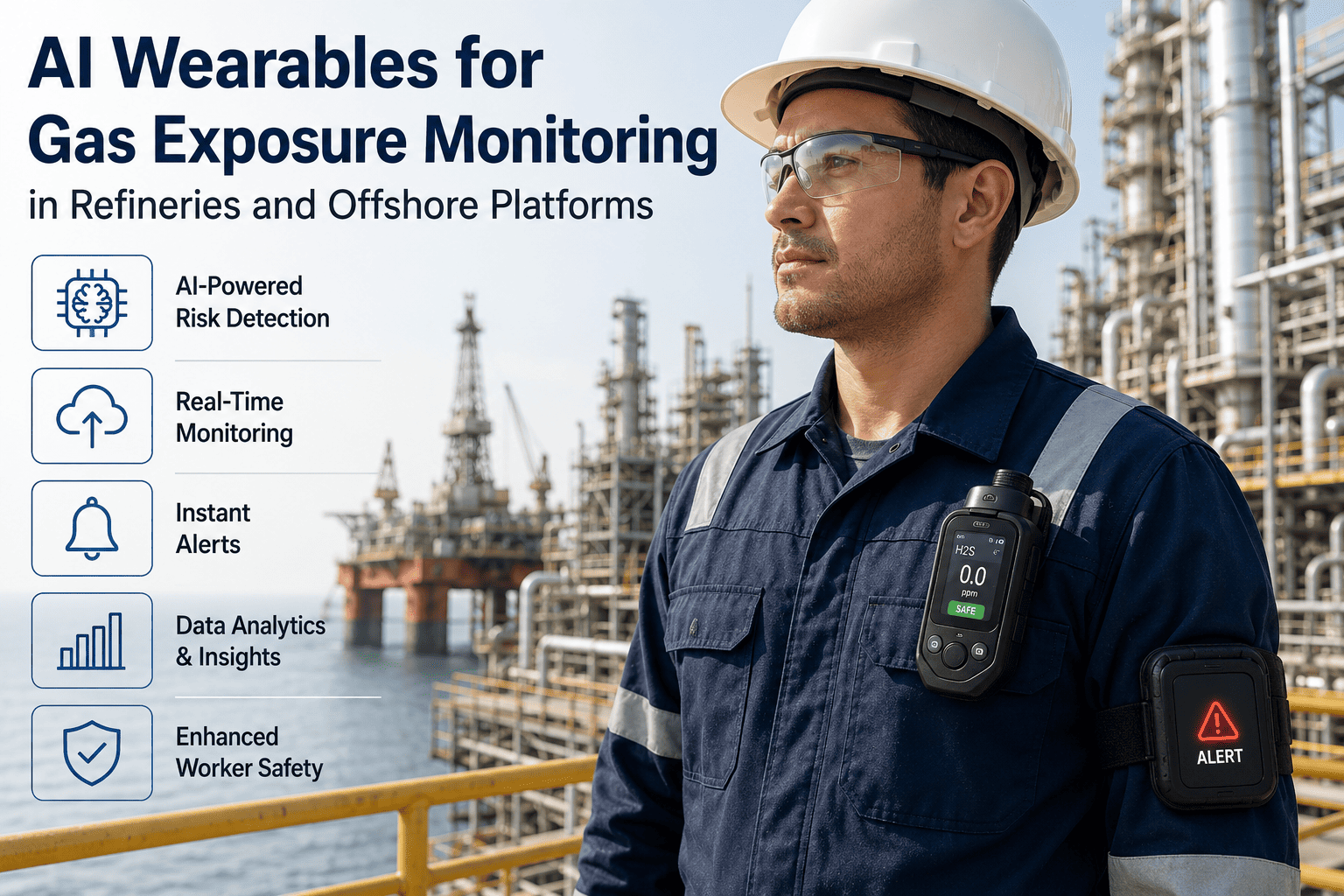
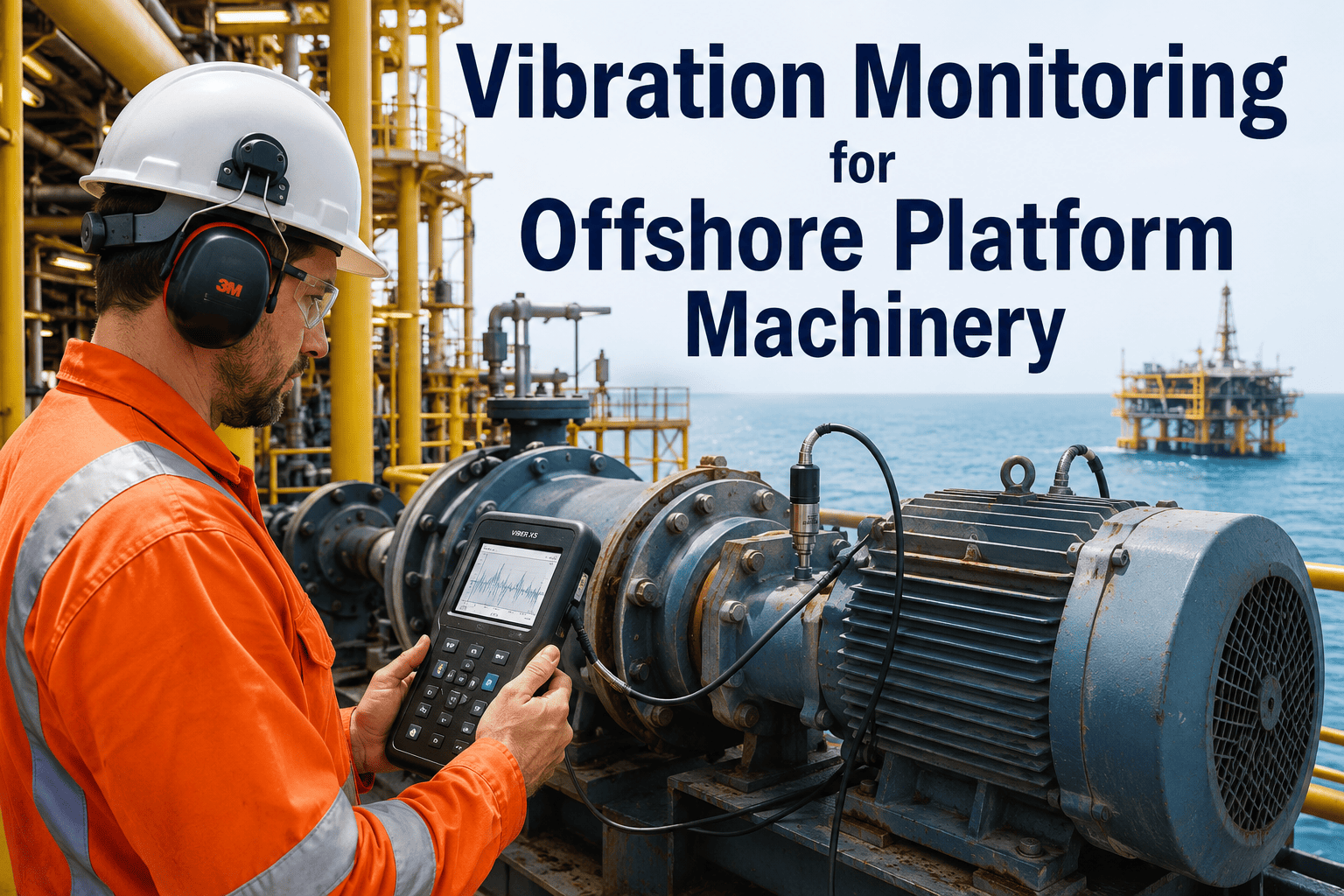
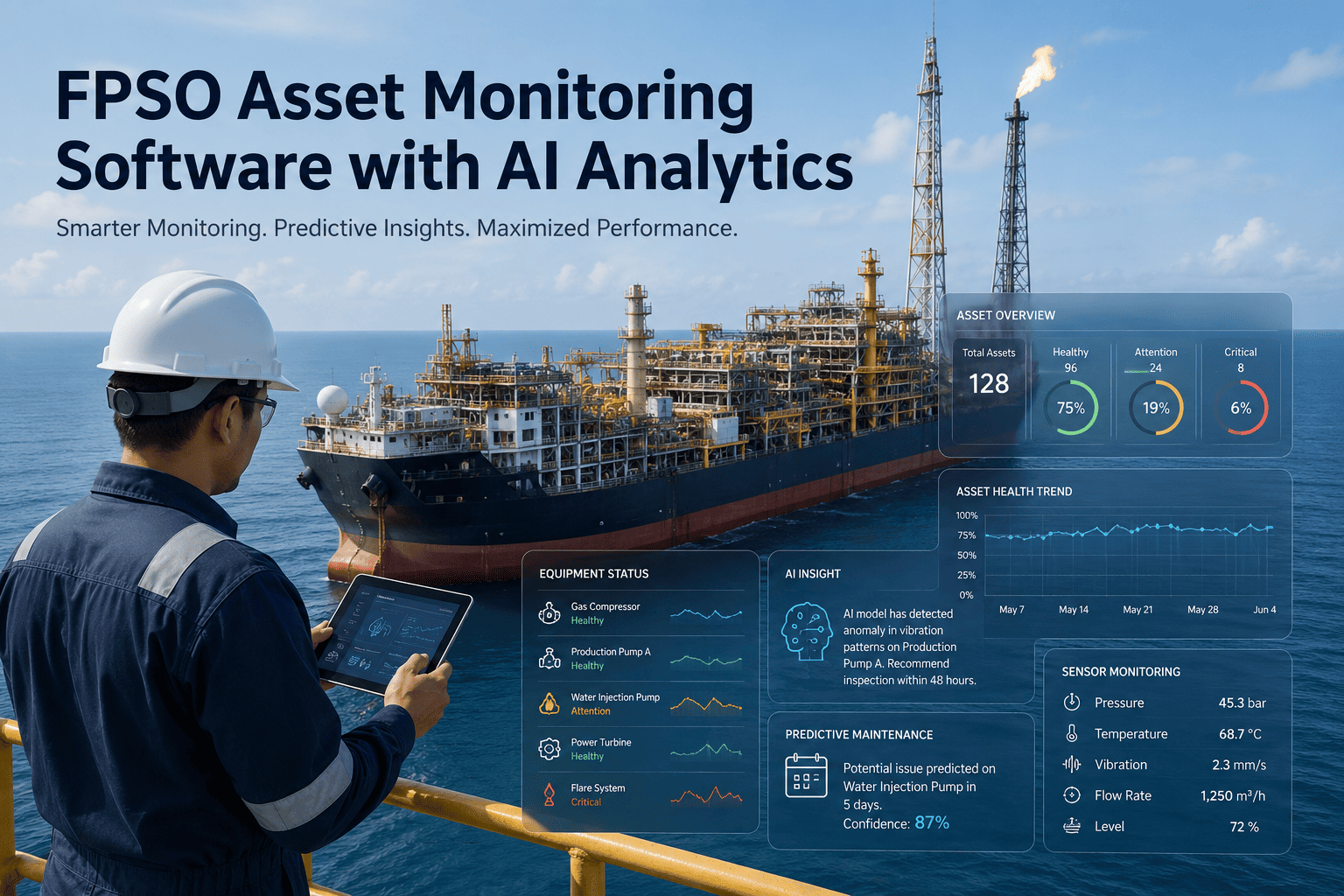
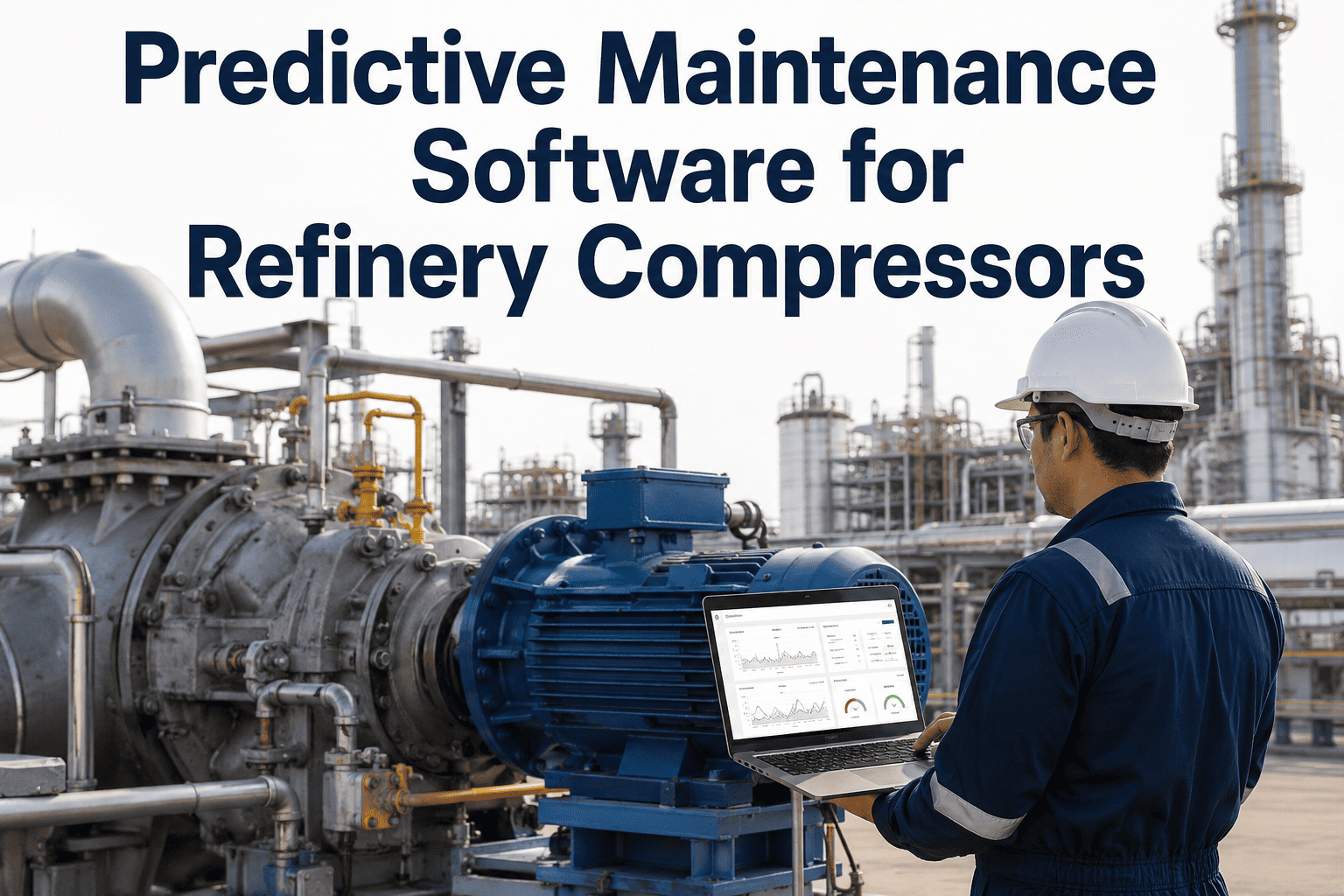
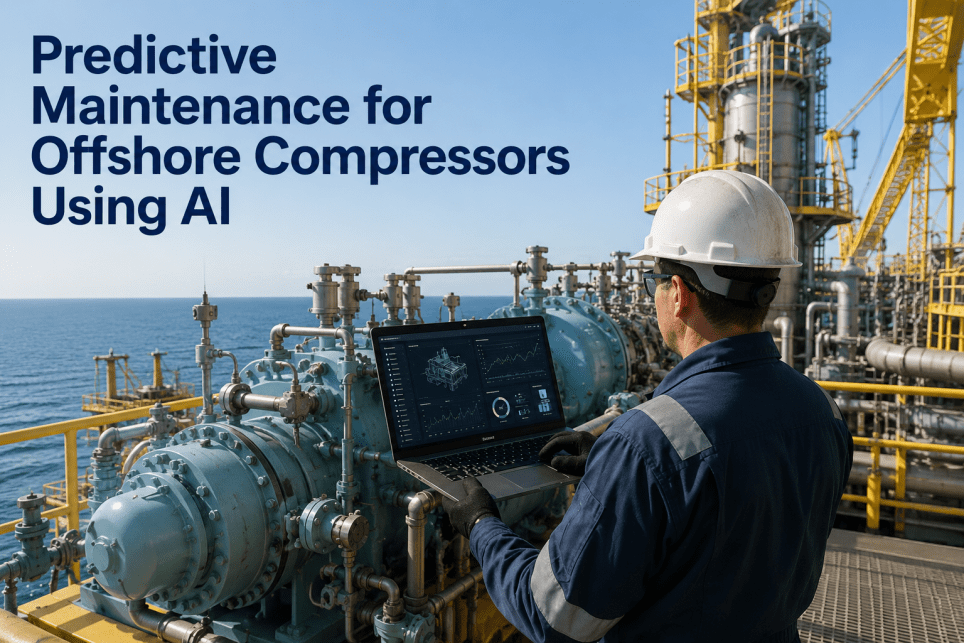
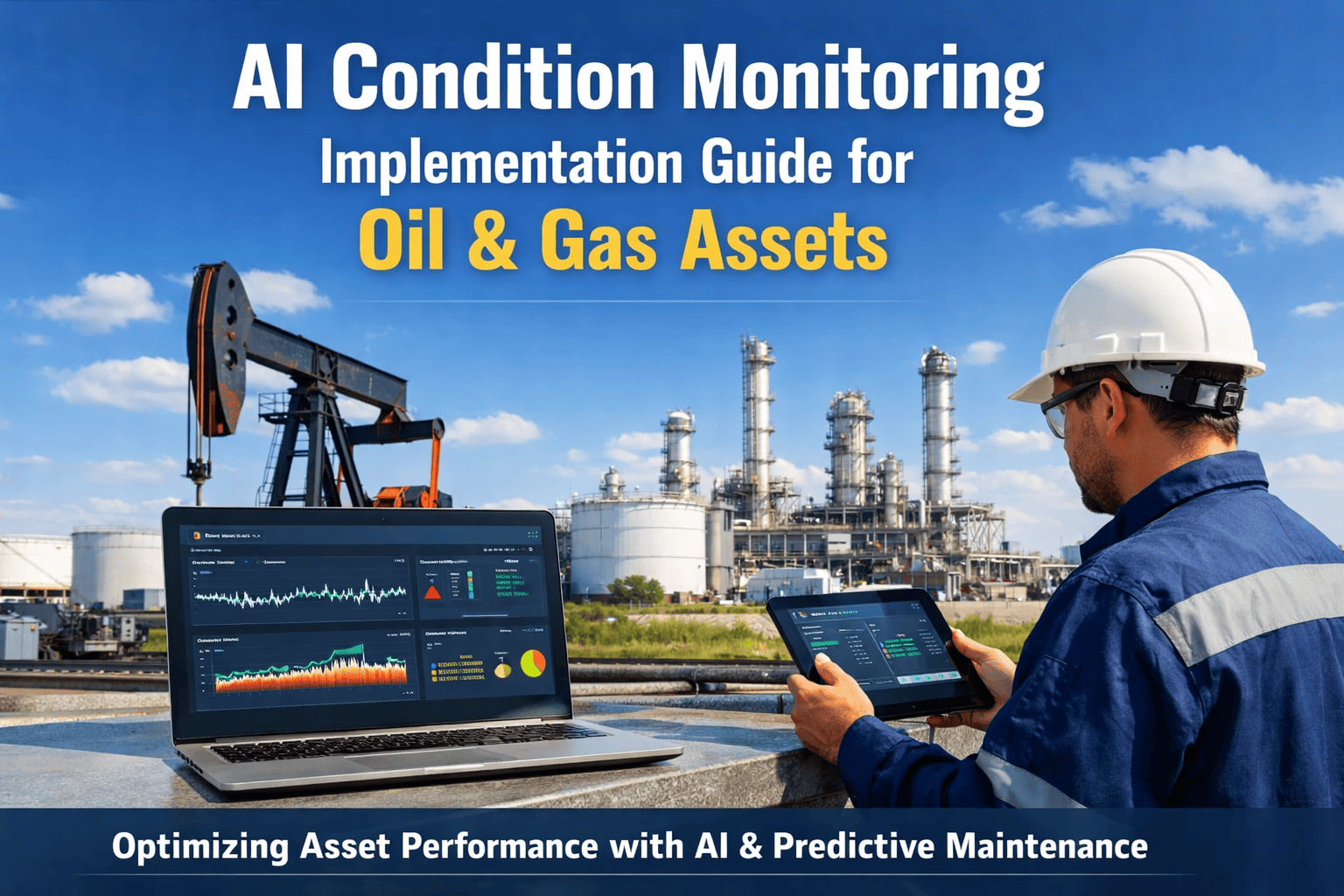
An offshore platform doesn't get the luxury of a quick parts run when a compressor fails. Every piece of critical equipment sits hours from shore by helicopter or boat, which turns a routine pump seal failure into a multi-day production stoppage the moment it happens without warning. Operators running AI-driven predictive maintenance across deepwater and shelf platforms have already shown this gap is closable: one major operator's offshore program detected the majority of pump disruptions roughly two days before failure across a fleet spanning thousands of assets. Reliability teams that want to see this kind of advance warning mapped against their own platform equipment list can book a demo before their next planned maintenance window.
Offshore Operations · Predictive Maintenance
Predict Offshore Equipment Failures Before the Helicopter Has to Fly
AI maintenance analytics for compressors, pumps, cranes, and generators that turns emergency mobilizations into planned maintenance windows.
Why an Offshore Failure Costs More Than an Onshore One
The same compressor failure that costs a few hours of onshore downtime can cost days offshore, once you factor in mobilizing a crew, weather windows, and the logistics of getting parts to a platform miles from the nearest supply base. Compressor station and rotating equipment failures in comparable production environments have been documented to cost between $180,000 and $340,000 per day in lost production, and offshore logistics only stretch that timeline further.
70%
Of pump disruptions detected roughly two days ahead in one large-scale offshore AI deployment
25%
Typical reduction in unplanned downtime once predictive alerts replace reactive response
10,000+
Offshore assets, including turbines, compressors, and subsea valves, covered under a single monitoring program
The Equipment Classes That Matter Most Offshore
Not every asset on a platform needs the same monitoring intensity. These are the classes where predictive maintenance delivers the clearest, fastest-proven results.
Gas Compressors
Vibration and thermal trends flag bearing wear and seal degradation weeks before a compressor train has to be shut down unexpectedly.
Production Pumps
Cavitation, seal wear, and impeller degradation show up in condition data long before a pump actually stops moving fluid.
Power Generation Turbines
Continuous monitoring of load, temperature, and vibration protects the generation assets an entire platform depends on for power.
Cranes & Lifting Equipment
Structural and mechanical stress indicators help schedule inspection and maintenance before a safety-critical lifting failure occurs.
Subsea Valves
Actuation performance and response time trends are tracked even on equipment that's physically inaccessible for routine manual inspection.
Emergency Generators & Safety Systems
Backup power and safety-critical systems get the same continuous scrutiny as production equipment, since their failure mode is rarely acceptable.
From Sensor Signal to Scheduled Maintenance Window
1
Condition Data Streams From Every Monitored Asset
Vibration, temperature, and pressure sensors on compressors, pumps, and turbines feed data continuously, even across remote and subsea equipment.
2
AI Models Trained on Failure History Flag Deviations
Machine learning models compare live readings against historical failure signatures across similar equipment classes to catch early degradation.
3
A Prioritized Alert Reaches the Onshore Planning Team
Instead of a general warning, the alert includes the specific failure mode, expected time to failure, and required parts and crew.
4
Maintenance Is Scheduled Into the Next Weather Window
Planners coordinate crew mobilization and logistics around a known failure timeline instead of reacting to a sudden shutdown.
Reactive Offshore Maintenance vs. Predictive Maintenance
| Factor |
Reactive Maintenance |
Predictive Maintenance |
| Failure warning time |
Little to none; failure is discovered as it happens |
Days of advance notice on most rotating equipment |
| Crew mobilization |
Emergency helicopter or boat trip on short notice |
Scheduled into the next available weather window |
| Parts availability |
Often not on hand, adding days to the repair |
Verified and staged before the crew departs |
| Production impact |
Full unplanned shutdown until repair is complete |
Repair coordinated around planned downtime windows |
| Subsea & hard-to-reach assets |
Rarely monitored between scheduled inspections |
Continuously monitored through remote sensor data |
Every emergency mobilization offshore is a maintenance failure that predictive data could have prevented. If your platform is still reacting to breakdowns instead of scheduling around them, the cost difference is measured in days, not hours.
Offshore Reliability Perspective
Onshore, a failed pump means a delayed work order. Offshore, it can mean a helicopter, a weather delay, and a production shutdown that lasts until the next scheduled crew change. That asymmetry is exactly why predictive maintenance pays off faster in offshore environments than almost anywhere else in the industry. A two-day warning on a pump disruption doesn't just prevent a failure, it turns an emergency mobilization into a line item on next week's planned maintenance schedule.
Offshore Asset Integrity Lead — Deepwater and Shelf Production Platforms
Frequently Asked Questions
How does predictive maintenance work on equipment that's physically hard to reach, like subsea valves?
Subsea and hard-to-reach equipment is monitored through remote sensor data streamed via existing platform communication links rather than requiring physical access for every reading. Actuation performance, response times, and pressure trends are tracked continuously, which is often more coverage than a manual inspection schedule could provide given the access constraints. This makes predictive monitoring particularly valuable for equipment that would otherwise only get checked during a planned intervention.
Book a demo to see how remote asset classes are monitored on your platform layout.
How far in advance can failures actually be predicted offshore?
Advance warning varies by equipment class and failure mode, but rotating equipment like compressors, pumps, and turbines commonly shows detectable degradation patterns days to weeks before failure, with some documented offshore deployments catching the majority of pump disruptions roughly two days ahead. The exact window depends on how much historical failure data exists for a given asset class and how continuously it's monitored. Earlier detection generally comes with more sensor coverage and a longer operating history to train against.
Contact support to discuss expected warning windows for your specific equipment mix.
Does this require new sensors, or can it work with existing platform instrumentation?
Most platforms already have some level of vibration, temperature, and pressure instrumentation feeding a SCADA or DCS historian, and predictive maintenance typically starts by connecting to that existing data rather than requiring a full new sensor buildout. Gaps in coverage, particularly on smaller balance-of-plant equipment, can be filled with additional wireless sensors where needed. This keeps initial deployment cost and offshore installation logistics manageable.
Book a demo to review what your current instrumentation already supports.
How does this fit into limited offshore crew change and weather window scheduling?
Predictive alerts include an estimated time-to-failure window, which planners use to slot repairs into upcoming crew changes and favorable weather windows rather than requesting an emergency mobilization. This is one of the biggest practical advantages offshore, since favorable weather and available helicopter or boat slots are limited resources that reactive maintenance can't plan around. Coordinating maintenance this way significantly reduces both cost and safety exposure tied to emergency transport.
Contact support to discuss how alerts integrate with your existing logistics planning process.
What kind of ROI timeline should an offshore operator expect?
Because offshore downtime and emergency mobilization costs are significantly higher than onshore equivalents, offshore predictive maintenance programs often show measurable returns faster than comparable onshore deployments, primarily through avoided emergency mobilizations and reduced unplanned production loss. Typical reported reductions in unplanned downtime run around 25 percent once predictive alerts are acted on consistently. Exact payback depends on platform size, equipment count, and current failure frequency.
Book a demo to get a payback estimate based on your platform's asset count.
Turn Offshore Emergencies Into Planned Maintenance
See how AI-driven predictive maintenance gives your platform days of warning instead of an emergency helicopter call.