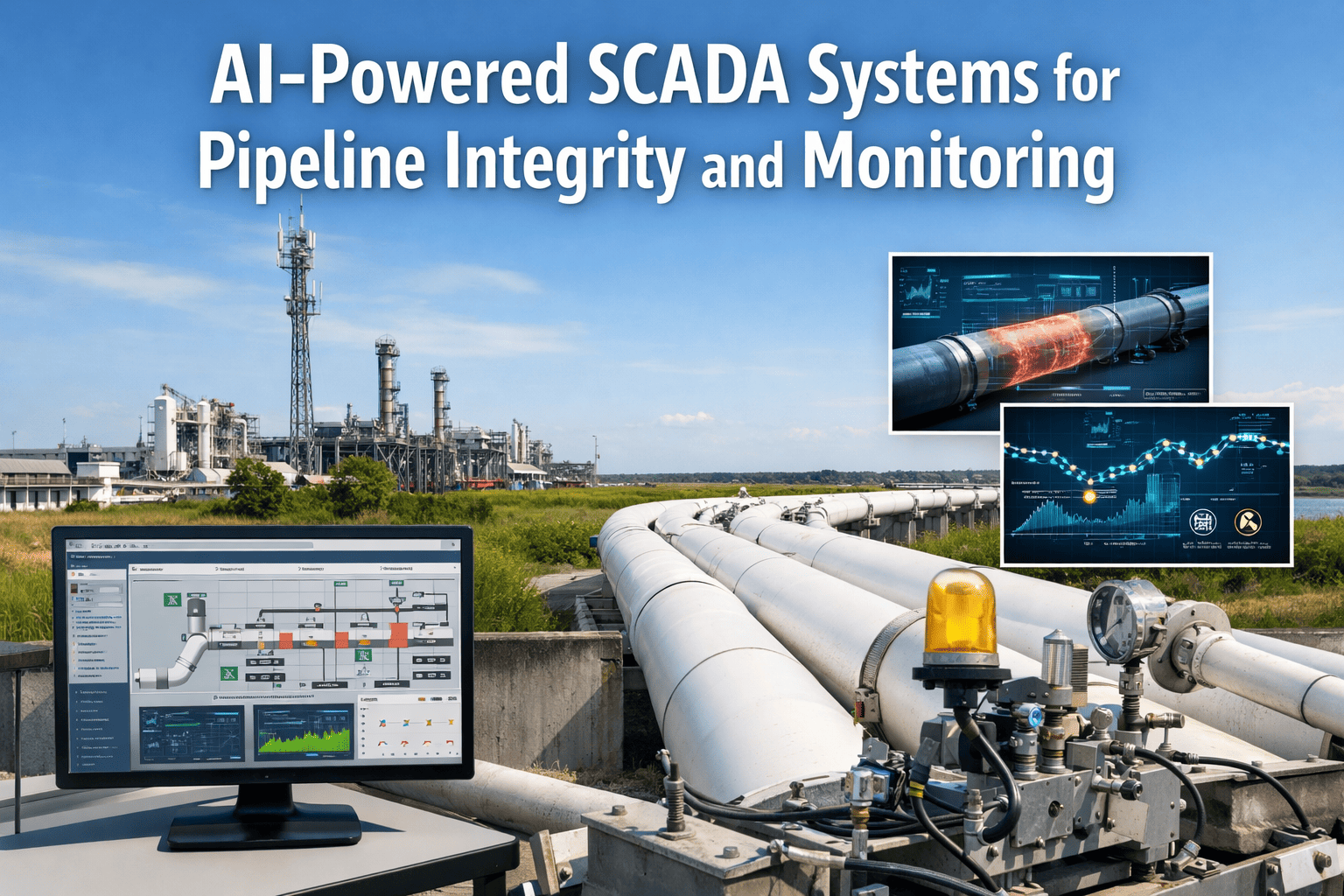
Corrosion destroys pipelines and pressure vessels from the inside out, often undetected until a catastrophic failure occurs. In upstream, midstream, and downstream oil and gas operations, unchecked corrosion causes billions in unplanned downtime, environmental penalties, and safety incidents every year. Traditional inspection cycles are too slow, too costly, and too dangerous for personnel. Manual methods miss internal wall thinning, micro-cracking, and early-stage pitting that AI models detect with precision. iFactory AI changes this entirely, giving operators continuous corrosion intelligence across every asset, every segment, and every shift.
Oil & Gas Operations: Where Corrosion Strikes Hardest
Oil and gas infrastructure spans three distinct operational segments, each with unique corrosion risk profiles and inspection demands.
Wellheads, christmas trees, casing strings, and downhole tubing face aggressive H2S, CO2, and chloride-laden produced water. SCADA systems monitor pressure and flow, but internal corrosion progresses invisibly between inspection cycles.
Thousands of miles of transmission and gathering lines carry products across varied soil conditions, river crossings, and climatic extremes. External corrosion under coatings, internal erosion-corrosion, and microbiologically induced corrosion (MIC) all require continuous monitoring that SCADA alone cannot provide.
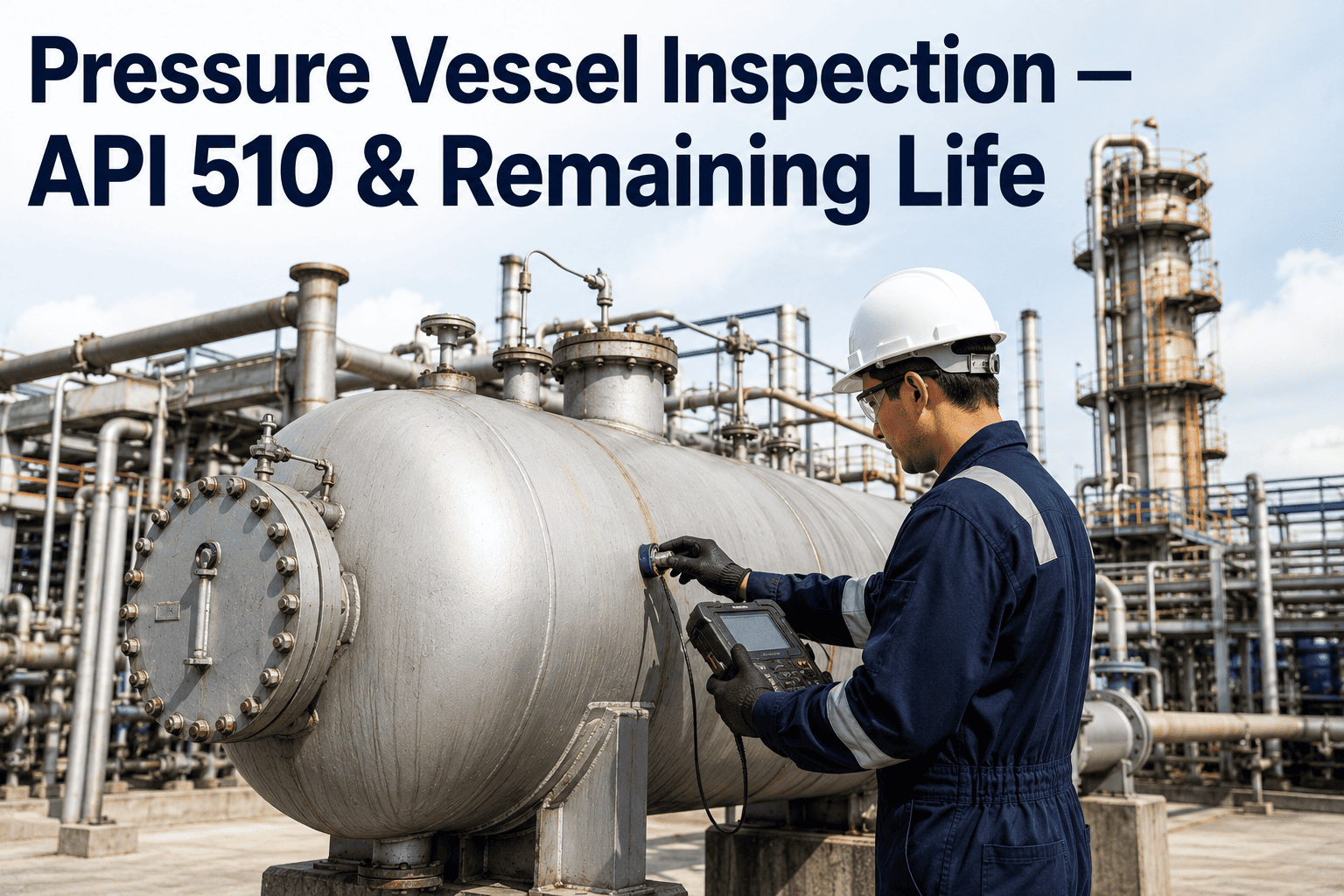
Pressure vessels, heat exchangers, storage tanks, and process piping in refineries operate at high temperatures and pressures with corrosive feedstocks. DCS and historian data capture process variables, but corrosion rates between turnarounds go untracked without AI inspection tools.
The Role of SCADA, DCS, PLC, Historians & IoT Sensors
Supervisory Control and Data Acquisition systems monitor field sensors, control valves, and pipeline flow across wide geographic areas. They capture operational data but lack AI corrosion pattern recognition.
Distributed Control Systems manage complex refinery and processing plant operations. DCS historians hold years of process variable data that iFactory AI mines for corrosion correlation signatures.
Programmable Logic Controllers drive equipment-level automation at compressor stations, pump skids, and valve manifolds. iFactory integrates PLC data into its asset health scoring models.
PI System, OSIsoft, and other industrial historians store decades of time-series plant data. iFactory connects natively to pull this data into predictive corrosion models without replacing existing infrastructure.
Ultrasonic wall-thickness sensors, corrosion coupons, electrochemical noise probes, and wireless pressure transmitters feed iFactory's edge AI layer with continuous, real-time corrosion data from any location.
Core Industry Challenges iFactory Solves
Corrosion-induced pipe failures and pressure vessel leaks trigger emergency shutdowns. iFactory predicts failure windows weeks in advance, enabling scheduled maintenance over forced outages.
Wall thinning, pitting, and weld seam degradation go undetected between inspection cycles. AI vision and sensor fusion continuously track corrosion rates across every monitored segment.
Sending personnel into confined spaces, elevated vessels, and H2S-exposure zones creates safety liability. Robotic and AI-vision inspection eliminates unnecessary human entry.
Corrosion data lives in inspection reports, SCADA historians, and manual logs that never talk to each other. iFactory unifies all sources into a single operational intelligence layer.
Operators react to corrosion after failure rather than preventing it. iFactory's machine learning models build corrosion rate predictions from sensor patterns, environmental data, and asset history.
Methane emissions, VOC releases, and corrosion-related incident reporting require pulling data from multiple systems. iFactory generates audit-ready compliance reports automatically.
iFactory Feature Modules for Corrosion & Integrity Management
AI Vision & Inspection: AI Eyes That Detect Leaks Before They Escalate
iFactory deploys computer vision models trained on thousands of corrosion images from pipeline exteriors, pressure vessel walls, tank floors, and weld seam regions. Mounted cameras or drone-captured footage is processed in real time to detect surface pitting, coating degradation, rust bloom, and active leak signatures.
- Detects corrosion anomalies at sub-millimeter resolution in live video feeds
- Classifies corrosion severity and generates immediate work order triggers
- Tracks corrosion progression across inspection cycles with visual comparison overlays
- Works in low-light, high-temperature, and chemically aggressive environments
Robotics Inspection: Robots That Inspect Where Humans Cannot Safely Go
Confined spaces, pressurized vessels, subsea lines, and live pipeline interiors are dangerous for human inspectors. iFactory integrates with crawler robots, drone platforms, and remote-operated vehicles to deploy AI inspection into every location where personnel risk is unacceptable.
- Inline inspection robot integration for real-time wall thickness and corrosion mapping
- Drone-based external corrosion surveys on elevated structures and offshore platforms
- AI-annotated robot inspection reports replace manual data entry entirely
- Full inspection audit trail maintained for regulatory compliance
Predictive Maintenance: Stop Corrosion Failures Before They Happen
iFactory's predictive maintenance engine combines corrosion sensor data, process conditions, environmental exposure, and asset service history to calculate remaining useful life (RUL) for pipelines and pressure vessels. Maintenance is scheduled precisely when needed, not on arbitrary calendar intervals.
- Corrosion rate trending with failure probability scoring per asset
- Automatic maintenance scheduling based on predicted degradation curves
- Integration with CMMS and work order systems for seamless execution
- Reduces unnecessary preventive maintenance costs by 25 to 40 percent
Work Order Automation: From Corrosion Alert to Corrective Action in Minutes
When iFactory's AI detects corrosion exceeding safe thresholds, it automatically generates a prioritized work order, assigns the correct technician skill set, attaches the inspection report and asset history, and routes for approval. Zero manual data entry, zero alert-to-action delays.
- Automated work order creation from AI corrosion alerts, sensor anomalies, or inspection findings
- Priority scoring based on corrosion severity, asset criticality, and production impact
- Full audit trail linking every work order to the originating inspection event
- Mobile technician interface for field execution and photo documentation
Asset Lifecycle Management: Track Every Pipeline and Vessel From Commissioning to Retirement
iFactory maintains a complete digital record of every asset, including material grade, original wall thickness, coating specification, inspection history, repair records, and remaining life assessments. This gives integrity engineers the full picture needed for run, repair, or replace decisions.
- Complete corrosion history per asset segment, weld joint, and inspection location
- Material degradation tracking against original design specifications
- Automated RBI (Risk-Based Inspection) scheduling aligned to API 580 and API 581
- End-of-life and replacement planning integrated with capital budget workflows
Pipeline Integrity Monitoring: AI-Driven Integrity for Every Mile of Pipeline
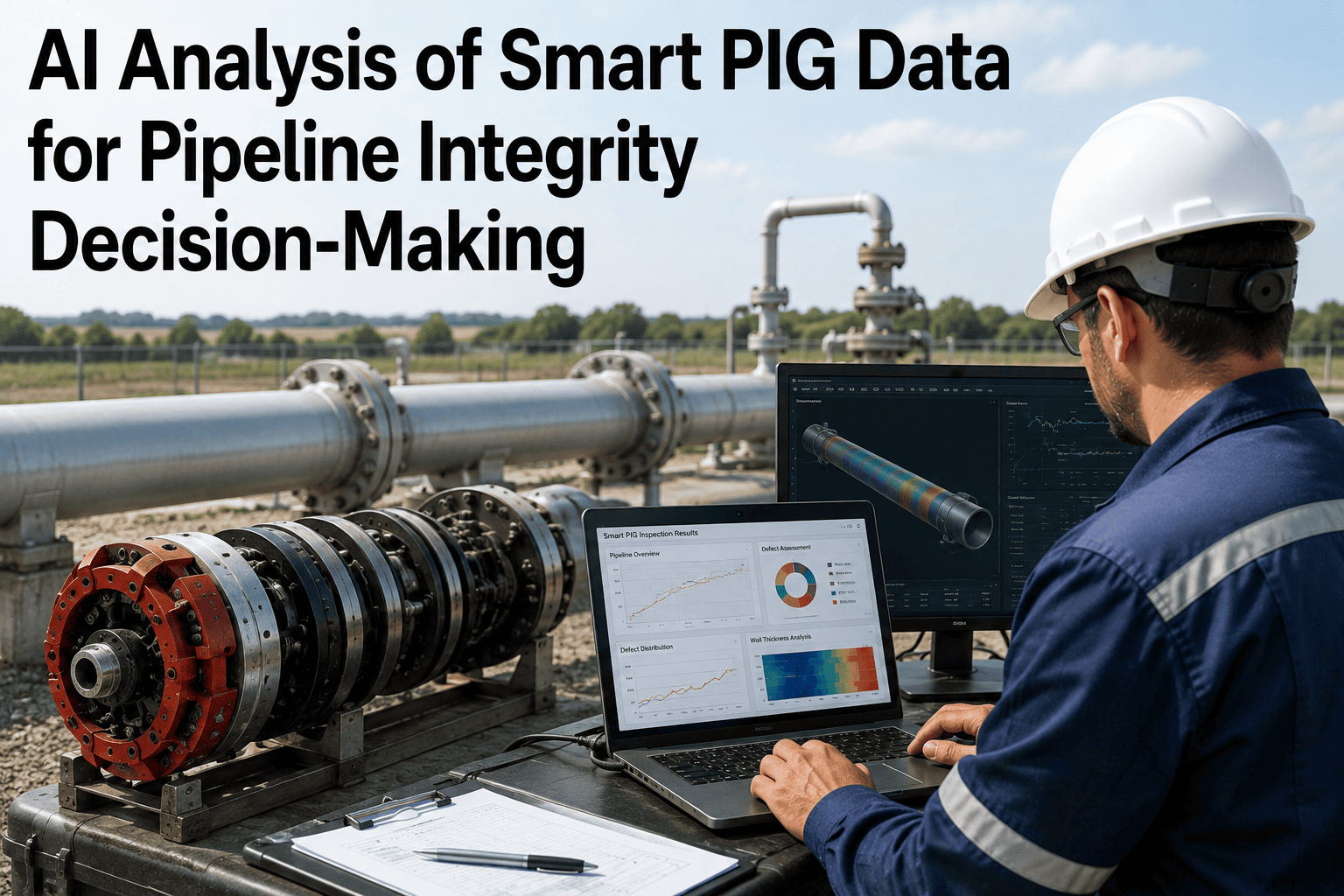
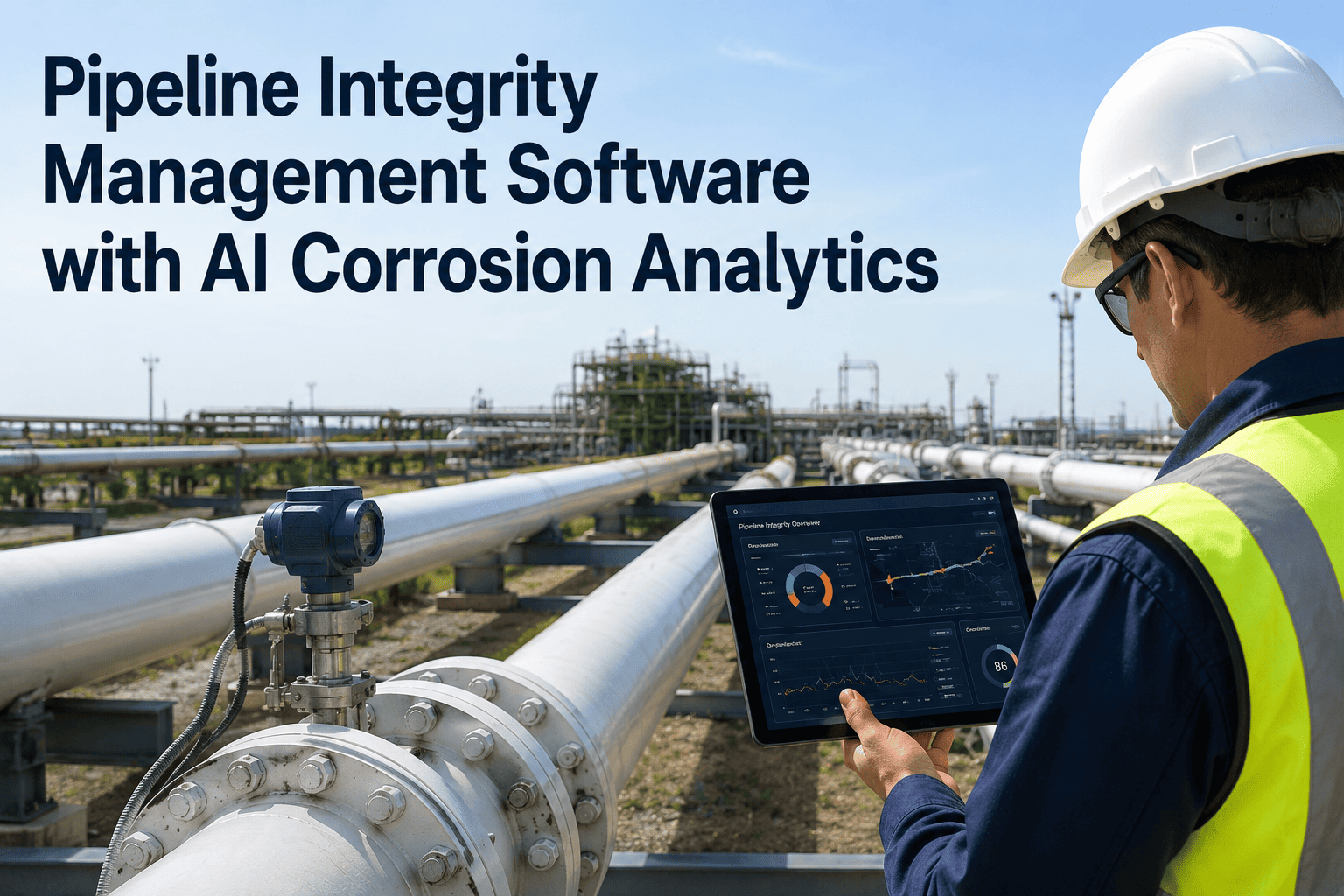
iFactory delivers continuous pipeline integrity intelligence by fusing ILI (inline inspection) data, cathodic protection readings, pressure monitoring, soil condition analysis, and acoustic leak detection into a unified risk map. Every segment is scored, ranked, and scheduled for intervention before failure.
- ILI data ingestion and AI-driven anomaly classification for metal loss and geometric defects
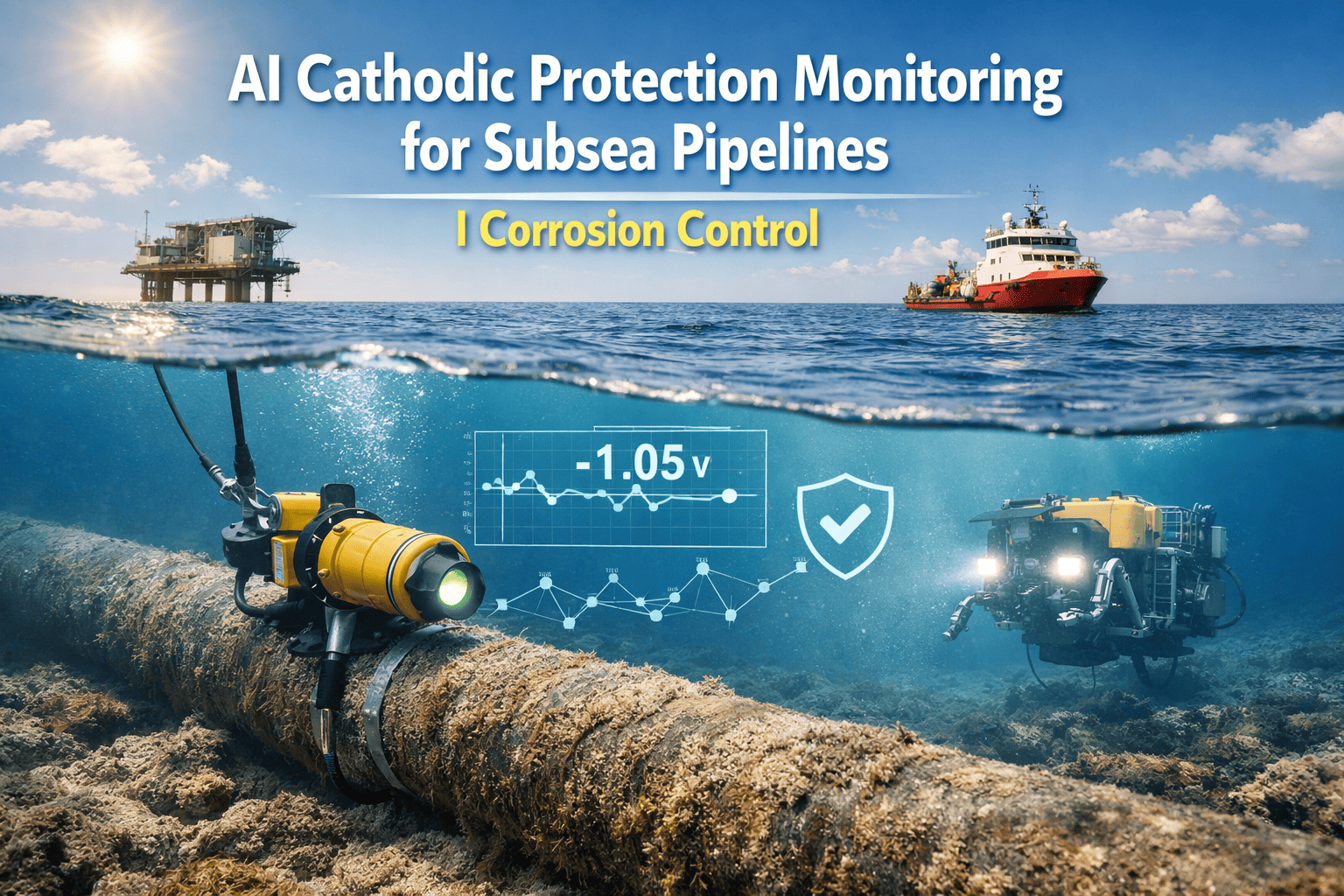
- Cathodic protection monitoring with CP failure prediction and stray current alerts
- Leak detection through pressure transient analysis and acoustic sensor fusion
- PHMSA, ASME B31.8, and API 1160 compliance reporting generated automatically
SCADA / DCS Integration: Connects to Your Existing DCS/SCADA & Historians
iFactory does not require replacing any existing control infrastructure. It connects directly to OSIsoft PI, Honeywell Experion, Emerson DeltaV, Yokogawa CENTUM, ABB Ability, Siemens PCS 7, and all major SCADA platforms through OPC-UA, Modbus, and REST API connectors. Operational technology data is never exposed to public networks.
- Native OPC-UA and OPC-DA connectivity for real-time process data ingestion
- PI System, Wonderware, and FactoryTalk historian integration without data migration
- Bidirectional SCADA data flow for AI alert routing back to control room displays
- OT Data Stays Inside Your Security Perimeter through on-premise edge AI deployment
ESG & Compliance: Methane, VOC & Flaring From Sensor to ESG Report
Corrosion-related pipeline failures are a leading cause of methane releases, VOC emissions, and unplanned flaring events. iFactory connects corrosion monitoring directly to emissions tracking, automatically attributing leak events to ESG reporting categories and generating regulator-ready documentation.
- Methane and VOC sensor integration with corrosion anomaly correlation
- Flaring event logging linked to upstream corrosion or equipment failure root cause
- Automated GRI, TCFD, and SEC emissions disclosure report generation
- EPA Method 21, Subpart W, and EU ETS compliance data packages built automatically
Predictive vs Reactive Corrosion Management
| Factor | iFactory AI (Predictive) | Reactive / Traditional |
|---|---|---|
| Failure Detection | Weeks before failure via AI pattern recognition | After rupture or visible leak |
| Inspection Method | Continuous AI + robotic + sensor fusion | Periodic manual inspection cycles |
| Corrosion Rate Tracking | Real-time, per-segment trending | Annual or biannual data points |
| Maintenance Scheduling | Condition-based, AI-optimized | Fixed calendar intervals |
| Personnel Safety Risk | Minimized through robotic inspection | High: confined space and hazardous entry |
| Work Order Generation | Automated from AI corrosion alert | Manual after inspection report reviewed |
| ESG & Compliance Reporting | Automated, audit-ready | Manual data collection and compilation |
| Corrosion Cost Impact | Reduced by 30-50% | Full replacement and incident cost burden |
| Pipeline Segment Coverage | 100% continuous monitoring | Sampled coverage only |
| SCADA/DCS Integration | Native, real-time, bidirectional | Manual data export and import |
Real-World Use Cases
A gas transmission operator deployed iFactory ultrasonic sensor integration across 200 km of insulated buried pipeline. AI models identified wall thinning at a river crossing segment six weeks before it would have reached minimum safe thickness. Emergency excavation and repair costs replaced a potential rupture and environmental fine scenario.
A US Gulf Coast refinery used iFactory AI vision during turnaround inspection to analyze 14,000 inspection images from a reactor vessel interior. The system identified early-stage HTHA (High Temperature Hydrogen Attack) blistering that manual inspectors had classified as surface scaling, averting a catastrophic overpressure failure.
An Abu Dhabi offshore operator integrated iFactory with existing cathodic protection SCADA and drone inspection workflows. CP system degradation detected by iFactory triggered work orders 40 days earlier than the next planned survey, preventing accelerated splash zone corrosion on four jacket legs.
A Canadian tank farm operator used iFactory to manage API 653 inspection scheduling for 38 above-ground storage tanks. Automated RBI scoring reprioritized three tanks for early internal inspection based on process fluid corrosivity changes. Two tanks showed floor plate minimum thickness at risk, preventing regulatory shutdown orders.
ROI & Measurable Results
AI corrosion prediction schedules intervention before failure rather than after. Operators report average downtime reduction of 35 to 45 percent within 12 months of deployment.
Robotic and AI-vision inspection replaces the majority of confined space and vessel entry requirements, reducing OSHA recordable incident exposure and contractor inspection costs.
Usage-based and condition-based maintenance scheduling eliminates unnecessary protective coating applications, chemical injection overtreatment, and premature component replacements.
Automated work order generation from AI alerts and integration with field mobile execution cuts average corrosion-related work order cycle time from days to hours.
Every inspection event, corrosion measurement, and corrective action is timestamped and linked automatically. Regulatory submissions require no additional manual data aggregation.
Corrosion-triggered methane and VOC releases are detected earlier and attributed correctly in emissions reports, reducing regulatory fine risk and improving ESG scoring.
Implementation Roadmap
iFactory engineers catalog target pipelines, pressure vessels, and monitoring points. SCADA, DCS, historian, and IoT sensor connectivity is mapped and OPC-UA or API connections are configured. No production system changes required.
Edge AI nodes are deployed at critical monitoring locations. Ultrasonic, electrochemical, and vision sensor feeds are connected to iFactory's data layer. Historical inspection data is ingested for baseline model training.
Corrosion prediction models are calibrated against asset material grades, operating conditions, and historical failure data. Alert thresholds are set with operations and integrity engineering teams to minimize false positives.
iFactory connects to existing CMMS, ERP, or standalone work order systems. Technician mobile apps are provisioned. Control room and field teams complete role-specific platform training. Go-live readiness review completed.
Full corrosion monitoring portfolio live. ESG and compliance reporting modules activated. Quarterly AI model retraining using accumulated field data. Ongoing integrity engineering support provided by iFactory customer success team.
Competitor Comparison: AI Corrosion & Pipeline Integrity Platforms
| Platform | iFactory AI | IBM Maximo | SAP EAM | Oracle EAM | Fiix (Rockwell) | UpKeep | L2L CW | QAD Redzone | PULSAR | Mingo | Evocon |
|---|---|---|---|---|---|---|---|---|---|---|---|
| AI Predictive Maintenance | Advanced | Partial | Partial | Partial | Basic | Basic | Basic | Limited | Partial | Limited | Limited |
| SCADA / DCS Integration | Native, Real-Time | Partial | Partial | Partial | Limited | No | Limited | No | Partial | No | No |
| Real-Time Monitoring | Full | Partial | Partial | Partial | Partial | Basic | Partial | Partial | Full | Basic | Basic |
| Work Order Automation | AI-Automated | Manual | Manual | Manual | Partial | Basic | Partial | Partial | Limited | Basic | No |
| Pipeline Monitoring | Dedicated Module | Limited | Limited | Limited | No | No | No | No | Partial | No | No |
| ESG Reporting | Automated, Audit-Ready | Partial | Partial | Partial | No | No | No | No | No | No | No |
| Edge AI Capability | OT-Secure, On-Premise | Limited | No | No | Limited | No | No | No | Limited | No | No |
| Ease of Deployment | Fast (8 weeks) | Complex | Complex | Complex | Moderate | Fast | Moderate | Moderate | Moderate | Fast | Fast |
| Oil & Gas Specialization | Purpose-Built | General EAM | General EAM | General EAM | General MRO | General MRO | General Mfg | General Mfg | Partial | General Mfg | General Mfg |
Region-Wise Compliance Requirements
| Standard Area | United States | United Kingdom | UAE | Canada | Europe (EU) |
|---|---|---|---|---|---|
| Safety | OSHA 1910 PSM, PHMSA Part 192/195 | HSE PSSR 2000, COMAH Regulations | ADNOC Safety Rules, DEWA EHS Standards | OHS Act, NEB Onshore Pipeline Regulations | ATEX Directive, Seveso III Directive |
| Environmental | EPA Subpart W, Clean Air Act, SPCC | EA Pollution Prevention Regulations | UAE Federal Law 24, EAD Environmental Regs | CEAA, Provincial Spill Response Regs | EU ETS, Industrial Emissions Directive |
| Industry Standards | API 570, API 580, ASME B31.3/B31.8 | BS EN 13480, PED 2014/68/EU (retained) | ASME B31.3, ADCO/ADGAS Engineering Standards | CSA Z662, ABSA Pressure Equipment Rules | EN ISO 15589, EN 13480, PED 2014/68/EU |
| ESG / Reporting | SEC Climate Disclosure Rules, GHG Reporting | TCFD Mandatory Reporting, ESOS Scheme | UAE Net Zero 2050, ADNOC ESG Framework | Federal GHG Offset System, NZE Commitments | CSRD, EU Taxonomy, GRI Standards |
Regional Platform Fit: How iFactory Addresses Local Challenges
| Region | Key Corrosion & Integrity Challenges | How iFactory Solves It |
|---|---|---|
| United States | Aging midstream infrastructure, PHMSA integrity management requirements, shale well corrosion from produced water, EPA methane reporting pressure | ILI data ingestion, PHMSA-aligned RBI scheduling, automated EPA Subpart W emission reports, edge AI on existing OT infrastructure without replacement |
| UAE | High-temperature soil and seawater corrosion on offshore platforms, ADNOC infrastructure digitization mandates, harsh desert pipeline environments | Splash zone robotic inspection integration, CP monitoring with desert soil corrosivity modeling, ADNOC HSE reporting automation, Arabic-localized operator dashboards |
| United Kingdom | UKCS offshore corrosion in aging North Sea assets, strict COMAH and HSE requirements, mandatory TCFD ESG disclosure obligations | Offshore platform inspection scheduling, HSE COMAH documentation automation, TCFD-aligned ESG corrosion incident reporting, PED-compliant pressure vessel lifecycle tracking |
| Canada | Remote Arctic and sub-zero pipeline environments, external corrosion acceleration under permafrost conditions, NEB regulatory compliance across vast distances | Remote edge AI deployment without cloud dependency, freeze-thaw corrosion cycle modeling, CSA Z662-aligned inspection scheduling, satellite-connected IoT sensor integration |
| Europe | Carbon emission reduction mandates under CSRD, aging transmission network corrosion, hydrogen blending infrastructure compatibility challenges, EU ETS exposure | CSRD-automated corrosion incident ESG reporting, hydrogen-service material compatibility monitoring, EU ETS data integration, Seveso III compliance documentation generation |