The global AI in oil and gas market is undergoing a structural transformation that extends far beyond operational efficiency gains. From autonomous drilling systems in deepwater Gulf of Mexico platforms to real-time pipeline integrity monitoring across Trans-Alaska infrastructure, artificial intelligence has shifted from a pilot-project novelty to a capital allocation imperative. By 2025, major upstream operators — ExxonMobil, Shell, BP, and Chevron — have embedded machine learning into core production workflows, and the investment data reflects this momentum. The global AI in oil and gas market was valued at approximately $4.8 billion in 2024 and is projected to surpass $14 billion by 2030, growing at a compound annual growth rate (CAGR) of approximately 19.7%. For U.S. operators navigating volatile commodity cycles, energy transition pressures, and tightening ESG mandates, AI is no longer an experimental budget line — it is the operational backbone that separates competitive producers from cost-exposed laggards. Book a Demo with iFactory AI to benchmark your current digital maturity against the market leaders driving this growth.
Top CTA BlockCapture Your Share of the $14B AI in Oil & Gas Market
iFactory AI delivers predictive maintenance, production optimization, emissions compliance, and digital twin capabilities — purpose-built for upstream, midstream, and downstream operations across U.S. oil and gas infrastructure.
AI in Oil & Gas: Global Market Intelligence 2025–2030
A data-driven analysis of market size, regional growth drivers, technology adoption rates, and the iFactory AI platform capabilities powering the next decade of intelligent oil and gas operations.
Global AI in Oil & Gas Market: Size, Segments, and 2030 Projections
The AI in oil and gas market encompasses a broad technology stack — machine learning, computer vision, natural language processing, digital twins, and autonomous robotics — applied across the upstream, midstream, and downstream value chain. The market's growth is structurally supported by three converging forces: escalating operational complexity in mature fields, the economics of unplanned downtime (averaging $490,000 per hour for offshore platforms), and the accelerating cost decline of industrial IoT sensors and cloud computing infrastructure. Book a Demo to explore how iFactory AI positions your operation within this market trajectory.
| Market Segment | 2024 Value | 2030 Projection | CAGR | Primary Use Case |
|---|---|---|---|---|
| Upstream AI | $2.1B | $6.4B | 20.4% | Reservoir modeling, drilling optimization, production forecasting |
| Midstream AI | $1.4B | $4.1B | 19.6% | Pipeline integrity, leak detection, flow optimization |
| Downstream AI | $0.9B | $2.6B | 19.3% | Refinery process optimization, product blending, safety AI |
| HSE & Compliance AI | $0.4B | $1.1B | 18.4% | Worker safety monitoring, emissions tracking, regulatory reporting |
Regional Market Leadership: North America Dominates, Middle East Accelerates
Regional market dynamics reflect both the maturity of existing oil and gas infrastructure and the pace of national digitalization mandates. North America's shale basin complexity drives the largest single regional market, while the Middle East's massive national oil company capital programs are generating the fastest absolute investment growth through 2030.
Six AI Applications Driving the Most Capital in Oil & Gas Operations
Market growth is not distributed uniformly across AI application categories. Investment concentration follows economic impact — the applications with the largest cost-reduction or revenue-protection potential attract disproportionate capital. Understanding where the market is concentrating spend is essential for operators prioritizing their own digitalization roadmaps. Operators benchmarking their programs can Book a Demo with iFactory AI to align their deployment priorities with industry investment patterns.
Predictive Maintenance & Asset Health
The single largest AI investment category in upstream and midstream. iFactory AI's sensor-to-dashboard platform monitors rotating equipment, wellhead components, and pipeline segments — flagging failure precursors weeks before unplanned downtime events.
Reservoir Characterization & Production Forecasting
Deep learning models trained on seismic, well log, and production data deliver reservoir characterization accuracy that reduces exploratory well dry-hole rates and improves EUR estimation precision for reserves reporting.
Autonomous Drilling Optimization
AI-driven drilling parameter optimization — weight on bit, RPM, flow rate — reduces drilling cost per foot by 12–18% in shale and deepwater environments by maintaining optimal mechanical specific energy throughout each run.
Pipeline Integrity & Leak Detection
Computer vision and acoustic AI deployed on pipeline networks detect micro-leak signatures, corrosion progression, and third-party damage events up to 72 hours before reportable release thresholds — reducing regulatory exposure and remediation cost.
Emissions Monitoring & ESG Compliance
Regulatory pressure from SEC climate disclosure rules and EPA methane standards is driving rapid adoption of AI-powered continuous emissions monitoring systems (CEMS) that generate verifiable, audit-ready Scope 1 emission records across upstream operations.
Worker Safety & Computer Vision Surveillance
AI vision systems on offshore platforms and refinery units monitor PPE compliance, restricted zone access, and ergonomic risk in real time — reducing recordable incident rates and OSHA citation exposure across high-hazard work areas.
iFactory AI: Four-Tier Deployment Architecture for Oil & Gas Operations
Capturing a share of the AI value available in the $14 billion market requires more than sensor installation — it demands a structured deployment architecture that aligns technology investment with operational ROI at each phase. iFactory AI's phased framework allows operators to scale from foundational asset monitoring to fully integrated, autonomous production optimization without disrupting active operations.
Asset Health Monitoring Foundation
Wireless vibration, thermal, and acoustic sensors deployed on rotating equipment — compressors, pumps, motors, wellhead chokes. Provides the predictive maintenance baseline that eliminates the highest-cost unplanned downtime events in the first 90 days.
Production Optimization & Flow Assurance
Real-time wellhead and separator data feeds ML models that optimize choke settings, gas lift injection rates, and ESP performance — maximizing production from each well without increasing lifting cost per barrel.
Emissions & HSE Compliance Intelligence
Continuous emissions monitoring, AI-powered safety camera networks, and automated regulatory reporting — generating the audit-ready data required for SEC climate disclosures, EPA 40 CFR Part 98, and ESG investor reporting.
Digital Twin & Autonomous Operations
Full facility digital twin with physics-based simulation and AI optimization layers — enabling closed-loop autonomous production decisions, predictive shutdown planning, and field development optimization without human latency.
Regulatory Frameworks Accelerating AI Adoption in U.S. Oil & Gas
Market growth through 2030 is not solely demand-driven — it is increasingly mandate-driven. Federal and state regulatory frameworks are creating compliance requirements that AI technology is uniquely positioned to satisfy at scale and cost that manual reporting cannot match. Book a Demo to review how iFactory AI maps to your specific compliance obligations.
| Regulatory Framework | AI Requirement | iFactory AI Capability | Compliance Deadline |
|---|---|---|---|
| SEC Climate Disclosure Rule | Verified Scope 1 & 2 emissions data with audit trail | Continuous CEMS with immutable blockchain logging | FY2026 filings (large accelerated filers) |
| EPA Methane Rule (OOOOb) | Continuous methane monitoring on well sites >3 tpy | AI-sensor mesh for methane detection and leak rate quantification | Phased 2025–2027 compliance schedule |
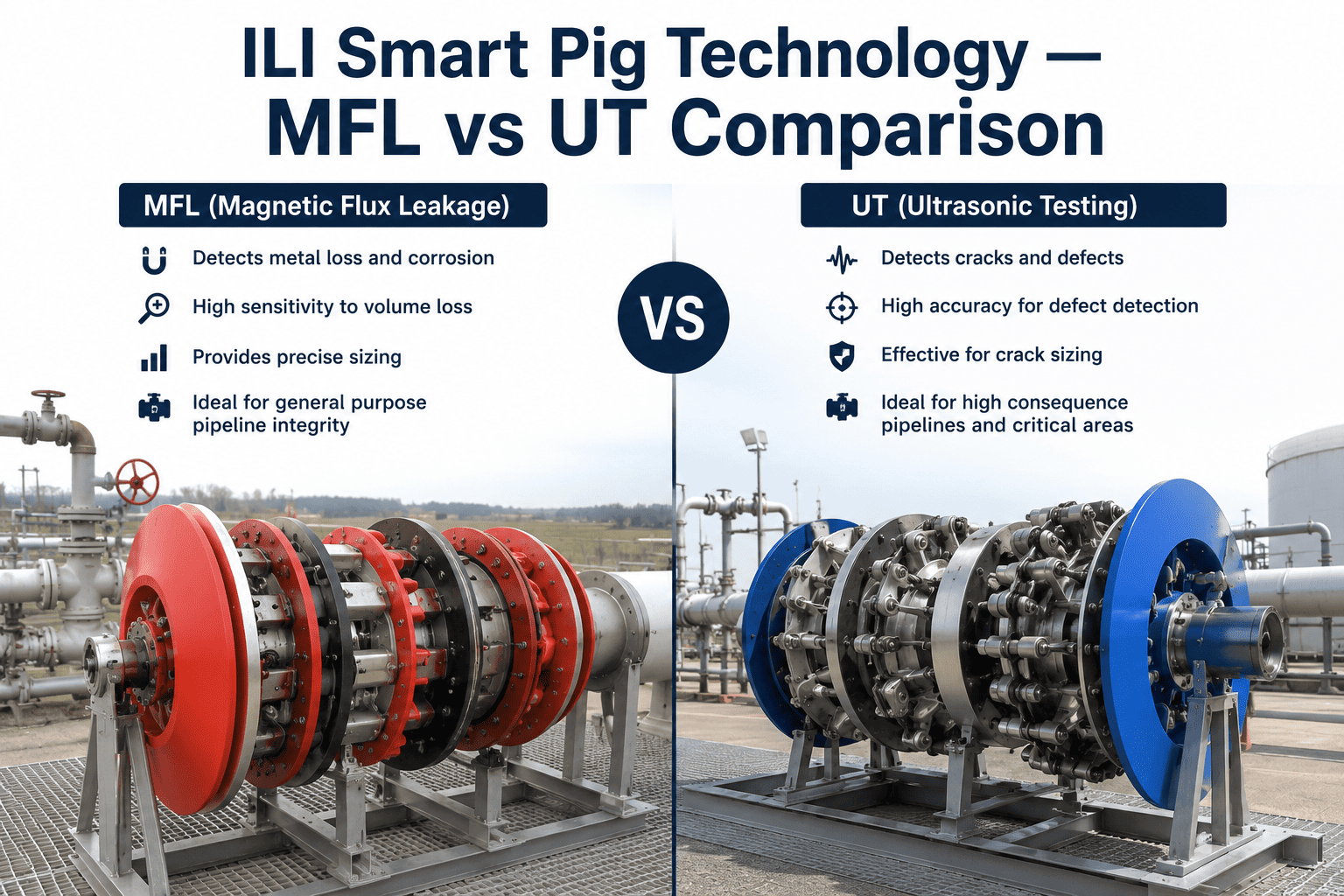
| PHMSA Pipeline Safety Rules | Integrity management data digitization & analytics | Automated ILI data analysis with AI anomaly classification | Ongoing — enhanced enforcement 2025+ |
| OSHA Process Safety Management | Proactive hazard identification and documentation | AI vision hazard logs, near-miss capture, automated PSM records | Continuous — National Emphasis Program active |
Position Your Operation Inside the $14 Billion AI Market
iFactory AI gives U.S. oil and gas operators the predictive maintenance, emissions compliance, and production optimization platform to capture the full ROI available in this market — without building a data science team from scratch.
"The AI in oil and gas market growth numbers are compelling, but the more important story is where the value is actually being captured. Operators who deployed predictive maintenance AI on their compression fleets in 2022 and 2023 are now running 18–22% lower maintenance cost per unit of throughput than their non-digitalized peers. That gap compounds — it is not a one-time efficiency gain; it is a structural cost advantage that becomes more pronounced every year. What I see in 2025 and beyond is the market bifurcating between operators who built the data infrastructure early and those still treating AI as a pilot project. The former are generating measurable EBITDA improvement and commanding investor premium on their assets. The latter are looking at a 3–5 year catch-up investment cycle at higher unit cost. For U.S. independent producers in particular, the shale productivity plateau means that operational AI is no longer optional — it is the primary lever for sustaining returns at sub-$70 WTI."
AI in Oil & Gas Is a Market Fact, Not a Market Forecast
The $14.2 billion projected market value for AI in oil and gas by 2030 is the aggregate of individual capital decisions being made today by operators who have already validated the ROI. Predictive maintenance programs that eliminate a single major compressor failure pay back platform investment multiples in the first year. Production optimization algorithms that identify 6% additional throughput from existing wells deliver returns that no new-well capital program can match at current drilling costs. Emissions monitoring systems that automate SEC and EPA reporting eliminate compliance risk that is already reaching eight-figure penalty exposure for non-compliant operators.
For U.S. independent producers, midstream operators, and integrated majors, the strategic question is not whether to invest in AI — it is which platform captures the most operational value with the least integration friction against existing SCADA, production databases, and field data infrastructure. iFactory AI is designed specifically for this constraint: a sensor-to-dashboard platform that delivers production-scale predictive maintenance, emissions compliance, and operational intelligence without requiring a multi-year data science buildout. Operators ready to capture their share of this market can Book a Demo with iFactory AI and benchmark their current digital maturity against the operators driving this market's growth.
AI in Oil & Gas Market — Frequently Asked Questions
Build Your AI Oil & Gas Strategy with iFactory AI
From predictive asset maintenance to emissions compliance and production optimization — iFactory AI delivers the integrated platform that captures the full operational value of the $14 billion AI oil and gas market, deployable on your existing SCADA and field data infrastructure.