How to Integrate iFactory AI With Existing Oil & Gas Control Systems
By Henry Green on May 29, 2026
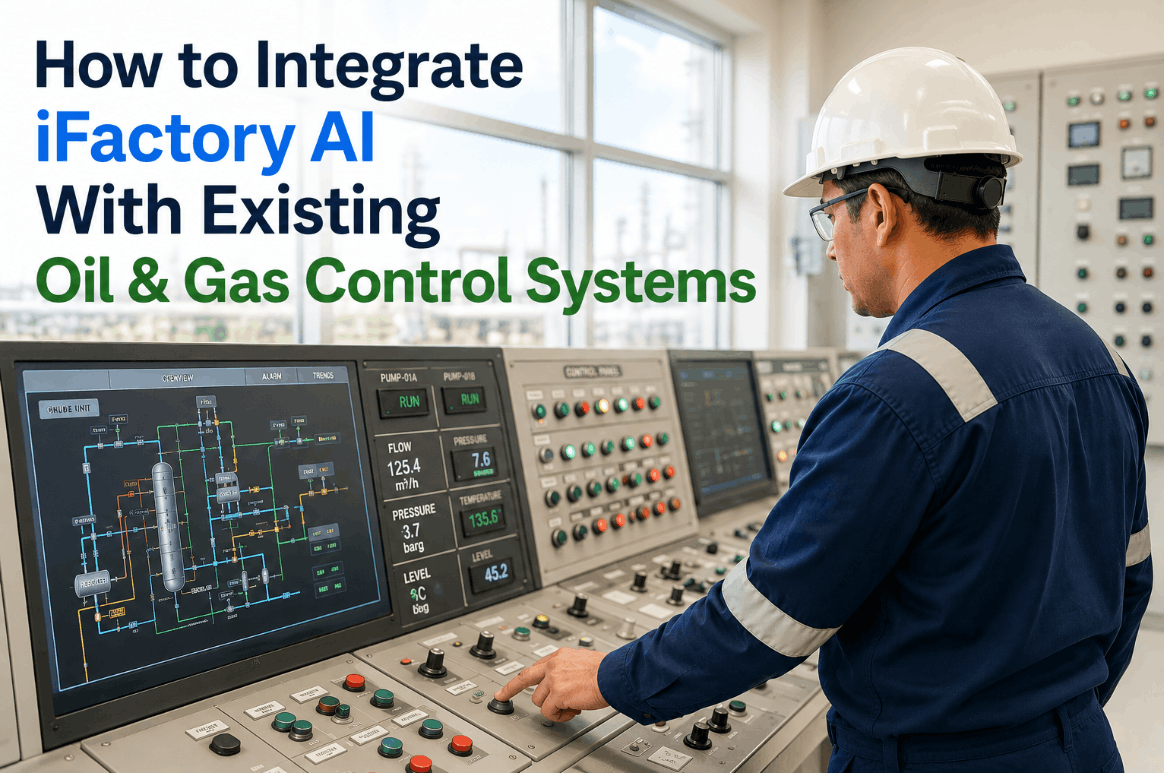
Oil and gas facilities across the USA, Canada, UK, and Australia are running some of the most complex control system environments in industrial operations — Honeywell Experion DCS managing refinery process units, Emerson DeltaV coordinating HRSG controls, Yokogawa CENTUM overseeing upstream separation trains, Siemens PCS 7 handling compressor station automation, and OSIsoft PI historians archiving years of operational telemetry that nobody has fully analysed. Integrating iFactory AI with these existing control systems does not mean ripping out proven infrastructure. It means connecting an AI intelligence layer above what is already running — ingesting historian data via OPC-UA and MQTT, training asset-specific ML models on your operational records and failure history, and surfacing predictive maintenance intelligence and digital twin analytics into your existing CMMS and maintenance workflows without modifying a single control system program or replacing any hardware. The integration path is structured, protocol-native, and designed for facilities where operational continuity is non-negotiable. This guide walks through exactly how iFactory AI connects to the control systems and historian platforms already deployed at oil and gas facilities — and what each integration stage delivers in terms of predictive capability, compliance documentation, and measurable reliability improvement. Book a Demo to see how iFactory integrates with your existing oil and gas control systems within 8 weeks.
500+
Oil and gas facilities globally running iFactory AI on existing control system infrastructure
8 Wks
Full deployment timeline from control system audit to live AI predictive model — no hardware replacement
94%
Bandwidth reduction at remote sites through edge computing before cloud synchronisation
Zero
Modifications required to existing DCS programs, PLC logic, or SCADA configurations
Ready to map iFactory AI against your facility's control system architecture? Book a Demo with iFactory's oil and gas integration team for a site-specific connectivity assessment.
Connect Your Existing DCS, SCADA, and Historian Infrastructure to iFactory AI — No Hardware Replacement Required
iFactory AI integrates with Honeywell, Emerson, Siemens, ABB, Yokogawa, and Rockwell control systems via OPC-UA, MQTT, and REST APIs — delivering predictive maintenance intelligence, digital twin analytics, and automated CMMS work order generation on top of your existing operational technology stack within 8 weeks.
Control Systems and Historian Platforms iFactory AI Integrates With
iFactory AI is protocol-agnostic by design. Whether your facility runs a Honeywell Experion PKS for process control, an Emerson DeltaV for DCS automation, or a Yokogawa CENTUM VP for upstream separation — iFactory connects via native industrial protocols and begins delivering AI-driven predictive intelligence without modifying existing control logic or replacing operational hardware. The platform supports every major DCS, SCADA, PLC, and historian system deployed in oil and gas environments across upstream, midstream, and downstream operations.
Platform Category
Supported Systems
Integration Protocol
Integration Timeline
DCS Platforms
Honeywell Experion PKS, Emerson DeltaV, Yokogawa CENTUM VP, Siemens PCS 7, ABB System 800xA, Emerson Ovation
OPC-UA, OPC-DA, Modbus TCP
1–2 weeks
SCADA Systems
Schneider Electric EcoStruxure, Siemens WinCC, Rockwell FactoryTalk, AVEVA InTouch, GE iFIX, Ignition SCADA
OPC-UA, MQTT, REST API
1–2 weeks
Historian Platforms
OSIsoft PI / AVEVA PI, Aspentech IP21, Honeywell PHD, GE Proficy Historian, Wonderware Historian, Emerson DeltaV Historian
SAP PM / SAP EAM, IBM Maximo, Infor EAM, Oracle EBS, Microsoft Dynamics 365
REST API, bidirectional connector
7 days
Drilling and Upstream Systems
NOV InSight, Pason EDR, Totco, Nabors SmartDRILL, Patterson-UTI AutoMatcher, MWD/LWD data systems
OPC-UA, WITSML, Modbus TCP
1–3 weeks
For legacy SCADA systems not listed above, iFactory provides custom integration support with protocol adapters. Integration scope for any facility is confirmed during the Week 1 network and control system audit. Facilities evaluating iFactory AI for a specific control system configuration can Book a Demo to walk through a site-specific connectivity review.
The iFactory AI Integration Architecture: How It Works Without Touching Your Control Systems
The integration architecture is designed around a single governing principle: iFactory AI reads from your existing control infrastructure — it never writes to it. Every connection between iFactory's analytics layer and your DCS, SCADA, or historian is read-only at the protocol level, not just policy level. No iFactory process has write-capable access to any OT endpoint. The AI intelligence layer sits above your existing operational technology stack, consuming data through hardened read-only connections and publishing analytical outputs — predictive alerts, equipment health scores, CMMS work orders — through your existing IT-layer systems.
01
Week 1–2: Control System and Network Audit
iFactory's integration team conducts a structured audit of your facility's control system inventory, historian architecture, and network topology. This covers DCS tag inventory, SCADA historian data quality assessment, CMMS work order record completeness, and OT network segmentation. Integration architecture is designed — including read-only firewall rules, historian polling intervals, and DMZ server placement — before any connection is made to live systems.
02
Week 2–3: Protocol Connection and Data Validation
OPC-UA, MQTT, or REST API connections are established from the iFactory server to the DCS historian, SCADA system, and CMMS platform via read-only endpoints. Data quality validation confirms tag completeness, timestamp alignment, and polling frequency. Edge computing devices are deployed at remote compressor stations, wellheads, or pipeline segments where local AI inference reduces bandwidth requirements by up to 94% before synchronisation to the central analytics platform.
03
Week 3–4: ML Model Training on Historical Data
iFactory ingests 12–36 months of historian data — vibration trends, temperature profiles, pressure records, flow anomalies, and CMMS failure logs — and trains asset-specific ML models for each equipment class: compressors, rotating equipment, process vessels, electrical assets, and fired heaters. Models are trained exclusively on your facility's own operational data, not generic industry templates, producing failure forecasts that reflect your asset fleet's unique degradation patterns.
04
Week 4–5: Pilot Deployment on Critical Asset Classes
Trained ML models are deployed to the highest-criticality asset classes first — typically compressors, rotating pumps, and process control systems. Predictive alerts, equipment health dashboards, and CMMS work order auto-generation are activated and validated with the facility's reliability team. First predictive interventions are executed during this phase, and ROI evidence begins accumulating from week 4 onward.
05
Week 6–8: Full Asset Fleet Rollout and CMMS Integration
Predictive models are expanded to the full asset envelope — all rotating equipment, electrical systems, process vessels, and pipeline integrity assets. Bidirectional CMMS integration is activated, with automated work order generation, parts procurement triggers, and maintenance schedule optimisation live across the facility. Compliance documentation — API 510, API 570, ISO 55001, and regional regulatory reporting — is structured from iFactory's predictive maintenance output logs automatically.
06
Ongoing: Continuous Model Retraining and Integration Health Monitoring
Every confirmed failure event, maintenance outcome, and false positive feeds back into the ML training pipeline — increasing prediction accuracy by an average of 12% per 6-month retraining cycle. Integration health monitoring confirms historian connections, CMMS sync status, and edge device connectivity in real time. Model performance reviews and ROI tracking are delivered quarterly to facility reliability and operations leadership.
Integration by Facility Type: Upstream, Midstream, and Downstream
The integration requirements for iFactory AI differ meaningfully across upstream, midstream, and downstream oil and gas operations — not in the underlying protocols, but in the asset classes monitored, the historian systems connected, and the operational outcomes that predictive analytics delivers. The following breakdown maps the specific integration architecture and analytical value by facility type.
Upstream: Wells, Drilling, and Production
iFactory connects to wellhead SCADA, MWD and LWD data systems, and production historian platforms via OPC-UA and WITSML. AI models monitor pump jack cycles, ESP performance degradation, separator efficiency, and wellbore integrity. Edge computing devices at remote well pads process vibration and pressure data locally before synchronising to the central analytics platform — reducing satellite bandwidth costs by up to 94%. Integration with NOV InSight, Pason EDR, and Totco drilling systems is supported natively.
Midstream: Pipelines and Compressor Stations
iFactory integrates with Schneider Electric EcoStruxure, ABB System 800xA, and Siemens PCS 7 SCADA platforms managing pipeline networks and compression facilities. AI models correlate pressure differentials, flow anomalies, acoustic signatures, and vibration data simultaneously to detect corrosion progression, leak precursors, and compressor degradation 6–14 days before critical threshold breach. Pipeline integrity reporting structured for DOT PHMSA compliance is generated automatically from predictive maintenance output logs.
Downstream: Refineries and Processing Facilities
iFactory connects to Honeywell Experion PKS, Emerson DeltaV, and Yokogawa CENTUM via OPC-UA with read-only historian connections to OSIsoft PI and Aspentech IP21. AI models train on crude distillation unit operational data, fired heater performance trends, heat exchanger fouling signatures, and rotating equipment degradation patterns. API 510 and API 570 compliance documentation is generated from predictive maintenance records without manual data compilation.
Offshore Platforms and Floating Production
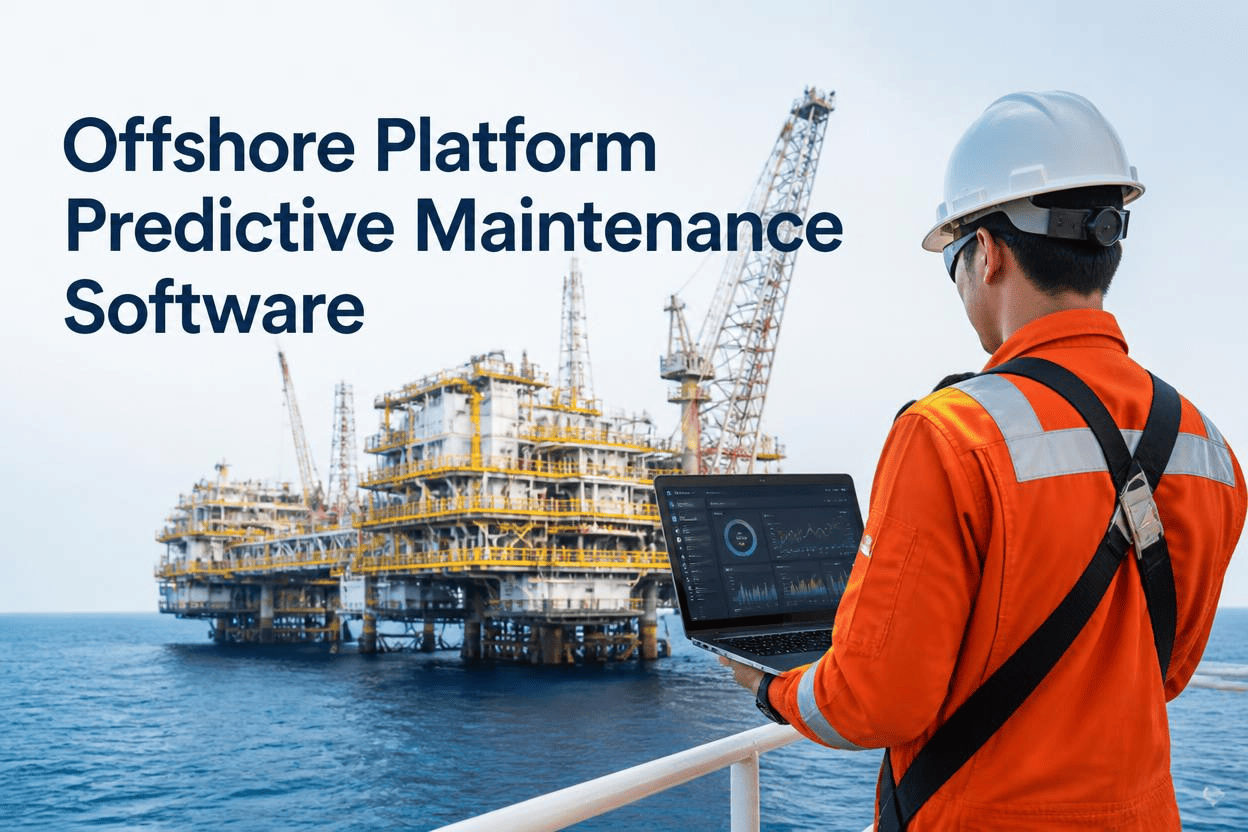
For offshore environments with limited bandwidth and intermittent connectivity, iFactory deploys AI inference at the edge — processing vibration, thermal, and process data locally on the platform before synchronising model outputs and health summaries to the onshore analytics server. This architecture delivers full predictive maintenance capability with satellite bandwidth consumption 94% lower than continuous raw data transmission. Integration with Kongsberg, Emerson, and Siemens offshore DCS platforms is supported via OPC-UA.
OT Security and Data Residency During Integration
Every iFactory AI integration for oil and gas facilities is designed to keep OT data inside the facility's security perimeter by default. No process data is transmitted to external cloud infrastructure unless the facility explicitly authorises cloud backup. All historian connections are read-only at the protocol level — OPC-UA endpoints are configured with read-only access permissions, with no write-capable API interfaces active on the OT-facing integration layer. The integration architecture complies with the NIST Cybersecurity Framework for industrial control systems and supports NERC CIP-governed facilities with full Electronic Access Point documentation, CIP-005 R2 vendor access controls, and CIP-013 supply chain risk management deliverables.
OT Security Controls Applied at Every iFactory AI Integration
Read-only OPC-UA and PI API connections at protocol level — no write-capable OT interface active at any integration point
iFactory server deployed inside plant DMZ — OT data never traverses corporate IT network or leaves facility perimeter
Vendor remote access via jump server with MFA, session recording, and plant-initiated connection initiation only
NIST Cybersecurity Framework compliance for industrial control system environments confirmed at deployment
NERC CIP-governed facilities: CIP-005 Electronic Access Point documentation, CIP-010 change management integration, and CIP-013 supply chain questionnaire delivered as standard compliance artifacts
Air-gapped deployment available for highest-consequence OT environments — one-way data diode compatible with Waterfall Security, Owl Cyber Defense, and Fox DataDiode configurations
SOC 2 Type II audit report available under NDA for procurement and supply chain risk management review
Contractual data residency commitment — process data, model training data, and asset configuration data never leave the plant perimeter in on-premise deployments
Zero
Write-capable OT interfaces active in iFactory's integration layer
On-Prem
Default deployment — no OT data leaves facility perimeter
48 hrs
Contractual SLA for customer notification of security vulnerabilities affecting OT-adjacent deployments
Measured Integration Outcomes at Oil and Gas Facilities
The following performance data reflects aggregated outcomes from iFactory AI integrations across upstream, midstream, and downstream oil and gas facilities in the USA, Canada, UK, and Australia — measured within the first 12 months of full production deployment on existing control system infrastructure.
8 Wks
Full Integration to Live AI Model
From network audit to live predictive model running on existing DCS, SCADA, and historian infrastructure — with CMMS work order generation and reliability team training completed.
34%
Reduction in Unplanned Downtime
AI models trained on existing historian data identify failure precursors 1–8 weeks before breakdown — replacing emergency stoppages with planned maintenance interventions scheduled within existing turnaround windows.
94%
Failure Prediction Accuracy
Asset-specific ML models trained on facility's own operational data — validated across compressors, rotating equipment, fired heaters, and process systems — compared to 31% detection rate under threshold-based alerting.
7 Days
CMMS Integration Timeline
Bidirectional connection to SAP PM, IBM Maximo, Infor EAM, and Oracle EBS completed within 7 days of deployment commencement — auto-generating prioritised work orders with failure probability and parts lists on every predictive alert.
89%
Reduction in Emergency Maintenance Spend
Reactive repair cycles eliminated from first month of live predictive model deployment — replacing expedited parts mobilisation and emergency crew costs with budget-aligned planned interventions.
<3.5%
False Positive Alert Rate
Multi-parameter cross-validation across 200+ sensor streams before any predictive alert fires — eliminating the alert fatigue that causes maintenance teams to bypass notifications from threshold-based systems.
$18.2M
Avg. Annual Savings
Production value and maintenance cost savings per oil and gas facility post-integration
47%
Asset Life Extension
Predictive maintenance on existing sensor data prevents premature equipment retirement
12%
Model Accuracy Improvement
Average accuracy gain per 6-month retraining cycle as models learn confirmed failure events
96%
Work Order Automation Rate
Predictive alerts auto-create CMMS work orders without manual data entry or approval delays
Expert Review: What Oil and Gas Integration Teams Get Wrong
The most common mistake I see oil and gas facilities make when approaching an AI integration project is treating it as a data infrastructure project rather than a reliability outcomes project. They spend months debating data lake architecture, historian schema normalisation, and cloud connectivity before a single model is trained or a single failure is predicted. iFactory's integration approach flips this entirely. The Week 1 audit is about understanding which assets produce the most financial risk if they fail unplanned — and the integration architecture is designed to get ML models running on data from those assets first, within weeks. We connected our Emerson DeltaV and OSIsoft PI historian to iFactory in under two weeks, had pilot models running on our gas compressor train by week four, and caught a bearing degradation event that would have caused a $340,000 forced shutdown. The integration did not require a single modification to our DCS configuration.
Senior Reliability Engineer
Midstream Gas Processing Facility, Gulf Coast USA
From a controls perspective, what convinced our team was the read-only architecture at the protocol level. We have had AI vendors propose integrations where their platform needed write-capable OPC sessions — that is a non-starter in any OT environment with real consequences. iFactory's historian connection is read-only at the OPC-UA endpoint configuration, not just at the policy level. Our DCS cannot receive commands from the iFactory server. Our SCADA historian cannot be modified through the integration channel. That is the architecture conversation you need to have with any AI vendor before discussing capability — and iFactory was the only vendor we evaluated who started with that conversation rather than finishing with it.
Lead Control Systems Engineer
Downstream Refinery, Alberta, Canada
Conclusion: The Intelligence Was Always in Your Control Systems. iFactory Makes It Actionable.
Oil and gas facilities running Honeywell, Emerson, Yokogawa, Siemens, and ABB control systems have been generating failure-prediction data for years. Every bearing degradation event, every heat exchanger fouling signature, every compressor performance trend is recorded in the DCS historian — waiting for an AI model trained to find the patterns that matter before they escalate into production loss. The gap between world-class reliability operations and the industry average is not a data availability problem. It is a gap between data collection and data intelligence.
iFactory AI closes that gap in eight weeks by connecting above your existing control infrastructure — not replacing it. Protocol-native integration with OPC-UA, MQTT, and REST APIs. Read-only historian access at the protocol level. On-premise deployment with OT data never leaving the facility perimeter. Asset-specific ML models trained on your operational history, not generic industry templates. And measurable reliability outcomes — 34% reduction in unplanned downtime, 89% reduction in emergency maintenance spend, 47% asset life extension — delivered at 500+ oil and gas facilities globally running iFactory AI on the control systems they already own. Facilities ready to activate their existing historian data can Book a Demo with iFactory's integration team to map the connectivity path for their specific control system architecture.
Frequently Asked Questions
No — iFactory connects to existing DCS historians and SCADA systems via read-only OPC-UA and REST API connections without modifying any control logic, PLC program, or SCADA configuration. Zero changes to live control systems are required at any stage of deployment.
iFactory natively integrates with OSIsoft PI / AVEVA PI, Aspentech IP21, Honeywell PHD, GE Proficy Historian, Wonderware Historian, and Emerson DeltaV Historian via PI API, REST API, and OPC-UA — with historian connections typically completed within 3–5 days of deployment commencement.
Yes — iFactory provides custom integration support with protocol adapters for legacy SCADA systems using Modbus TCP, DNP3, and proprietary vendor protocols; integration scope for legacy systems is confirmed during the Week 1 network audit.
iFactory deploys edge computing devices at remote well pads, compressor stations, and offshore platforms that run AI inference locally, reducing bandwidth consumption by up to 94% by transmitting only model outputs and health summaries rather than continuous raw sensor streams.
Yes — iFactory delivers CIP-005 Electronic Access Point documentation, CIP-010 change management integration, CIP-013 supply chain risk management questionnaire responses, and a SOC 2 Type II audit report as standard compliance artifacts for NERC CIP-governed facilities.
Connect Your Existing Oil and Gas Control Systems to iFactory AI. No Hardware Replacement. Live in 8 Weeks.
iFactory AI integrates with Honeywell, Emerson, Siemens, ABB, Yokogawa, Rockwell, and all major historian platforms via OPC-UA, MQTT, and REST APIs — delivering AI-driven predictive maintenance, digital twin analytics, and automated CMMS work order generation on top of your existing operational technology stack, with OT data never leaving your facility perimeter.