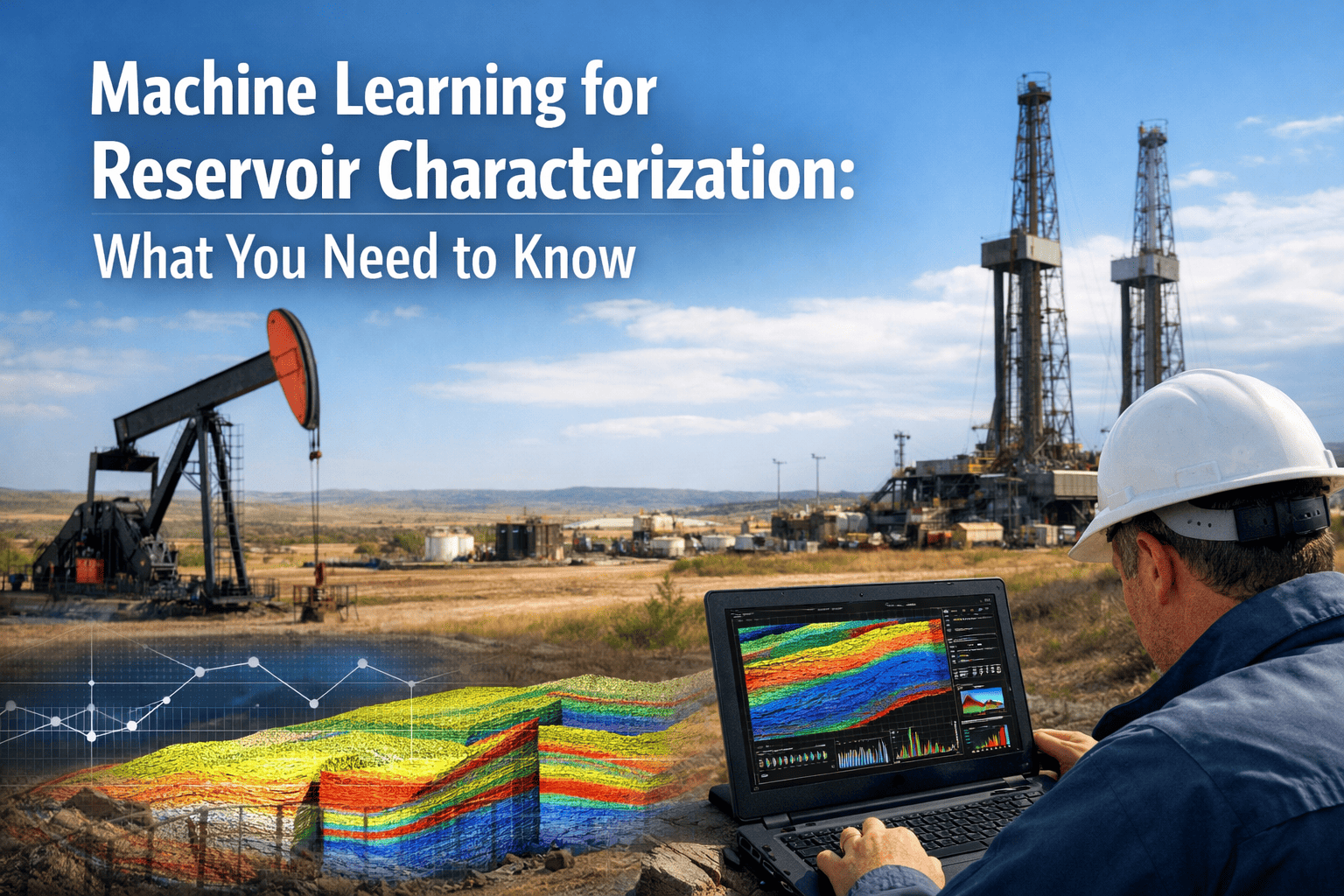
Reservoir simulation has been the backbone of subsurface decision-making in oil and gas for more than four decades — but the computational cost, data requirements, and turnaround time of full-physics eclipse models have always imposed hard limits on how frequently engineers can update their understanding of a reservoir. Machine learning reservoir simulation is breaking those limits. By training data-driven models on production histories, pressure transient records, completion parameters, and seismic attributes, upstream operators can now generate simulation-quality insights in seconds rather than days — enabling real-time production optimization, continuous history matching, and scenario analysis at a frequency that physics-based simulation alone cannot support. This guide delivers a structured, technically grounded examination of how machine learning reservoir simulation works, where it delivers its highest value, where its limitations require careful management, and how iFactory AI's platform integrates these capabilities into a unified upstream analytics environment.
What Machine Learning Reservoir Simulation Actually Does — and How It Differs from Physics-Based Models
Traditional reservoir simulation solves partial differential equations governing fluid flow through porous media — a rigorous, physics-based approach that requires detailed geological models, fluid PVT data, and weeks of compute time for a full-field model run. Machine learning reservoir simulation takes a fundamentally different path: instead of solving governing equations, it trains statistical models on observed production and pressure data to learn the input-output relationships that physics-based models compute from first principles. The result is a proxy model that can predict production rates, pressure behavior, and recovery trajectories orders of magnitude faster than a full-physics simulator — enabling a class of real-time optimization applications that eclipse-based workflows cannot support. Upstream teams evaluating their simulation strategy can Book a Demo to see how iFactory AI integrates machine learning proxy models with existing reservoir simulation workflows.
The 5 Core Benefits of Machine Learning Reservoir Simulation for Upstream Operations
The productivity gains from machine learning reservoir simulation are not incremental improvements on conventional workflows — they are architectural changes in what reservoir engineering teams can accomplish with the same headcount and data infrastructure. Understanding where these benefits are most pronounced helps upstream operators prioritize their ML deployment strategy and extract maximum value from existing production datasets. For teams ready to explore deployment specifics, Book a Demo to map iFactory AI's machine learning capabilities to your asset portfolio.
Real-Time Production Optimization
Full-physics simulators cannot run at the frequency required for real-time well control decisions. ML proxy models trained on reservoir data generate production rate predictions in milliseconds — enabling continuous choke optimization, injection allocation adjustment, and artificial lift parameter tuning at the speed of SCADA data. This is the single most impactful application of machine learning reservoir simulation for operating assets with real-time sensor coverage.
Accelerated History Matching
Automated history matching using ML surrogate models reduces the time required to calibrate a full-field reservoir model from weeks to hours. By replacing expensive full-physics simulation runs with fast proxy model evaluations during the optimization loop, engineers can explore thousands of geological realizations per day — dramatically improving the quality of reservoir characterization and the reliability of long-range production forecasts that drive capital allocation decisions.
Uncertainty Quantification at Scale
Generating probabilistic production forecasts (P10/P50/P90) through full-physics simulation requires running hundreds of model realizations — a computationally prohibitive task for large fields or tight timeline decisions. ML proxy models reduce the cost of each realization by orders of magnitude, making full uncertainty quantification practical for every significant reservoir management decision rather than only the highest-profile capital commitments.
EOR Strategy Screening and Optimization
Evaluating multiple enhanced oil recovery scenarios — water flood pattern modifications, CO₂ injection timing, polymer flood concentration — through full-physics simulation is a months-long process. ML reservoir models reduce EOR screening cycles from months to days, allowing reservoir teams to evaluate a full strategy matrix against historical production response data and identify optimal recovery mechanisms before committing capital to injection infrastructure changes.
Infill Drilling and Well Placement Optimization
ML models trained on completion data, production performance, and subsurface attributes can predict the expected EUR of proposed infill locations across the full drilling inventory — enabling a data-driven ranking of well candidates that accounts for subsurface heterogeneity, spacing effects, and completion design variables simultaneously. This capability directly improves capital efficiency by ensuring drilling budgets are allocated to the highest-value locations across a complex unconventional inventory. Explore how iFactory AI supports drilling optimization workflows by visiting Book a Demo.
Machine Learning vs. Physics-Based Simulation: A Direct Comparison for Reservoir Engineers
The decision to deploy machine learning reservoir simulation is not a binary choice between data-driven and physics-based approaches — the highest-performing upstream operations use both, with each methodology applied to the decision types it handles best. The comparison below maps the strengths, limitations, and ideal deployment scenarios for each approach to help reservoir engineering teams allocate their analytical resources strategically.
| Evaluation Dimension | Physics-Based Simulation | Machine Learning Simulation | Optimal Application |
|---|---|---|---|
| Computation Speed | Hours to weeks per full-field run | Milliseconds to seconds per prediction | ML for real-time optimization; physics for annual reserves reporting |
| Data Requirements | Geological model, PVT, relative permeability | 12+ months production and pressure history | Physics for new fields; ML for producing assets with data history |
| Forecast Extrapolation | Reliable beyond observed production range | Degrades outside training data envelope | Physics for long-range capital planning; ML for operational decisions |
| History Matching | Manual, expert-intensive, weeks per cycle | Automated, thousands of iterations per day | ML surrogate accelerates physics model calibration cycles |
| Uncertainty Quantification | Computationally expensive; limited realizations | Fast probabilistic output at scale | ML for full P10/P50/P90 range on all decisions |
| Interpretability | Full physical mechanism transparency | Variable; physics-informed models improve this | Physics for regulatory documentation; ML for operational insight |
The Limitations of Machine Learning Reservoir Simulation — and How to Manage Them
Honest assessment of machine learning reservoir simulation requires equal attention to its limitations as to its capabilities. The most effective upstream deployments are those where ML methods are applied to the decision types they handle well, with physics-based simulation maintained for the application domains where data-driven approaches introduce unacceptable risk. The four limitations below are the most consequential for upstream reservoir management programs and represent the design constraints that iFactory AI's hybrid analytics architecture is specifically built to address.
Training Data Dependency
ML reservoir models cannot generate reliable predictions for production conditions outside their training data envelope. A model trained on a water-flood response pattern will not correctly predict performance during a gas injection EOR program without retraining on relevant analogue data. This constraint makes ML simulation less suitable for greenfield assets or novel recovery mechanisms without supporting production history from analogous reservoirs.
Physical Consistency Violations
Pure data-driven ML models can generate predictions that violate fundamental physical laws — negative pressures, material balance violations, or flow rates exceeding theoretical limits — particularly when extrapolating beyond the training domain. Physics-informed neural network architectures partially address this by embedding conservation law constraints into the model structure, but require significantly more complex training workflows and domain expertise to implement correctly.
Model Degradation Over Time
ML reservoir models trained on historical production data become progressively less accurate as reservoir conditions evolve — new wells are drilled, injection patterns change, and fluid contacts move. Without a systematic retraining and validation workflow, a model that was accurate at deployment will silently degrade in predictive performance over the asset life cycle, producing recommendations based on outdated learned patterns rather than current reservoir state.
Regulatory Acceptance Challenges
SEC reserves reporting and state-jurisdiction production forecasts require defensible, auditable methodologies. Pure ML production forecasts lack the physical mechanism transparency that regulators and reserves auditors require for formal reserves certification. Hybrid approaches — where ML surrogate models accelerate physics-based simulation workflows rather than replacing them — preserve the regulatory defensibility of the underlying physics model while delivering the operational speed of ML-based analysis.
iFactory AI addresses all four ML simulation limitations through a hybrid architecture that deploys machine learning proxy models for real-time operational decisions while maintaining physics-based simulation as the foundation for reserves reporting, regulatory compliance, and long-range capital planning. The platform continuously monitors proxy model prediction accuracy against live production data and triggers automatic retraining when model drift exceeds defined accuracy thresholds — ensuring that ML models remain representative of current reservoir conditions throughout the asset life cycle. Upstream teams building hybrid simulation programs can Book a Demo to see how this architecture deploys against their specific data environment.
Where Machine Learning Reservoir Simulation Delivers the Highest ROI in Upstream Operations
Upstream operators allocating resources to machine learning reservoir simulation programs achieve the highest returns when deployment is prioritized by application type and asset maturity. The risk bar visualization below shows where ML simulation creates the most measurable value across upstream operational domains — from daily production optimization decisions to long-range capital planning.
"In 20 years of reservoir engineering across Permian unconventional and mature waterfloods, I have not seen a technology shift as structurally significant as physics-informed machine learning applied to reservoir simulation. The paradigm change is not computational speed — though that is transformative. It is the ability to maintain a continuously updated, production-calibrated reservoir model that informs operational decisions at the frequency those decisions actually happen. Our injection optimization workflow went from a monthly manual exercise to a daily automated recommendation engine. The recovery factor improvement we documented in the first 18 months of deployment exceeded every full-physics simulation scenario we had run in the prior three years of development planning. The limitation conversation matters — ML models require rigorous governance and hybrid architecture to manage their failure modes. But the operators who are managing that governance correctly are seeing production outcomes that calendar-based reservoir management programs simply cannot match."
— T. Ramirez, PE, SPE Member — Senior Reservoir Engineering Advisor, Unconventional and Waterflood Operations, 20 Years
The iFactory AI Platform: How Machine Learning Reservoir Simulation Is Deployed in Practice
Deploying machine learning reservoir simulation as an operational capability — rather than a research prototype — requires a structured implementation pathway that connects existing production data infrastructure, establishes model governance workflows, and integrates ML recommendations into the decision processes that reservoir engineers and production teams use every day. iFactory AI's deployment roadmap for machine learning reservoir simulation follows five structured phases that deliver measurable production value at each stage while building toward a fully integrated, continuously learning reservoir analytics environment.
Production Data Unification and Quality Assessment
Aggregate production histories, downhole pressure records, injection volumes, and completion data from SCADA, historian, and CMMS sources into a unified, quality-screened dataset. Identify data gaps, sensor failures, and rate allocation inconsistencies that would degrade ML model training accuracy — establishing a clean production data foundation before model development begins.
Physics-Based Simulation Model Integration
Connect iFactory AI's ML layer to existing reservoir simulation models and historical simulation run outputs. Train initial proxy models on simulation-generated training data supplemented by production observations — creating ML surrogates that honor the physics embedded in the underlying full-field model while delivering prediction speed orders of magnitude faster than direct simulation.
Real-Time Production Monitoring and Anomaly Detection
Activate continuous ML-based production monitoring that compares actual well performance against proxy model predictions — automatically flagging wells where production deviates from forecast in ways that indicate intervention opportunities, equipment issues, or reservoir behavior changes requiring engineering review.
Optimization Engine Deployment and Recommendation Workflow
Enable ML-driven optimization recommendations for injection allocation, choke settings, and artificial lift parameters — with each recommendation delivered with uncertainty bounds and physical constraint verification. Integrate recommendations into the reservoir engineer's daily decision workflow through role-specific dashboards and automated escalation for high-impact optimization opportunities.
Closed-Loop Model Governance and Continuous Retraining
Implement systematic ML model performance monitoring that tracks prediction accuracy against live production data and triggers retraining when model drift exceeds defined thresholds. Production outcomes from optimization recommendations are fed back into model training as labeled events — continuously improving proxy model accuracy and reducing the false recommendation rate over the asset life cycle.
Conclusion: Deploying Machine Learning Reservoir Simulation as an Operational Capability
Machine learning reservoir simulation is not a replacement for physics-based subsurface modeling — it is a precision complement that unlocks a class of real-time, high-frequency reservoir management decisions that full-physics simulation cannot support at operational speed. The benefits are substantial and well-documented: real-time production optimization, accelerated history matching, full uncertainty quantification at scale, and EOR strategy screening cycles measured in days rather than months. The limitations are equally real and require structured governance: training data dependency, physical consistency risk, model degradation over time, and regulatory acceptance constraints that make hybrid architectures — not pure ML approaches — the correct design for serious upstream operators.
iFactory AI's platform delivers this hybrid capability in a deployment architecture that integrates with existing simulation tools, production historians, and SCADA infrastructure without replacing the engineering workflows already in use. The platform's closed-loop model governance ensures that ML proxy models remain accurate as reservoir conditions evolve — and that every optimization recommendation is physically constrained, uncertainty-quantified, and traceable to the production data that generated it. For upstream teams ready to deploy machine learning reservoir simulation as a production operational capability rather than a research initiative, Book a Demo with the iFactory AI team to see how the platform maps to your specific asset portfolio and data environment.
Frequently Asked Questions: Machine Learning Reservoir Simulation
Machine learning reservoir simulation uses data-driven models trained on production history to predict reservoir behavior — generating forecasts in seconds versus the days or weeks required by physics-based eclipse simulation.
Pure ML models are not yet accepted for formal SEC reserves certification — hybrid approaches that use ML to accelerate physics-based simulation workflows preserve the regulatory defensibility required for auditable reserves reporting.
A minimum of 12 months of consistent production and pressure data is typically required; assets with 24+ months of history across varied operating conditions produce significantly more accurate and reliable proxy models.
No — iFactory AI integrates as an intelligence layer above existing simulation tools via API, using physics-based simulation outputs as ML training data while delivering real-time optimization recommendations that conventional simulators cannot generate at operational speed.
The platform continuously monitors proxy model prediction accuracy against live production data and automatically triggers retraining when model drift exceeds defined accuracy thresholds — maintaining reliable performance as reservoir conditions evolve.