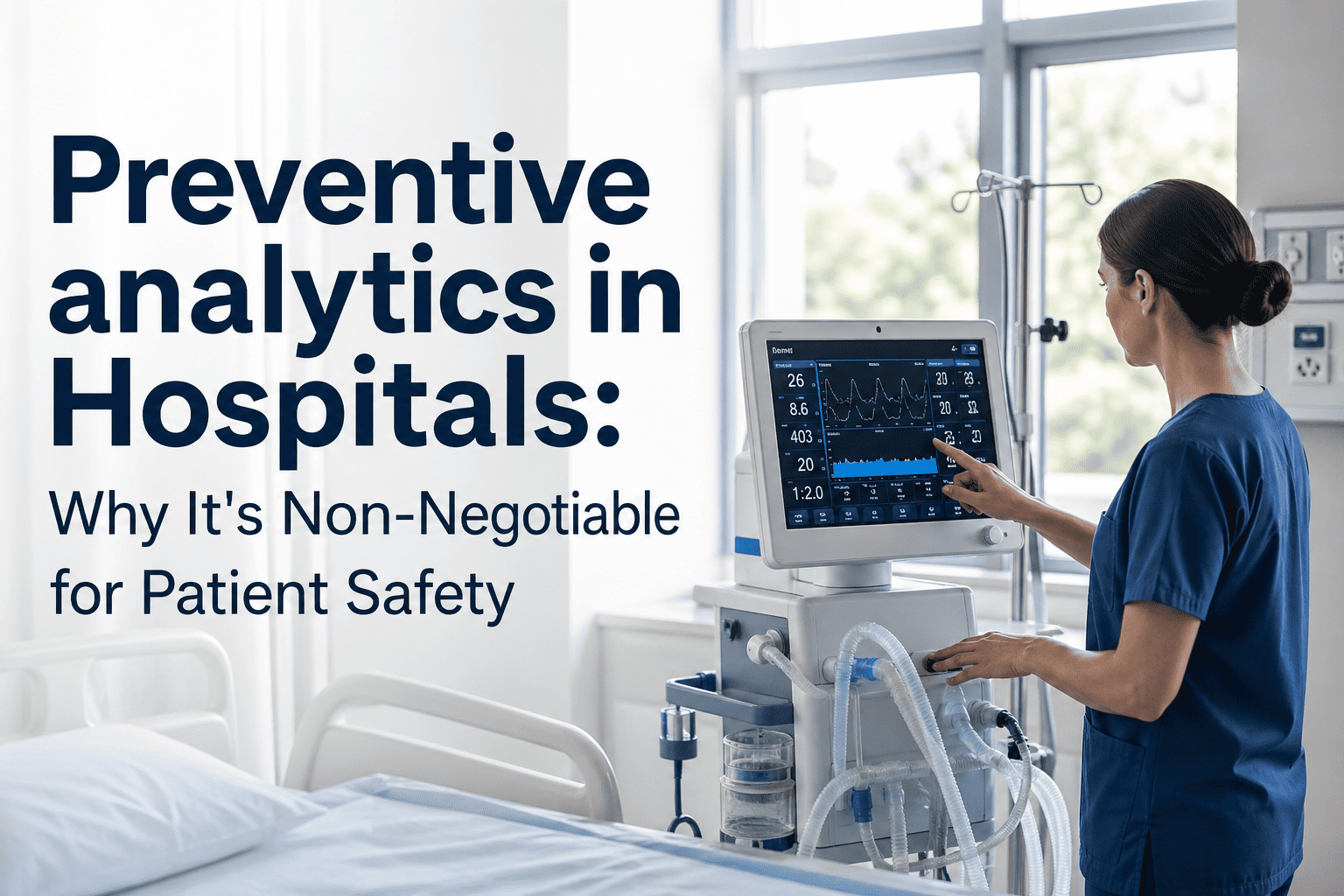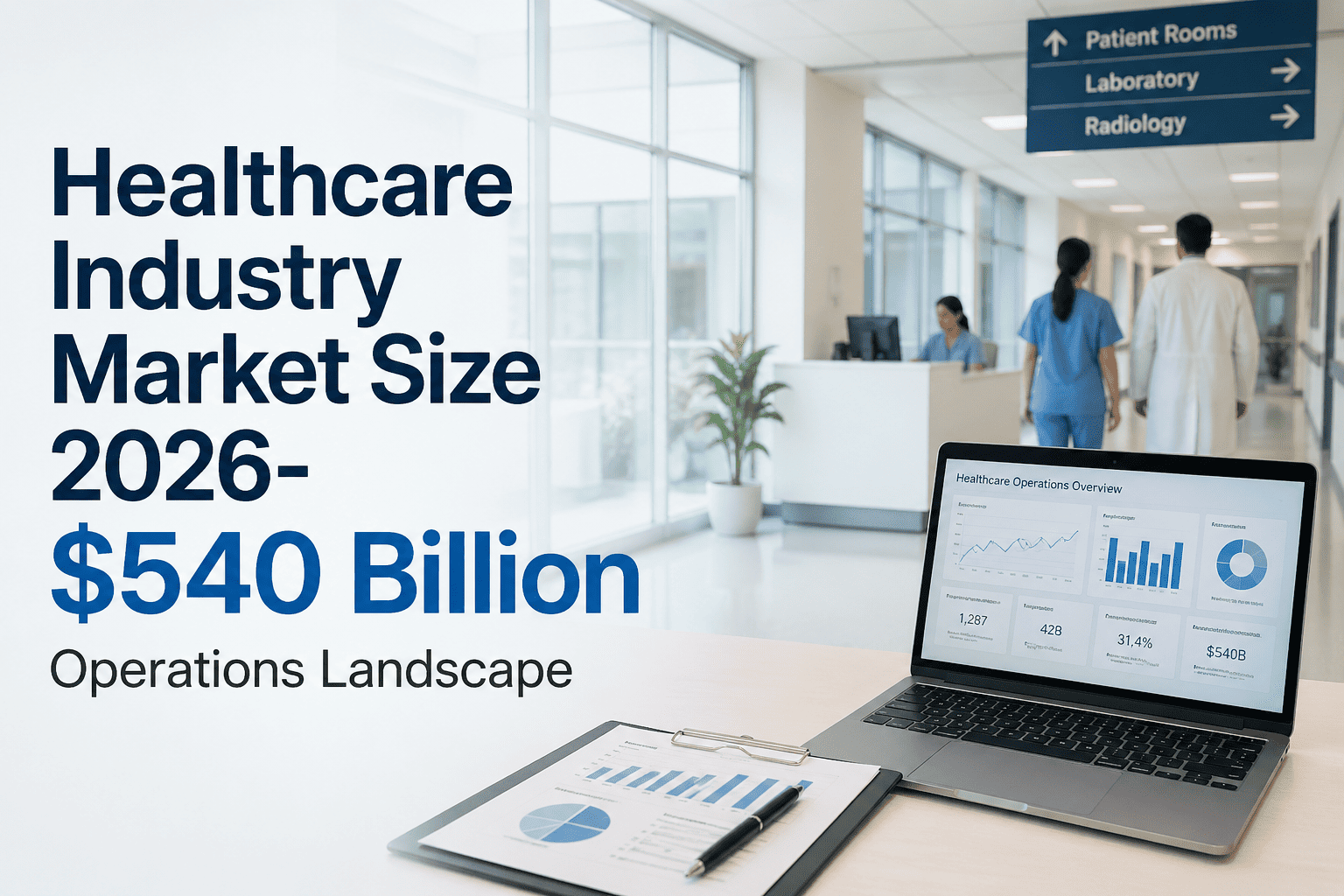
Every hour a hospital runs on fragmented analytics data, it hemorrhages revenue — misallocated equipment budgets, undetected compliance gaps, and avoidable patient safety incidents compound silently until they become audits, lawsuits, or Joint Commission citations. For healthcare operations leaders, 2026 is no longer a year for piloting dashboards — it is the year to unify your hospital's intelligence layer before the cost of inaction exceeds the cost of transformation.
Is Your Hospital Analytics Platform Built for 2026 Operational Scale?
Centralize equipment telemetry, compliance workflows, and predictive maintenance into a single clinical operations dashboard — purpose-built for healthcare systems.
Why Hospital Analytics Is Your Highest-ROI Operational Investment in 2026
Hospital analytics in 2026 is not a reporting function — it is the connective tissue between clinical outcomes, regulatory compliance, and capital efficiency. Healthcare systems that operate without a unified analytics layer face a compounding liability: equipment downtime inflates labor costs, untracked preventive cycles trigger accreditation risk, and siloed facility data prevents the cross-departmental intelligence required for strategic CapEx decisions.
The Four Pillars of a Unified Hospital Analytics Platform
Modern hospital analytics is a multi-domain discipline. Each pillar must be integrated into a Single Pane of Glass architecture — or data silos will continue to erode both clinical and financial performance.
Equipment Uptime Analytics
- Real-time sensor monitoring across all critical medical devices
- Automated alerts for deviations from manufacturer baselines
- Predictive failure scoring to prevent OR cancellations
- Full maintenance history for accreditation audit trails
Compliance Documentation
- Auto-generated inspection records tied to regulatory frameworks
- Joint Commission, CMS, and OSHA checklist automation
- Immutable digital audit trails for every maintenance action
- Deadline tracking with automated escalation workflows
Preventive Maintenance AI
- AI-driven scheduling based on actual usage cycles, not static calendars
- Risk-ranked maintenance queues prioritized by patient safety impact
- Technician dispatch optimization to reduce labor overhead
- Parts inventory forecasting to eliminate procurement delays
Integrated Operations Platform
- Unified dashboard connecting facilities, biomedical, and clinical teams
- Cross-departmental data correlation for strategic decision-making
- CapEx lifecycle modeling for long-range equipment planning
- API connectivity to existing CMMS, EHR, and BIM systems
Legacy Friction vs. iFactory Optimized Excellence
The operational gap between fragmented hospital analytics and a unified intelligent platform is not incremental — it is structural. This matrix maps the direct financial and clinical cost of inaction against the measurable outcomes of an integrated deployment.
| Operational Domain | Legacy Friction | iFactory Optimized Excellence | Clinical & Financial Impact |
|---|---|---|---|
| Equipment Monitoring | Manual rounds, reactive repairs | 24/7 IoT sensor telemetry with AI alerts | ↓ 40% Downtime |
| Compliance Tracking | Spreadsheets, paper logs, missed deadlines | Automated checklists with immutable audit trails | Zero Citation Risk |
| Preventive Maintenance | Static calendar schedules | AI-prioritized queues based on usage and risk | ↑ 35% PM Compliance |
| Data Accessibility | Siloed vendor dashboards, no cross-correlation | Single pane of glass, department-wide visibility | 3× Faster Decisions |
| CapEx Planning | Reactive replacement, budget overruns | Predictive lifecycle modeling with ROI scoring | ↓ 25% Capital Waste |
| Staff Coordination | Phone-based dispatch, manual work orders | Automated technician routing with digital work orders | ↑ 50% Tech Efficiency |
How Unified Analytics Solves Staff Burnout and Increases Patient Throughput
The downstream effect of fragmented hospital analytics is not just operational — it is deeply clinical. When biomedical teams chase paper records and facilities staff manage reactive repairs, the burden falls on nursing and clinical coordinators. iFactory's integrated platform directly addresses the three clinical-operational failure modes costing hospitals patients, staff, and revenue.
Staff Burnout Reduction
- Eliminates manual inspection logging — saves 3–5 hrs/technician/week
- Automated escalation removes coordination burden from nursing staff
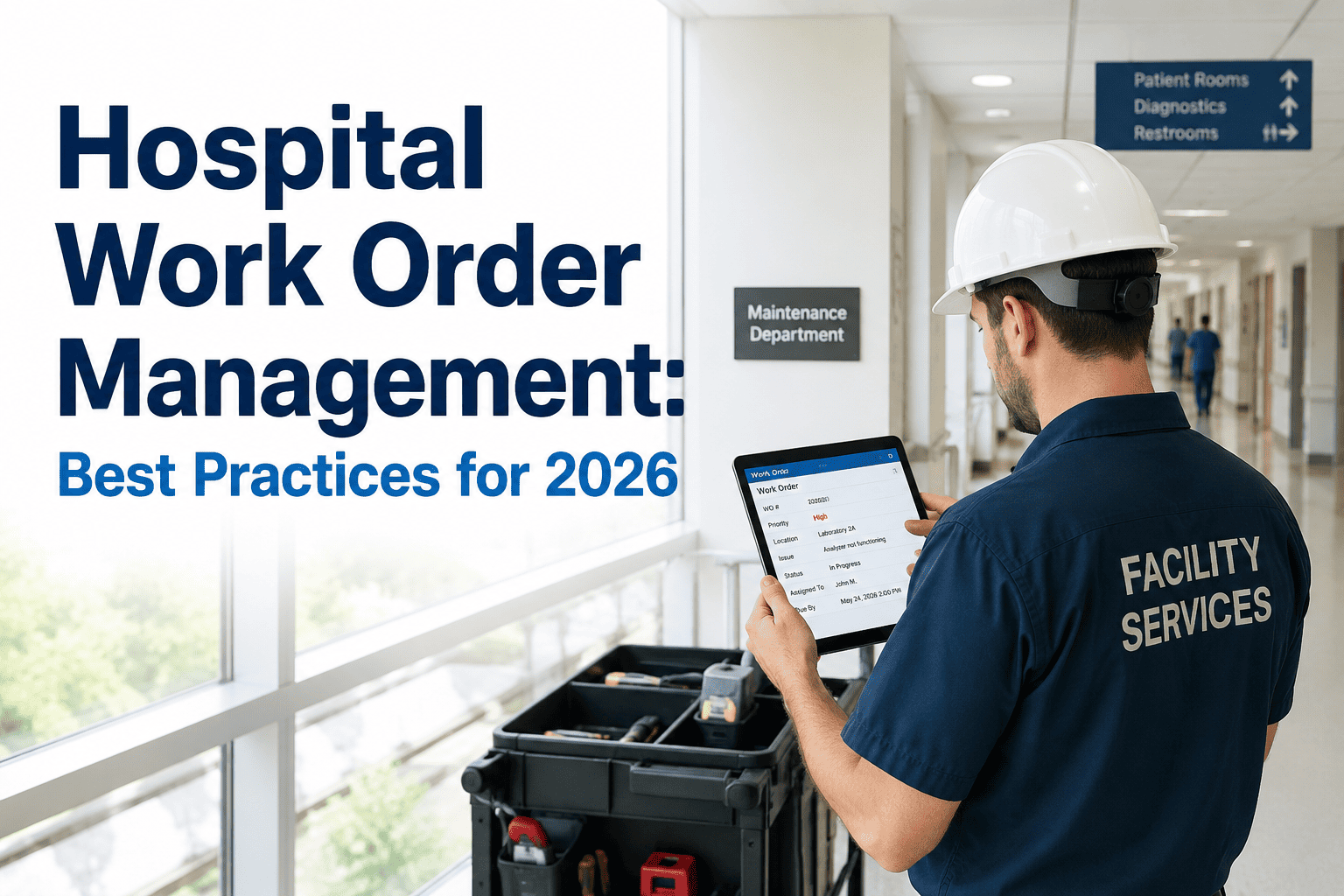
- Mobile-first work orders replace radio-based dispatch chaos
- Predictive scheduling prevents emergency overtime surges
Patient Throughput Optimization
- OR equipment verified operationally before each surgical block
- ICU device uptime monitoring prevents care delays
- Bed management analytics reduce discharge bottlenecks
- Imaging equipment uptime directly increases diagnostic capacity
Patient Safety Assurance
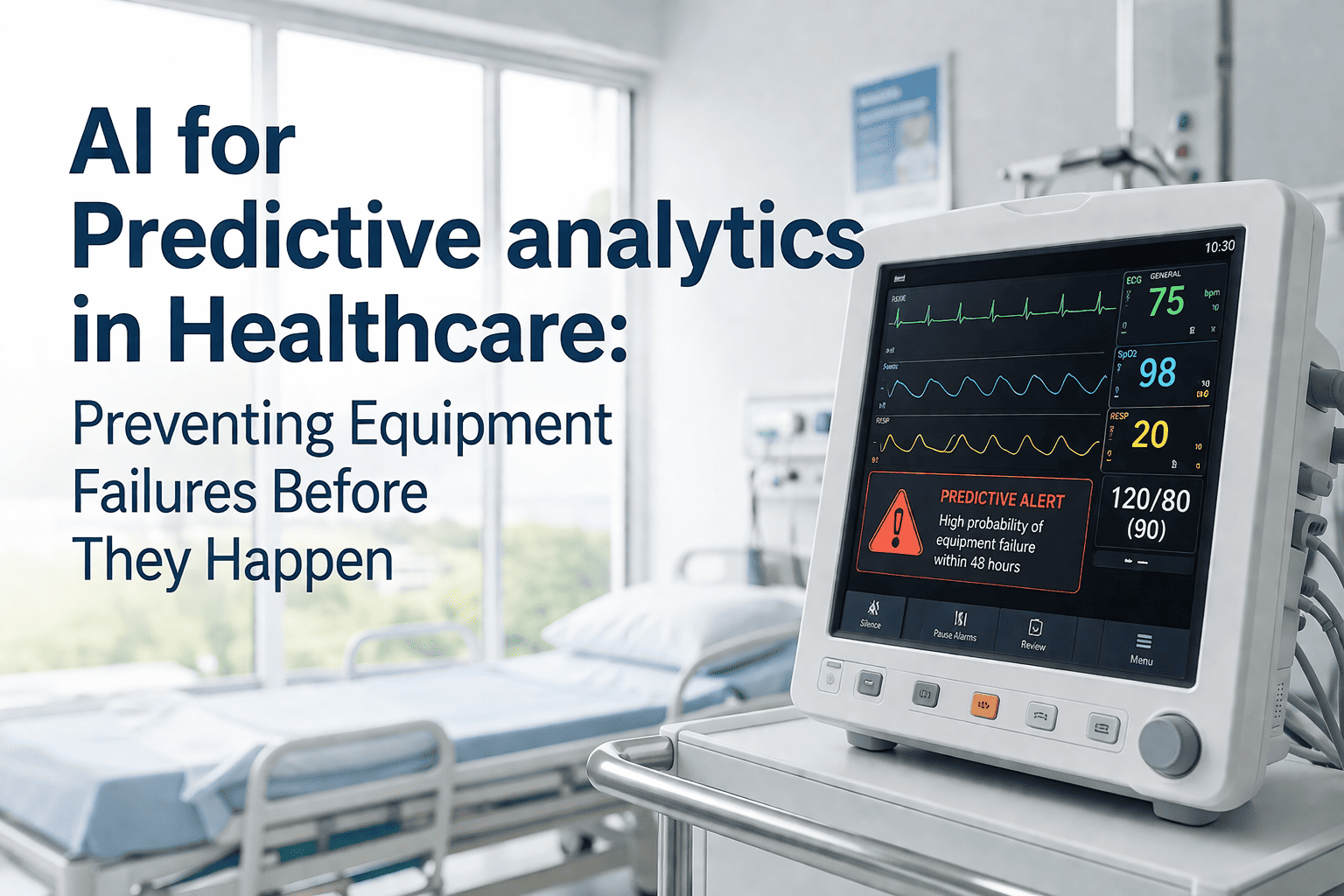
- Critical device failure prediction before patient contact
- Automated recall and safety alert tracking per FDA notifications
- Sterilization cycle compliance logged with timestamp integrity
- Full chain of custody for every high-risk device interaction
Five-Phase Deployment for Enterprise Hospital Analytics
Asset Inventory & Digital Twin Creation
- Full biomedical and facilities equipment cataloguing
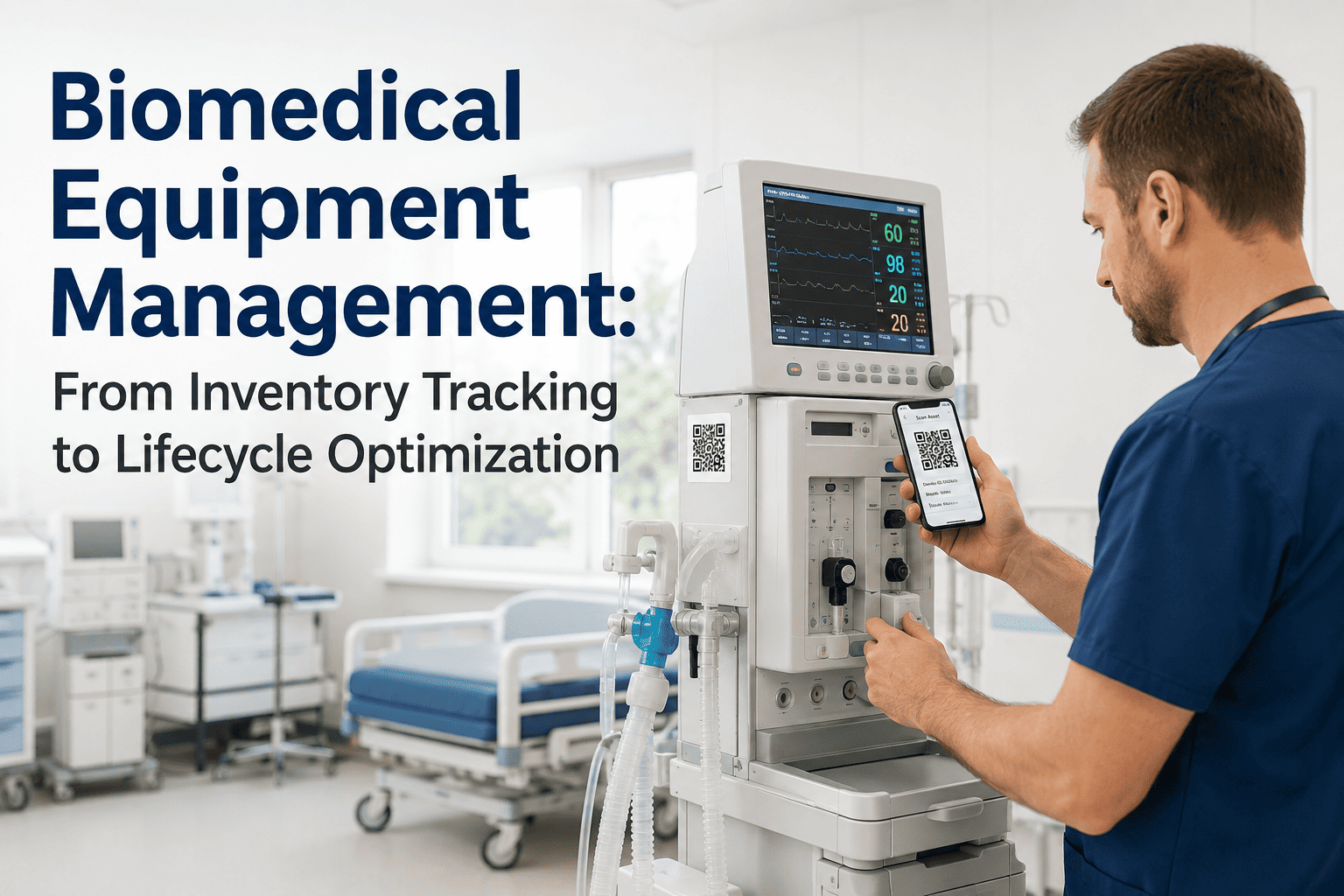
- QR/RFID tagging for physical-digital asset linkage
- 3D facility mapping for spatial maintenance planning
IoT Sensor Integration & Telemetry Activation
- Non-invasive sensor deployment on critical medical devices
- Real-time data streaming to central analytics engine
- Baseline performance fingerprinting per device class
AI Model Training & Predictive Configuration
- Historical maintenance data ingestion for model calibration
- Risk threshold configuration with clinical leadership
- Automated maintenance queue logic validation
Compliance Framework Mapping
- Joint Commission, CMS, and state DOH requirement encoding
- Automated documentation workflow activation
- Staff role-based access and accountability assignment
Lifecycle Optimization & Continuous Intelligence
- CapEx replacement modeling based on real-world wear data
- Department-level analytics reporting for executive dashboards
- Continuous AI model refinement as operational data matures
Top Barriers to Hospital Analytics Maturity — And How to Close Them
- Biomedical, facilities, and clinical teams on separate systems
- No cross-departmental correlation of equipment and patient outcomes
- Resolved via vendor-neutral API integration layer
- Break-fix workflows dominate over preventive strategies
- No predictive intelligence to prioritize high-risk assets
- AI risk scoring shifts teams to proactive operations
- Manual record-keeping creates audit exposure windows
- Missed PM deadlines generate regulatory citations
- Automated workflows eliminate documentation debt
- Outdated systems lack real-time sensor integration
- No AI layer for predictive or prescriptive analytics
- Modern APIs allow hybrid deployment without rip-and-replace
- PHI-adjacent telemetry must meet HIPAA encryption standards
- Cloud deployments require healthcare-grade security posture
- AES-256 encryption with role-based access control enforced
- CFOs cannot quantify maintenance program effectiveness
- No linkage between operational data and financial outcomes
- Executive analytics dashboards surface direct cost savings
Launch a Unified Hospital Analytics Platform Today
Stop managing hospital operations reactively. Unify your equipment telemetry, compliance workflows, and predictive AI into one intelligent dashboard built for enterprise healthcare systems.
Frequently Asked Questions — Hospital Analytics Management 2026
Can iFactory integrate with our existing CMMS or EHR systems?
Yes. The platform uses vendor-neutral APIs compatible with major CMMS platforms (IBM Maximo, ServiceMax, UpKeep) and EHR systems. Integration is additive — no rip-and-replace required, and all historical data is preserved and enriched.
How does the platform handle HIPAA compliance for device telemetry?
All telemetry data is processed under AES-256 encryption with role-based access control. The platform is deployed on healthcare-grade cloud infrastructure with immutable audit logs for every data interaction — fully aligned with HIPAA technical safeguard requirements.
What is the typical implementation timeline for a mid-sized hospital?
Most mid-sized hospital deployments (200–500 beds) complete the five-phase implementation within 90 to 120 days. High-priority asset classes such as OR equipment and ICU devices are activated first to deliver immediate operational ROI while broader rollout continues. Book a Demo to see a deployment timeline tailored to your facility size.
How does predictive AI reduce accreditation risk?
The platform maps every preventive maintenance action to its corresponding regulatory requirement — Joint Commission EC standards, CMS Conditions of Participation, or state DOH rules. Automated deadline tracking and documentation generation eliminate the manual compliance gaps that most commonly generate citations during surveys.
What is the measurable ROI for hospital analytics in year one?
Hospitals typically achieve a 40% reduction in unplanned equipment downtime, a 35% improvement in preventive maintenance compliance, and significant avoidance of regulatory penalty costs — averaging $2.1M in annual operational savings. Book a Demo to model your specific facility's ROI with our financial calculator.
Start Your Hospital Analytics Transformation with a Strategic Workflow Audit
Join leading healthcare systems already closing operational gaps with predictive analytics, automated compliance, and unified equipment intelligence.