Every minute a hospital work order sits unresolved, it silently bleeds revenue, erodes patient trust, and compounds staff burnout — yet most facilities still manage critical service requests through outdated ticketing systems, phone chains, and spreadsheets that were never built for clinical urgency.
Is Your Work Order System Costing You Patients?
iFactory transforms hospital service requests into resolved outcomes — faster, smarter, and fully traceable from request to resolution.
The Hidden Cost of Slow Work Orders in Clinical Environments
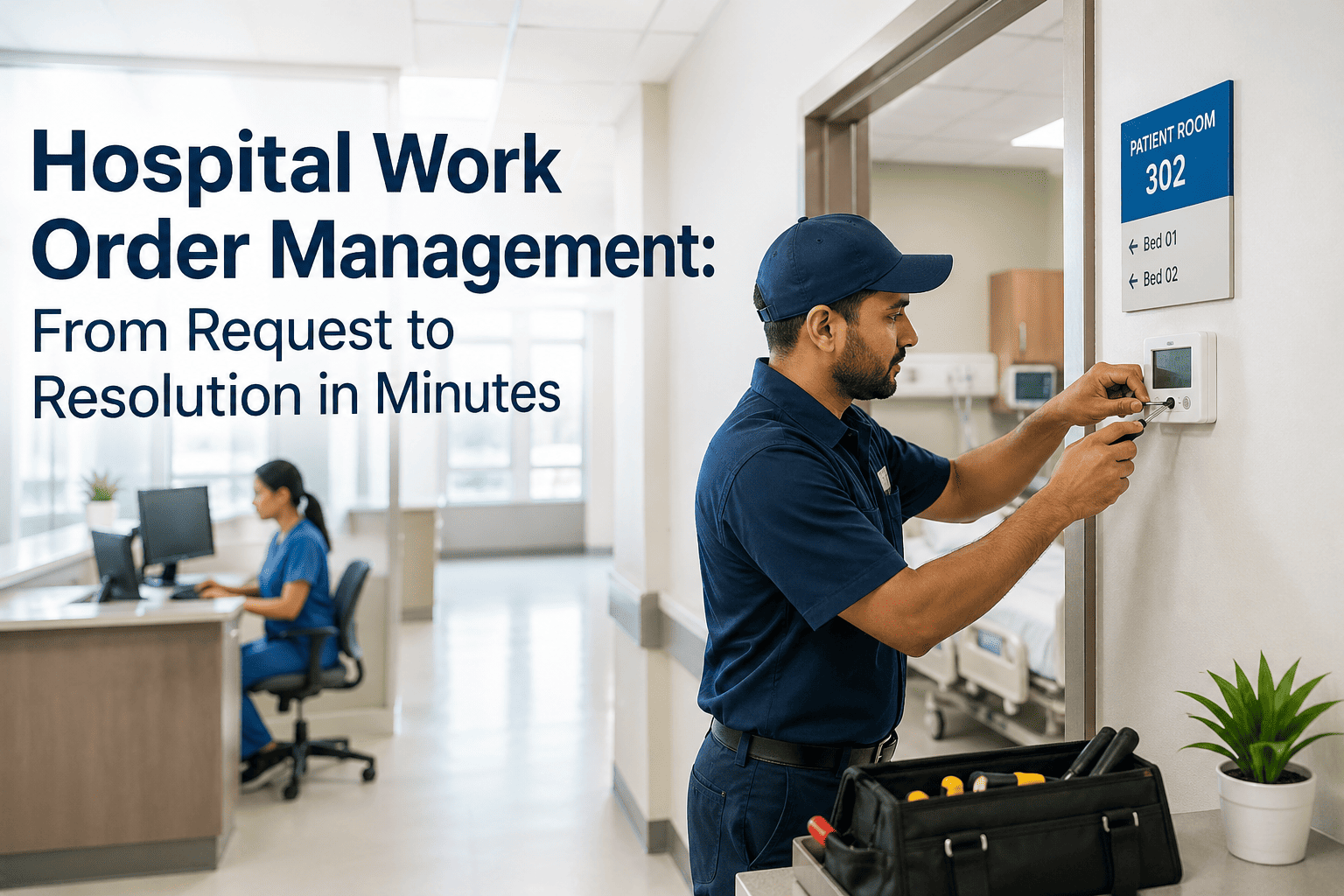
Delayed work orders are not an IT problem — they are a patient safety and revenue problem. When a biomedical equipment fault goes unresolved for 90 minutes, an OR suite sits idle. When housekeeping requests stack up in a phone queue, bed turnover slows and admissions stall. iFactory's Work Order Management module eliminates this operational drag by converting every service request into a prioritized, tracked, and SLA-bound workflow — resolved in minutes, not hours.
Revenue Leakage
- Idle OR suites from unresolved equipment faults
- Stalled bed turnover blocking new admissions
- SLA breaches triggering penalty clauses
- Manual rework consuming billable labor hours
Patient Safety Exposure
- Untracked equipment failures reaching clinical areas
- No audit trail for regulatory inspections
- Infection control delays from slow housekeeping cycles
- Missed preventive maintenance windows
Staff Burnout Drivers
- Nurses coordinating repairs instead of caring for patients
- No visibility into request status post-submission
- Repeated follow-up calls consuming shift time
- Technicians receiving duplicate or mis-routed tickets
iFactory Outcome
- 40% reduction in average response time — Year 1
- Real-time SLA dashboards for department heads
- Auto-prioritization by patient impact score
- Full audit trail for Joint Commission compliance
Legacy Friction vs. iFactory Optimized Excellence
The gap between how most hospitals manage work orders today and what iFactory delivers is not incremental — it is structural. This comparison matrix defines the exact operational delta that drives clinical and financial outcomes.
| Operational Dimension | Legacy Friction | iFactory Optimized Excellence | Clinical Impact |
|---|---|---|---|
| Request Submission | Phone call, email, or paper form | Mobile-first digital intake with category tagging | Faster Triage |
| Prioritization Logic | Manual, first-in-first-out | AI-driven priority score by patient impact | Safety-First Routing |
| Dispatch & Assignment | Supervisor calls technician manually | Auto-dispatch to nearest qualified technician | 40% Faster Response |
| SLA Tracking | No tracking — SLA breaches discovered post-incident | Real-time SLA countdown with escalation alerts | Zero Surprise Breaches |
| Status Visibility | Requester must call to check status | Live status updates to requester's device | Staff Time Reclaimed |
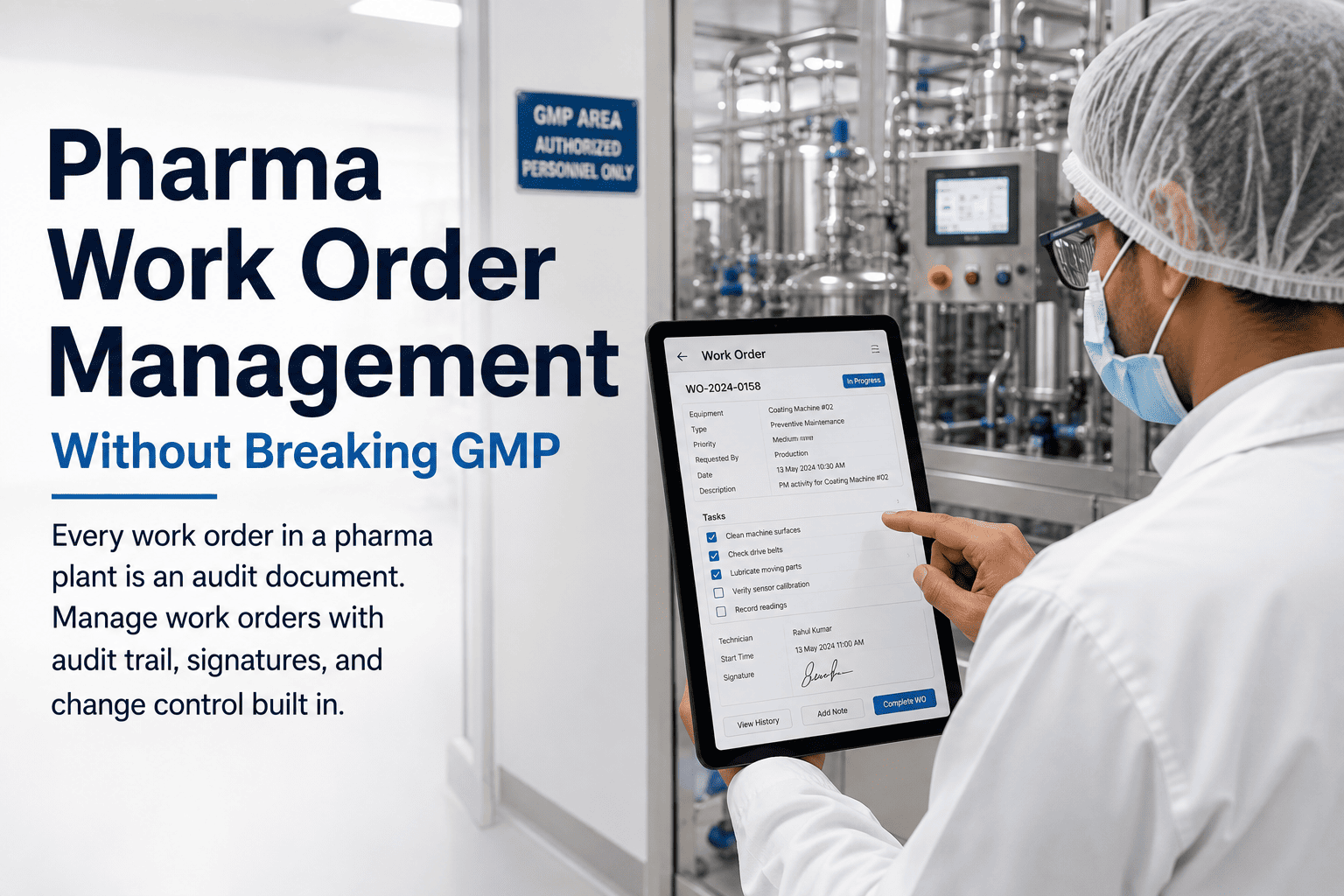
| Audit & Compliance | Paper logs, incomplete records | Immutable digital audit trail per work order | Regulatory Ready |
| Analytics & Reporting | Monthly manual spreadsheet compilation | Real-time dashboards with department-level KPIs | Executive Visibility |
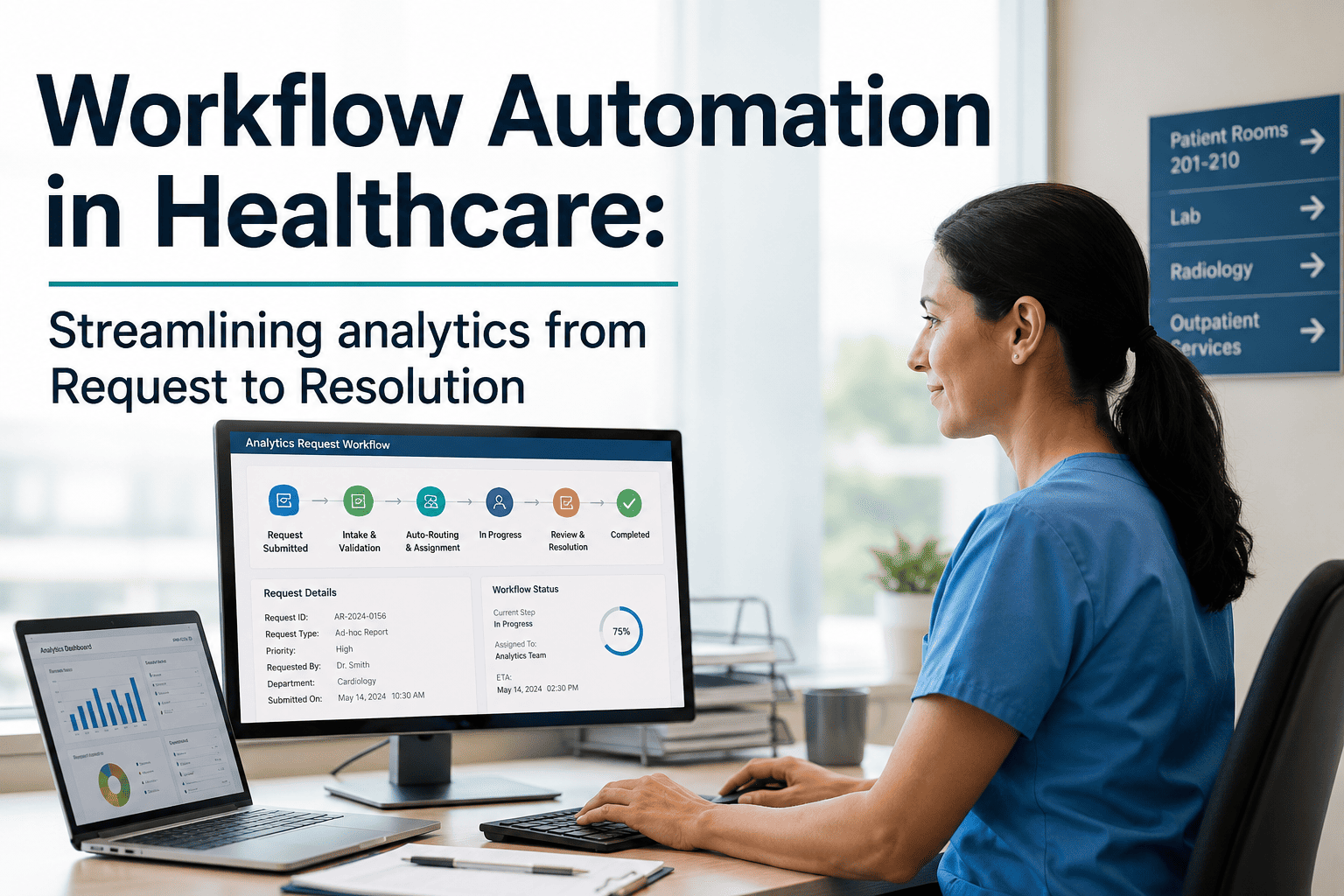
From Request Submitted to Resolution Confirmed — In Minutes
iFactory's work order lifecycle is engineered around clinical urgency, not administrative convenience. Every touchpoint is automated, every status is visible, and every resolution is documented.
Smart Intake
- Staff submit via mobile app, web portal, or QR-code scan at asset location
- Request auto-categorized: Biomedical, Facilities, Housekeeping, IT, or Safety
- Photo and location data attached at submission — no follow-up calls needed
Intelligent Prioritization
- AI scores each request by patient proximity, equipment criticality, and department load
- Critical requests escalate automatically — no manual intervention required
- SLA clock starts instantly upon submission with countdown alerts
Auto-Dispatch & Routing
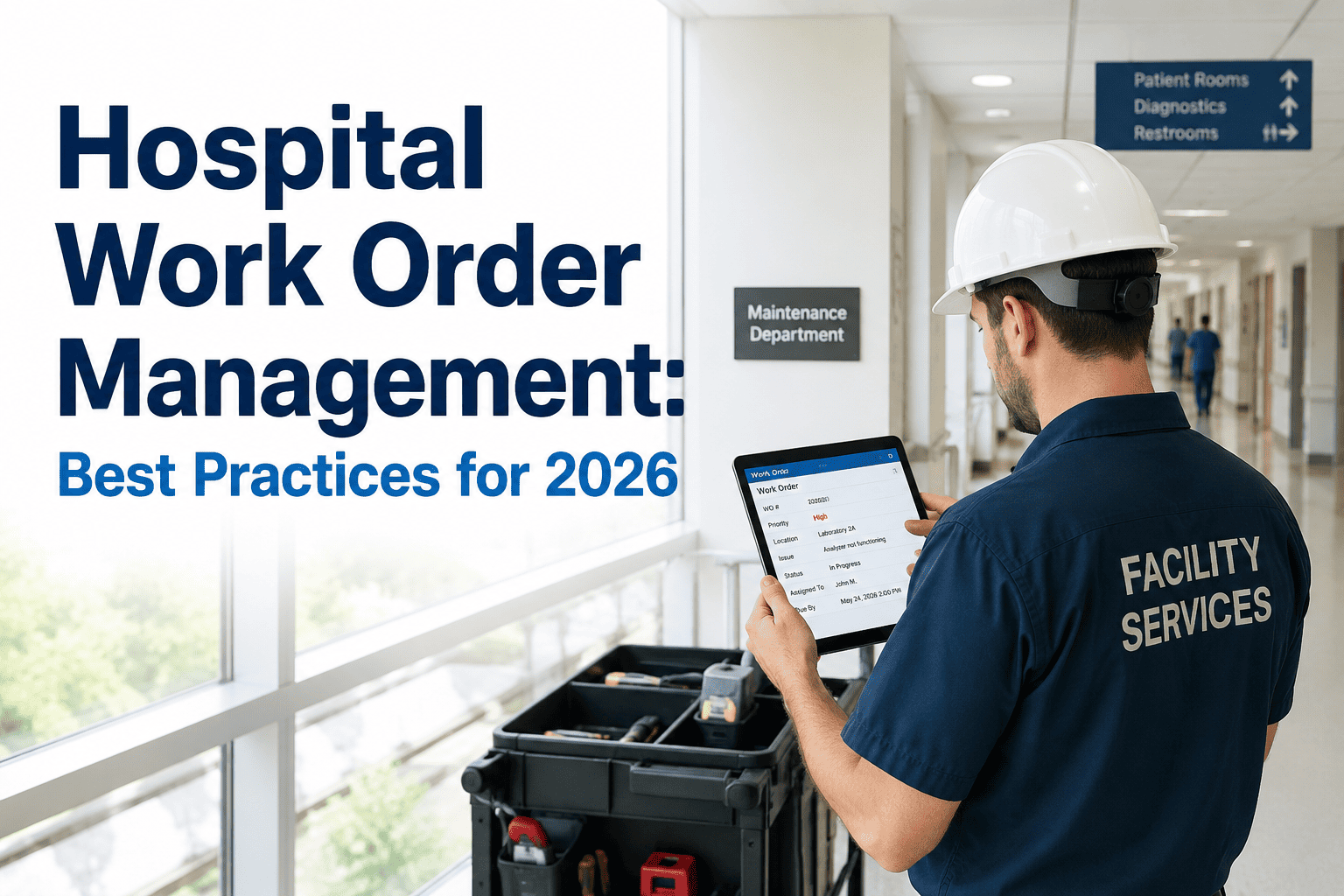
- Nearest qualified technician receives push notification with full request context
- Workload balancing prevents technician overload across shifts
- Backup escalation fires automatically if no acceptance within threshold
Live Status Tracking
- Requester receives real-time updates: Assigned → In Progress → Resolved
- Department heads view all open orders on a live operations dashboard
- Escalation paths visible to supervisors before SLA breach occurs
Resolution & Audit Trail
- Technician closes order with digital sign-off, photo confirmation, and resolution notes
- Immutable record created instantly — Joint Commission and DNV audit-ready
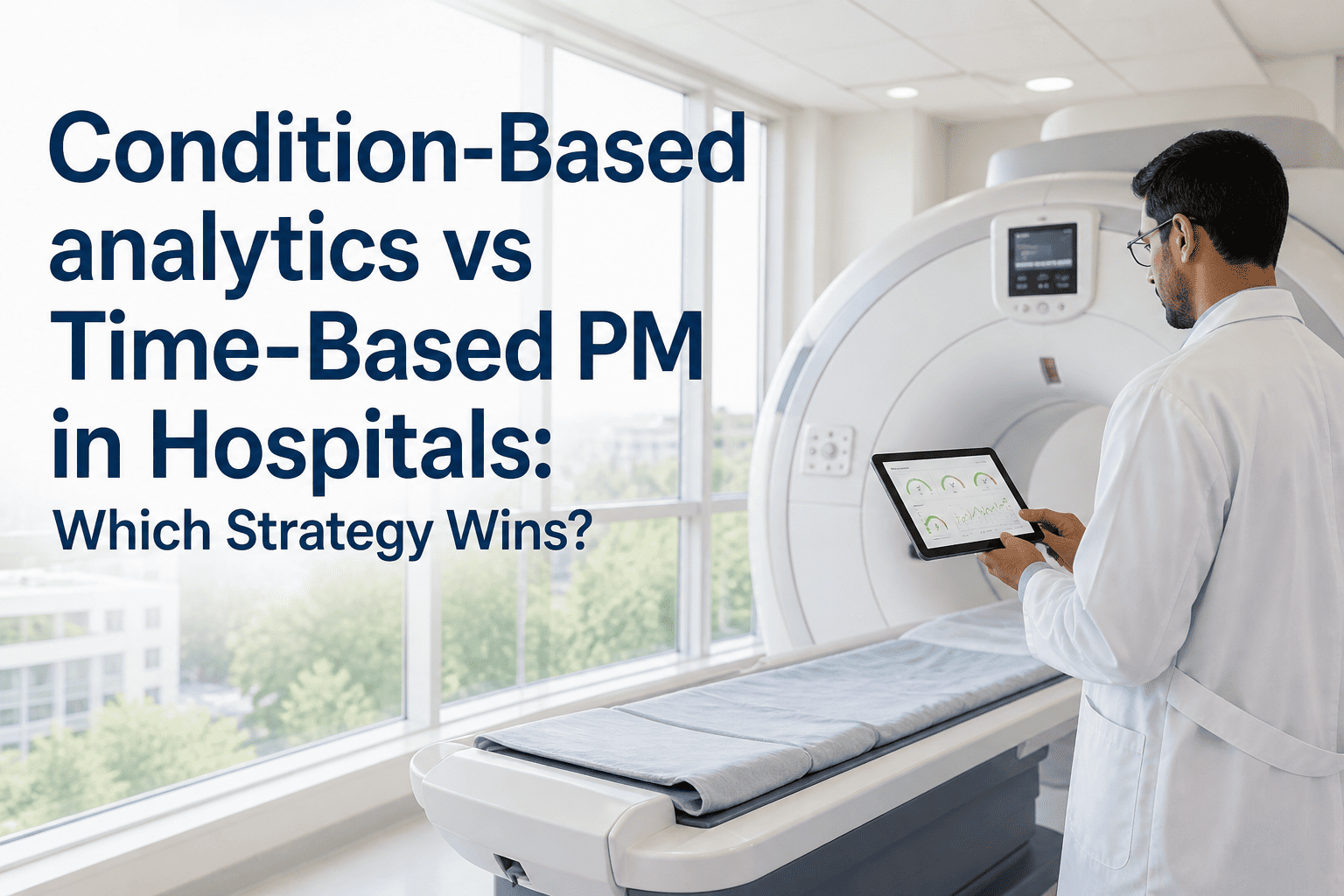
- Resolution data feeds predictive maintenance models for future prevention
Three Dimensions of Clinical Transformation
iFactory's Work Order Management module does not just fix tickets — it reconfigures the operational backbone of your hospital's service delivery. The clinical impact spans three interconnected domains.
Staff Burnout Reduction
- Nurses spend zero minutes chasing work order status
- Technicians receive clear, prioritized task queues — not phone floods
- Shift supervisors gain real-time workload visibility
- Automated escalations remove the burden of manual follow-up
- Reduced after-hours emergency requests via predictive scheduling
Patient Throughput Increase
- Bed turnover accelerated by faster housekeeping dispatch cycles
- OR downtime reduced through real-time biomedical fault resolution
- Admission bottlenecks cleared via rapid facilities response
- Discharge delays cut when transport and room prep sync automatically
- Higher daily census capacity without adding headcount
Compliance & Risk Elimination
- Every work order creates a timestamped, unalterable record
- Preventive maintenance schedules auto-generated from asset history
- Regulatory inspection reports generated in one click
- Equipment failure patterns surfaced before incidents occur
- SLA breach risk flagged 30 minutes before deadline — not after
Enterprise-Grade Integration with Your Existing Hospital Stack
iFactory is not a standalone tool — it is a connective intelligence layer that amplifies the systems your hospital already runs. Deployment is phased, non-disruptive, and scaled to your facility's complexity.
Bidirectional sync with leading CMMS platforms and EHR systems — no duplicate data entry, no manual reconciliation.
Every work order links to the specific asset record — full maintenance history, warranty status, and lifecycle cost visible in one view.
Single dashboard across all campuses, departments, and service lines — from a single community hospital to a 40-facility health system.
Granular permissions by role: clinicians, technicians, supervisors, and C-suite each see exactly what they need — nothing more.
iOS and Android apps for field technicians — offline-capable, barcode-scanning, and GPS-verified task completion.
Push KPI data to Power BI, Tableau, or any BI platform via API — enabling CFO-level visibility into operational performance.
Stop Losing Revenue to Slow Service Requests
Book a personalized demo or request an Operational Gap Audit to see exactly where your hospital's work order process is leaking time, money, and patient capacity.
Frequently Asked Questions — Hospital Work Order Management
How quickly can iFactory be deployed in an active hospital environment?
Most facilities achieve full go-live within 6 to 8 weeks. iFactory deploys in phased rollouts by department — starting with high-impact areas like Biomedical and Facilities — minimizing operational disruption during cutover.
Does the platform support Joint Commission and DNV compliance documentation?
Yes. Every work order generates an immutable, timestamped audit record. Compliance reports for Joint Commission, DNV, and CMS inspections can be exported on demand in structured formats.
Can iFactory handle work orders for both biomedical equipment and facilities management?
Absolutely. The platform manages multi-category work orders — Biomedical, Facilities, Housekeeping, Environmental Services, and IT — within a single unified dashboard with category-specific workflows and SLA rules.
What ROI can a mid-sized hospital expect in Year 1?
Facilities averaging 500+ work orders per month typically see a 40% reduction in labor hours spent on coordination, a measurable increase in bed turnover speed, and full SLA compliance within the first quarter of deployment.
Is the system accessible to non-technical clinical staff?
Yes. The staff-facing submission interface requires no training — it mirrors consumer app simplicity. Nurses submit requests in under 60 seconds via mobile. Technical complexity is reserved for the operations and analytics layer used by supervisors and administrators.
See iFactory Work Order Management in Action
Join healthcare systems already resolving work orders 40% faster with automated dispatch, real-time SLA tracking, and full regulatory compliance built in.