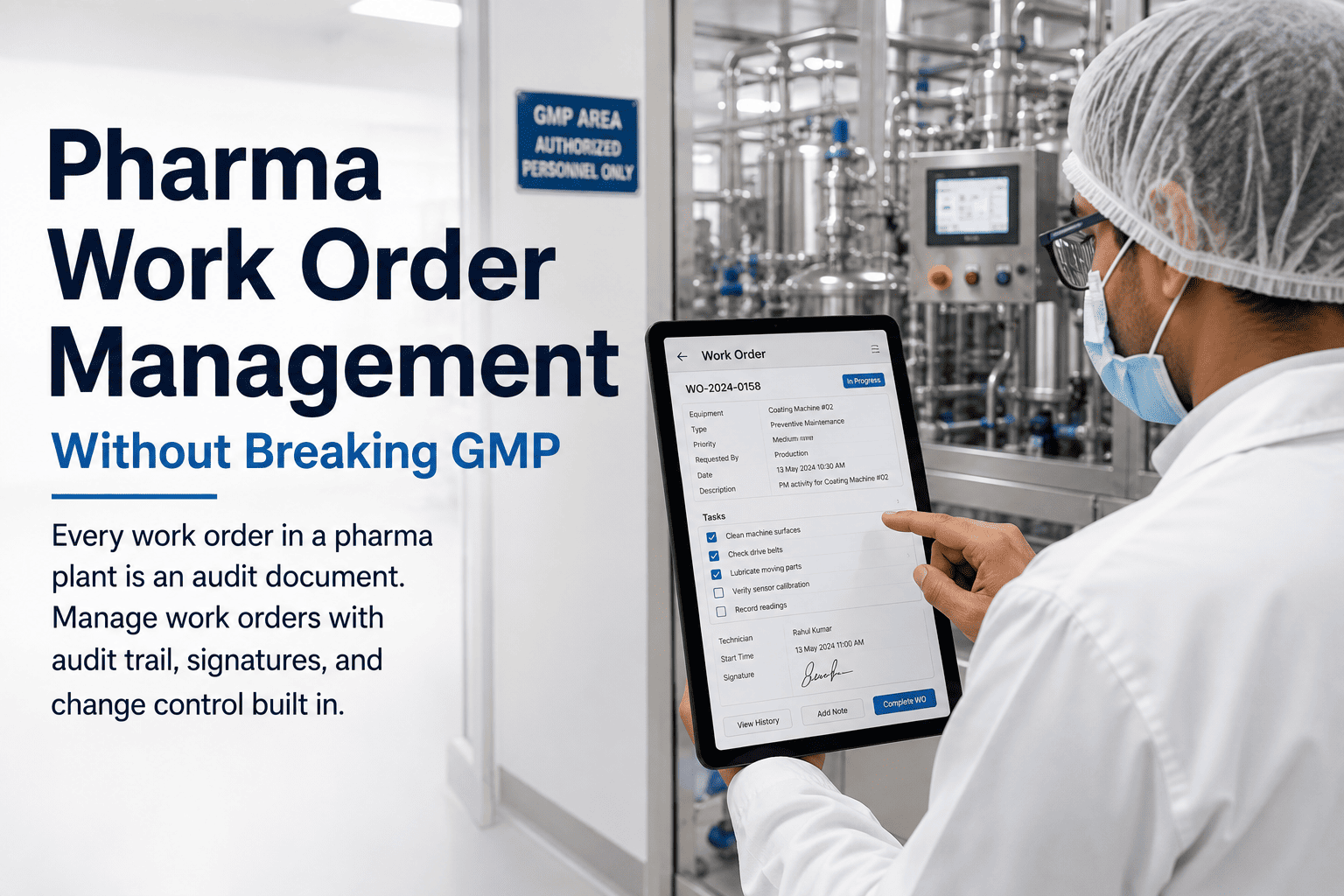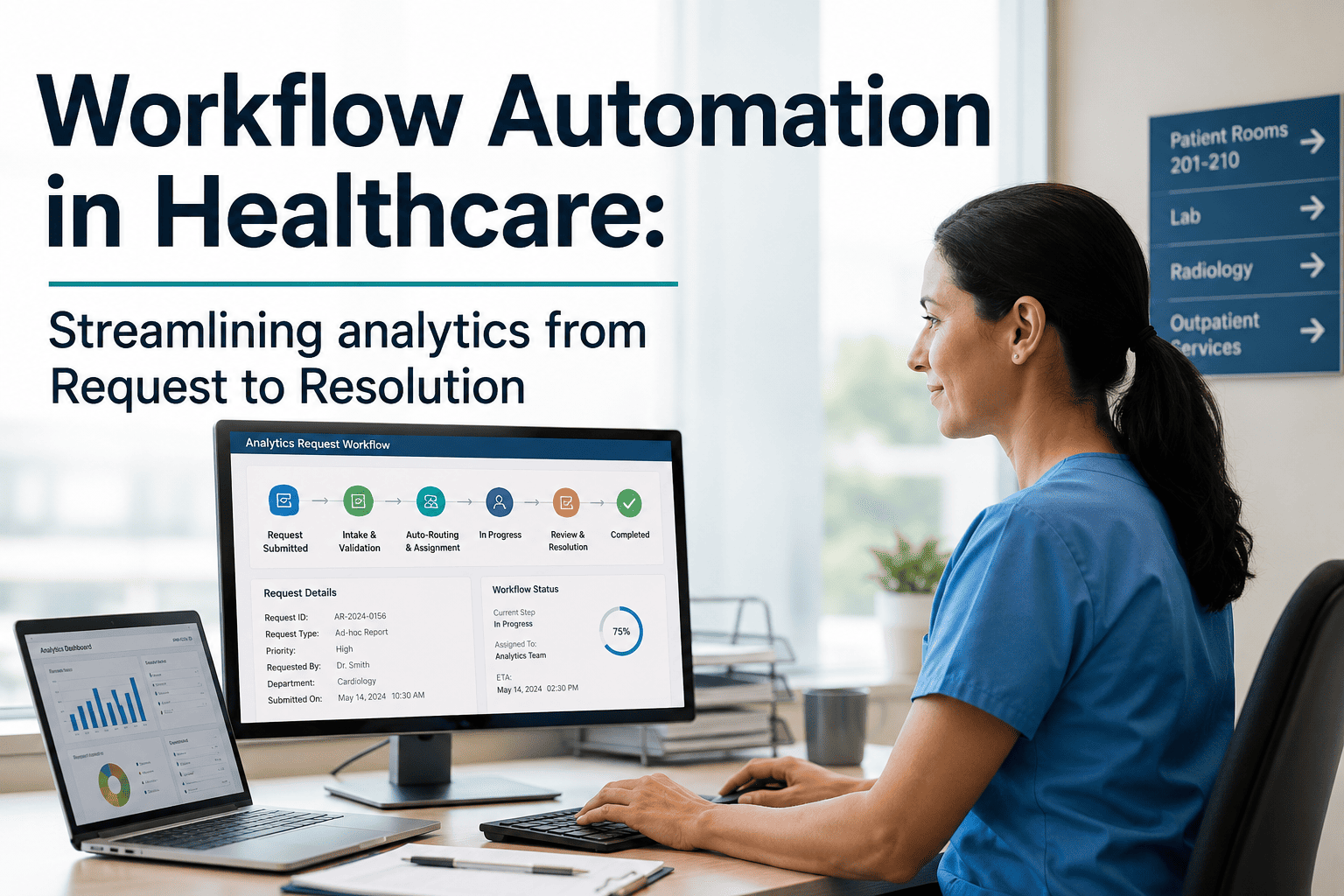
Every hour a hospital work order sits unresolved, your facility loses an average of $1,200 in operational drag — equipment downtime, staff overtime, and deferred patient throughput compound silently into a revenue hemorrhage that most analytics supervisors never see on a single dashboard. In 2026, the gap between reactive work order management and AI-driven orchestration is no longer a technology conversation; it is a patient safety and financial survivability conversation.
Is Your Work Order System Costing You Patients?
iFactory Healthcare eliminates legacy friction with AI-driven routing, real-time SLA tracking, and mobile-first workflows built for clinical environments.
Why Hospital Work Order Management Is a 2026 Board-Level Priority
Analytics supervisors are no longer measured solely on resolution rates. They are accountable for clinical uptime, regulatory compliance, and capital preservation. The modern hospital work order system must deliver on all three — simultaneously.
Revenue at risk: Untracked work orders inflate preventable equipment failure costs by up to 34% annually across mid-size hospitals.
Compliance exposure: Missing SLA documentation triggers Joint Commission findings that delay accreditation and invite CMS scrutiny.
Staff burnout signal: Technicians managing paper-based or siloed digital systems report 40% more cognitive load than those on unified mobile platforms.
AI readiness gap: Facilities without structured work order data cannot train predictive maintenance models — losing the single biggest ROI lever in healthcare facilities management.
Legacy Friction vs. iFactory Optimized Excellence
This matrix translates the operational gap into financial and clinical terms your leadership team can act on immediately.
| Operational Dimension | Legacy Friction | iFactory Optimized Excellence | Clinical & Financial Impact |
|---|---|---|---|
| Work Order Routing | Manual dispatch, phone queues | AI-driven priority routing engine | 68% faster resolution |
| SLA Tracking | Spreadsheet-based, retrospective | Real-time SLA dashboards with alerts | Zero missed compliance windows |
| Mobile Access | Desktop-locked, paper supplements | Mobile-first iOS/Android native app | 52% reduction in technician idle time |
| Preventive Scheduling | Static calendar, frequently skipped | AI-predicted maintenance windows | 40% fewer emergency repairs |
| Analytics & Reporting | Monthly exports, lagging indicators | Live operational intelligence layer | Board-ready KPIs in real time |
| Audit Trail | Fragmented, manually compiled | Immutable digital record per order | Regulatory-ready in one click |
7 Proven Best Practices for Hospital Work Order Management
Analytics supervisors leading high-performing facilities share a common operational playbook. These seven practices separate facilities that scale from those that stagnate.
Implement AI-Driven Priority Scoring
- Assign dynamic risk scores to every incoming request based on asset criticality and patient proximity.
- Automatically escalate life-safety equipment orders ahead of non-clinical requests.
- Reduce supervisor triage time by up to 75% through intelligent auto-routing.
Deploy Mobile-First Workflows
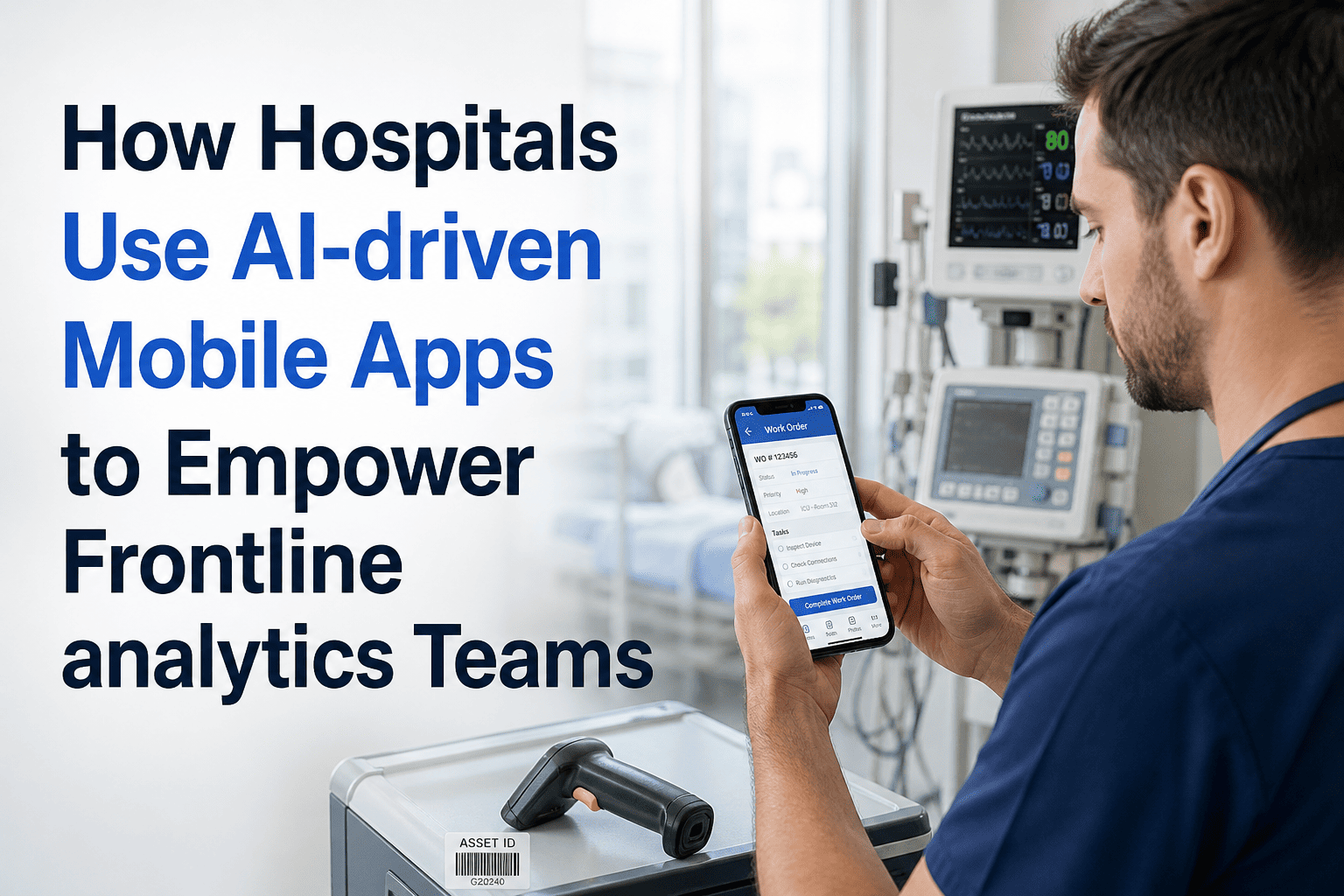
- Equip every technician with offline-capable mobile work order access.
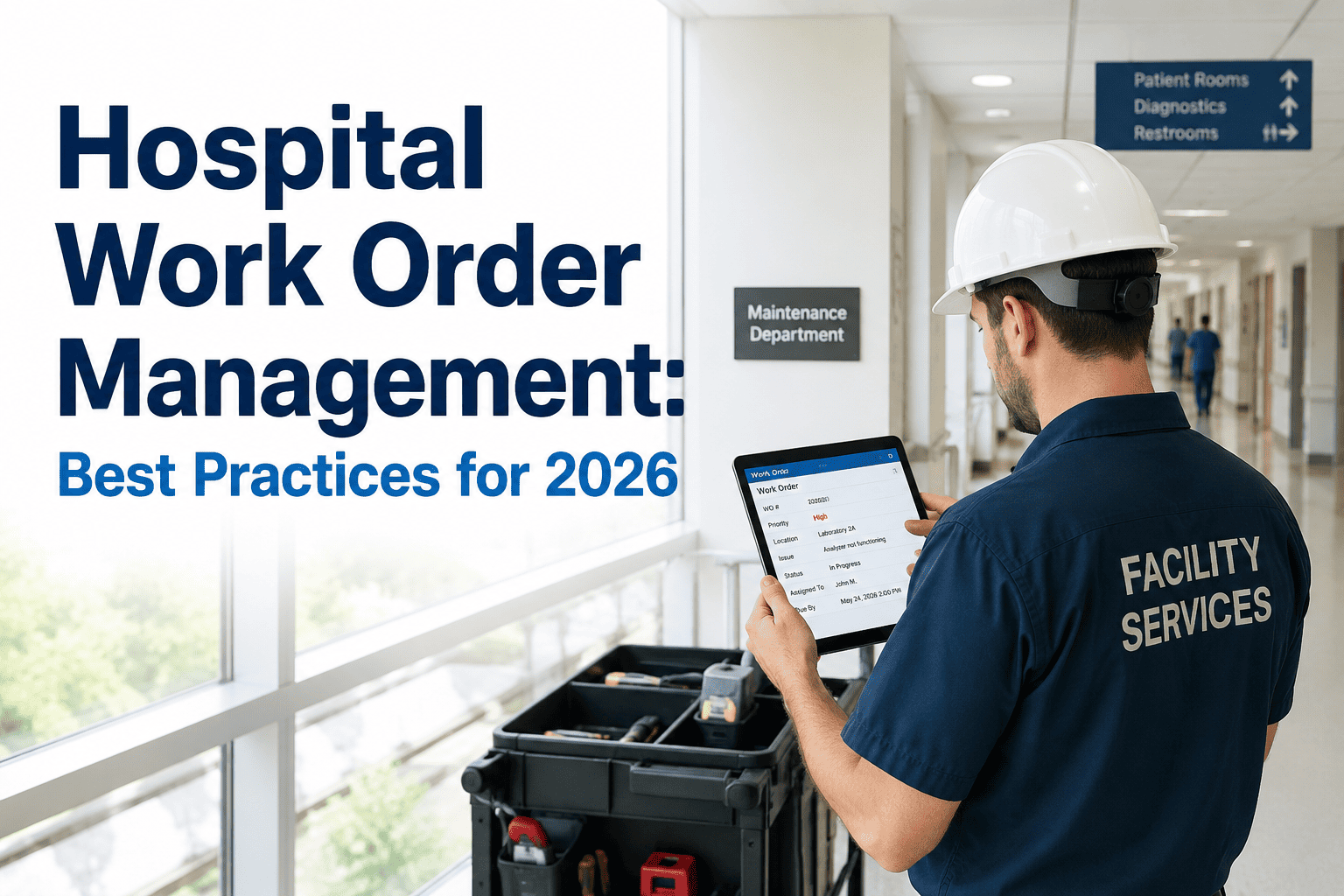
- Enable photo documentation, e-signatures, and parts lookup at point of work.
- Eliminate clipboard-to-system transcription errors that inflate labor costs.
Establish Tiered SLA Frameworks
- Define response-time tiers: Immediate (life-safety), Urgent (clinical support), Routine (facility).
- Automate escalation triggers when SLA thresholds approach breach.
- Generate audit-ready SLA compliance reports for accreditation bodies on demand.
Integrate Preventive Maintenance Triggers
- Link PM schedules directly to equipment IoT sensor thresholds.
- Auto-generate work orders when vibration, temperature, or cycle-count anomalies are detected.
- Shift from time-based to condition-based maintenance to reduce unnecessary service calls by 30%.
Centralize Multi-Department Request Intake
- Unify nursing, environmental services, biomedical, and facilities into one request portal.
- Eliminate shadow systems — phone calls, WhatsApp groups, and sticky notes — that create liability gaps.
- Provide department heads with real-time visibility into order status without contacting dispatch.
Build a Living Asset Intelligence Database
- Link every work order to a structured asset record with full maintenance history.
- Enable AI to detect failure patterns and recommend proactive capital replacement.
- Support CapEx planning with data-driven asset lifecycle projections.
Close the Loop with Automated Reporting
- Schedule auto-generated performance reports for supervisors, directors, and boards.
- Surface backlog trends, technician utilization rates, and cost-per-order benchmarks weekly.
- Use operational intelligence to renegotiate vendor contracts with evidence-backed data.
How Optimized Work Order Management Elevates Patient Outcomes
Work order management is not a back-office function. It is a direct determinant of patient throughput, staff wellbeing, and clinical safety. Here is where the impact concentrates.
Patient Safety
- Critical equipment downtime reduced through predictive alerts.
- Life-safety orders auto-escalated to senior technicians within 90 seconds.
- HAI risk lowered via timely environmental services dispatch.
- Full documentation trail supports root cause analysis after adverse events.
Staff Burnout Reduction
- Technicians receive clear, prioritized task queues — no more verbal dispatch chaos.
- Nursing staff submit requests in under 30 seconds via mobile portal.
- Supervisors manage by exception, not by constant follow-up calls.
- Reduced cognitive load correlates with 18% lower turnover in facilities teams.
Patient Throughput
- Faster bed-turn cleaning orders reduce discharge-to-admit cycle times.
- Equipment availability increases OR utilization by an average of 11%.
- HVAC and infrastructure reliability sustains sterile field environments.
- Reduced reactive shutdowns protect scheduled procedure revenue streams.
Stop Managing Work Orders. Start Orchestrating Clinical Operations.
iFactory Healthcare gives analytics supervisors a single, intelligent platform to eliminate legacy friction, protect SLA compliance, and deliver measurable ROI in the first 90 days.
Hospital Work Order Management — Frequently Asked Questions
How quickly can iFactory integrate with our existing CMMS or EHR systems?
Most integrations go live within 30 days. iFactory uses vendor-neutral APIs compatible with leading CMMS platforms (Maximo, Infor EAM, eMaint) and can sync work order status into EHR scheduling modules to align clinical and facilities operations in a single data layer.
Does the platform support Joint Commission and DNV audit documentation requirements?
Yes. Every work order creates an immutable, timestamped digital record. SLA compliance reports, PM completion rates, and life-safety equipment logs are exportable in formats accepted by Joint Commission, DNV, and CMS surveyors — eliminating the manual compilation that typically consumes weeks before an audit cycle.
Can the AI routing engine handle multi-campus hospital systems?
Absolutely. The platform is architected for health system scale — routing work orders across multiple campuses, buildings, and departments while maintaining campus-specific SLA configurations and technician assignment pools. Book a Demo to see our multi-campus orchestration architecture.
What is the typical ROI timeline for analytics supervisors?
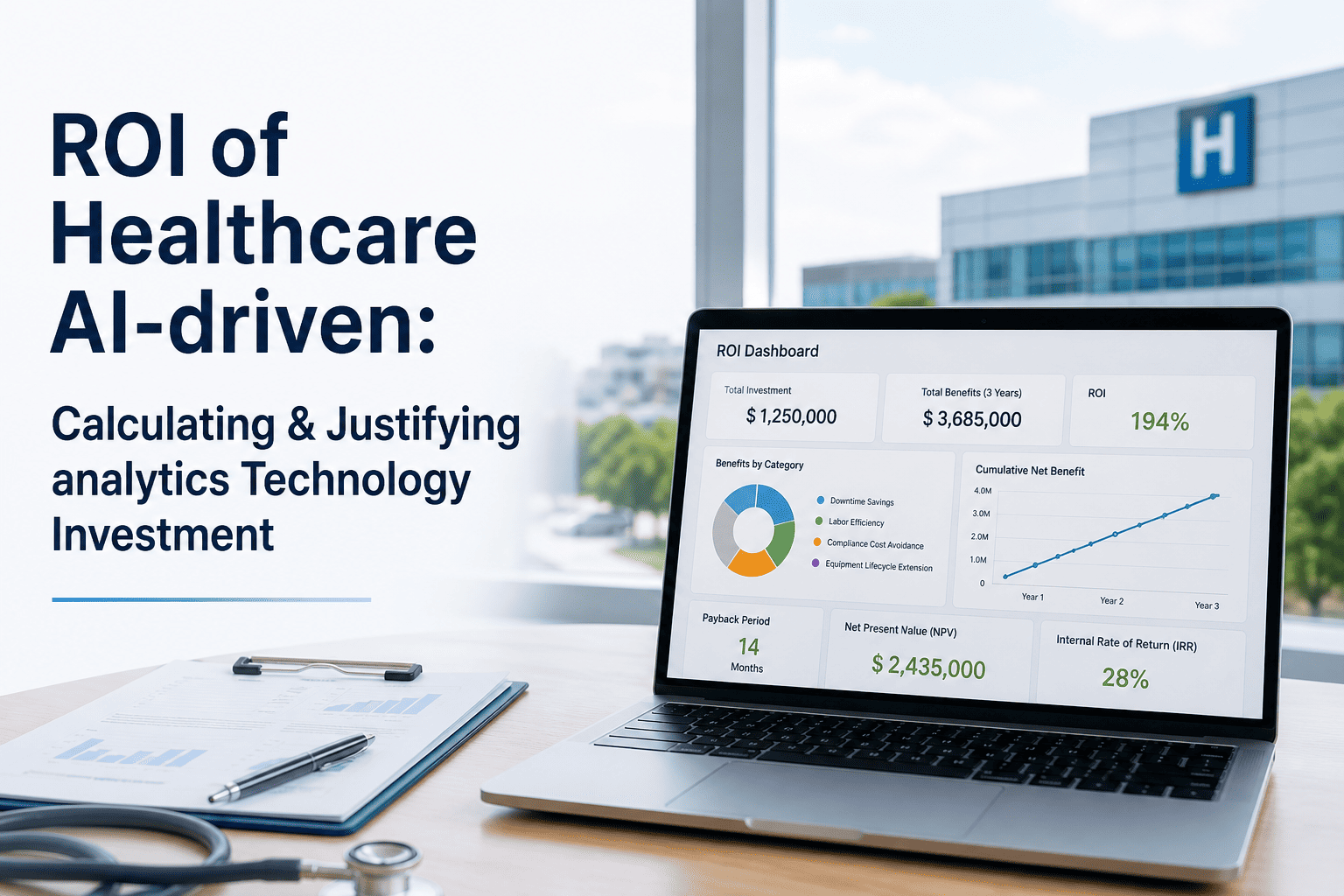
Facilities reporting the fastest ROI typically see three impact waves: (1) labor efficiency gains in weeks 1–8 from mobile workflow adoption, (2) SLA penalty avoidance and compliance cost reduction in months 3–6, and (3) capital preservation from predictive maintenance beginning in month 9. Most mid-size hospitals report full cost recovery within 14 months.
How does iFactory handle work orders in low-connectivity areas like basements or shielded clinical suites?
The mobile application operates fully offline. Technicians can view assigned orders, update status, capture photos, and log labor in zero-connectivity environments. All data syncs automatically when the device re-establishes network access — ensuring zero data loss in RF-shielded MRI suites, sub-basements, or remote plant rooms.
Book Your Hospital Work Order Intelligence Demo Today
Join leading healthcare analytics supervisors who have eliminated legacy friction and built AI-powered operations with iFactory Healthcare.