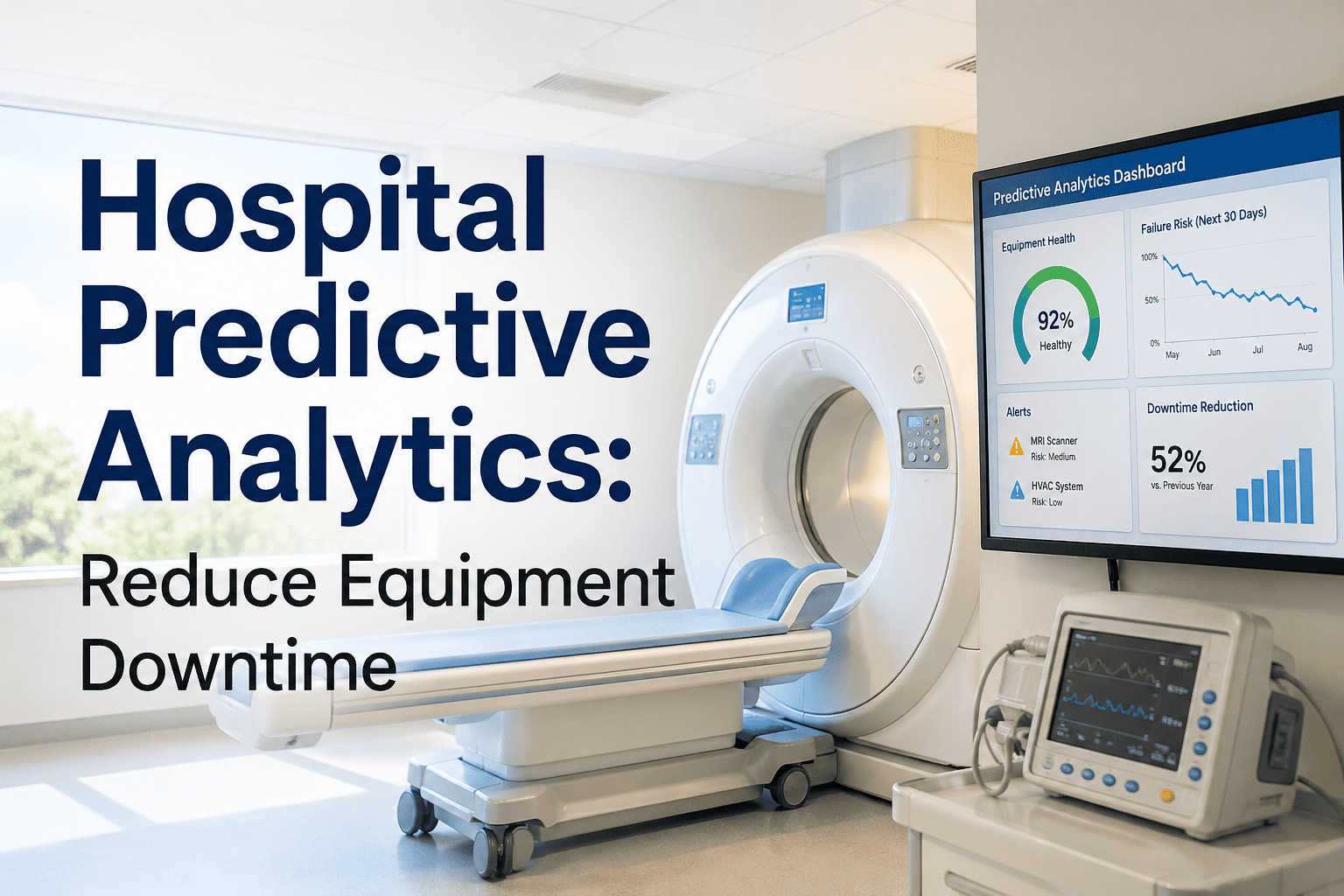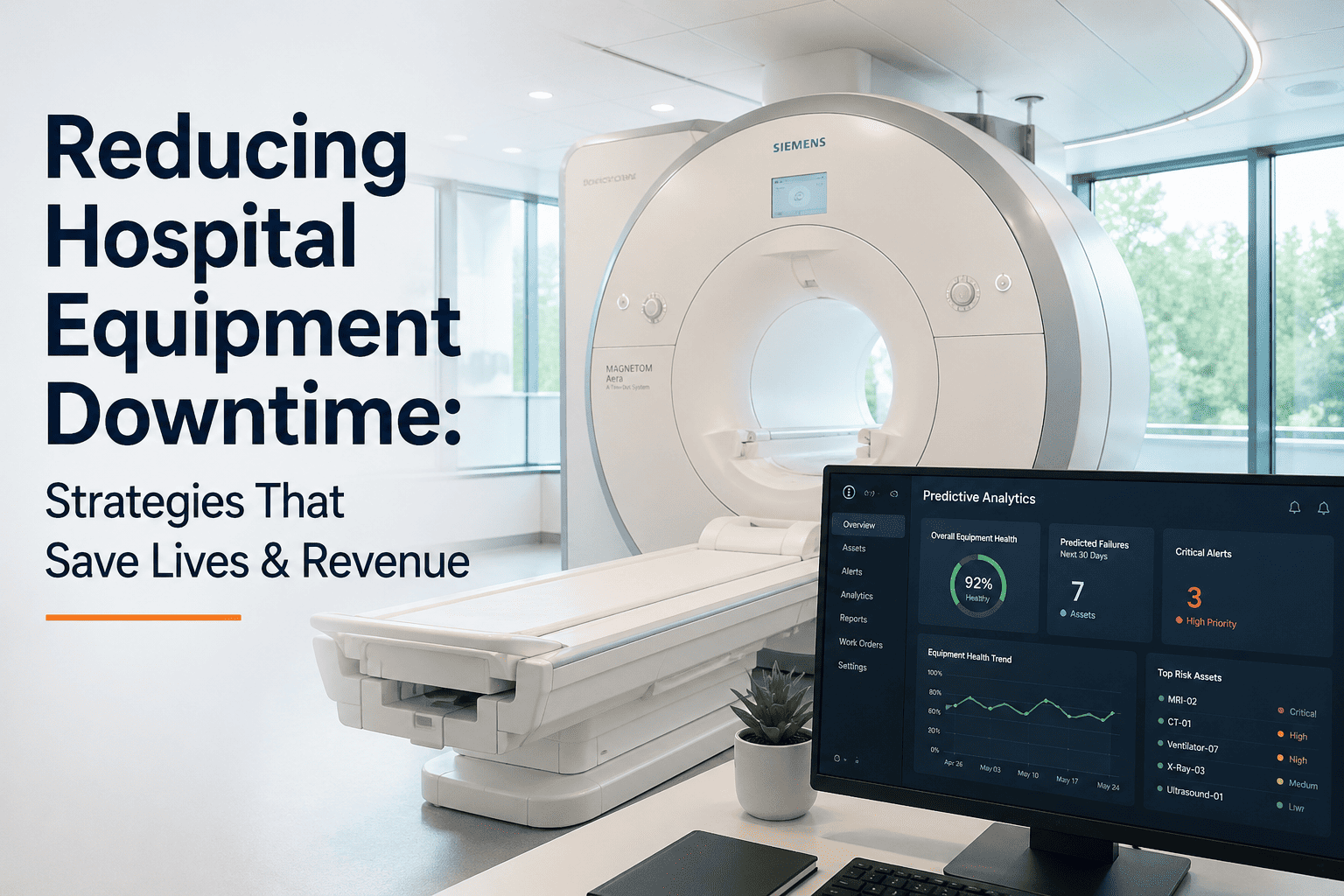
Every hour a critical imaging suite sits idle, your hospital loses $5,000–$10,000 in billable revenue. A single unplanned MRI breakdown can cost $40,000–$80,000 per day — not counting patient diversions, staff overtime, and the irreversible damage to clinical reputation. Yet most hospitals still manage $50M+ equipment portfolios with reactive maintenance cycles, paper-based logs, and siloed vendor contracts. The financial hemorrhage is silent, predictable, and entirely preventable.
Stop Revenue Leakage From Equipment Downtime
iFactory's Predictive Analytics Console gives clinical engineers real-time visibility across every asset — before failure strikes.
The True Cost of Unplanned Downtime in Hospital Operations
Hospital equipment downtime is no longer just a maintenance issue — it is a boardroom-level financial and patient safety risk. Clinical operations leaders are under mounting pressure to deliver measurable uptime guarantees across CT scanners, ventilators, infusion pumps, and surgical robotics. The gap between reactive and predictive maintenance is where revenue is either protected or permanently lost.
Revenue Exposure
- MRI downtime: $40K–$80K per day
- CT scanner idle: $25K–$55K per day
- Surgical suite delay: $15K per cancelled case
- Annual leakage exceeds $3M for mid-size hospitals
Patient Safety Risk
- Undetected ventilator drift increases ICU incidents
- Delayed imaging slows emergency diagnoses
- Equipment failures contribute to 7,000+ adverse events annually
- Regulatory non-compliance triggers CMS penalties
Operational Friction
- Staff overtime surges during unplanned failures
- Emergency vendor calls cost 3× planned service rates
- Manual work orders create documentation backlogs
- Inventory shortages delay repair cycles by 72+ hours
Why Legacy Maintenance Models Fail Modern Hospitals
Most hospital equipment downtime is not random — it is systematic. The root causes are structural failures in how hospitals collect, analyze, and act on equipment performance data. Understanding these failure modes is the first step toward building a resilient, data-driven asset management infrastructure.
Calendar-Based PM Schedules
- Maintenance triggered by dates, not actual equipment condition
- High-use assets under-serviced; low-use assets over-serviced
- No correlation between usage hours and failure probability
Siloed CMMS Data
- Work order history locked in vendor-specific platforms
- No cross-asset pattern recognition or failure forecasting
- Clinical engineers operate on institutional memory, not analytics
No Real-Time Asset Visibility
- Equipment location and status unknown without physical checks
- Utilization data not captured for capital planning decisions
- Alarm fatigue from disconnected monitoring systems
Reactive Parts Procurement
- Critical spares ordered only after equipment failure occurs
- Emergency procurement premiums inflate repair costs by 40–60%
- Supply chain delays extend mean-time-to-repair (MTTR) significantly
Legacy Friction vs. iFactory Optimized Excellence
The operational gap between a reactive maintenance model and an AI-powered predictive platform is measurable in dollars, downtime hours, and patient outcomes. This matrix maps the exact transformation iFactory delivers across your most critical operational metrics.
| Operational Metric | Legacy Friction | iFactory Excellence | Impact Delta |
|---|---|---|---|
| Maintenance Trigger | Fixed calendar schedule | AI condition-based alerts | 35% fewer failures |
| Downtime Detection | Staff reports failure manually | Real-time sensor-triggered alert | 90% faster response |
| Parts Availability | Reactive emergency orders | Predictive inventory pre-staging | 60% lower parts cost |
| Asset Utilization | No tracking or benchmarking | Live utilization dashboard | 20% capacity gain |
| Compliance Reporting | Manual documentation, audit gaps | Auto-generated, audit-ready logs | 100% audit readiness |
| CapEx Planning | Gut-feel replacement cycles | Data-driven lifecycle modeling | $2M+ CapEx savings |
How Predictive Analytics Transforms Clinical & Financial Outcomes
Staff Burnout Reduction
- Eliminates reactive emergency scrambles for clinical engineers
- Automated work order routing reduces administrative burden
- Planned maintenance windows prevent after-hours call-ins
- Engineers shift from firefighting to strategic asset stewardship
Patient Throughput Gains
- Higher imaging suite availability increases daily scan volumes
- Zero unplanned OR delays from equipment failures
- Faster diagnosis cycles improve patient flow through ED
- Consistent equipment uptime supports elective case scheduling
Financial Performance
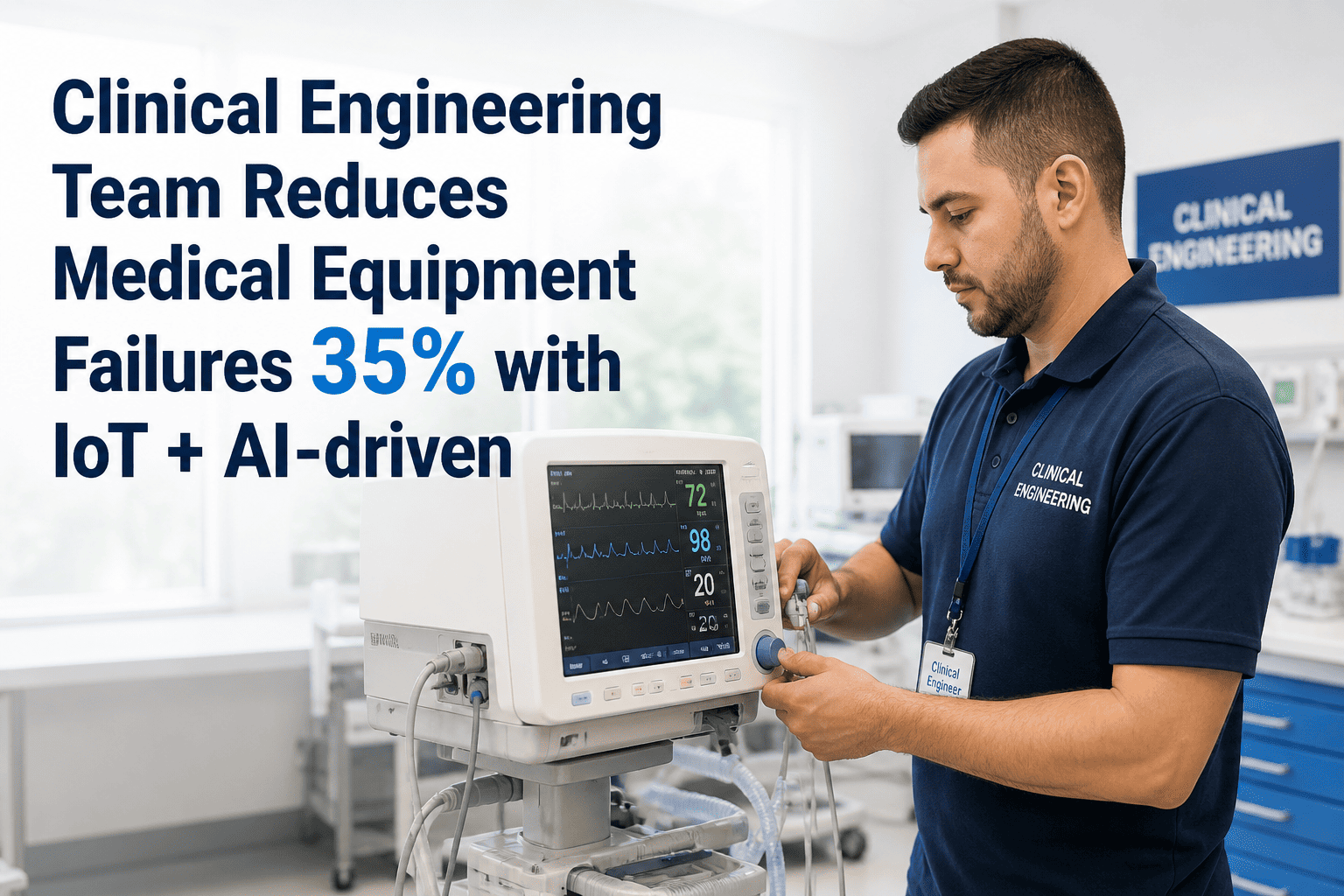
- Average 35%+ reduction in total equipment downtime hours
- ROI achieved within 6–12 months of platform deployment
- Predictive CapEx modeling extends asset life by 3–5 years
- Eliminated emergency service fees save $500K–$1.5M annually
5-Step Path to Zero Unplanned Downtime
Asset Inventory Audit
- Digitize entire equipment portfolio into unified platform
- Tag assets with IoT sensors for live condition monitoring
- Establish baseline utilization and failure-rate benchmarks
Predictive Model Calibration
- Train AI on historical work orders and sensor telemetry
- Define failure-risk thresholds per equipment category
- Configure automated maintenance alert workflows
Live Dashboard Activation
- Deploy real-time asset health console for clinical engineers
- Integrate with existing CMMS and EHR systems via API
- Enable mobile access for field technicians and managers
Workflow Optimization
- Automate work order creation, assignment, and escalation
- Optimize parts procurement with AI-driven inventory forecasting
- Align PM schedules to actual usage patterns, not fixed calendars
Lifecycle & CapEx Planning
- Generate multi-year replacement forecasts with cost modeling
- Produce compliance-ready documentation for TJC and CMS audits
- Continuously refine AI predictions as new failure data accrues
Your Equipment Downtime Has a Cure. Book a Demo Today.
See how iFactory's Predictive Analytics Console transforms hospital asset management from reactive firefighting to proactive, revenue-protecting intelligence.
Frequently Asked Questions — Hospital Equipment Downtime
How quickly can we see measurable downtime reductions after deployment?
Most hospital clients observe a 20–30% reduction in unplanned downtime within the first 90 days, as the platform immediately surfaces deferred maintenance risks and high-failure-probability assets across the portfolio.
Does iFactory integrate with our existing CMMS or EHR infrastructure?
Yes. iFactory uses vendor-neutral APIs to integrate with leading CMMS platforms including IBM Maximo, Infor EAM, and ServiceMax, as well as Epic and Cerner EHR environments for cross-functional asset tracking.
How does the platform handle regulatory compliance documentation?
Every maintenance action, inspection, and work order is automatically logged to an immutable audit trail, pre-formatted for The Joint Commission, CMS, and FDA 510(k) compliance reporting. Book a Demo to review our compliance framework.
What is the typical ROI for a 300-bed hospital deploying predictive analytics?
A 300-bed facility typically realizes $800K–$2M in annual savings from eliminated emergency service contracts, reduced overtime, avoided equipment replacements, and increased billable procedure volume from higher asset availability.
Can the platform scale across a multi-site health system?
Absolutely. iFactory is purpose-built for enterprise health systems, with a centralized dashboard that aggregates asset data across every facility, enabling system-wide benchmarking, standardized PM protocols, and consolidated CapEx planning. Book a Demo to see our enterprise architecture.
Eliminate Equipment Downtime Risk Across Your Hospital
Join healthcare systems protecting millions in annual revenue with iFactory's AI-powered Predictive Analytics Console.

.png)