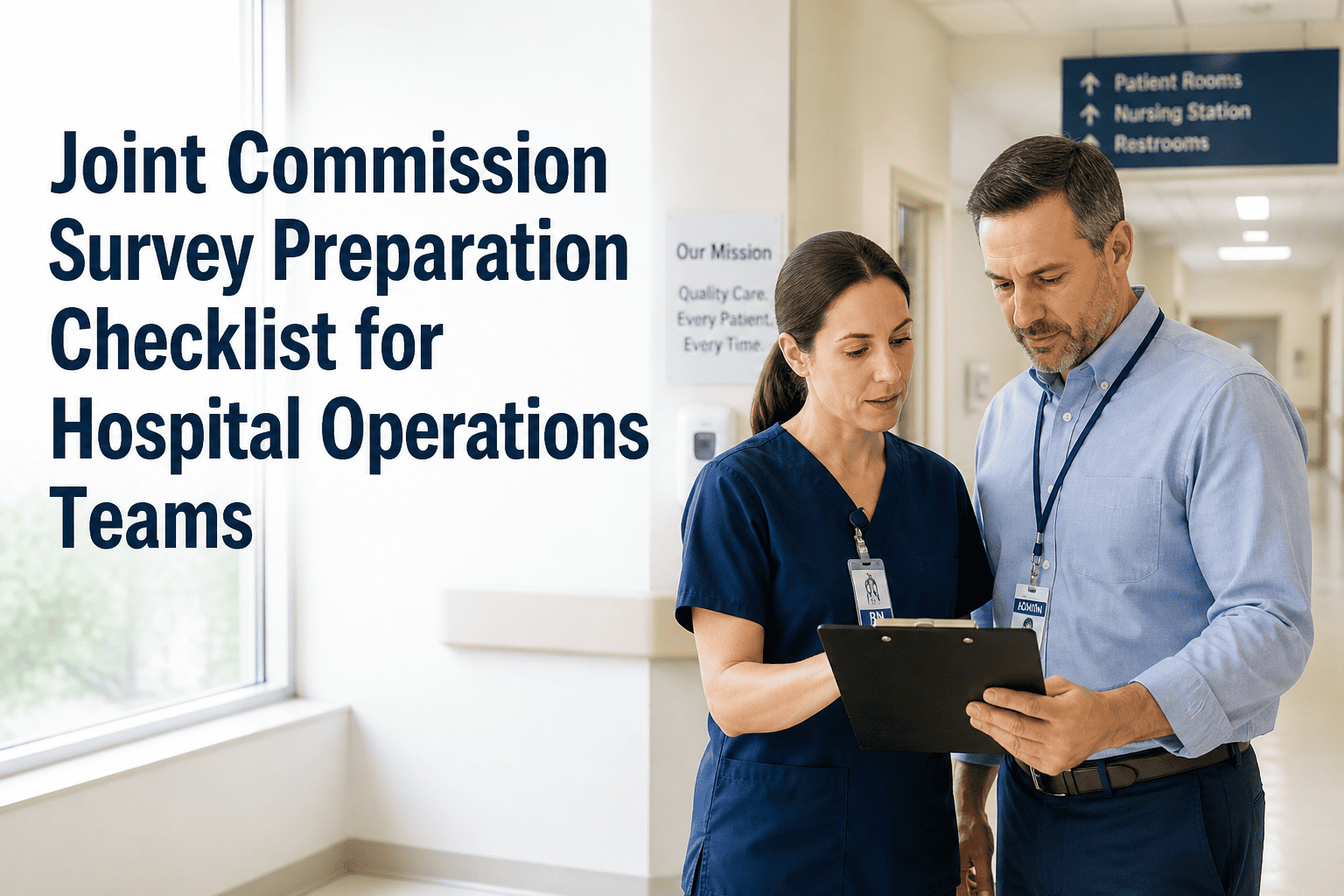
Every year, hospitals that fail Joint Commission surveys don't just lose accreditation—they hemorrhage revenue, face CMS payment suspensions, and expose leadership to liability that no insurance policy fully covers. The average cost of a failed survey cycle exceeds $1.2M in remediation, lost reimbursements, and staff overtime. Yet most operations teams are still running survey prep on spreadsheets, paper checklists, and institutional memory. If your organization cannot produce a complete, time-stamped compliance trail within 24 hours of a surveyor's arrival, you are already behind.
Is Your Hospital Truly Survey-Ready?
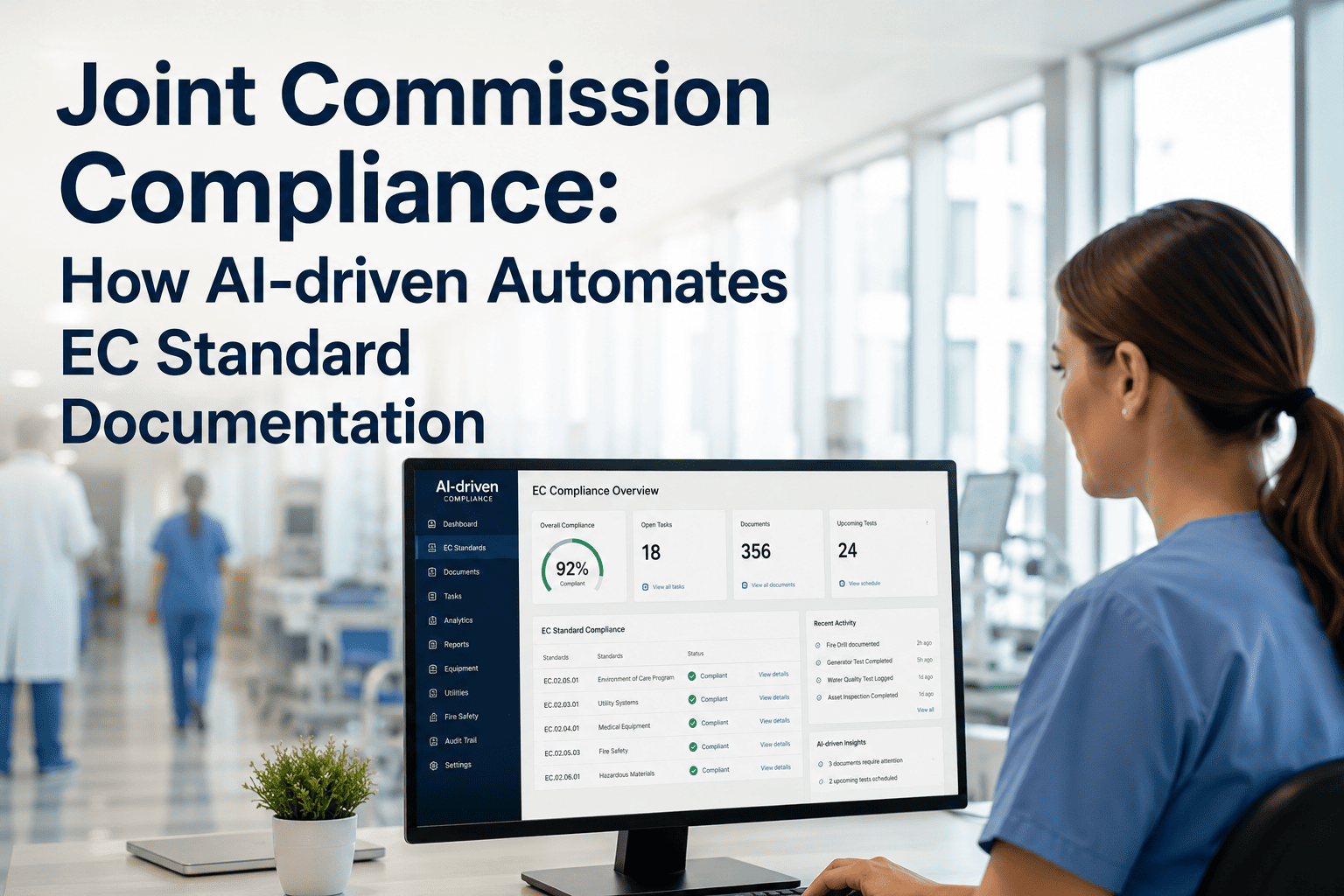
iFactory's Compliance Management platform centralizes documentation, automates EC rounds, and delivers real-time survey readiness scores across every department.
What a Failed Survey Actually Costs Your Hospital
Joint Commission accreditation is not a compliance checkbox—it is the revenue protection mechanism for your entire Medicare and Medicaid reimbursement stream. Operations leaders must reframe survey preparation from an administrative burden into a financial imperative. The risks of legacy, manual compliance processes are quantifiable and severe.
Revenue Exposure
- CMS payment suspension within 23 days of failed survey
- Average remediation cycle: 90–180 days of reduced billing
- Malpractice premiums increase 15–30% post-citation
- Payer contract renegotiations triggered by accreditation gaps
Operational Risk
- Unscheduled surveys follow any sentinel event within 45 days
- Documentation gaps create legal discovery exposure
- Staff overtime for emergency remediation averages 800+ hours
- Leadership credibility loss with board and medical staff
Patient Safety Cost
- Untracked EC deficiencies directly correlate with adverse events
- Missed fire and life safety rounds increase liability 3x
- Infection control gaps trigger outbreak protocols and closures
- Staff non-compliance with NPSGs elevates never-event probability
The Complete Joint Commission Survey Readiness Checklist
Use this operational checklist as your 90-day countdown framework. Every item maps to a TJC chapter and a trackable compliance record your team should be able to produce on demand.
Documentation & Record Integrity
- Verify all patient care policies are reviewed and signed within the last 12 months
- Confirm medical staff credentialing files are complete and current
- Audit informed consent documentation across all procedure types
- Validate that nursing care plans are individualized and updated per visit
- Review discharge instructions for completeness and patient signature
- Confirm all adverse event reports are filed, investigated, and closed
- Check that all QAPI meeting minutes are documented and accessible
Environment of Care (EC) Rounds
- Complete documented EC rounds for all patient care and support areas
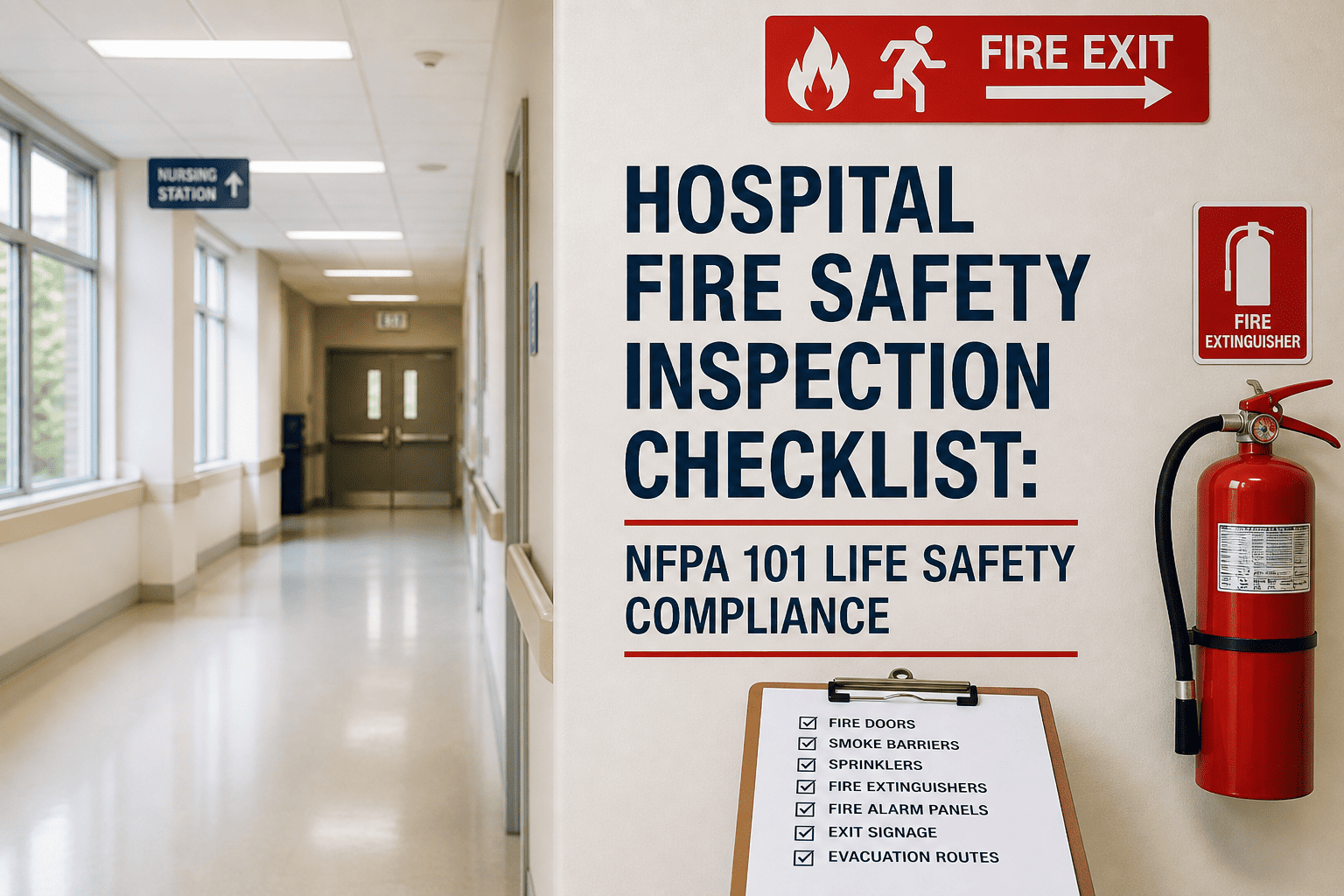
- Verify fire extinguisher inspections are current and logged
- Test all emergency lighting systems and document results
- Confirm hazardous materials storage compliance per OSHA and TJC EC.02
- Inspect medical gas systems for labeling, storage, and pressure compliance
- Validate that all utility system testing logs are current and retrievable
- Audit all life safety drawings for accuracy and surveyor-ready formatting
Staff Competency & Training
- Confirm 100% staff completion of annual fire response and evacuation training
- Verify BLS/ACLS certifications are current for all required clinical staff
- Audit restraint and seclusion training completions for applicable units
- Review infection control competency records including hand hygiene observation
- Confirm NPSG-specific training completions (medication reconciliation, falls, ID)
- Document that all new hires completed orientation within required timeframes
- Validate that contracted staff competencies meet the same standards as employees
Infection Prevention & Control
- Confirm active surveillance program for HAIs with monthly data trending
- Verify sterilization and high-level disinfection logs are complete and stored
- Audit isolation protocol signage and PPE availability at all required areas
- Review construction Infection Control Risk Assessments (ICRA) for active projects
- Confirm that all immunization records for staff are current and on file
- Inspect all supply and linen areas for compliance with IC storage standards
Mock Survey & Gap Remediation
- Conduct a full-facility tracer methodology mock survey at least 60 days prior
- Assign a deficiency owner and remediation deadline for every finding
- Document all corrective actions with evidence photos and sign-off signatures
- Retest all high-risk areas identified during mock survey before survey window
- Brief department managers on OPPE/FPPE process and surveyor question protocols
- Prepare a surveyor-ready binder with all required policies indexed by TJC chapter
Legacy Friction vs. iFactory Optimized Excellence
The operational gap between manual compliance management and an integrated platform is not incremental—it is the difference between survey confidence and survey crisis. This matrix quantifies that gap for executive leadership.
| Compliance Area | Legacy Manual Process | iFactory Optimized Excellence | ROI Impact |
|---|---|---|---|
| EC Round Tracking | Paper logs, missed cycles, no alerts | Mobile-first digital rounds with automated escalation | 80% Fewer Missed Rounds |
| Policy Management | Shared drive chaos, version conflicts | Centralized policy library with expiry auto-alerts | 100% Current Documentation |
| Staff Training Records | HR system silos, manual reporting | Real-time competency dashboard by unit and role | 60% Faster Audit Response |
| Deficiency Management | Spreadsheet tracking, lost follow-ups | Assigned workflows with deadline tracking and closure proof | Zero Open Deficiencies at Survey |
| Survey Readiness Score | Unknown until mock survey | Live readiness dashboard updated daily per TJC chapter | Predictive Risk Visibility |
| Reporting for Leadership | Manual compilation, weeks of effort | One-click executive reports with board-ready formatting | 40 Hours Saved Per Cycle |
How Compliance Management Solves the Clinical Operational Crisis
Survey preparation is not isolated to the compliance department. When executed through an integrated platform, it directly reduces staff burnout, increases patient throughput, and protects the clinical environment that drives outcomes.
Reduce Compliance Burden on Clinical Staff
- Eliminate redundant manual data entry across departments
- Push targeted training notifications instead of blanket emails
- Auto-populate competency records from completed LMS modules
- Free charge nurses from documentation coordination during survey windows
Protect Bed Capacity During Survey Events
- Pre-survey environment corrections prevent unit-level temporary closures
- Automated life safety compliance removes risk of emergency shutdowns
- Streamlined surveyor document requests reduce clinical workflow disruption
- Real-time EC status prevents last-minute patient relocation events
Build a Defensible Safety Culture Year-Round
- Immutable audit trails for every inspection, training, and correction
- Automated NPSG compliance tracking across all patient-facing units
- Root cause analysis workflows built into every deficiency record
- Board-level dashboards demonstrate proactive governance to surveyors
Stop Preparing for Surveys. Start Passing Them.
iFactory's Compliance Management platform gives your operations team a live, chapter-by-chapter readiness score—so your next Joint Commission survey is a confirmation, not a crisis.
Joint Commission Survey Prep — Frequently Asked Questions
How far in advance should we begin formal survey preparation?
A structured readiness program should run year-round, but intensive preparation—mock surveys, documentation audits, and gap remediation—should begin no later than 90 days before your anticipated survey window. iFactory's platform maintains a continuous readiness score that eliminates the need for emergency sprint cycles.
Which TJC chapters generate the most findings in hospital surveys?
Environment of Care (EC), Life Safety (LS), and National Patient Safety Goals (NPSG) consistently generate the highest finding rates. iFactory's compliance modules are structured around these high-risk chapters, with dedicated tracking for each standard and element of performance.
Can iFactory integrate with our existing EHR and HR systems?
Yes. iFactory is built on a vendor-neutral API architecture that connects with leading EHR platforms, HRIS systems, and LMS tools. This allows competency records, policy sign-offs, and training completions to flow automatically into the compliance dashboard without duplicate data entry. Book a Demo to review integration capabilities.
How does the platform handle unannounced surveys or sentinel event follow-ups?
Because iFactory maintains real-time documentation and a continuous audit trail, your team can respond to an unannounced surveyor in minutes rather than hours. All required documents are indexed, timestamped, and retrievable from a single dashboard—eliminating the frantic search that defines legacy compliance environments.
See iFactory Compliance Management in Action
Join healthcare operations teams already turning Joint Commission surveys from high-risk events into routine confirmations of excellence.


.png)