Your cleanroom is a controlled environment — until it isn't. Every degree of temperature drift, every Pascal of pressure loss, and every failed HEPA integrity check represents not just a batch deviation, but a direct threat to patient safety, regulatory standing, and your facility's financial performance. As the executive accountable for GMP compliance and operational continuity, you cannot afford to manage pharmaceutical HVAC and air handling systems on reactive schedules and manual rounds. The era of predictive, AI-driven cleanroom analytics is the new baseline for pharmaceutical manufacturing excellence.
Is Your Air Handling Infrastructure GMP-Ready for Predictive Analytics?
Unify HEPA filtration telemetry, pressure cascade monitoring, and AHU performance data into a single compliance-grade dashboard built for pharmaceutical manufacturing executives.
The Strategic Imperative: Converging HVAC, Cleanroom, and AI in Pharmaceutical Manufacturing
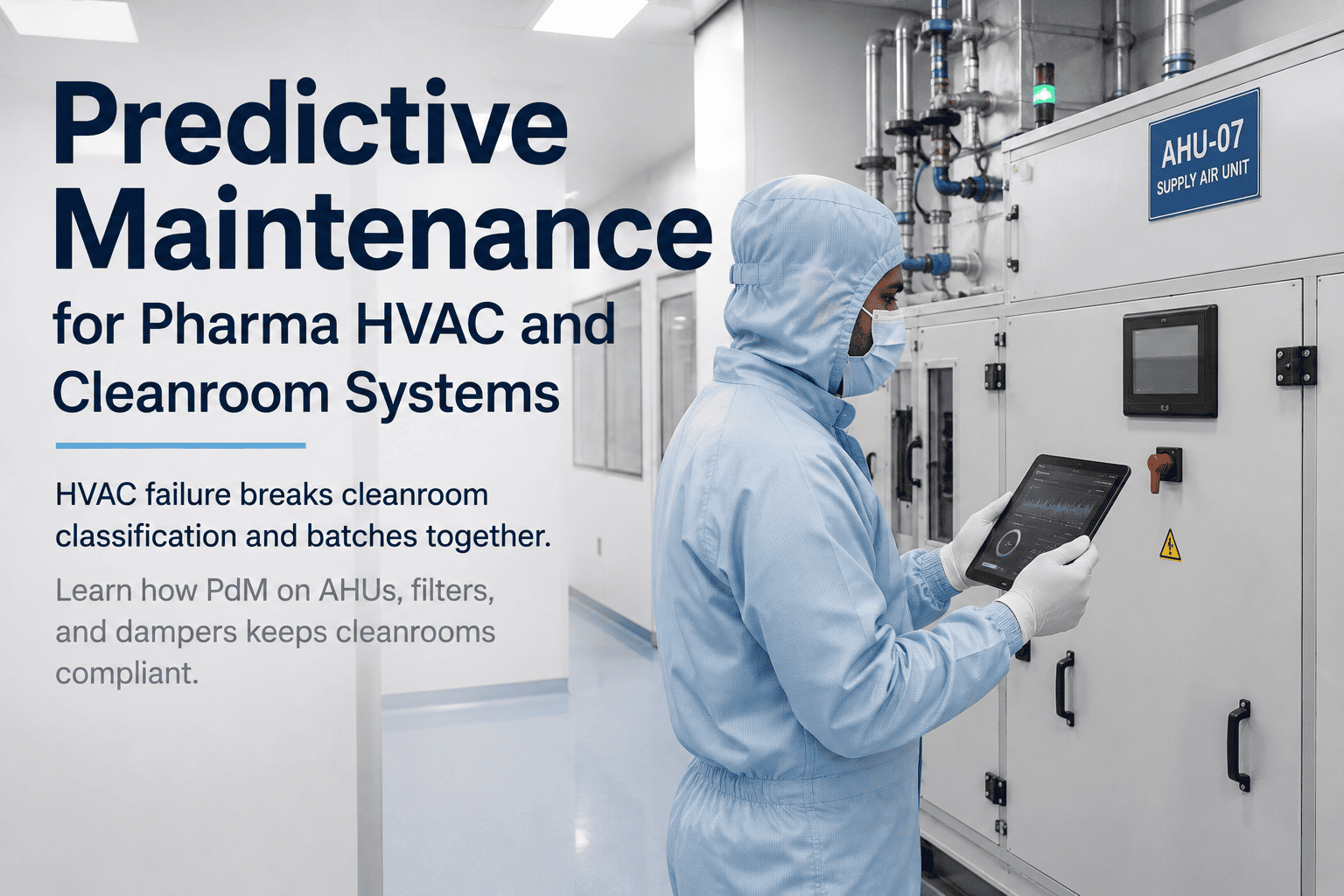
Pharmaceutical HVAC and cleanroom air handling systems are not utility infrastructure — they are direct determinants of product quality, regulatory compliance, and patient outcome. ISO classification integrity, differential pressure cascades, and HEPA filter performance are the silent guardians of your GMP environment. The primary challenge for modern pharmaceutical executives is not the equipment itself, but the absence of a unified intelligence layer that correlates AHU performance data, cleanroom environmental monitoring, and predictive maintenance signals into a single, auditable operational view. Without this convergence, your facility operates in a state of managed risk rather than proactive control. You can schedule a strategic solution session to see how a unified platform eliminates environmental monitoring silos and delivers continuous GMP assurance across every critical zone.
HEPA Filtration Analytics
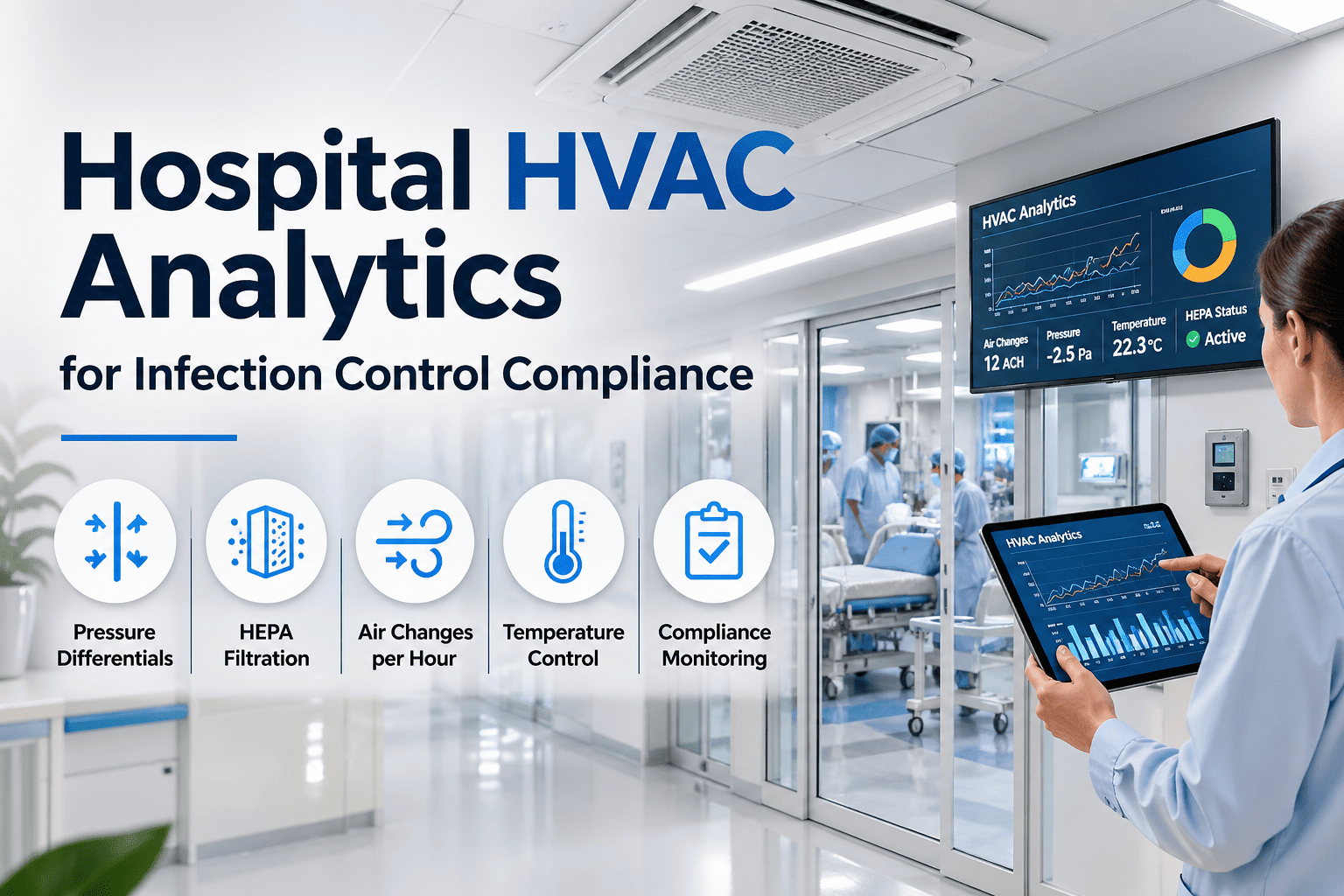
Continuous filter integrity monitoring with predictive replacement scheduling. Eliminate surprise integrity failures and schedule interventions during planned downtime windows.
Pressure Cascade Control
Real-time differential pressure monitoring across all cleanroom classifications. Automated alerts and trend analysis prevent cascade inversions before they trigger batch deviations.
Temperature & Humidity AI
Machine learning models trained on your specific process parameters to predict excursions hours before they breach specification limits, protecting both product and regulatory standing.
GMP Compliance Dashboard
A centralized audit-ready interface that consolidates all AHU and cleanroom environmental data into a legally defensible, 21 CFR Part 11 compliant reporting framework.
The Cost of Inaction: Reactive HVAC Management vs. Predictive Cleanroom Intelligence
Every month your facility operates without predictive air handling analytics is a month of compounding operational and financial risk. The comparison below quantifies the gap between legacy reactive maintenance and an AI-integrated cleanroom intelligence platform — the difference measured not in uptime percentages, but in batch yields, regulatory exposure, and capital efficiency. Schedule a strategic solution session to benchmark your current operations against this performance standard.
| Performance Dimension | Current State (Reactive) | Future State (Predictive AI) | Financial & Clinical Impact | Priority |
|---|---|---|---|---|
| HEPA Filter Management | Calendar-based replacement cycles | AI-predicted integrity failure windows | 40% reduction in unplanned filter replacements | Critical |
| Pressure Cascade Monitoring | Manual hourly rounds, paper logs | Continuous sensor telemetry with excursion prediction | Eliminates cascade inversion batch deviations | Critical |
| Temperature & RH Control | Reactive alarm response after breach | Predictive excursion alerts 2–4 hours in advance | Protects product batches worth $500K–$5M each | Critical |
| AHU Mechanical Health | Preventive maintenance on fixed schedules | Vibration, current, and efficiency AI modeling | 35% reduction in unplanned AHU downtime | High |
| Regulatory Audit Readiness | Manual data compilation, weeks of preparation | Always-on 21 CFR Part 11 compliant audit trail | Reduces audit preparation labor by 70% | High |
| Energy Optimization | Fixed setpoints regardless of occupancy or load | Demand-responsive HVAC scheduling via AI | 20–30% reduction in cleanroom HVAC energy cost | Moderate |
Five-Phase Deployment Architecture for Pharmaceutical HVAC Analytics
Integrating predictive analytics into an operational GMP environment requires a structured, validation-conscious deployment methodology. Each phase is designed to deliver measurable value while maintaining the environmental integrity and regulatory compliance of your cleanroom operations. Request an operational audit to receive a facility-specific deployment roadmap calibrated to your ISO classification, product portfolio, and regulatory jurisdiction.
Baseline Environmental Mapping
Conduct a comprehensive sensor gap analysis across all classified zones. Map existing BMS data streams, identify non-instrumented critical control points, and establish the historical performance baseline required for AI model training.
Sensor Network Integration
Deploy IoT-grade sensors for differential pressure, temperature, relative humidity, and particulate counts. Integrate with existing AHU control systems via OPC-UA or BACnet protocols, ensuring zero disruption to live cleanroom operations.
AI Model Commissioning & Validation
Train predictive models on facility-specific environmental data. Execute IQ/OQ/PQ validation protocols for all software components per GAMP 5 guidelines, generating the validation documentation package required for regulatory submission.
Predictive Alert Activation
Activate the real-time predictive excursion engine. Configure role-based alert routing for QA, Engineering, and Operations. Establish escalation workflows that align with your existing deviation management and CAPA processes.
Continuous Lifecycle Optimization
Leverage accumulating operational data to refine HEPA replacement intervals, optimize AHU setpoint schedules, and generate annual Continued Process Verification (CPV) reports that strengthen your regulatory dossier over time.
Operational Scalability and Risk Mitigation Across Your Pharmaceutical Portfolio
The operational and financial case for integrated cleanroom HVAC analytics extends well beyond maintenance cost reduction. For pharmaceutical executives managing multi-product facilities, the platform delivers compounding clinical and commercial value across every dimension of cleanroom governance.
Predictive temperature and humidity control protects high-value batches from environmental excursions that trigger costly investigations, retesting, and potential product disposal.
Continuous, tamper-evident environmental logging satisfies 21 CFR Part 11 and EU Annex 11 requirements, transforming inspection preparation from a weeks-long exercise into an instant data export.
Replace paper-based hourly cleanroom monitoring rounds with automated sensor telemetry, freeing qualified technical staff to focus on higher-value quality assurance and process improvement activities.
AI-driven vibration and efficiency monitoring detects bearing degradation, belt wear, and coil fouling months before failure, extending capital equipment service life and deferring replacement capital expenditure.
Machine learning identifies occupancy-correlated load patterns to dynamically optimize air change rates and setpoint targets, delivering 20–30% energy savings without compromising environmental classification integrity.
A single unified platform scales from one cleanroom suite to a global network of manufacturing sites, providing corporate quality leadership with consistent visibility across every facility in your portfolio.
Pharmaceutical quality and engineering leaders regularly request an operational audit to benchmark their current cleanroom monitoring maturity against the industry's leading integrated analytics architecture.
Explainable AI for GMP Environments: Governance That Regulators and Engineers Trust
In pharmaceutical manufacturing, an AI prediction is only as valuable as its regulatory defensibility. When the platform's predictive model flags an impending HEPA integrity failure or a pressure cascade risk, the underlying analytical logic must be transparent to your QA team and auditable by regulatory inspectors. Our Explainable AI framework ensures that every alert, every prediction, and every maintenance recommendation is traceable to its source sensor data and validated model parameters. This is not a black-box system — it is a transparent, documented decision-support layer that enhances human judgment rather than replacing it. Schedule a strategic solution session to review our GAMP 5-aligned AI validation framework and understand how we maintain data integrity at every stage of the predictive analytics loop.
Transform Your Cleanroom from a Compliance Risk into a Competitive Advantage
Deploy unified HVAC and cleanroom air handling analytics across your pharmaceutical manufacturing portfolio. Protect product, accelerate inspections, and reduce operational costs at enterprise scale.
From Single-Suite Pilot to Enterprise-Wide Cleanroom Intelligence
Scaling cleanroom HVAC analytics across a pharmaceutical enterprise requires a phased deployment strategy that respects the operational sensitivity of GMP manufacturing environments. Begin with the highest-risk or highest-value classification zones — typically ISO 5 and ISO 7 suites supporting sterile fill-finish or aseptic processing. As predictive models mature and ROI is validated, the platform can be extended to secondary manufacturing suites, packaging areas, and ultimately across your global facility network. You can schedule a strategic solution session to review a phased enterprise scaling roadmap that protects operational continuity while accelerating your journey to predictive cleanroom governance.
Pharma HVAC & Cleanroom Analytics — Questions from Quality and Engineering Leadership
How does the platform integrate with our existing Building Management System (BMS)?
The platform connects to your existing BMS via standard industrial protocols including BACnet, Modbus, and OPC-UA. This allows direct ingestion of AHU data, chilled water, and HVAC control signals without requiring replacement of existing infrastructure or disruption to classified area operations.
Can the platform support 21 CFR Part 11 and EU Annex 11 compliance simultaneously?
Yes. The platform is architecturally designed for dual-jurisdiction compliance. All data entries are time-stamped, user-attributed, and protected by electronic signatures. Audit trails are immutable and exportable in formats accepted by both FDA and EMA inspectors. Schedule a session to review our compliance documentation package.
What is the validation effort required for GAMP 5 compliance?
The platform is classified as a GAMP 5 Category 4 configured product, which significantly reduces validation scope compared to custom-built solutions. We provide a pre-qualified validation package including URS, FRS, IQ, OQ, and PQ templates, typically reducing total validation effort by 60% compared to traditional EMS implementations.
How does predictive analytics handle seasonal environmental variability in cleanrooms?
The AI models are trained on historical operational data that includes seasonal cycles. The system learns facility-specific correlations between external ambient conditions, HVAC load, and internal cleanroom parameters, automatically adjusting predictive thresholds and alert sensitivities to account for seasonal variability without generating false excursion alerts.
What is the typical ROI timeline for a pharmaceutical HVAC analytics deployment?
Most pharmaceutical manufacturers achieve positive ROI within 12–18 months. The primary value drivers are batch loss prevention, HEPA filter optimization, and audit preparation labor reduction. A single avoided batch failure — typical value $500K to $5M — typically recovers the entire first-year platform investment. Request an operational audit for a facility-specific ROI projection.
Can the platform manage both sterile and non-sterile manufacturing environments?
Yes. The platform supports ISO classifications from ISO 5 through ISO 8, as well as non-classified controlled environments. Configurable zone profiles allow Quality and Engineering teams to define independent monitoring parameters, alert thresholds, and reporting requirements for each manufacturing area within a single unified dashboard.
Secure Your Cleanroom Operations with Enterprise-Grade HVAC Analytics
Join pharmaceutical manufacturers already protecting product quality, accelerating regulatory readiness, and reducing operational costs through unified cleanroom air handling intelligence.

.png)