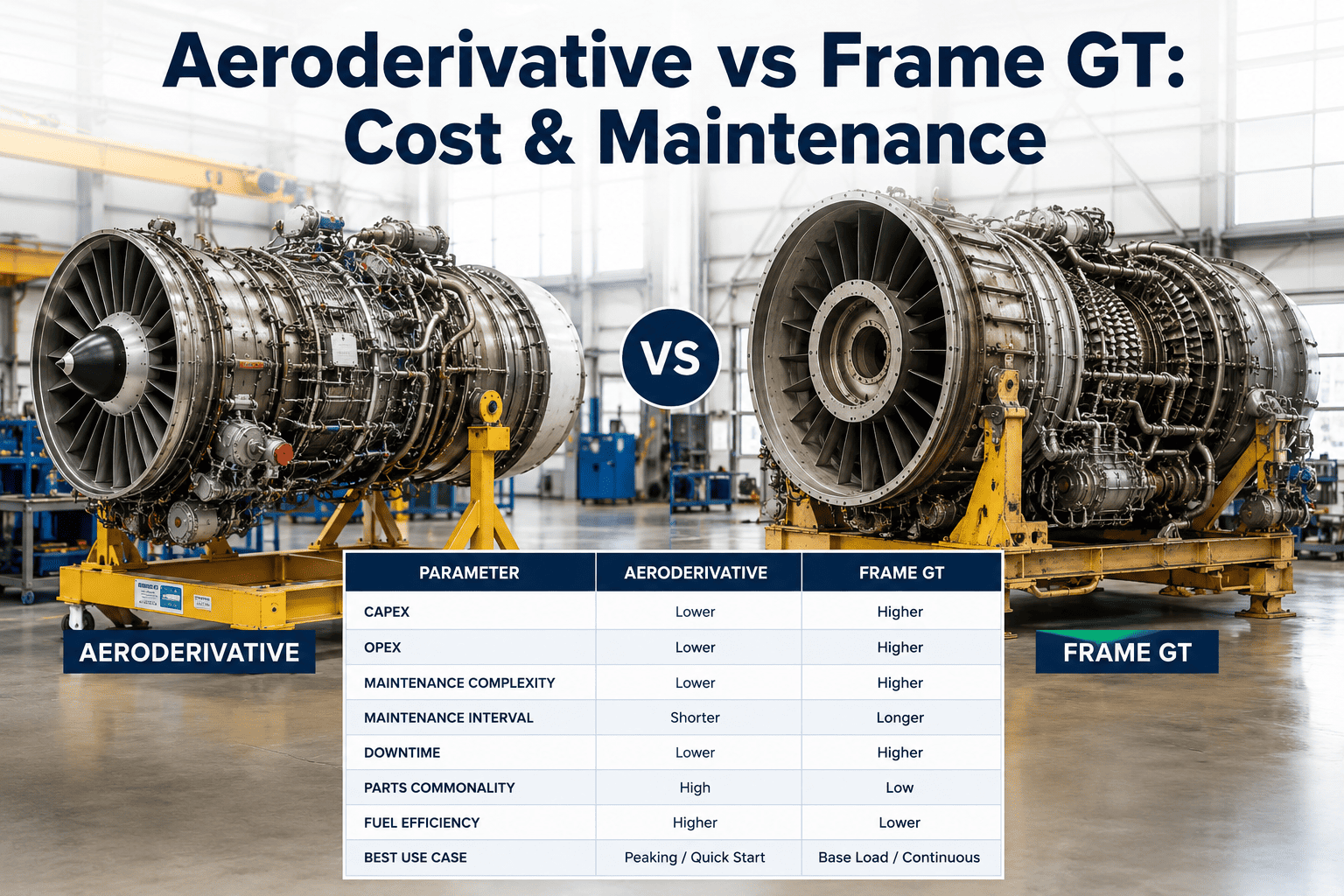
A single LM2500 module swap can turn a two-week outage into a two-day one, but only if the fleet team already knows which module is closest to its exchange threshold before the unit trips on its own schedule. Most reliability teams running LM2500, LM6000, and LMS100 fleets still lean on fixed calendar intervals or a shared spreadsheet to decide when a module comes off the skid, which means healthy modules get pulled early and degraded ones sometimes run past their safe window. Peaking units, cogeneration sites, and offshore platforms almost never share the same duty cycle, so an interval that fits one engine in the fleet is often wrong for the other three sitting beside it. The result is a fleet where the exchange decision gets made once a quarter on a spreadsheet, not continuously against what each engine's starts, hours, and thermal cycles are actually reporting. iFactory's AI-driven platform tracks module-level condition across every aeroderivative unit in the fleet in real time, so the exchange call is based on live operating data instead of a generic interval borrowed from the OEM manual. Book a demo to see fleet-wide module tracking configured for your LM2500, LM6000, or LMS100 units.
AI-Driven · Aeroderivative Fleet Management · Reliability Engineering
Track Every LM2500, LM6000, and LMS100 Module Like It Has Its Own Maintenance Calendar — Because It Does
Stop pulling healthy modules early and running degraded ones late. iFactory models module-level life consumption per unit, per serial number, so exchange planning follows real operating data instead of a fleet-wide average.
1–2 Days
Typical turnaround for a planned module or engine exchange versus a multi-week on-site overhaul
Highest Class
Aeroderivative gas turbines rank among the most available and reliable thermal power technologies in service today
~75%
Share of gas turbine outages tied to control and instrumentation issues, many of which can be diagnosed remotely
3 Families
LM2500, LM6000, and LMS100 each carry different module architectures and life-limit logic to track
The Multi-Unit Fleet Problem
Why Aeroderivative Fleets Slip Out of Sync With Their Own Maintenance Plan
A single unit is manageable on a clipboard. A fleet of LM2500s running peaking duty next to LM6000s running cogeneration and an LMS100 running intercooled base load is a different problem entirely, and most tracking methods were never built for that mix.
Mismatched Duty Cycles
One Interval Doesn't Fit the Whole Fleet
A peaking unit that starts and stops daily consumes cyclic life at a completely different rate than a baseload unit running continuously, yet both are often scheduled off the same fixed calendar interval.
Fixed Calendar Pulls
Modules Come Off the Skid on a Date, Not a Condition
Scheduling an exchange by the calendar instead of by measured degradation means a module in good condition gets pulled early, tying up spare capital and outage time that wasn't necessary yet.
Manual Tracking
Life-Limited Parts Get Tracked by Serial Number in a Spreadsheet
Hot section parts, rotors, and modules each carry their own life limits and serial history, and reconciling that manually across a fleet of mixed LM engine types is where tracking errors creep in.
Spare Logistics
Nobody Knows Which Unit Needs the Spare Module Next
Aeroderivative exchange programs only deliver their speed advantage if the right spare module or engine is already positioned before the unit needs it, which requires forecasting weeks ahead, not reacting after a trip.
How the Platform Works
Four Steps From Raw Engine Data to a Fleet-Wide Exchange Plan
The platform does not replace the OEM's engineering limits. It tells you, unit by unit and module by module, where each engine actually sits against those limits right now.
01
Continuous Data Ingestion
The platform connects to each unit's control system and pulls starts, fired hours, trips, and thermal cycle counts continuously, rather than relying on a monthly manual data pull from each site.
02
Module-Level Life Modeling
Compressor, combustor, and turbine sections are modeled separately per module and per serial number, so life consumption is tracked at the part level instead of averaged across the whole engine.
03
Exchange Window Forecasting
Based on the actual duty profile of each unit, the platform forecasts the earliest safe exchange window and the latest date before the module reaches its limit, instead of a single fixed calendar date.
04
Fleet-Wide Prioritization
Every unit in the fleet is ranked by exchange urgency on one screen, so spare module logistics and outage scheduling can be planned weeks ahead instead of triggered by a trip alarm.
Fleet Reference
LM2500, LM6000, and LMS100 — What Each Family Needs Tracked Differently
Reliability teams running mixed fleets need one system that understands these three engine families are not interchangeable when it comes to module life and exchange planning.
| Category |
LM2500 |
LM6000 |
LMS100 |
| Typical Application |
Marine propulsion, industrial power, oil and gas mechanical drive |
Mid-size power generation and cogeneration |
Fast-start peaking and grid balancing |
| Module Architecture |
Split compressor casing with in-place blade and hot section access |
Separate low and high pressure compressor modules |
Intercooled compressor design with distinct module staging |
| Exchange Interval Driver |
Fired hours and thermal cycles from start-stop frequency |
Fired hours combined with fuel type and injection method |
Cyclic starts due to fast-start, fast-stop peaking duty |
| Common Duty Profile |
Continuous to cyclic depending on site |
Continuous baseload or cogeneration |
Highly cyclic, multiple starts per day |
Exchange Readiness
The Six-Point Exchange Readiness Scorecard for Reliability Engineers
A fleet that clears all six items can schedule an exchange with confidence weeks in advance. A fleet missing two or more is still reacting to trips instead of planning around them.
1
Starts, fired hours, and thermal cycles are logged automatically at the module level for every unit in the fleet
2
Degradation trends are visible weeks before a module reaches its OEM exchange threshold, not discovered at the threshold itself
3
Spare module or engine availability is confirmed against the forecasted exchange window before the window opens
4
Logistics lead time for shipping a spare module is built directly into the exchange forecast, not added as an afterthought
5
Life-limited parts are tracked by serial number across every module, so a swapped part carries its history with it
6
A single fleet-wide priority list shows which unit needs an exchange next, ranked ahead of the others in the queue
See Your Fleet's Module Condition on One Screen — Before the Next Trip Alarm Does the Deciding for You.
Module-level life modeling, exchange window forecasting, and fleet-wide priority ranking configured for your specific mix of LM2500, LM6000, and LMS100 units.
Old Method vs. New Method
Calendar-Driven Exchange Planning vs. Condition-Based Fleet Tracking
Calendar-Driven Planning
Exchange dates set once a year from OEM guidance, applied the same way to every unit in the fleet
Spare module orders placed reactively, after a unit already shows a problem
Life-limited part history tracked across separate spreadsheets per site
Fleet priority decided in a monthly meeting from whoever raises the loudest concern
Condition-Based Fleet Tracking
Exchange window forecasted per module, per unit, from its own live operating data
Spare module logistics scheduled against the forecast, weeks before the window opens
Serial-number-level part history tracked automatically in one fleet-wide system
Fleet priority ranked continuously, updated the moment any unit's condition changes
From the Field
What Changes When a Mixed Fleet Stops Running on One Shared Calendar
We had six LM2500 and LM6000 units spread across three sites, all scheduled off the same generic exchange interval because that was easier to manage on paper than tracking each one separately. Two of our peaking units were burning through cyclic life almost twice as fast as our baseload unit, but they were all pulled on the same calendar date regardless. Once we started tracking module condition per unit instead of per fleet average, we caught a compressor module on one of the peaking units trending toward its limit nearly two months before the old calendar would have flagged it, and we had the spare positioned before it became an unplanned outage. The other units on lighter duty stayed in service longer than the old schedule would have allowed, which freed up spare capital we had been tying up unnecessarily.
— Fleet Reliability Manager, Multi-Site Power Generation Operator
2 MonthsEarlier warning on a module trending toward its exchange limit
6 UnitsTracked individually across three sites instead of one shared calendar
0Unplanned trips traced back to the flagged compressor module
Conclusion
Your Fleet Isn't Running on One Calendar. Its Maintenance Plan Shouldn't Either.
The advantage of an aeroderivative fleet is the speed of a module or engine exchange compared to an on-site overhaul, but that advantage only shows up when the fleet team already knows which unit needs the swap and already has the spare positioned. A fixed calendar interval applied evenly across peaking, cogeneration, and baseload units gives up most of that advantage before the outage even starts.
iFactory's AI-driven platform models module-level condition for every LM2500, LM6000, and LMS100 unit in your fleet against its own actual operating profile, so exchange planning is a forecast your team can act on weeks ahead, not a reaction to a trip alarm. Book a demo to see it configured against your fleet's real duty data.
Frequently Asked Questions
Aeroderivative Fleet Management — What Reliability Engineers Ask First
How is module-level tracking different from tracking the whole engine's fired hours?
Fired hours on the whole engine give a single number that hides which specific section is actually closest to its limit. Compressor sections, combustors, and turbine sections each accumulate wear differently depending on how the unit is operated, so a module-level model tracks starts, cycles, and thermal exposure separately for each section. That level of detail is what allows the platform to forecast an exchange window for one specific module instead of scheduling the entire engine off a single average number.
Book a demo to see module-level tracking applied to your specific engine mix.
Does this replace the OEM's engineering limits for LM2500, LM6000, or LMS100 modules?
No. The platform does not change or override any OEM-defined life limit, inspection requirement, or exchange threshold for any module. What it does is show your team, in real time, exactly where each module sits against those existing OEM limits based on the unit's actual starts, hours, and cycles, so the exchange decision is made earlier and with more confidence than a fixed calendar date allows.
How far in advance can an exchange window realistically be forecasted?
The forecast window depends on the unit's duty cycle and how close the module already is to its threshold, but fleets with continuous data connected typically see a module's exchange window flagged several weeks to a couple of months before it becomes urgent. That lead time is what makes it possible to schedule spare module logistics and outage windows proactively instead of scrambling after an unplanned trip or alarm.
Can the platform manage a fleet that mixes LM2500, LM6000, and LMS100 units across different sites?
Yes, that mixed-fleet scenario is exactly what fleet-wide prioritization is built for. Each engine family has its own module architecture and life-limit logic modeled separately, and the platform ranks every unit across every site on one shared priority list so your team can see which engine, at which site, needs attention next without reconciling separate spreadsheets per location.
Contact support to discuss connecting a multi-site fleet.
What data does a site need to have in place before module tracking can start?
Most sites already generate the data the platform needs — starts, fired hours, trip history, and thermal readings from the unit's existing control system. The connection process maps those existing data points into the module-level model rather than requiring new sensors or instrumentation in most cases, which means a typical unit can begin generating a module condition picture within the early weeks of connection rather than after a lengthy retrofit.
Know Which Module Needs the Swap Before the Alarm Tells You.
Module-level condition tracking, exchange window forecasting, and fleet-wide prioritization — configured for your specific mix of LM2500, LM6000, and LMS100 units.