Steam turbine shaft misalignment is one of the most reliably preventable causes of forced outage at U.S. power plants — and one of the most consistently underdocumented maintenance activities in CMMS records. A misalignment condition that over months through thermal growth, foundation settlement, and coupling wear generates a predictable cascade: elevated bearing vibration, accelerated seal wear, coupling fatigue, and eventually a shaft or bearing failure that converts a planned outage window into an unplanned event at $12,000 to $45,000 per hour of capacity loss. What makes this preventable is that the entire degradation pathway is visible — laser alignment results, vibration baseline shifts coupling inspection findings, and thermal growth records all tell the story before the failure occurs. The problem is that at most power plants, those records live in four different places and no system connects them to automatically trigger the next alignment inspection before the vibration trend becomes a failure event.
AI-driven steam turbine alignment analytics closes that gap by doing what no standalone CMMS or vibration monitoring system can do alone: correlating laser alignment history with vibration spectral trending, coupling inspection records, and thermal growth data to calculate the current alignment condition and automatically schedule the next inspection based on the rate at which the condition is degrading — not based on a calendar interval that was set at commissioning and never updated. For power plant reliability teams managing steam turbines with annual operating hours that vary significantly from year to year, this condition-based approach to alignment interval management is the difference between alignment inspections that happen when the turbine needs them and alignment inspections that happen on a schedule that was designed for different operating conditions than the ones the turbine is actually experiencing.
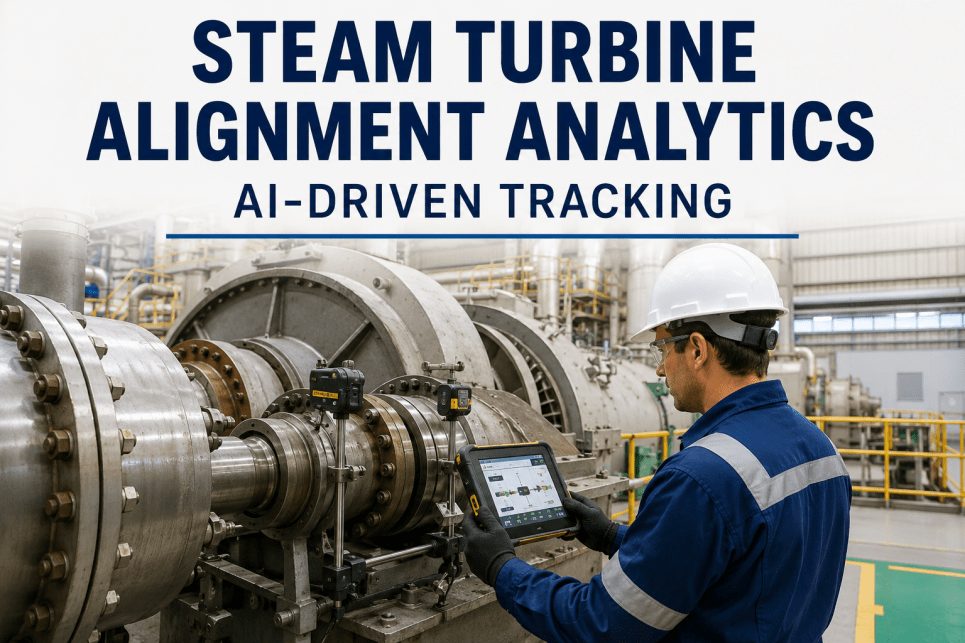
Steam Turbine Alignment Analytics & AI-Driven Tracking
Laser alignment results, coupling inspection records, and thermal growth data — all connected in one AI-driven platform with automatic scheduling triggers based on operating hours and vibration trends.
$28K per Hour
Average forced outage cost from bearing or coupling failure traceable to uncorrected misalignment at a 250 MW steam plant
67% of Bearing Failures
Steam turbine bearing failures attributable to misalignment as a primary or contributing root cause in post-event investigations
14–60 Day Lead Time
Typical detection window before bearing or coupling failure when vibration spectral trends are correlated with alignment history
4 Disconnected Records
Average number of separate systems storing alignment-relevant data at power plants without integrated alignment analytics
Want to see how AI-driven alignment analytics applies to your specific steam turbine fleet? Book a 30-minute alignment analytics assessment with iFactory's power generation team.
Why Alignment Records Fail at Power Plants Without Integrated Analytics
The fundamental problem with steam turbine alignment management at most power plants is not a lack of data — it is a lack of connection between the data that already exists. Laser alignment measurement results are recorded in the alignment contractor's report PDF, filed after the outage and rarely opened again. Vibration spectral data is stored in the online monitoring system. Coupling inspection findings are in the maintenance work order. Thermal growth calculations are in an engineering spreadsheet last updated three outages ago. No one connects these four data sources into a current picture of the turbine's alignment condition between outages — which means the first indication that alignment has degraded is frequently the bearing vibration alarm that arrives 48 hours before the failure.
Alignment Inspection Completed — Data Scattered
Laser alignment results recorded by contractor in PDF report. Coupling inspection findings entered in CMMS work order. Thermal growth data calculated in a spreadsheet. Vibration baseline reset in the monitoring system. Each record exists independently with no system connecting them to a unified alignment condition picture.
Condition Drifts — No Integrated Signal
Foundation settlement, thermal cycling, and coupling wear gradually shift alignment from the post-inspection baseline. Vibration spectral patterns show early 1X and 2X amplitude increase. No system correlates the vibration trend with the alignment history to calculate the current condition or project when the next inspection is warranted.
DCS Alarm Fires — Diagnostic Uncertainty
Bearing vibration exceeds the DCS high-vibration alarm threshold. Operations notifies maintenance. Maintenance does not know the alignment history, the last coupling inspection result, or the thermal growth record — because those are in three different systems not accessible from the CMMS work order queue. Investigation starts from scratch.
With AI Analytics — Condition Detected at Stage 2
AI-driven alignment analytics continuously correlates vibration spectral trends with the last alignment measurement record, current thermal growth model output, and coupling inspection history. When the combined signal pattern indicates degraded alignment condition, a scheduled inspection recommendation is generated with the specific evidence that justifies it — before the DCS alarm fires.
Want to see how AI-driven alignment analytics applies to your specific steam turbine fleet? Book a 30-minute alignment analytics assessment with iFactory's power generation team.
What Steam Turbine Alignment Analytics Tracks: A Complete Data Architecture
Effective alignment analytics requires four data streams to be ingested, correlated, and continuously updated in a single platform. Each stream contributes a different dimension of the turbine's alignment condition — and the value of the analytics is in the correlation between them, not in monitoring any single stream in isolation.
Laser Alignment Measurement Records
Every laser alignment inspection result — offset and angularity readings at each coupling, measurement date, ambient and operating temperature at time of measurement, and the calculated correction values applied — is stored in the platform against the specific equipment record. Alignment results from multiple outages build a trend history that shows the rate at which the turbine train is migrating from its corrected baseline, enabling the platform to project when the tolerance band will be exceeded before the condition develops into a vibration problem. PDF alignment reports from contractors are ingested via structured data extraction, so historical alignment records are incorporated even when the original measurements predate the platform deployment.
Vibration Spectral Trend Correlation
Online vibration monitoring data — bearing housing vibration amplitude at 1X, 2X, and sub-synchronous frequencies — is ingested continuously from the plant DCS historian or dedicated vibration monitoring system. The analytics platform correlates spectral trend patterns with the known vibration signatures of misalignment conditions: elevated 1X radial amplitude, high 2X with phase relationship consistent with angular misalignment, and sub-synchronous activity associated with bearing preload change from coupled misalignment. When spectral trends show patterns consistent with developing misalignment, the correlation is flagged against the last alignment measurement record and thermal growth model to generate a specific recommendation rather than a generic anomaly alert.
Coupling Inspection Records and Wear History
Flexible coupling inspection findings — coupling element condition assessment, bolt torque verification records, coupling hub measurement results, and visual inspection observations — are tracked against each coupling in the turbine train. Coupling wear patterns inform the alignment analytics in two ways: abnormal coupling wear is a retroactive indicator that alignment was outside tolerance during the preceding operating period, and current coupling condition affects the thermal growth model accuracy. The platform tracks coupling replacement history, OEM service life recommendations, and any anomalous findings from prior inspections that should inform the scope of the next alignment check.
Thermal Growth Data and Foundation Movement Monitoring
Steam turbine alignment is a dynamic condition — the turbine's hot alignment position differs from its cold alignment position by amounts that vary with steam conditions, load, and ambient temperature. The platform maintains thermal growth models for each turbine that calculate the expected hot operating alignment from the measured cold alignment position, the turbine's thermal growth vector, and current operating conditions. Where foundation settlement monitoring instrumentation exists, those displacement measurements are integrated into the alignment condition model. The combination of thermal growth model and foundation movement data provides a continuously updated estimate of the turbine's current operating alignment — not just the alignment measured at the last cold outage inspection.
Alignment Inspection Scheduling: Calendar-Based vs. Condition-Based
The most operationally significant improvement that AI-driven alignment analytics delivers is the shift from calendar-based alignment inspection scheduling to condition-based scheduling that reflects the actual degradation rate of each specific turbine train. The comparison below illustrates how these two approaches differ in practice across the dimensions that matter most to plant reliability teams.
Steam Turbine Alignment KPI Reference
The following table maps the primary alignment-related performance indicators tracked in AI-driven alignment analytics platforms against their measurement definitions, the data sources used to calculate them, and the maintenance action triggered when each KPI trends outside the acceptable band.
| KPI | Measurement Definition | Data Source | Alert Threshold | Triggered Action |
|---|---|---|---|---|
| Alignment Migration Rate | Change in offset and angularity from post-inspection baseline per 1,000 operating hours — trending across multiple inspection events | Laser alignment inspection records from CMMS work orders and historical PDF report ingestion | Migration rate exceeding 25% of tolerance band per 1,000 hours | Inspection interval shortened; thermal growth model review triggered; vibration spectral monitoring sensitivity increased |
| 1X Radial Vibration Trend | Rate of change in 1X running-speed radial vibration amplitude at journal bearings — normalized for load and steam conditions | DCS historian bearing vibration signals or dedicated online vibration monitoring system | Greater than 15% increase from post-alignment baseline at equivalent load | Alignment condition assessment triggered; spectral pattern classified against misalignment signature library |
| 2X Vibration Amplitude Ratio | Ratio of 2X to 1X vibration amplitude at journal bearings — elevated ratio consistent with angular misalignment signature | Vibration spectrum from online monitoring or periodic route measurement data | 2X/1X ratio greater than 0.5 with increasing trend | Angular misalignment assessment scheduled; coupling inspection recommended; phase analysis initiated |
| Thermal Growth Deviation | Difference between calculated hot operating alignment position and expected position from thermal growth model — indicates foundation movement or changed operating conditions | Thermal growth model from operating data — temperature, load, steam conditions from DCS historian | Greater than 2 mil deviation from thermal growth model prediction | Foundation movement inspection; operating condition review; cold alignment check scheduled for next available outage window |
| Coupling Element Life Fraction | Estimated consumed life of flexible coupling elements based on OEM service life, operating hours, and coupling inspection findings from prior events | Coupling inspection work orders from CMMS correlated with OEM service life specifications | Greater than 75% of OEM service life consumed or abnormal wear finding at prior inspection | Coupling inspection scheduled before next alignment check; spare coupling elements pre-ordered if lead time exceeds inspection window |
| Alignment Inspection Interval Compliance | Percentage of alignment inspections completed within condition-based schedule window — tracking whether AI-generated recommendations are being acted on within the recommended timeframe | Planned vs. actual completion dates from CMMS work order records against AI-generated inspection recommendations | Inspection overdue beyond 14-day grace window from recommendation date | Escalation to plant management; vibration monitoring sensitivity increased to compensate for delayed inspection |
Want to see how AI-driven alignment analytics applies to your specific steam turbine fleet? Book a 30-minute alignment analytics assessment with iFactory's power generation team.
Expert Review: What Alignment Engineers Say About AI-Driven Tracking
"The problem I see at every plant I work with is the same: the alignment contractor leaves a PDF report, the maintenance team files it, and nobody looks at it again until there's a bearing problem. By that point the turbine has been running misaligned for months and the bearing has been absorbing forces it wasn't designed for. What changes with AI-driven alignment analytics is that the PDF becomes a live data record — the last alignment measurement feeds a model that runs continuously against the vibration data and says 'this 1X trend increase at bearing 3 is consistent with the offset condition we measured at the last outage, and it's moving in a direction that warrants an inspection in the next planned window.' That's not exotic technology. It's just connecting records that should have been connected twenty years ago. The facilities I've worked with that deploy this approach consistently catch developing misalignment conditions three to six weeks before their DCS alarm systems would have flagged anything. At $28,000 per hour of forced outage, that lead time pays for the entire platform multiple times over from a single avoided event."
Conclusion
Steam turbine shaft alignment is a maintenance discipline that has been practiced with high technical precision for decades — laser alignment tools, thermal growth calculations, and coupling inspection procedures are all well-established. What has been missing is not the measurement capability. It is the data management infrastructure that keeps alignment records connected to the vibration trends and thermal growth data that tell you whether the alignment is holding between inspections, and that automatically schedules the next inspection based on the rate at which it is not. AI-driven alignment analytics provides exactly that infrastructure — ingesting laser alignment records, vibration spectral data, coupling inspection findings, and thermal growth calculations into a unified model that continuously calculates the current alignment condition and generates condition-based inspection recommendations before the degradation pathway reaches the DCS alarm threshold.
For U.S. power plant reliability teams managing steam turbines under capacity market commitments, the business case is straightforward: misalignment failures generate forced outage costs that are multiples of the annual platform subscription cost from a single event. The 14 to 60 day detection lead time that correlation of alignment history with vibration trends provides — consistently observed at deployed facilities — converts potential emergency forced outages into planned maintenance windows. That conversion is the primary value of AI-driven alignment analytics, and it is available from existing sensor data and existing alignment records without additional instrumentation investment at most power generation facilities.
Ready to connect your alignment records and vibration data into a condition-based scheduling platform? Schedule your steam turbine alignment analytics assessment with iFactory's power generation team.
Frequently Asked Questions
Purpose-Built Steam Turbine Alignment Analytics for Power Plants
From laser alignment record trending to coupling inspection tracking and thermal growth modeling, iFactory delivers AI-driven alignment management that converts misalignment failures from emergency forced outage events into planned maintenance windows.