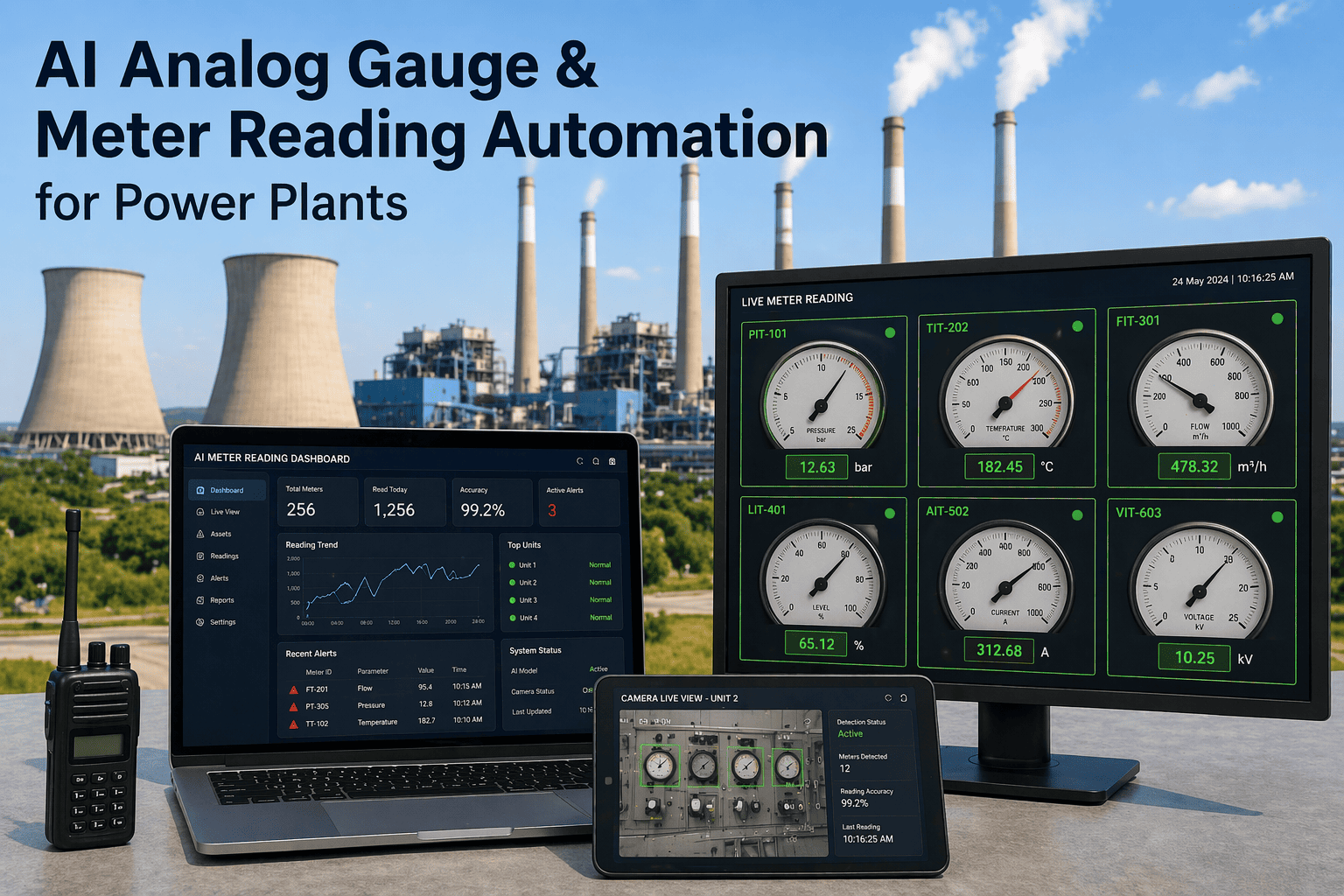
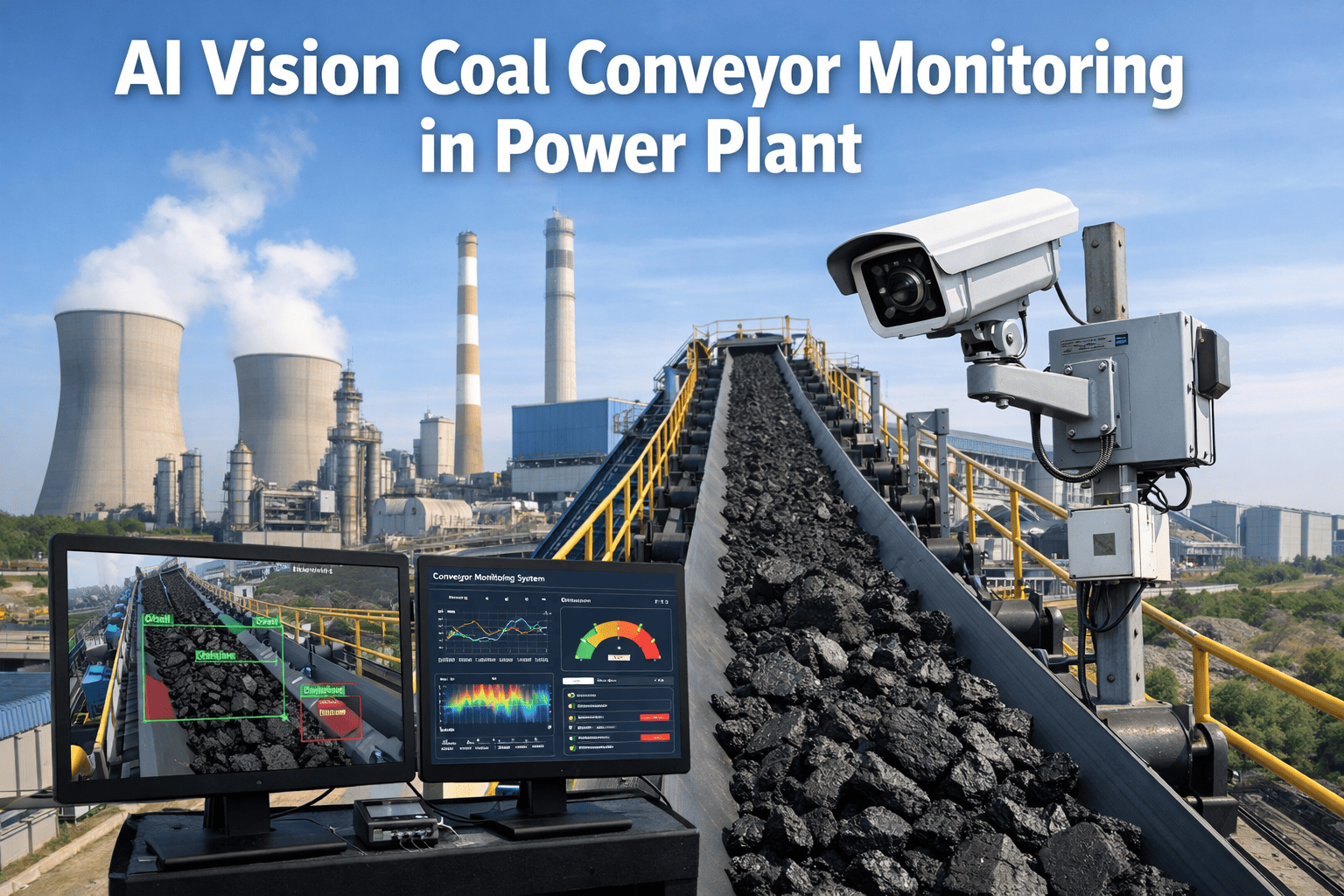
Power plants in the United States lose an average of 16–33% of operational efficiency annually to manual gauge reading errors — not from instrument failures, but from parallax misreads, transcription mistakes, delayed data entry, and inaccessible locations that no paper logbooks or legacy handheld scanners catch in time. By the time pressure excursions, temperature drifts, or level anomalies trace back to gauge reading inconsistencies, the compounding costs are already realized: unplanned trips, equipment damage, safety incidents, and regulatory findings. iFactory AI Gauge Reading Platform changes this entirely — capturing analog gauge and meter readings in real time using computer vision, validating accuracy against historical trends, and integrating directly into your existing DCS, historians, and maintenance systems without disrupting plant operations. Book a Demo to see how iFactory deploys AI gauge reading automation across your US power plant within 7 weeks.
99%
Gauge reading accuracy with AI vision vs. 73% for manual rounds
$1.6M
Average annual labor savings & error prevention per mid-size US plant
94%
Reduction in gauge misreading errors vs. paper-based or handheld data collection
7 wks
Full deployment timeline from gauge audit to live AI reading go-live
Every Misread Pressure Gauge and Delayed Temperature Entry Is Operational Risk. AI Vision Eliminates the Guesswork.
iFactory's AI vision platform monitors analog pressure gauges, temperature indicators, level meters, and flow instruments across your entire plant — 24/7, from hazardous or hard-to-reach locations, without operator exposure or transcription errors.
The Hidden Cost of Manual Gauge Reading: Why Paper Rounds Fail US Power Plants
Before exploring solutions, understand the root causes of gauge reading errors in industrial power generation. Manual instrument monitoring introduces systemic risks that compound over time — risks that AI vision directly addresses.
Parallax & Transcription Errors
Operators read analog gauges from varying angles, leading to parallax errors. Manual transcription to paper logs or spreadsheets introduces typos, missed decimals, and delayed data entry — creating false operational pictures.
Hazardous Location Exposure
Critical gauges in boiler rooms, turbine halls, and chemical storage areas require personnel entry into high-temperature, high-noise, or confined spaces. Manual rounds create safety exposure that could be eliminated with remote vision monitoring.
Data Latency & Decision Delays
Paper logs and handheld scanners create hours of delay between gauge reading and DCS integration. By the time anomalies are entered into systems, operational conditions may have already shifted beyond corrective action windows.
Audit & Compliance Vulnerability
NERC, OSHA, and NFPA require verifiable instrument readings and calibration records. Manual logs lack timestamp validation, reader authentication, and immutable audit trails — creating regulatory exposure during inspections.
How iFactory Solves Analog Gauge Reading Challenges in US Power Plants
Traditional gauge monitoring relies on scheduled rounds, paper logbooks, and manual data entry — all of which introduce reading errors, data lag, and safety exposure. iFactory replaces this with a unified AI vision platform designed for US power plant workflows that captures gauge readings at the source, validates accuracy in real time, and creates an immutable audit trail for every instrument reading. See a live demo of iFactory reading boiler pressure gauges, turbine temperature meters, and condenser level indicators in a US power generation facility.
01
Real-Time AI Vision Gauge Recognition
Computer vision models continuously analyze camera feeds of analog gauges to extract needle position, digit displays, and scale markings — converting visual data to digital readings with 99% accuracy. Works across lighting conditions, gauge types, and mounting orientations.
02
Reading Validation & Anomaly Detection
Proprietary ML models validate each reading against historical trends, instrument specifications, and process correlations — flagging implausible values, stuck needles, or gauge damage. False positive rate drops to under 2% with confidence scoring.
03
Hazardous Location Remote Monitoring
AI vision cameras with industrial housings monitor gauges in high-temperature, high-vibration, or confined spaces — eliminating personnel exposure to hazardous environments. Edge processing ensures functionality during network interruptions.
04
DCS, Historian & Maintenance Integration
iFactory connects to Honeywell, Siemens, Emerson, and Rockwell DCS environments plus OSIsoft PI, AVEVA Historian, and IBM Maximo via OPC-UA, Modbus TCP, and REST APIs. Auto-link gauge tags to control loops, trend displays, or calibration work orders. Integration completed in under 10 days.
05
Automated Compliance & Calibration Reporting
Generate NERC, OSHA, and NFPA compliance reports instantly: gauge reading logs, calibration due dates, reader authentication records, and anomaly resolution documentation. Pre-configured templates for US federal and state frameworks.
06
Gauge Health & Maintenance Decision Support
iFactory presents contextual guidance during gauge monitoring: linked calibration procedures, replacement histories, or escalation contacts. Reading anomalies trigger ranked corrective actions with operational impact estimates. Teams act with confidence, not guesswork.
Regulatory Framework Support: Built for US Power Industry Compliance
iFactory's AI gauge reading platform is pre-configured to meet the documentation requirements of major US power industry regulatory frameworks. No custom development needed — compliance reporting is automatic.
NERC Reliability Standards
Bulk electric system monitoring requirements: instrument reading verification, data integrity validation, and operational logging — with automated timestamp authentication and electronic acknowledgment workflows.
OSHA 1910.146 / 1910.147
Confined space entry and lockout/tagout standards: hazardous location monitoring, personnel exposure reduction, and safety procedure documentation — structured for audit readiness and incident prevention.
NFPA 85 / 70E
Boiler and electrical safety standards: pressure/temperature instrument verification, calibration recordkeeping, and arc flash risk documentation — with automated reading validation and maintenance tracking.
EPA 40 CFR Part 60 / 75
Emissions monitoring and reporting requirements: continuous parameter monitoring system (CPMS) data validation, instrument calibration records, and compliance certification — formatted for EPA and state agency submissions.
How iFactory Is Different from Generic Vision or Data Collection Tools
Most industrial monitoring vendors offer basic camera feeds or handheld scanners wrapped in a portal. iFactory is built differently — from the US power plant gauge reading workflow up, specifically for environments where reading accuracy, hazardous location safety, and regulatory traceability determine operational reliability, personnel safety, and compliance readiness. Talk to our gauge automation specialists and compare your current instrument reading approach directly.
iFactory AI Gauge Reading Implementation Roadmap
iFactory follows a fixed 5-stage deployment methodology designed specifically for US power plant instrument monitoring workflows — delivering pilot results in week 3 and full production rollout by week 7. No open-ended implementations. No operational disruption.
01
Gauge Audit
Map critical instruments & identify reading gaps
02
System Integration
Connect to DCS, Historian, CMMS via APIs
03
Pilot Configuration
Deploy AI vision to 15–25 critical gauges
04
Validation & Training
User acceptance testing & role-based training
05
Full Production
Plant-wide AI gauge reading automation go-live
7-Week Deployment and ROI Plan
Every iFactory engagement follows a structured 7-week program with defined deliverables per week — and measurable ROI indicators beginning from week 3 of deployment. Request the full 7-week deployment scope document tailored to your instrument monitoring configuration.
Weeks 1–2
Discovery & Design
Current gauge reading workflow assessment across operations, maintenance, and safety teams
AI vision design aligned with existing processes and NERC/OSHA compliance requirements
Integration planning with DCS, historians, and maintenance management systems
Weeks 3–4
Pilot & Validation
Deploy AI gauge reading to high-impact instruments: boiler pressure gauges, turbine temperature meters, condenser level indicators
Real-time reading validation and anomaly alerts activated; supervisor workflows tested with operations team
First misreading prevention captured — ROI evidence begins here
Weeks 5–7
Scale & Optimize
Expand to full plant coverage: all critical analog instruments, all locations, all shifts
Automated NERC/OSHA compliance reporting activated for applicable regulatory frameworks
ROI baseline report delivered — labor savings, error prevention, and audit efficiency gains
ROI IN 5 WEEKS: MEASURABLE RESULTS FROM WEEK 3
Plants completing the 7-week program report an average of $175,000 in avoided labor costs and error-related incidents within the first 5 weeks of full production rollout — with gauge reading accuracy improvements of 26–44% detected by week 3 pilot validation.
$175K
Avg. savings in first 5 weeks
26–44%
Reading accuracy gain by week 3
91%
Reduction in manual round labor hours
Eliminate Manual Gauge Rounds. Deploy AI Reading Automation in 7 Weeks. ROI Evidence in Week 3.
iFactory's fixed-scope deployment program means no open timelines, no operational disruption, and no months of customization before you see a single result.
Use Cases and KPI Results from Live US Deployments
These outcomes are drawn from iFactory deployments at operating US power plants across three gauge reading categories. Each use case reflects 6-month post-deployment performance data. Request the full case study report for the instrument workflow most relevant to your plant.
A 650 MW coal plant operating 18 boiler pressure gauges was experiencing recurring operational deviations due to parallax reading errors and delayed data entry during manual rounds. Legacy paper logs identified anomalies only after shift handover reviews — well past the point of cost-effective intervention. iFactory deployed AI vision monitoring across all critical pressure instruments, with needle recognition models trained on steam conditions and lighting variability. Within 4 weeks of go-live, the system prevented 24 reading errors that would have impacted boiler control or NERC reporting.
24
Critical reading errors prevented in first 4 weeks
$490K
Estimated annual operational deviation cost avoided
98%
Reading accuracy on boiler pressure gauge monitoring
A Midwest combined cycle plant was spending 12–16 hours per week manually compiling turbine temperature readings for operational logs and maintenance planning, with frequent gaps in data completeness due to inaccessible meter locations. iFactory replaced manual tracking with real-time AI vision temperature meter reading featuring digit recognition, trend validation, and automatic sync to the historian system. Log compilation time dropped to under 60 minutes, and data completeness reached 100% for turbine performance analysis and predictive maintenance scheduling.
60 min
Log compilation time (down from 14+ hours weekly)
100%
Data completeness for turbine monitoring achieved
$260K
Annual labor & maintenance planning savings from automated reading
A Texas nuclear generation facility was struggling with inconsistent condenser level monitoring across 12 sight glass indicators, with manual rounds missing subtle level changes due to lighting conditions and operator fatigue. iFactory deployed AI vision level reading with real-time meniscus detection, calibration validation, and automatic escalation to control room operators. All 19 level anomalies in month one were addressed before operational impact, and the facility achieved zero instrumentation-related findings in its next NRC inspection.
100%
Level anomaly resolution before operational impact
0
Instrumentation findings in subsequent NRC inspection
$580K
Annual operational reliability value from proactive level monitoring
What US Power Plant Teams Say About iFactory AI Gauge Platform
The following testimonial is from a plant operations director at a US power facility currently running iFactory's AI gauge reading automation platform.
We eliminated the "did I read that gauge correctly?" uncertainty entirely. Every pressure, temperature, and level reading is captured, validated, and logged in real time — from locations our team no longer needs to enter. Our last NERC audit was completed in one-quarter the time with zero instrumentation findings, and we prevented three potential operational deviations in the first month alone. That single outcome justified the investment and fundamentally changed how we approach instrument reliability and personnel safety.
Director of Plant Operations
Combined Cycle Generation Facility, Arizona
Frequently Asked Questions
Does iFactory require replacing existing analog gauges immediately?
No. iFactory works with existing analog instruments — no gauge replacement needed. The AI vision system reads current gauges via mounted cameras. Most US plants complete full adoption within 7 weeks with zero instrument downtime or operational disruption.
Which industrial systems does iFactory integrate with for gauge reading automation?
iFactory integrates natively with Honeywell Experion, Siemens PCS 7, Emerson DeltaV, Rockwell PlantPAx, and Yokogawa CENTUM via OPC-UA and Modbus TCP. For data management, iFactory connects to OSIsoft PI, AVEVA Historian, IBM Maximo, and custom platforms via REST APIs. Integration scope is confirmed during the Week 1 gauge audit.
How does iFactory ensure reading accuracy across different gauge types and conditions?
iFactory uses adaptive computer vision models trained on 70+ power plant gauge scenarios: pressure dials, temperature thermometers, level sight glasses, and flow rotameters. Models handle varying lighting, steam, vibration, and mounting angles. Confidence scoring and trend validation ensure only reliable readings enter operational systems.
Can operators access gauge readings and alerts on mobile devices in the field?
Yes. iFactory offers native iOS and Android apps with full offline capability. Operators can view real-time readings, receive anomaly alerts, acknowledge validations, and submit maintenance requests without network connectivity. Data syncs automatically when connectivity is restored.
How long does training take for plant personnel?
Role-based training modules are delivered during Weeks 4–5 of deployment. Most operators and maintenance technicians achieve proficiency in under 65 minutes. Supervisors and reliability engineers receive additional training on reading validation, reporting, and system configuration. Ongoing support is included.
What if our plant has unique gauge configurations or hard-to-reach locations?
iFactory's vision models allow configuration of custom gauge profiles, reading validation rules, and camera mounting strategies without code. Our implementation team works with your operations, maintenance, and safety teams during Week 1–2 to align the platform with your specific instrument configurations and accessibility challenges.
Stop Losing Accuracy to Manual Rounds. Start Building an AI-Ready Instrument Future.
iFactory gives US power plant teams real-time AI gauge reading automation, predictive anomaly detection, automated NERC/OSHA compliance reporting, and seamless system integration — fully deployed in 7 weeks, with ROI evidence starting in week 3.
99% gauge reading accuracy with adaptive computer vision
DCS, Historian & CMMS integration in under 10 days
NERC and OSHA audit trails with immutable reading logs
Mobile offline capability for field operations teams