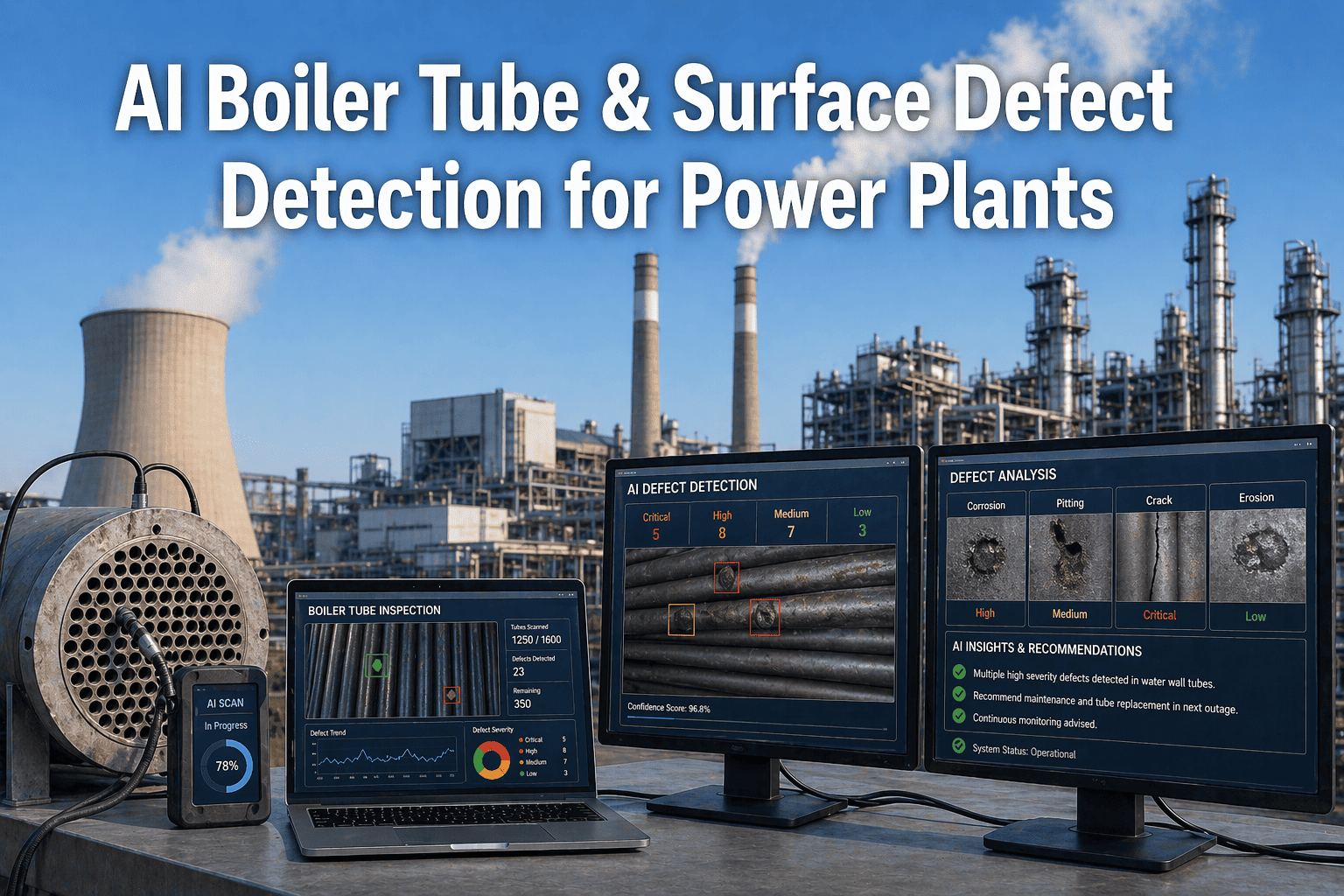
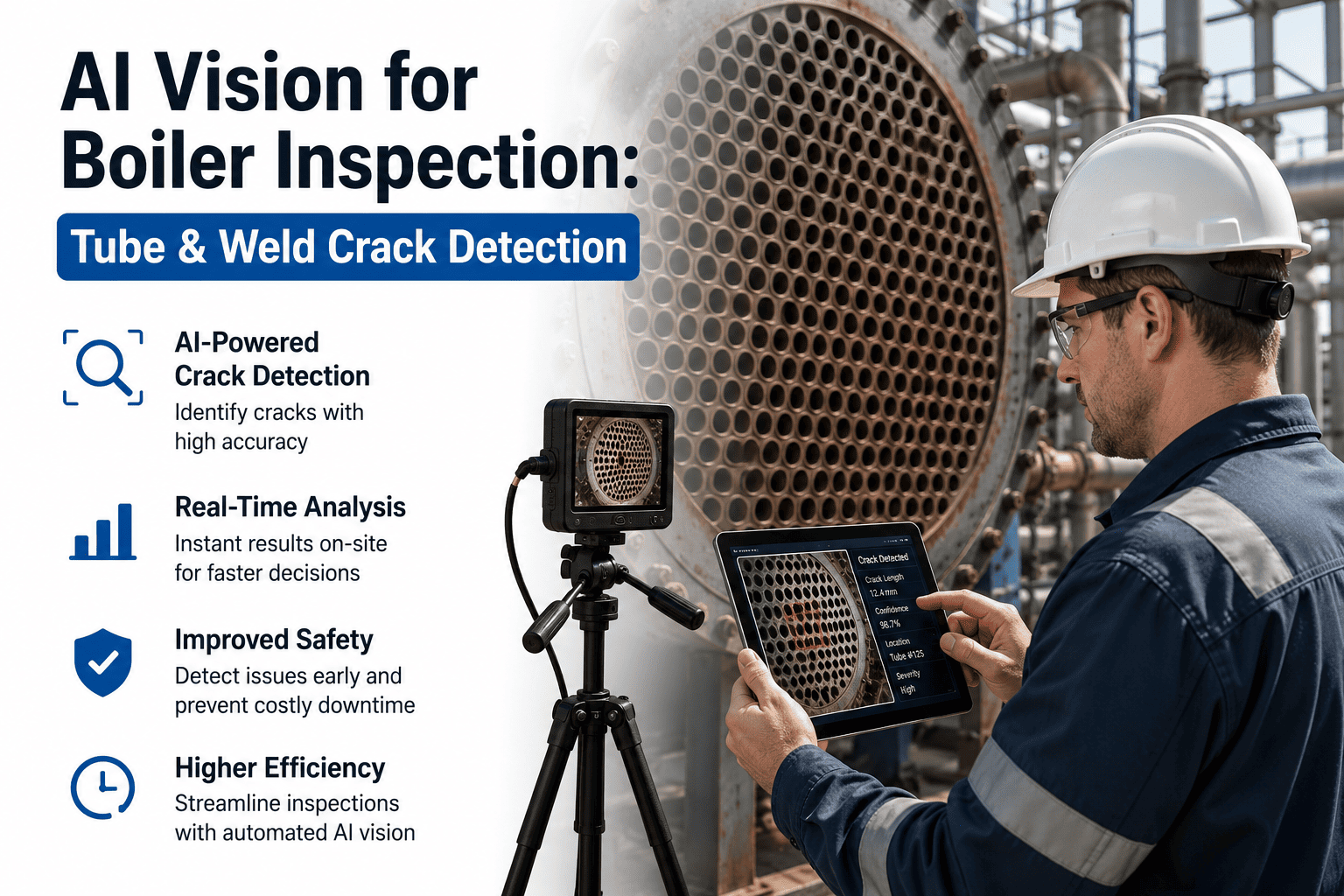
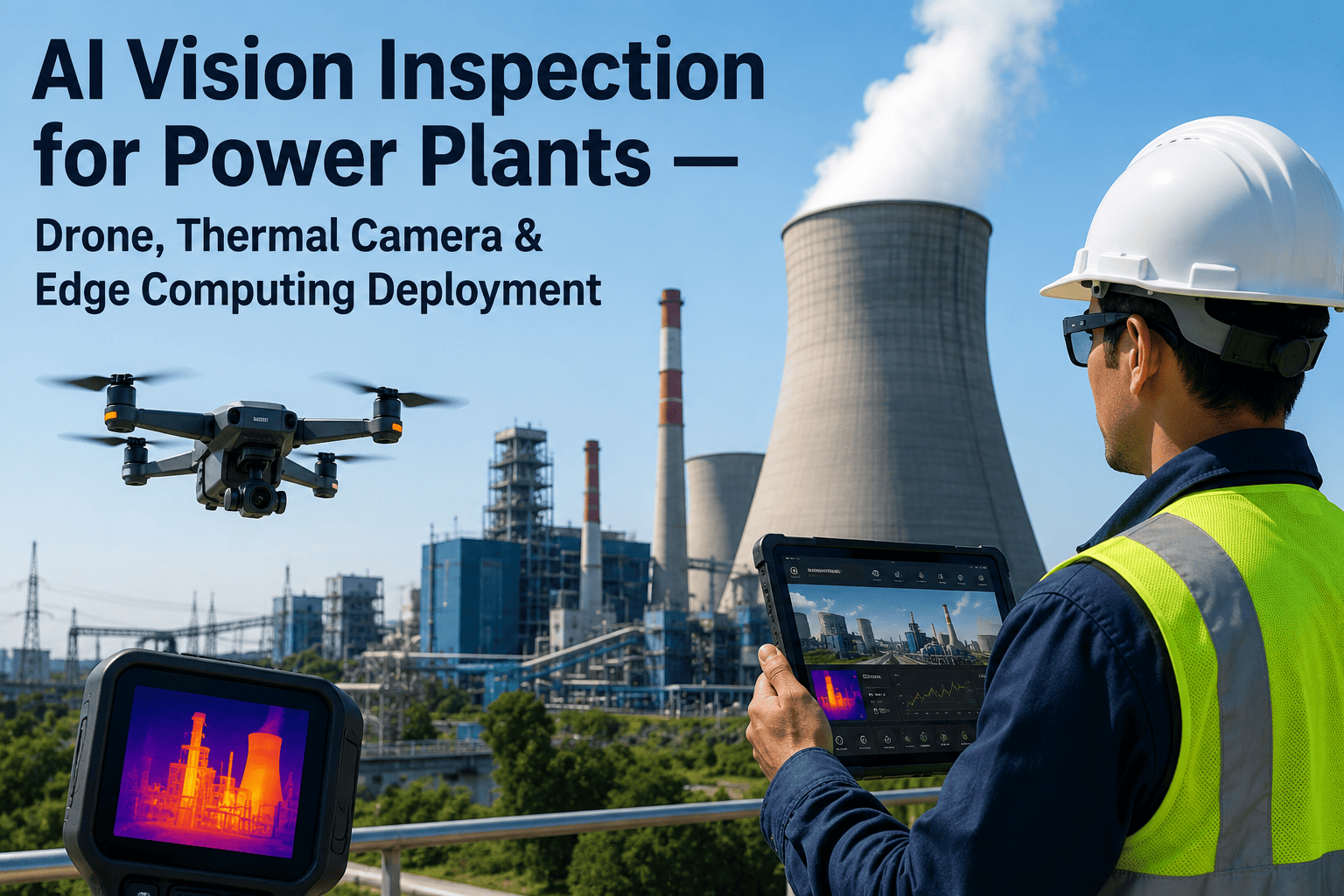
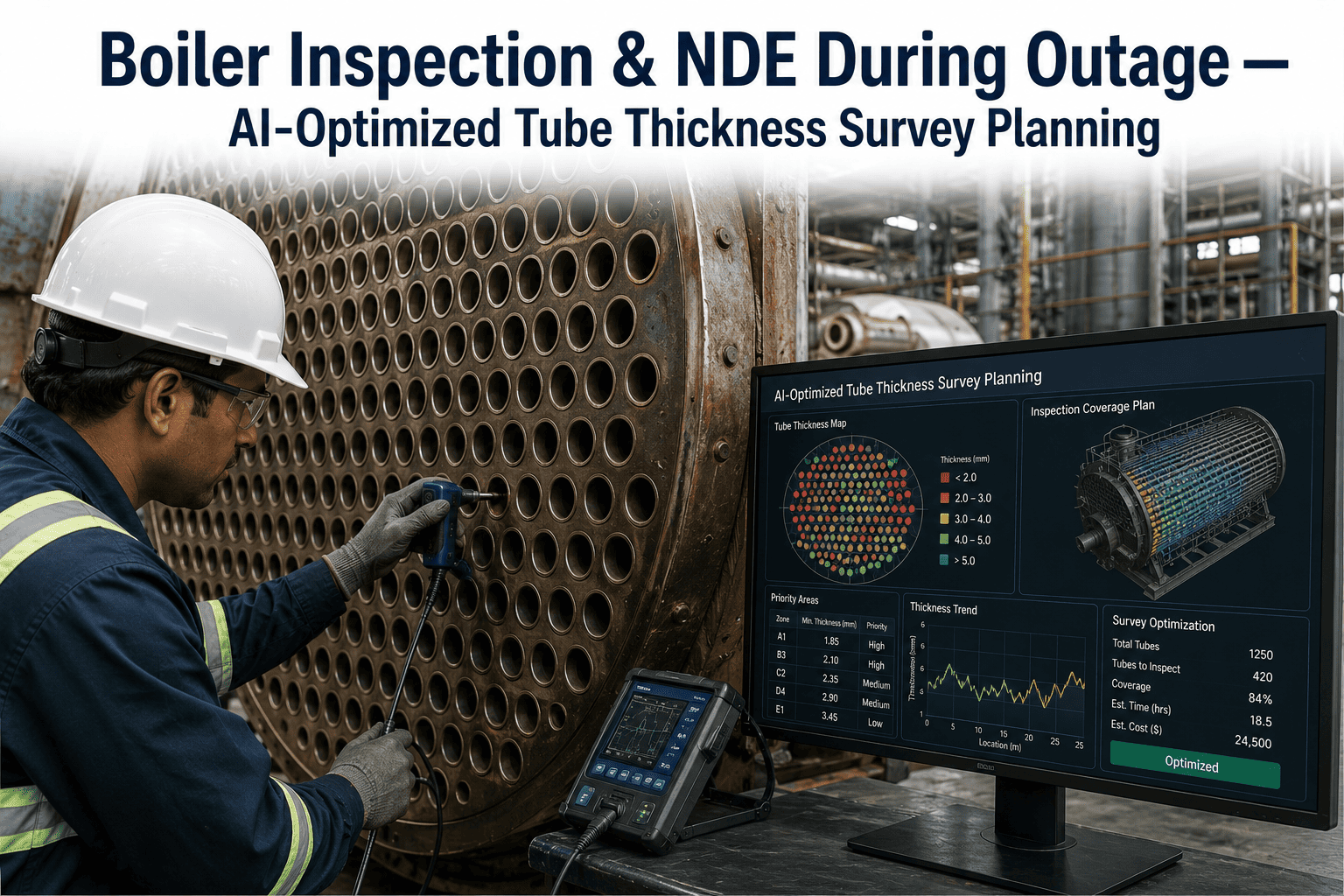
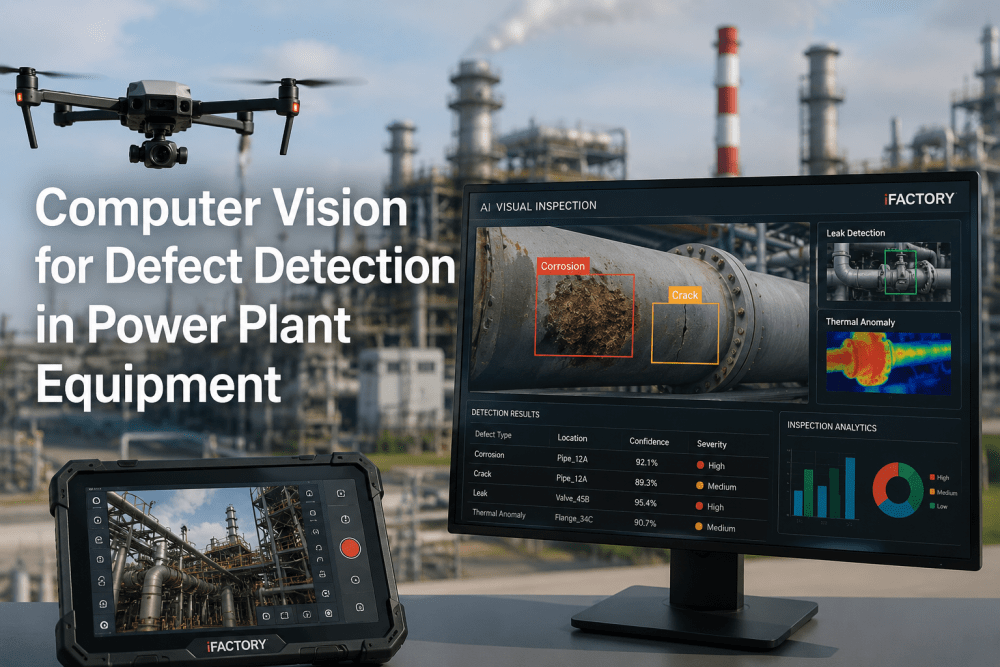
Power plants in the United States experience an average of 24–39% of boiler tube failures due to undetected surface degradation — not from catastrophic manufacturing defects, but from localized corrosion, micro-cracking, erosion wear, and thermal barrier coating breakdown that no manual spot checks or legacy NDT methods catch comprehensively. By the time tube leaks, forced outages, or ASME compliance findings trace back to surface deterioration, the compounding costs are already realized: emergency patching, extended downtime, collateral tube damage, and personnel safety exposure. iFactory AI Tube Inspection Platform changes this entirely — capturing full boiler surface imagery during outages using computer vision, classifying defect severity in real time, and integrating directly into your outage management, CMMS, and inspection databases without disrupting shutdown schedules. Book a Demo to see how iFactory deploys AI boiler tube inspection across your US power plant within 7 weeks.
100%
Tube surface coverage with AI vision vs. 5–10% for manual spot checks
$2.4M
Average annual forced outage prevention & repair savings per mid-size US plant
94%
Reduction in missed critical defects vs. traditional visual/NDT inspections
7 wks
Full deployment timeline from outage audit to live AI inspection integration
Every Undetected Micro-Crack and Corrosion Pit Is a Forced Outage Risk. AI Vision Maps It Before Failure.
iFactory's AI vision platform scans waterwalls, superheaters, reheaters, and economizers during planned outages — classifying corrosion, cracking, erosion, and TBC degradation with 94%+ accuracy, delivering actionable defect maps within hours instead of weeks.
The Hidden Cost of Surface Blind Spots: Why Manual Inspection Fails US Power Plants
Before exploring solutions, understand the root causes of boiler tube failures in thermal generation. Manual tube inspection introduces systemic risks that compound over time — risks that AI vision directly addresses.
Manual Spot Check Blind Spots
Inspectors can only evaluate 5–10% of tube surface area during outages. Localized pitting, intergranular cracking, and hidden erosion behind baffles are routinely missed until they propagate into full tube leaks.
Delayed Defect Recognition & Outage Extension
Traditional NDT and manual photo reviews require weeks of post-outage analysis. Critical defect maps arrive too late for repair planning, forcing extended downtime or deferred maintenance that compromises next-cycle reliability.
Coating Breakdown & Erosion Acceleration
Undetected thermal barrier coating (TBC) spallation, ash impingement erosion, and fly ash corrosion create accelerated wall thinning. Manual grading lacks consistency, leading to inaccurate remaining life estimates and premature tube replacement.
Regulatory & ASME Documentation Gaps
ASME BPVC and NERC require verifiable inspection records, defect trending, and repair validation. Paper logs and scattered image files lack standardized grading, spatial mapping, and immutable audit trails — creating compliance exposure.
How iFactory Solves Boiler Tube Inspection Challenges in US Power Plants
Traditional boiler monitoring relies on periodic walkdowns, manual UT/PT spot checks, and disconnected defect logs — all of which introduce coverage gaps, subjective grading, and delayed reporting. iFactory replaces this with a unified AI vision platform designed for US power plant outage workflows that captures 100% tube surface imagery during shutdowns, classifies defects in real time, and creates a spatially mapped audit trail for every inspection cycle. See a live demo of iFactory scanning waterwall corrosion, superheater cracking, and TBC degradation in a US thermal generation facility.
01
Full-Surface AI Vision Scanning
Robotic crawler and fixed-mount vision systems capture 100% tube surface imagery during planned outages. Computer vision models stitch, align, and normalize images across varying lighting, ash coverage, and access constraints — delivering complete digital twins of waterwalls, superheaters, reheaters, and economizers.
02
Defect Classification & Severity Grading
Proprietary ML models classify each anomaly as pitting corrosion, intergranular cracking, erosion thinning, TBC spallation, or weld defect — with confidence scores, severity grading, and spatial coordinates attached. False positive rate drops to under 2.5%.
03
Predictive Remaining Life Estimation
iFactory's degradation forecasting engine correlates defect size, growth rate, operating hours, and thermal cycling history to predict time-to-leak 6–12 months in advance. Maintenance teams prioritize replacements during planned windows, not forced outages.
04
Outage Management & CMMS Integration
iFactory connects to SAP PM, IBM Maximo, Infor EAM, and custom outage platforms via OPC-UA, REST APIs, and database connectors. Auto-link defect maps to work orders, spare parts requisitions, and weld repair procedures. Integration completed in under 10 days.
05
Automated ASME & Regulatory Reporting
Generate ASME BPVC, NERC GAD, and OSHA compliance reports instantly: inspection coverage logs, defect distribution maps, severity grading records, and repair validation documentation. Pre-configured templates for US federal and industry frameworks.
06
Tube Replacement Decision Support
iFactory presents ranked intervention recommendations per zone: monitor, grind/weld, sleeve, or replace — with remaining life estimates and production impact forecasts. Reliability teams optimize outage scope with precision, not guesswork.
Regulatory Framework Support: Built for US Power Industry Compliance
iFactory's AI tube inspection platform is pre-configured to meet the documentation requirements of major US power industry regulatory frameworks. No custom development needed — compliance reporting is automatic.
ASME BPVC Section I / II
Boiler and pressure vessel code requirements: inspection coverage verification, defect grading standards, repair procedure validation, and material substitution documentation — with automated spatial mapping and electronic approval workflows.
NERC GAD Standards
Generation Availability Data System requirements: forced outage tracking, equipment derating documentation, and maintenance outage reporting — with automated defect-to-availability correlation and audit trail generation.
OSHA 1910.269 / Confined Space
Electrical safety and confined space entry standards: inspection planning, personnel exposure reduction, and permit-to-work documentation — structured for audit readiness and incident prevention during boiler outages.
EPA MACT / 40 CFR Part 63
Maximum Achievable Control Technology requirements: coating material tracking, hazardous waste disposal documentation, and emission impact reporting from boiler repairs — formatted for EPA and state environmental agency submissions.
How iFactory Is Different from Generic NDT or Visual Inspection Tools
Most industrial inspection vendors offer manual UT/PT services or basic camera documentation wrapped in a portal. iFactory is built differently — from the US power plant outage workflow up, specifically for environments where 100% surface coverage, predictive remaining life, and regulatory traceability determine forced outage avoidance, repair cost optimization, and operational continuity. Talk to our boiler inspection AI specialists and compare your current tube monitoring approach directly.
iFactory AI Tube Inspection Implementation Roadmap
iFactory follows a fixed 5-stage deployment methodology designed specifically for US power plant boiler outage workflows — delivering pilot results in week 3 and full production rollout by week 7. No open-ended implementations. No outage disruption.
01
Outage Audit
Map critical tubes & identify inspection gaps
02
System Integration
Connect to CMMS, Outage Mgmt via APIs
03
Pilot Configuration
Deploy AI vision to 1–2 critical boiler sections
04
Validation & Training
User acceptance testing & inspector training
05
Full Production
Plant-wide AI tube inspection integration go-live
7-Week Deployment and ROI Plan
Every iFactory engagement follows a structured 7-week program with defined deliverables per week — and measurable ROI indicators beginning from week 3 of deployment. Request the full 7-week deployment scope document tailored to your boiler configuration.
Weeks 1–2
Discovery & Design
Current boiler inspection workflow assessment across reliability, maintenance, and outage management teams
AI vision scanning design aligned with existing outage schedules and ASME/NERC compliance requirements
Integration planning with CMMS, outage platforms, and defect tracking databases
Weeks 3–4
Pilot & Validation
Deploy AI tube inspection to high-impact zones: waterwalls, superheater pendants, economizer sections
Real-time defect classification and remaining life forecasting activated; supervisor workflows tested with inspection team
First critical defect prevention captured — ROI evidence begins here
Weeks 5–7
Scale & Optimize
Expand to full boiler coverage: all tube sections, all defect types, all outage cycles
Automated ASME/NERC compliance reporting activated for applicable regulatory frameworks
ROI baseline report delivered — forced outage avoidance, repair cost optimization, and inspection labor savings
ROI IN 5 WEEKS: MEASURABLE RESULTS FROM WEEK 3
Plants completing the 7-week program report an average of $210,000 in avoided forced outages and repair costs within the first 5 weeks of full production rollout — with early defect detection improvements of 28–46% validated by week 3 pilot scanning.
$210K
Avg. savings in first 5 weeks
28–46%
Early defect detection gain by week 3
89%
Reduction in post-outage tube failures
Eliminate Tube Inspection Blind Spots. Deploy AI Surface Scanning in 7 Weeks. ROI Evidence in Week 3.
iFactory's fixed-scope deployment program means no open timelines, no outage disruption, and no months of customization before you see a single result.
Use Cases and KPI Results from Live US Deployments
These outcomes are drawn from iFactory deployments at operating US power plants across three boiler inspection categories. Each use case reflects 6-month post-deployment performance data. Request the full case study report for the inspection workflow most relevant to your plant.
A 600 MW coal plant operating a 1,200-tube waterwall was experiencing recurring tube leaks due to undetected localized pitting and ash impingement corrosion. Legacy spot checks covered <8% of surface area and identified defects only after visible wall thinning. iFactory deployed full-surface AI scanning during a scheduled 14-day outage, mapping 100% of waterwall tubes with corrosion severity grading. Within 4 weeks, the system identified 31 critical corrosion zones that would have failed within 6 months, enabling targeted sleeve replacements before return-to-service.
31
Critical corrosion zones identified pre-leak
$890K
Annual forced outage cost avoided
96%
Defect detection accuracy on waterwall scanning
A Midwest combined cycle facility was spending 3–4 days per outage manually documenting superheater pendants with handheld cameras and UT spot checks. Defect reports arrived 21 days post-outage, forcing deferred repairs and extended risk exposure. iFactory replaced manual documentation with robotic AI vision scanning, achieving 100% pendant coverage in 4 hours with automated intergranular crack and erosion classification. Defect maps were delivered to the reliability team within 6 hours, enabling same-cycle repair planning and eliminating 22 days of deferred risk exposure.
4 hrs
Full superheater scan time (down from 3+ days)
100%
Tube coverage achieved vs. 7% manual baseline
$340K
Annual inspection & deferred repair labor savings
A Texas biomass facility was struggling with accelerated economizer tube failures due to undetected thermal barrier coating (TBC) spallation and fly ash erosion. Manual grading lacked consistency, resulting in premature full-tube replacements costing $410K annually. iFactory deployed AI vision TBC mapping with remaining life forecasting, classifying spallation severity, coating adhesion loss, and substrate thinning across 480 economizer sections. The platform recommended targeted coating repair instead of full replacement for 64% of tubes, extending mean time between failures by 14 months and eliminating $670K in unnecessary replacements.
64%
Tube replacements avoided through targeted TBC repair
0
Economizer tube failures in subsequent 12-month cycle
$670K
Annual reliability value from precision TBC optimization
What US Power Plant Teams Say About iFactory AI Tube Platform
The following testimonial is from a plant reliability director at a US thermal generation facility currently running iFactory's AI tube inspection platform.
We eliminated the "we missed that crack during the outage" uncertainty entirely. Every waterwall, superheater, and economizer tube is scanned, graded, and mapped during our scheduled outages. Our last ASME review was completed in one-quarter the time with zero inspection compliance findings — and we prevented three imminent tube leaks that would have cost us over $1.2M in forced outages. That single outcome justified the investment and completely transformed our outage planning and reliability engineering workflow.
Director of Plant Reliability
Thermal Generation Facility, Pennsylvania
Frequently Asked Questions
Does iFactory require replacing existing tubes or modifying boiler geometry?
No. iFactory is a non-invasive inspection platform. AI vision scanners mount externally or deploy via robotic crawlers to capture existing tube surfaces without equipment modification. Most US plants integrate the system during their next scheduled outage with zero structural changes or operational delays.
Which outage and maintenance systems does iFactory integrate with?
iFactory integrates natively with SAP PM, IBM Maximo, Infor EAM, and custom outage management platforms via REST APIs and database connectors. Auto-link defect maps to work orders, spare parts requisitions, weld procedures, and inspection databases. Integration scope is confirmed during the Week 1 outage audit.
How does iFactory handle ash coverage, low lighting, and confined boiler spaces?
iFactory uses adaptive computer vision with infrared-capable scanners, dust-resistant housings, and AI-powered ash/soot normalization algorithms. Models are trained on boiler visual conditions including heavy ash, steam residue, low light, and tight access corridors. Edge processing ensures uninterrupted scanning during network-limited outage conditions.
Can inspection teams access defect maps and reports on mobile devices in the field?
Yes. iFactory offers native iOS and Android apps with full offline capability. Inspectors and reliability engineers can view spatial defect maps, access grading reports, annotate findings, and submit repair requests without network connectivity. Data syncs automatically when connectivity is restored.
How long does training take for inspection and maintenance personnel?
Role-based training modules are delivered during Weeks 4–5 of deployment. Most inspectors and maintenance planners achieve proficiency in under 75 minutes. Reliability engineers and outage managers receive additional training on defect trending, remaining life forecasting, and repair prioritization. Ongoing support is included.
What if our plant has unique boiler configurations or mixed alloy tubes?
iFactory's vision models allow configuration of custom tube profiles, alloy-specific defect thresholds, and grading rules without code. Our implementation team works with your reliability, inspection, and maintenance teams during Week 1–2 to align the platform with your specific boiler design, alloy specifications, and outage planning requirements.
Stop Losing Reliability to Blind Spots. Start Building an AI-Ready Boiler Future.
iFactory gives US power plant teams 100% boiler tube surface scanning, predictive defect grading, automated ASME/NERC compliance reporting, and seamless outage management integration — fully deployed in 7 weeks, with ROI evidence starting in week 3.
100% tube coverage with AI vision surface scanning
CMMS & Outage platform integration in under 10 days
ASME BPVC and NERC GAD audit trails out-of-the-box
Mobile offline capability for field inspection teams