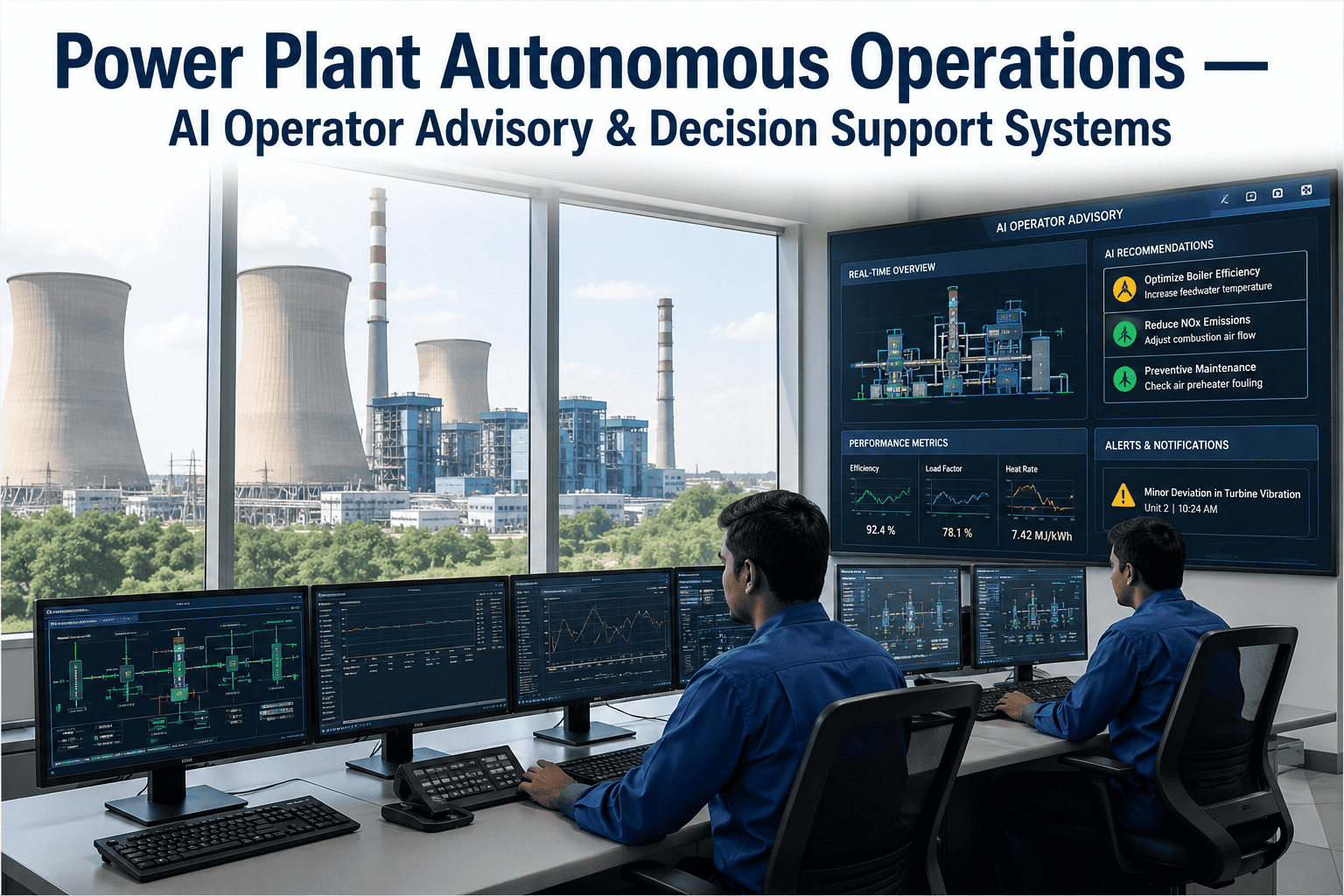
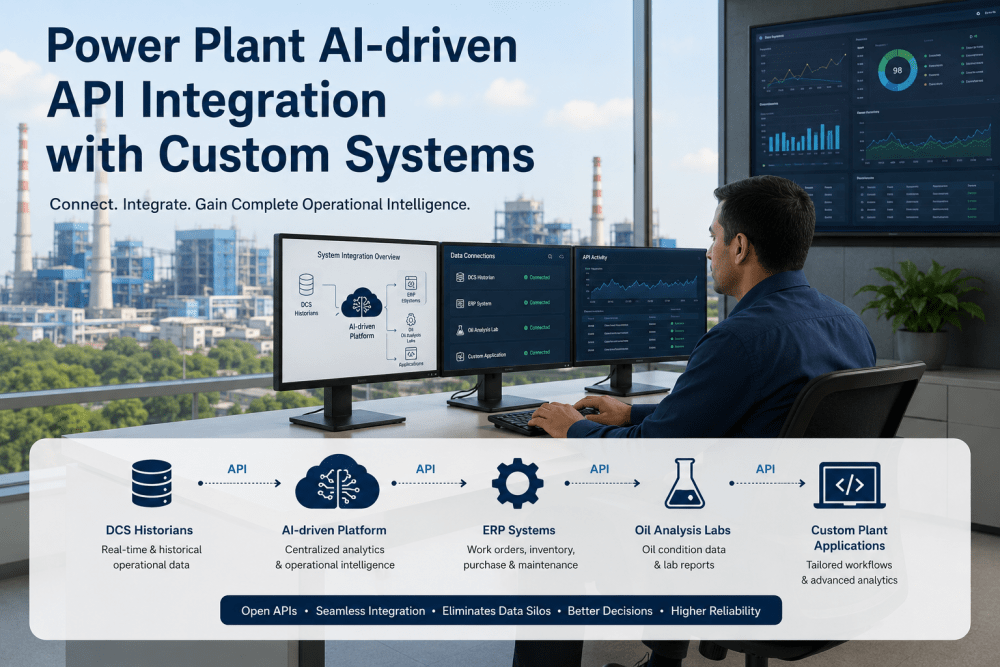
Most power plant control rooms still run on a simple, exhausting assumption: that a handful of operators can absorb hundreds of readings, catch every early warning sign, and make the right call under pressure every single time. During a startup sequence, a load swing, or a cascading alarm event, that assumption gets tested hard, and the margin for a missed signal keeps shrinking as plants push for tighter efficiency and leaner staffing. AI operator advisory systems are changing that equation by continuously modeling plant behavior in the background and surfacing a ranked recommendation the moment conditions call for a decision, instead of leaving operators to reconstruct the picture from scratch. It is a shift from reactive monitoring toward genuine decision support, and plants that have piloted it are finding it easier to justify a closer look through a short working session with the operations team.
AUTONOMOUS OPERATIONS & AI ADVISORY
Give Every Operator a Second Set of Eyes on the Plant
AI operator advisory systems analyze live plant data continuously and recommend specific actions for load changes, startup sequencing, and alarm response, so decisions are backed by predictive analytics instead of memory and gut feel alone.
Where Advisory AI Fits on the Path to Autonomy
Full autonomous operation is a long-term destination, not a switch that gets flipped overnight. Advisory systems occupy the practical middle ground where most plants are actually operating today.
Level 0
Manual Operation
Operators interpret raw readings and trends themselves, with no automated interpretation layer between the data and the decision.
Level 1
Automated Alerting
Threshold-based alarms flag deviations after they occur, but offer no context on cause, severity, or recommended response.
Level 2-3
AI Advisory & Decision Support
Predictive models rank likely causes, project outcomes of each option, and recommend a specific action while the operator retains full authority to accept, adjust, or override.
Level 4
Supervised Autonomous Control
The system executes routine actions directly within pre-approved boundaries, with operators supervising and intervening on exceptions only.
6 Per Hour
Recommended maximum steady-state alarm rate per operator under EEMUA 191 guidance
Under 10 Minutes
Target alarm count in the first ten minutes following a major plant upset
Seconds, Not Minutes
Typical response window operators are left with once an alarm flood begins
What an AI Operator Advisor Actually Recommends
The value of an advisory layer comes down to whether its recommendations are specific enough to act on, not just another dashboard of numbers.
Load Change Guidance
Recommends ramp rates and setpoint sequencing for load changes based on current equipment condition and recent thermal history.
Startup Sequencing
Walks operators through startup steps in the order least likely to trip protective interlocks, adjusting for ambient and equipment state.
Alarm Prioritization
Groups related alarms into a single root-cause narrative during a flood instead of presenting each one as an isolated event.
Predictive Deviation Flags
Surfaces slow drifts in vibration, temperature, or efficiency well before they cross a hard alarm threshold.
Traditional Control Room vs AI-Advised Control Room
How the Recommendation Loop Works
1
Continuous Data Ingestion
Process historian, DCS, and sensor data streams are pulled in continuously rather than sampled at fixed intervals.
2
Predictive Modeling
Models trained on historical plant behavior project how current conditions are likely to evolve over the next minutes and hours.
3
Ranked Recommendation
The system presents a specific recommended action along with the reasoning and the expected outcome behind it.
4
Operator Review and Decision
The operator accepts, modifies, or overrides the recommendation, keeping final accountability with the human in the loop.
5
Outcome Feedback
The actual result is logged and fed back into the model, sharpening future recommendations for that specific plant.
See the Advisory Layer Run Against a Real Scenario
Walk through a startup sequence or an alarm flood scenario and see exactly what the system would have recommended.
Why Operators Stay in Control the Whole Time
Advisory AI is designed to strengthen operator judgment, not replace it, which is why trust and accountability are built into every recommendation.
Final Authority Stays Human
Every recommendation requires operator acceptance before any action is taken, preserving accountability and existing operating procedures.
Reasoning Is Shown, Not Hidden
Recommendations are presented with the contributing factors behind them, so operators can judge the logic rather than act on a black box.
Full Decision Audit Trail
Every recommendation, operator decision, and outcome is logged for post-event review and regulatory documentation.
Frequently Asked Questions
MOVE TOWARD AUTONOMOUS OPERATIONS AT YOUR OWN PACE
Put an AI Advisor Behind Every Operator on Every Shift
See how predictive analytics can turn startup sequencing, load changes, and alarm response into confident, well-supported decisions.