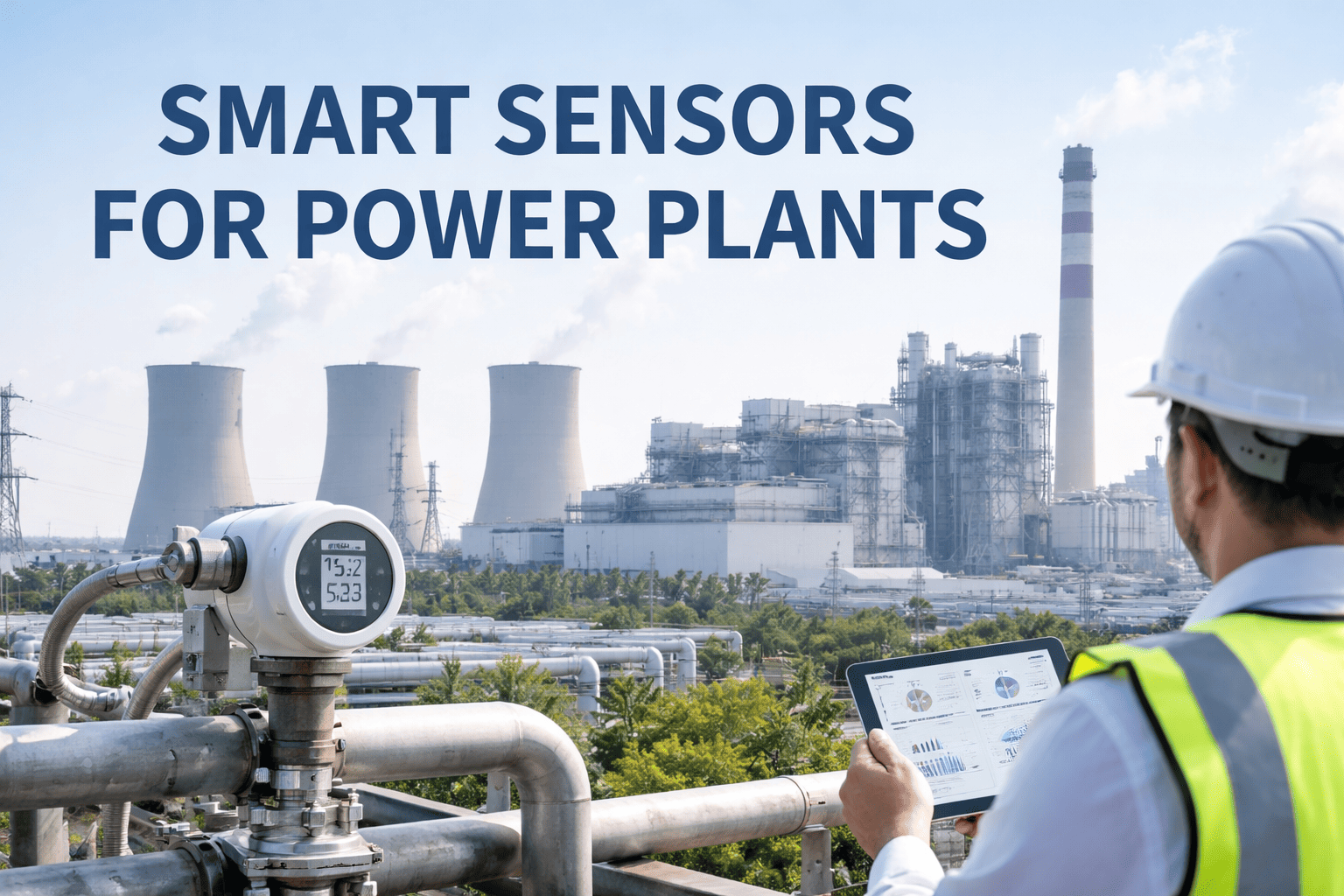
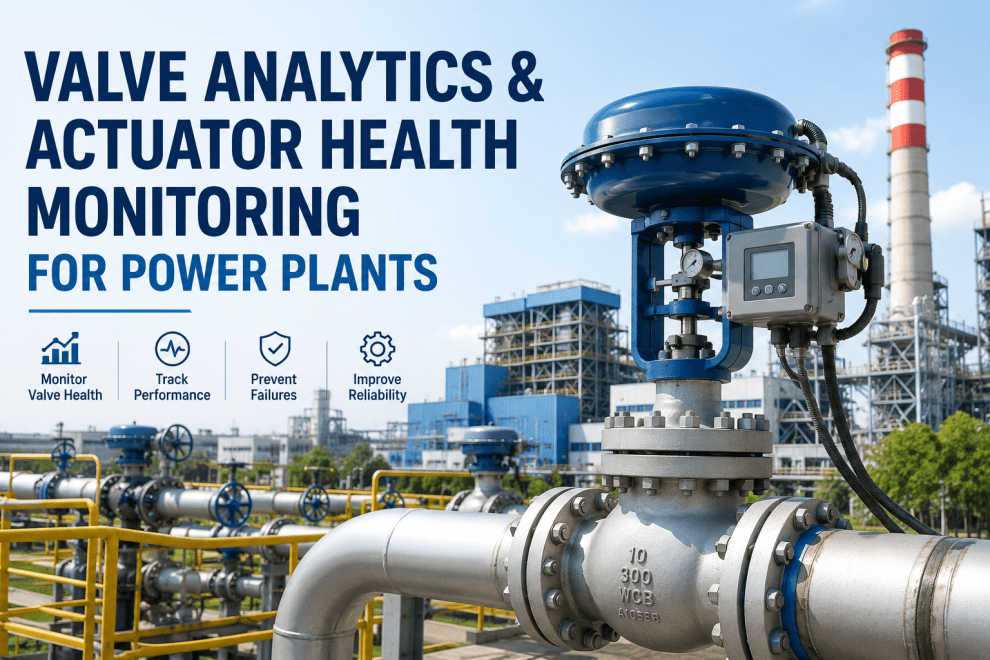
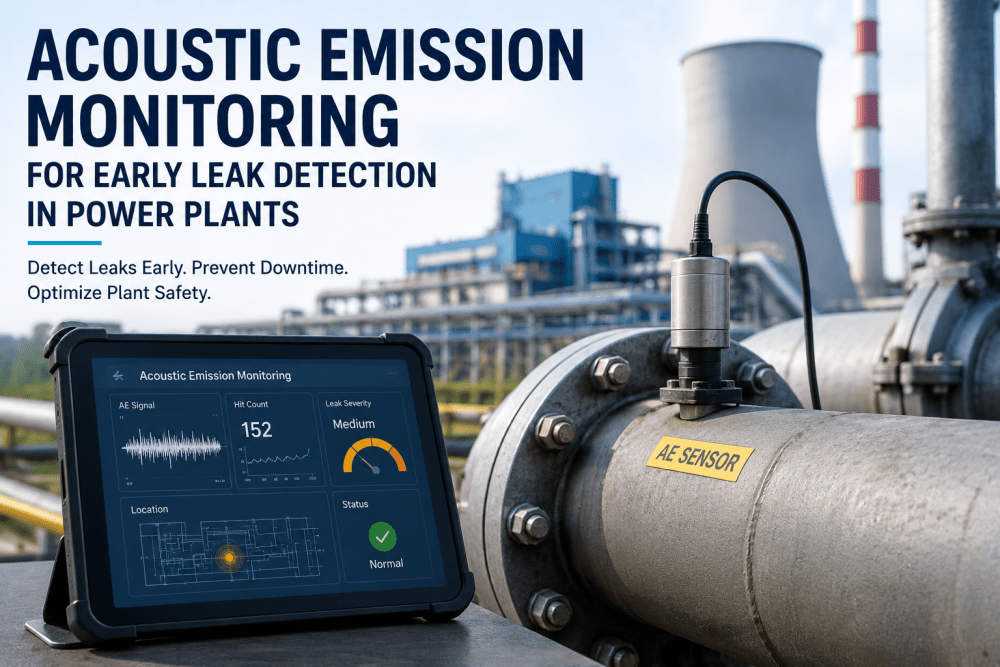
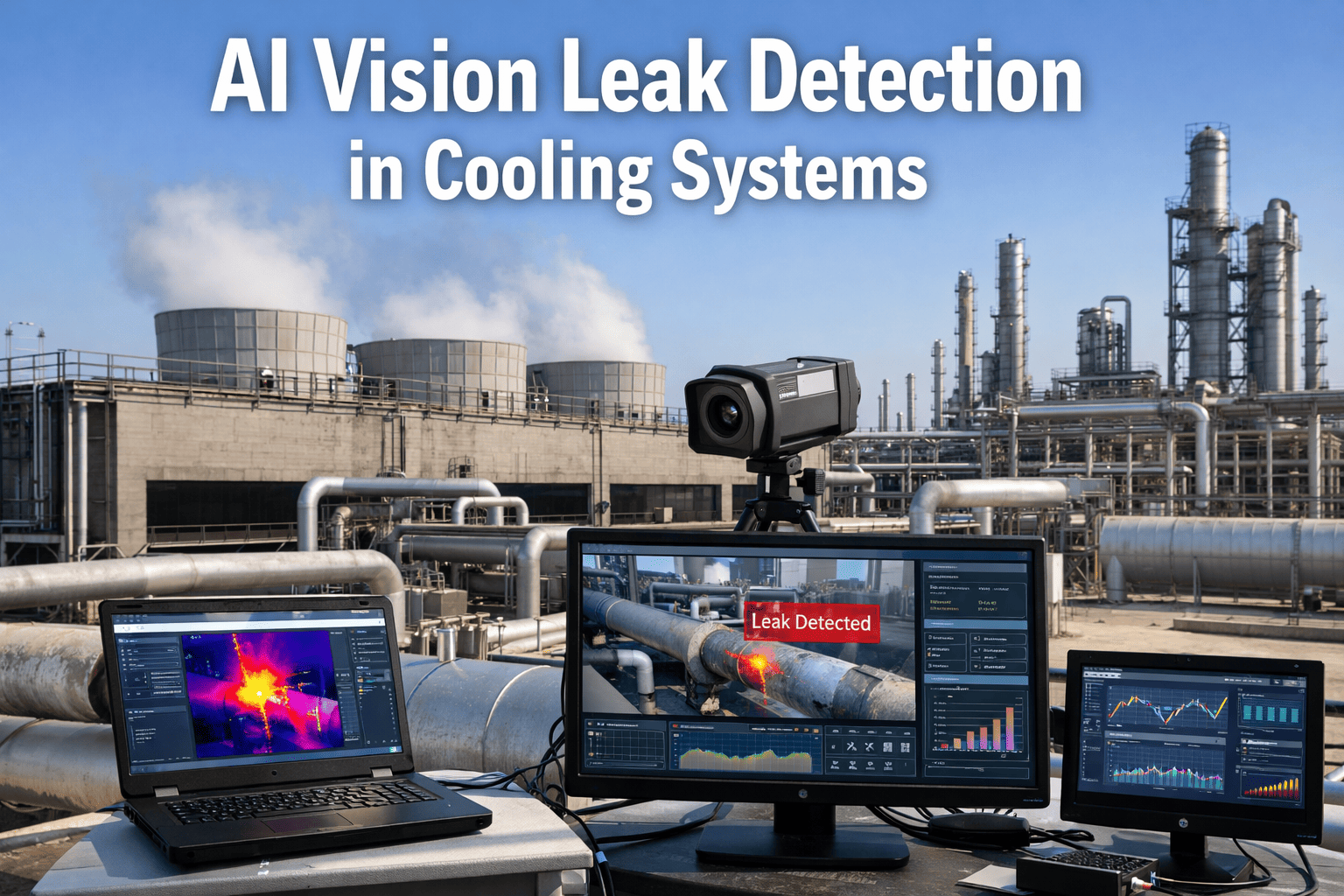
Most power plants have sensors — vibration accelerometers on rotating equipment, thermocouples in generator windings, pressure transmitters across the steam cycle. What they lack is the signal-to-decision pipeline that converts raw sensor data into remaining useful life forecasts, failure mode classifications, and maintenance work orders before the equipment fails. iFactory connects every smart sensor type deployed in power generation — vibration, temperature, oil quality, ultrasonic, thermal imaging, current signature, and pressure — to a unified predictive analytics engine that fuses multi-sensor data per asset, produces component-level RUL forecasts, triggers spare parts procurement, and generates prioritised work orders automatically. Book a sensor integration assessment for your plant.
Quick Answer
iFactory integrates with all major smart sensor types used in power plant condition monitoring — vibration accelerometers, RTDs and thermocouples, online oil particle counters, ultrasonic detectors, thermal cameras, motor current analysers, and pressure transmitters. Each sensor feeds into iFactory's predictive analytics engine, which fuses multi-sensor data per asset to produce component-level RUL forecasts with higher accuracy than any single sensor alone. Average result: 14-day earlier failure detection than single-sensor systems, 91% RUL forecast accuracy on critical rotating equipment.
Sensor-to-Analytics Signal Flow
The matrix below maps each smart sensor type to the failure modes it detects, the equipment it monitors, and the analytics output iFactory produces from its data. Every sensor feeds a unified analytics engine — not isolated dashboards per sensor vendor.
DetectsBearing defects, imbalance, misalignment, looseness, gear mesh faults, cavitation
EquipmentPumps, fans, compressors, turbines, generators, gearboxes, motors
Analytics outputPer-bearing RUL forecast, defect frequency classification (BPFO/BPFI/BSF/FTF), severity trending
Primary sensor for rotating equipment — highest ROI per sensor dollar
Temperature — RTDs & Thermocouples
DetectsWinding insulation degradation, bearing overheating, heat exchanger fouling, steam leak thermal signatures
EquipmentMotors, generators, transformers, boilers, heat exchangers, steam turbines
Analytics outputThermal trending with rate-of-change alerts, insulation life estimation, fouling coefficient tracking
Highest installed base — most plants already have temperature data available
Online Oil Quality Sensors
DetectsParticle contamination, moisture ingress, viscosity change, metal wear debris, oxidation
EquipmentTurbine lube systems, hydraulic systems, gearboxes, transformers (DGA), compressors
Analytics outputOil condition index, wear rate trending, contamination source identification, oil change optimisation
Detects failures 4–8 weeks before vibration changes become measurable
Ultrasonic Leak & Discharge Detectors
DetectsSteam trap failures, compressed air leaks, valve pass-through, partial discharge in switchgear, bearing defects (early stage)
EquipmentSteam systems, compressed air networks, high-voltage switchgear, slow-speed bearings
Analytics outputLeak location and severity quantification, steam trap failure rate, partial discharge trending, energy loss calculation
Steam leak detection alone recovers $100K–$500K/year in energy losses
Thermal Imaging — Fixed & Portable
DetectsHot spots in electrical connections, refractory degradation, insulation breakdown, blocked heat exchanger tubes
EquipmentSwitchgear, bus ducts, boiler refractory, heat exchangers, electrical panels, transformers
Analytics outputThermal anomaly detection with severity classification, delta-T trending, refractory condition mapping
Fixed thermal cameras enable continuous monitoring of high-value electrical assets
Motor Current Signature Analysis
DetectsRotor bar defects, stator winding faults, air gap eccentricity, mechanical load anomalies, power quality issues
EquipmentInduction motors, synchronous motors, motor-driven pumps, fans, compressors
Analytics outputElectrical fault severity index, rotor bar crack progression, stator insulation trending, load profile analysis
Non-invasive — installed at the MCC, not at the equipment
Sensor Integration
You Have Sensors. You Need a Signal-to-Decision Pipeline.
iFactory connects every sensor type in your plant to a unified predictive analytics engine — fusing multi-sensor data per asset to produce RUL forecasts, work orders, and spare parts triggers automatically.
14 days
Earlier Detection
Multi-Sensor Fusion — Why Single-Sensor Monitoring Misses Failures
A vibration sensor alone detects bearing defects — but misses lubrication degradation that causes those defects. An oil sensor detects contamination — but cannot determine which bearing is affected. iFactory fuses data from multiple sensor types per asset to detect failures earlier and classify root causes more accurately than any single monitoring technology. Talk to an expert about multi-sensor strategies for your critical equipment.
Pump — Single Sensor
Vibration sensor detects bearing inner race defect at severity stage 3 (audible noise). Estimated remaining time: 5–10 days. No root cause data — was it contamination, misalignment, or age?
Detection: Late stage. Root cause: Unknown.
Pump — Multi-Sensor Fusion
Oil sensor detects particle count increase (week 1). Vibration shows early-stage spectral change (week 3). Temperature trending confirms localised heating (week 4). iFactory correlates: contamination-driven bearing wear, DE bearing, inner race. RUL: 42 days.
Detection: 5 weeks earlier. Root cause: Identified.
Sensor Deployment Strategy by Equipment Criticality
Not every piece of equipment needs every sensor type. iFactory recommends sensor deployment density based on equipment criticality, failure consequence, and cost-benefit analysis per monitoring technology.
| Equipment Class |
Vibration |
Temperature |
Oil Quality |
Ultrasonic |
Thermal IR |
Current Sig |
| Gas/Steam Turbines |
Required |
Required |
Required |
Optional |
Optional |
N/A |
| Generators |
Required |
Required |
Recommended |
Recommended |
Recommended |
Required |
| BFW Pumps (Critical) |
Required |
Required |
Recommended |
Optional |
Optional |
Recommended |
| ID/FD Fans |
Required |
Recommended |
Recommended |
Optional |
Optional |
Recommended |
| Transformers |
N/A |
Required |
Required |
Recommended |
Required |
N/A |
| HV Switchgear |
N/A |
Recommended |
N/A |
Required |
Required |
N/A |
| Auxiliary Pumps (Non-Critical) |
Recommended |
Optional |
Optional |
N/A |
N/A |
Optional |
| Steam System (Headers/Traps) |
N/A |
Recommended |
N/A |
Required |
Recommended |
N/A |
Required = monitored continuously with online sensors. Recommended = periodic or online based on plant-specific risk. Optional = cost-benefit positive in some configurations. N/A = sensor type not applicable.
Platform Capability Comparison — Sensor Integration & Predictive Analytics
GE APM, Emerson AMS, Bentley Nevada, and SKF Enlight provide sensor-specific monitoring platforms. iFactory differentiates on multi-vendor sensor fusion, unified analytics across all sensor types, RUL-to-work-order automation, and spare parts integration — capabilities that require a platform approach, not vendor-locked monitoring silos. Book a comparison demo.
| Capability |
iFactory |
GE APM |
Emerson AMS |
Bentley Nevada |
SKF Enlight |
| Sensor Integration |
| Multi-vendor sensor support |
Any vendor, any protocol |
GE ecosystem preferred |
Emerson ecosystem |
BN sensors only |
SKF sensors only |
| Multi-sensor fusion per asset |
All sensor types fused |
Limited cross-type |
Single-type silos |
Vibration focus |
Vibration focus |
| Edge-to-cloud data pipeline |
Edge processing + cloud AI |
Predix platform |
Plantweb only |
System 1 on-premise |
Cloud platform |
| Analytics & Automation |
| Component-level RUL from sensor data |
Per bearing, per winding |
Equipment-level |
Alert-based only |
Vibration RUL only |
Vibration RUL only |
| Auto work order from sensor alert |
Classified + routed WO |
Alert to CMMS link |
Alert to CMMS link |
Manual WO creation |
Alert to CMMS link |
| Spare parts trigger from RUL |
Auto PO when RUL critical |
Not available |
Not available |
Not available |
Not available |
Based on publicly available product documentation as of Q1 2025. Verify current capabilities with each vendor before procurement decisions.
Measured Outcomes Across Deployed Plants
14 days
Earlier Failure Detection vs Single-Sensor
91%
RUL Forecast Accuracy on Critical Assets
6 types
Sensor Technologies Unified in One Platform
78%
Root Cause Identification at First Alert
Zero
Vendor Lock-In — Any Sensor, Any Protocol
Auto
Work Order + Spare Parts From Sensor Alert
Predictive Analytics Platform
Your Sensors Generate Data. iFactory Generates Maintenance Decisions.
Multi-sensor fusion produces RUL forecasts, failure mode classifications, and prioritised work orders — turning your existing sensor investment into a predictive maintenance programme that prevents failures instead of detecting them.
78%
Root Cause at First Alert
Auto
WO + Parts Triggered
From the Field
"We had three separate monitoring systems — Bently Nevada for vibration, Emerson for process data, and a standalone oil analysis programme. Each had its own dashboard, its own alert logic, and its own definition of 'critical.' iFactory unified all three into a single analytics engine. The first month, it detected a cooling water pump bearing degradation by correlating oil particle count increase with early-stage vibration spectral change — 6 weeks before either system alone would have alarmed. That pump serves a unit-critical cooling loop. The avoided forced outage was worth $420,000 in the first event alone."
Condition Monitoring Engineer
1,600 MW Coal-Fired Plant — Central USA
Frequently Asked Questions
QWe already have Bently Nevada vibration monitoring — can iFactory work with our existing sensors?
Yes. iFactory integrates with Bently Nevada System 1, Emerson AMS, SKF Enlight, Honeywell, and most OPC-UA or Modbus-compatible sensor systems. Your existing sensors stay in place; iFactory adds the multi-sensor fusion analytics layer on top. No hardware replacement required.
Book a sensor integration assessment.
QHow does iFactory handle the data volume from continuous online sensors — thousands of data points per second?
iFactory uses edge processing at the plant level — performing initial signal conditioning, feature extraction, and anomaly detection locally before sending summarised analytics data to the cloud platform. Raw waveform data is stored locally and transmitted only when anomaly investigation requires it. This reduces bandwidth requirements by 95% while preserving full diagnostic capability.
QWhat if we don't have sensors on some critical equipment — can iFactory recommend where to deploy first?
iFactory's sensor gap analysis compares your current sensor coverage against your equipment criticality register and failure history — recommending where additional sensors deliver the highest ROI based on failure consequence, failure frequency, and sensor cost. Most plants find that 60–70% of the value comes from instrumenting the top 15–20 critical assets.
Start with a sensor gap analysis.
QDoes iFactory support wireless sensors for equipment that is difficult to wire?
Yes. iFactory integrates with wireless vibration sensors (ISA100, WirelessHART, Bluetooth LE), wireless temperature transmitters, and battery-powered ultrasonic monitors. For equipment in remote locations or hazardous areas where running cable is impractical, wireless sensors provide the same analytics capability with simplified installation.
Continue Reading
Smart Sensors Connected to Smarter Analytics — Every Signal Converted to a Maintenance Decision.
iFactory integrates vibration, temperature, oil quality, ultrasonic, thermal, and current signature sensors into a unified predictive analytics engine — producing multi-sensor RUL forecasts, automated work orders, and spare parts triggers from your existing sensor infrastructure.
Multi-Vendor Sensor Integration
Multi-Sensor Fusion Analytics
Component-Level RUL Forecasts
Auto Work Order Generation
Edge-to-Cloud Architecture