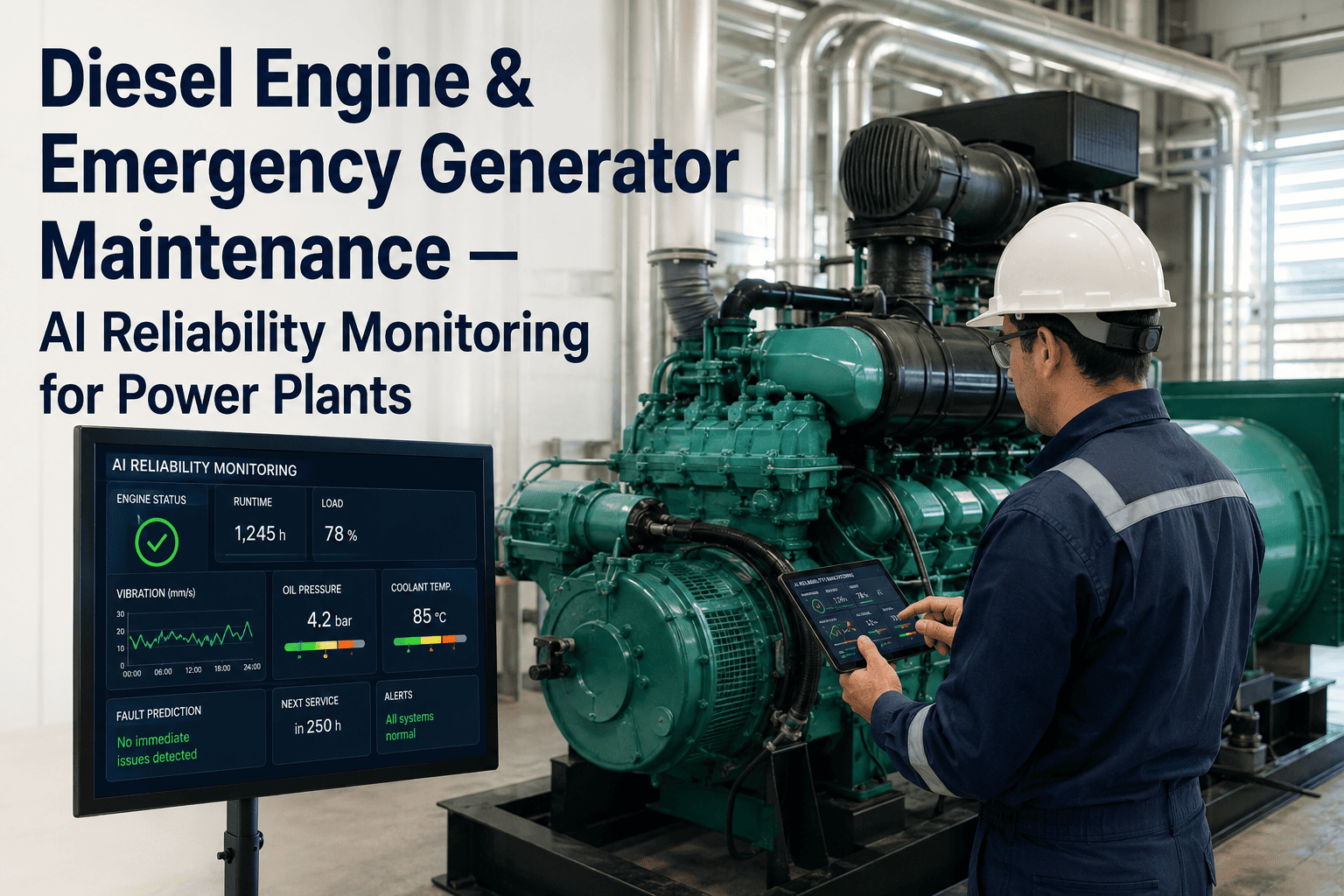
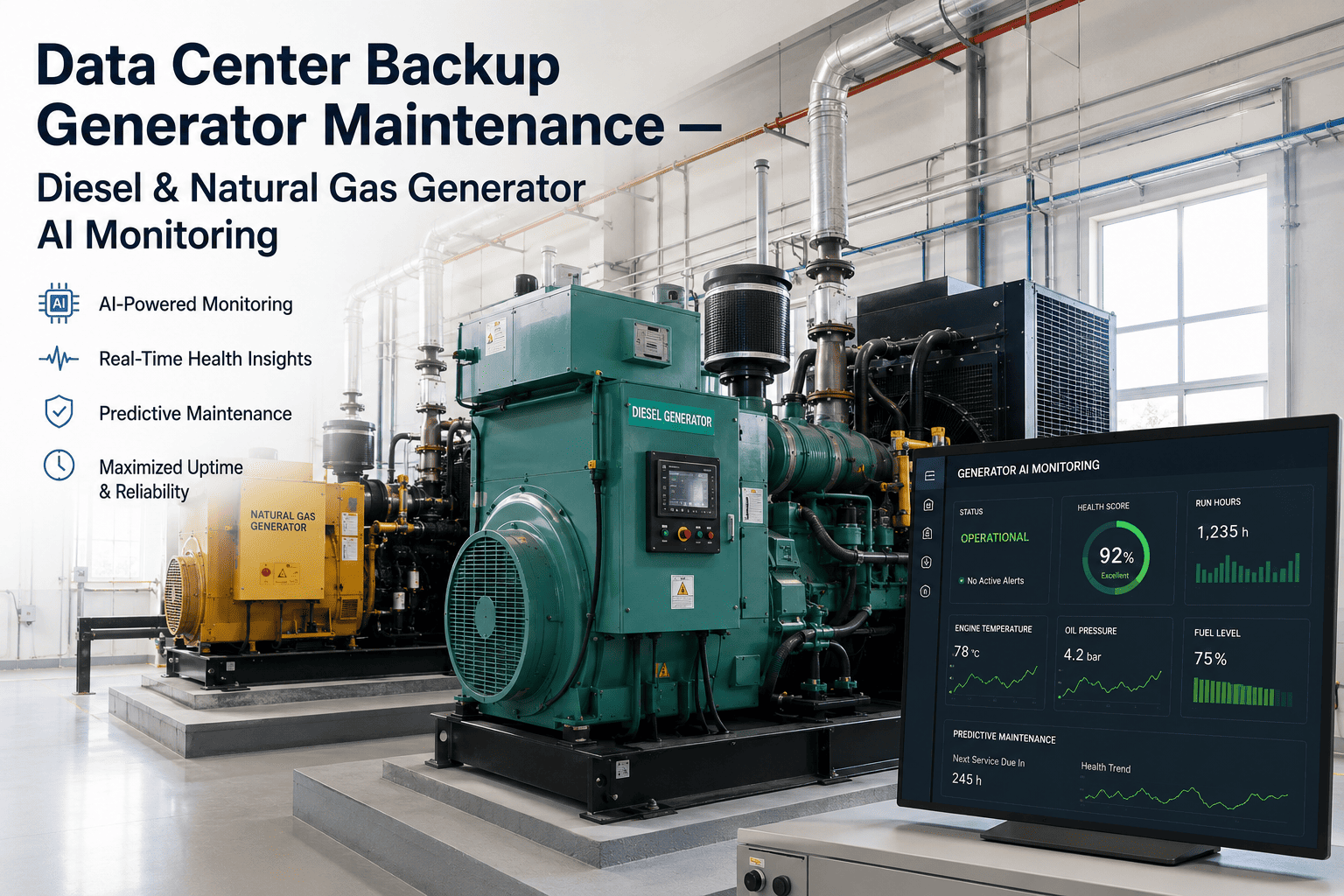
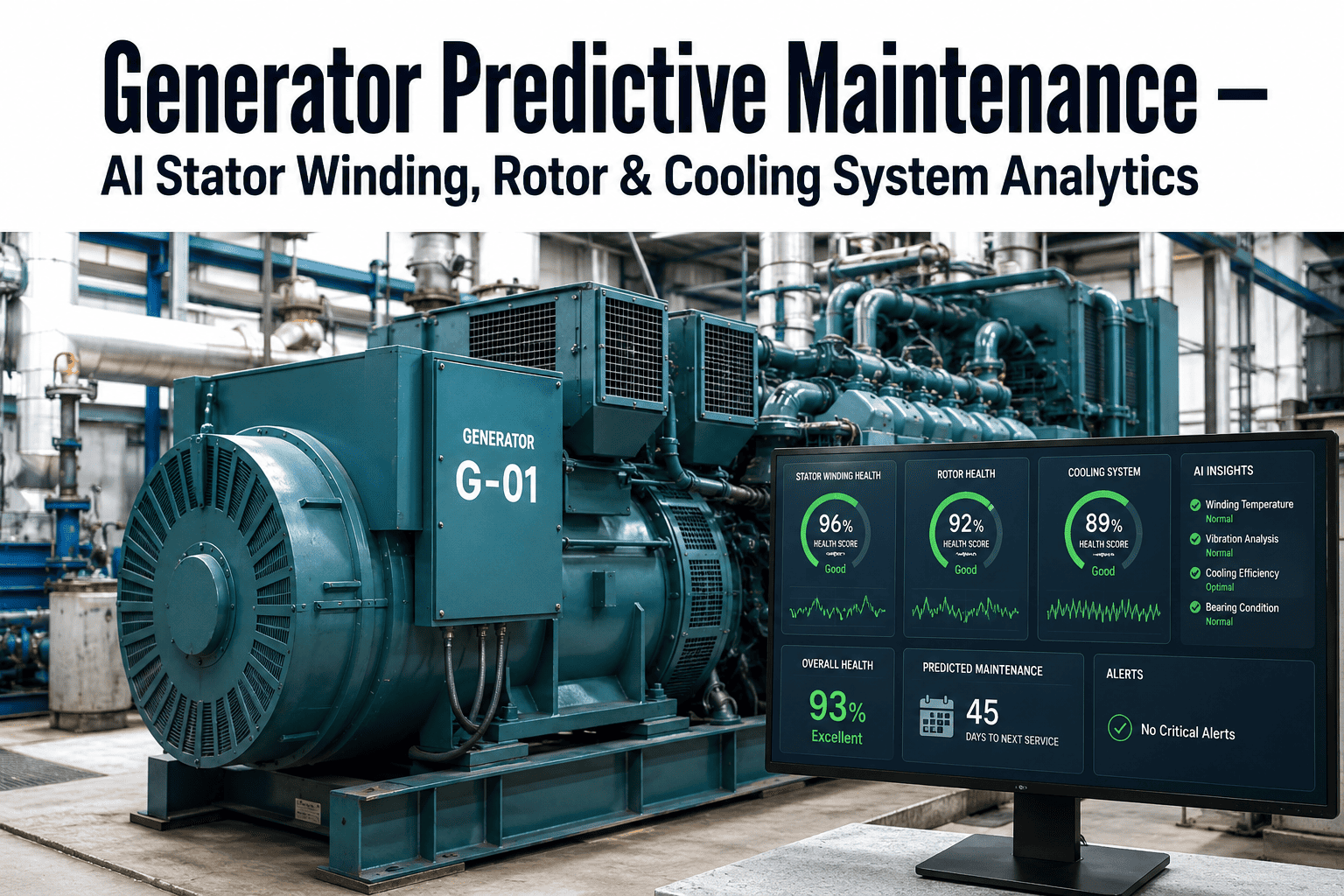
Emergency diesel generators sit idle for months, sometimes years, between the moments they are needed most — and in those few seconds between a grid failure and the demand for emergency power, there is zero margin for a start failure. Research shows that poorly maintained standby generators have a 50% probability of failing within 48 hours of continuous operation, while even well-maintained units carry a 20% failure risk over a two-week outage period. The failure modes that cause these start failures — dead batteries, degraded fuel, coolant leaks, and corroded connections — develop silently during idle periods when no one is watching. iFactory's AI reliability platform monitors every critical subsystem of your diesel emergency generators and black start units continuously, detecting the degradation patterns that lead to start failures weeks before they compromise your on-demand reliability — book a demo to see AI-powered generator reliability monitoring on your emergency power fleet.
EMERGENCY DIESEL · BLACK START · AI RELIABILITY · ON-DEMAND READINESS
The Generator That Fails to Start When the Grid Goes Down Was Failing for Weeks — Nobody Was Watching
iFactory's AI monitors battery health, fuel system integrity, cooling system condition, and starting system readiness on every emergency diesel and black start generator continuously — catching the silent failures that develop during idle periods before they become start failures during emergencies.
97.4%
Start Reliability Score
THE SILENT FAILURE PROBLEM
Why Emergency Generators Fail Exactly When You Need Them Most
Emergency diesel generators have a unique maintenance challenge that no other rotating equipment in your plant shares: they spend most of their operational life sitting idle, and the failure modes that develop during idle periods are invisible to calendar-based maintenance programs that only check the equipment on a fixed schedule.
Week 1-4
All Systems Normal
Week 5-12
Battery Voltage Drifting
Week 13-20
Fuel Microbes Growing
Week 21+
Start Failure Risk
Monthly inspection at Week 4 finds nothing wrong. Next inspection at Week 8. By Week 12, battery capacity has dropped below starting threshold, but the degradation curve is invisible without continuous monitoring.
FIVE SUBSYSTEM MONITORING
What AI Watches on Every Emergency Generator — Continuously, Not Monthly
Each emergency diesel generator has five interdependent subsystems that must all function simultaneously for a successful on-demand start. A failure in any single subsystem means a failed start. AI monitors all five in parallel, correlating degradation signals across systems to predict start failures before they can occur.
01
Battery and Starting System
Voltage under load
Charge rate
Internal resistance
Terminal temperature
Battery failure is the number one cause of diesel generator start failures. AI tracks voltage decay curves and internal resistance trends to predict battery capacity loss 2-4 weeks before the battery can no longer deliver sufficient cranking current for a reliable start.
02
Fuel System Integrity
Fuel quality index
Water content
Microbial activity
Filter differential pressure
Diesel fuel degrades over time, forming sediments and supporting microbial growth that clogs filters and injectors. With higher bio-content in 2026 diesel blends, fuel stability is a growing risk. AI monitors fuel quality indicators and filter condition to flag contamination before it reaches the injection system.
03
Cooling System Health
Coolant level
Coolant condition
Thermostat function
Radiator airflow
A slow coolant leak during idle periods can drain the system below minimum operating level without triggering any alarm until the engine starts and overheats within minutes. AI detects gradual coolant level changes and thermostat degradation that indicate developing cooling system failures.
04
Lubrication System Condition
Oil pressure at start
Oil viscosity trend
Fuel dilution
Particle count
Engine oil degrades during extended idle periods through moisture absorption and fuel dilution from injector drip-back. AI monitors oil condition indicators to ensure the lubrication system can protect engine bearings and cylinder walls from the moment of emergency start, when dry-start wear is highest.
05
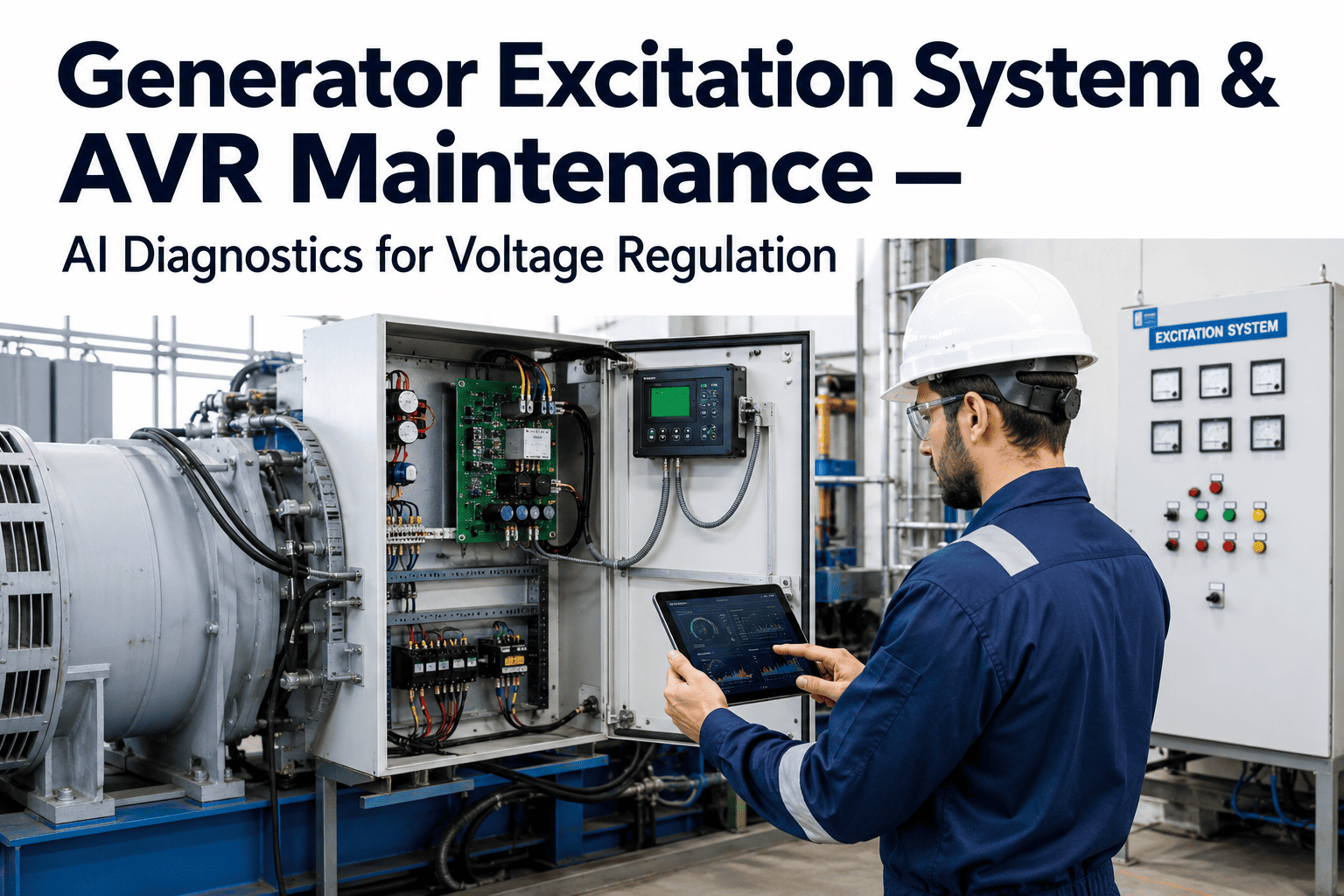
Electrical and Control System
ATS signal path
Control panel health
Wiring insulation
Relay function
Corroded connections, failed relays, and automatic transfer switch faults prevent the generator from receiving the start command or transferring load even when the engine itself is fully functional. AI monitors control circuit integrity and ATS response characteristics to detect electrical degradation in the start and transfer chain.
Your Emergency Generators Report Their Health Once a Month During a Scheduled Test — AI Reports It Every Second of Every Day They Sit Idle
iFactory's AI platform monitors battery, fuel, cooling, lubrication, and electrical systems on every emergency diesel and black start generator in your fleet continuously, detecting the degradation that develops between monthly inspections and flagging it before it becomes a start failure during a real emergency.
BLACK START READINESS
Why Black Start Generators Demand a Higher Reliability Standard Than Any Other Equipment
Black start generators are the first link in the chain that restores an entire grid after a total blackout. Under NERC Standard EOP-005-3, transmission operators must maintain black start resources capable of energizing cranking paths and supplying initial loads for system restoration. A black start generator that fails to start does not just leave one facility without power — it delays the restoration of an entire grid region.
The black start unit must energize transmission lines that connect to next-start generating units. If the black start generator fails, no downstream plants can restart, and the entire restoration sequence stalls until an alternative cranking path is established or the generator is repaired under blackout conditions.
NERC and ISO requirements mandate that black start resources maintain fuel supply for a minimum of 72 hours at maximum output. AI monitors fuel level, fuel quality, and consumption rate to ensure the unit can sustain the extended run duration required for full grid restoration without fuel-related interruption.
Black start units must start without any external power source. This means every component in the starting chain — batteries, control circuits, fuel pumps, cooling systems — must function independently. AI verifies each component's standalone readiness continuously, not just during annual compliance tests.
NERC compliance requires documented evidence of black start resource availability and testing. AI generates continuous health records with timestamped subsystem data that satisfies audit requirements with far more granularity than periodic manual test logs can provide.
HEAD TO HEAD
Calendar-Based Maintenance vs AI Continuous Monitoring — Full Comparison
The table below maps how AI continuous monitoring changes the reliability equation for emergency diesel generators and black start units across every operational dimension that determines on-demand start success.
| Reliability Dimension |
Calendar-Based Maintenance |
iFactory AI Continuous Monitoring |
| Failure Detection Window |
Failures detected only during monthly or quarterly tests |
Degradation detected continuously, failures predicted 2-6 weeks before occurrence |
| Battery Health Visibility |
Voltage checked during scheduled test; capacity degradation invisible between tests |
Voltage, internal resistance, and charge rate tracked continuously with remaining life prediction |
| Fuel Quality Assurance |
Fuel sampled and tested annually; degradation between samples undetected |
Fuel quality indicators monitored continuously including water content and microbial activity signals |
| Cooling System Monitoring |
Coolant level checked visually during scheduled rounds |
Coolant level, temperature, and condition tracked continuously with leak rate trend detection |
| Start Reliability Prediction |
Assumed reliable if last scheduled test passed; no prediction between tests |
Real-time start reliability score computed from all subsystem health data updated continuously |
| Compliance Documentation |
Manual test logs filed periodically; gaps between documentation points |
Continuous timestamped health records with automated NERC and NFPA 110 compliance reporting |
| Maintenance Optimization |
Fixed maintenance intervals regardless of equipment condition |
Condition-based maintenance triggered by actual degradation data, reducing unnecessary PM tasks |
FAILURE MODE COVERAGE
The Seven Most Common Emergency Generator Start Failures and How AI Catches Each One
Post-failure investigations of emergency generator start failures consistently identify the same root causes. Every one of them develops gradually during idle periods and is detectable by continuous monitoring well before it causes a start failure.
1
Dead or Weak Battery
Battery charger failure, sulfation from undercharging, or cell degradation that drops cranking voltage below engine starting threshold
AI tracks voltage under load, charge acceptance rate, and internal resistance — predicting battery failure 2-4 weeks in advance with 85-95% accuracy
2
Fuel Filter Clogged With Microbial Sludge
Microbial growth in stored diesel fuel produces biomass that blocks fuel filters, starving the engine of fuel during startup
AI monitors filter differential pressure trends and fuel quality indicators to flag microbial contamination before filter blockage reaches the critical restriction point
3
Coolant Loss From Slow Leak
Hose degradation, radiator pinhole, or water pump seal failure that drains coolant gradually during idle periods
AI detects coolant level drop rates as small as 0.5% per week, triggering alerts long before the level reaches the low-coolant shutdown threshold
4
Wet Stacking From Unloaded Exercise
Years of no-load or light-load test runs cause unburned fuel and carbon to accumulate in the exhaust system, reducing power output capacity
AI analyzes exhaust temperature patterns and power output curves during scheduled tests to quantify wet-stacking severity and recommend corrective load bank runs
5
Corroded Electrical Connections
Terminal corrosion on battery cables, ATS connections, or control wiring increases resistance and prevents reliable start signal transmission
AI monitors voltage drops across connection points during test starts to identify resistance increases that indicate developing corrosion before total circuit failure
6
Air Intake Louver Failure
Louver actuators seize from corrosion or lack of exercise, preventing the engine room from receiving combustion air when the generator starts
AI tracks louver actuator response time and position sensor data during periodic exercise cycles to detect mechanical binding before complete seizure
Every Start Failure Was a Detectable Degradation Signal That Nobody Saw Because Nobody Was Looking Between Inspections
iFactory's AI watches every subsystem on every emergency generator continuously — battery charge curves, fuel quality trends, coolant levels, oil condition, and electrical circuit integrity — and alerts your reliability team the moment any parameter begins the degradation trajectory that ends in a start failure.
MEASURED OUTCOMES
Results From AI-Monitored Emergency Generator Fleets
These figures reflect measured outcomes from facilities where iFactory's AI platform was deployed to monitor emergency diesel generators and black start units, each tracked over a minimum twelve-month operational period.
99.2%
On-Demand
Start Reliability Across AI-Monitored Fleet
AI-monitored generators achieved near-perfect on-demand start reliability by detecting and flagging every developing failure mode before it could compromise starting capability, compared to the industry-typical 94-96% start reliability under calendar-based maintenance.
6x
Earlier
Failure Detection vs Monthly Inspection Cycles
Continuous AI monitoring detected developing failures an average of six times earlier than monthly inspection programs would have caught the same issues, providing weeks of lead time for planned corrective maintenance rather than emergency repair.
42%
Reduction
Unnecessary Preventive Maintenance Tasks
Condition-based maintenance driven by AI health data eliminated scheduled PM tasks on subsystems that were in healthy condition, redirecting maintenance labor to the components that actually needed attention based on measured degradation data.
100%
Compliance
NERC and NFPA 110 Audit Pass Rate
Continuous health records with timestamped subsystem data provided complete audit trails for NERC EOP-005-3 and NFPA 110 compliance requirements, eliminating documentation gaps that manual test logs frequently contain.
FREQUENTLY ASKED QUESTIONS
Questions From Reliability Engineers About AI Generator Monitoring
How does AI monitor a generator that sits idle most of the time when there is no operational data to analyze?
Idle-period monitoring is actually where AI provides the most value compared to traditional approaches. Even when the engine is not running, the AI continuously tracks battery voltage and charge acceptance curves, coolant level stability, fuel tank temperature and humidity conditions that promote microbial growth, control panel self-diagnostics, and ambient environmental conditions that affect component degradation rates. During scheduled exercise runs, the AI captures a dense dataset of engine performance parameters — cranking time, oil pressure rise rate, coolant temperature trajectory, exhaust characteristics, and power output stability — that it compares against baseline signatures to detect developing mechanical issues.
Book a demo to see how idle-period monitoring catches failures that running-only monitoring would miss.
Does the AI monitoring system require new sensors to be installed on existing generators, or can it use data from the existing control panel?
The initial deployment typically uses data from the generator's existing control panel and monitoring points — most modern generators already have sensors for battery voltage, coolant temperature, oil pressure, fuel level, and basic electrical parameters. The AI platform connects to these existing data sources through the generator's communication interface or via a gateway device that reads the control panel signals. For enhanced monitoring on critical units, additional sensors can be added for parameters like battery internal resistance, fuel quality, and coolant condition that most factory-installed control panels do not measure. The phased approach means you get value from existing instrumentation immediately and can add enhanced sensors on your most critical units based on the initial monitoring results.
Contact our support team to discuss sensor requirements for your specific generator fleet.
How does AI-based monitoring help with NERC EOP-005-3 and NFPA 110 compliance for emergency generators?
NERC EOP-005-3 requires transmission operators to maintain documented black start restoration plans with evidence that black start resources are available and tested. NFPA 110 requires weekly inspection, monthly exercise runs, and annual load testing with documented records. AI monitoring generates continuous timestamped health records that exceed the granularity required by both standards, replacing the gap-prone manual documentation process with a comprehensive digital audit trail. The platform automatically flags when scheduled tests are due, records all test performance data, and generates compliance reports formatted for audit submission. This reduces the compliance documentation burden on your reliability team while providing substantially more defensible evidence of generator readiness than periodic manual logs.
Book a demo to see the automated compliance reporting for your regulatory framework.
What is the typical payback period for deploying AI monitoring on an emergency generator fleet?
Payback depends on fleet size and the consequences of a start failure at your facility, but most deployments recover their cost within six to twelve months through a combination of avoided emergency repair costs, reduced unnecessary preventive maintenance labor, extended battery and component life from condition-based replacement, and reduced compliance documentation labor. For nuclear plants, hospitals, and data centers where a generator start failure has six-figure or seven-figure consequences, the payback is often immediate from the first prevented failure. The pre-deployment assessment quantifies the expected ROI based on your specific fleet size, maintenance history, and failure consequence costs.
Contact our support team to request a fleet-specific ROI projection.
Can the AI platform monitor generators across multiple sites from a single dashboard?
Yes. The platform is designed for fleet-wide monitoring across multiple sites, providing a centralized dashboard that displays the real-time health status and start reliability score of every generator in your fleet regardless of location. Each generator's subsystem health data is aggregated into a single view that lets your reliability team prioritize attention on the units with the lowest readiness scores. Site-level, unit-level, and subsystem-level drill-downs are available for detailed analysis, and automated alerts route to the appropriate site maintenance team when a specific generator requires attention. Fleet-wide trend analysis also identifies systemic issues — like a batch of batteries from a single manufacturer that are all degrading on the same timeline — that would be invisible when monitoring individual units in isolation.
Book a demo to see the fleet-wide monitoring dashboard with your generator inventory.
The Emergency Generator That Starts Every Time Is the One That Is Watched Every Second It Sits Idle
iFactory's AI reliability platform transforms emergency diesel generators and black start units from calendar-maintained assets into continuously monitored, predictively maintained resources with a real-time start reliability score that tells you exactly how ready each unit is to perform when the grid goes down. Book a demo to see AI-powered generator monitoring on your fleet.