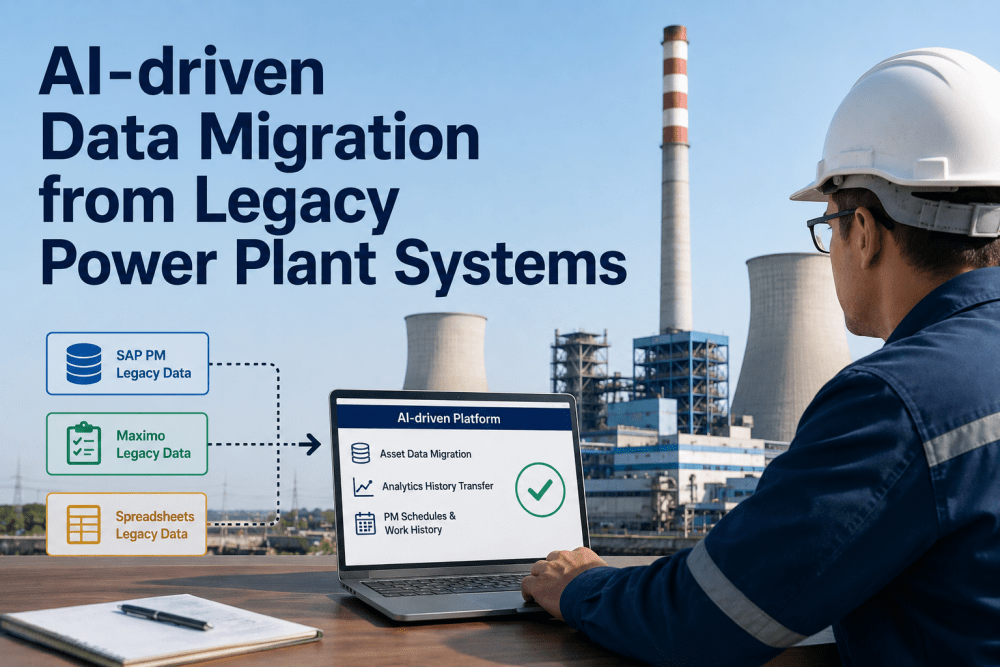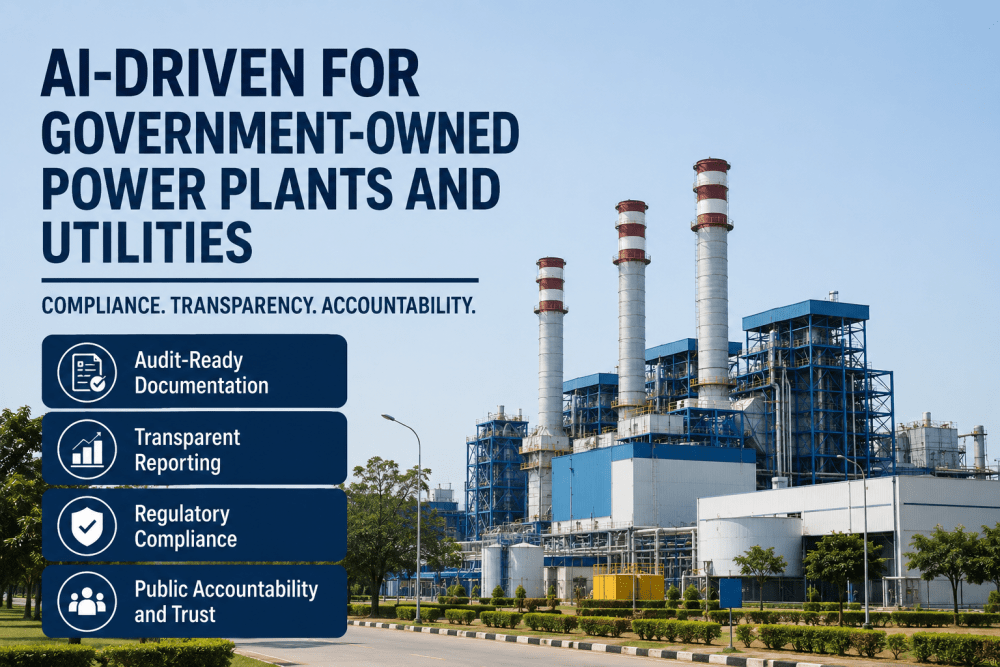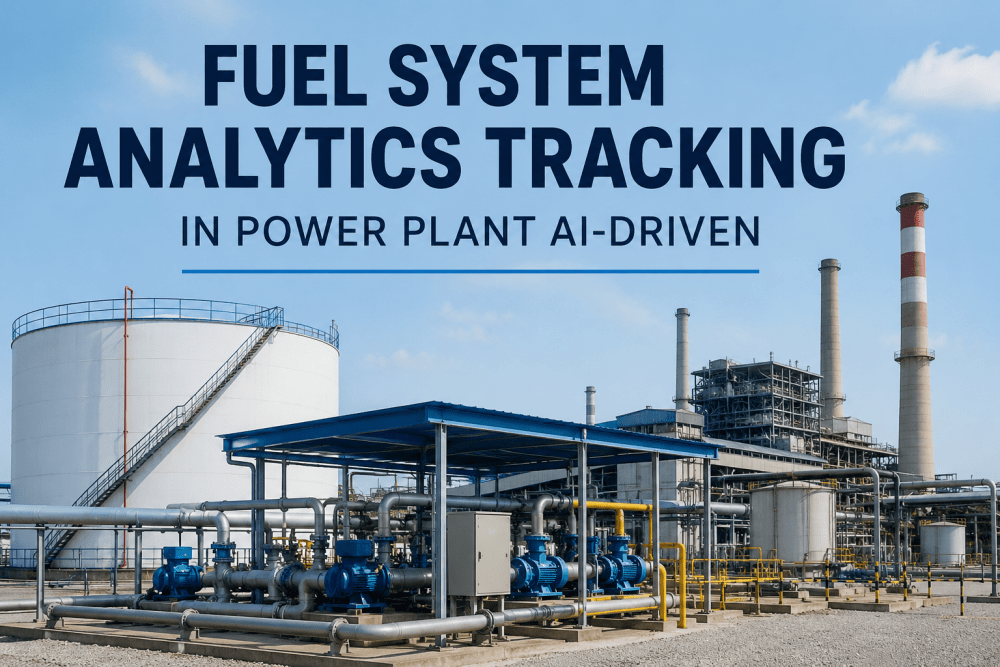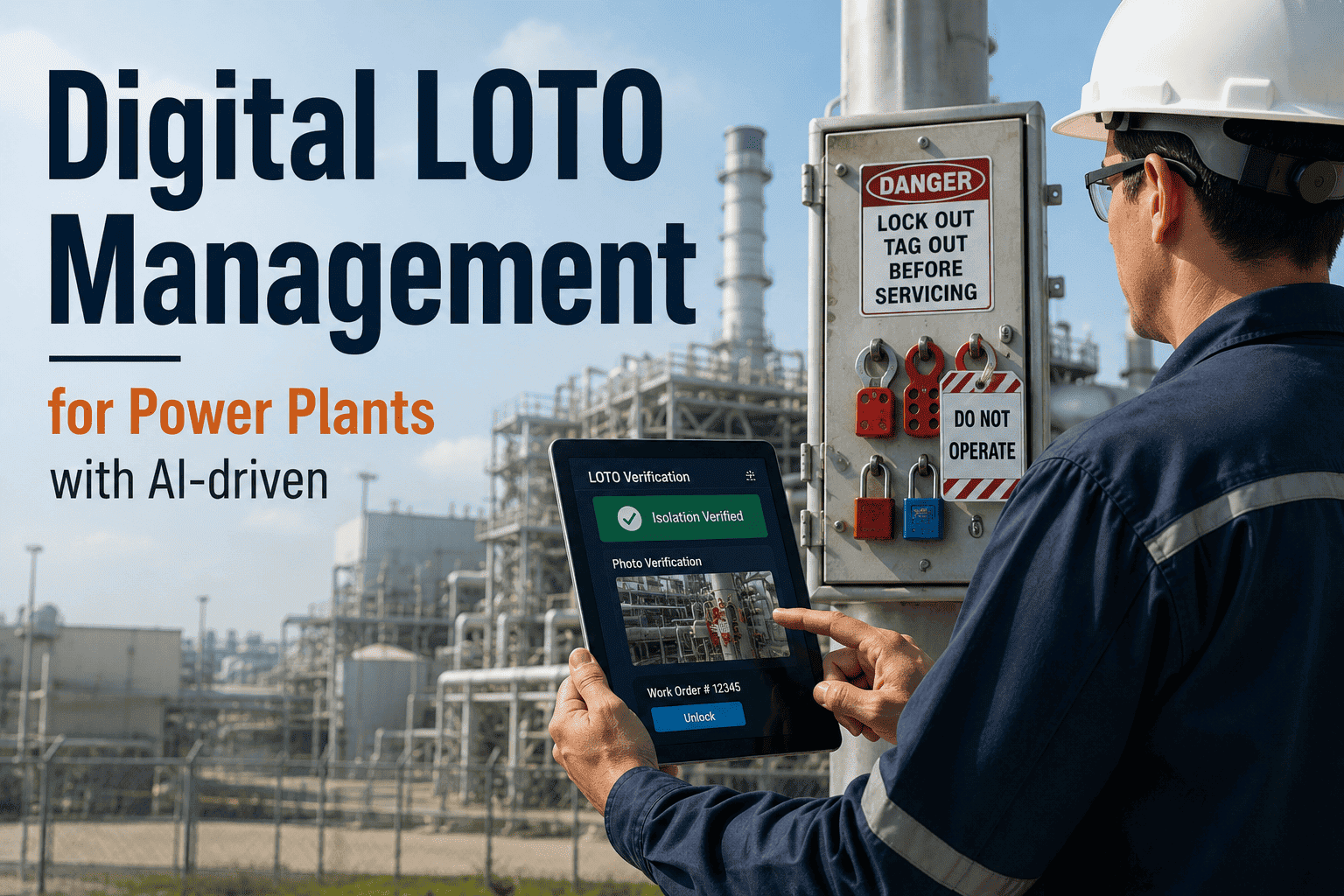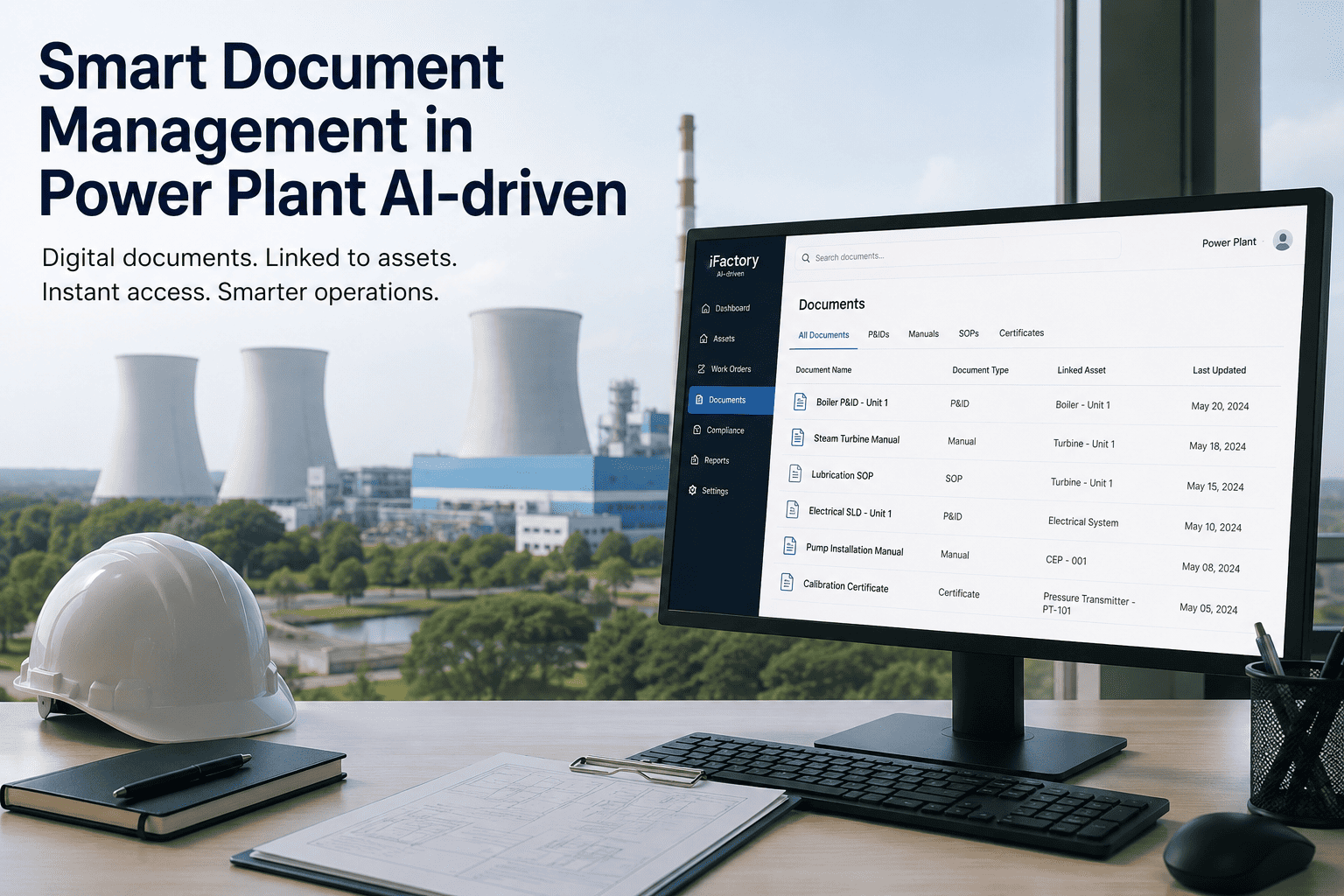
A power plant generates an extraordinary volume of critical documents — P&IDs, equipment manuals, standard operating procedures, inspection certificates, calibration records, and compliance logs. In most facilities, these documents live in filing cabinets, shared network drives, and email threads that nobody fully trusts. When a technician needs the latest revision of a valve SOP during a planned outage at 2 a.m., the last thing they should be doing is calling the document control office or digging through a folder structure that has not been audited in three years andSmart document management inside an AI-driven CMMS changes that equation entirely — linking every document directly to the asset it belongs to, surfacing the right revision automatically, and creating an unbroken audit trail that satisfies regulators, insurers, and operations leadership alike.
Smart Document Management
for Power Plants
Link P&IDs, equipment manuals, SOPs, and compliance certificates directly to assets and work orders — so every technician has the right document, at the right revision, in the right place.
Why Document Control Failures Are a Power Plant Operations Problem
Document management is rarely treated as an operations issue — it gets classified as an administrative one. That is a costly misclassification. When the wrong revision of a maintenance procedure is followed on a gas turbine combustion inspection, the consequence is not a filing error. It is a potential equipment failure, a reportable safety incident, or a compliance violation that triggers a NERC or OSHA audit. The gap between document control and operational reliability is much narrower than most plant managers recognize until something goes wrong.
The structural problem is that most power plants manage documents in one system and assets in another. The CMMS tracks what needs to be done. A separate shared drive or document management system holds the instructions for how to do it. These two systems do not talk to each other, which means every work order execution depends on a technician manually bridging the gap — finding the right document, verifying it is the current revision, and applying it correctly under time pressure. AI-driven CMMS platforms eliminate that gap by embedding document management directly inside the asset and work order layer.
- Asset-linked P&IDs served at current revision automatically
- MOC (Management of Change) workflow triggers P&ID update requests
- Full revision history with redline comparison available on-device
- Access log captures every view event for regulatory audit trails
Equipment Manuals
OEM equipment manuals are the legal and technical baseline for warranty compliance, insurance requirements, and failure investigation. When a turbine fails and the insurer asks whether the maintenance was performed according to manufacturer specifications, the answer must come from documented evidence — not from a technician's memory. Manuals linked directly to the asset record in the CMMS make that evidence available instantly.
- OEM manuals stored and served at the asset level, not the folder level
- AI-powered search surfaces relevant manual sections from work order context
- Superseded manual versions retained with clear archival status
- Offline access for field technicians at remote or low-connectivity sites
Standard Operating Procedures (SOPs)
SOPs govern how every routine maintenance task, startup sequence, and emergency response is executed. The revision control problem is especially acute for SOPs because they are updated frequently — after incident investigations, regulatory changes, or equipment modifications — and the consequence of following an outdated procedure can be immediate and severe. AI-driven CMMS platforms serve the current approved SOP directly within the work order, eliminating the possibility of a technician pulling a superseded version from a shared drive.
- Current-revision SOP embedded directly in each work order type
- Digital acknowledgment capture before task execution begins
- Automatic notification to all affected work order types when SOP is revised
- Revision history and approver signatures stored permanently in audit log
Compliance Certificates & Inspection Records
Pressure vessel inspection certificates, lifting equipment certifications, environmental monitoring records, and calibration certificates all have expiration dates that carry regulatory and legal consequences. An expired pressure vessel inspection certificate does not just create a compliance gap — it can trigger a mandatory shutdown until the inspection is completed and filed. AI-driven document management tracks expiration dates automatically, routes renewal workflows, and maintains the complete certificate history that auditors require.
- 30/60/90-day expiration alerts for all time-bound certificates
- Certificate status dashboard visible to operations and compliance teams
- Inspection records linked to specific asset and work order history
- One-click compliance package generation for NERC, OSHA, and EPA audits
Manual vs. AI-Driven Document Management: Workflow Comparison
The performance gap between paper-based document control and an AI-driven system embedded in the CMMS becomes most visible when you trace a single document retrieval event from request to resolution. The table below maps that comparison across every critical stage of document lifecycle management in a power plant environment.
| Document Lifecycle Stage | Manual Process | AI-Driven Process | Time Saved |
|---|---|---|---|
| Document Retrieval | Search shared drive, email document control, wait for response | One-tap access from asset record or work order screen | 2–4 hrs → 15 seconds |
| Revision Verification | Cross-check file date against document control log manually | Current revision served automatically with revision badge | 30 min → Zero effort |
| SOP Assignment to Work Order | Technician manually selects procedure from shared folder | Current SOP auto-attached based on work order type and asset | 20 min → Automatic |
| Certificate Expiry Tracking | Spreadsheet updated manually, checked periodically if at all | Automated alerts at 90/60/30 days with renewal workflow trigger | Ongoing risk → Zero gaps |
| Revision History Access | Archive folders with inconsistent naming conventions | Full revision timeline with redline comparison in one click | Hours of search → Instant |
| Audit Package Preparation | Days of compiling, printing, and organizing documentation | One-click compliance package with all linked records | 3–5 days → Under 5 min |
| Field Access (Remote Sites) | No access without connectivity; technicians work from memory | Full document library available offline on field tablets | Zero access → Full access |
| Document Update Notification | Email blast to distribution list, no confirmation of receipt | In-app notification with mandatory acknowledgment before next use | Unreliable → Guaranteed |
Regulatory Documentation Requirements for U.S. Power Plants
Every major U.S. power generation regulatory framework has explicit documentation requirements that touch document version control, access logging, and retention. The following breakdown identifies what each standard actually requires from your document management system — not in general terms, but in the specific evidence format that auditors and inspectors look for.
NERC CIP Standards
CIP-010 and CIP-013 require documented change management processes and supply chain risk records. Document management systems must maintain access logs showing who retrieved which document, when, and what action was taken — with tamper-evident audit trails.
OSHA PSM / 1910.119
Process Safety Management requires that process safety information — including P&IDs, equipment specifications, and chemical hazard data — is current and accessible to employees working on or near covered processes. Written procedures must reflect actual current practice.
NRC 10 CFR 50 / Appendix B
Nuclear plants operating under Appendix B quality assurance requirements must maintain controlled document systems with mandatory review and approval cycles, distribution control, and retention schedules that span plant operating life plus post-shutdown periods.
EPA Title V & Air Permits
Continuous emissions monitoring system calibration records, stack test reports, and operational logs must be retained and accessible for a minimum of five years. Gaps in calibration documentation are among the most common sources of Title V permit violations.
Measured Results: What Plants Report After Deploying AI-Driven Document Management
The operational case for centralized, asset-linked document management is built on outcomes that plants are actually reporting — not projections from vendor marketing materials. The figures below reflect deployments at U.S. power generation facilities across gas, wind, solar, and hydro asset classes.
Expert Review: What Document Management Actually Requires in a Power Plant Environment
Plant managers evaluating document management solutions often compare platforms on storage capacity and search speed. Those are table-stakes features. The capabilities that separate a document management system that actually improves operational reliability from one that simply digitizes existing chaos come down to three things that vendors rarely lead with in demos.
Conclusion: Documents Are Not Administrative — They Are Operational Infrastructure
Every power plant has a document control policy. The gap between that policy and what actually happens on the plant floor — during a 2 a.m. forced outage, during a planned maintenance window with three contractors on site, during the week before a NERC audit — is the gap that AI-driven document management closes. When every P&ID, equipment manual, SOP, and compliance certificate is embedded directly in the asset and work order layer, document retrieval stops being a friction point and starts being a capability multiplier.
For U.S. power generation operators managing aging assets, increasing regulatory scrutiny, and a workforce transition that is moving institutional knowledge out the door, the document management question is not whether to digitize. It is whether the digitization is structured around how plant operations actually work — at the asset level, in the field, in real time. That is the standard iFactory's platform is built to meet.
Build Your Asset-Linked Document System
From P&IDs to compliance certificates, iFactory gives every technician instant access to the right document at the right revision — linked directly to the asset, accessible offline, and audit-ready on demand.

.png)