Power plant generators are the beating heart of modern energy infrastructure, converting mechanical energy into electrical power with precision and scale. However, these massive machines face relentless stress from thermal cycling, electromagnetic forces, and environmental contaminants that accelerate wear on critical components. Traditional maintenance approaches often rely on fixed schedules or reactive repairs, leading to costly unplanned outages and reduced asset lifespan. With advances in artificial intelligence and industrial IoT, a new paradigm has emerged: predictive maintenance that continuously analyzes generator health signals to forecast failures before they occur. This guide explores how AI-driven analytics for stator windings, rotor systems, and hydrogen cooling can transform generator reliability, reduce downtime, and optimize maintenance budgets. For a deeper dive into implementing these strategies at your facility, Book a Demo with our team of industry experts.
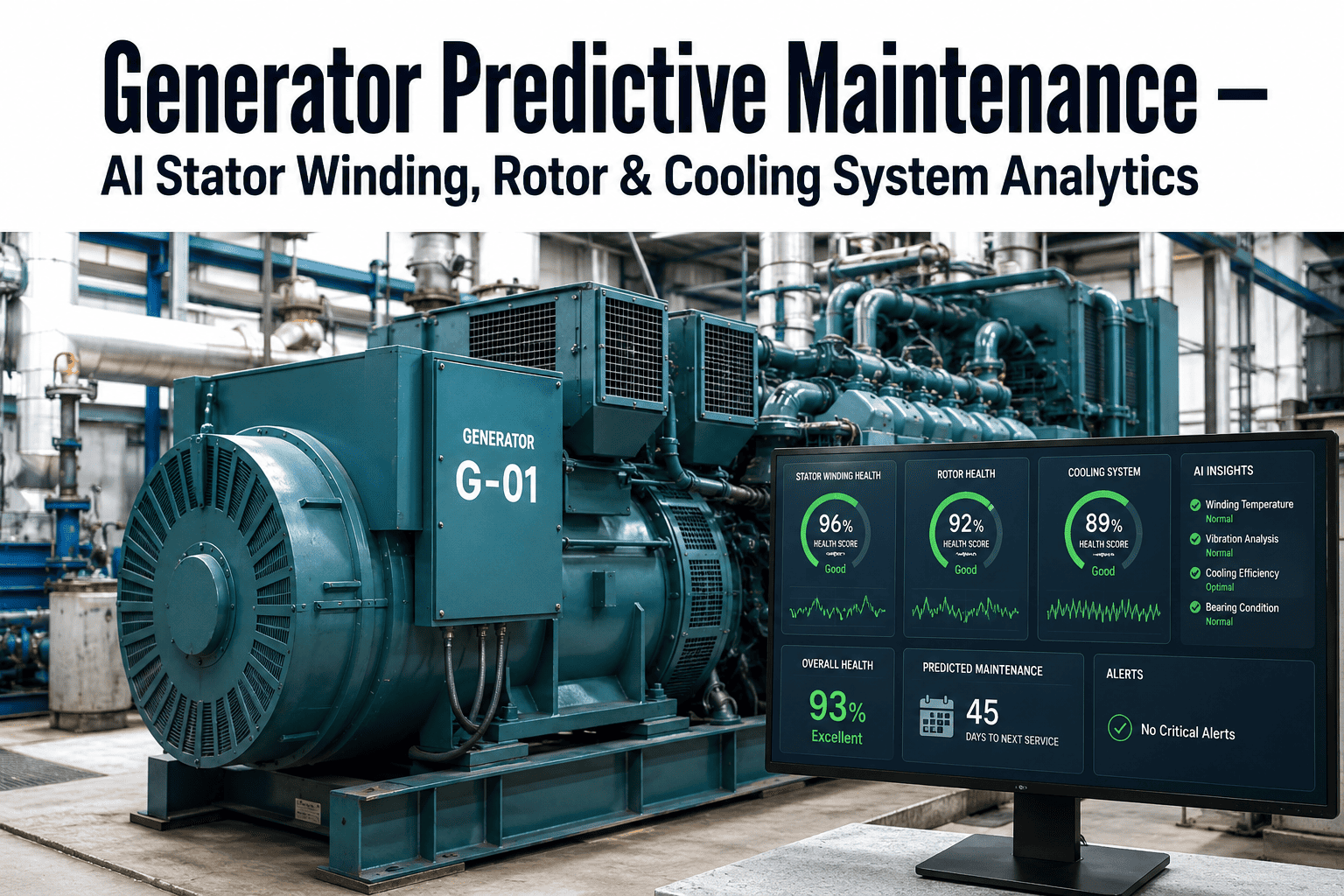
AI-Driven Generator Predictive Maintenance for Power Plants
Prevent catastrophic failures in stator windings, rotors, and hydrogen cooling systems with advanced analytics and machine learning models.
Understanding Generator Failure Modes
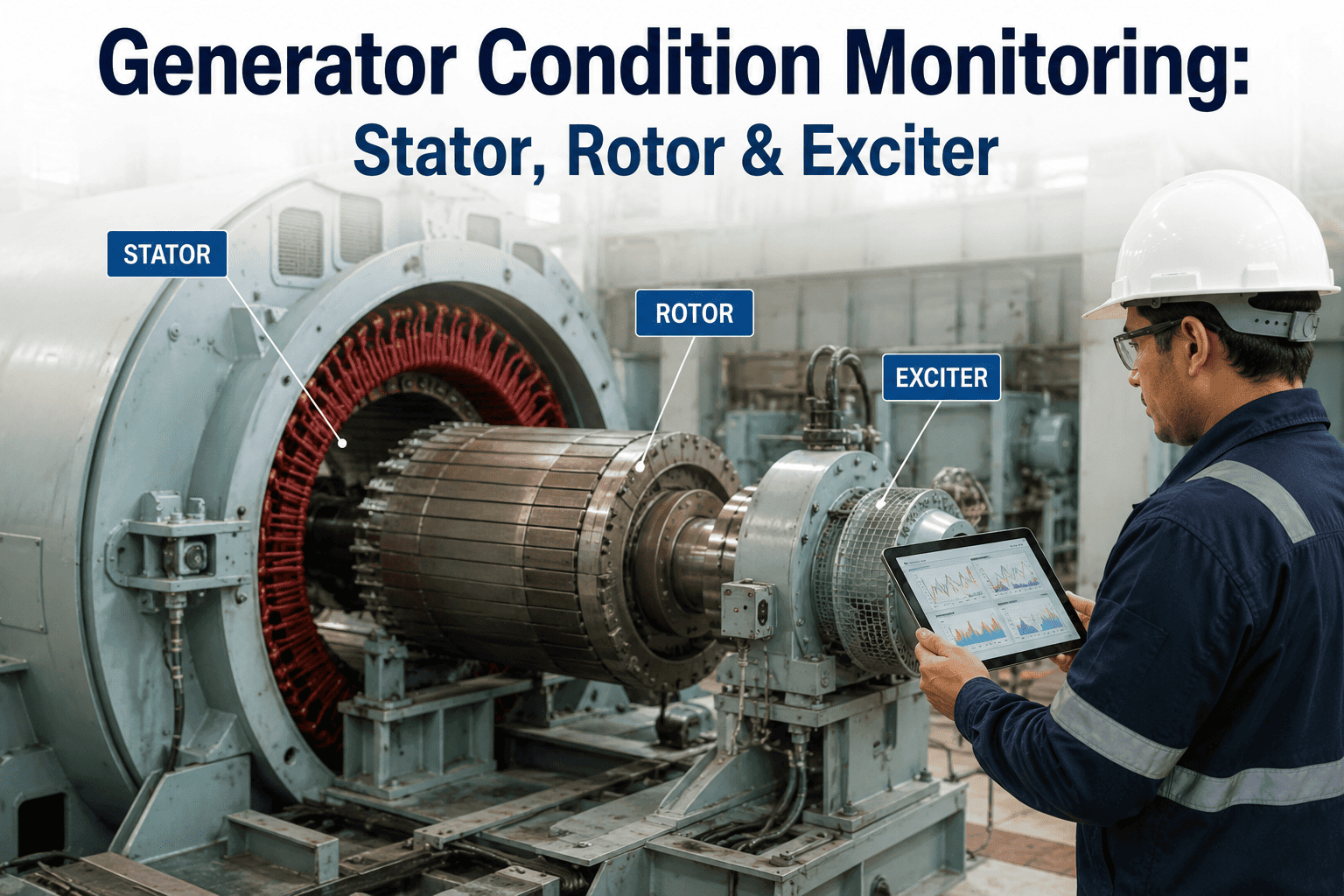
Generators in power plants are subjected to extreme conditions that lead to distinct failure modes. Stator windings face insulation degradation due to partial discharge, thermal stress, and moisture ingress. Rotor systems suffer from vibration imbalances, bearing wear, and winding shorts. Hydrogen cooling systems can experience purity drops, leaks, and seal oil contamination. Each of these failure modes has unique signatures that can be detected early with the right sensors and AI models. By understanding the physics behind these failures, we can design predictive algorithms that alert operators weeks or months before a breakdown occurs. This proactive approach not only saves millions in repair costs but also ensures grid stability and compliance with stringent regulatory standards. The key is to integrate data from multiple sources—vibration sensors, temperature probes, gas analyzers—into a unified analytics platform that learns from historical patterns.
Partial Discharge Monitoring
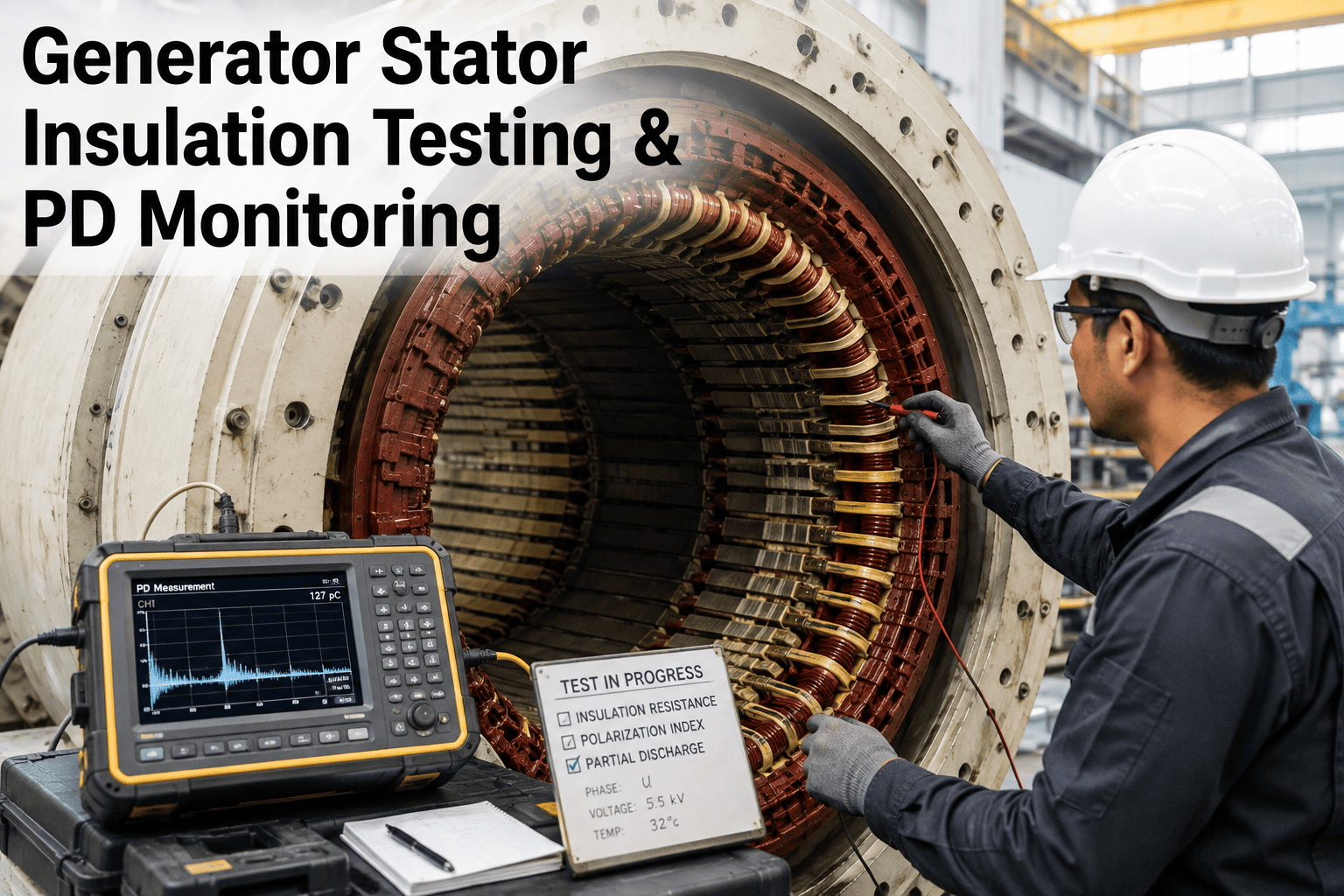
Partial discharge (PD) is a leading indicator of stator insulation deterioration. AI algorithms analyze PD patterns to identify phase-resolved signatures, trend intensity over time, and distinguish between harmless corona and dangerous void discharges. Early detection allows for planned re-wedging or varnish treatments.
Stator Winding Temperature
Embedded RTDs and thermocouples provide continuous temperature readings across stator bars. Machine learning models detect hot spots caused by coolant blockage, unbalanced loads, or insulation breakdown. Temperature trends are correlated with load cycles to predict remaining useful life.
Rotor Vibration Analysis
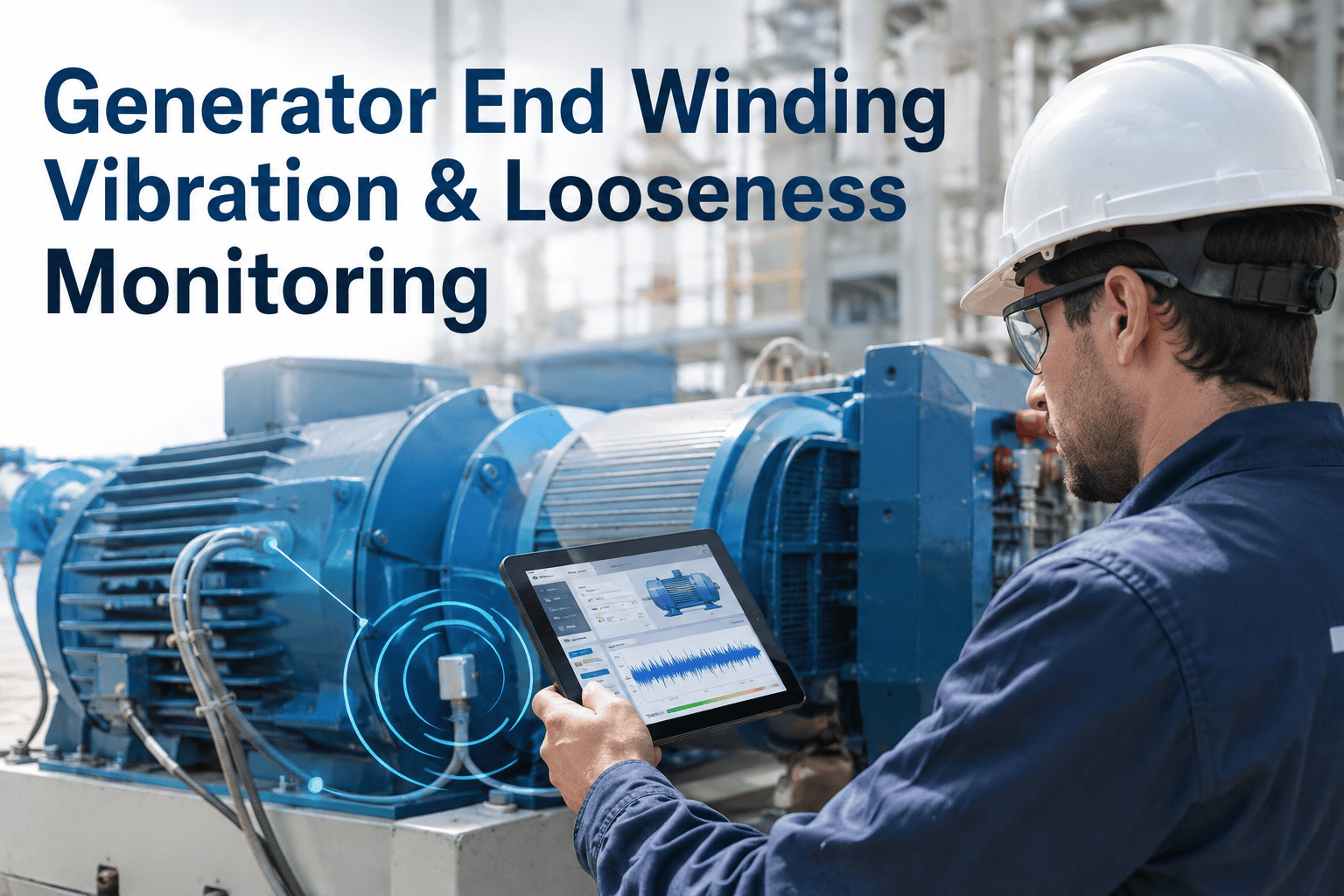
Rotor vibration is monitored via proximity probes and accelerometers. AI models decompose vibration spectra to identify developing faults like mass imbalance, shaft misalignment, or winding shorts. Advanced techniques use orbit plots and order tracking to isolate specific rotor dynamics.
Hydrogen Cooling Purity
Hydrogen gas is used for cooling due to its high thermal conductivity. Purity sensors detect contamination from air or moisture. AI analytics predict seal oil degradation and leak rates, enabling proactive purification or seal replacement before cooling efficiency drops.
Transform Your Generator Maintenance Strategy
Leverage AI to predict failures before they happen. Our platform integrates with your existing sensors and delivers actionable insights.
The AI Predictive Maintenance Workflow
Data Acquisition
Sensors continuously capture partial discharge pulses, temperature readings, vibration waveforms, and hydrogen purity levels. Data is streamed to a central platform via secure IoT gateways.
Feature Engineering
Raw signals are processed to extract relevant features: PD magnitude and phase angle, temperature gradients, vibration harmonics, and gas concentration trends. Domain expertise ensures features correlate with failure modes.
Model Training
Supervised and unsupervised learning models are trained on historical failure data. Techniques include random forests, LSTM networks for time series, and autoencoders for anomaly detection. Models are validated on holdout sets.
Real-Time Inference
Deployed models score incoming data in real time. Alerts are generated when anomaly scores exceed thresholds, with severity levels indicating urgency. Dashboards visualize trends and predictions.
Actionable Recommendations
The system suggests specific maintenance actions, such as scheduling a visual inspection, replacing a seal, or reducing load. Integration with CMMS automates work orders.
Comparison of Traditional vs. AI-Driven Generator Maintenance
| Aspect | Traditional Approach | AI-Driven Approach |
|---|---|---|
| Detection Lead Time | Days to hours before failure | Months to weeks in advance |
| Data Utilization | Limited to threshold alarms | Full waveform and trend analysis |
| Maintenance Planning | Reactive or calendar-based | Condition-based with RUL estimates |
| Cost Impact | High emergency repair costs | Optimized resource allocation |
| False Alarm Rate | High due to single thresholds | Low with multi-variate models |
Advanced AI Techniques for Generator Diagnostics
Modern predictive maintenance platforms employ a suite of machine learning algorithms tailored to generator signals. Convolutional neural networks (CNNs) excel at classifying partial discharge patterns from phase-resolved data. Recurrent neural networks (RNNs) with LSTM cells capture temporal dependencies in temperature and vibration trends. Autoencoders learn normal operating conditions and flag deviations as anomalies. Ensemble methods combine multiple models to improve robustness. For rotor fault detection, wavelet packet decomposition extracts features from non-stationary vibration signals, which are then fed into support vector machines (SVMs). These techniques are deployed on edge devices for low-latency inference or in the cloud for large-scale analytics. The choice depends on data volume, latency requirements, and computational resources. Our platform supports hybrid deployments to optimize performance.
Partial Discharge Classification
Using CNN-based models, PD pulses are classified into internal voids, surface discharges, or corona. This distinction helps prioritize maintenance actions. Accuracy exceeds 95% in field trials.
Temperature Gradient Forecasting
LSTM networks predict future temperature gradients across stator bars. A rising gradient indicates cooling system issues. Predictions are updated every minute with 99% confidence intervals.
Rotor Fault Localization
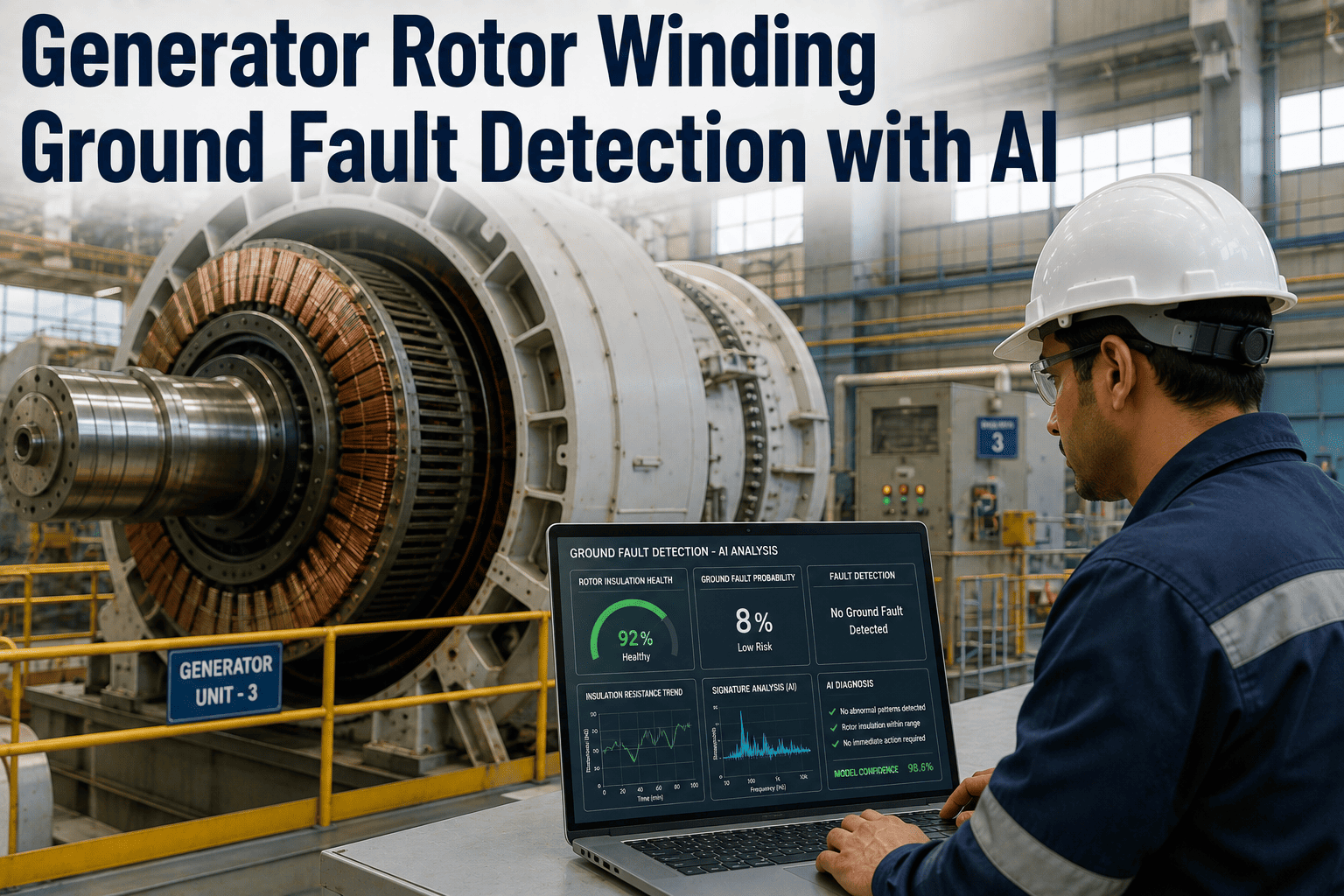
Wavelet decomposition combined with SVM locates the specific rotor slot with a winding short. This reduces inspection time from days to hours and targets repair efforts precisely.
Integrating Hydrogen Cooling System Analytics
Hydrogen cooling is critical for large generators, as it removes heat more efficiently than air. However, maintaining gas purity above 98% is essential to prevent reduced cooling capacity and risk of explosion. AI models monitor purity trends, seal oil condition, and leak rates. Predictive algorithms forecast when seal replacement is needed based on historical degradation curves. Additionally, the system detects anomalies such as sudden purity drops caused by seal failure or moisture ingress. By integrating hydrogen analytics with stator and rotor data, a holistic view of generator health emerges. This enables coordinated maintenance planning, such as scheduling seal replacement during a planned outage for stator re-wedging. The result is optimized downtime and extended generator life.
Frequently Asked Questions
What is partial discharge and why is it important for generator maintenance?
Partial discharge (PD) is a localized electrical discharge that occurs within the insulation system of stator windings when the electric field strength exceeds the dielectric strength of the insulation. It is a primary indicator of insulation degradation and can lead to complete failure if left unchecked. AI-driven PD monitoring analyzes the phase-resolved patterns of these discharges to identify the type and severity of the defect. This allows maintenance teams to plan interventions such as re-wedging or varnish treatment before a catastrophic breakdown occurs. For more details on implementing PD monitoring, Book a Demo to see our platform in action.
How does AI improve rotor fault detection compared to traditional methods?
Traditional rotor fault detection relies on fixed vibration thresholds that often trigger false alarms or miss early-stage faults. AI models analyze the full frequency spectrum and temporal evolution of vibration signals, using techniques like wavelet decomposition and machine learning classifiers. This enables detection of subtle changes caused by winding shorts, mass imbalance, or thermal bowing. The models are trained on historical failure data to recognize patterns that precede faults by weeks or months. As a result, maintenance can be scheduled proactively, reducing unplanned outages and extending rotor life. To learn how our AI models can be tailored to your generator fleet, Contact Support for a consultation.
What sensors are needed for AI-based generator predictive maintenance?
A comprehensive sensor suite includes partial discharge couplers (capacitive or UHF), RTDs and thermocouples for stator temperature, proximity probes and accelerometers for rotor vibration, and hydrogen purity analyzers and moisture sensors for cooling system health. Additionally, current and voltage transformers provide load data. These sensors are connected to a data acquisition system that streams data to an AI platform. Our solution supports integration with existing sensors via standard protocols like Modbus, OPC-UA, and MQTT. For a detailed sensor specification list tailored to your generator model, Book a Demo and our engineers will guide you.
How long does it take to deploy an AI predictive maintenance system for generators?
Deployment time varies based on existing infrastructure and generator complexity. Typically, a pilot deployment with one generator takes 4-6 weeks: 2 weeks for sensor installation and connectivity, 2 weeks for data collection and model training, and 2 weeks for validation and dashboard setup. For fleet-wide deployment, we use a phased approach to minimize disruption. Our team provides on-site support and remote monitoring during the transition. The ROI is often realized within the first year through avoided failures and optimized maintenance. To discuss a timeline for your facility, Contact Support for a custom project plan.
Can the AI system predict remaining useful life (RUL) of generator components?
Yes, the AI platform estimates RUL for stator windings, rotor systems, and hydrogen cooling components using degradation models trained on historical data. For example, stator insulation RUL is predicted based on PD trend acceleration and temperature history. Rotor RUL considers vibration trend and cumulative fatigue. These predictions are updated continuously as new data arrives, with confidence intervals that narrow over time. RUL estimates empower maintenance planners to optimize spare parts inventory and schedule outages during low-demand periods. To see RUL predictions in action for your generator data, Book a Demo and we will walk you through a live dashboard.
Ready to Revolutionize Your Generator Maintenance?
Join industry leaders who have reduced unplanned outages by 45% with AI-driven insights. Our team is ready to help you implement a tailored solution.