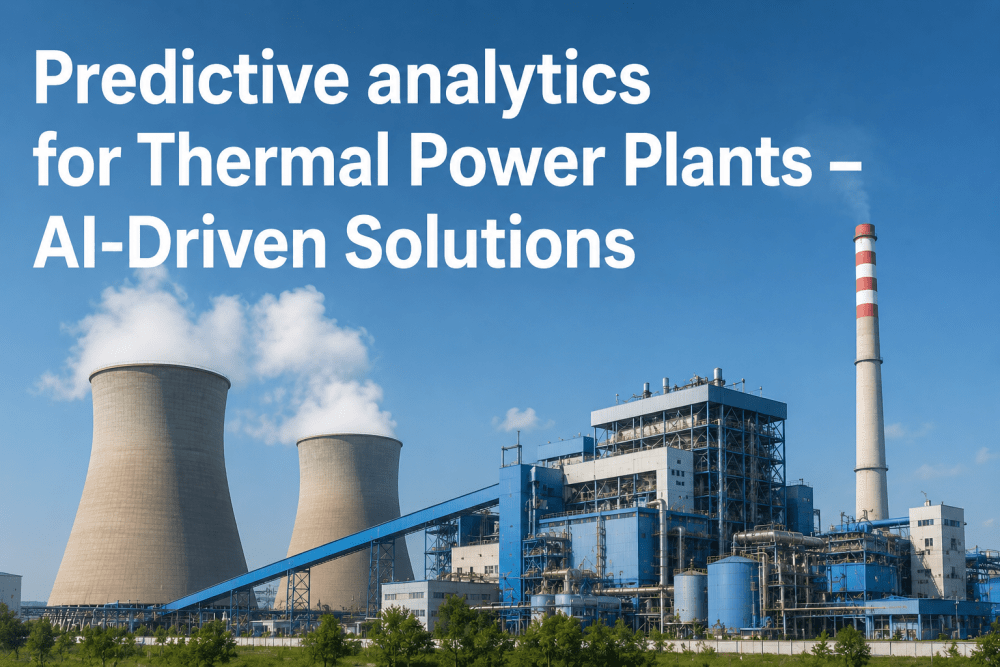
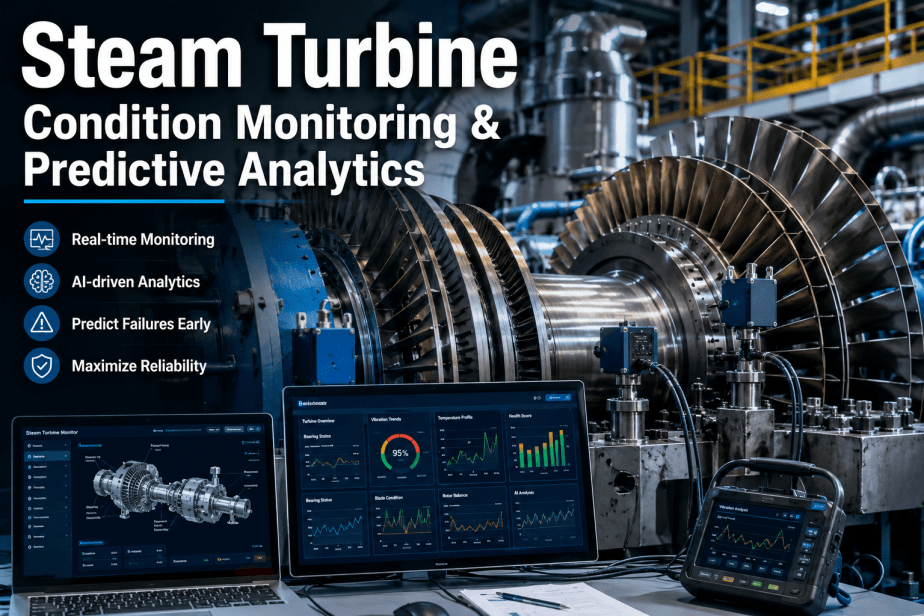
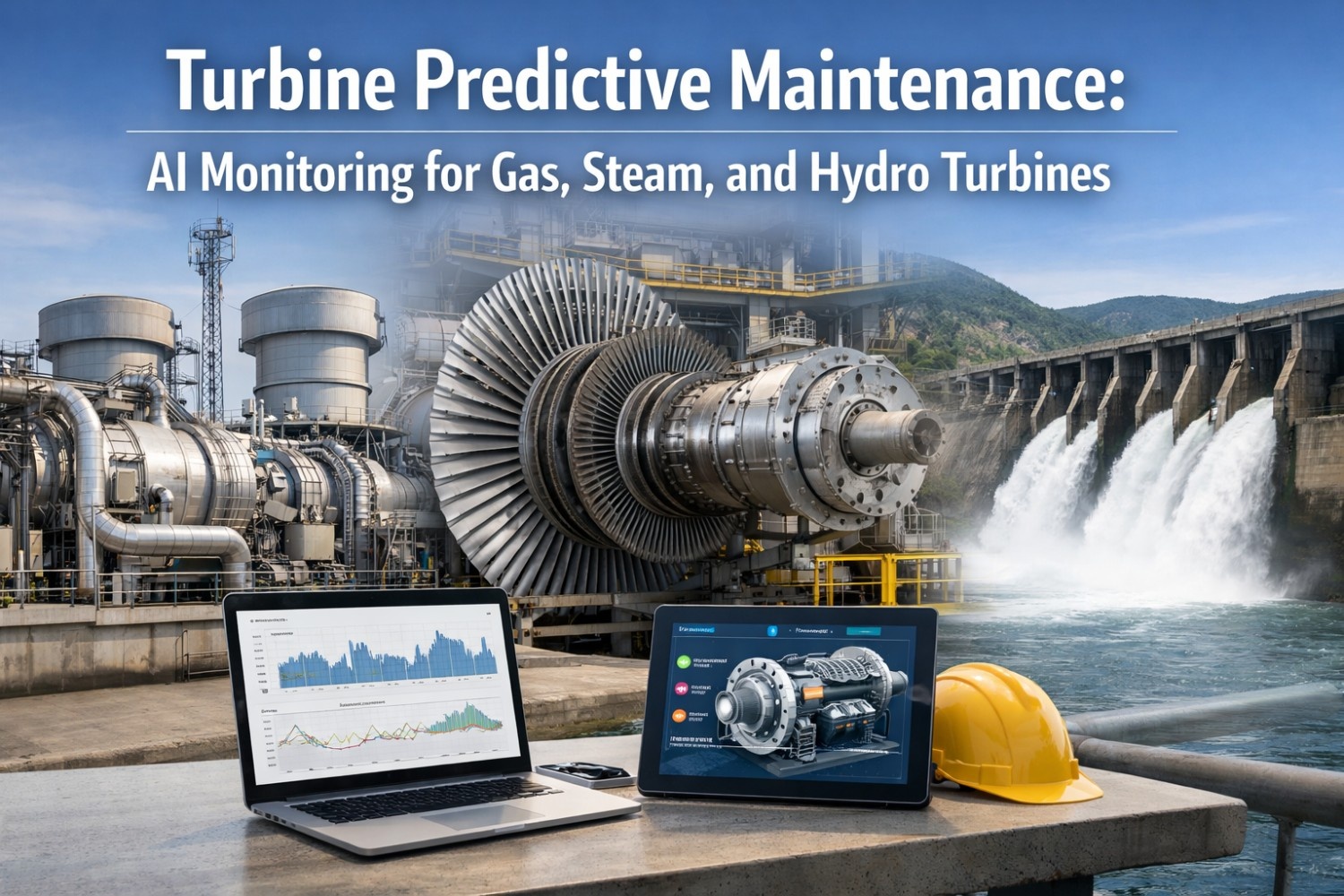
Every turbine in your power plant is generating thousands of data points per second — exhaust gas temperatures, vibration signatures, compressor pressure ratios, bearing conditions, fuel flow rates, steam path pressures. Yet most plants still rely on calendar-based maintenance schedules designed decades ago and operator rounds that check a fraction of what sensors can see. The result: turbines account for 43% of all power plant equipment failures. A single forced outage costs $500,000 to $2.5 million when you factor in lost generation revenue, emergency repair premiums, grid penalty fees, and cascade impacts on dispatch commitments. The data to prevent these failures already exists. It's flowing through your SCADA right now. The question is whether anyone — or anything — is watching it intelligently.
Power Generation Intelligence
Your Turbine Tells You It's Failing Weeks Before It Stops. Are You Listening?
AI-powered turbine monitoring that detects vibration anomalies, efficiency degradation, and fault signatures weeks before forced outages — across gas, steam, and combined cycle units
43%
Of all power plant failures originate in turbines
$125K/hr
Average cost of unplanned turbine downtime
85%
Of failures catchable with AI predictive monitoring
What AI Monitors — And What It Catches Before Operators Can
A turbine failure doesn't happen in an instant. It develops over days or weeks through subtle shifts in vibration patterns, temperature gradients, pressure ratios, and efficiency curves that fall below human detection thresholds but are unmistakable to machine learning algorithms trained on thousands of hours of operational data.
Vibration analysis is the single most powerful window into turbine health. Every anomaly — rotor imbalance, bearing wear, blade fatigue, shaft misalignment, seal rubs — produces a distinct vibration signature detectable long before visible damage occurs.
Rotor Imbalance
1x RPM amplitude increase
Bearing Wear
High-frequency spectral energy shift
Shaft Misalignment
2x RPM with axial component
Blade Fatigue
Blade-pass frequency sidebands
Seal Rub
Sub-synchronous whirl patterns
Thermal Bow
Eccentricity slow-roll deviation
Heat Rate Degradation
AI tracks turbine heat rate continuously against design curves, identifying efficiency losses from fouling, seal degradation, and steam path deterioration — losses invisible in daily logs but worth hundreds of thousands annually.
Exhaust Temperature Spread
Monitoring temperature differentials across gas turbine exhaust identifies combustion imbalances, hot spots, and liner degradation before they trigger protective trips or cause thermal damage to downstream components.
Compressor Performance
Pressure ratio and mass flow tracking detects compressor fouling, blade erosion, and inlet guide vane degradation. AI quantifies the MW and efficiency impact so you know exactly when cleaning or intervention pays for itself.
Start/Stop Cycle Impact
Every start-stop cycle ages turbine components. AI tracks equivalent operating hours factoring in cycling stress, predicting component life remaining more accurately than hour-based maintenance schedules.
Your turbine data is already flowing. The intelligence layer is what's missing. See what AI reveals about your turbine fleet.
Turbine Types, Common Failures, and What AI Prevents
Different turbine types have different failure signatures. AI models are trained on type-specific degradation patterns, catching failures that generic monitoring thresholds miss entirely.
Top Failure Modes
Compressor blade erosion and fouling
Hot gas path component distress
Combustion liner cracking
Bearing and journal wear
Fuel nozzle degradation
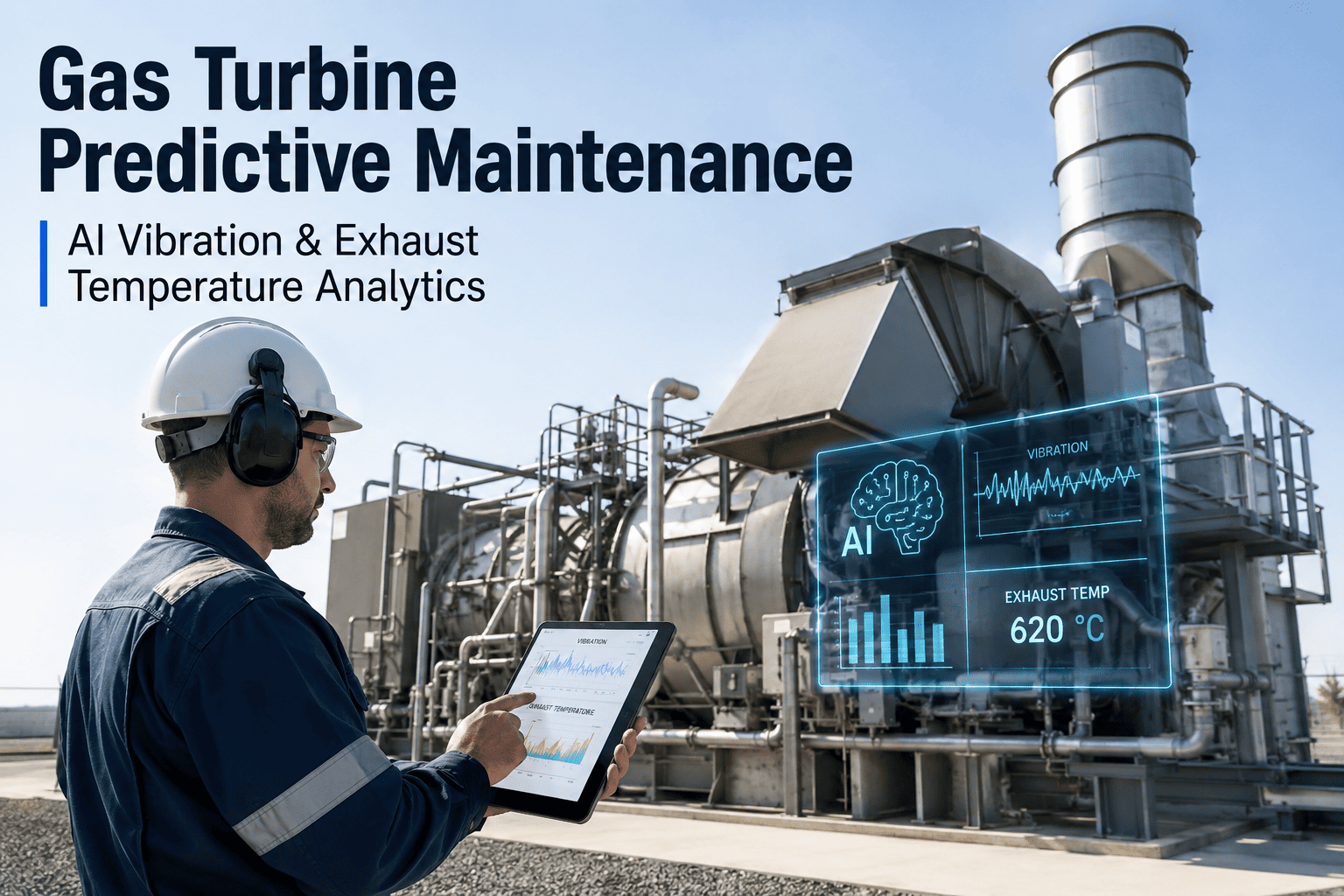
AI tracks exhaust temperature spreads, compressor pressure ratios, and vibration patterns simultaneously. Detects combustion dynamics issues and path degradation 4-8 weeks before they trigger protective trips.
Top Failure Modes
Blade corrosion and solid particle erosion
Seal strip and diaphragm packing wear
Rotor bow and thermal distortion
Valve and actuator degradation
LP exhaust hood wetness damage
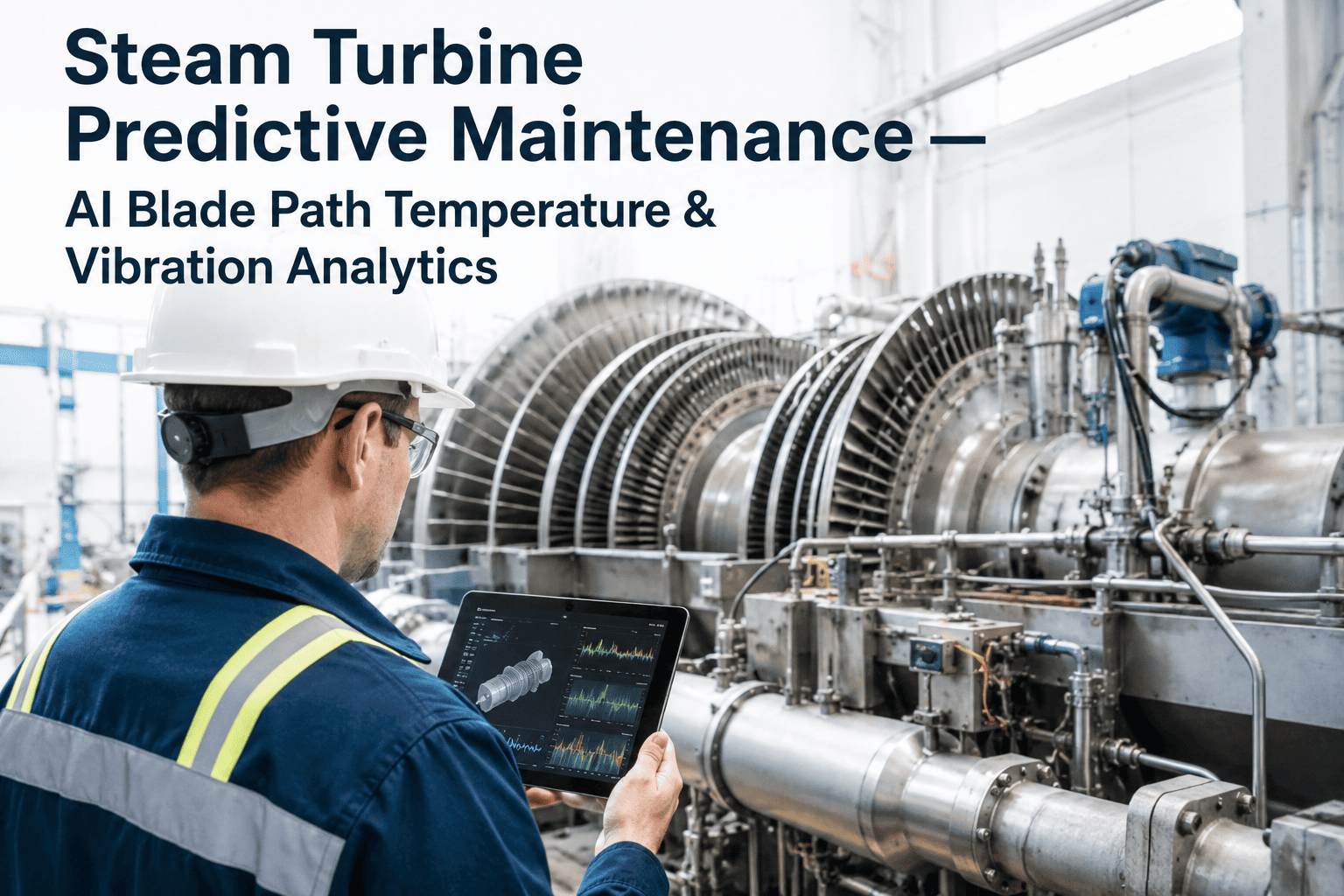
AI monitors steam path efficiency stage by stage, tracking HP, IP, and LP section performance against design curves. Detects leakage losses, aerodynamic degradation, and surface roughness impact on efficiency before heat rate tests reveal them.
Top Failure Modes
HRSG tube leaks and flow-accelerated corrosion
Attemperator spray valve failure
Steam drum level instability
GT-ST coupling and load mismatch
Stack damper and bypass system issues
AI correlates gas turbine exhaust conditions with HRSG performance and steam turbine response, detecting coupling inefficiencies that single-unit monitoring misses. Optimizes the GT-ST load balance for maximum combined cycle output.
The Business Case: What Predictive Turbine Monitoring Saves
Unplanned Downtime Reduction
30-50%
AI catches 85% of failures before they happen. Maintenance shifts from emergency response to planned interventions during scheduled windows.
Maintenance Cost Reduction
Up to 30%
Condition-based intervention replaces calendar-based overhauls. Fix what's degrading, not what the schedule says might be degrading.
Equipment Availability
+20%
Higher availability from fewer forced outages means more generation hours, more revenue, and better grid reliability commitments.
First-Year Avoided Failures
$1M-$3M
Targeted sensor deployment on turbines, generators, and transformers typically costs $50K-$100K and delivers 10-30x return in year one.
Heat Rate Recovery
1-3%
Continuous efficiency monitoring identifies fouling, seal degradation, and steam path losses that erode heat rate invisibly over months.
Payback Period
6-12 months
95% of organizations implementing AI predictive maintenance report positive ROI. 27% achieve full payback within the first year.
One Prevented Forced Outage Pays for the Entire System
iFactory connects to your existing SCADA, DCS, and turbine control systems. AI begins detecting degradation patterns within weeks — turning your turbine fleet's existing data into the predictive intelligence that prevents $500K+ outage events.
How AI Turbine Monitoring Integrates With Your Plant
AI doesn't replace your existing control systems or your operators. It adds an intelligence layer on top of what you already have, connecting data sources that currently exist in silos into a unified predictive platform.
Data Sources
SCADA / DCS
Turbine Control
Vibration Monitors
Pyrometers
Gas Analyzers
Lube Oil Analysis
Process Historian
AI Engine
Pattern Recognition
Anomaly Detection
Degradation Modeling
Failure Prediction
RUL Estimation
Action Layer
Auto Work Orders
Mobile Alerts
Parts Triggers
Outage Planning
Performance Reports
Implementation: 90 Days to Predictive Intelligence
01
Week 1-2
Connect Critical Assets
Start with the 15-20% of assets causing 60-70% of forced outages: turbines, generators, main transformers, critical feedwater pumps. Connect existing SCADA data and deploy additional IoT sensors where gaps exist. Typical initial investment: $50K-$100K.
02
Week 3-6
Baseline & Learn
AI establishes performance baselines for each asset, learning normal operating signatures across load ranges, ambient conditions, and fuel types. Anomaly detection begins producing alerts within weeks of deployment.
03
Month 2-3
Predictive Alerts Active
AI models begin predicting failures with specific timelines, recommended actions, and cost impact projections. Work orders auto-generate in your CMMS. First prevented failures typically occur within 90 days of deployment.
04
Ongoing
Continuous Improvement
Every maintenance event feeds back into AI models. Prediction accuracy improves continuously. Expand monitoring to additional assets as ROI is proven on critical equipment. The system never stops learning your plant.
Frequently Asked Questions
What types of turbines does AI monitoring cover?
The platform monitors gas turbines, steam turbines (HP, IP, LP sections), combined cycle units including HRSGs, and associated generators and transformers. AI models are trained on type-specific failure patterns — gas turbine combustion dynamics differ fundamentally from steam turbine blade erosion, and the monitoring adapts accordingly.
How far in advance can AI predict turbine failures?
AI typically identifies equipment degradation 4-8 weeks before failure for gradual degradation modes like bearing wear, fouling, and seal deterioration. For faster-developing issues like combustion dynamics shifts, detection occurs within hours to days. The system provides specific remaining useful life estimates so you can plan interventions during scheduled windows.
Does this integrate with our existing control and monitoring systems?
Yes. iFactory connects to existing SCADA, DCS, turbine control systems, process historians, and vibration monitoring platforms through standard protocols including OPC-UA, Modbus, and standard APIs. No replacement of current infrastructure required. Most plants have 70-80% of the sensor data needed already being collected — the gap is the analytical intelligence connecting data to maintenance decisions.
What's the ROI and payback period?
Initial sensor deployment on critical turbine assets typically costs $50K-$100K and delivers $1M-$3M in first-year avoided failures. Most plants achieve positive ROI within 6-12 months. A single prevented forced outage — avoiding $500K-$2.5M in losses — typically covers the entire implementation cost. 95% of organizations implementing AI predictive maintenance report positive returns.
Does AI replace our maintenance engineers and operators?
No. AI transforms your maintenance team from reactive firefighters into strategic reliability engineers. The system handles continuous data analysis across thousands of parameters — work no human team can do at that scale. Your engineers focus on interpretation, decision-making, and high-value interventions. AI delivers the intelligence; your team delivers the expertise.
Every Hour of Unmonitored Operation Is a Gamble You Don't Need to Take
iFactory's AI connects to your turbine fleet's existing data infrastructure and delivers the predictive intelligence that catches failures weeks before they cost you millions. Gas, steam, or combined cycle — one platform, every turbine, every second.