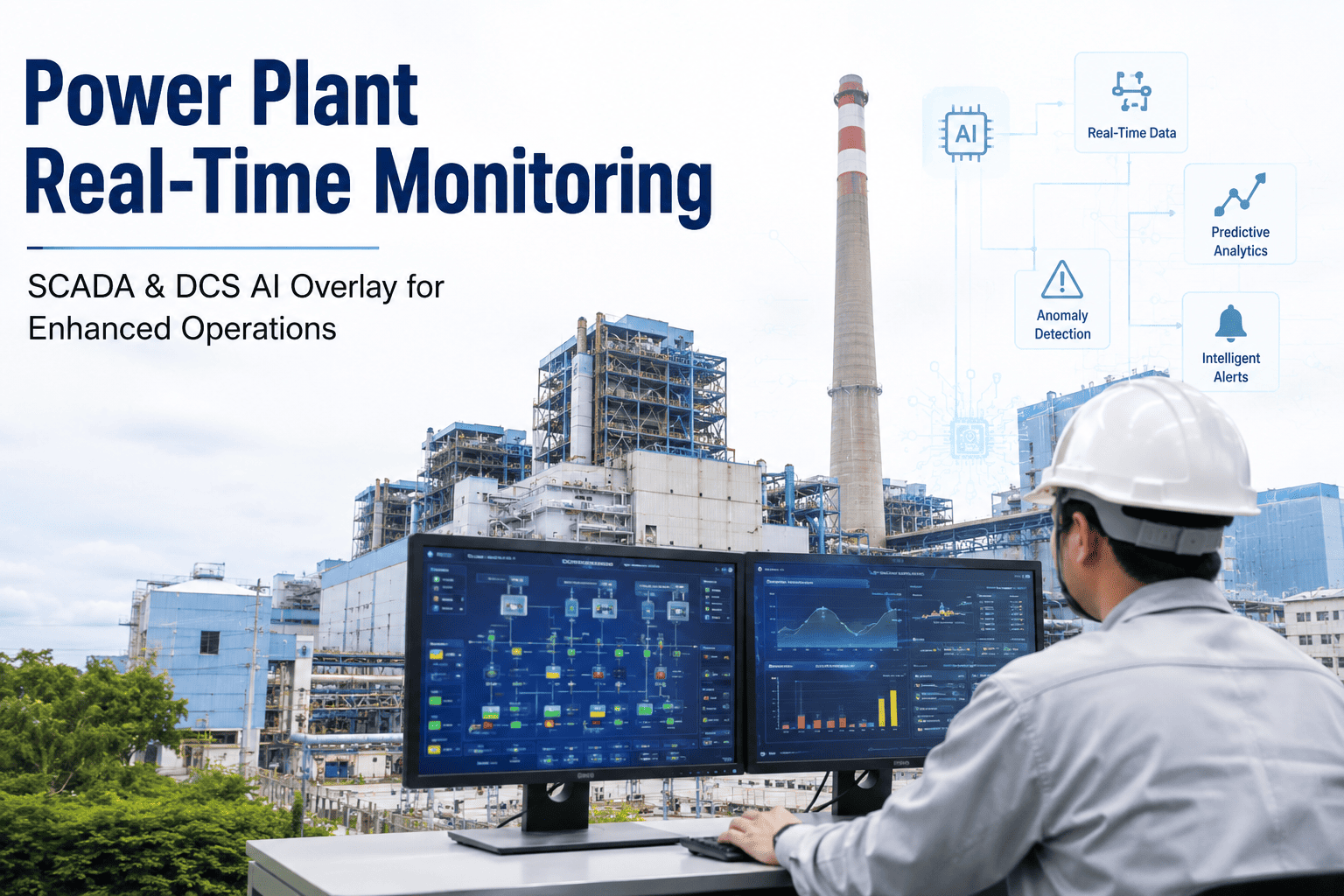
Most power plant control rooms generate thousands of SCADA alarms every day. A large fraction of those alarms are acknowledged, silenced, or filtered out by operators who have learned — through experience — which ones matter and which ones are noise. The ones that matter but get missed are the ones that cost $800,000 in a forced outage two weeks later. The gap between a SCADA alarm firing and a maintenance action being initiated is where equipment damage escalates silently and it is gap that exists at almost every facility operating on conventional alarm management without AI-driven integration.
SCADA and DCS historian have been generating structured process data for decades. Most of that data has never been connected to the maintenance management layer in a way that turns alarm events into prioritized work orders automatically, before damage escalates. AI-driven integration closes that connection — converting raw alarm streams into ranked maintenance actions, correlating DCS historian data with asset health models, and routing the right information to the right person in minutes rather than days. This guide explains exactly how that integration works, what it catches, and what power plant operations teams should demand from any platform claiming to connect their SCADA and analytics layers.
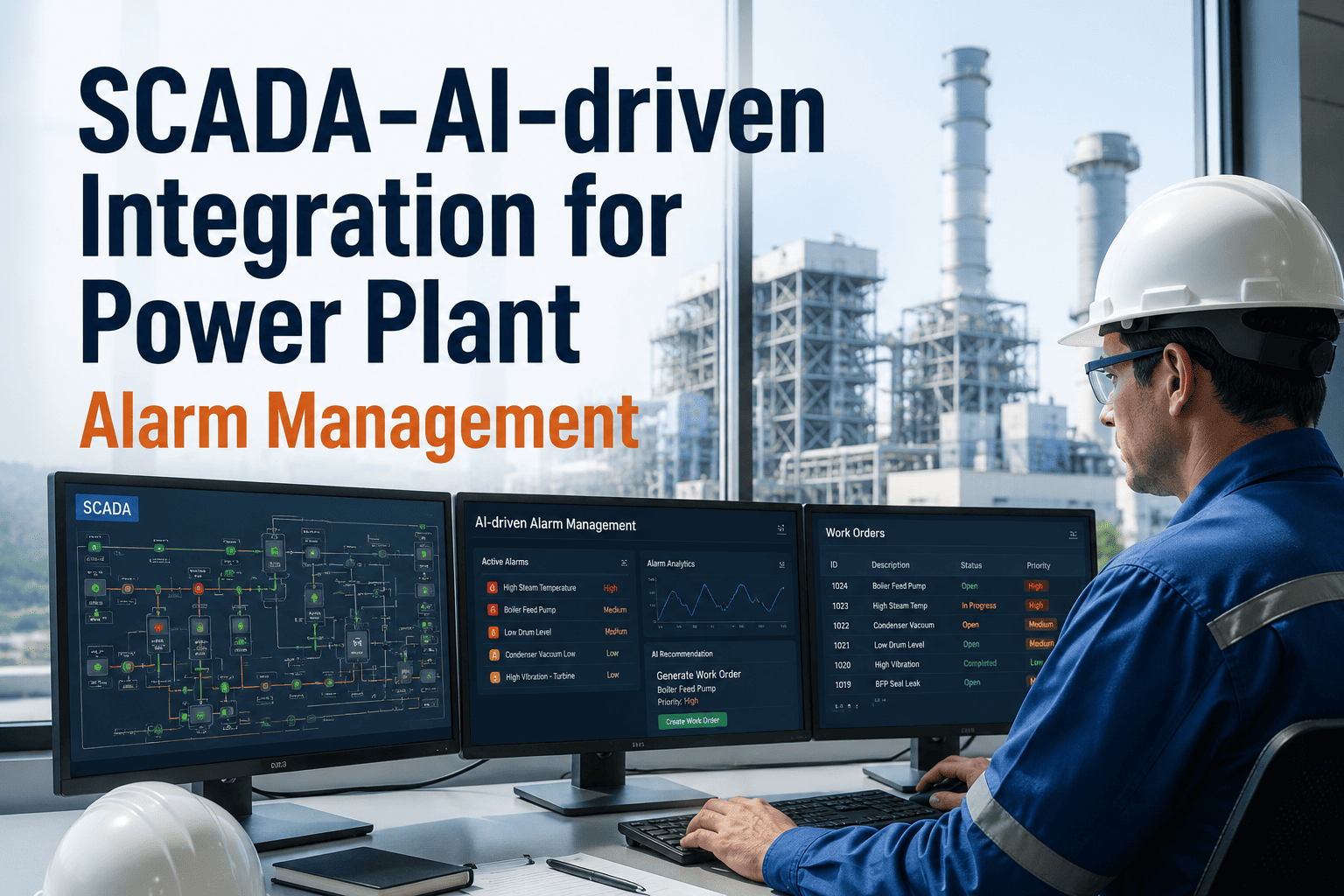
SCADA-AI-driven Integration for Power Plant Alarm Management
Connect your DCS historian and SCADA alarm streams directly to AI-driven analytics — automatically generating priority work orders before equipment damage escalates from an alarm into an outage.
Want to see how SCADA-AI-driven integration applies to your specific DCS configuration and alarm architecture? Book a 30-minute technical assessment with iFactory's power generation team.
The Alarm Management Gap: Why SCADA Data and Maintenance Actions Don't Connect
The fundamental problem with alarm management at most power plants is architectural. SCADA and DCS systems are designed to display process conditions to control room operators. CMMS platforms are designed to schedule and track maintenance work. These two systems were built independently, they speak different data languages, and in most facilities they are operated by different teams with different objectives. The alarm that fires at 6:47 a.m. in the DCS never automatically creates a work order in the CMMS. A human has to bridge that gap — at the right moment, with the right context, under operational pressure.
The consequence of this architectural gap is not just slow response — it is systematic information loss. When an alarm is acknowledged without a structured response, the operating context surrounding that alarm — the load conditions, the ambient temperature, the recent maintenance history of the affected asset — is never captured. Three weeks later, when the asset fails, the investigation has to reconstruct that context manually from shift logs and historian exports. AI-driven SCADA integration eliminates that reconstruction requirement by capturing and structuring the context automatically at the moment of the alarm event.
Alarm Flood Without Priority Ranking
High-alarm-rate control rooms generate hundreds of alarms per operator per shift. Without AI-driven priority scoring that correlates alarm severity with asset criticality and current operating conditions, operators cannot distinguish the compressor stall precursor from the low-priority instrument drift alarm buried three lines above it.
No Automatic Work Order Generation
Between a SCADA alarm firing and a maintenance work order being initiated, a human must recognize the alarm, assess its significance, decide to escalate, locate the right maintenance contact, and initiate the CMMS entry — each step under time pressure and with incomplete context about the asset's recent history.
Historian Data Unused for Predictive Analysis
DCS historians store years of process data at one-second resolution. In most plants, that data is used for post-event investigation and nothing else. The predictive value embedded in that historian — the degradation trends, the alarm frequency patterns, the process deviation histories — is never extracted systematically or connected to maintenance planning.
Shift Handoff Information Loss
Alarm events that occur late in a shift frequently carry over without documented action because the operator who acknowledged the alarm has left and the incoming shift has no structured context for why the alarm fired or what assessment was made. AI-driven integration captures that context permanently regardless of shift boundaries.
How SCADA-AI-driven Integration Works: The Technical Architecture
Connecting a SCADA or DCS historian to an AI-driven analytics platform is not a simple data pipe — it is a layered integration that must handle high-frequency sensor data, alarm event streams, equipment hierarchy mapping, and bidirectional communication with the CMMS. The following architecture diagram traces how a purpose-built integration handles each layer without requiring control system modifications or new sensor installations.
Read-Only Historian Connection via Standard Industrial Protocols
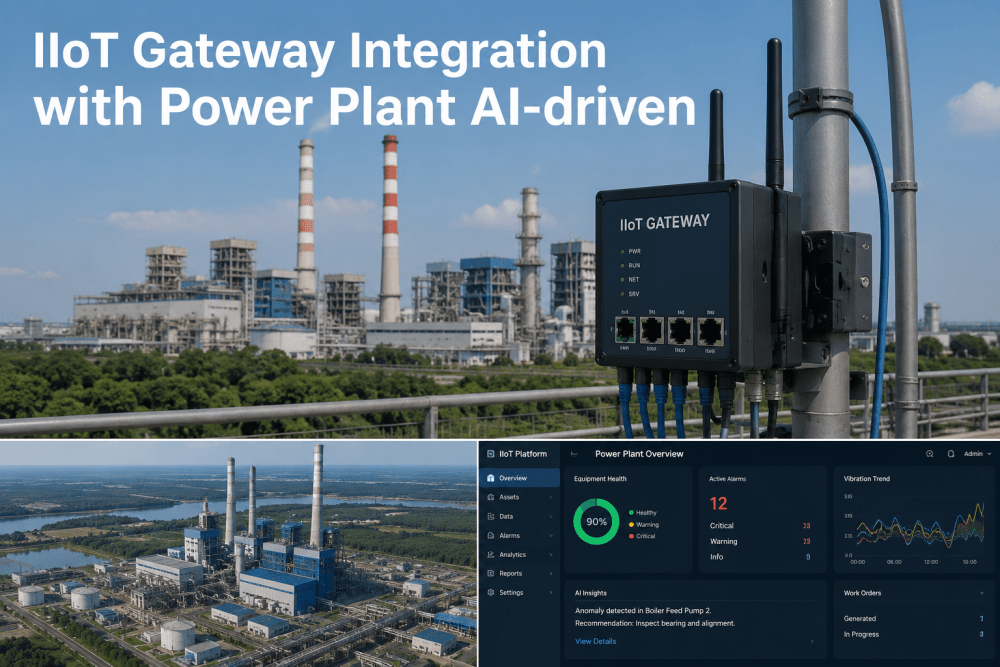
The integration connects to the existing plant DCS historian using read-only OPC-UA, OPC-DA, PI API, or direct historian export protocols. No control system modifications, no new sensor installations, and no DCS configuration changes are required. The connection is unidirectional from the historian to the analytics layer — there is no inbound command path that could affect plant operations. For plants without a centralized historian, a lightweight edge data collector aggregates tags locally before cloud transmission.
Tag Mapping and Equipment Hierarchy Alignment
Raw historian tags are mapped to the plant equipment hierarchy — associating each sensor signal with its specific asset, system, and subsystem. This mapping is what enables the AI layer to correlate a drum level transmitter deviation with the specific boiler it belongs to, rather than treating it as an isolated process variable. Tag mapping is completed during implementation using existing P&IDs and equipment lists — no manual tagging of thousands of process points required.
Real-Time Alarm Stream Ingestion and Normalization
SCADA alarm events are ingested in real time alongside continuous process data streams. Each alarm event is enriched with the operating context that existed at the moment it fired — ambient conditions, current load factor, recent maintenance history for the affected asset, and the state of related systems. This enrichment transforms a raw alarm code into a contextualized diagnostic event that can be matched against known failure patterns.
AI Priority Scoring and Failure Mode Classification
Machine learning models evaluate each incoming alarm event against three dimensions: asset criticality score, failure mode match confidence, and current degradation trajectory from continuous historian trending. The output is a priority score that ranks alarm events by actual consequence risk — not just by alarm setpoint severity. A low-priority instrument alarm on a high-criticality asset with a developing degradation trend is ranked above a high-priority alarm on a non-critical auxiliary system, because the consequence exposure is greater.
Automatic Work Order Generation and CMMS Routing
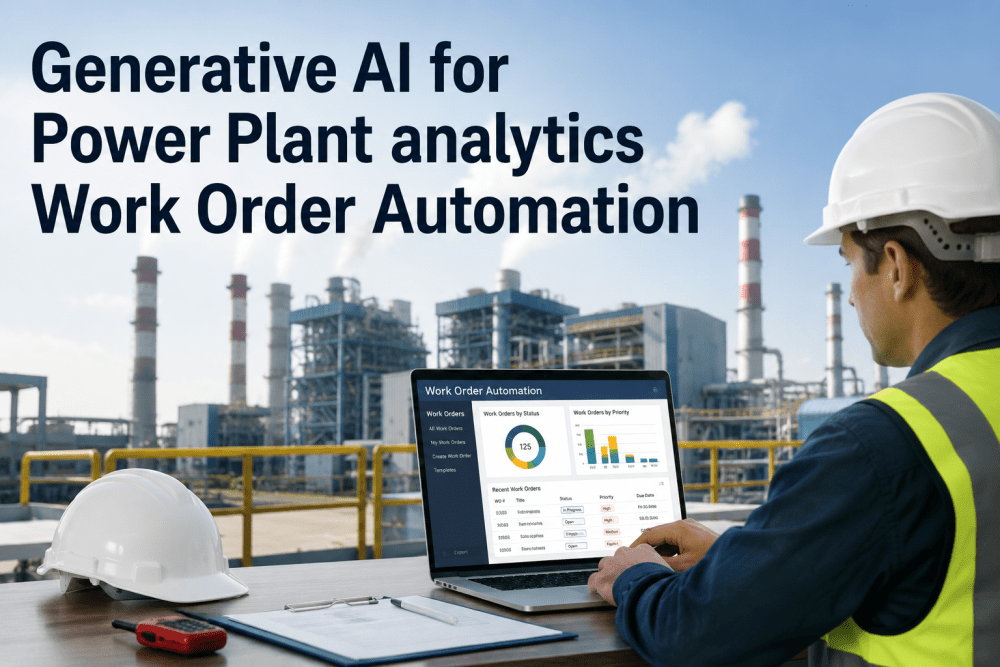
High-priority scored alarm events automatically generate draft work orders in the connected CMMS — SAP PM, IBM Maximo, or Infor EAM — pre-populated with asset identification, alarm code, operating context at alarm time, failure mode classification, recommended inspection scope, and suggested parts requirements. Plant operators and maintenance supervisors receive a mobile push notification with a single-tap approval workflow. The time from alarm event to actionable work order in the CMMS drops from hours to minutes.
Alarm Pattern Analysis and Recurrence Prevention
Beyond individual alarm events, the platform continuously analyzes alarm frequency patterns across assets and asset classes — identifying chattering alarms that indicate ongoing process instability, alarm storms that precede forced outage events, and recurrence patterns where the same alarm repeatedly fires on the same equipment without a successful corrective action. These patterns are flagged for reliability review and drive PM interval adjustments and operating limit revisions automatically.
Want to see how SCADA-AI-driven integration applies to your specific DCS configuration and alarm architecture? Book a 30-minute technical assessment with iFactory's power generation team.
SCADA Integration Compatibility: What DCS Platforms Connect Natively
Integration compatibility is the first practical question plant managers ask — and the right answer should not require a multi-month data engineering project. Purpose-built power plant analytics platforms support native connectivity to the major DCS and historian platforms deployed across U.S. generation facilities, with standard protocol adapters that handle the connection without custom development work.
| DCS / Historian Platform | Native Integration Method | Data Frequency Supported | Alarm Stream Access | Typical Connection Time |
|---|---|---|---|---|
| GE Mark VI / VII | OPC-DA / OPC-UA direct | 1-second to 1-minute resolution | Full alarm event log with codes | 3–5 days |
| Emerson DeltaV | OPC-UA + DeltaV historian export | Sub-second to 1-minute | Alarm journal with context data | 3–5 days |
| Honeywell Experion PKS | OPC-DA + Uniformance PHD | 1-second to 5-minute resolution | System event log + alarm priority | 4–7 days |
| ABB 800xA | OPC-UA + Asset Optimization export | Sub-second to 1-minute | Full alarm and event log | 4–7 days |
| OSIsoft PI (AVEVA) | PI API / PI Web API (native) | Sub-second resolution | PI Event Frames + alarm attributes | 1–3 days |
| Siemens SPPA-T3000 | OPC-UA + historian CSV export | 1-second to 5-minute resolution | Alarm archive with severity codes | 5–8 days |
| Plants Without Centralized Historian | Edge data collector deployment | 1-second resolution post-install | Modbus TCP / direct PLC polling | 1–2 weeks including edge install |
Alarm Management Before and After AI-Driven Integration
The operational difference between a conventional SCADA alarm management workflow and an AI-driven integrated system is most visible in the sequence of events between an alarm firing and a maintenance action being completed. The comparison below maps that sequence for a representative alarm escalation scenario — a gas turbine compressor inlet temperature deviation — across both approaches.
Measured Outcomes: What Plants Report After SCADA-AI-driven Integration
The business case for SCADA-AI-driven integration at power plants follows a direct chain from faster alarm response to fewer escalations, from fewer escalations to reduced forced outage frequency, and from reduced forced outage frequency to measurable operating margin improvement. The results below reflect outcomes from U.S. power generation facilities across gas, combined cycle, and steam asset classes within the first 12 months of deployment.
Want to see how SCADA-AI-driven integration applies to your specific DCS configuration and alarm architecture? Book a 30-minute technical assessment with iFactory's power generation team.
Expert Review: What Plant Managers Should Demand from a SCADA Integration Vendor
Having supported SCADA and DCS integration projects at more than twenty power generation facilities, the technical evaluation errors that cost plant managers the most time and money follow a predictable pattern. Here is the checklist that every plant manager should run before committing to a SCADA-analytics integration vendor.
Conclusion
The SCADA alarm management problem at U.S. power plants is not a technology problem in the sense that the technology to solve it is unavailable — it is an integration problem. The data exists in the historian. The maintenance workflow exists in the CMMS. The equipment knowledge exists in the analytics platform. The gap is the connection between them, and that gap is where alarms become outages, where context gets lost across shift boundaries, and where the same equipment fails repeatedly because no one ever connected the alarm pattern to the corrective action.
AI-driven SCADA integration closes that connection without requiring control system modifications, new sensor installations, or dedicated data science staff. The result is a power plant where every high-priority alarm event generates a structured, contextualized, asset-specific work order in minutes rather than hours — and where the historian data that has been accumulating for years finally produces the predictive intelligence it was always capable of generating.
Ready to connect your SCADA alarms to automatic, prioritized maintenance actions? Schedule your SCADA integration assessment with iFactory's power generation analytics team.
Frequently Asked Questions
Connect Your SCADA Alarms to Automatic, Prioritized Maintenance Actions
iFactory's SCADA-AI-driven integration platform connects your DCS historian to AI-driven alarm prioritization and automatic work order generation — deployable in 4 to 8 weeks, with ROI measurable within the first avoided forced outage event.