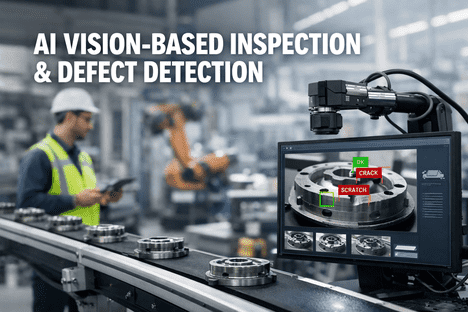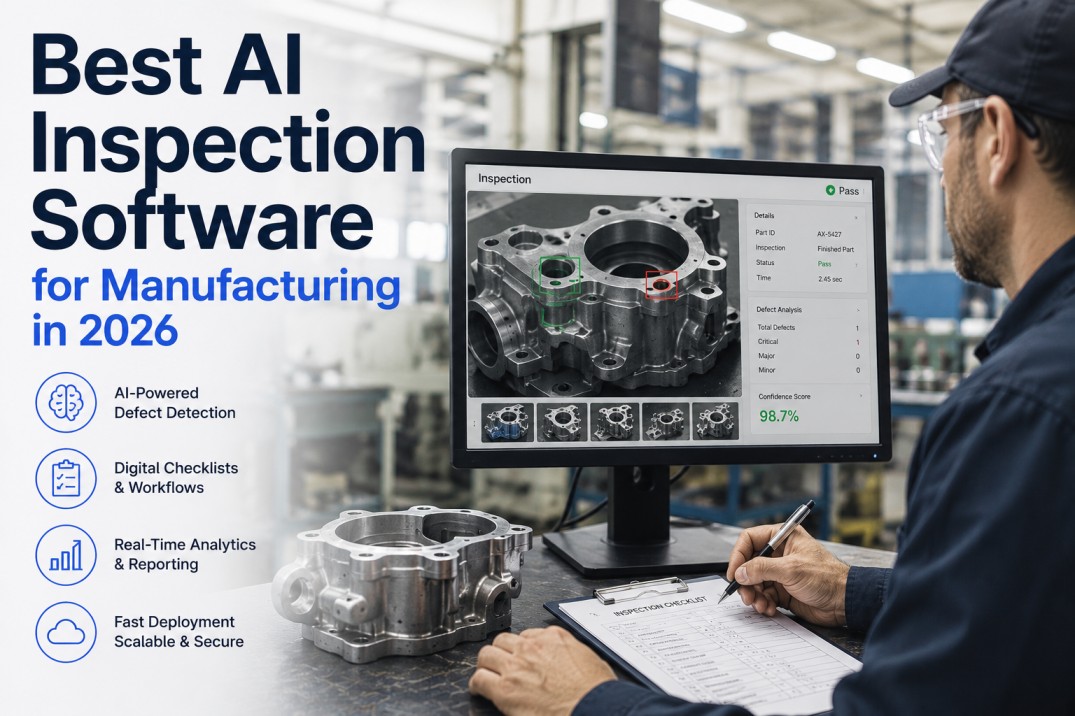
AI inspection software for manufacturing in 2026 splits into two distinct categories: platforms that use AI to automate administrative inspection tasks, and platforms that deploy computer vision AI on the production line to detect defects in real time. The first category is valuable. The second is transformative. This review covers both — with a focus on the computer vision category where the technology gap between vendors is largest and the ROI is highest. Side-by-side comparison across vision AI maturity, manufacturing integration depth, deployment timeline, and total cost of ownership.
Two Types of AI in Inspection Software
Understanding the distinction between AI-assisted workflow automation and AI visual inspection is critical to evaluating any platform claiming AI capabilities. Most platforms in the inspection management market use some form of AI workflow automation. Only a subset deploy AI models at the camera level to detect defects continuously in real time.
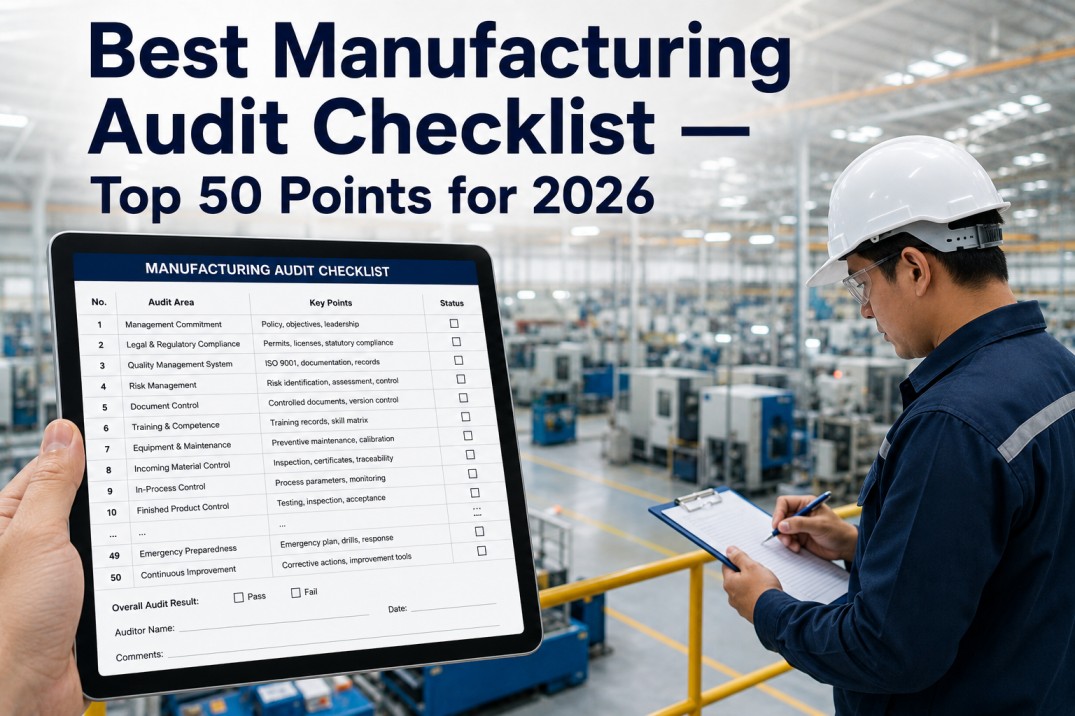
AI Workflow Automation
- Auto-routes non-conformances to the correct corrective action workflow
- Suggests likely root cause based on historical defect patterns
- Flags incomplete inspection records before sign-off
- Prioritises inspection findings by severity and frequency
- Generates formatted reports from captured inspection data
- Predicts inspection workload based on production schedule
AI Visual Inspection (Computer Vision)
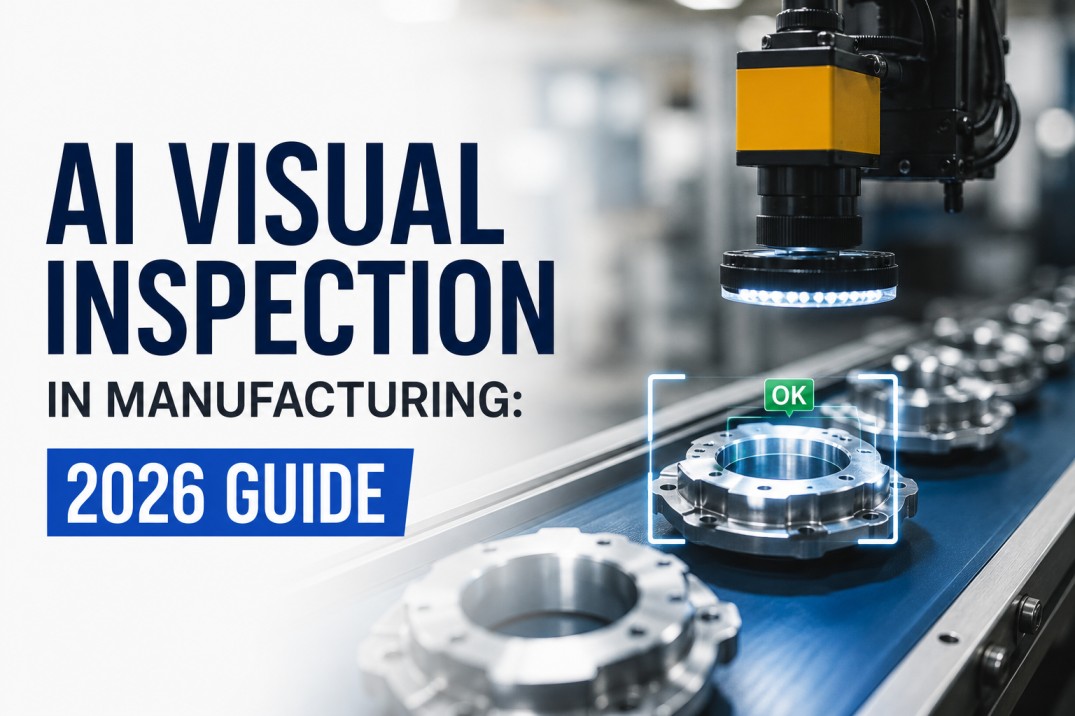
- Camera captures every unit on the production line in real time
- AI model classifies each unit as conforming or non-conforming
- Detects surface defects, dimensional deviations, assembly errors
- Operates continuously — not limited to operator sampling frequency
- Achieves 99%+ accuracy on trained defect categories
- Generates photo-documented non-conformances automatically
Rules-Based Vision vs. AI Model — Detection Accuracy by Defect Type
The accuracy gap between rule-based machine vision (~85% ceiling) and trained AI models (~99%+) is consistent across defect types. The bars below show the maximum achievable accuracy for each approach on common manufacturing defects — the gap represents the quality improvement available by switching to deep learning inspection.
Best AI Inspection Platforms — Manufacturing 2026
Ranked by production manufacturing suitability. Vision AI maturity, edge compute capability, manufacturing workflow integration, and deployment timeline all factored.
iFactory: Vision AI + Digital Checklists — The Complete AI Inspection Stack
iFactory is the only platform combining structured digital inspection checklists with AI visual inspection — so operators and AI cameras inspect the same lot, against the same specification, in one connected workflow.
AI Inspection Platform — Capability Heat Map
The matrix below scores each platform across six production-critical AI inspection capabilities. Full = native production-ready capability. Partial = available with configuration. Limited = incomplete. None = not available.
AI Inspection Deployment — Implementation Cost Comparison
Total cost of ownership for AI inspection goes well beyond the platform licence. Training data collection, model training, hardware, systems integration, and ongoing model maintenance all factor into the three-year TCO. The table below compares the key cost drivers across platforms.
| Platform | Model Training | Go-Live Timeline | Implementation Cost | Support SLA |
|---|---|---|---|---|
| iFactory | Included in platform | 4 weeks | £/$ low-mid | ✓ SLA included |
| Cognex ViDi | Systems integrator required | 8–16 weeks | High (SI fees) | ✗ Vendor only |
| Landing AI | Extensive professional services | 12–24 months | Very high | ✗ Project-based |
| Keyence CV-X | Hardware bundle required | 4–8 weeks | Mid (HW cost) | ✗ Hardware SLA |
| Custom AI Build | Full internal dev team | 6–18 months | Highest (TCO) | ✗ Internal only |
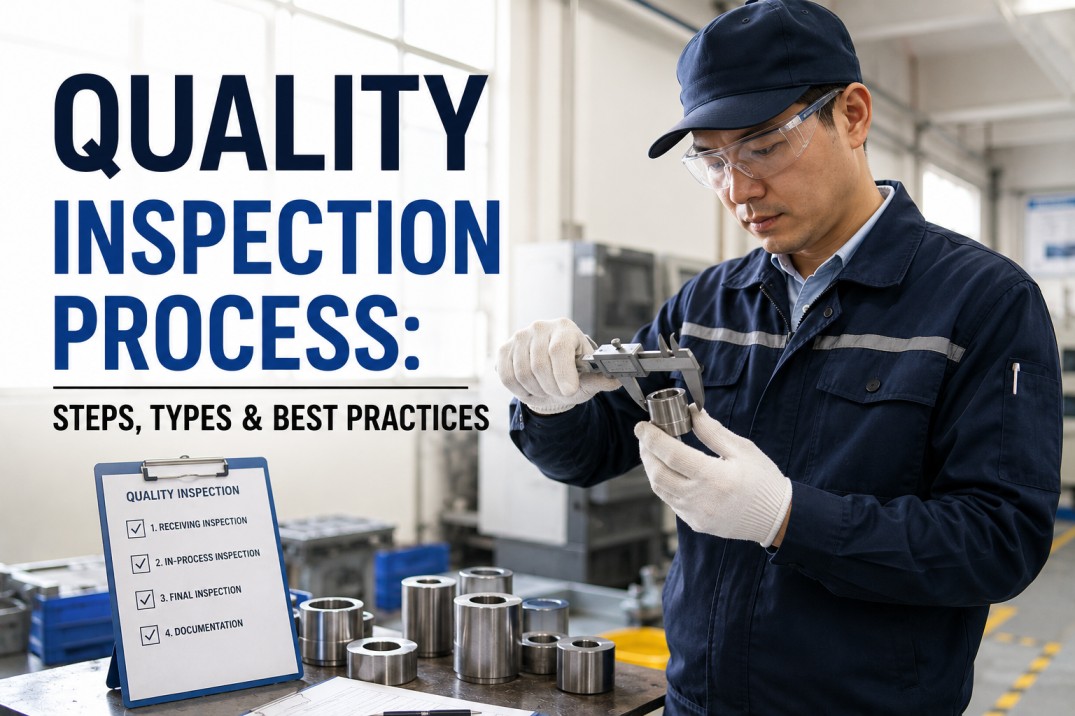
Three-Phase AI Inspection Evaluation Process
Evaluating an AI inspection platform correctly requires three phases — shortlisting, structured demos, and contract review. Most buying mistakes happen when buyers skip Phase 1 (accepting a demo before defining requirements) or Phase 3 (accepting a verbal go-live commitment instead of a contractual one).
01 Phase 1 — Shortlist Complete this phase before requesting demos.
- Define primary inspection use cases: surface defects, dimensional, assembly, label — or a combination
- Confirm minimum defect size requirement: this drives camera resolution specification
- Establish production line speed (units per minute) — determines edge compute requirement
- Identify whether AI-only or AI + digital checklist integration is required
- Set go-live timeline requirement — eliminates vendors with 12+ month deployment cycles
02 Phase 2 — Vendor Demos Evaluate in every demo session — not just for iFactory.
- Request AI demonstrated on your defect type — not on vendor-curated sample parts
- Ask for measured false positive rate on a production line — not a lab environment
- Confirm inference runs on edge compute — not cloud-dependent for production decisions
- Verify NCR creation from AI detection — how does a defect get into the quality workflow?
- Request implementation plan with named implementation manager — not a generic estimate
03 Phase 3 — Contract & Go-Live Before signing any agreement.
- Go-live date for pilot line contractually committed — not in the SOW as a target
- Training data collection included in scope — who labels images, how many required
- Model performance specification in contract: accuracy ≥99%, false positive rate ≤0.5%
- Data ownership confirmed: your training images and trained model are yours on exit
- Performance monitoring process defined: who reviews accuracy weekly after go-live
Frequently Asked Questions
What is AI visual inspection and how does it work?
AI visual inspection uses deep learning models — convolutional neural networks trained on labeled production images — to classify parts as conforming or non-conforming in real time. Unlike rule-based machine vision that tops out at ~85% detection accuracy, AI models trained on production data routinely achieve 99%+. iFactory runs AI inference on edge compute local to the camera — no cloud latency, no connectivity dependency on the production line. Book a Demo to see it running.
How accurate is AI defect detection in manufacturing?
On surface defect detection for metals and plastics — scratch, pit, colour deviation — well-trained AI models achieve 99–99.8% detection with ≤0.5% false positive rate. Dimensional deviation and assembly verification reach similar accuracy with correct optical setup. iFactory validates model accuracy against a held-out test set before production go-live — accuracy and false positive rate are disclosed before contract. Book a Demo to see accuracy data for your defect type.
How long does it take to train an AI inspection model?
Three to four weeks from camera installation to production-ready model for common surface defects. Week 1: hardware install and image capture. Weeks 2–3: training data labeling and model training. Week 4: validation on held-out test set and production deployment. Complex multi-class models or large parts with multiple inspection surfaces may require six to eight weeks.
What is the false positive rate for AI inspection?
A production-grade AI inspection specification requires ≤0.5% false positive rate concurrent with ≥99% detection accuracy. A 2% false positive rate at 1,000 units/hour generates 20 false rejections per hour — more disruption than the system prevents. iFactory discloses the false positive rate for your defect type before contract. Book a Demo to discuss your production volume.
Can AI inspection integrate with ERP and MES systems?
Yes. iFactory connects AI-detected defects to the production order and lot number from the ERP — so every AI detection is automatically linked to the correct production record. AI detections create NCRs in the same quality management workflow as operator-detected defects. The inspection report includes both AI and operator findings in one document. Book a Demo to see the ERP integration.
iFactory AI Visual Inspection — Camera to Production-Ready Model in 4 Weeks
iFactory installs cameras, trains the AI model on your specific defects, validates accuracy, and deploys to production in four weeks. No custom development, no 12-month integration project.
.jpg)