
A single inspection in a typical plant touches seven people, three paper forms, two spreadsheets, one email chain, and at least one "hey, did anyone follow up on this?" before it closes. Multiply that by thousands of inspections a month and the coordination overhead quietly consumes more time than the inspections themselves. This 75-point checklist — structured for digital execution on iFactory — eliminates that coordination tax entirely.
Paper inspection forms are a liability in 2026. They get lost, misfiled, or altered — and when an OSHA auditor walks in or a customer requests traceability records, scrambling through binders is not an option. This checklist gives your team a structured, 75-point quality inspection framework you can run digitally on iFactory's inspection management platform — with photo evidence, digital signatures, and auto-generated audit reports built into every step.
Run this entire checklist digitally — auto-schedule, capture photos, and generate audit reports in one click.
What a Weak Inspection Process Actually Costs
Most plants do not have an inspection problem — they have an inspection workflow problem. What breaks is everything around the inspection: who got assigned, what got escalated, where is the paperwork. Here is where the financial exposure sits.
| Inspection Gap | Operational Impact | Typical Cost | iFactory Fix |
|---|---|---|---|
| Missed pre-shift equipment check | Unplanned downtime | $5K–$20K / hr | Automated daily scheduling |
| No incoming material inspection | Defective input in production | 2–10x rework cost | Supplier lot inspection template |
| Paper-only records | OSHA fine exposure | Up to $165,514 / violation | Timestamped digital audit trail |
| No root cause linkage | Recurring failures | Ongoing scrap & rework | 5 Whys linked to inspection items |
| Offline / remote inspectors | Skipped inspections | Compliance gaps | Full offline mobile capture, auto-sync |
| Digital checklist + auto-reporting | 98% compliance rate maintained | Baseline protected | iFactory inspection management |
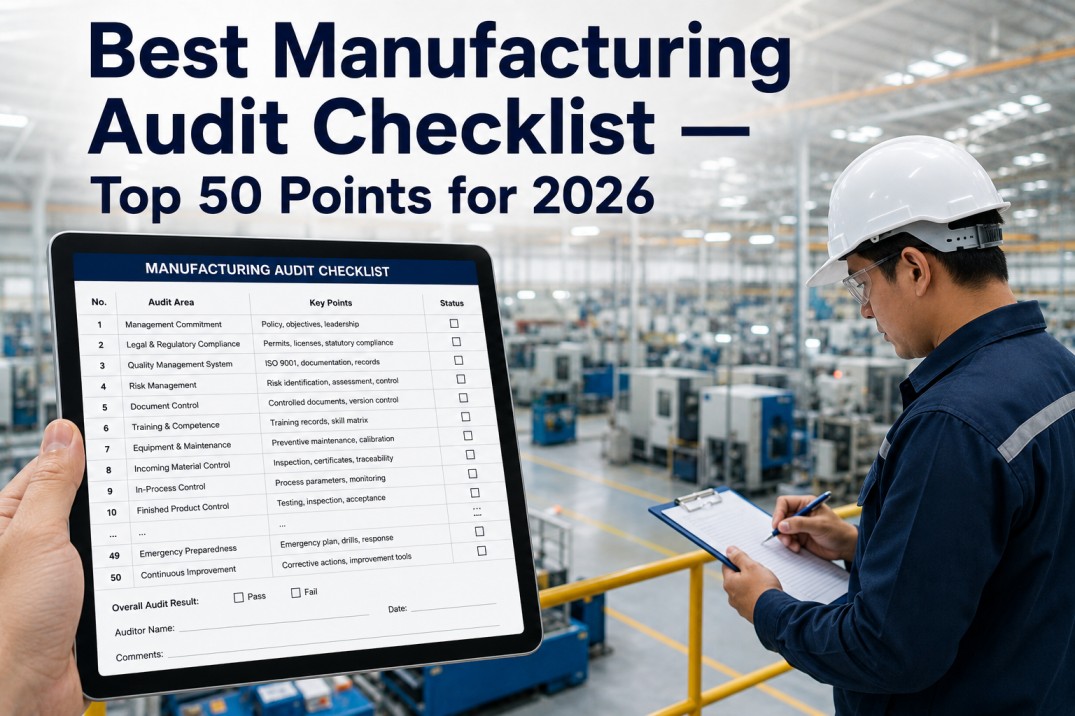
75+ Quality Inspection Points Across 5 Stages
Expand each stage below. Critical items auto-trigger work orders in iFactory when failed. Photo-required items are flagged for in-line evidence capture on mobile.
01
Incoming Material & Supplier Inspection15 inspection points
Critical
- Verify purchase order against received lot — quantity, part number, revision levelCritical
- Check Certificate of Conformance present and matches material lotCritical
- Inspect packaging for shipping damage — dents, moisture, crush marksPhoto
- Confirm material labeling: lot number, expiry, storage requirements
- Dimensional sampling — measure 5 or AQL-required pieces against drawing tolerancesCritical
- Visual inspection for surface defects — cracks, corrosion, contaminationPhoto
- Hardness or material composition test when required by specAI
- Check supplier scorecard rating — flag if below threshold
- Record incoming temperature for temperature-sensitive materials
- Assign quarantine status if non-conformance found — do not release to productionCritical
- Log lot traceability number into system before material leaves receiving dock
- Verify ROHS / REACH compliance documentation for applicable materials
- Confirm shelf life acceptable for planned production window
- Inspector sign-off with timestamp and digital signature capturedCritical
- Disposition decision logged: Accept / Reject / Use-As-Is with authorization
02
In-Process Production Inspection20 inspection points
High Priority
- Confirm correct work order / job traveler is active at workstationCritical
- Verify machine setup parameters against control plan — speed, feed, temp, pressureCritical
- First-off part dimensional check before full run startsCritical
- Record actual vs. target cycle time at each process step
- Mid-run dimensional sampling per AQL or control plan frequency
- Visual inspection for surface defects at each stage — scratches, burrs, flashPhoto
- Verify torque values on fastener operations with calibrated torque toolCritical
- Check gauges and measuring equipment calibration status — not expiredCritical
- Scrap count logged and within acceptable rate per shift target
- Rework pieces identified, tagged, and routed through rework process — not mixed with conforming stock
- Verify correct revision-level drawing is at workstation
- WIP inventory count reconciles against production schedule
- Operator certification verified for special process — welding, heat treat, coatingCritical
- Weld visual inspection — porosity, undercut, spatter, cracksPhoto
- Coolant / fluid levels and concentrations within spec
- Assembly torque / clamp load data recorded for traceability
- Packaging interleave material or protection applied at correct stage
- PPE usage and repetitive motion rotation log current
- All anomalies and non-conformances logged in real timeAI
- End-of-shift sign-off with parts-produced count reconciliation
03
Final Product & Release Inspection18 inspection points
Critical
- 100% visual inspection of finished units or AQL-based samplingCritical
- Final dimensional report matches customer drawing tolerancesCritical
- Functional test passed — output verified against performance specificationPhoto
- Surface finish measurement recorded where specified
- Serial / lot number marking verified — legible, correctly positioned
- Packaging integrity check — correct box, foam, desiccant, and labelPhoto
- Customer-specific requirements checklist completedCritical
- PPAP documentation complete and current (automotive)AI
- Certificate of Conformance generated, signed, and attached to shipment recordCritical
- Hold quantity reconciled — released vs. held vs. scrapped totals balance
- First Pass Yield calculated and logged for lot traceability
- Color / appearance matches approved golden sample or customer standardPhoto
- Leak test or pressure test data recorded where applicableCritical
- Weight check within spec — final assembly
- Hazardous material documentation / SDS attached where required
- Final release authorization — QC manager digital sign-off with timestampCritical
- Shipping label matched against packing list and customer PO
- Inspection record closed — report auto-generated and archivedAI
04
Equipment & Safety Inspection (Pre-Shift)14 inspection points
Safety
- LOTO procedure verified before any maintenance activityCritical
- Emergency stop functional test — all buttons responsiveCritical
- Machine guards, shields, and interlocks in place and functionalPhoto
- Lubrication points serviced per PM schedule — oil / grease level checked
- Hydraulic pressure within operating range — record actual PSI readingCritical
- No visible fluid leaks — hydraulic, coolant, or pneumatic lines checkedPhoto
- Electrical panel condition — no exposed wiring, breakers properly labeledCritical
- Fire extinguisher present, charged, and within annual inspection dateCritical
- Noise and vibration at startup — no abnormal sounds or signatures
- PPE availability confirmed at workstation — gloves, glasses, hearing protection
- Walkway and work area free of obstructions and slip hazardsPhoto
- Conveyor belt alignment and tension within spec
- Tool condition — no chipped inserts or out-of-spec tooling in useCritical
- Pre-shift checklist signed off — operator and supervisor digital sign-off captured
05
Compliance & Audit Readiness12 inspection points
Compliance
- All inspection records available with timestamps and inspector identitiesCritical
- Calibration records for all inspection equipment accessible and currentCritical
- Non-conformance reports closed with root cause and corrective action
- ISO 9001 internal audit schedule current and findings closed
- OSHA 300 log maintained and current for recordable incidentsCritical
- Training records for all active inspectors current and on file
- Customer complaint traceability — complaints linked to specific lot records
- Environmental monitoring logs current for controlled storage areasAI
- Change control log — engineering changes documented and inspection updated
- Supplier qualification file current — approved supplier list reviewed annually
- Quality management review metrics compiled and trend data visibleAI
- Audit report generated, reviewed, and distributed — findings assigned with due datesCritical
From Checklist to Closed Loop — The 4-Step Workflow
In iFactory, this checklist does not sit in a folder. It runs as a structured digital workflow where every step creates traceable data.
Import this checklist directly or use the AI generator — describe your equipment and get a complete checklist with sections, critical flags, and photo requirements in under 60 seconds.
Set recurring schedules — daily pre-shift, weekly equipment audits, monthly compliance walkthroughs. Inspectors receive push notifications and scan asset QR codes to load the right checklist on mobile, even offline.
Photo-required items capture evidence in-line. Failed critical items automatically create a linked work order — no manual handoff, no delay. Digital signatures close each inspection with a timestamp.
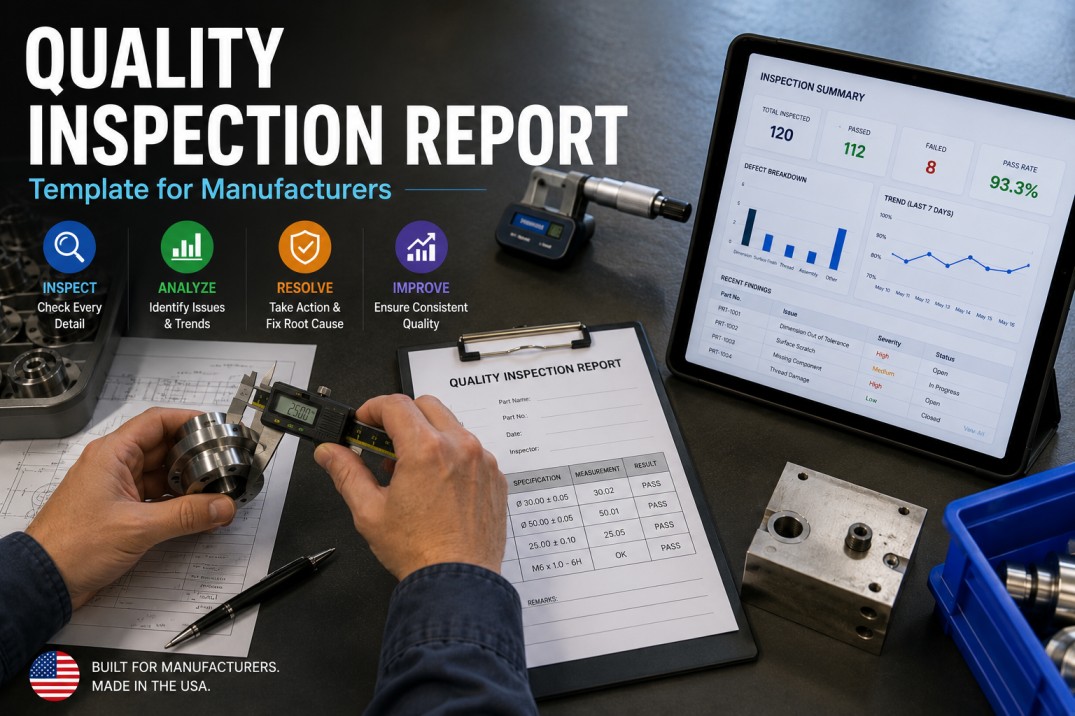
Each failed item links to 5 Whys root cause analysis. Corrective actions are tracked to closure. One click generates an audit-ready PDF for OSHA, ISO 9001, IATF 16949, or HACCP — what used to take three days now takes twenty minutes.
Where Manual Inspection Programs Break at Scale
The inspection task itself takes roughly the same time in both approaches. Everything around it — scheduling, handoffs, approvals, data entry, reporting — is where automation deletes hours nobody realizes they are spending.
| Inspection Activity | Paper / Manual | iFactory Digital |
|---|---|---|
| Checklist creation | 1–3 days per template | Under 60 seconds (AI-generated) |
| Inspection execution time | Avg. 45 min / inspection | Avg. 24 min / inspection |
| Photo documentation | Separate camera, manual file | In-line capture, auto-attached |
| Failed item follow-up | Manual email or phone call | Auto-creates work order instantly |
| Audit report preparation | 2–3 days manual compilation | One-click PDF export |
| Offline capability | Paper works offline, data lost later | Full offline, auto-syncs on reconnect |
| Compliance rate (typical) | 72–80% | Up to 98% |
Run This Entire Checklist Digitally — Starting This Week
iFactory deploys in 1–2 weeks. Pre-built templates for OSHA, ISO 9001, and IATF 16949 are ready on day one. Zero manual coordination required.
What Makes This Checklist AI-Ready in 2026
AI-ready does not mean replacing inspectors. It means the inspection data you collect is structured enough to let AI surface patterns, predict failures, and generate documentation automatically.
Every point uses numeric ranges, pass/fail states, or defined options — not free text — so AI can analyze trends across thousands of inspections without manual cleanup.
iFactory's AI links repeated failures across equipment, shifts, and operators to surface root causes before they become production stoppages.
Describe an asset and the AI engine generates a complete OSHA/ISO-aligned checklist with sections, critical flags, numeric ranges, and photo requirements instantly.
AI recommends increasing inspection frequency on equipment with rising failure rates — your schedule adapts to actual risk rather than a fixed calendar.
Items tagged AI above are points iFactory's AI engine commonly adds based on equipment type, industry standards, and historical failure data from the platform's 1.5 million completed inspections.
Standards CoverageWhich Standards Does This Checklist Address?
| Standard | Applicable Stages | Key Requirements Covered |
|---|---|---|
| ISO 9001:2015 | Stages 1, 2, 3, 5 | Control of nonconforming outputs, documented inspection records, traceability |
| IATF 16949 | Stages 1, 2, 3, 5 | PPAP, CSR compliance, incoming material control, first-off inspection |
| OSHA 29 CFR 1910 | Stages 4, 5 | LOTO, machine guarding, OSHA 300 log, E-Stop, PPE verification |
| HACCP | Stages 1, 2, 3 | Critical control points, temperature monitoring, lot traceability |
| ISO 45001 | Stages 4, 5 | Hazard identification, incident reporting, safety audit records |
"The biggest shift in manufacturing QC over the past three years is not the technology — it is the data quality. Digital inspection platforms turn inspection activity into a structured dataset. When every failed item is timestamped, photo-documented, and linked to a work order, you are not just ticking compliance boxes. You are building the evidence base that lets AI tell you which press is going to fail next Tuesday, not after it already has."
Bottom Line for 2026
A quality inspection checklist is only as useful as the system you run it on. Paper-based or spreadsheet-driven inspection programs create the illusion of control — until an auditor walks in or a shipment comes back.
The 75+ points across these five stages give your team a structured framework covering incoming materials through final release and plant safety. Running it digitally on iFactory means every inspection produces timestamped, photo-documented, audit-ready records — automatically linked to work orders, incidents, and root cause analysis.
If you want to digitize this checklist and start your first automated inspection this week, book a free 30-minute demo and the iFactory team will walk you through setup for your specific equipment and standards.
5 Common Questions About Manufacturing Quality Inspection Checklists
How many inspection points should a manufacturing quality checklist have?
Most effective plant-floor checklists range from 20 to 100 points per inspection type. A pre-shift equipment check may have 12–18 targeted items, while a final product release inspection for a complex assembly could require 40+. The key is specificity — each point should be actionable and measurable, not a general category. iFactory's AI generator tailors point count to your asset type and applicable standards, helping teams avoid both under-inspection and checklist fatigue.
What is the difference between a quality inspection checklist and a control plan?
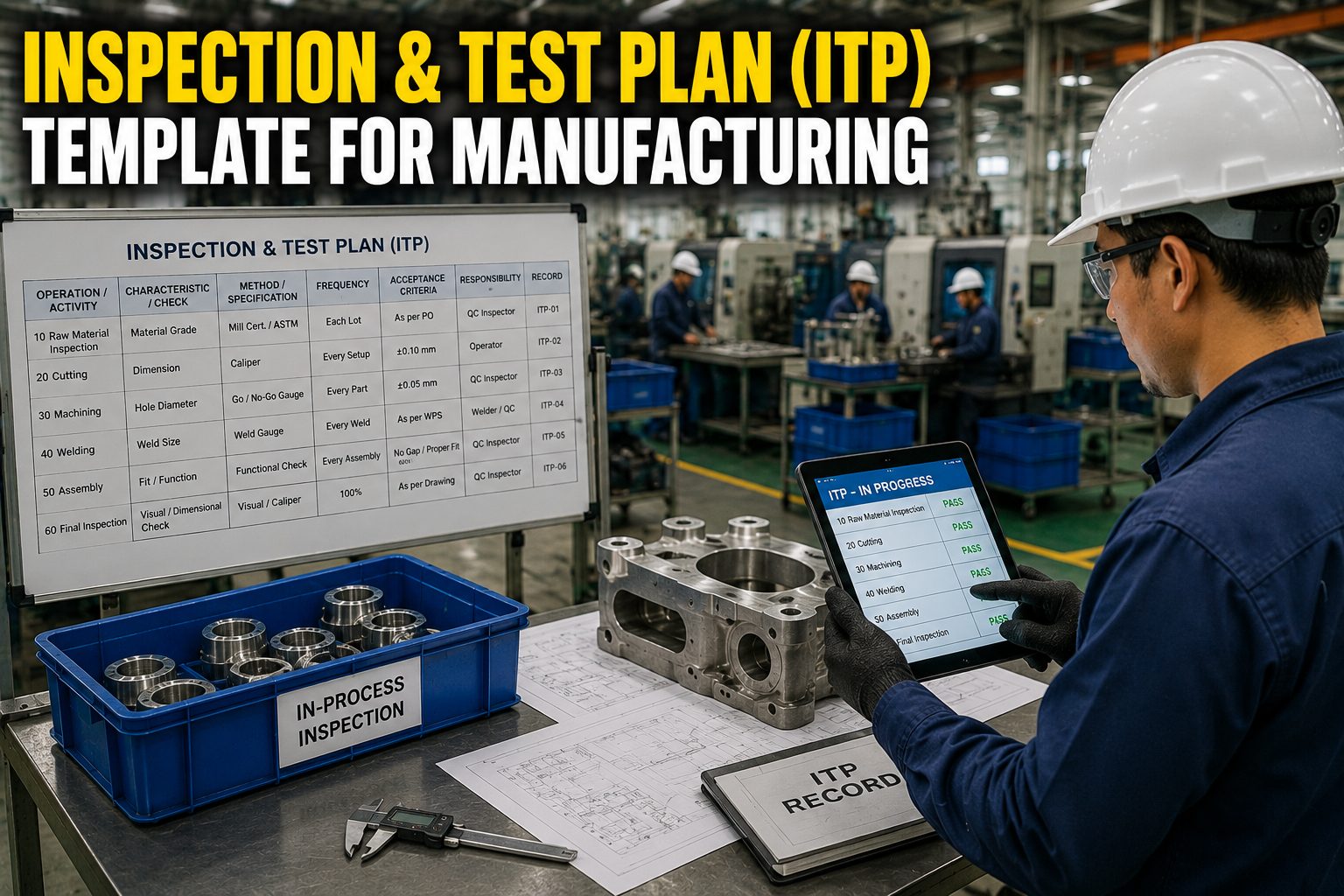
A control plan is a planning document — it defines what characteristics to control, the methods, frequency, and reaction plan at each process step. A quality inspection checklist is the execution tool inspectors use on the floor to record actual findings. The control plan tells you what to inspect; the checklist is where you record whether it passed or failed. In iFactory, checklists are built to directly reflect the control plan, creating a closed loop between planning and execution with full traceability.
How often should a manufacturing quality inspection be performed?
Frequency depends on the inspection type. Pre-shift equipment safety checks are typically daily. In-process dimensional checks follow the control plan frequency — often every Nth part or at defined intervals. Final product inspections occur per lot or shipment. Compliance audits may be monthly or quarterly. iFactory allows flexible recurrence scheduling — daily, weekly, monthly, custom — with automatic notifications and escalation rules so nothing gets missed regardless of shift changes or staffing.
Can this checklist be used for OSHA and ISO 9001 audits?
The checklist framework above is aligned with OSHA 29 CFR 1910 (Stage 4 safety items), ISO 9001:2015 Clause 8.6 and 8.7, and IATF 16949 incoming and in-process requirements. For official certification audits, checklists need to be tailored to your specific processes within your QMS. iFactory generates audit-ready reports with complete digital audit trails — timestamps, inspector identities, photo evidence, and digital signatures — that auditors can review directly from the platform.
What happens when an inspector fails an item — who gets notified?
Failed inspection items trigger automatic notifications to the assigned team — maintenance, QC supervisor, or plant manager — based on severity and item type. Critical items auto-generate a work order and an incident report simultaneously. Escalation rules fire a supervisor alert if a work order is not acknowledged within a defined window. Every action is tracked with timestamps, creating a complete documented trail from detection through resolution — exactly what OSHA and ISO auditors look for.
Ready to Digitize Your Inspection Process?
Join 500+ facilities running structured, audit-ready inspections on iFactory. Deploy in 1–2 weeks. Zero missed inspections. Audit reports in minutes, not days.



-checklist-for-manufacturers.jpg)