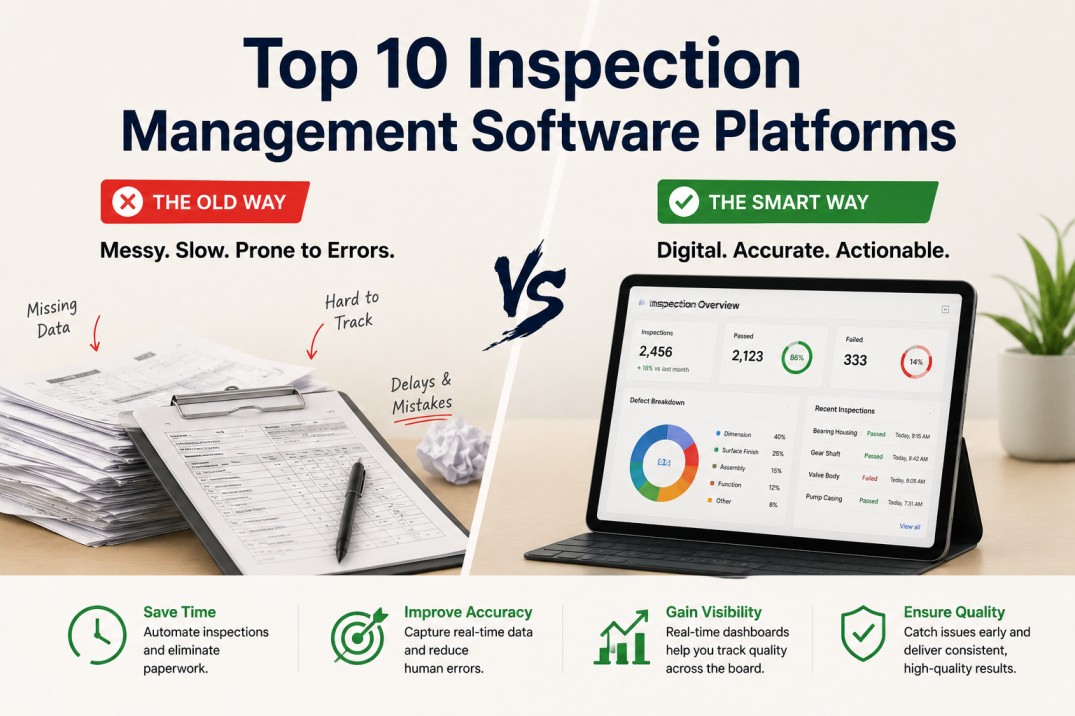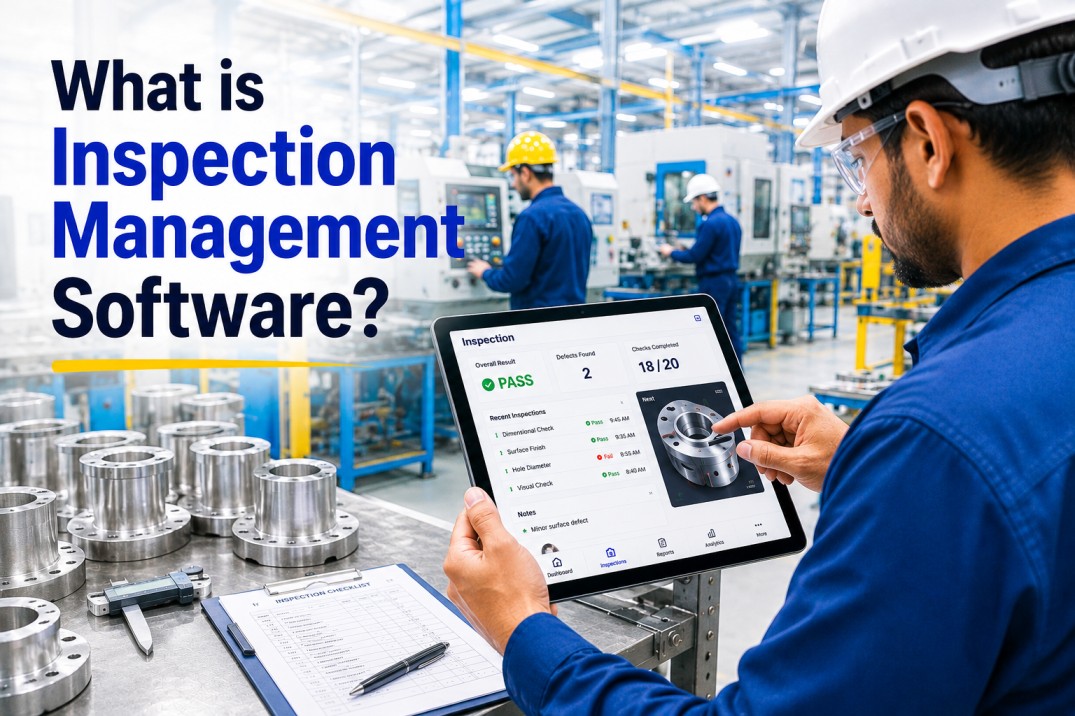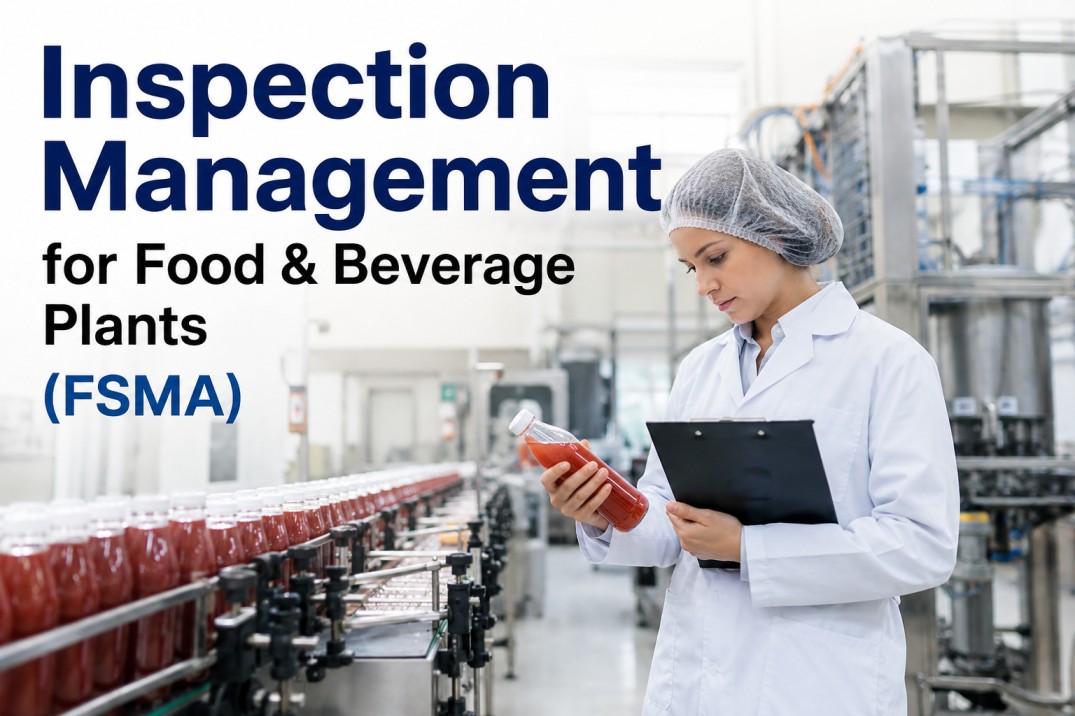
If your food or beverage plant still relies on paper checklists, binders, and manual sign-offs to satisfy FSMA, HACCP, and SQF requirements, your next FDA inspection could expose gaps you didn't know existed — and the cost of that discovery is no longer just operational.
Why Paper Records Break Under FDA Scrutiny
In FY 2024, the FDA issued over 4,000 Form 483 observations across regulated facilities. The leading driver was not unsafe product — it was documentation failure. Missing corrective action records, unsigned monitoring logs, and CCP data that couldn't be produced within the required 24-hour window accounted for a significant share of those citations.
For food and beverage manufacturers, this distinction matters enormously. Under FSMA's preventive controls framework, a missed CCP monitoring interval is a recordable plan deviation regardless of whether a product safety issue occurred. The absence of a record is treated the same as the absence of the control itself.
Paper systems create this exposure structurally. Forms get misplaced between shifts. Supervisors sign off on logs they didn't witness. Environmental monitoring results sit in a binder that no one has indexed. When an FDA investigator arrives — often unannounced — the scramble to reconstruct documentation exposes exactly the gaps that trigger Form 483s and, for repeat offenders, formal warning letters.
"Waiting for an inspection to reveal gaps is no longer a viable strategy. Facilities should maintain a state of continuous readiness."
— FDA Enforcement Guidance, 2026See How iFactory Keeps Your Plant Audit-Ready Every Shift
Join food and beverage manufacturers across the U.S. who have replaced paper inspection workflows with iFactory's digital platform.
What FSMA Actually Demands From Your Inspection Records
The Food Safety Modernization Act represents the most significant overhaul of U.S. food safety regulation since 1938. Its fundamental shift — from reactive response to preventive control — has direct consequences for how food and beverage plants document their inspection activities. The law doesn't merely require that inspections happen. It requires that every step of the inspection lifecycle be captured, verified, and retrievable.
For QA managers and plant directors, the six pillars below define what FSMA compliance looks like in practice — not just on paper, but in daily plant operations.
How HACCP and SQF Inspection Requirements Differ — and Where They Overlap
Most U.S. food and beverage manufacturers operate under HACCP as a regulatory baseline and pursue SQF or BRC certification as a commercial requirement for major retail and foodservice customers. These frameworks share structural similarities but have meaningfully different documentation standards. Understanding where they diverge prevents two common problems: duplicating effort and leaving genuine gaps.
| Inspection Area | HACCP FDA Requirement | SQF Level 2 GFSI Certified |
|---|---|---|
| Hazard Analysis | Biological, chemical, and physical hazards identified per process step with documented rationale | Full food safety risk assessment with scored severity and likelihood ratings per hazard |
| CCP Monitoring | Defined critical limits with timestamped logs per shift; any deviation triggers corrective action | Same requirements plus monthly HACCP plan verification review and trend documentation |
| Pre-Op Inspections | Sanitation verification before production; records must confirm equipment is clean and functional | Must include sanitizer concentration tests, ATP bioluminescence results, and hygiene observation logs |
| Corrective Actions | Root cause, product disposition, and restoration of control — documented per deviation | All of the above, plus response time tracking as a reportable KPI during the SQF audit |
| Internal Audits | Verification of CCP monitoring accuracy — does not require a full GMP facility audit | Full-system audit against the SQF Code; must be conducted by qualified staff, results retained |
| Record Retention | Minimum 2 years for all preventive control records under 21 CFR Part 117.305 | Records must be available and organized for unannounced third-party SQF certification audits |
The Digital Shift: What Actually Changes on the Plant Floor
The move from paper to digital inspection management isn't primarily a technology decision — it's an operational one. The gap between the two approaches becomes most visible at the two moments that define a plant's compliance posture: an unannounced FDA inspection and a food safety incident requiring rapid traceability. Below is how the two systems compare across the capabilities that matter to plant-floor QA teams.
From Pre-Op Logs to FDA-Ready Audit Packages — iFactory Handles It All
Speak with a product specialist about mapping your current inspection workflow to a digital system in under 30 days.
How iFactory Manages the Full Inspection Lifecycle
iFactory is purpose-built for manufacturing plant floors, not adapted from a generic quality management template. The platform covers every stage of the inspection lifecycle — from pre-operation sanitation checks through corrective action closure and audit record export — within a single connected workflow. Here is how the process works in practice.
Inspection schedules are built around your specific HACCP plan, SQF code requirements, or internal GMP protocols — by line, shift, CCP, or facility. Tasks are pushed automatically to the right person at the right time. No one is waiting for a supervisor to distribute paper forms before the shift starts.
Plant floor staff complete inspections directly on handheld devices. Checklists mirror your HACCP plan structure with defined pass/fail criteria, numeric entry for critical limits, photo documentation for visual observations, and electronic signature capture. No paper. No transcription.
When an inspection point fails — a CCP limit is exceeded, a pre-op sanitizer concentration is out of range, an ATP result is above threshold — a corrective action workflow launches automatically. Root cause prompts, assignee routing, and response time requirements are all configurable. Nothing is left to informal follow-up.
QA managers and plant directors see inspection completion rates, overdue tasks, open corrective actions, and CCP compliance status on a live dashboard. Not in a weekly report. Not in a pre-audit summary. In real time, every shift. Multi-facility operations get a consolidated view across all plants from a single login.
When an FDA investigator arrives or an SQF third-party auditor requests documentation, iFactory generates a complete, timestamped, QA-signed record package in minutes — filtered by any combination of date range, CCP, facility, and inspection type. The 24-hour records window becomes a non-event.
Frequently Asked Questions
Under 21 CFR Part 117, facilities covered by the Preventive Controls for Human Food rule must maintain written food safety plans, hazard analysis records, preventive control monitoring logs, corrective action records, verification and validation records, and supply chain documentation. Most records must be retained for a minimum of two years and made available to FDA within 24 hours of a request — not 24 business hours.
An FDA HACCP inspection focuses on whether your Critical Control Points are actively monitored, whether records are complete and accurate, and whether corrective actions were taken for deviations. An SQF third-party audit is a broader assessment of your entire food safety management system against the SQF Code — covering HACCP plan implementation, prerequisite programs, management commitment, document control, internal audit performance, and employee training. SQF Level 2 certification requires a fully implemented and verified HACCP plan as a non-negotiable foundation.
A Form 483 is issued at the close of an FDA inspection when investigators observe conditions that may constitute violations. You are expected to respond in writing within 15 business days with documented corrective actions for each observation. If FDA deems your response inadequate — as occurred in numerous 2024 warning letters — enforcement escalates to a formal warning letter, which is publicly posted. Subsequent consequences can include import alerts, facility registration suspension, and injunctions. The most important step is treating the Form 483 as a systemic signal, not a one-time paperwork exercise.
Yes. iFactory's inspection templates and workflow configurations support layered compliance requirements from the same interface. A single pre-op inspection task can simultaneously capture data satisfying HACCP CCP monitoring requirements, SQF prerequisite program verification, and your own GMP standards — generating one timestamped, QA-signed record that covers all three frameworks. There is no need to run separate inspection workflows for different compliance obligations.
Most facilities are fully operational with configured inspection templates, CCP monitoring workflows, and corrective action routing within 30 days. iFactory is designed to mirror your existing inspection structure — not require a process redesign. A dedicated implementation specialist works with your QA team during onboarding to map current paper forms to digital workflows, train floor staff on mobile execution, and configure alert thresholds for each CCP.
Yes. iFactory provides a corporate-level dashboard that consolidates inspection completion rates, open corrective actions, overdue tasks, and compliance metrics across all facilities. Each plant maintains its own inspection templates and schedules while contributing to a unified compliance view for QA directors and operations leadership — eliminating the silo'd binder-per-facility model that makes multi-plant oversight operationally impractical.
Turn Your Inspection Program Into a Compliance Advantage
Plants that operate audit-ready don't just pass inspections — they close corrective actions faster, respond to FDA inquiries with confidence, and build a documented food safety culture that protects the brand. iFactory gives your QA team the platform to operate that way every shift.
This content is intended for quality assurance, food safety, and operations professionals in U.S. food and beverage manufacturing. For regulatory guidance specific to your facility, consult a qualified food safety consultant or regulatory affairs professional.
.jpg)