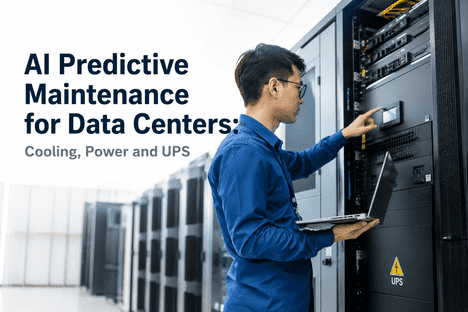
AI Predictive Maintenance for Data Centers: Cooling, Power and UPS
By Ethan Walker on June 6, 2026
Data centers are the backbone of modern digital infrastructure, yet their physical assets — CRAC units, UPS systems, diesel generators, PDUs, chillers, and cooling towers — operate under relentless thermal and electrical stress. A single UPS capacitor failure or chiller compressor trip can cascade into a full outage costing $9,000 per minute in direct revenue loss, not counting brand damage and customer churn. Traditional preventive maintenance based on filter-replacement schedules and battery-load-test intervals cannot account for real-world variables like ambient temperature swings, partial-load inefficiency, battery chemistry degradation, or refrigerant loss. Predictive maintenance powered by AI and IoT telemetry is transforming how data center operators manage critical infrastructure: thermal imaging detects PDU breaker fatigue, vibration analysis predicts chiller bearing wear, electrolyte monitoring forecasts UPS battery end-of-life, and airflow analytics model CRAC unit degradation before cooling capacity drops. iFactory AI's industrial software platform, including its Shift Logbook and predictive maintenance engine, enables data center operators to deploy AI-native predictive maintenance without replacing existing DCIM, BMS, CMMS, or EPMS systems. Book a Demo to see how iFactory applies predictive maintenance for data center operations. This guide explores the technology stack, critical failure modes, efficiency implications, and the practical deployment path for operators evaluating modernization.
Data Center · Critical Infrastructure · 2026
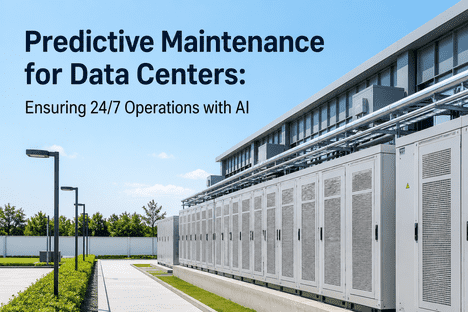
Predictive Maintenance for Data Centers
AI-driven failure prediction · cooling system prognostics · power-chain reliability — reducing unplanned downtime, improving PUE, and extending asset life across electrical and mechanical infrastructure.
Why Traditional Data Center Maintenance Is Hitting Its Ceiling
The traditional approach — scheduled filter changes, battery load tests every 12 months, chiller PMs on calendar intervals — treats every asset identically regardless of actual operating conditions. A UPS in a Phoenix data center experiences ambient temperatures 30°F higher than the same model in Seattle, accelerating capacitor aging by 2–3x. A CRAC unit struggling with blocked perforated tiles works 40% harder than a unit with proper airflow. Fixed-interval maintenance either over-serves healthy assets (wasting labor and parts) or under-serves assets approaching failure (risking thermal runaway, power loss, and service interruption). Four specific ceilings are visible across every mature data center operation.
01
Fixed PM Schedules
Calendar-based filter changes and battery tests ignore actual operating conditions. A UPS battery bank at 75°F lasts 5 years; the same bank at 90°F fails in 3. AI models use temperature, impedance, and discharge data per string.
Gap: Calendar-based vs Condition-based
02
No Cross-Asset Learning
Each CRAC unit, UPS module, and PDU has siloed sensor data. Patterns — a specific chiller model failing under low-load cycling, or PDU breaker degradation correlating with harmonic distortion — remain invisible. AI models learn across the entire fleet.
Gap: Siloed vs Fleet-wide
03
Reactive Thermal Response
Hot spots, condenser fouling, and refrigerant loss follow identifiable precursor patterns in temperature, pressure, and compressor current data. Manual inspection intervals miss those precursors. AI models detect degradation 14–30 days before cooling capacity drops.
Gap: Reactive vs Predictive Cooling
04
Fragmented Data Architecture
DCIM tracks power, BMS tracks cooling, CMMS tracks maintenance, and spreadsheets track battery health — no unified view connects asset health to risk. AI-native platforms fuse all streams into single asset dashboards with predictive context.
Gap: Fragmented vs Unified
What Predictive Maintenance Actually Adds to Data Center Operations
The misconception some operators carry: predictive maintenance replaces existing DCIM, BMS, CMMS, or EPMS systems. It doesn't. Your CMMS continues handling work orders, parts inventory, and maintenance schedules. Your DCIM continues tracking power chain capacity and utilization. What changes is the intelligence layer feeding those systems. Time-based maintenance schedules migrate to AI-driven condition-based predictions. Thermal alarm thresholds gain predictive context — not just "rack inlet temperature 82°F — alert" but "CRAC unit 4 shows compressor discharge temperature elevation at 93% confidence — estimated 12 days remaining useful life — root cause: condenser coil fouling — recommended action: schedule cleaning within 7 days." iFactory AI's Shift Logbook provides facility operators and technicians with a unified interface for shift handovers, equipment status, and AI-generated maintenance recommendations integrated with existing workflows.
Capability
Traditional Maintenance
AI Predictive Maintenance
Service trigger
Calendar / runtime hours
Predicted remaining useful life per asset
Battery monitoring
Annual load bank test
Continuous AI prediction from impedance and temperature
Cooling assessment
Quarterly filter replacement
AI-driven condenser fouling and refrigerant loss detection
Failure notification
After overheating / power loss
14–30 day predictive lead time before failure
PUE optimization
Manual analysis on monthly data
Continuous efficiency optimization via real-time AI modeling
Critical Failure Modes in Data Centers — What AI Catches That Manual Inspections Miss
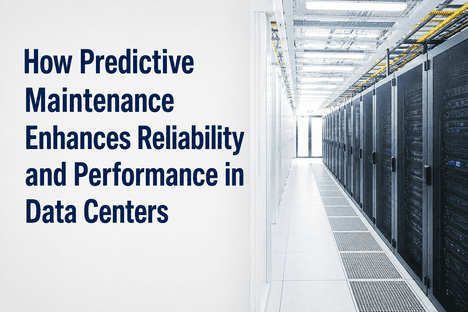
Data center equipment fails through specific electrical and mechanical degradation processes that leave identifiable signatures in sensor data before they become visible to operators or technicians. AI models trained on these signatures detect degradation 14–30 days before failure — the window that separates planned intervention from a costly downtime event.
U
UPS & Power Chain
Capacitor ESR elevation, battery impedance rise, rectifier IGBT fatigue, static switch weld detection, inverter output harmonic distortion. AI correlates 10+ electrical parameters per UPS to predict remaining life.
Predictive lead time: 14–30 days
C
Cooling & CRAC
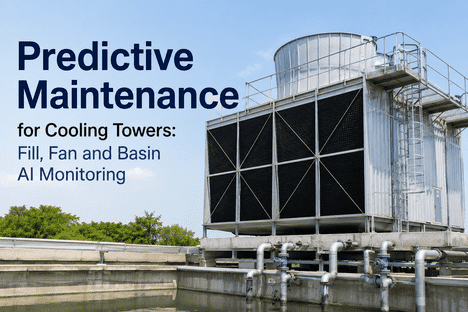
Compressor valve leakage, condenser coil fouling, evaporator fan bearing wear, refrigerant charge loss, expansion valve degradation, humidifier scale buildup. AI detects thermal efficiency degradation before setpoint drift.
Breaker thermal fatigue, transformer winding hot spots, bus bar connection degradation, meter drift, tap changer mechanism wear, fuse degradation precursors. AI detects resistance changes before catastrophic failure.
Predictive lead time: 14–30 days
The Keep / Retire / Transform / Replace Decision Matrix
Migration discipline starts here. Every asset management artifact in your current operation falls into one of four categories. Getting the categorization right in week one of the workshop saves quarters of debate later.
Keep
Core operations foundations
DCIM capacity management
BMS / BAS environmental control
CMMS work order engine
EPMS power monitoring
Service provider contracts
Established capabilities. No business case to replace. AI predictive maintenance writes recommendations and work orders to these systems.
Retire
Legacy inspection layers
Fixed calendar-based PM schedules
Manual thermography rounds
Spreadsheet battery tracking
Standalone vibration data collection
Email-based alert notification
Replaced by AI-driven condition-based predictions and unified interface. 70–90% reduction in manual monitoring effort.
Transform
Analysis workflows
Asset health scoring
Battery degradation trending
Thermal risk prediction
PUE optimization analysis
Shift handover reporting
Become AI model invocations grounded in real-time data. Intelligence upgraded via iFactory Shift Logbook.
Replace
Alert & notification layer
Legacy alarm notification gateways
Manual escalation workflows
Standalone pager / SMS systems
Paper-based shift logs
Siloed battery reports
Event-driven AI alert engine replaces manual notification. Critical alerts with automated work order creation.
Want this matrix applied to your specific data center asset inventory in a working session? Walk through every asset class and prioritize your predictive maintenance rollout.
Three Deployment Paths for Data Center Predictive Maintenance
Same starting point, three valid destinations. The right path depends on facility tier level, regulatory exposure, co-location vs enterprise ownership, and current sensor instrumentation. Operators that pick the wrong path spend 12 months in pilot purgatory. Operators that pick the right path deploy in 6–12 weeks.
Path A
Augment in Place
6–8 weeks
AI predictive monitoring runs alongside existing PM and thermography programs. Shadow mode for 4 weeks. Alerts flow to CMMS for review. No legacy systems retired.
Best fit
Tier III / IV facilities · risk-averse operators · first AI deployment in critical infrastructure
Wk 1–2 Sensor data federation
Wk 3–5 Shadow mode AI
Wk 6–8 CMMS integration live
Path B
Hybrid Migration
8–12 weeks
AI predictive layer replaces fixed PM schedules. Legacy thermography rounds retire for unified mobile UX. DCIM, BMS, CMMS preserved. Battery data federated.
Best fit
Enterprise data centers · colocation operators · sponsorship for digital transformation
Wk 1–3 Discovery · matrix
Wk 4–8 Deploy AI prediction layer
Wk 9–12 Mobile UX migration · cutover
Path C
Full Modernization
10–14 weeks
Legacy fixed-interval programs retired. iFactory platform provides full predictive capability. CMMS retained. All asset classes covered against matrix.
Best fit
Large multi-facility operators · hyperscale · strategic platform consolidation
Wk 1–4 Full asset inventory + matrix
Wk 5–10 Parallel build + test
Wk 11–14 Cutover + legacy sunset
Find the Right Path for Your Facility in a 90-Minute Workshop
iFactory AI's data center practice runs a focused workshop against your specific asset classes, sensor coverage, existing DCIM / BMS configuration, and uptime requirements. You leave with a defended path recommendation, a 12-week deployment plan, and a cost projection grounded in your maintenance history.
Vendor Evaluation Framework — Data Center Specific Questions
Generic predictive maintenance vendors handle the AI math. Data center-aware vendors handle the integration reality — cooling and power chain diversity, Tier classification requirements, battery chemistry variation, refrigerant management, and zero-disruption deployment. Eight criteria separate vendors who've done data center modernizations from vendors selling a demo.
01
UPS and battery monitoring depth
Ask:
"Does your platform integrate with UPS internal BMS, external battery monitoring systems, and support VRLA, Li-ion, and Ni-Cd chemistries?"
Battery failure is the leading root cause of UPS outages. Platforms that only monitor electrical load miss 60% of UPS failure risk. Production-grade platforms fuse impedance, temperature, and discharge data per cell.
02
Cooling system prognostics
Ask:
"Does your platform provide remaining useful life predictions for centrifugal and scroll compressors, condenser fans, pumps, and cooling towers?"
Cooling accounts for 35–40% of data center energy consumption. Single-asset-type platforms deliver limited ROI. Full cooling chain coverage from chiller to CRAC to row-level is required.
03
Generator readiness monitoring
Ask:
"Does your platform analyze weekly generator exercise tests and predict starting reliability, fuel quality issues, and coolant system degradation?"
Standby generators must start under all conditions. Platforms that ignore generator health leave the final layer of power protection unmonitored. AI analysis of exercise data identifies degradation invisible to manual review.
04
PDU and breaker analytics
Ask:
"Can your platform detect PDU breaker thermal degradation, harmonic distortion trends, and tap changer mechanisms before failure?"
Distribution failures cause localized outages that are as disruptive as UPS failures. Platforms must monitor downstream distribution health, not just the UPS output.
05
Refrigerant loss detection
Ask:
"Does your platform detect refrigerant charge loss and condenser fouling from existing sensor data without additional refrigerant sensors?"
Refrigerant leaks reduce cooling capacity and increase PUE. AI correlation of suction pressure, discharge temperature, and compressor current detects charge loss weeks before it affects rack inlet temperatures.
06
BMS / DCIM integration
Ask:
"Does your platform integrate with existing BMS (Siemens, Johnson Controls, Honeywell, Schneider) and DCIM platforms without custom development?"
Pre-built connectors for major BMS and DCIM platforms are the difference between 8-week and 8-month deployment. Custom integration projects fail at 3x the rate of template-based deployments.
07
Tier classification compliance
Ask:
"Does your platform generate maintenance reports aligned with Uptime Institute Tier III and Tier IV requirements and ANSI/TIA-942 standards?"
Tier-certified facilities need predictive maintenance records that satisfy audit requirements. Platforms with pre-built compliance report templates save months of deployment time.
08
Deployment timeline commitment
Ask:
"When does the first validated predictive alert reach our CMMS in production?"
8–12 weeks is the production-grade benchmark. Path A is 6–8 weeks. Path C is 10–14 weeks. Vendors quoting 6+ months are building custom development.
Want to score your shortlisted vendors against this 8-criterion framework? Run a vendor evaluation working session with our team.
The ROI Math — What Predictive Maintenance Delivers for Data Centers
The business case for AI-native predictive maintenance in data centers isn't about software cost — it's about cost avoidance on unplanned downtime, emergency repair premiums, and efficiency degradation. Operators moving from preventive to AI-native predictive maintenance see measurable improvements across four metrics in the first quarter post-deployment.
−40–60%
Unplanned downtime reduction
AI identifies equipment degradation 14–30 days before failure. Emergency outages shift to planned maintenance during maintenance windows.
−25–40%
Maintenance cost reduction
Condition-based service eliminates unnecessary PM work while catching failures before cascading damage inflates repair costs.
−0.05–0.15
PUE improvement
AI-optimized cooling operation and early detection of fouling / refrigerant loss directly reduces energy overhead in the facility.
6–12 mo
Typical ROI payback
Full investment recovery through downtime avoidance, efficiency savings, and extended equipment replacement intervals.
Expert Perspective
"The single biggest mistake data center operators make in predictive maintenance modernization is treating it as a rip-and-replace of their DCIM or BMS. It isn't. Your DCIM capacity dashboards, BMS environmental controls, and CMMS work order engine work as designed — there's no business case to replace them. What needs to change is the intelligence layer feeding those systems. Calendar-based filter changes and annual battery load tests need to migrate to AI model invocations running remaining useful life predictions across UPS batteries, CRAC compressors, generator starters, and PDU breakers. Battery impedance data that currently sits in a spreadsheet needs to stream continuously into fusion models that predict end-of-life 30 days before capacity drops below critical threshold. The architectural decision isn't DCIM-or-AI — it's DCIM-plus-AI-plus-BMS-plus-battery-plus-thermal. Operators that frame it correctly deploy in 8–12 weeks. Operators that frame it as rip-and-replace spend 12 months in pilot purgatory."
— Data Center Asset Management Practice, 2026 industry insight
8–12 wk
hybrid deployment with pre-configured data center templates
70–90%
reduction in custom deployment scope with templates
Zero rip
of existing DCIM, BMS, or CMMS required
Conclusion: The Modernization Decision Has Three Right Answers
Calendar-based maintenance programs aren't failing in data centers — they're hitting an architectural ceiling that fixed-interval analysis can't cross. AI-native predictive maintenance adds the condition-based intelligence layer that traditional systems were never designed to deliver: remaining useful life predictions across UPS batteries and CRAC compressors, refrigerant loss detection before cooling degrades, generator readiness prognostics, self-updating models from operator confirmations, and mobile-native operator interfaces grounded in real-time asset data. The modernization conversation has three valid answers depending on facility tier and risk tolerance — augment in place (6–8 weeks), hybrid migration (8–12 weeks), or full modernization (10–14 weeks). All three keep existing DCIM, BMS, CMMS intact and reuse current sensor infrastructure. All three deliver 40–60% reduction in unplanned downtime and measurable PUE improvement within the first quarter. The decision worth making in 2026 isn't whether to adopt AI predictive maintenance — it's which of the three paths fits your specific facility portfolio.
Run the Predictive Maintenance Workshop Built for Your Data Center
iFactory AI's data center practice runs a 90-minute workshop against your real asset classes, sensor coverage, and BMS / DCIM configuration. You leave with a defended path recommendation, the keep/retire/transform/replace matrix applied to your assets, and a cost reduction projection grounded in your maintenance history.
Does predictive maintenance replace our existing DCIM or BMS system?
No. Your DCIM continues handling capacity planning, power chain visualization, and utilization tracking. Your BMS continues managing environmental controls, alarms, and setpoints. These are mature, mission-critical systems with no business case to replace. What changes is that sensor data now feeds AI models that predict asset failures 14–30 days in advance, in addition to the real-time monitoring your operators already perform. The predictive layer sits on top of existing systems through standard BACnet, Modbus, and SNMP integration. Deployment does not require any changes to control logic or alarm thresholds.
What data center failure modes can AI actually predict?
Production-grade AI predictive maintenance covers UPS and power chain (capacitor degradation, battery impedance rise, IGBT fatigue, static switch anomalies), cooling system (compressor leakage, condenser fouling, refrigerant loss, fan bearing wear, humidifier scale), generators (starter battery health, fuel degradation, coolant leaks, alternator wear), and distribution (breaker thermal fatigue, transformer hot spots, bus bar degradation, harmonic distortion trends). Each failure mode has a characteristic sensor signature detectable 14–30 days before catastrophic failure.
Does deployment require new sensors on existing equipment?
No. Production-grade predictive maintenance platforms integrate with existing instrumentation already installed in most data centers — UPS internal sensors, BMS temperature and humidity points, CRAC controller data, generator ECU telemetry, and PDU metering. iFactory's federation layer reuses current instrument data through existing BACnet, Modbus, SNMP, and OPC-UA infrastructure. For older assets without continuous monitoring, retrofittable wireless sensor kits are available, but the platform is designed to extract maximum value from existing instrumentation first.
How does predictive maintenance improve data center uptime?
Uptime improvements come through three mechanisms. First, battery and UPS degradation is detected 14–30 days before failure — enabling planned replacement during maintenance windows rather than emergency response during outages. Second, cooling system degradation (refrigerant loss, condenser fouling, compressor wear) is caught before it causes thermal events that trigger server throttling or shutdown. Third, generator standby readiness is continuously evaluated so the final layer of power protection is verified between annual full-load tests. Facilities deploying predictive maintenance typically see 40–60% reduction in unplanned downtime within the first year.
Which deployment path fits a Tier III co-location facility best?
Path A (Augment in Place) is the right starting point for Tier III co-location environments with customer SLAs and audit requirements. The platform runs alongside existing maintenance and inspection programs for 4 weeks in shadow mode, generating predictions logged for review but not triggering automatic work orders. Operations teams compare AI predictions against actual events, document performance, and approve cutover with full traceability. No legacy systems retire in Path A — existing PM programs and BMS continue running as a control comparison. After 6–12 months, most operators progress to Path B or C to capture additional efficiency gains.