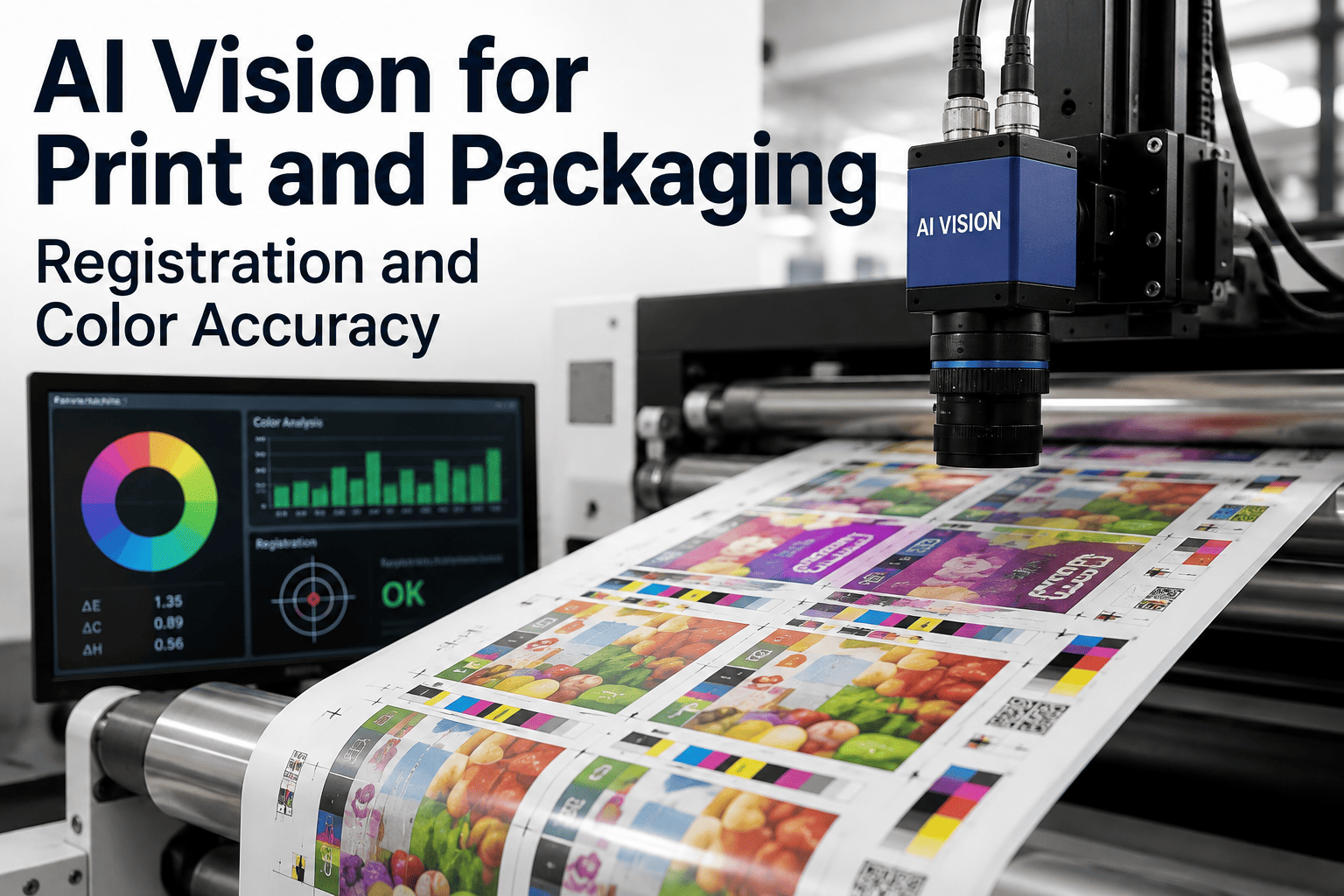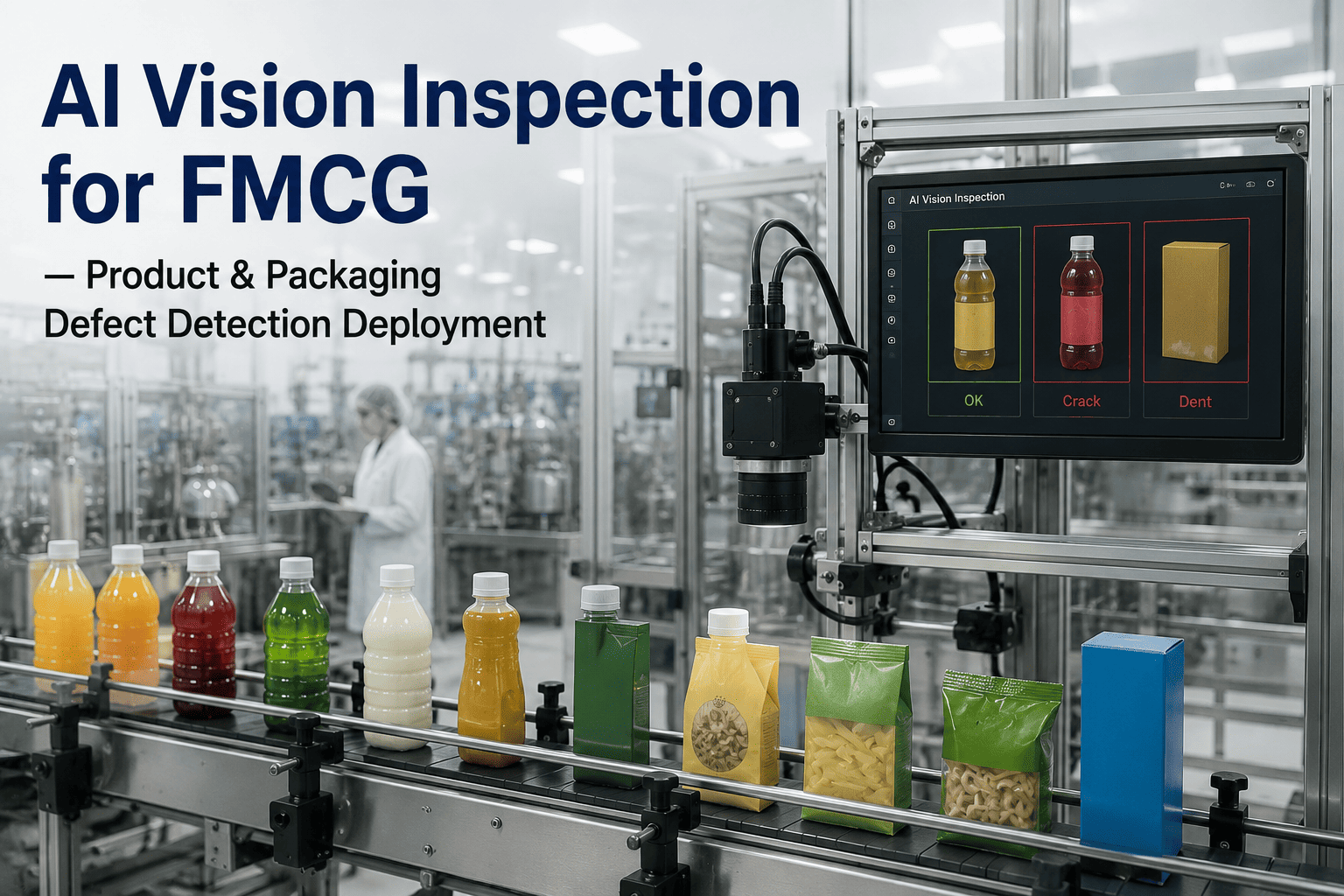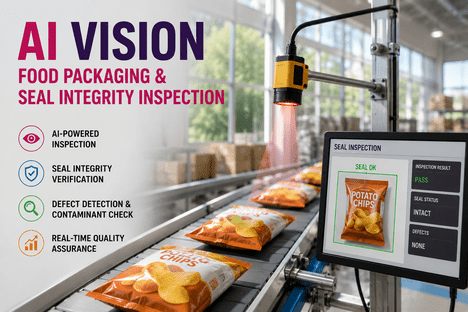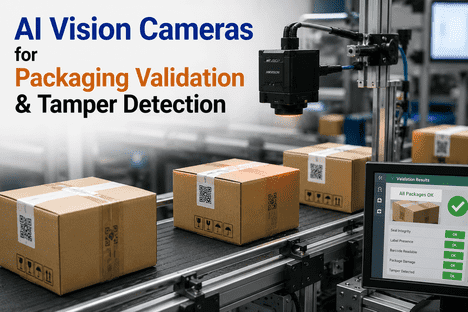
Packaging is the final quality gate between a manufacturer and the consumer — and it is the most inspection-intensive, compliance-critical, and recall-prone step in any production line. A single mislabeled allergen declaration, an incomplete heat seal on a pharmaceutical blister pack, or a broken tamper band on a consumer product can trigger an FDA Class I recall averaging $10 million in direct costs, before brand damage and regulatory penalties are counted. Manual visual inspection on high-speed packaging lines — running at 600 to 1,200 units per minute — cannot deliver the detection accuracy, speed, or documentation consistency that food, pharmaceutical, and consumer goods manufacturers need to meet today's compliance and traceability standards. iFactory's AI vision camera system transforms packaging validation and tamper detection from a labor-intensive sampling exercise into a 100% inspection process, running at line speed, with 99%+ detection accuracy and automated compliance records built in. Organizations that Book a Demo with iFactory's packaging vision engineers are discovering defect escape rates they didn't know existed — and eliminating them before the next recall event.
Is Your Packaging Line Running 100% Inspection — or 100% Risk?
iFactory's AI vision camera platform catches seal failures, label mismatches, tamper band breaks, and barcode errors at production speed — with zero operator fatigue and full audit-ready documentation.
Why Packaging Inspection Is the Highest-Stakes Quality Function on Your Line
Labeling errors alone are responsible for more than 25% of FDA Class I food recalls — the category reserved for products that present a reasonable probability of serious adverse health consequences. In pharmaceuticals, a single packaging compliance failure can trigger a consent decree that shuts down an entire manufacturing site. In consumer goods, a tamper-evident seal breach that reaches a retailer's shelf generates liability exposure that dwarfs the cost of the product itself. Despite this, most packaging lines still rely on manual spot-checking or rule-based vision systems that flag false positives at rates above 3–5%, overwhelming quality teams and training operators to override alerts. The result is a quality program that generates paperwork without preventing failures.
iFactory's AI vision camera platform addresses this gap by applying deep learning models — trained on your specific packaging formats, label artwork, and defect library — to every unit on the line. The system inspects seal integrity, label placement and content accuracy, tamper-evidence features, fill levels, cap orientation, and barcode readability in parallel, at inspection speeds up to 1,200 units per minute. Detection accuracy of 99%+ is maintained consistently across shifts, packaging variants, and product changeovers, without the fatigue-driven variability that degrades manual inspection over an 8-hour production run. Teams that Book a Demo see firsthand how a single AI vision deployment on a packaging line generates audit-ready inspection records, reduces customer complaints by up to 22%, and eliminates the sample-based blind spots that allow defective product to reach distribution.
Seal Integrity Verification
Detect incomplete heat seals, unsealed edges, partial closures, and contaminated seal areas in real time — including on transparent packaging where traditional systems generate high false positive rates.
Label & Print Validation
Verify label placement, orientation, and content accuracy — including allergen declarations, lot codes, expiry dates, and barcode readability — on every unit at full line speed.
Tamper Detection & Band Inspection
Identify broken shrink wraps, missing tamper bands, damaged induction seals, and compromised cap integrity — with sub-100ms per-unit decision speed and automated rejection triggering.
Fill Level & Cap Orientation
Measure fill levels within 1mm tolerance using 3D sensors, and verify cap placement, thread engagement, and orientation — catching underfills, overfills, and cross-threaded closures before downstream packing.
"We were running a manual check on a sample basis — maybe 1 in 50 units on the allergen label line. After three customer complaints about missing 'Contains Nuts' declarations in a single quarter, we implemented iFactory's AI vision. The first week of full-line inspection found label content errors on 0.4% of production — errors that had been shipping for months. We eliminated them within the first campaign. We haven't had a single label-related customer complaint in fourteen months, and our FDA audit documentation is now generated automatically from every shift."
The Technical Pillars of AI-Driven Packaging Validation
Effective packaging inspection requires solving problems that rule-based machine vision cannot handle: reflective foil surfaces, transparent seal areas that look identical to unsealed areas under standard lighting, and the absence-based defect — a missing desiccant packet, a missing insert, a missing tamper band — where the defect is defined by what is not there rather than what is. iFactory's platform is built on three technical pillars that address these challenges directly. Packaging and quality teams that Book a Demo see each pillar demonstrated on their specific packaging format.
Pillar 1 — Deep Learning Defect Classification
Traditional rule-based vision systems define defects by pixel threshold rules that cannot adapt to packaging variation — different label artwork, foil reflectivity changes with humidity, or minor dimensional differences between packaging batches. iFactory's deep learning models are trained on your specific defect library and packaging variants, learning to distinguish genuine defects from acceptable variation with a false reject rate below 0.3%. This eliminates the operator override behavior that defeats legacy inspection systems and ensures that every rejection is a genuine quality event.
Pillar 2 — Multi-Spectral Imaging for Transparent & Reflective Surfaces
Transparent packaging seal inspection is one of the hardest problems in machine vision: the seal area and the unsealed area often appear identical under standard illumination. iFactory deploys specialized lighting configurations — polarized, UV, backlighting, and multi-angle setups — that create contrast signatures invisible under normal lighting, making incomplete seals, membrane damage, and contamination on foil surfaces detectable with the same accuracy as surface defects on opaque packaging.
Pillar 3 — OCR & Barcode Validation at Line Speed
Label content validation goes beyond visual placement checks. iFactory's AI-powered OCR reads every text field on every label — lot codes, expiry dates, allergen statements, ingredient lists, and regulatory markings — and compares them against the active production order in real time. Barcodes are verified for readability, correct symbology, and data content match. This catches the class of errors — correct label applied to wrong product, correct label with wrong batch code printed — that conventional image-matching systems miss entirely because the label visually appears correct.
Manual & Rule-Based Inspection vs. iFactory AI Vision
The gap between legacy packaging inspection approaches and AI vision is not incremental — it is categorical. The comparison below shows the operational reality of each approach across the defect types and inspection challenges that define modern packaging validation requirements.
| Inspection Function | Manual / Rule-Based Approach | iFactory AI Vision | Business Impact |
|---|---|---|---|
| Seal Integrity Detection | Sample-based squeeze test | 100% inline thermal + visual AI | Eliminates contaminated product reaching distribution |
| Label Content Verification | Manual visual spot check | AI-OCR every unit, every field | Prevents label-driven recalls (25%+ of FDA Class I events) |
| Tamper Band Inspection | End-of-line visual audit | Real-time per-unit AI detection | Zero compromised tamper seals reaching retail shelf |
| Barcode Readability | Manual scanner verification | Vision-based grade & content check | Eliminates distribution system failures and retailer chargebacks |
| Fill Level Accuracy | Checkweigher (weight proxy) | 3D vision ± 1mm tolerance | Accurate underfill detection without overfill giveaway |
| Compliance Documentation | Manual paper records per shift | Automated digital record per unit | Audit-ready 24/7 — zero documentation gaps during inspections |
The 3-Phase Roadmap to Full Packaging Validation Coverage
Deploying AI vision on a packaging line requires a phased approach that respects line speed constraints, product changeover complexity, and the validation documentation requirements of regulated industries. iFactory's implementation roadmap delivers measurable defect detection from the first week of deployment, with full autonomous validation coverage achieved within a standard campaign cycle. Quality managers ready to eliminate their next recall event can Book a Demo to see the deployment sequence on their specific packaging format.
Camera Placement, Lighting & Baseline Model Training
Position cameras at the highest-impact inspection points — seal station, labeler exit, and tamper application. Configure lighting for the specific packaging surface (foil, transparent film, matte label, reflective cap). Train initial deep learning models on your defect library using reference images from existing rejects. Production integration and first inspection data in 5–10 business days. Timeline: 2–4 weeks.
OCR Integration, MES Connectivity & Rejection Automation
Activate AI-OCR for label content validation against active production orders. Connect the vision platform to MES or ERP for real-time lot code and expiry date verification. Wire rejection output to pneumatic or mechanical reject gates for automated removal of non-conforming units. Establish inspection data historian for compliance record generation. Timeline: 4–8 weeks.
Full-Line Coverage, Changeover Management & Audit Reporting
Extend coverage to all packaging stations across the line. Configure changeover recipe management so the system automatically loads the correct inspection parameters for each SKU and packaging format. Activate automated FDA/GMP compliance report generation per batch. Achieve 100% inspection coverage with zero manual documentation gaps. Timeline: Ongoing optimization.
Documented Results: What iFactory AI Vision Delivers on Packaging Lines
The performance gains below reflect documented outcomes from packaging line deployments across food, pharmaceutical, and consumer goods manufacturing. These are the results of AI models trained specifically on packaging defect libraries, not generic computer vision benchmarks. Quality and operations managers can Book a Demo to see projected outcomes for their specific production environment.
AI Vision for Packaging Validation — Common Questions
How does AI vision detect seal defects on transparent packaging?
Transparent packaging is one of the hardest seal inspection challenges because the sealed and unsealed areas look virtually identical under standard lighting. iFactory uses specialized lighting configurations — polarized light, UV illumination, and backlighting — that create optical contrast signatures in the seal zone that are invisible under normal illumination. The AI model is trained on your specific film and seal geometry to distinguish genuine seal failures from acceptable variation, achieving detection accuracy above 99% on transparent film, foil pouches, and blister pack seals.
Can the system verify label content — not just label presence?
Yes, and this distinction is critical for recall prevention. iFactory's AI-OCR reads every text field on every label — allergen statements, ingredient lists, lot codes, expiry dates, net weight declarations, and regulatory markings — and cross-references them against the active production order in real time. A label that is visually correct but carries the wrong batch code, an expired date format, or a missing allergen declaration is rejected as a content failure, not passed as a visual match. This is the inspection capability that closes the gap responsible for more than 25% of FDA Class I food recalls.
What types of tamper evidence does the system inspect?
iFactory's packaging vision inspects all major tamper-evident feature types: shrink-wrap integrity (including incomplete wrap coverage, tears, and lifting edges), induction seals (presence, full-coverage, and membrane integrity), tamper-evident bands on caps (presence, breakage, and correct positioning), and blister pack foil integrity. Detection is at the individual unit level, at full line speed, with automated rejection triggering to the downstream reject gate — no manual verification step required.
How does the system handle SKU changeovers on multi-product packaging lines?
iFactory's changeover management module stores a complete inspection recipe for each SKU — including label artwork reference, seal geometry, tamper feature type, barcode symbology, and fill level tolerance — and loads it automatically when the production order changes. Changeover of the inspection parameters takes under 60 seconds and requires no manual camera repositioning for products sharing the same line configuration. For lines running 20+ SKUs, the system's recipe library eliminates the per-changeover setup time that makes comprehensive inspection impractical on manually configured legacy systems.
Does iFactory's system generate FDA and GMP compliance documentation automatically?
Yes. Every inspection decision — pass, fail, and defect type — is logged to a tamper-evident digital record with timestamp, production batch reference, camera image, and operator acknowledgment where required. iFactory generates batch inspection summary reports in formats aligned with 21 CFR Part 11, EU GMP Annex 11, and customer-specific quality management system requirements. These records are available in real time during an audit, eliminating the documentation preparation labor that consumes quality team hours before every scheduled inspection.
What ROI should we expect from a packaging AI vision deployment?
ROI on packaging AI vision is driven by three compounding value streams: recall avoidance (average FDA Class I recall costs $10M–$100M per event), labor reallocation (AI replaces 3-shift manual inspection labor running $135,000–$225,000 per line annually), and quality cost reduction (30% defect rate reduction documented within the first production campaign). A packaging company in the U.S. documented 50% reduction in inspection time and a 6× output increase using one-quarter of the previous manual inspection headcount. Payback periods of 6–12 months are typical. Book a Demo for a site-specific ROI model built on your production data.
Can the system detect missing components — inserts, desiccants, or secondary labels?
Yes. Absence-based detection — where the defect is defined by what is missing rather than what is damaged — is one of the hardest challenges in packaging inspection and one where AI significantly outperforms rule-based systems. iFactory trains absence detection models on reference images of correctly assembled packages, enabling the system to flag missing desiccant packets, absent instruction inserts, missing secondary labels, and incomplete kit assembly configurations. This capability is particularly valuable in pharmaceutical and medical device packaging where missing components carry direct patient safety implications.
How quickly can the AI vision system be deployed on an existing packaging line?
Initial deployment — camera mounting, lighting configuration, and baseline model training on the primary inspection function — is completed in 2–4 weeks without a production stoppage. The system begins generating inspection data from the first production run on trained models. Full coverage across all inspection functions (seal, label, tamper, fill, barcode) and full MES integration are achieved within 4–8 weeks. Organizations following iFactory's structured deployment approach achieve full ROI 40% faster than unstructured implementations.
Stop Sampling. Start Inspecting Every Unit.
iFactory's AI vision camera platform delivers 100% packaging inspection at line speed — seal integrity, label content, tamper detection, and barcode validation in a single pass, with automated compliance records built in from day one.