Every pipeline segment, storage tank, pressure vessel, and mining structure operating in a harsh field environment is a corrosion event in progress — and the question is not whether surface degradation is occurring, but whether your monitoring systems are detecting it early enough to prevent structural failure, unplanned downtime, and the safety incidents that follow. In oil, gas, and mining operations, corrosion accounts for more than 25% of all infrastructure failures and drives an estimated $2.5 trillion in annual costs globally across inspection, emergency repair, production loss, and regulatory penalties. The facilities achieving the highest asset integrity records are not the ones with the largest inspection teams — they are the ones running AI-powered vision camera systems continuously across their most critical assets, detecting surface degradation at the pixel level in real time, before it evolves into a structural risk or a compliance liability. iFactory AI's vision camera platform delivers automated, continuous corrosion monitoring to oil refineries, offshore platforms, gas pipelines, mine structures, and processing facilities — transforming raw visual data into actionable asset integrity intelligence that manual inspection cycles cannot replicate at scale.
Why AI Vision Cameras Change the Economics of Corrosion Inspection
Traditional corrosion inspection in oil, gas, and mining operations follows a fundamentally reactive model — scheduled visual inspections, periodic ultrasonic thickness measurements, and corrosion coupon analysis at intervals that may be weeks or months apart. Between inspections, the asset is essentially unmonitored, and corrosion progresses continuously, particularly in high-humidity offshore environments, acidic mine drainage zones, and high-temperature refinery process areas where degradation rates can reach multiple millimetres per year. By the time a scheduled inspection identifies a defect, the corrosion event may have already advanced past the point where preventive intervention is cost-effective, leaving the operation with a choice between emergency repair and continued risk exposure.
AI vision cameras fundamentally alter this equation by making inspection continuous rather than periodic. Book a Demo to see how iFactory's platform replaces episodic spot-check inspection with 24/7 automated surface monitoring — detecting the early visual indicators of corrosion, coating degradation, and surface anomalies that human inspectors identify only when they are already advanced. The result is a dramatically compressed detection-to-intervention window: from weeks or months to hours or days, which transforms the cost structure of corrosion management from emergency repair into planned, cost-optimised maintenance.
- Corrosion identified at scheduled inspection — often months after initiation
- Manual inspection misses early-stage pitting and underpaint corrosion indicators
- Inaccessible or elevated assets inspected infrequently due to access cost and safety risk
- Coating failure detected visually only after substrate corrosion has already begun
- Inspection records paper-based or siloed — no cross-asset trend analysis possible
- Emergency repair costs 3–8× higher than planned maintenance at equivalent defect size
- Continuous surface monitoring — degradation flagged within hours of first visible initiation
- AI detects sub-millimetre pitting, blistering, and discolouration invisible at scheduled spot checks
- Fixed cameras monitor inaccessible and elevated assets continuously with zero personnel risk
- Coating degradation flagged before substrate exposure — maximum intervention window preserved
- Unified asset integrity database — corrosion trends tracked across the entire facility inventory
- Planned interventions at optimal timing — corrosion managed at the lowest possible lifecycle cost
How iFactory AI Vision Cameras Detect Corrosion in Real Time
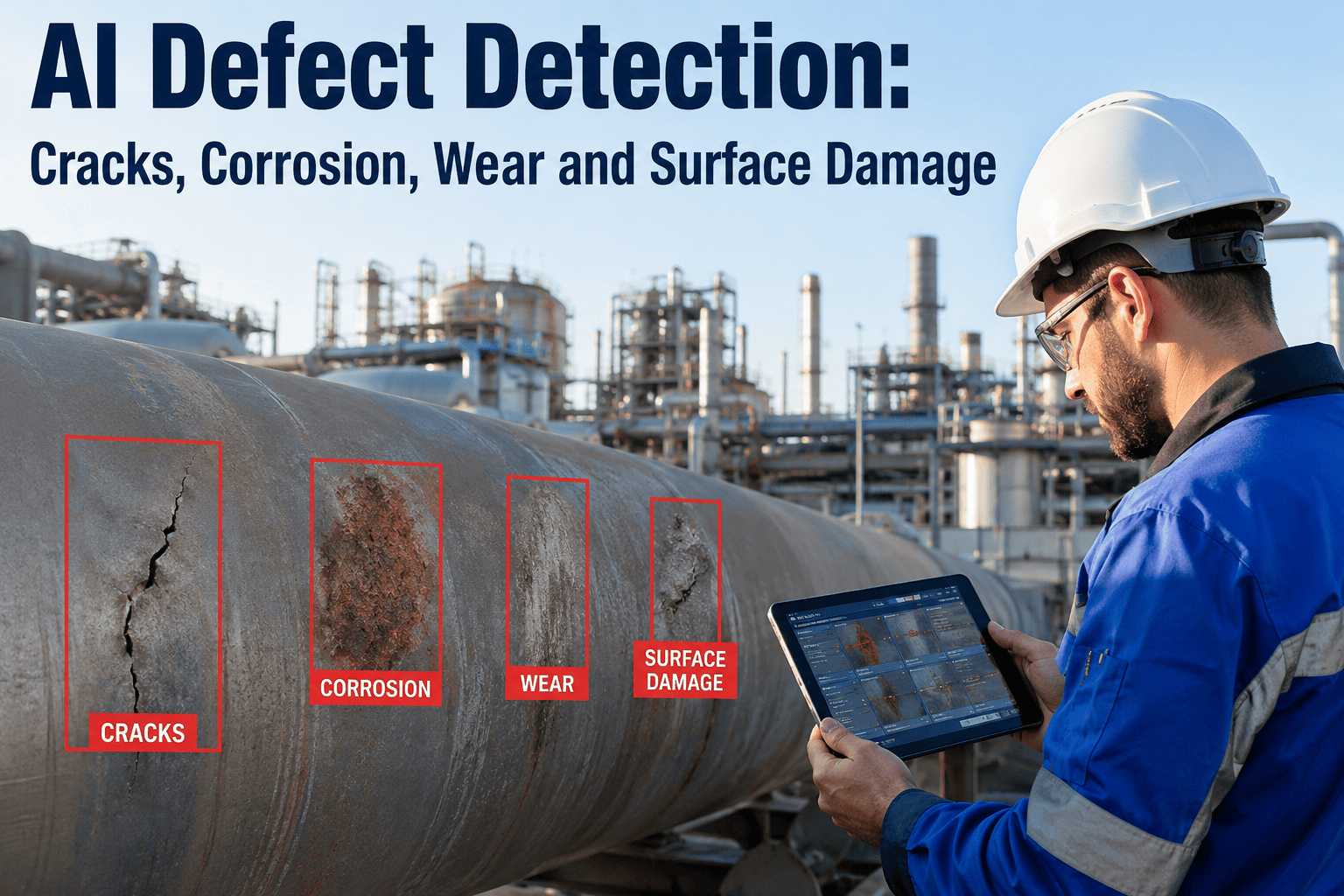
iFactory's AI vision camera platform applies deep learning models trained on millions of industrial surface images across corrosion types, materials, and environmental conditions specific to oil, gas, and mining operations. The platform identifies the full spectrum of surface degradation indicators — from early rust bloom and paint blistering to active pitting, crevice corrosion, and galvanic attack at dissimilar metal interfaces — and classifies each detected anomaly by type, severity, and rate of change over successive observation intervals. This is not edge-detection image processing: it is machine learning inference that distinguishes genuine early-stage corrosion from surface contamination, shadow variation, and normal surface ageing at the pixel level, with detection accuracy sufficient to support maintenance decision-making without generating the false positive rate that renders conventional automated inspection systems operationally unacceptable. Book a Demo to see the detection accuracy benchmarks across refinery, offshore, and mining environments.
AI Corrosion Detection Applications Across Oil, Gas, and Mining
Corrosion risk is not uniform across an industrial facility — it concentrates in specific asset classes, environmental exposure zones, and process interface points where temperature, moisture, chemical contact, and mechanical stress combine to accelerate degradation. iFactory's AI vision camera platform is deployed across the full range of corrosion-critical assets in oil, gas, and mining operations, with detection models calibrated for the specific surface types, corrosion mechanisms, and environmental conditions that characterise each application. Learn more at iFactory AI Vision Camera or explore the application areas below.
External corrosion on above-ground pipeline segments, riser supports, and clamp interfaces is monitored continuously by fixed cameras covering high-risk spans. iFactory detects coating disbondment, cathodic protection failure indicators, and active corrosion at weld seams and mechanical joints — the locations where external pipeline corrosion initiates most frequently. Degradation rate tracking provides the data input for remaining wall thickness estimation that previously required dedicated ultrasonic inspection crews and access scaffolding.
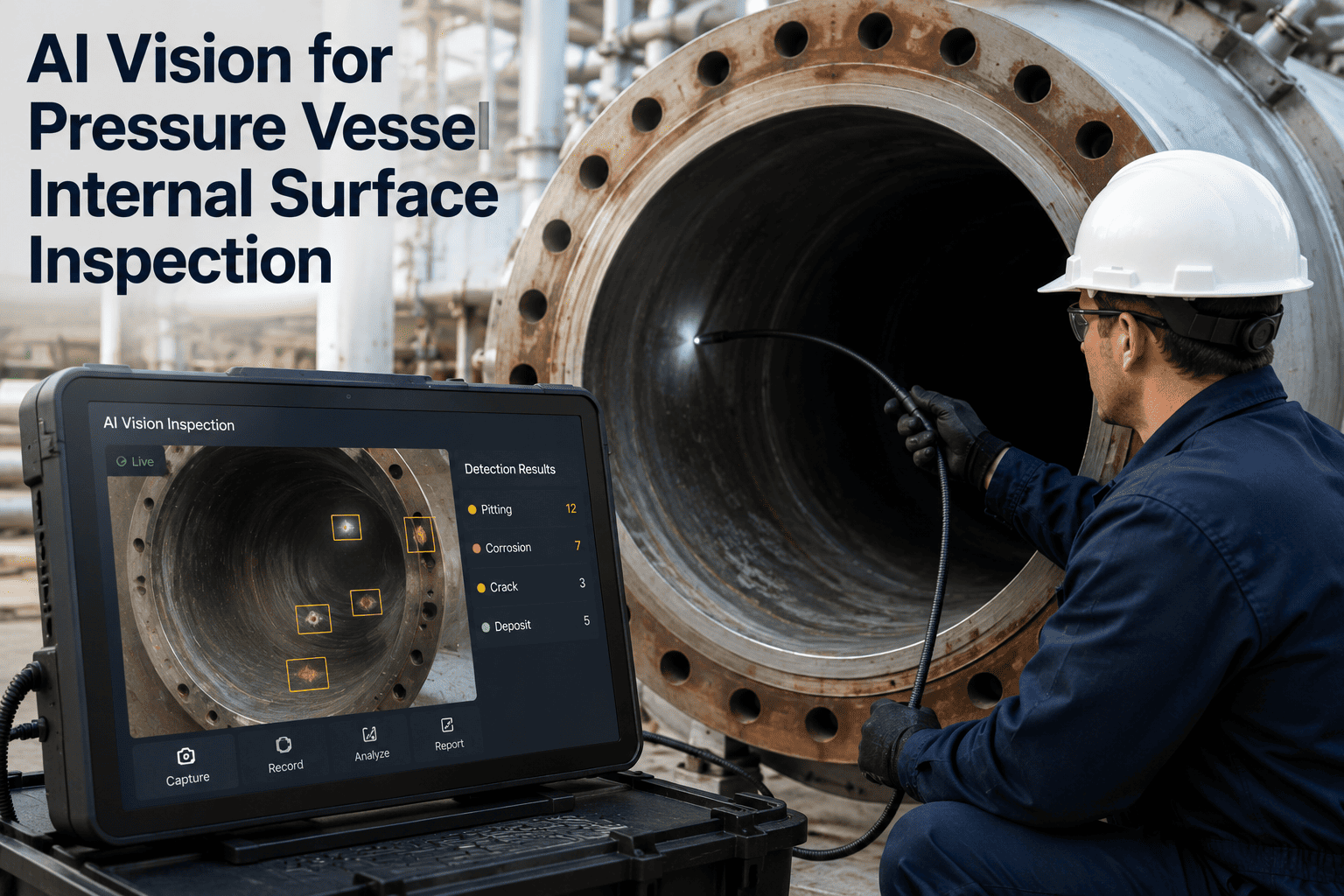
Tank shell, roof, and nozzle corrosion monitoring using fixed camera arrays covering the full external surface. iFactory identifies early blistering and rust bleed-through that indicate coating failure, allowing recoating to be scheduled before substrate corrosion progresses to measurable wall loss. For pressure vessels subject to API 510 inspection requirements, iFactory's continuous visual monitoring record supplements formal inspection intervals with documented surface condition evidence between inspection dates.
Offshore structural steel, grating, handrails, and equipment skids operate in one of the most aggressive corrosion environments — continuous salt spray, high humidity, and temperature cycling that degrades protective coatings at rates multiple times faster than onshore installations. Fixed cameras monitor splash zone areas, deck plate surfaces, and structural node points continuously, providing the real-time surface condition data that offshore inspection programs require but cannot achieve with conventional diver or rope-access inspection cycles.
Ore processing plants, concentrate pipelines, and mine structural steelwork are exposed to acidic process streams, abrasive slurries, and atmospheric corrosion that combine to produce complex, multi-mechanism degradation. iFactory's AI models are trained on mining-specific corrosion patterns — including underpaint corrosion on structural steel in acidic mine atmospheres and erosion-corrosion signatures on slurry-handling equipment — enabling accurate detection in conditions where standard models underpredict actual degradation rates.
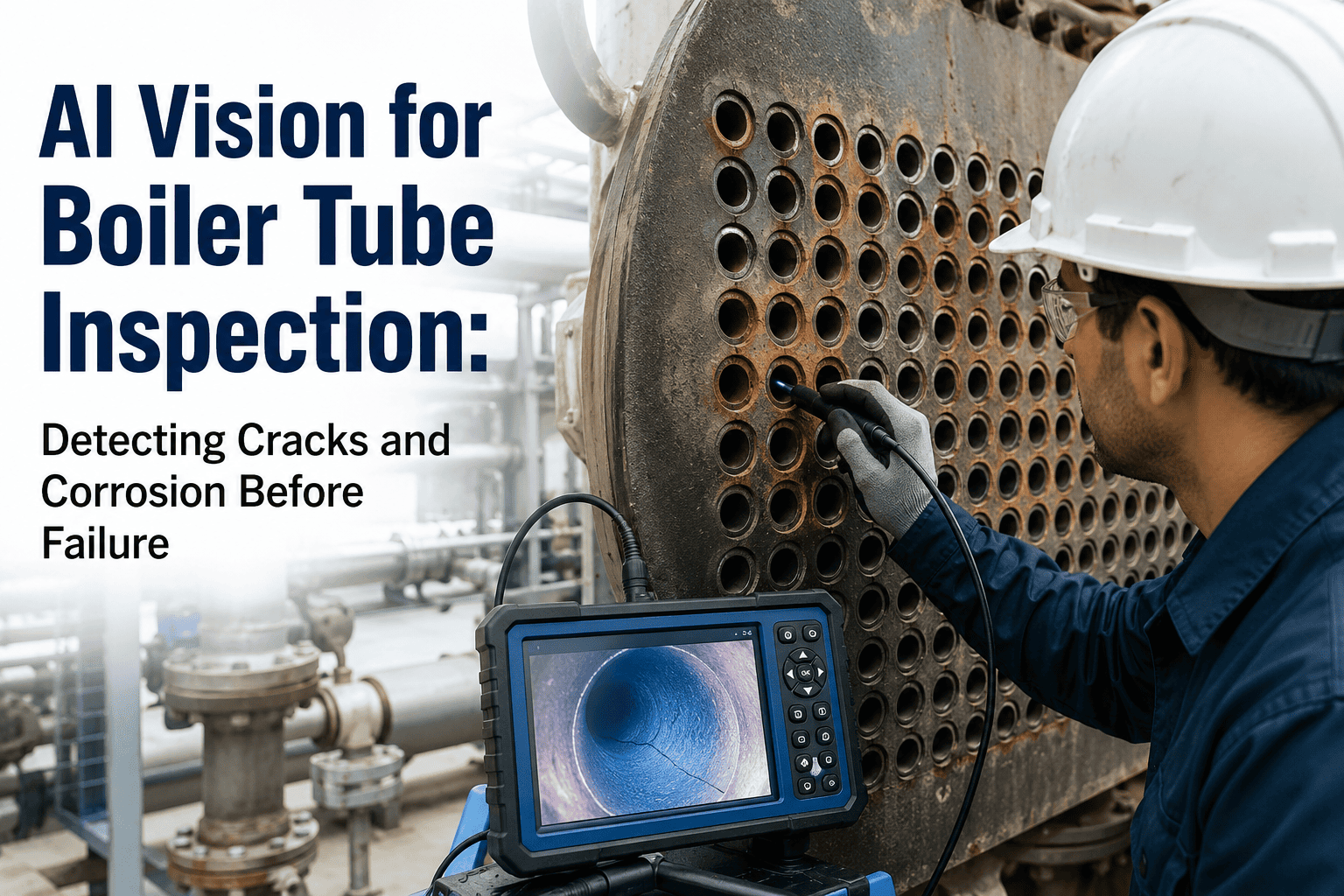
External shell corrosion on heat exchangers, tube bundle end plates, and fired heater casing is monitored during normal operation — eliminating the need to take the unit out of service for visual condition assessment. High-temperature-resistant camera housings maintain imaging capability on assets with elevated external surface temperatures, while the AI model distinguishes heat-induced surface discolouration from corrosion initiation to avoid false positive alerts triggering unnecessary inspection response.
High-elevation assets including flare stacks, cooling towers, and structural towers present extreme access difficulty for conventional inspection — requiring rope access, scaffolding, or drone inspection that is costly, weather-dependent, and episodic. Fixed AI vision cameras with high-resolution telephoto optics provide continuous surface monitoring of elevated structures at a fraction of access inspection cost, replacing months-long intervals between conventional elevated structure campaigns with continuous automated coverage.
Integration with Asset Integrity Management and CMMS Systems
AI vision corrosion detection delivers its full operational value only when the findings it generates are integrated into the asset integrity management and maintenance planning systems that drive operational decisions. iFactory's platform integrates natively with the major CMMS and EAM platforms used in oil, gas, and mining operations — including SAP PM, IBM Maximo, Infor EAM, and AssetWise — automatically creating inspection work orders for detected anomalies that meet the configured severity threshold, attaching annotated images and severity classifications to the work order record, and updating the asset's corrosion history in the integrity management database without requiring manual data entry or transfer. Book a Demo to see the CMMS integration workflow for your specific maintenance platform.
| Asset Class | iFactory Monitoring Parameters | Corrosion Mechanism Detected | Alert Lead Time | Estimated Avoided Cost / Event |
|---|---|---|---|---|
| Above-Ground Pipeline Segments | Coating condition, rust bloom area, disbondment extent, weld seam discolouration | External atmospheric corrosion, galvanic attack at supports | 14–60 days | $180,000–$450,000 |
| Storage Tank Shell and Roof | Coating blistering, rust bleed-through, surface discolouration progression rate | Atmospheric corrosion, crevice corrosion at seams | 21–90 days | $95,000–$280,000 |
| Offshore Structural Steel | Splash zone coating condition, grating surface degradation, structural node indicators | Salt spray corrosion, crevice corrosion under marine growth | 7–30 days | $320,000–$900,000 |
| Mining Process Equipment | Slurry contact surface wear-corrosion signature, structural steel coating failure indicators | Erosion-corrosion, acidic atmospheric corrosion | 10–45 days | $140,000–$380,000 |
| Heat Exchangers | Shell external condition, nozzle-pipe interface corrosion, insulation damage indicators | Corrosion under insulation (CUI), atmospheric corrosion | 14–60 days | $75,000–$220,000 |
| Flare Stacks and Elevated Structures | High-elevation surface condition via telephoto imaging, structural node visual status | Atmospheric corrosion, heat-induced coating degradation | 30–120 days | $60,000–$190,000 |
Frequently Asked Questions: AI Vision Cameras for Corrosion Detection
Conclusion: The Inspection Model That Matches the Scale of the Problem
The corrosion inspection model that oil, gas, and mining operations have operated under for decades — periodic visual inspection, thickness measurement sampling, and reactive maintenance after defect identification — was designed around the limitations of human inspection: finite labour, safety-constrained access, and the economic impossibility of continuous manual surveillance across large asset inventories. Those limitations no longer define what is achievable. AI vision cameras make continuous, automated surface monitoring economically viable across the full corrosion-critical asset base of an industrial facility, detecting degradation at the earliest visible stage, tracking progression in real time, and delivering prioritised maintenance recommendations directly into the systems where operational decisions are made.
The result is not just a better inspection programme — it is a fundamentally different relationship between an operation and its assets. One where corrosion events are identified and addressed in days rather than discovered at an advanced stage months after initiation. One where the true condition of every monitored asset is known continuously rather than inferred from the last inspection record. And one where the maintenance cost of corrosion management declines over time as the platform's data accumulates and the operation's understanding of its specific corrosion risks deepens into precision that changes how infrastructure investment decisions are made. Book a Demo to see what continuous AI corrosion monitoring would look like across your facility's most critical assets.