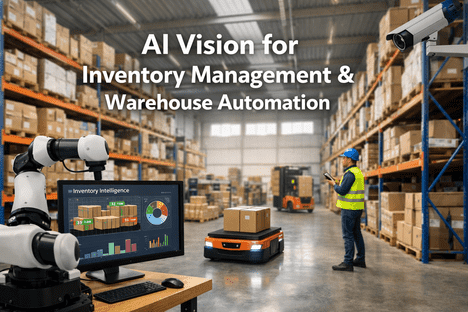
Manufacturing operations across automotive, electronics, pharmaceuticals, and precision machining are under mounting pressure to increase throughput, reduce defect rates, and ensure worker safety on shared production floors. Traditional robotic systems, constrained to fixed programmed paths without real-time environmental awareness, are reaching their operational ceiling — they cannot adapt to part variation, positional drift, or the unstructured presence of human workers without costly manual reprogramming and production halts. AI vision cameras integrated into robotic guidance systems and collaborative robot (cobot) platforms represent the decisive technological shift: enabling robots to see, interpret, and respond to dynamic production environments with adaptive intelligence that converts them from rigid tools into precision-guided, safety-aware production assets. ifactory's AI vision camera platform delivers this intelligence layer across pick-and-place operations, assembly lines, welding cells, and cobot deployments — giving manufacturers the real-time visual guidance infrastructure that extracts measurable performance from existing and new robotic investments.
AI VISION · ROBOTICS GUIDANCE · COBOT SAFETY
Are Your Robots Operating Without Real-Time Visual Intelligence?
Deploy ifactory's AI vision camera platform to guide robotic arms, enable safe human-robot collaboration, and deliver inline inspection across your most critical production cells — without reprogramming or line shutdowns.
±0.1mm
Robotic Positioning Accuracy
99.4%
Defect Detection Rate
100%
Cobot Safety Zone Coverage
01 / The Challenge
Fixed-Path Robots and Blind Automation: The Compounding Cost of Vision-Less Manufacturing
Robotic automation without integrated visual intelligence operates on a fundamentally flawed assumption — that every part arrives in exactly the right position, at exactly the right time, with exactly the right orientation. In practice, this assumption fails hundreds of times per shift. A component that shifts 3mm on a conveyor, a bin containing randomly oriented fasteners, or a weld seam that deviates from its nominal path are routine production realities that blind robotic systems cannot handle without generating defective assemblies, triggering fault stops, or requiring human intervention. The consequences compound: unplanned downtime, scrap rates that erode margins, and safety incidents in collaborative work cells where robots operating without real-time visual awareness cannot distinguish between a product and a person. For manufacturers scaling robotic density on mixed-model production lines, the absence of AI vision is not a minor operational inefficiency — it is a structural ceiling on productivity, quality, and workforce safety.
3–8mm
Positional drift causing assembly rejects
Without real-time visual feedback, robotic arms operating at high cycle rates accumulate positional errors from tool wear, thermal expansion, and part presentation variance. A 3–8mm cumulative drift at the end effector translates directly into assembly failures, weld defects, or packaging misalignment that requires costly manual rework or full-part scrapping.
22%
OEE loss from unplanned robotic fault stops
Fixed-path robots generate fault stops when encountered part positions fall outside their programmed tolerance window. These fault conditions — caused by bin variation, fixture wear, or upstream process drift — create an average OEE loss of 22% across high-mix robotic assembly cells, directly eroding the return on automation capital investment.
4.1%
Inline defect escape rate without vision inspection
End-of-line quality inspection cannot catch defects created at individual assembly stations. Without inline AI vision, defect escape rates of 4% or higher are typical — meaning non-conforming assemblies routinely reach downstream stations, compounding rework costs and, in regulated industries like automotive and pharmaceuticals, triggering costly audit failures.
Zero
Cobot safety awareness without vision intelligence
Collaborative robots operating without real-time visual awareness of human workers rely entirely on force-limit stops — a reactive safety mechanism that only engages after physical contact has occurred. AI vision-based safety zone monitoring provides proactive human detection and adaptive speed reduction, preventing human-robot contact events before they occur rather than responding to them after the fact.
02 / The Solution
ifactory AI Vision Camera Platform: Real-Time Guidance, Inspection, and Safety Intelligence for Robotic Cells
ifactory's AI vision camera platform is built on a unified edge-computing architecture that integrates high-resolution 2D and 3D imaging, deep learning inference, and real-time robotic communication protocols — enabling industrial robots and collaborative arms to perceive and respond to their physical environment within milliseconds. The platform is OEM-agnostic and compatible with FANUC, KUKA, Universal Robots, ABB, and Yaskawa control systems, designed to be deployed alongside existing robotic infrastructure without line modifications or production downtime. To understand how ifactory configures AI vision guidance for your specific robotic cell, Book a Demo with ifactory's robotics vision engineering team.
GUIDE
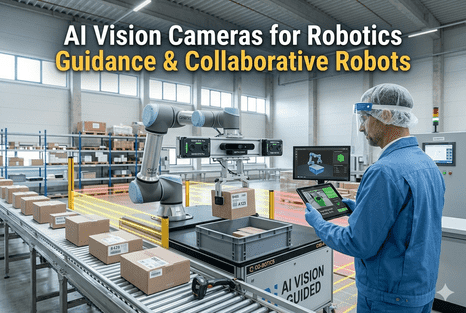
6-DOF robotic arm guidance with AI pose estimation uses structured light and stereo imaging to compute real-time part position, orientation, and depth — enabling pick-and-place robots to locate randomly positioned components in bins, fixtures, and on conveyors with sub-millimeter precision. Guidance corrections are transmitted to the robot controller within 80ms, enabling continuous adaptive alignment without cycle time penalty.
INSPECT
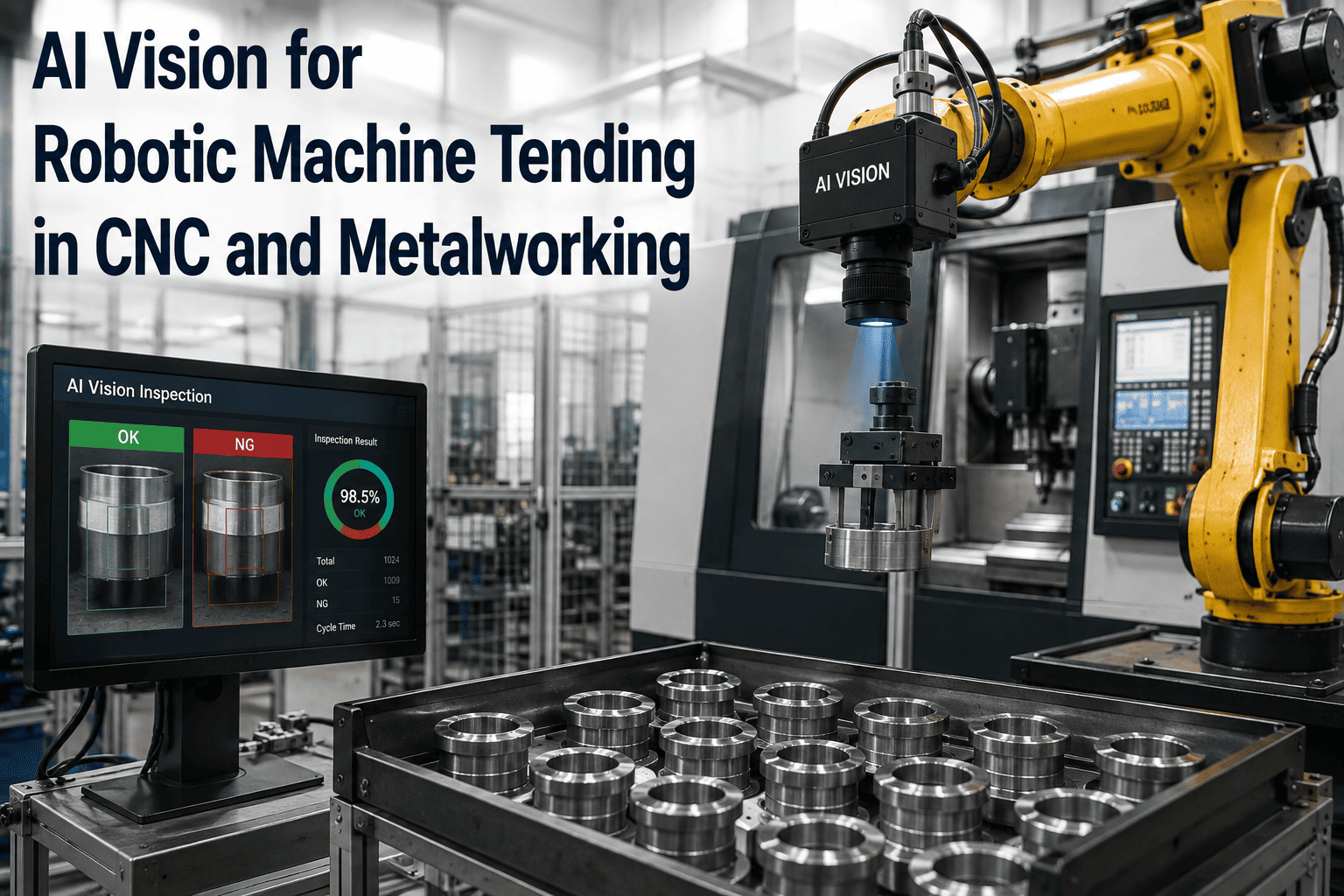
Inline AI visual inspection integrated directly into the robotic cell performs 100% part inspection at full production speed — detecting surface defects, dimensional non-conformance, incorrect assembly, and label or marking errors without a separate downstream inspection station. The AI model is trained on customer-specific defect libraries and achieves detection rates exceeding 99.4% across complex assembly geometries.
PROTECT
Cobot safety zone monitoring with real-time human detection uses dedicated AI vision processing to classify humans and objects within the robot's shared workspace continuously. When a human worker enters a defined proximity zone, the platform signals the cobot controller to reduce speed or pause within 90ms — proactively preventing contact events and meeting ISO/TS 15066 collaborative operation safety requirements without the need for physical guarding infrastructure.
OPTIMIZE
Weld seam tracking and real-time path correction for arc welding robots uses AI vision to detect seam position deviations caused by joint fit-up variation, thermal distortion, or fixture wear — and transmits corrective path adjustments to the welding robot controller in-cycle. This eliminates the need for precision fixtures and reduces weld rework rates by up to 74% on structural and cosmetic weld applications across carbon steel, stainless, and aluminum assemblies.
"The transition from fixed-path robotics to AI vision-guided operation is not incremental — it is the difference between a robot that executes a program and a robot that understands its environment. For manufacturers building out cobot-dense mixed-model lines, that distinction determines whether your automation investment scales or stagnates."
03 / Performance Benchmarks
Measured Performance Outcomes Across AI Vision-Guided Robotic Deployments
The following benchmarks reflect measured results from ifactory AI vision camera deployments across precision assembly, bin-picking, welding, and collaborative robot applications in active manufacturing facilities across automotive, electronics, and pharmaceutical production environments.
| Performance Metric |
Without AI Vision |
With ifactory AI Vision |
Net Improvement |
| Robotic positioning accuracy (end effector) |
±3–8mm (drift-dependent) |
±0.1–0.3mm (vision-corrected) |
95%+ accuracy gain |
| Bin-picking first-attempt success rate |
~71% success |
97%+ success |
+26 percentage points |
| Inline defect detection rate |
~62% (manual spot check) |
99.4% (100% inline AI) |
+37 percentage points |
| Robotic cell OEE (unplanned fault stops) |
~77% effective rate |
96%+ effective rate |
+19 percentage points |
| Weld rework rate (seam tracking enabled) |
~8.2% rework rate |
~2.1% rework rate |
−74% reduction |
| Cobot human proximity response time |
Force-limit stop only (contact required) |
<90ms (pre-contact visual detection) |
Proactive safety |
| SKU changeover and robot reprogramming time |
4–8 hours per product changeover |
15–40 minutes (AI model selection) |
−85% changeover time |
| Scrap and rework cost per production run |
Baseline (facility-specific) |
−35 to −60% reduction |
Significant cost avoidance |
±0.1mm
Positioning Accuracy
Zero
Contact Safety Events
See ifactory AI Vision Guidance Working in a Live Robotic Cell
Get a live walkthrough of 6-DOF pose estimation, inline defect detection, and ISO-compliant cobot safety zone monitoring configured for your specific robot brand and production cell type.
04 / Key Analysis
Why AI Vision Guidance Outperforms Every Alternative in High-Mix Robotic Production
01
Pose estimation enables bin-picking at production speed where mechanical fixturing cannot. Traditional approaches to part randomness — precision fixtures, dedicated feeders, and vision-less mechanical locating — add significant capital cost and eliminate the flexibility needed for high-mix production. AI vision-based 3D pose estimation solves the bin-picking and random-orientation problem without mechanical intervention, identifying part position and orientation in three-dimensional space within 80ms and transmitting guidance corrections to the robot controller in real time. For facilities running 20 or more active SKUs on shared robotic cells, this adaptive flexibility is the determining factor in whether automation investment generates a positive ROI or creates a new operational rigidity.
02
Inline AI inspection at the robotic cell eliminates the defect propagation problem. The conventional end-of-line inspection model — catching defects after all value-added operations are complete — means that a non-conformance introduced at station three accumulates labor and material costs through stations four, five, and six before it is detected. AI vision inspection integrated at each robotic station detects defects at the precise point of creation, stopping the propagation of non-conforming assemblies through the production flow and reducing the total cost of quality by 35–60% per production run across mixed-model assembly environments.
03
Proactive cobot safety monitoring closes the gap between ISO compliance and operational productivity. ISO/TS 15066 defines speed and separation monitoring requirements for collaborative robot operations, but most cobot deployments meet these requirements only through permanent conservative speed limits that dramatically reduce throughput. ifactory's AI vision safety monitoring enables speed and separation management based on real-time visual measurement of human proximity — allowing cobots to run at full rated speed when the zone is clear and reduce speed precisely proportional to worker approach distance, without the permanent productivity penalty of fixed speed restrictions that undercut the economic case for collaborative automation.
04
AI model-based changeover replaces multi-hour reprogramming with a 15-minute configuration selection. The hidden cost of robotic automation in high-mix environments is changeover time between SKUs — historically requiring manual robot reprogramming, fixture swaps, and vision system recalibration consuming 4–8 hours per product transition. ifactory's AI vision platform stores trained models for every registered product variant and applies them at changeover via a unified dashboard interface, reducing SKU transition time to under 40 minutes and making automated mixed-model production economically viable at annual volumes below 50,000 units per SKU. To see a live changeover demonstration on a configured production cell, Book a Demo with the ifactory robotics engineering team.
05 / Applications
AI Vision Camera Use Cases Across Industrial Robotic Platforms
Robotic Bin-Picking and Depalletizing
ifactory's 3D AI vision system identifies the position, orientation, and depth of randomly stacked components in bins or on pallets — enabling robotic arms to plan and execute collision-free grasp trajectories for each individual part. This eliminates manual pre-sorting, reduces bin-change labor requirements, and enables fully automated inbound material handling for high-mix assembly cells running diverse component geometries.
Arc Welding Seam Tracking
Real-time AI vision seam tracking detects deviations in joint fit-up, root gap, and seam position during the live welding process and transmits corrective path adjustments to the welding robot controller in-cycle. This eliminates the need for tight-tolerance joint preparation and high-precision fixtures, reducing welding cell setup cost and rework rates by up to 74% on structural and cosmetic weld applications in carbon steel, stainless, and aluminum fabrication.
Electronics PCB Assembly and Inspection
AI vision guidance enables robotic placement systems to locate fiducial markers, compensate for PCB positional variance, and verify component placement accuracy at full production speed. Inline post-placement inspection confirms correct component orientation, lead coplanarity, and solder paste coverage — reducing defect escape rates and eliminating the need for separate automated optical inspection stations in many cell configurations.
Pharmaceutical and Medical Device Handling
In regulated pharmaceutical environments, AI vision-guided cobots perform vial, syringe, and blister pack handling with the sterile-area compatibility and traceability documentation required for FDA 21 CFR Part 11 and GMP compliance. The ifactory platform records every vision inspection result with a time-stamped, immutable digital audit trail — supporting batch release documentation without manual review burden or paper-based log reconciliation.
06 / FAQ
Frequently Asked Questions
Which robot brands and control systems is ifactory AI vision compatible with?
ifactory's AI vision camera platform is OEM-agnostic and supports communication with FANUC, KUKA, Universal Robots (UR), ABB, Yaskawa/Motoman, and Kawasaki robot controllers via standard industrial protocols including EtherNet/IP, PROFINET, and proprietary robot-native interfaces. Integration is designed to work alongside existing robot programs without requiring full cell reprogramming or hardware replacement.
How does ifactory AI vision enable safe human-robot collaboration in cobot cells?
ifactory's cobot safety vision module uses dedicated AI processing to monitor the shared workspace in real time, classifying humans and objects and computing separation distance continuously. When a human worker enters a defined proximity zone, the platform sends a speed reduction or pause signal to the cobot controller within 90ms — before any physical contact occurs — meeting ISO/TS 15066 speed and separation monitoring requirements without the need for physical guarding infrastructure.
What is the positioning accuracy of ifactory's AI vision guidance for robotic arms?
Under controlled production conditions, ifactory's AI vision guidance system delivers robotic end-effector positioning accuracy of ±0.1–0.3mm in 6 degrees of freedom. Actual accuracy varies based on camera configuration (2D vs. 3D stereo), working distance, and part surface reflectivity. Precision calibration protocols are included in every deployment and verified at commissioning before production handoff.
How quickly can ifactory AI vision be deployed on an existing robotic cell?
A typical single-cell AI vision deployment — including hardware installation, AI model training on customer part libraries, and robot controller integration — is completed in 5–15 business days depending on cell complexity and the number of product SKUs to be supported. Multi-cell facility deployments are phased to avoid production disruption, with each cell going live sequentially and independently.
Does ifactory's platform support both robotic guidance and inline quality inspection simultaneously?
Yes. ifactory AI vision cameras perform both robotic guidance and inline quality inspection within the same platform and processing architecture. This eliminates the need for separate inspection stations, reduces capital expenditure, and provides a single unified data stream for both production control and quality management — with every inspection result logged to the ifactory analytics dashboard in real time for traceability and reporting.
How does ifactory handle AI vision changeovers between different product SKUs?
ifactory stores trained AI vision models for each registered product SKU on the platform. During changeover, the operator selects the new product configuration from the dashboard interface, which loads the corresponding vision model and guidance parameters within minutes — replacing the 4–8 hour manual reprogramming cycle that traditionally makes high-mix robotic automation economically impractical at volumes below 100,000 annual units per SKU.
AI Vision Guidance for Your Robots. Live in Days, Not Months.
See how ifactory's AI vision camera platform enables precision robotic guidance, inline defect inspection, and ISO-compliant cobot safety monitoring across your existing robotic cell infrastructure — configured for your robot brand, your parts, and your production environment.