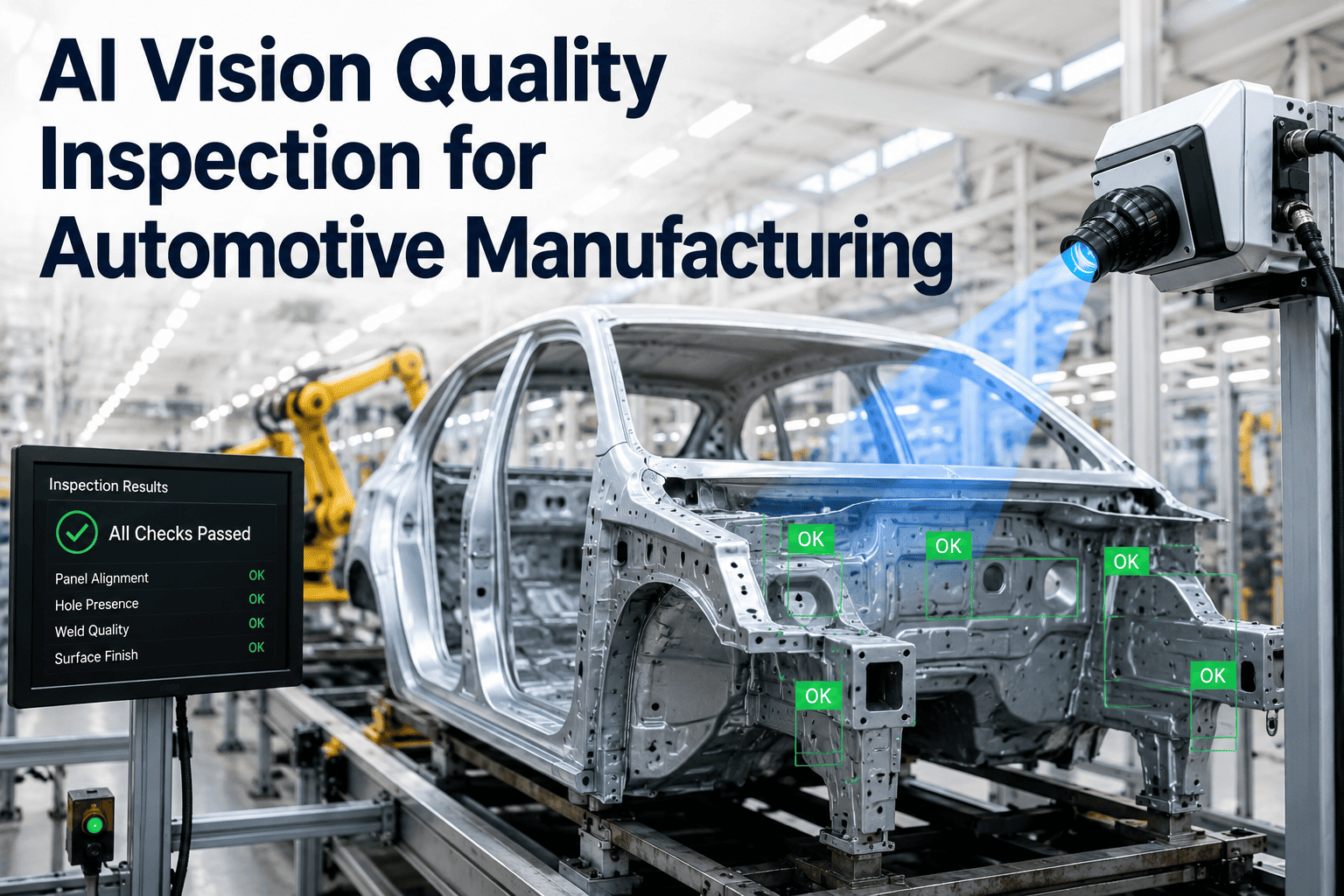
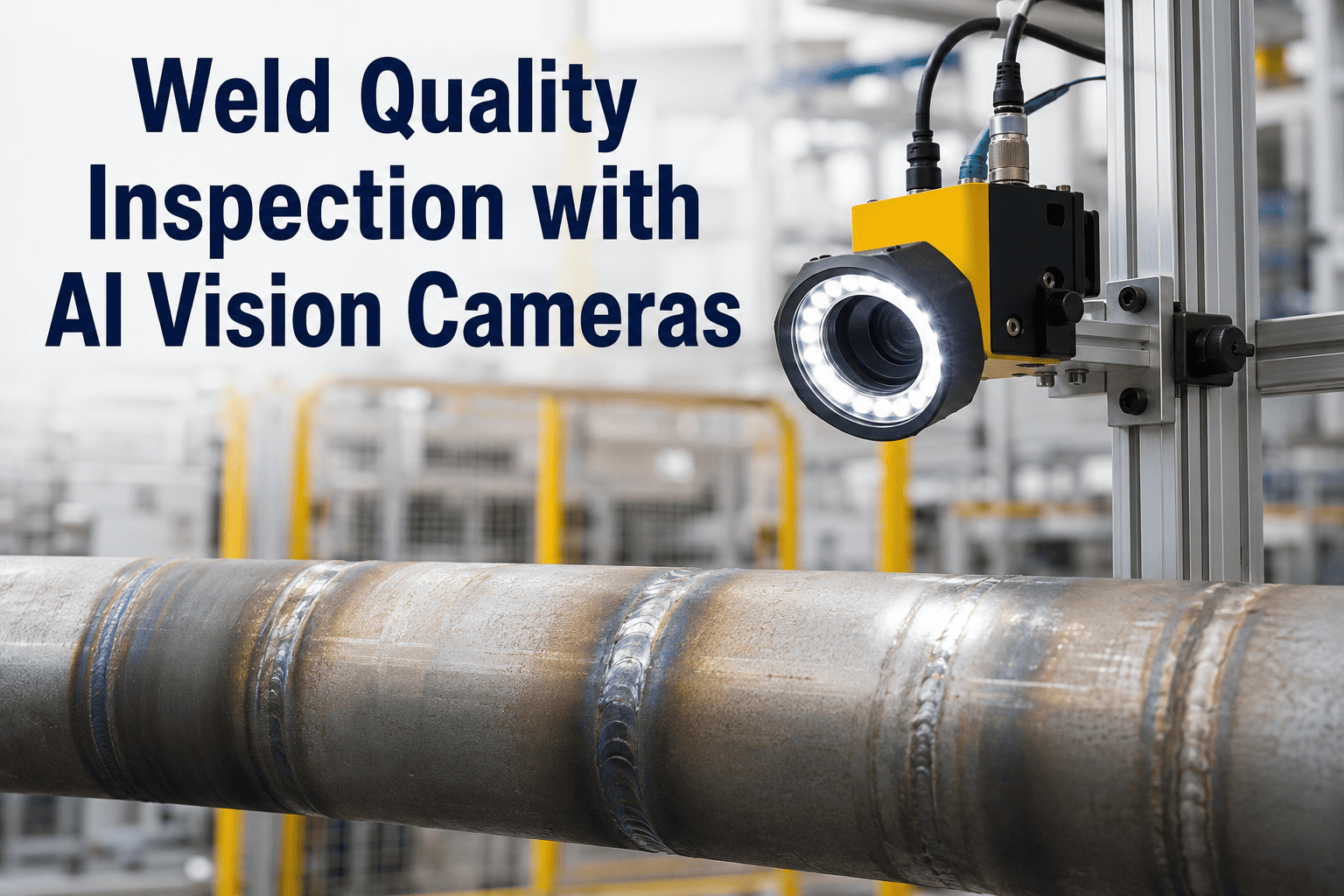
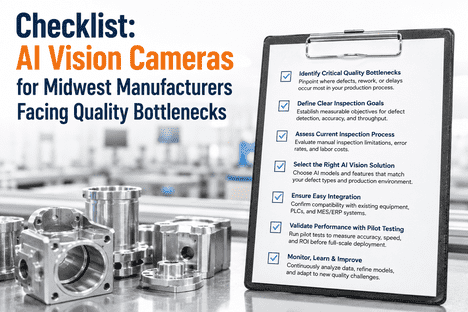
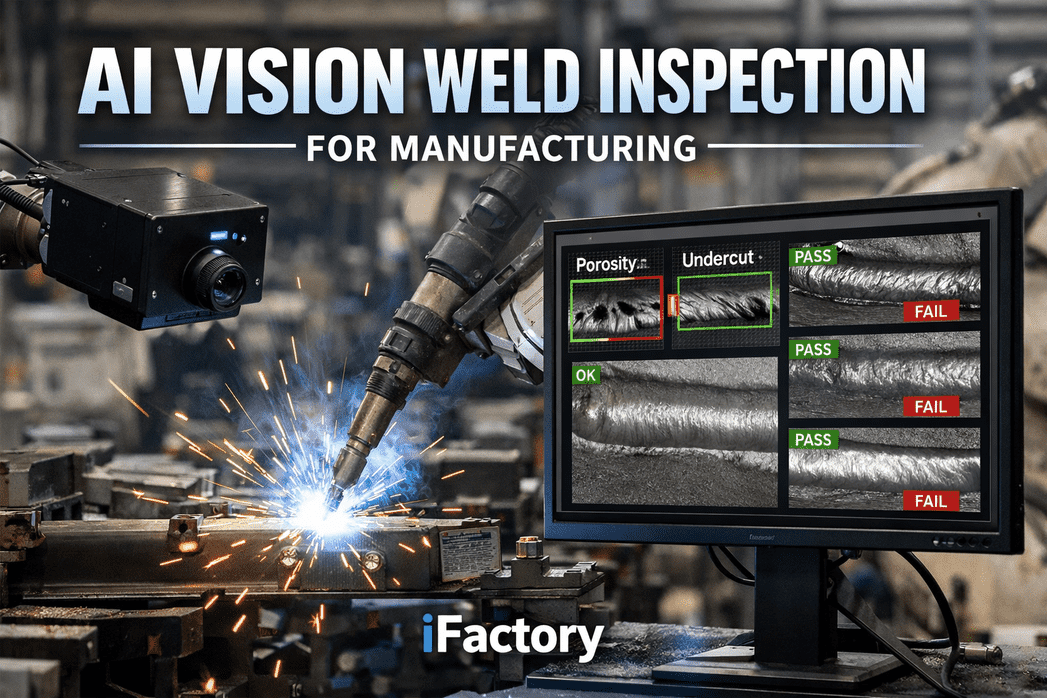
The Midwest manufacturing sector is in the middle of its most significant resurgence in a generation — and it is arriving with a quality control problem that manual inspection methods are structurally incapable of solving. U.S. manufacturing spend surged 183% between 2020 and 2024, with the Midwest leading reshoring initiatives across automotive, steel, food processing, plastics, and industrial components. That growth is accelerating production volumes faster than quality teams can scale. The result is a widening inspection gap: more parts, more lines, more shift hours, and fewer experienced inspectors available to cover them at the speed modern throughput demands. iFactory's AI Vision Camera platform addresses this directly — delivering real-time defect detection, automated visual inspection, and safety compliance monitoring at 99%+ accuracy, without the throughput bottleneck that human inspection creates. For a conversation about deploying AI vision inspection at your Midwest facility, contact our support team.
Is Your Midwest Plant Ready for AI-Powered Visual Inspection?
iFactory's AI Vision Camera delivers real-time defect detection, crack and corrosion identification, and PPE safety compliance monitoring — reducing manual inspection time by up to 80% and catching defects that human inspectors miss at speed.
The Manufacturing Resurgence Is Real — and It Is Outpacing Legacy Quality Infrastructure
The Midwest, once written off as the Rust Belt, is now the geographic center of America's industrial comeback. Reshoring mandates, federal CHIPS Act and IRA incentives, and shifting global supply chain risk calculations are driving billions in new facility investment across Ohio, Michigan, Illinois, Indiana, Wisconsin, and Minnesota. Midwestern states are outpacing national manufacturing growth averages year over year. But the production systems coming online are running faster, producing tighter tolerances, and serving customers with lower defect acceptance thresholds than the region's existing quality infrastructure was designed to handle. The inspection bottleneck — the gap between what lines can produce and what quality teams can verify — is where the resurgence creates its most urgent operational risk.
Manufacturing Spend Growth
U.S. manufacturing spend surge between 2020 and 2024, concentrated in Midwest and Southeast reshoring initiatives — driving production volumes that manual inspection systems cannot scale to match.
Year-Over-Year Growth
Midwestern manufacturing industry growth rate per U.S. Census Bureau data, outpacing national averages and intensifying pressure on quality teams managing higher throughput with static headcount.
Inspection Time Reduction
Reduction in manual inspection time achieved by facilities deploying iFactory's AI Vision Camera — freeing quality personnel to focus on process improvement rather than routine visual verification cycles.
Detection Accuracy
AI vision detection accuracy for defects including cracks, corrosion, surface anomalies, dimensional variance, and assembly errors — exceeding the consistency of human inspection, particularly on high-speed lines and fatigue-sensitive shifts.
Where Midwest Manufacturers Are Losing Quality Control Ground: The Five Primary Failure Pathways
Quality failures in Midwest manufacturing do not originate from a single cause — they distribute across five structural gaps that manual inspection methods cannot close as throughput scales. Each pathway generates independent cost exposure before combining into the compound rework, recall, and customer-facing quality risk that characterizes a facility running faster than its inspection capability allows.
| Quality Risk Pathway | Primary Impact | Typical Cost Range | Root Cause | iFactory AI Vision Capability |
|---|---|---|---|---|
| Surface Defect Escape | Customer returns, warranty claims | $50K–$2M per recall event | Manual inspector fatigue and speed limits | Real-Time Defect Detection |
| Crack and Corrosion Propagation | Safety risk, unplanned downtime | $100K–$5M per failure | Micro-defects invisible to naked eye at speed | AI Crack & Corrosion Detection |
| Assembly Verification Gaps | Rework, downstream line stoppages | $30K–$800K per incident | Manual spot-check coverage limits | Automated Visual Assembly Verification |
| PPE and Safety Non-Compliance | OSHA exposure, injury liability | $15K–$500K per violation | Inconsistent floor-level compliance monitoring | Real-Time PPE Compliance Monitoring |
| Leak and Contamination Detection Delays | Product quality, regulatory compliance | $80K–$1.5M per event | Visual inspection intervals too infrequent | Continuous AI Leak Detection |
Manual Visual Inspection vs. AI Vision Camera: The Structural Difference for Midwest Manufacturers
The core limitation of manual inspection is not effort — it is biological consistency. Human inspectors cannot maintain the same detection sensitivity at 4 AM as at 10 AM, cannot simultaneously monitor multiple product surfaces at high conveyor speeds, and cannot log every inspection result in real time for regulatory traceability. AI Vision Camera inspection removes all three constraints simultaneously, creating a quality capability that does not degrade with shift length, throughput rate, or product complexity.
- Detection accuracy drops 15–30% after four consecutive inspection hours due to fatigue
- Inspection coverage limited to sampled units — full 100% inspection is not economically viable with human labor
- Micro-crack, micro-corrosion, and sub-millimeter surface defects require specialized magnification setup that slows throughput
- PPE compliance monitoring requires dedicated safety personnel — coverage gaps during high-volume shifts
- No real-time data capture — quality records created manually after the fact, creating traceability gaps
- Inspector headcount scales linearly with production volume — cost structure incompatible with reshoring growth targets
- Night shift and weekend inspection quality often lower due to staffing constraints
- Defect pattern analysis requires manual data aggregation — corrective action decisions delayed by days or weeks
- 99%+ detection accuracy maintained 24/7 regardless of shift duration, throughput rate, or product complexity
- 100% of units inspected at full line speed — no sampling compromise, no coverage gap
- Sub-millimeter crack, corrosion, surface anomaly, and dimensional variance detection at conveyor speed
- Automated PPE compliance monitoring across all monitored zones with real-time alert on violation
- Every inspection logged automatically with timestamp, image, defect classification, and disposition — full traceability
- Inspection cost does not scale with production volume — one deployment covers multiple lines simultaneously
- Detection consistency identical on first shift, third shift, and weekend production runs
- Real-time defect pattern dashboards enable corrective action decisions within the same shift the data is captured
Midwest manufacturers who have deployed AI vision inspection report 30–50% reductions in customer-facing defect escape rates and 40–60% reductions in internal rework costs within the first year of operation. Book a Demo to see how iFactory's AI Vision Camera applies to your specific product type and line configuration.
Stop Letting Defects Escape to Your Customers. AI Vision Catches What Manual Inspection Misses.
iFactory's AI Vision Camera delivers 99%+ accuracy defect detection at full line speed — covering cracks, corrosion, surface anomalies, assembly errors, and PPE compliance monitoring across your Midwest facility, 24 hours a day.
What iFactory's AI Vision Camera Platform Delivers for Midwest Manufacturers
iFactory's AI Vision Camera is built specifically for industrial manufacturing environments — integrating with existing ONVIF-compatible cameras, CMMS work order systems, and SCADA historians without requiring a full infrastructure replacement. The platform delivers automated inspection across three operational dimensions that manual processes cannot address at scale: product quality, equipment condition, and workforce safety compliance.
Visual Defect Detection & Quality Inspection
- Real-time detection of cracks, corrosion, surface scratches, pitting, and contamination at full conveyor speed
- Sub-millimeter defect identification that exceeds human visual inspection capability at production throughput rates
- 100% unit coverage inspection — eliminates the sampling gap that allows defects to reach downstream operations or customers
- Automated defect classification and severity grading with immediate line alert or hold trigger
- Inspection result logging with timestamped image capture for full quality traceability and regulatory documentation
Equipment Condition & Leak Monitoring
- Continuous visual monitoring of equipment surfaces, pipe runs, and seal points for early leak detection
- Thermal imaging integration for heat signature anomaly detection before equipment failure occurs
- Corrosion progression tracking on structural components with automated maintenance alert generation
- Integration with iFactory CMMS to convert detected condition anomalies directly into work orders
- Trend visualization showing condition change over time across monitored equipment zones
Safety Compliance & PPE Monitoring
- Real-time detection of PPE compliance violations including missing hard hats, safety glasses, vests, and gloves
- Zone-specific compliance monitoring with configurable alert thresholds by area and shift
- Automated compliance reporting for OSHA record-keeping without manual documentation effort
- Near-miss event capture providing safety incident data that traditional reporting consistently misses
- Integration with incident reporting workflows so safety events are documented and escalated automatically
From Camera Installation to Quality Control Results: A 60-Day Deployment Path for Midwest Plants
AI vision inspection deployment does not require a months-long integration project. Midwest manufacturers deploying iFactory's AI Vision Camera follow a structured activation sequence that delivers measurable defect detection improvement within the first two weeks of go-live — and expands coverage across additional lines and inspection types through the first 60 days of operation.
Days 1–15: Line Assessment and Camera Integration
Identify the highest-priority inspection points across your production lines — the zones where defect escape rates are highest, where manual inspection throughput is the greatest bottleneck, or where safety compliance visibility is most limited. iFactory connects to existing ONVIF-compatible cameras or deploys new industrial camera hardware at the priority inspection points. The AI model is configured for your specific product type, surface material, and defect categories — cracks, corrosion, dimensional variance, assembly errors, or contamination — using your existing defect sample library or iFactory's pre-trained industrial inspection models. Most facilities achieve first detection results within the first 72 hours of camera connection.
Days 16–35: Detection Calibration and Workflow Integration
Calibrate the AI detection model against your actual product variation range — normal surface texture, acceptable cosmetic variation, and allowable dimensional tolerance — so the system achieves accurate defect classification without false positive rates that create unnecessary line interruptions. Connect iFactory's quality output to your existing CMMS work order system, quality management records, and SCADA historian so detected defects generate the appropriate downstream workflow: hold tag, rework routing, maintenance alert, or safety incident report. This integration phase converts AI detection from a standalone sensor into an embedded component of your existing quality and maintenance process.
Days 36–60: Coverage Expansion and Analytics Activation
Expand AI vision coverage to secondary inspection points, additional production lines, and equipment condition monitoring zones identified as priorities in the initial assessment. Activate iFactory's quality analytics dashboards — defect trend by line, by shift, by product SKU, and by defect type — providing your quality team with the production intelligence needed to identify process root causes rather than managing individual defect events reactively. Book a Demo to build a facility-specific deployment timeline based on your current inspection configuration and quality priorities.
Why Midwest Manufacturers Cannot Afford to Delay AI Vision Inspection Deployment
The Midwest manufacturing resurgence is real and it is accelerating — but the quality infrastructure at most facilities was designed for the throughput volumes of five years ago, not the volumes these plants will be running in 2026 and 2027. The machine vision market is growing at over 13% annually precisely because manufacturers across automotive, steel, food processing, and industrial components have recognized that manual inspection cannot scale with reshoring-driven production growth. Facilities that deploy AI vision inspection now — while production volumes are still manageable with a hybrid approach — build the detection model quality and process integration depth that makes the technology work at scale. Facilities that wait until defect escape rates become a customer-facing crisis are deploying under pressure, with less calibration time and higher stakes. The global machine vision market is moving from USD 20 billion toward USD 41 billion by 2030. That capital is being deployed by manufacturers who understand that quality automation is no longer a competitive differentiator — it is a baseline operational requirement for any facility serious about competing on quality at Midwest reshoring volumes.
The Midwest Manufacturing Resurgence Demands a Quality System That Scales. AI Vision Is That System.
The Midwest manufacturing opportunity is genuine — reshoring investment is real, production volumes are growing, and the region's industrial infrastructure, workforce, and logistics advantages remain structurally compelling. But the quality dimension of that growth requires a response that manual inspection methods cannot deliver. Human inspectors cannot maintain 99%+ detection accuracy at high conveyor speeds across every shift. They cannot monitor 100% of produced units without creating a throughput bottleneck that offsets the capacity gains from production investment. And they cannot generate the real-time quality analytics that modern customer quality requirements and regulatory traceability standards increasingly demand.
iFactory's AI Vision Camera closes that gap through automated defect detection at full production speed, continuous equipment condition and leak monitoring, and real-time PPE safety compliance — integrated with existing CMMS, SCADA, and quality management systems without requiring infrastructure replacement. Midwest manufacturers deploying AI vision inspection now are building the quality capability that will define their competitive position as reshoring production volumes continue to scale through 2026 and beyond. Book a Demo to see iFactory's AI Vision Camera configured for your facility's specific product type, line configuration, and quality priorities.
Your Midwest Plant Is Producing More Than Ever. Make Sure Your Quality System Can Keep Up.
iFactory's AI Vision Camera delivers 99%+ accuracy visual inspection at full line speed — catching defects, monitoring equipment condition, and tracking safety compliance 24 hours a day, across every shift your facility runs.
AI Vision Cameras for Midwest Manufacturers — Frequently Asked Questions
What types of defects can iFactory's AI Vision Camera detect in Midwest manufacturing environments?
iFactory's AI Vision Camera is trained to detect a broad range of industrial defect types relevant to Midwest manufacturing sectors including automotive components, steel products, food packaging, industrial parts, and plastics. Defect categories covered include surface cracks and micro-fractures, corrosion and rust progression, surface scratches and pitting, dimensional variance outside tolerance, contamination and foreign material presence, seal and weld integrity failures, label and packaging defects, and assembly verification errors. The platform can also be configured for product-specific defect categories using your facility's historical defect image library. Book a Demo to see detection capability demonstrated on a product type representative of your manufacturing output.
Does iFactory's AI Vision Camera work with our existing camera hardware, or does it require new equipment?
iFactory's AI Vision Camera platform supports integration with existing ONVIF-compatible industrial cameras already installed in your facility — which means many Midwest plants can activate AI vision inspection capability on their current camera infrastructure without capital expenditure on new hardware. Where camera positioning, resolution, or coverage angles are insufficient for the required inspection type, iFactory can advise on minimal hardware additions. For facilities starting from no existing camera infrastructure, iFactory's Radian-class industrial cameras are available in standard, waterproof, and high-resolution configurations suited to Midwest automotive, food processing, steel, and industrial components environments. The platform also supports thermal imaging camera integration for equipment heat signature monitoring alongside standard visual inspection.
How does iFactory's AI Vision Camera integrate with our existing CMMS and quality management systems?
iFactory's AI Vision Camera is designed for integration with existing plant systems rather than replacement. CMMS integration — including Maximo, SAP PM, Infor EAM, and others — enables detected defects and equipment condition anomalies to generate work orders automatically, with defect image, classification, and location data embedded in the work order record. Quality management system integration enables detected defect events to flow into your existing quality records and corrective action tracking workflows without manual re-entry. SCADA and historian integration provides the production context — line speed, product SKU, batch ID — that makes defect data actionable for root cause analysis rather than isolated event records. Standard API and OPC-UA integration protocols are supported across all major plant system vendors common in Midwest manufacturing environments.
How long does it take to train the AI detection model for our specific products and defect types?
Initial AI model configuration for a new product type typically requires two to five days depending on defect category complexity and the availability of historical defect image samples. For common defect types — cracks, corrosion, surface scratches, contamination — iFactory's pre-trained industrial inspection models provide immediate baseline detection capability that is refined through the first two weeks of production operation. For specialized defect categories unique to your product, a structured image capture session during normal production run generates the training data needed to configure detection within the first deployment week. Most Midwest facilities achieve production-ready detection accuracy on their primary defect categories within 72 hours of camera connection, with ongoing model refinement improving accuracy through the first 30 days of operation.
Can iFactory's AI Vision Camera monitor multiple production lines simultaneously from a single platform deployment?
Yes — iFactory's AI Vision Camera platform is designed for multi-line, multi-zone deployment from a single management interface. The platform supports simultaneous monitoring of multiple production lines, multiple inspection points per line, and multiple facility zones including production floor, equipment rooms, and safety-monitored areas. Each camera zone maintains independent detection model configuration — so a facility running multiple product types on different lines can have product-specific defect detection active on each line simultaneously. Defect data, equipment condition alerts, and safety compliance events from all monitored zones consolidate into a single quality analytics dashboard, providing plant management with facility-wide quality visibility in real time. Book a Demo to see a multi-line deployment configured for a facility similar to yours.