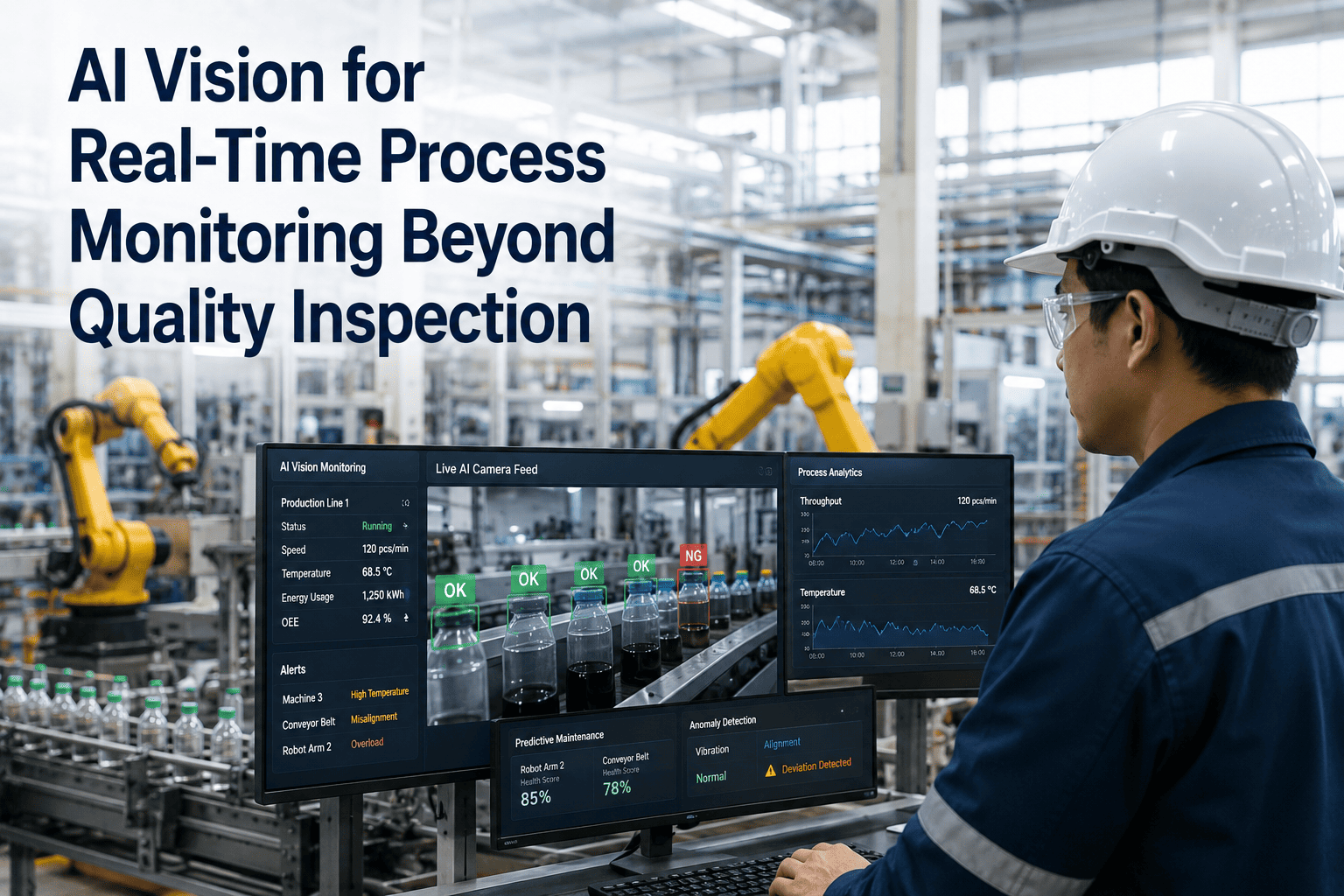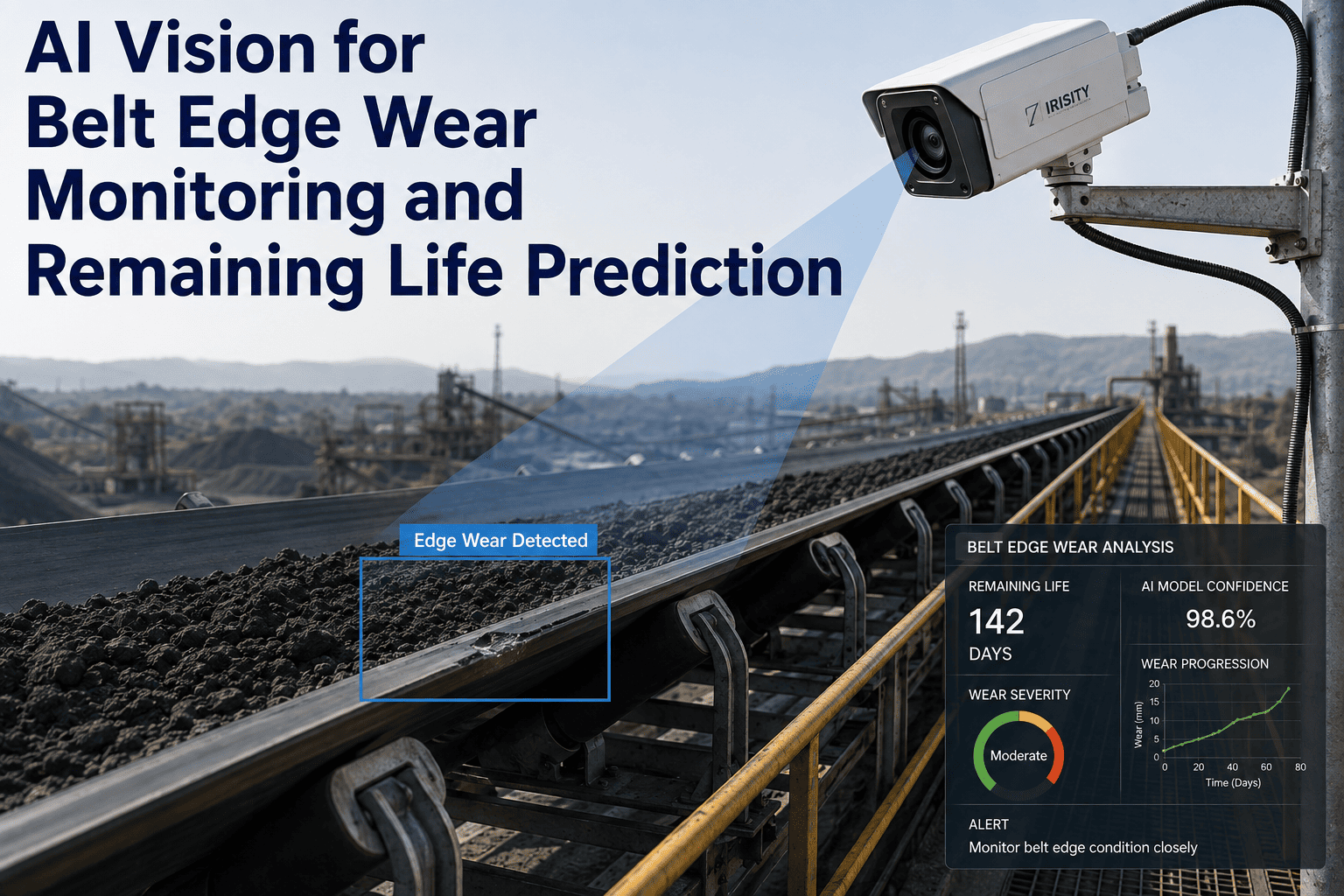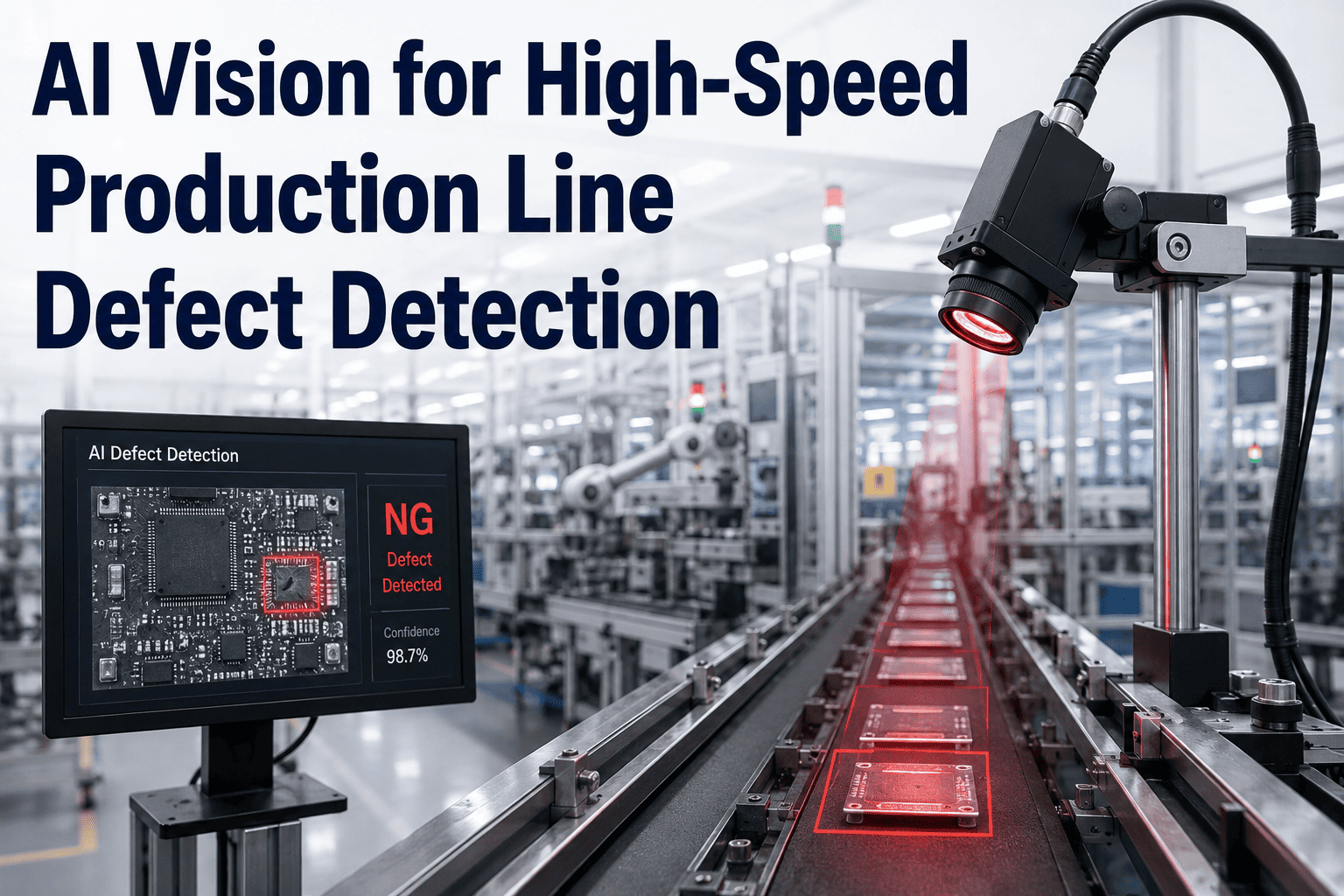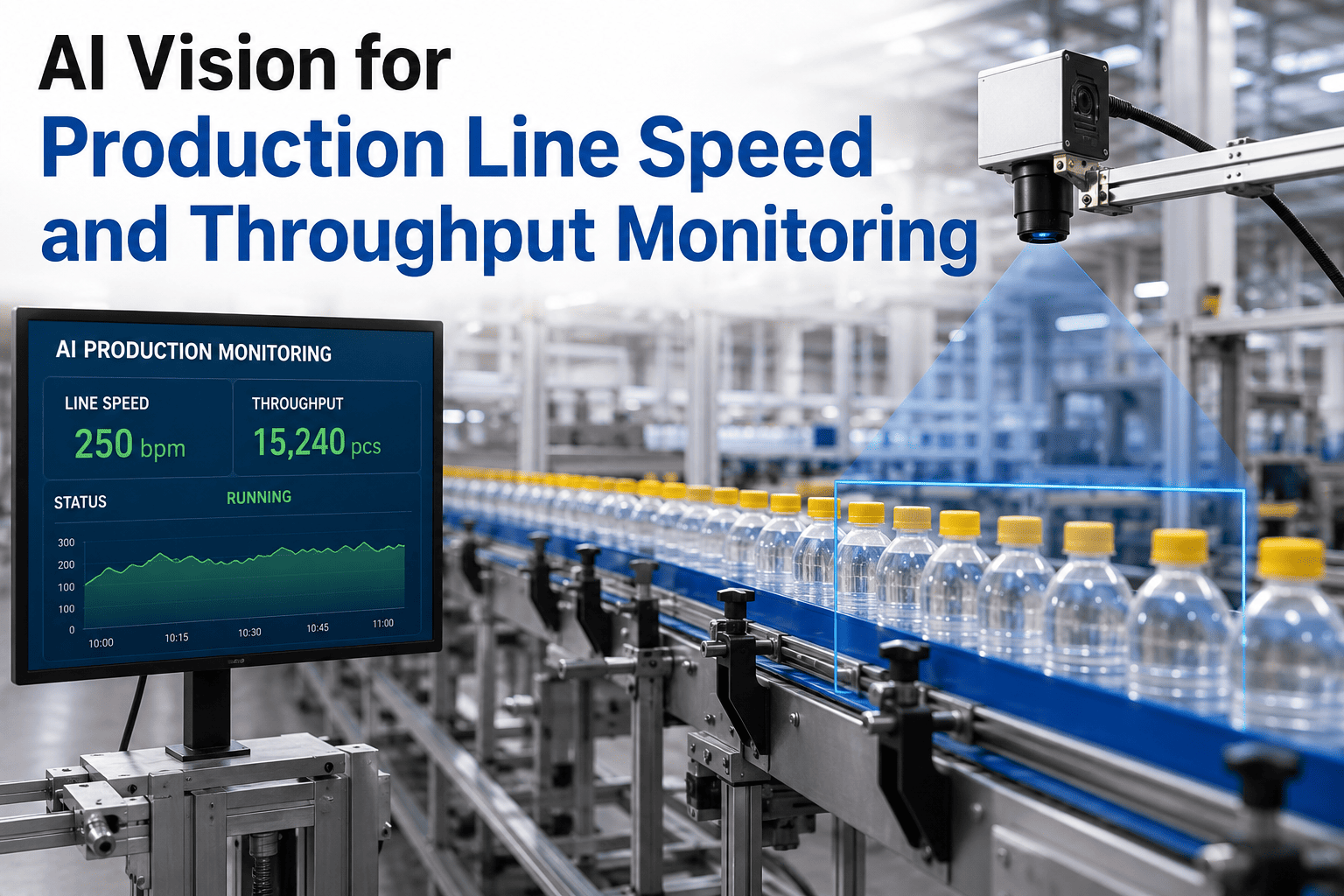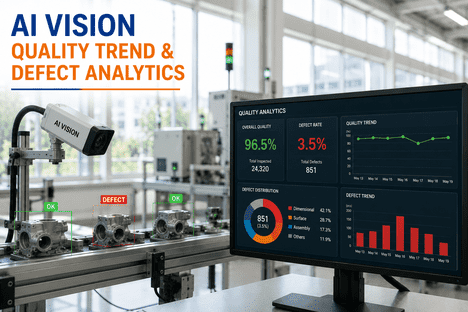
Traditional quality control finds defects after they happen. Predictive quality monitoring stops them before they exist. By analyzing visual production data in real time — correlating process parameters, defect patterns, and environmental conditions — AI vision systems now forecast where and when quality failures will emerge, giving your team the window to intervene before a single defective unit is produced. Manufacturers deploying predictive quality AI are cutting rework by up to 50%, reducing scrap by 30–50%, and transforming quality from a cost center into a competitive advantage. This is how it works — and why factories that wait are falling behind every quarter.
The Shift: From Finding Defects to Preventing Them
Quality control has evolved through three distinct eras. Most factories are still stuck in the second. The leaders have already moved to the third.
Reactive Inspection
Manual inspectors check finished products. Defects are found after entire batches are produced. Escape rates of 20–30% are normal. Every defect caught is a defect that already cost you material, labor, and time.
Real-Time Detection
AI cameras inspect 100% of output at line speed with 99%+ accuracy. Defects are caught instantly — but only after they form. You stop shipping bad product, but you are still producing it.
Predictive Quality
AI correlates visual data with process parameters to predict defects 1–2 hours before they appear. You intervene upstream — adjusting temperature, pressure, alignment, or feed rate — and the defect never occurs.
What Reactive Quality Actually Costs You
The Rule of 10: Every stage a defect passes undetected, the cost to fix it multiplies by 10x. Predictive quality catches problems at the $1 stage — or prevents them entirely. Want to see how much your facility is losing to late-stage defect detection? Schedule a free assessment and we will map your Cost of Quality by stage.
How Predictive Quality Monitoring Works
Four integrated layers turn raw visual data into actionable quality forecasts — before defects materialize on the line.
Continuous Visual Data Collection
Data LayerHigh-speed industrial cameras capture multi-angle images of every product at line speed. Structured lighting and 3D sensors reveal surface topography, internal structures, and dimensional accuracy invisible to 2D inspection. Every frame becomes a data point in the predictive model — not just an inspection, but an input to a quality intelligence engine that grows more accurate with every production run.
Process Parameter Correlation
Intelligence LayerMachine learning models correlate visual inspection results with upstream process variables — temperature, vibration, pressure, humidity, material batch, machine speed, tool wear, and operator shift patterns. The AI identifies the specific combinations of conditions that historically precede defect formation. When those conditions begin to converge again, the system knows what is coming.
Predictive Defect Forecasting
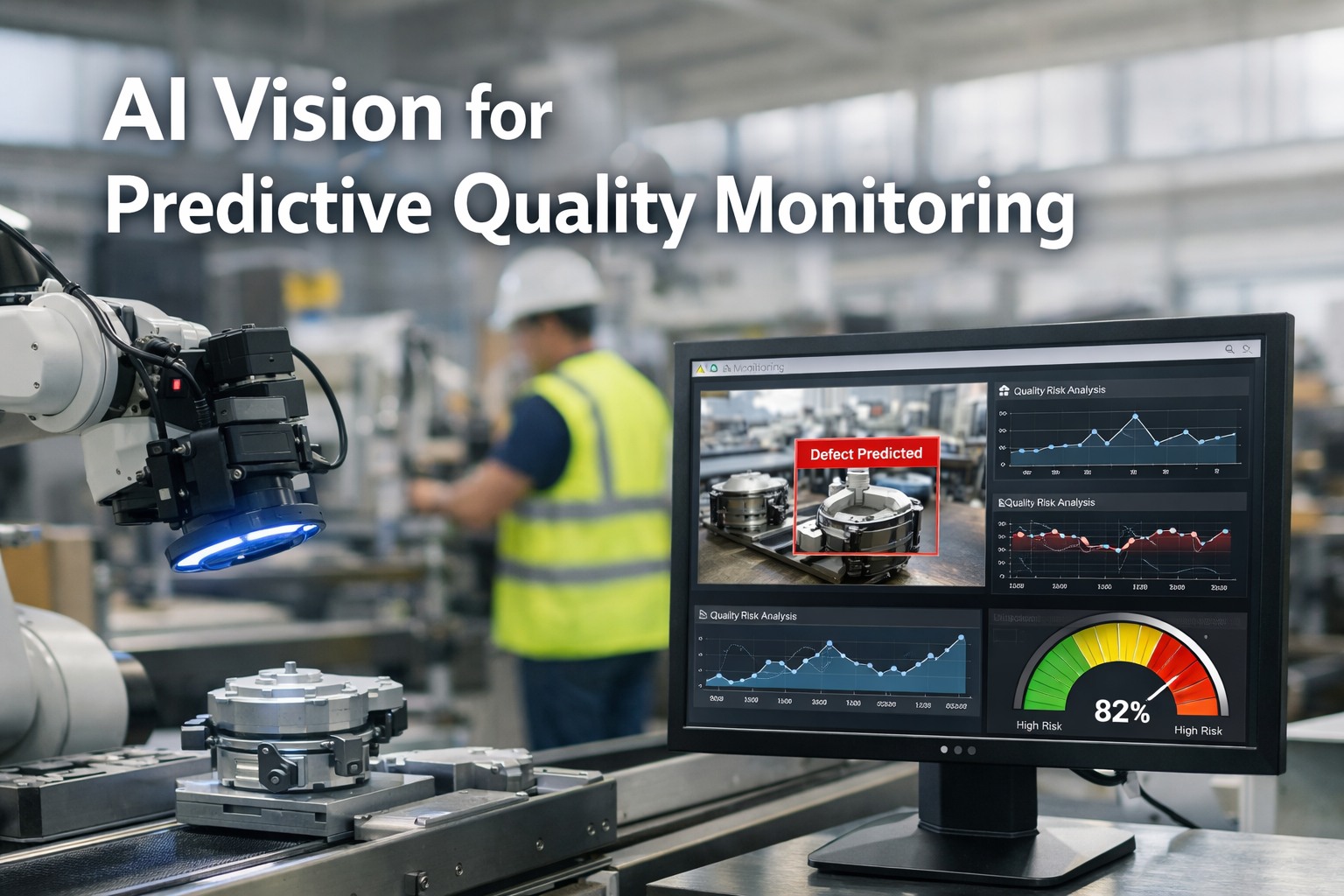
Prediction LayerUsing trained models that achieve 80–97% prediction accuracy for well-defined defect types, the system generates real-time risk scores for each production segment. Heatmaps visualize defect probability across your line. When risk exceeds configured thresholds, the system issues predictive alerts — identifying not just that a defect is likely, but which defect type, on which line, and what process parameter is driving the risk.
Automated Closed-Loop Response
Action LayerPredictive alerts trigger automated responses through your CMMS, MES, and SCADA systems: work orders are generated, process parameters are adjusted, operators receive targeted guidance, and affected production segments are flagged for enhanced inspection. The loop closes when the AI confirms that corrective action has resolved the risk condition — all documented with full audit traceability.
See this 4-layer predictive pipeline running on real production data — book a personalized demo tailored to your facility and defect types.
Measurable Results From Predictive Quality AI
What Changes When Quality Becomes Predictive
Where Predictive Quality Creates the Biggest Impact
Welding, Painting, Assembly
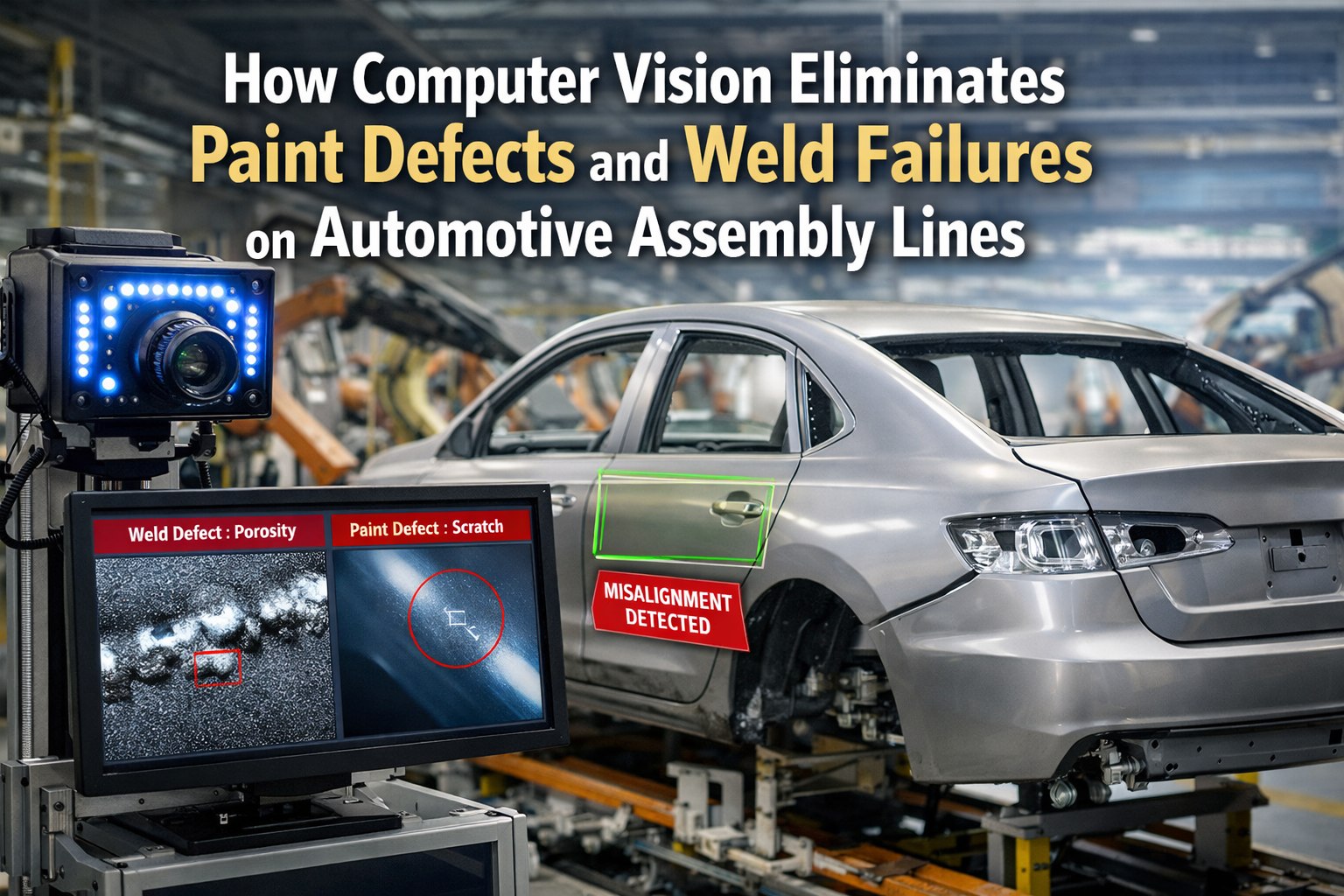
AI vision monitors weld integrity, paint thickness, and assembly alignment — predicting quality drift before it produces rejects. BMW reduced defect rates by 30% within one year. Audi inspects 5 million welds daily with AI vision that catches flaws invisible to manual inspection.
Wafer Fabrication, Etching
Samsung uses AI vision to monitor wafer etching and alignment continuously, generating defect risk heatmaps that allow technicians to halt defective batches before they reach later processing stages. Even a 0.1% yield improvement at this scale translates to millions in additional revenue.
Tablet Coating, Packaging
Predictive quality AI detects subtle coating irregularities and packaging deviations that precede dosage errors — reducing recall risk by 80% while maintaining full FDA and GMP compliance with automated traceability records.
PCB Assembly, Soldering
AI correlates solder temperature, component placement, and reflow profiles to predict joint failures before they occur. One electronics manufacturer eliminated €1.5M in hidden annual losses from undetected micro-cracks within 8 months of deployment.
Whether your challenge is weld integrity in automotive, wafer yield in semiconductors, or coating consistency in pharma — predictive quality AI adapts to your specific defect types. Get a walkthrough showing how iFactory maps to your production environment.
The Predictive Quality Intelligence Stack
Predictive quality monitoring does not work in isolation. Its power multiplies when integrated across your manufacturing systems — creating a single nervous system for quality intelligence.
CMMS Integration
When predictive quality AI detects that equipment condition is driving rising defect risk, it automatically generates maintenance work orders in your CMMS — scheduling corrective action before the equipment produces defective output.
MES Integration
Quality predictions feed directly into production execution. Batch records are enriched with predictive risk scores. Process parameters auto-adjust based on quality forecasts. Production scheduling adapts to prioritize lines with lowest defect risk.
SCADA Integration
Real-time quality risk alerts appear in operator SCADA dashboards alongside machine status. When the AI detects rising defect probability, it can trigger automatic process parameter adjustments through the control system — closing the loop without human delay.
ERP Integration
Aggregate quality intelligence feeds supplier performance management, cost-of-quality reporting, and warranty analytics. When defect patterns correlate with specific material batches, the system flags supplier quality deviations automatically.
Market Context: Why 2026 Is the Inflection Point
Stop Reacting to Defects. Start Preventing Them.
iFactory's predictive quality AI analyzes visual production data in real time, forecasts quality failures before they occur, and triggers automated corrective action through your CMMS, MES, and SCADA — deployed in days with edge processing, zero cloud dependency, and models that get smarter with every production run.