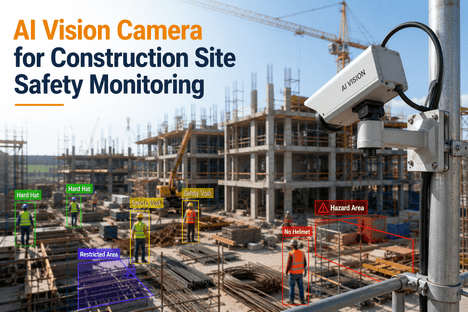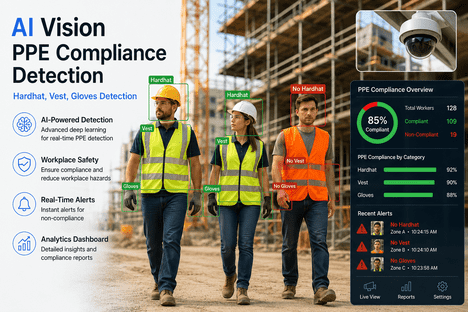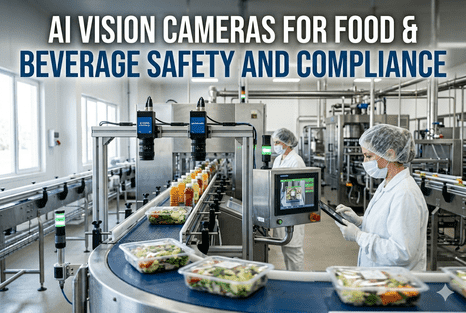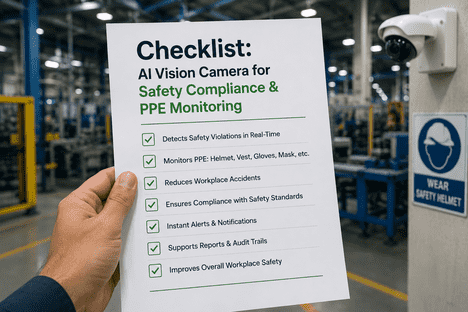
A safety program is only as good as the moment its rules are actually enforced. A binder full of PPE policy that no one is watching gets translated on the shop floor into a hard hat on the toolbox instead of on a head, into safety glasses pushed up onto a helmet during a grinding cut, into a hi-vis vest left in the cab of a forklift. Peer-reviewed benchmarks now put modern computer vision models at 96 to 97 percent mean average precision on hard hats, vests, and goggles at real production sites, with inference under ten milliseconds per frame. iFactory turns those numbers into a working compliance layer that runs on your existing cameras — see it detecting missing PPE against your own footage with a Book a Demo.
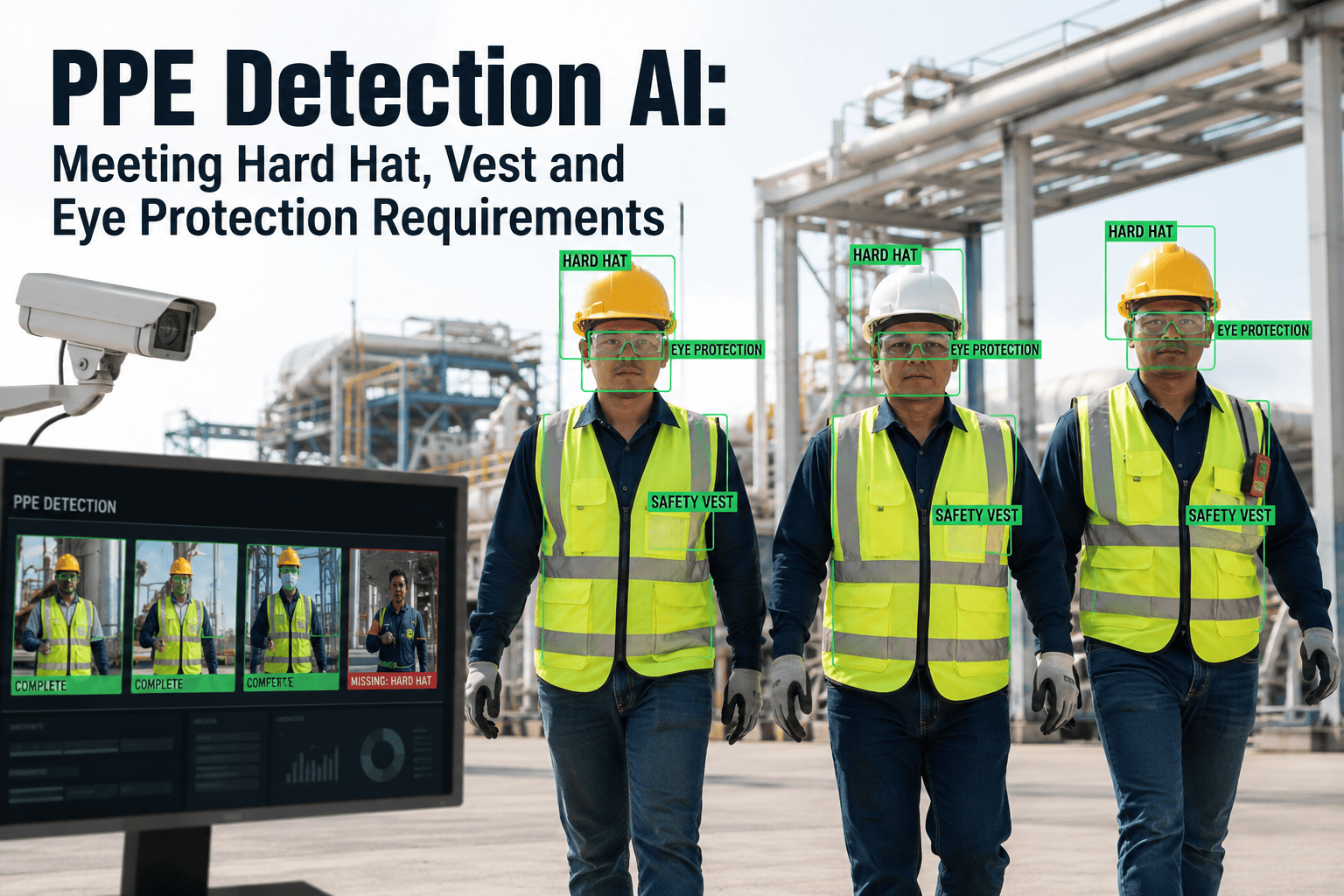
PPE Detection AI: Meeting Hard Hat, Vest and Eye Protection Requirements
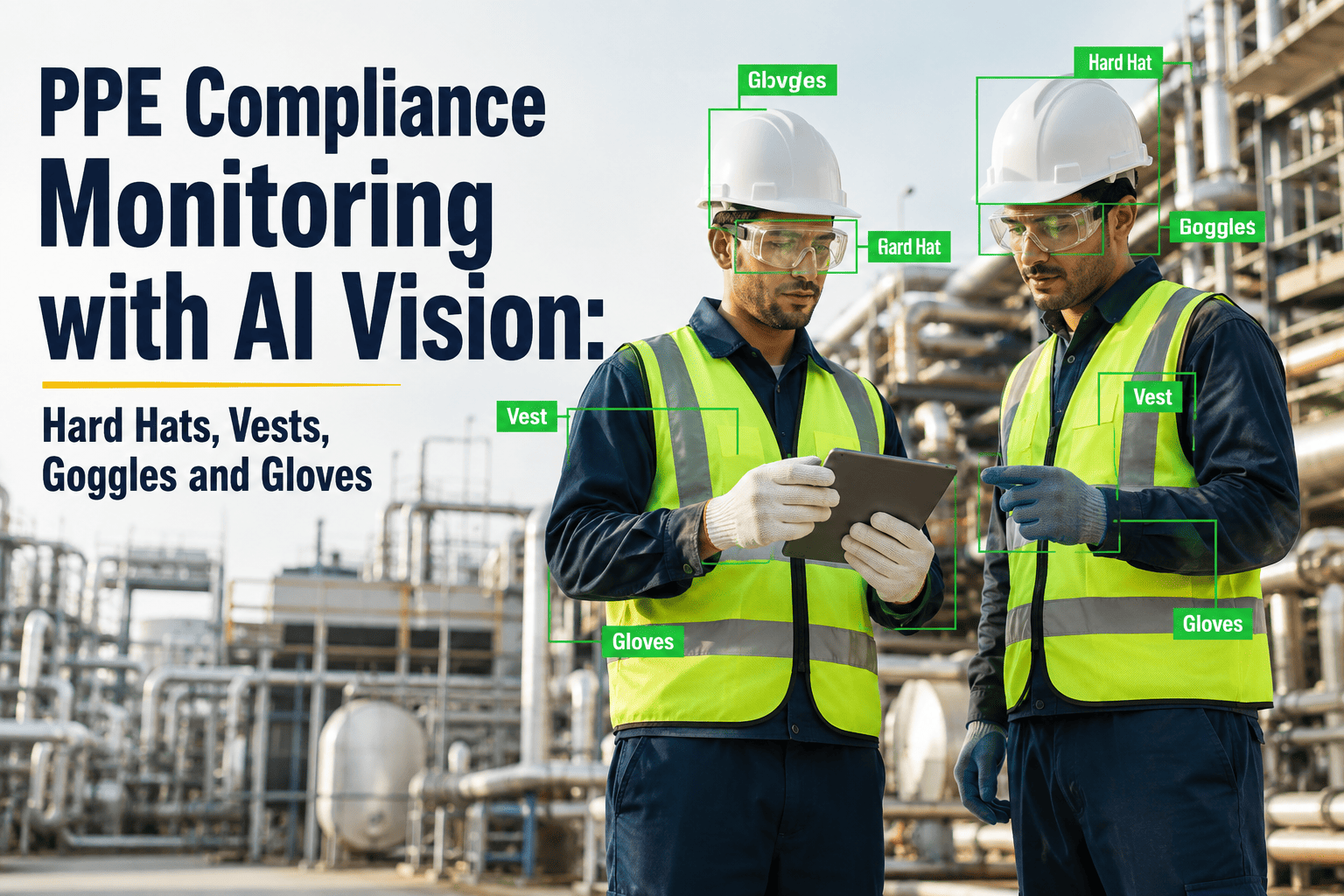
Continuous computer vision detects missing hard hats (with color and type), high-visibility vests, safety goggles, gloves, and steel-toe boots. Real-time alerts, automated violation logs, and zone-specific rule enforcement — all on the cameras you already have.
Where the Model Actually Lands on Each PPE Category
Detection accuracy is not one number for the whole system — it is a different number for each class the model is trained on. Peer-reviewed benchmarks and iFactory's own production data across facilities converge on the ranges below, with slightly higher accuracy on high-contrast items like hi-vis vests and slightly lower on small items like goggles at distance.
Accuracy figures reflect mean average precision on trained classes across representative industrial footage. Fine-tuning against your specific lighting, PPE color scheme, and camera angles typically improves each class by two to four percentage points during the calibration window.
Five Body Regions, Five Detection Rules, One Camera Feed
The AI parses each visible worker into five body zones and evaluates the PPE requirement for each zone against the active site rule. A single frame produces up to five independent compliance verdicts per person.
Head
Hard hat presence, ANSI Type I vs Type II identification, and color classification for role-based coding used at construction and heavy industry sites.
Face / Eyes
Safety glasses, splash goggles, welding shield, and full face shield detection with configurable zone-specific rules such as chemical handling or grinding cells.
Torso
High-visibility vest presence with color class recognition for fluorescent yellow-green, orange, and red, meeting ANSI 107 and FHWA visibility requirements.
Hands
Glove presence at chemical handling, cut-risk, and hot work stations, catching the specific pattern of gloves removed for a fine task and not put back on.
Feet
Steel-toe safety boot detection in load-bearing zones, addressing the statistic that only 23 percent of workers with foot injuries were wearing safety footwear.
What Each Uncaught PPE Violation Actually Costs Over Time
A missed hard hat on Monday is a training conversation. The same missed hard hat every Monday for six months is a compliance pattern. The pattern becomes a citation. The citation becomes an injury. The injury becomes a claim. AI vision catches the pattern before the escalation begins.
Isolated Violation
Individual incident, verbal correction. Direct cost is a supervisor conversation and a training note.
Repeated Pattern
Behavior becomes a normalized shortcut. Costs show up as re-training hours, supervisor time, and eroded safety culture.
OSHA Serious Citation
Fines up to $16,131 per instance-by-instance violation, with legal defense time and remediation planning costs added on top.
Willful or Repeated Finding
Fines up to $161,323 per violation, workers' compensation premium impact, and elevated inspection scrutiny across all sites in the corporate group.
Injury or Fatality
Direct medical costs, lost-time payouts, litigation exposure, reputational impact, and the human cost that no penalty schedule can quantify.
Catch the Pattern Before It Becomes the Claim
See continuous PPE detection running on your own footage, with the specific violation types your site is most exposed to laid out on a single dashboard.
Which Standards Every Detection Type Traces Back To
Every PPE category the AI monitors ties back to a specific OSHA general industry or construction standard and an underlying ANSI or ISEA performance specification. Audit-ready reporting maps each detected violation to the standard it fails against.
| PPE Category | OSHA Standard | ANSI / ISEA Standard | Most Cited Failure Mode |
|---|---|---|---|
| Head Protection | 29 CFR 1910.135 & 1926.100 | ANSI Z89.1 Type I / II, Class G / E / C | Absent or wrong type for the electrical hazard present |
| Eye and Face Protection | 29 CFR 1910.133 & 1926.102 | ANSI Z87.1 impact and splash ratings | Standard glasses used where splash goggles or face shield are required |
| High-Visibility Apparel | 29 CFR 1926.201 (Signaling) | ANSI/ISEA 107 Class 2 or 3 rated | Vest present but not rated for the vehicle exposure level |
| Hand Protection | 29 CFR 1910.138 | ANSI/ISEA 105 cut and chemical ratings | Gloves removed for a fine task and not put back on |
| Foot Protection | 29 CFR 1910.136 & 1926.96 | ASTM F2413 protective footwear | Non-safety footwear worn in load-bearing zones |
Four Channels So the Right Person Sees the Violation in Time to Act
Mobile Push Notification
Delivered to the zone supervisor on shift with the timestamped frame, camera location, and violation type. Median delivery time under five seconds from detection.
On-Floor Audio Prompt
Optional zone-mounted speaker triggers a spoken prompt that draws the worker's attention to the missing item without needing supervisor intervention for common cases.
Control Room Dashboard
Live grid displays every active zone with violation counts, pending acknowledgements, and hotspot heatmaps for supervisors covering multiple areas.
Compliance Log Export
Weekly and monthly exports of PPE compliance rates by zone, shift, and role, formatted for direct inclusion in management review and audit documentation.
Manual PPE Enforcement vs. iFactory AI Vision, Line by Line
| Compliance Dimension | Manual Enforcement | iFactory AI Vision |
|---|---|---|
| Coverage | Supervisor spot-checks reach roughly 5 percent of floor time | Every camera-covered zone monitored continuously across shifts |
| Detection Speed | Hours to days after the violation, if noticed at all | Under five seconds from violation to alert |
| Objectivity | Depends on the observer and the moment they walked past | Same standard applied to every worker in every frame |
| Documentation | Incident reports written after the fact when they exist at all | Automatic timestamped log with visual evidence per event |
| Audit Preparation | Weeks of assembling logs, interviews, and photocopied inspections | Live dashboard with compliance rates by zone, shift, and role |
| Cost per Violation Caught | Rising with headcount and rework of missed detections | Flat once deployed, scaling with camera count not observer hours |
Where iFactory PPE Vision Is Running Today
Manufacturing & Assembly
Zone-varied PPE with grinding cells, chemical cabinets, and mechanical assembly all governed by a single policy engine.
Construction & Civil
Highest fatality count of any US industry sector. Hard hat detection with color coding is the most common first use case.
Warehousing & Distribution
Mixed pedestrian and forklift traffic where hi-vis vest enforcement is safety-critical, not cosmetic.
Oil, Gas & Petrochemicals
Type II helmets, flame-resistant clothing, and Class E electrical protection layered into zone-specific rules.
Metals & Fabrication
Welding shields, cut-resistant gloves, and hearing protection zones with high PPE compliance value per detection.
Utilities & Power
Class E hard hats near switchgear, dielectric gloves for panel work, and mandatory eye protection at breaker operations.
We were passing PPE audits on paper while our monthly incident report kept showing eye and hand injuries. The disconnect was that our supervisors were seeing the compliant workers and missing the noncompliant ones by accident of timing. Since iFactory went live, the compliance rate on our dashboard reflects what is actually happening on the floor. That single change moved our workers' comp premium calculation for the next renewal cycle.
Frequently Asked Questions
Q: How does the model handle workers wearing PPE but not correctly — for example, a hard hat pushed back on the head?
Incorrect-wear detection is a separate model output from presence detection, and it is one of the higher-value categories once a site is past the initial deployment. The system recognizes a hard hat present but not sitting flush on the head, safety glasses pushed up onto the forehead, and vests worn open at the front rather than closed. These fine-grained failure modes are configurable per zone so that a lower-risk area does not flood the alert channel with edge cases. Walk through incorrect-wear detection on your own site footage with a Book a Demo.
Q: What happens with detection accuracy when lighting is poor or workers are far from the camera?
Distance and lighting both affect accuracy, and the system is engineered to abstain rather than guess when frame quality is inadequate. If a worker is too small in frame or a body region is occluded, the system does not generate an alert rather than firing on low-confidence detection. This is a deliberate design choice — a system that produces frequent false positives quickly loses supervisor trust and gets ignored. Camera placement during onboarding is planned around the specific zones and worker distances typical for your operation, and camera additions are made only where genuine coverage gaps exist.
Q: Can the system be integrated with our existing safety management platform or work order system?
Integration is supported through both real-time webhook delivery and batch export APIs, so detected violations can automatically create tickets in your safety management system, corrective action software, or work order platform. Common integrations include EHS software, LMS training triggers when a repeated pattern is detected for a specific role, and the OSHA logging workflow used for near-miss and recordable tracking. Integration options are reviewed against your existing stack during onboarding, and technical documentation can be requested through Support Contact.
Q: How does the deployment work from a hardware and infrastructure perspective?
A pre-configured NVIDIA edge server ships racked and ready with the vision software pre-loaded, so on-site work is limited to power, network, and camera stream connection. Most facilities keep their existing IP camera infrastructure with no camera replacement required, and additional cameras are added only where genuine coverage gaps exist at PPE gates or blind-spot zones. The system runs locally at the site, meaning video does not need to leave the facility for detection to happen. Live in six to twelve weeks is the standard turnkey timeline including pre-deployment site assessment and rule calibration.
Q: How is the system positioned to workers and union representatives to avoid becoming a surveillance concern?
The system is designed around detecting PPE state and behavior rather than identifying individuals. There is no facial recognition and no linkage to employee records unless a facility explicitly configures it for a specific purpose. Body-blurring is available for sites with heightened privacy requirements, and role-based access controls determine who can view alert footage. The most successful rollouts have positioned the system to workforce representatives as a leading-indicator safety tool that catches the near-misses which used to only surface after injuries — a framing that generally shifts the conversation from resistance to engagement.
Stop Finding PPE Failures on the Incident Report
Watch continuous, zone-aware PPE detection running on real camera feeds — hard hats by color, vests by rating, eye protection by task.