A steel rolling mill in Jamshedpur was running at 94% quality pass rate — a number the plant manager was proud of until a customer returned a 120-ton shipment over hairline surface cracks that human inspectors had missed. The cost: ₹68 lakh in rework, a delayed contract, and a dent in reputation that took six months to repair. Three hundred kilometers away, a cement plant in Madhya Pradesh was over-dosing clinker by 4% on every batch — not because anyone wanted to, but because lab results took 28 days to come back, and nobody wanted to risk falling below grade. The extra clinker cost ₹1.2 crore a year and pumped 3,800 tons of extra CO₂ into the atmosphere. Two different plants, two different materials, one identical problem: quality control built on manual inspection and lab lag can't keep up with modern production speed. AI quality systems change that equation completely — by turning every sensor, camera, and process variable into a continuous quality signal that predicts defects before they happen instead of counting them after they've shipped.
AI Quality Intelligence
Stop Inspecting Defects. Start Preventing Them.
Manual inspection catches roughly 80% of defects. AI-driven quality systems detect them at 99%+ accuracy — in milliseconds, at full production speed, across every ton of cement and every meter of steel.
99.8%
AI defect detection accuracy vs. 80% manual
70–85%
Defect rate reduction in cement plants
20%+
Defect reduction at Voestalpine steel
2.2%
Of revenue lost to scrap and rework
The Hidden Cost of "Good Enough" Quality
In cement and steel, quality failures don't just ship back. They ripple — through production schedules, raw material budgets, customer contracts, and brand reputation. Most plants track quality using monthly scrap-rate dashboards and 28-day lab reports, which means problems surface weeks after the defective material has already left the plant. By then, the fix is expensive. By then, the customer knows.
10–30%
Of annual revenue lost to Cost of Poor Quality at typical manufacturers — world-class plants stay under 5%
28 days
Average lag for lab-based cement strength testing — thousands of tons ship before results arrive
20 m/sec
Speed of modern steel production lines — faster than any human inspector can visually track
4× hidden
ASQ benchmark — hidden costs of poor quality typically exceed visible costs by 4x
Know your real Cost of Poor Quality? See your plant's quality baseline in a 30-minute walkthrough.
Why Traditional Quality Control Breaks in Heavy Industry
Cement and steel aren't built like automotive or electronics — they're built at volume, heat, and speed that make manual sampling statistically meaningless. Every traditional QC method was designed around the assumption that you'd inspect a sample and trust the batch. AI breaks that assumption by inspecting the batch itself.
Traditional QC Approach
Sample-based inspection — 2–3 samples per hour per line, less than 0.1% of total production actually examined
Lag-time lab testing — 28 days for cement strength, hours for steel composition; by the time results come in, production has moved on
Fatigue-sensitive inspection — human accuracy drops from 85% to below 70% across a single 12-hour shift
Reactive, not predictive — defects found after they've been produced, packaged, or shipped
No root cause traceability — a defective coil or batch can rarely be traced back to the exact process variable that caused it
AI-Powered Quality Intelligence
100% production coverage — AI vision inspects every bag, every meter of steel, every batch of clinker in real time
Virtual lab testing — machine learning predicts 28-day cement strength from process data with R² above 0.95, while material is still in the mill
Consistent 24/7 accuracy — AI detection stays at 99%+ across every shift, every day, every line, regardless of fatigue
Predictive deviation alerts — AI flags parameter drift 20–60 minutes before a measurable defect is produced
Full-chain traceability — every defect linked to exact process conditions, shift, batch, and operator for instant root cause analysis
How AI Quality Control Works: The 4-Layer Stack
AI quality control isn't a single camera or algorithm — it's a connected intelligence stack that sits on top of existing sensors, cameras, and lab systems. Each layer adds a different type of quality signal, and the power comes from combining them.
Layer 01
Data Ingestion — Every Signal, Every Second
Online analyzers, cross-belt XRF at raw mill feed, process gas analyzers at preheater exit, particle size analyzers at mill discharge, high-speed line-scan cameras at coil exit, thermal imaging on kiln shells — all stream data every 30–60 seconds instead of every shift or every batch.
10,000+ inspections/hour via AI vision
30–60s sensor update frequency
Layer 02
Computer Vision — Defects Invisible to Human Eyes
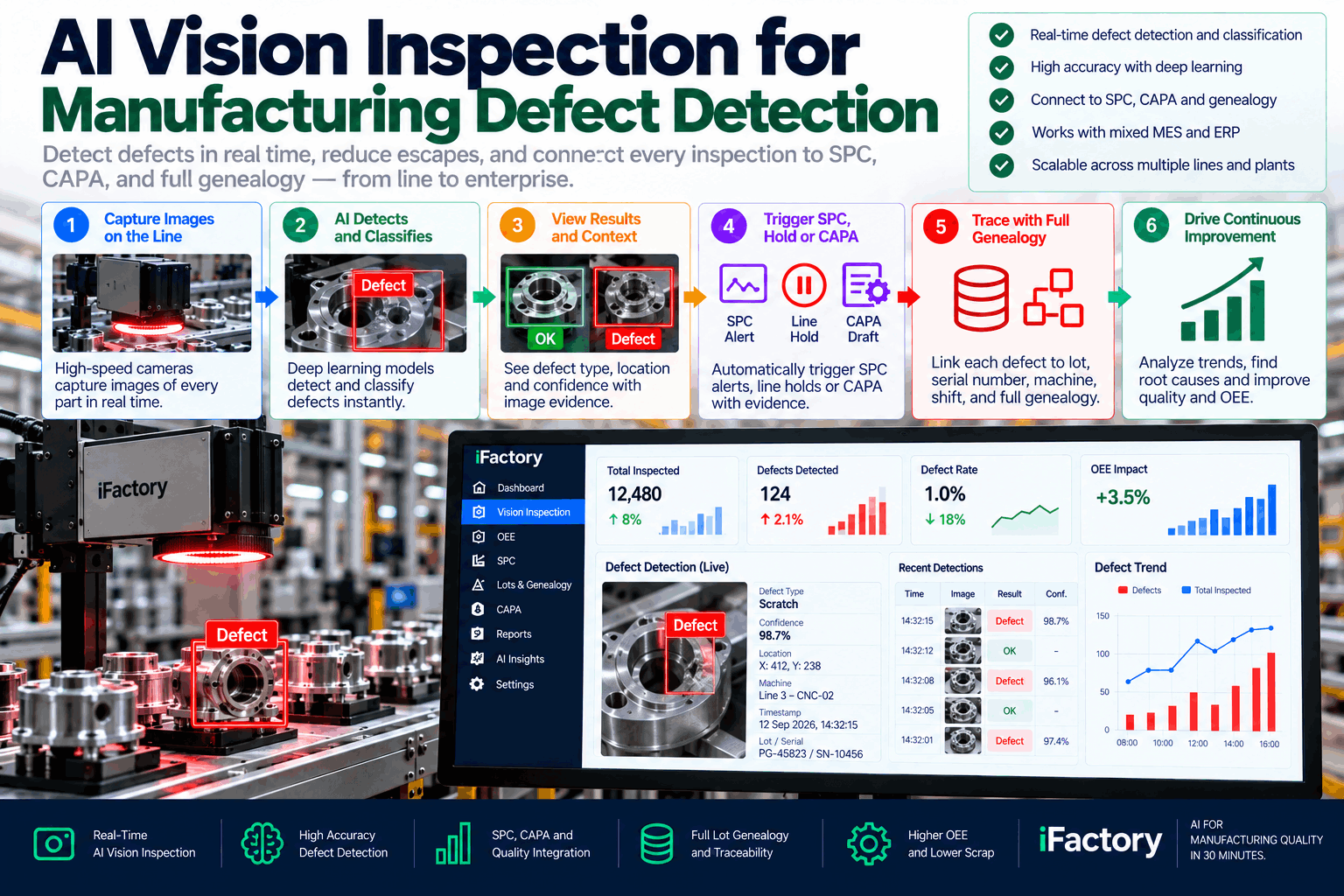
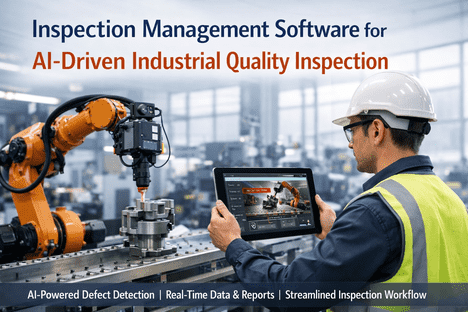
Deep learning models (CNNs, YOLO, Vision Transformers) trained on millions of defect samples detect cracks, inclusions, scratches, dents, dimensional deviations, coating issues, and print failures at production speed. Edge processing delivers decisions in under 200 milliseconds — fast enough to trigger automatic rejection before the next unit arrives.
0.1mm smallest detectable defect
<200ms detection to action cycle
Layer 03
Predictive Quality Models — Virtual Lab Testing
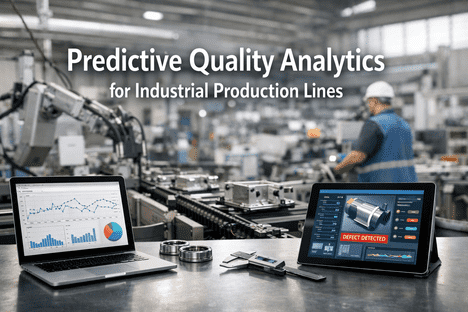
AI correlates kiln temperature zones, cooling rates, mill vibration, raw meal chemistry, and fuel mix to predict final cement strength, setting time, and Blaine fineness while material is still in production. For steel, ML predicts mechanical properties from rolling parameters — eliminating the need to wait for destructive testing before releasing a coil.
R² 0.95+ accuracy for 28-day strength prediction
4× faster than manual SPC review cycles
Layer 04
Automated SPC & Root Cause — Act Before the Defect Ships
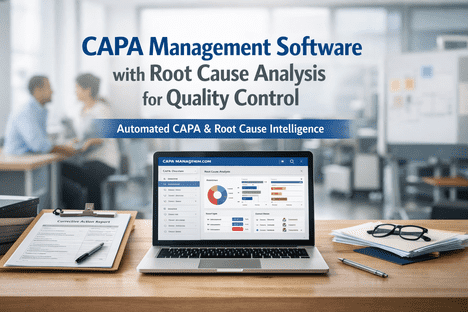
Statistical Process Control runs continuously in the background, flagging parameter drift before it becomes a deviation. When a defect is detected, AI instantly correlates it back to process conditions — raw mix chemistry, kiln temperature curves, mill ball-charge degradation, cooling rate anomalies — giving operators root cause in seconds, not weeks.
20–60 min predictive alert window
100% defect-to-root-cause traceability
Every Defect That Ships Costs You Twice — Once in Product, Once in Trust
iFactory's AI quality intelligence connects to your existing cameras, analyzers, and SCADA systems — and transforms them into a predictive quality layer that catches issues before they reach your customer. 30 days to first insights. 90 days to measurable defect reduction.
Cement vs. Steel: Where AI Quality Delivers the Biggest Wins
Cement and steel share the same quality challenge — volume, heat, speed — but the specific quality failures and AI solutions look very different. Here's how AI reshapes quality control in each industry, side by side.
Cement Quality Wins with AI
28-Day Strength, Predicted in Minutes
AI models predict final compressive strength from clinker chemistry and mill parameters — no more over-dosing clinker "just in case"
Cement Bag Defect Detection
Vision AI inspects cracks, spills, cuts, print failures on every bag at conveyor speed — eliminating contaminated pallets and customer returns
Kiln & Mill Parameter Drift
AI monitors kiln temperature zones and mill acoustics to predict Blaine drift 30 minutes before it shows up in a lab sample
Clinker Factor Optimization
Real-time quality control allows plants to reduce clinker factor without risking strength — cutting both cost and CO₂ emissions
Result: Defect rates drop 70–85% · Quality variation drops 50–70% · Over-dosing eliminated
Steel Quality Wins with AI
Surface Defect Detection at 20 m/sec
Line-scan cameras + deep learning catch scratches, cracks, inclusions, pits as small as 0.1mm at full rolling mill speed — 100% coverage vs. 2–3 samples/minute manually
Weld Quality Analysis
AI detects weld porosity, cracks, undercut, and incomplete fusion in real time — critical for structural, automotive, and pipeline steel
Internal Defect Detection via ML + UT
Machine learning on ultrasonic and X-ray data detects cracks, porosity, inclusions inside the material — defects no visual inspector can see
OCR + Coil Traceability
AI-based OCR reads stamped IDs on steel plates at 100% accuracy — enabling full traceability from raw material to finished coil
Result: 98%+ detection accuracy · 31% fewer customer returns · 37% scrap reduction
The ROI Math: What AI Quality Control Pays Back
Quality investments are easy to defer because the "cost of poor quality" is often invisible in monthly P&L reports. AI quality control makes the math impossible to ignore — because the savings show up in scrap reduction, rework labor, customer returns, and clinker/raw material efficiency, all at once.
Defect Rate Reduction
70–85%
AI quality control in cement plants (100% inspection vs. sampling)
Quality Variation Reduction
50–70%
Standard deviation of key properties after ML model deployment
Scrap Rate Reduction
37%
Steel manufacturers deploying AI vision on coil lines
Customer Return Reduction
31%
Within 18 months of AI-powered inspection deployment
Detection Accuracy Uplift
80% to 99.8%
Manual inspection baseline vs. AI vision systems
Typical ROI Timeline
8–14 months
Full payback from labor, scrap, rework, and warranty savings
Ready to run these numbers on your own plant? Let's map your quality baseline together.
Why iFactory for Cement & Steel Quality
01
Built for Heavy Industry Chemistry
Generic vision AI treats every surface the same. iFactory understands clinker mineralogy, Bogue compounds, kiln flame geometry, rolling mill stand vibration, and weld pool thermal signatures — quality parameters specific to cement and steel that generic platforms miss entirely.
02
Any Sensor. Any Camera. Any Protocol.
OPC-UA, Modbus, MQTT, 4-20mA, RTSP video streams, XRF analyzer outputs, lab LIMS integration — iFactory connects to your existing instrumentation. No rip-and-replace, no CAPEX-heavy camera overhauls before you see value.
03
Virtual Lab Testing, Not Just Vision
Most AI QC platforms stop at surface defects. iFactory predicts bulk properties — cement strength, Blaine fineness, setting time, steel tensile strength — from process parameters in real time, eliminating the 28-day lab lag that drives over-dosing and over-design.
04
Unified Quality + Energy + Maintenance
A kiln temperature anomaly doesn't just cause quality drift — it also wastes fuel and accelerates refractory wear. iFactory's unified platform detects the root cause once and optimizes across all three domains in parallel. One platform. One dashboard. Three wins.
Frequently Asked Questions
How quickly can AI quality control start delivering results in our plant?
Most cement and steel plants deploying iFactory's AI quality module see first measurable quality improvements within 30–60 days of full sensor integration and model activation. Initial gains come from real-time deviation alerting — reducing the time that out-of-spec process conditions go undetected. Full defect reduction impact, including predictive quality modeling benefits, typically becomes statistically significant within 3–4 months as models build plant-specific knowledge from accumulated data.
Do we need to replace our existing cameras or lab equipment?
No. iFactory is designed to layer on top of your existing infrastructure — SCADA, MES, cameras, XRF analyzers, gas analyzers, LIMS systems, and DCS historians. We add targeted cameras or sensors only where there are genuine coverage gaps. Most plants can get to first insights within 30 days using instrumentation they already own. This is deliberate: the faster you prove ROI, the faster you scale.
How accurate is AI strength prediction compared to actual 28-day lab results?
In calibrated industrial environments, iFactory typically achieves an R² value of 0.95 or higher for 28-day cement strength prediction — meaning the model explains over 95% of the variance observed in actual lab results. The model continuously adjusts for changes in raw material mineralogy, fuel types, and seasonal variations to maintain accuracy across all cement grades (OPC, PPC, PSC, blended). For steel, mechanical property prediction from rolling parameters reaches similar accuracy once the model has seen 2–3 months of plant-specific production data.
Can AI detect defects at full production speed without creating bottlenecks?
Yes — this is actually where AI outperforms manual inspection most dramatically. AI vision systems process 10,000+ inspections per hour and operate at production line speeds of 20+ meters per second. Unlike manual inspection (2–3 samples per minute), AI provides 100% coverage without creating bottlenecks. Edge processing delivers decisions in under 200 milliseconds, fast enough to trigger automatic rejection or operator alerts before the next unit arrives at the inspection point.
Does AI replace our quality team or laboratory?
No — it amplifies them. The quality team shifts from reactive firefighting (responding to defects after they've shipped) to strategic predictive work (validating AI models, investigating edge cases, driving continuous improvement). The lab focuses on high-value verification, R&D, and new grade development instead of routine testing of every batch. The net effect: fewer quality surprises, faster corrective action, and a quality organization that finally has the bandwidth to work on improving the process instead of just policing it.
Your Next Defect Is Already in the Process. AI Finds It First.
Stop measuring quality after it's too late. Start predicting it while you can still act. iFactory transforms your existing sensors, cameras, and process data into a continuous quality intelligence layer — with first insights in 30 days and measurable defect reduction in 90.