-syncs-back-to-mes-and-spc-in-real-time.png)
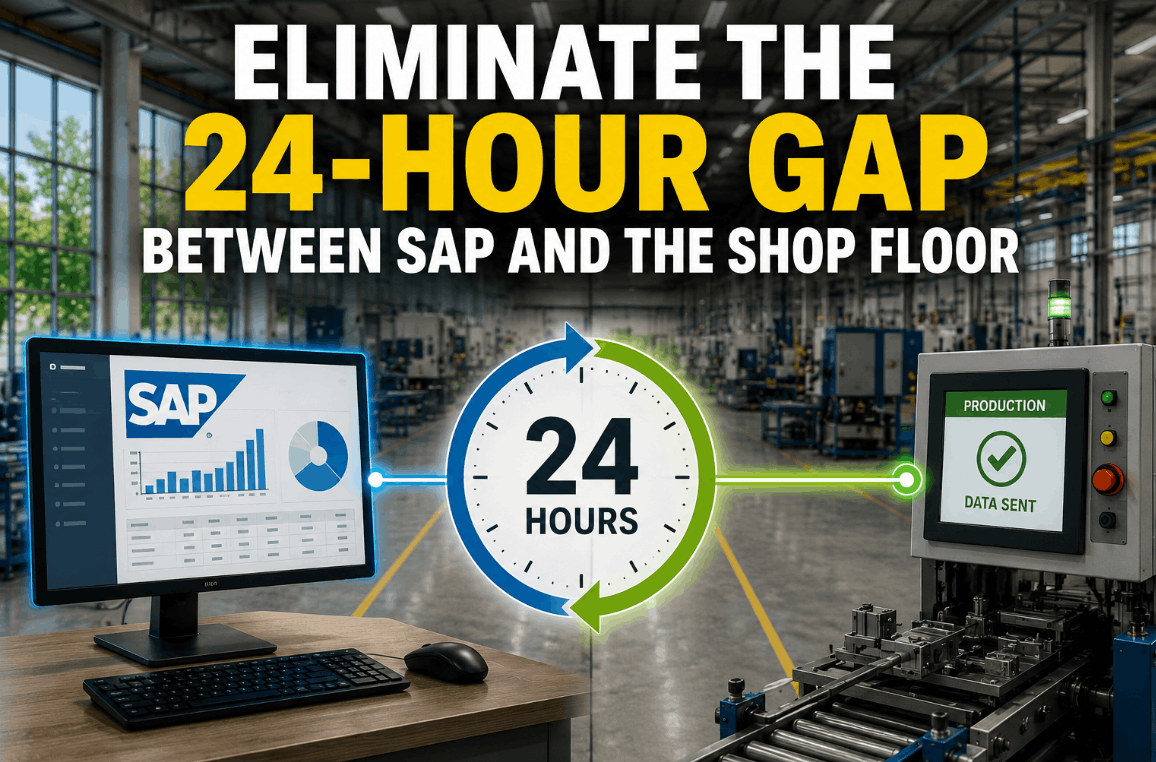
In most U.S. manufacturing plants, a goods receipt posted in SAP MM is invisible to the shop floor for anywhere from four hours to the next morning. A planner confirms movement type 101 in MIGO against a purchase order, the MM-008 IDoc fires into the SAP outbound queue — and then the line operator, the MES, and the SPC system continue operating as if the raw material does not exist yet. The production supervisor makes allocation decisions based on yesterday's inventory. The quality team schedules incoming inspection against a spreadsheet that was last refreshed at shift change. The SPC model flags a material substitution as an anomaly because it has no record that a new lot arrived at the receiving dock. This is not a data problem — the data exists in SAP the moment the goods receipt is posted. It is a synchronization problem: the 60-second window between a GR posting in SAP MM and a visible, actionable update on the line operator's screen is achievable, and iFactory's MM-008 inbound IDoc sync closes exactly that gap. Book a Demo to see a live MM-008 sync running in under 60 seconds.
The SAP MM-008 IDoc: What It Carries and Why the Shop Floor Never Sees It
The MM-008 message type — transmitted via the WMMBXY IDoc base type (WMMBID02) — is the SAP Materials Management outbound document that fires when movement type 101 is posted in MIGO: a goods receipt against a purchase order. The IDoc carries the full material document payload: plant code, storage location, purchase order number and line item, material number, batch number, quantity, unit of measure, movement type, and the posting date and time. Every piece of data the shop floor needs to update inventory, initialize an SPC lot record, and display the GR event on an operator screen is present in that IDoc the moment SAP posts the goods receipt.
The reason the shop floor never sees it is architectural. SAP's standard outbound IDoc processing — governed by partner profile configuration and the RBDAPP01 background job scheduling — was designed for system-to-system document exchange between SAP instances, not for sub-minute synchronization to a plant-floor MES. Without a dedicated inbound connector that consumes the MM-008 IDoc in real time and translates it into MES inventory transactions and SPC lot initialization events, the GR data sits in the SAP outbound queue waiting for the next scheduled processing window. iFactory's MM-008 sync eliminates that queue latency entirely. Book a Demo to review the IDoc connector architecture for your SAP instance.
How the MM-008 IDoc Flows: From SAP Posting to Shop Floor in Four Steps
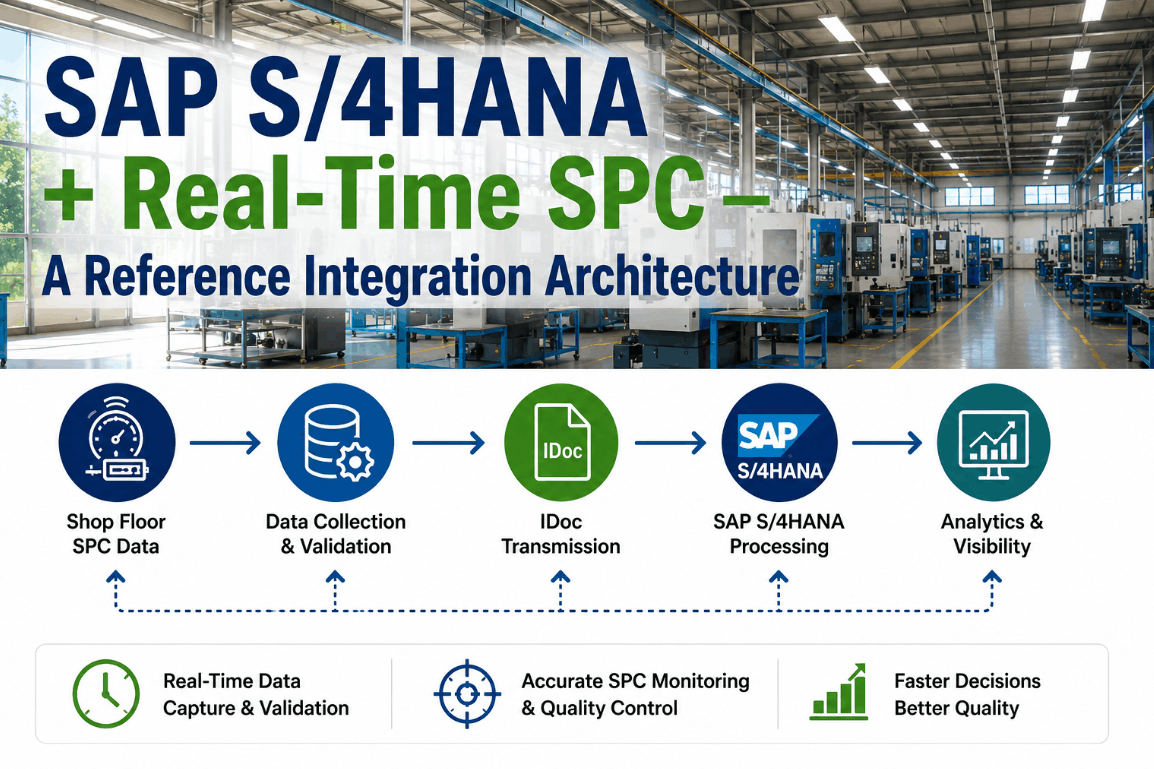
The end-to-end goods receipt synchronization loop involves four distinct system transitions, each of which introduces latency in a conventional integration architecture and each of which iFactory eliminates through its real-time IDoc ingest pipeline. The flow below documents exactly what happens at each transition point — and how iFactory's connector converts a standard SAP MM-008 IDoc into live, actionable intelligence on the production floor within the 60-second target window.
GR Posting in SAP MM — MIGO, Movement Type 101
The receiving clerk posts the goods receipt against the purchase order in MIGO. SAP MM creates the material document, updates the MM inventory position, and triggers the outbound IDoc generation for the configured partner profile. The MM-008 IDoc (WMMBXY / WMMBID02) is written to the SAP outbound queue with the full material document payload: plant, storage location, PO reference, material number, batch, quantity, and posting timestamp.
iFactory IDoc Inbound Connector — Real-Time Queue Consumption
iFactory's MM-008 inbound connector monitors the SAP outbound IDoc queue continuously — not on a scheduled polling interval. The moment the MM-008 IDoc is written to the queue, the connector consumes it, validates the payload structure against the configured plant and material master mapping, and translates the SAP document format into iFactory's internal MES inventory event schema. Processing time at this stage: under 5 seconds for a standard single-line goods receipt.
MES Inventory Update and SPC Lot Initialization
The translated GR event updates the iFactory MES inventory register for the receiving storage location in real time. Simultaneously, if the received material is a monitored SPC input — raw material or semi-finished component on the SPC watchlist — an incoming inspection lot record is automatically initialized in the SPC module with the batch number, quantity, and supplier reference from the IDoc payload. The SPC lot is queued for incoming quality sampling without any manual lot creation step.
Operator Screen Update and Production Planning Visibility
The line operator's iFactory dashboard refreshes to show the newly received material as available stock in the plant's MES inventory — with the SAP material document number, PO reference, batch number, and quantity visible in real time. Production schedulers see the GR event immediately on the materials availability view. If the received material was on a shortage watch list, an automatic availability alert fires to the shift supervisor. Total elapsed time from MIGO posting to operator screen update: under 60 seconds. Book a Demo to see this sequence live.
What the MM-008 IDoc Payload Drives in iFactory — Field-by-Field Mapping
Every field in the MM-008 IDoc payload is consumed by iFactory's inbound connector and mapped to a specific MES or SPC action. The table below documents the complete field-to-action mapping — what data arrives in the IDoc, where it goes in the iFactory platform, and what operational event it triggers on the shop floor. SAP MM Integration Leads implementing this connector regularly Book a Demo to validate the mapping against their specific SAP configuration before go-live.
| MM-008 IDoc Field | SAP MM Data Element | iFactory MES Action | iFactory SPC Action | Operator Impact |
|---|---|---|---|---|
| WERKS (Plant) | Receiving plant code | Routes GR to correct plant inventory register | Assigns lot to plant-specific SPC profile | Stock shown in correct plant view |
| LGORT (Storage Location) | Receiving storage location | Updates bin-level MES inventory at exact location | Links batch to storage zone sampling point | Exact rack/zone visible on operator screen |
| MATNR (Material Number) | SAP material master reference | Matches to iFactory asset/material register | Triggers SPC watchlist check for monitored materials | Material description and specs displayed |
| CHARG (Batch Number) | Supplier or internal batch ID | Creates batch traceability record in MES | Initializes incoming inspection lot with batch reference | Batch number visible for traceability scan |
| MENGE (Quantity) + MEINS (UoM) | Received quantity and unit | Updates MES on-hand quantity in correct UoM | Sets lot size for SPC sampling plan | Available quantity shown for production planning |
| EBELN / EBELP (PO + Line) | Purchase order reference | Links GR event to open production requirements | Associates lot to supplier quality history record | PO reference visible for procurement confirmation |
| BLDAT (Posting Date) | Document creation timestamp | Timestamps inventory transaction for audit trail | Sets lot receipt date for supplier DPPM tracking | GR timestamp visible in inventory history |
The Operational Cost of the SAP MM–MES Gap — Why Sub-Minute Sync Is a Financial Decision
The latency between a SAP MM goods receipt and the shop floor's awareness of that receipt is not a technology inconvenience — it is a measurable daily operational cost. Every hour the MES is operating on stale inventory data is an hour in which production decisions are made against a reality that SAP has already updated but the floor has not seen. The four cost categories below represent the documented financial impact of the SAP MM–MES synchronization gap in U.S. discrete and process manufacturing plants.
"We were posting 40 to 60 goods receipts per shift across three plants. Every one of those GRs had to be manually communicated to the production floor — the MES planner would check the SAP transaction report, then update the scheduling board, then call the shift supervisor. By the time the line knew the material was available, we had already made sub-optimal production sequencing decisions for that shift. After implementing iFactory's MM-008 IDoc sync, that latency dropped to under a minute. The production scheduler sees the GR in the same dashboard as the work order queue, the SPC team gets an automatic inspection lot, and the line supervisor gets an availability alert. We recovered an estimated 1.5 hours of shift planning efficiency per plant per day — which at our production cost rate is a material EBITDA impact." — S. Petrov, SAP MM Integration Lead, Multi-Plant Discrete Manufacturer, 14 Years SAP MM Experience
Conclusion: The 60-Second Standard for SAP MM–MES Synchronization
The SAP MM-008 goods receipt IDoc carries every data element the shop floor needs — material identity, batch, quantity, storage location, PO reference — the moment the receiving clerk confirms the goods receipt in MIGO. The 60-second synchronization window between that SAP posting and a visible, actionable update on the line operator's MES screen is not a stretch goal. It is the architectural baseline that iFactory's MM-008 inbound IDoc connector delivers on every deployment.
The operational and financial case is clear: every hour of latency between SAP MM and the shop floor is an hour of production decisions made against stale inventory data. Sub-minute MM-008 sync eliminates that cost category entirely — and the SPC lot initialization that fires automatically on every monitored material GR eliminates the parallel cost of manual incoming inspection queue management. For SAP MM Integration Leads implementing this connection, the payback is documented within weeks of go-live.
Frequently Asked Questions: SAP MM-008 Goods Receipt Sync
What SAP IDoc type does iFactory consume for goods receipt synchronization?
iFactory's inbound connector processes the MM-008 message type transmitted via the WMMBXY base IDoc type (WMMBID02), which SAP MM generates on movement type 101 goods receipt postings in MIGO — no custom IDoc development is required on the SAP side.
Does iFactory require changes to SAP partner profile configuration to enable MM-008 sync?
iFactory's connector registers as a partner in the SAP outbound partner profile configuration — a standard SAP Basis setup task — and no modifications to the MM module, MIGO transaction, or material document posting logic are required.
How does iFactory handle multi-line goods receipts with multiple material numbers and batches in one IDoc?
The MM-008 inbound connector processes each IDoc segment line independently — creating separate MES inventory transactions and SPC lot records per material/batch combination within a single goods receipt document, all within the 60-second processing window.
What happens if an MM-008 IDoc fails processing — does the MES inventory stay out of sync?
Failed IDocs are queued in iFactory's error management dashboard with the SAP document reference, error code, and retry controls — the SAP MM record remains the system of record and a re-process action resubmits the IDoc without requiring manual inventory correction.
Which materials automatically trigger an SPC incoming inspection lot on GR posting?
Materials configured on the iFactory SPC watchlist — defined by material number, plant, and optionally supplier — automatically receive an incoming inspection lot on MM-008 GR posting; all other materials update MES inventory only, with no SPC action required.