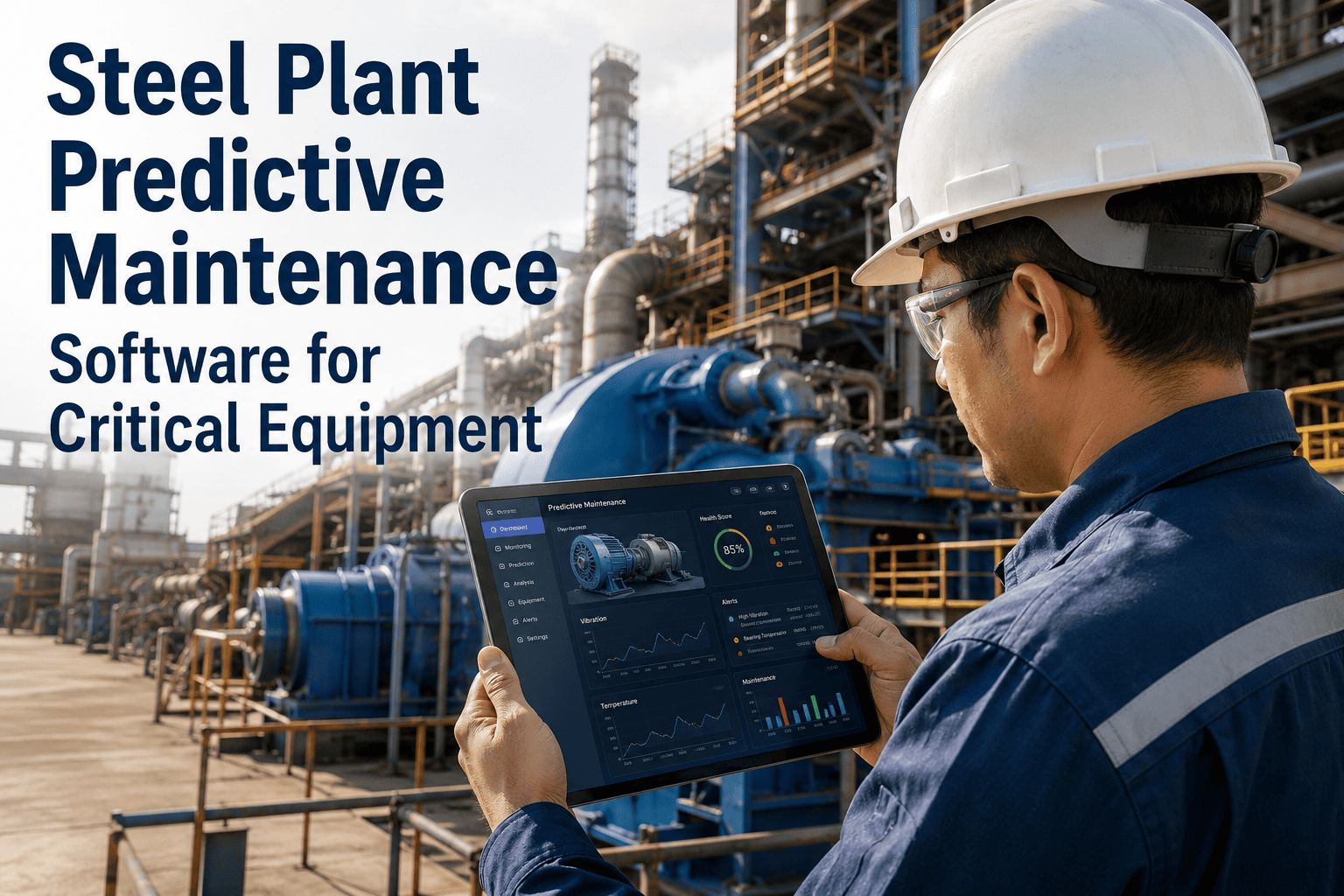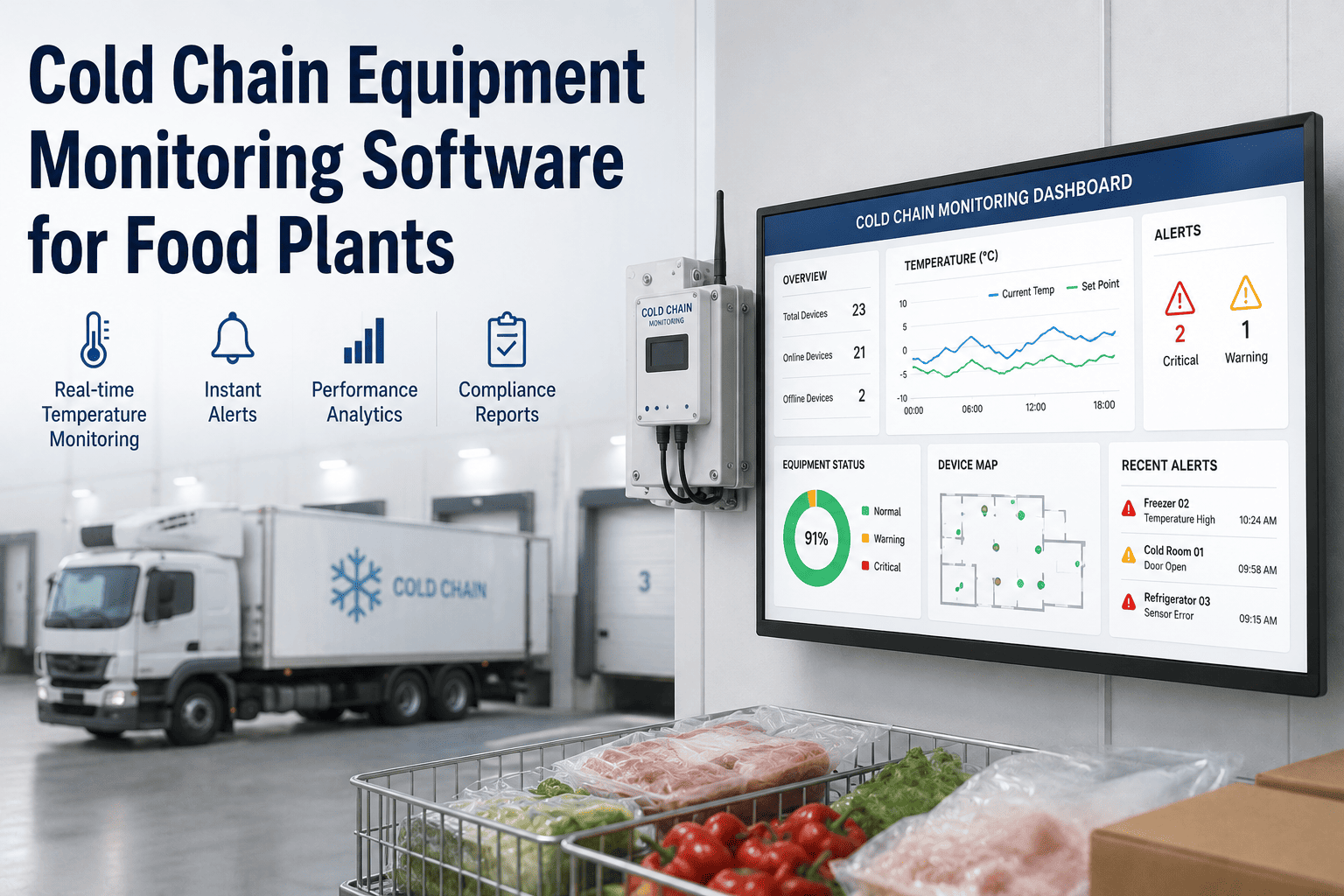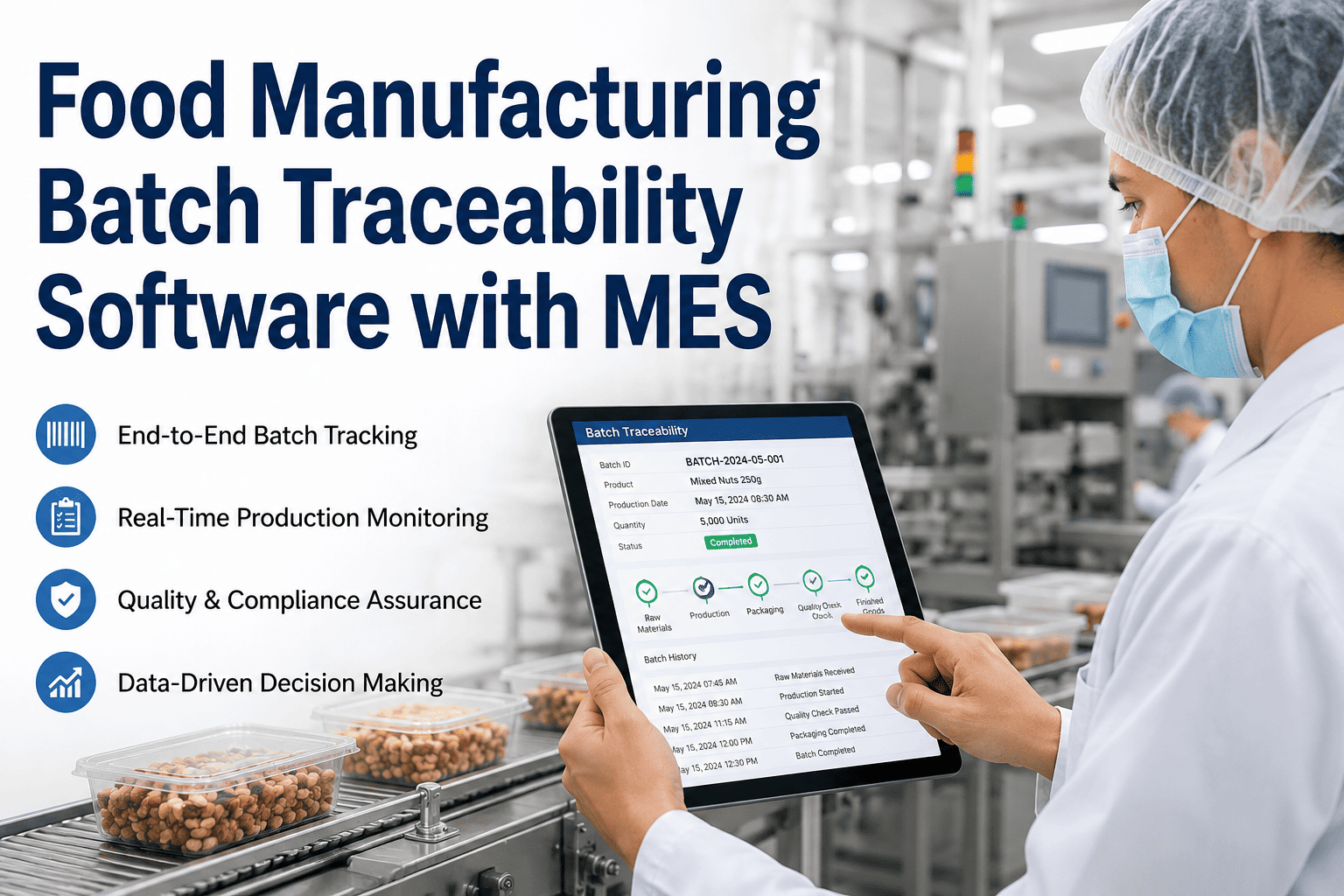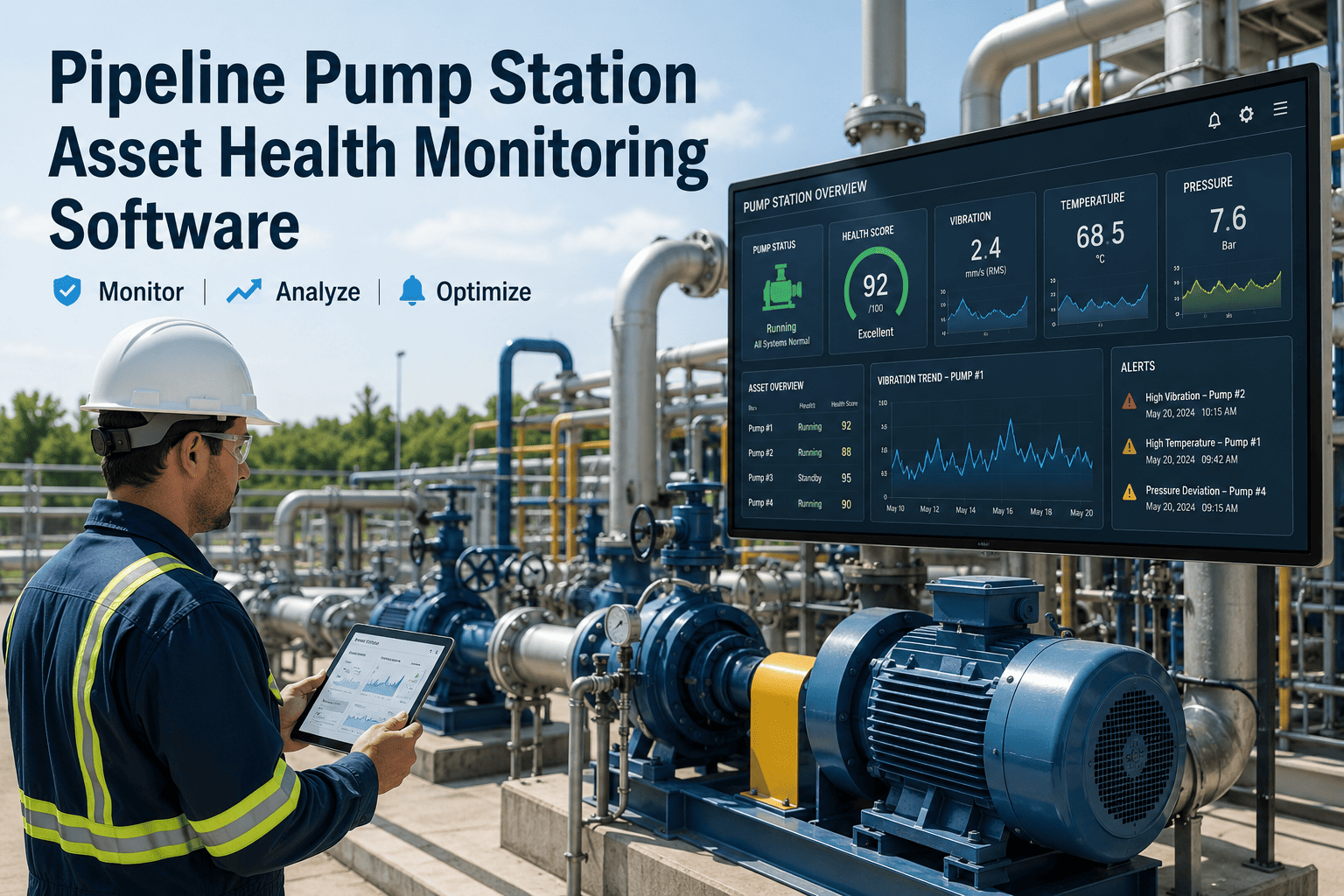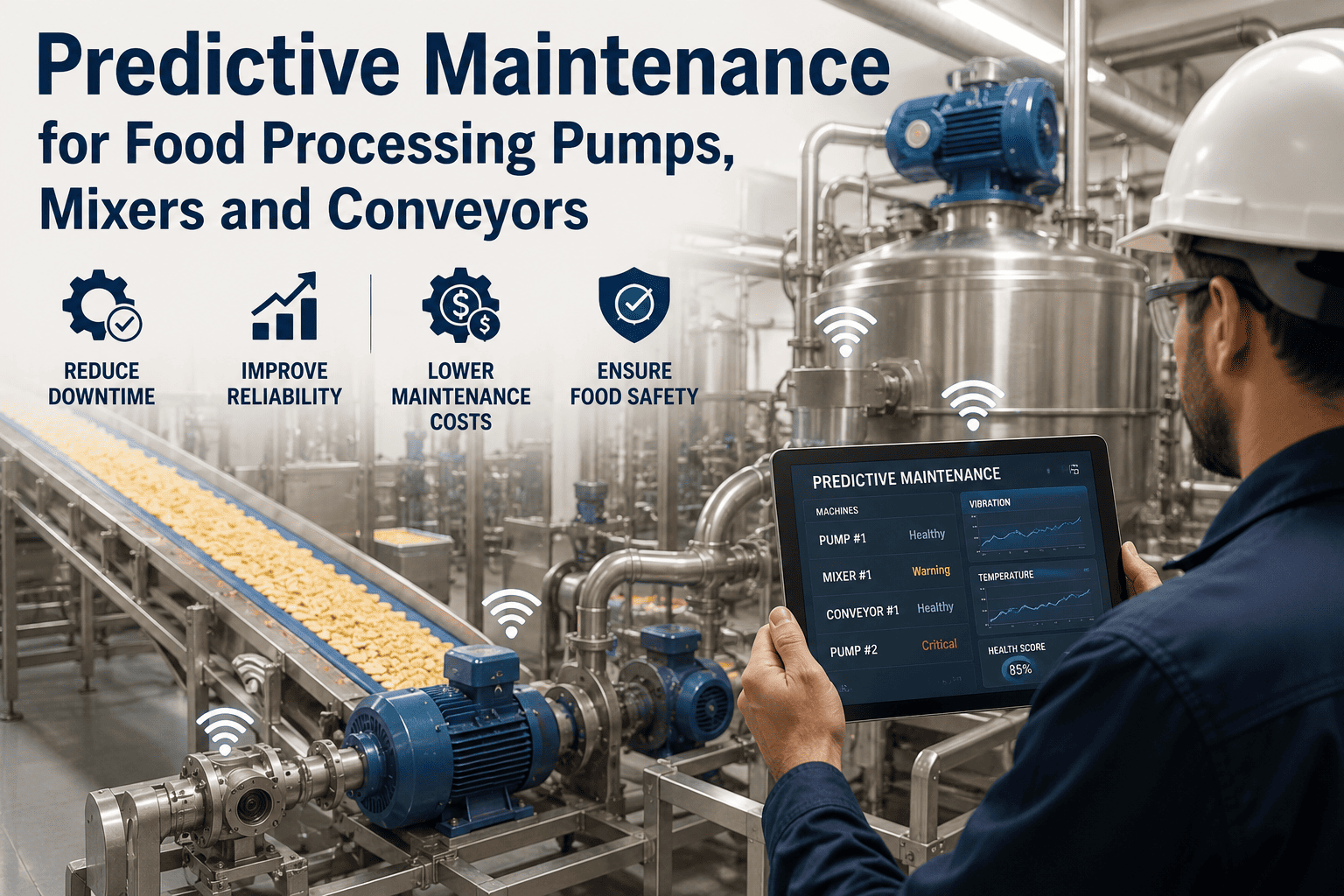
In the high-stakes environment of food and beverage processing, unplanned downtime on pumps, mixers, and conveyors can halt production lines, compromise food safety, and erode profit margins. Traditional reactive maintenance or even preventive schedules often fall short, leading to costly emergency repairs and wasted raw materials. iFactory's AI-driven predictive maintenance platform transforms this paradigm by continuously monitoring equipment health, analyzing vibration, temperature, and pressure data, and forecasting failures weeks in advance. This enables maintenance teams to move from firefighting to strategic planning, optimizing asset lifecycles and ensuring uninterrupted production. For plant managers and CTOs seeking to reduce downtime and enhance operational efficiency, iFactory provides a proven, scalable solution. Book a Demo to see how our predictive analytics can safeguard your food processing operations.
Transform Your Maintenance Strategy Today
Leverage AI-driven insights to predict failures and optimize asset performance in your food processing plant. Schedule a personalized demo now.
Why Food Processing Demands Predictive Maintenance
Food and beverage manufacturing environments are uniquely challenging. Equipment operates under strict hygiene standards, often in wet or corrosive conditions, and must comply with FDA and HACCP regulations. Unplanned failures on a pump or conveyor can lead to contamination risks, product recalls, and significant financial losses. Traditional maintenance approaches—reactive or time-based—are no longer sufficient. Predictive maintenance powered by AI and IoT offers a paradigm shift, enabling real-time condition monitoring and failure forecasting. By analyzing data from sensors on pumps, mixers, and conveyors, iFactory's platform provides actionable insights that help maintenance teams prioritize tasks, order parts just-in-time, and schedule interventions during planned downtime. This not only reduces unplanned outages but also extends asset life and improves overall equipment effectiveness (OEE). For enterprises aiming to achieve smart factory goals, predictive maintenance is a foundational capability.
Vibration Analysis for Rotating Equipment
Pumps and mixers are prone to bearing wear and misalignment. iFactory's AI models detect subtle changes in vibration patterns, alerting teams before catastrophic failure occurs. This enables precise, condition-based lubrication and alignment adjustments.
Thermal Monitoring for Conveyor Systems
Overheating motors and belts are common failure points. Continuous thermal monitoring via infrared sensors identifies hotspots, allowing preemptive cooling or replacement. This prevents fire hazards and production halts.
Pressure and Flow Analytics for Pumps
Centrifugal and positive displacement pumps are critical for moving ingredients and cleaning fluids. iFactory tracks pressure and flow rates, flagging deviations that indicate cavitation, blockages, or seal degradation. Early detection reduces repair costs.
Acoustic Emission Detection
Ultrasonic sensors capture high-frequency sounds from mixers and conveyors, identifying early-stage bearing defects or gear wear. This non-invasive technique adds an extra layer of sensitivity, especially for slow-speed equipment.
Step-by-Step Implementation Journey
Asset Inventory and Criticality Assessment
Identify all pumps, mixers, and conveyors. Classify by criticality based on production impact and safety risk. iFactory's onboarding team helps prioritize high-value assets for initial sensor deployment.
Sensor Installation and IoT Integration
Deploy vibration, temperature, pressure, and acoustic sensors. iFactory integrates with existing PLCs and SCADA systems, ensuring seamless data flow without disrupting operations. Wireless sensors simplify installation in hard-to-reach areas.
AI Model Training and Baseline Establishment
iFactory's machine learning algorithms analyze historical data to establish normal operating baselines. Models are trained to recognize early warning signatures for common failure modes in food processing equipment.
Dashboard Configuration and Alert Setup
Customizable dashboards display real-time health scores, trend charts, and predicted remaining useful life (RUL). Alerts are configured for multiple severity levels, sent via email, SMS, or integrated with existing CMMS.
Continuous Improvement and Model Refinement
As more data is collected, iFactory's AI models continuously improve prediction accuracy. Maintenance teams provide feedback on actual failures, enabling adaptive learning and reducing false positives over time.
Technical Deep Dive: Predictive Algorithms for Food Processing Assets
iFactory employs a hybrid approach combining physics-based models and data-driven machine learning. For rotating equipment like pumps and mixers, we use Fast Fourier Transform (FFT) to convert vibration time-series data into frequency spectra. Specific frequency bands correspond to bearing defects, gear mesh, and imbalance. Our convolutional neural networks (CNNs) classify these patterns with over 95% accuracy. For conveyors, we analyze thermal images using computer vision to detect hot spots that precede motor failure. Additionally, we apply Long Short-Term Memory (LSTM) networks to predict remaining useful life (RUL) based on historical degradation trends. This multi-modal approach ensures robust predictions even in noisy food plant environments where steam, cleaning agents, and ambient conditions can interfere with single-sensor methods.
To handle the variability in food processing—such as batch changes, CIP cycles, and seasonal production spikes—iFactory's models incorporate contextual data from MES and ERP systems. For example, a pump's vibration signature may differ during a high-viscosity chocolate run versus a low-viscosity water flush. By correlating sensor data with production schedules, the AI distinguishes normal process-related variations from true fault indicators. This reduces false alarms and builds trust among maintenance teams. The platform also supports edge computing for real-time inference, minimizing latency and bandwidth requirements. On-premise or cloud deployment options are available to meet data sovereignty and latency needs.
Maintenance Approaches Compared
| Approach | Cost | Downtime Impact | Food Safety Risk | Asset Life |
|---|---|---|---|---|
| Reactive (Run-to-Failure) | Very High (emergency repairs, lost production) | High (unplanned stops) | High (potential contamination) | Short |
| Preventive (Time-Based) | Moderate (scheduled parts, labor) | Moderate (planned stops) | Low (controlled) | Moderate |
| Condition-Based | Low (targeted interventions) | Low (minimal stops) | Low | Long |
| Predictive (AI-Driven) | Lowest (optimized resource use) | Very Low (predictable) | Very Low (early warning) | Maximum |
Ready to Eliminate Unplanned Downtime?
See how iFactory's predictive maintenance can transform your food processing operations. Book a demo to explore real-world use cases and ROI calculations.
Real-World Impact: Food Processing Success Stories
Global Dairy Processor Reduces Downtime by 52%
A leading dairy company deployed iFactory on 200 pumps and homogenizers across three plants. Within six months, unplanned downtime dropped by 52%, saving $1.2M annually. The AI predicted a critical homogenizer failure 14 days in advance, allowing scheduled replacement during a planned shutdown.
Snack Manufacturer Extends Conveyor Life by 35%
By monitoring 150 conveyors with thermal and vibration sensors, a snack manufacturer identified misalignment and bearing wear early. Preventive actions extended conveyor life by 35% and reduced spare parts inventory by 20%.
Beverage Plant Achieves 99% OEE on Mixing Lines
iFactory's predictive models for mixers and pumps helped a beverage plant achieve 99% OEE on high-speed mixing lines. The system detected a pump cavitation issue during a syrup batch, preventing a costly product recall.
Seamless Integration with Existing Systems
iFactory's platform is designed to complement your current technology stack. We offer native connectors for leading CMMS (e.g., SAP PM, Maximo, Fiix), SCADA systems (Ignition, Wonderware), and MES platforms. Data ingestion from OPC-UA, Modbus, and MQTT protocols is supported out-of-the-box. For plants with legacy equipment, our edge gateways can retrofit sensors without replacing existing controllers. Integration with ERP systems enables automatic work order generation based on predicted failures, streamlining the entire maintenance workflow. APIs are available for custom integrations, ensuring that iFactory fits seamlessly into your smart factory architecture.
Frequently Asked Questions
How does predictive maintenance improve food safety?
Predictive maintenance reduces the risk of equipment failure that could lead to contamination. For example, a failing pump seal can allow lubricants or cooling fluids to mix with food products. iFactory's AI detects seal degradation early, alerting maintenance teams to replace the seal before a breach occurs. This proactive approach supports HACCP compliance and minimizes recall risks. By maintaining equipment in optimal condition, you also ensure consistent processing parameters, such as temperature and pressure, which are critical for food safety. Contact our support team to learn more about food safety applications.
What sensors are needed for pumps, mixers, and conveyors?
iFactory supports a wide range of sensors, including accelerometers for vibration, thermocouples or RTDs for temperature, pressure transducers for flow systems, and ultrasonic microphones for acoustic emissions. For conveyors, thermal cameras can monitor motor and belt temperatures. The specific sensor type and placement depend on the asset's criticality and failure modes. iFactory's engineering team conducts a site survey to recommend the optimal sensor suite. Wireless sensors are available for hard-to-reach locations, and all data is transmitted securely to the iFactory platform. Book a demo to discuss your specific equipment.
How long does implementation typically take?
Implementation timelines vary based on plant size and asset count. A typical deployment for a medium-sized food processing plant with 50-100 critical assets takes 4-6 weeks. This includes sensor installation, network setup, AI model training, and dashboard configuration. iFactory's turnkey approach minimizes disruption to ongoing operations. Pilot projects can be completed in as little as 2 weeks, allowing you to validate ROI before full-scale rollout. Schedule a consultation to get a detailed timeline for your facility.
Can iFactory integrate with our existing CMMS?
Yes, iFactory offers pre-built integrations with major CMMS platforms such as SAP PM, IBM Maximo, Fiix, Maintenance Connection, and UpKeep. When a predictive alert is triggered, the system can automatically create a work order in your CMMS, including asset details, fault description, and recommended actions. This closed-loop workflow ensures that insights are acted upon promptly. For custom CMMS, our REST API allows easy integration. Contact support for integration specifics.
What is the ROI of predictive maintenance in food processing?
ROI varies but is typically realized within 6-12 months. Key benefits include reduced unplanned downtime (40-60% decrease), lower maintenance costs (20-30% reduction), extended asset life (20-40% increase), and improved OEE. Additionally, avoiding product recalls and compliance fines adds significant value. iFactory provides a customized ROI calculator during the demo, factoring in your specific asset base and production metrics. Book a demo to see your potential savings.
Future-Proof Your Food Processing Plant
Embrace Industry 4.0 with AI-driven predictive maintenance. iFactory empowers you to achieve zero unplanned downtime and maximize asset performance. Take the first step today.