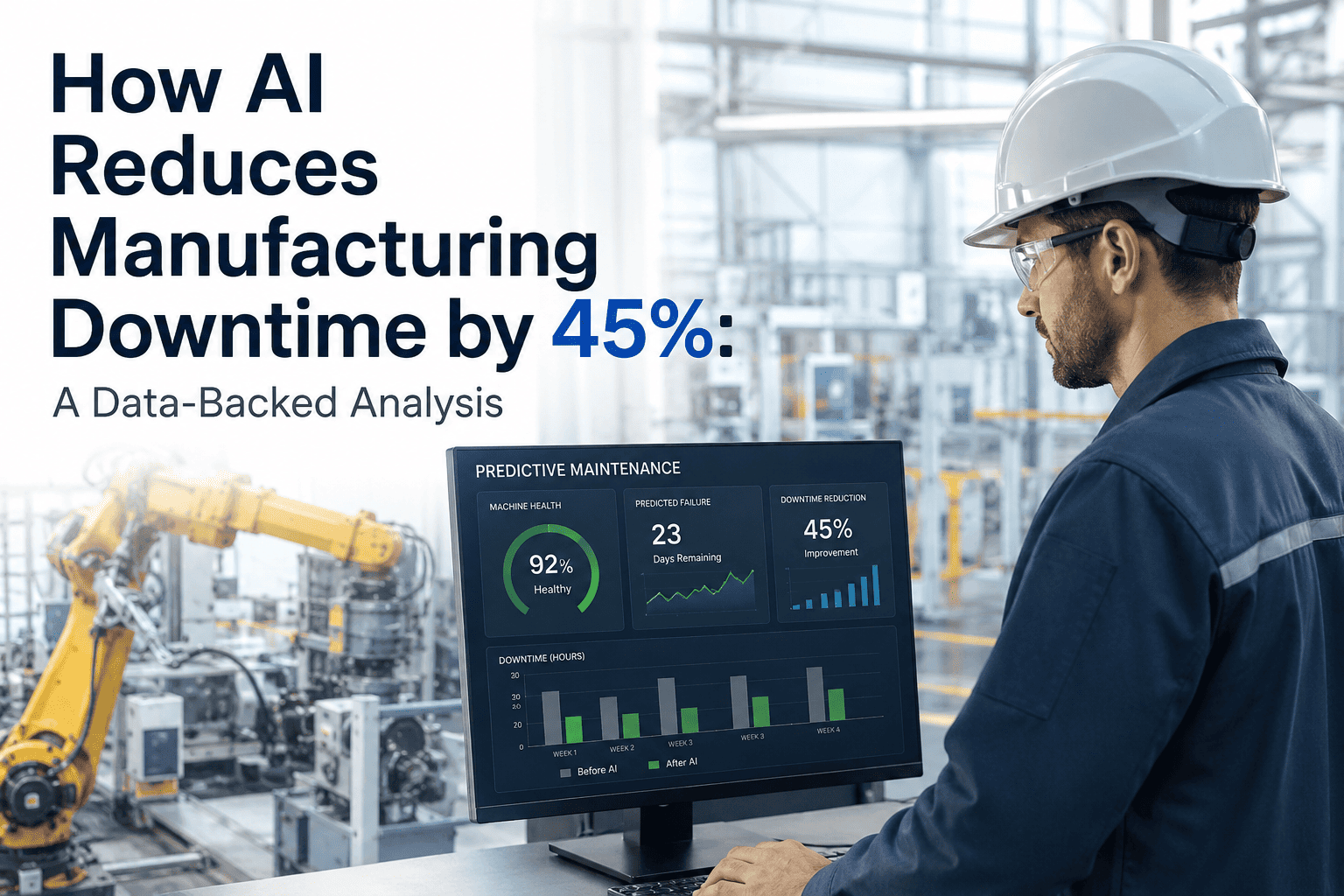
Every hour of unplanned downtime in a mid-size manufacturing facility costs between $100,000 and $260,000. Multiply that by the industry average of 800 unplanned downtime hours per year and you are looking at a silent budget drain that dwarfs most capital expenditure programs. The manufacturers absorbing those losses are not failing because of bad equipment. They are failing because they are still reacting — dispatching technicians after the alarm sounds, ordering emergency parts after the failure occurs and writing incident reports after the production window is already gone. AI-powered predictive analytics changes the math entirely: instead of responding to failure, you eliminate it before it begins. Manufacturers who have deployed machine learning on live sensor data are reporting 35–45% reductions in unplanned downtime, 25–30% cuts in maintenance spend, and MTBF improvements that compound year over year. This analysis breaks down how they are achieving it — and what it costs to get there.
How AI Reduces Manufacturing Downtime by 45%
A rigorous breakdown of how AI predictive analytics, sensor-driven ML models, and automated maintenance workflows eliminate unplanned downtime — with validated ROI benchmarks from real deployments.
The Hidden Cost of Reactive Maintenance
Most manufacturers measure downtime in hours. The smarter measure is dollars per hour — and then opportunity cost, customer penalty clauses, emergency labour premiums, and accelerated asset degradation from run-to-failure cycles. When those components are totalled, the true cost of a reactive maintenance posture is typically 3–5 times what the maintenance budget itself reflects. AI downtime reduction strategies attack each of these cost drivers simultaneously, not sequentially.
How AI Predictive Analytics Actually Works on the Factory Floor
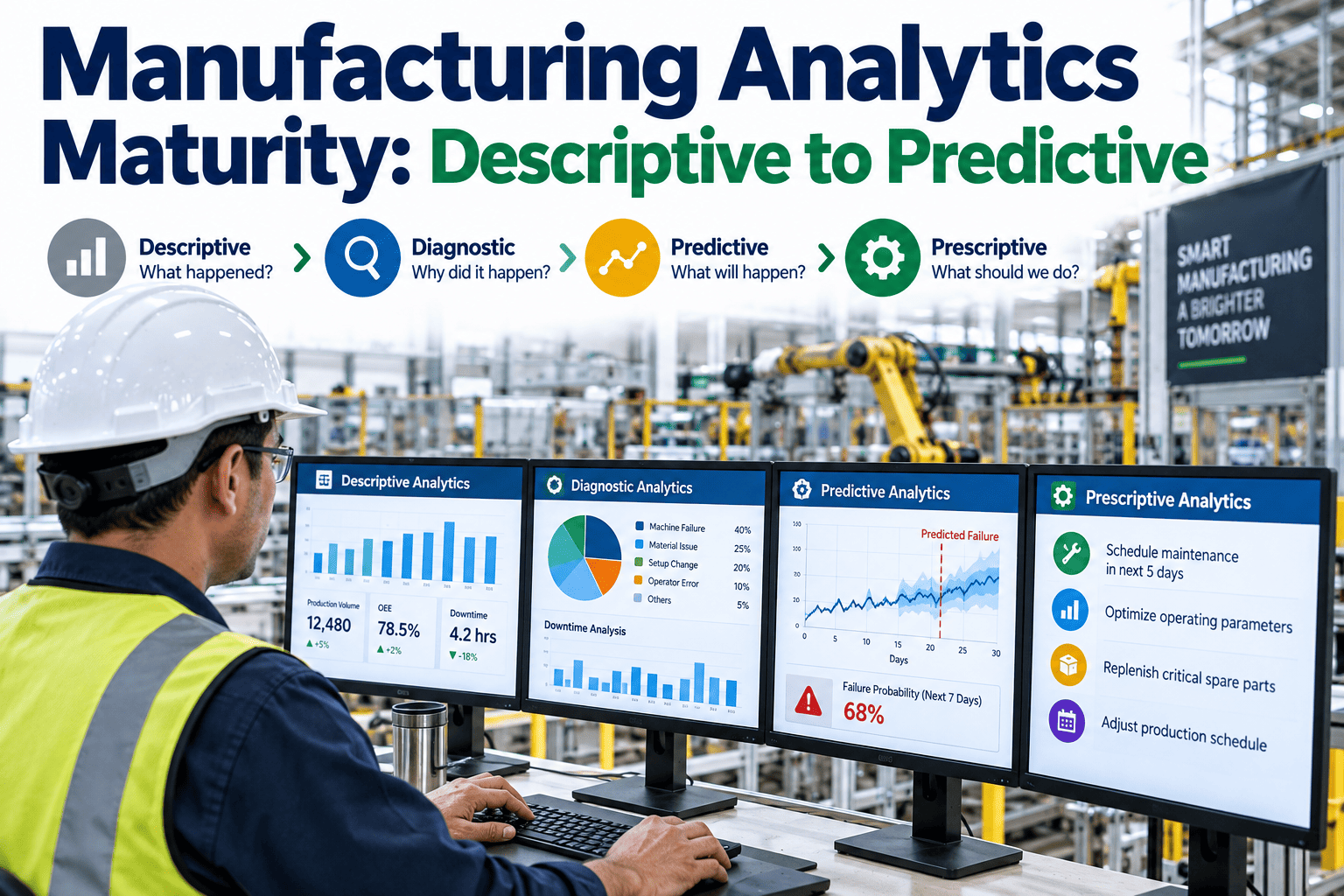
Reducing manufacturing downtime with AI is not a single-point intervention. It is a layered system — sensors feeding data pipelines, ML models learning normal operating envelopes, and anomaly detection algorithms that distinguish signal from noise. Understanding each layer clarifies both the capability and the deployment sequence.
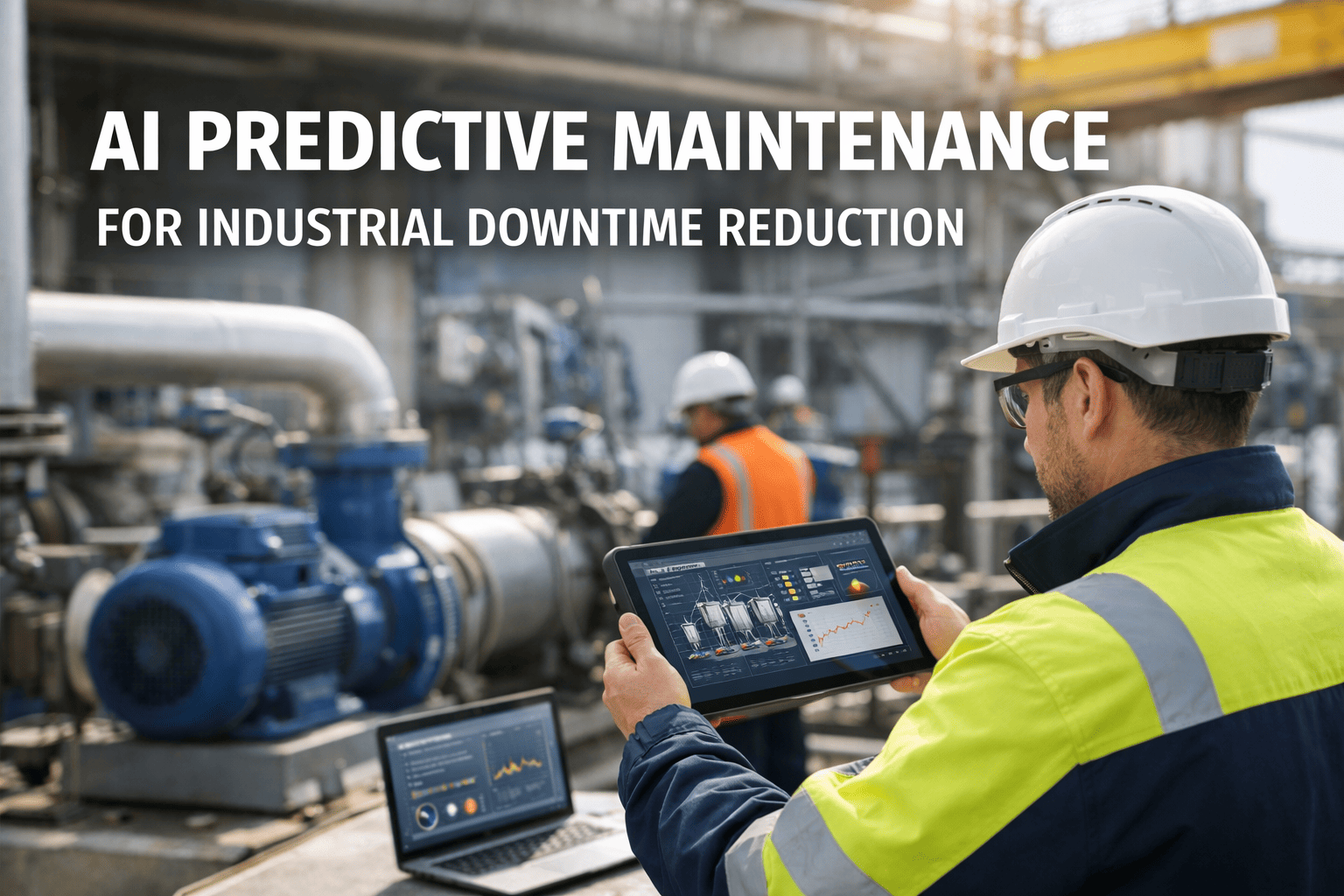
Vibration, temperature, current draw, and pressure sensors stream data at 1–100Hz from critical assets. Industrial vibration monitors now cost $50–100 per point, making comprehensive instrumentation economically viable for assets previously considered too low-value to monitor. This live data stream is the foundation that makes everything else possible — AI models are only as good as the sensor infrastructure feeding them.
During the first 4–8 weeks of deployment, LSTM and gradient boosting models learn what "normal" looks like for each specific asset under its specific load conditions. This is asset-specific, not generic — a pump operating at 60% load in a 35°C ambient environment has a different normal than the identical pump model at a different site. This contextualisation is why AI downtime analysis outperforms generic threshold alerting by a wide margin.
Once baseline models mature, the platform begins identifying deviations that match known failure precursor signatures. Bearing wear, impeller cavitation, winding insulation degradation, and lubrication breakdown each produce recognisable sensor signatures days or weeks before catastrophic failure. The AI matches live data patterns against a trained library of failure modes, delivering alerts with failure-type identification — not just a generic "something is wrong" notification.
RUL models provide a continuously updating estimate of how many operating hours remain before intervention is required. These projections allow maintenance planning teams to schedule interventions during planned production windows, batch work orders for technician efficiency, and pre-position parts from standard procurement channels. The 14–21 day advance warning window is where the majority of cost avoidance is generated.
The Three-Pillar Impact on Manufacturing Operations
- Maintenance shifts from reactive dispatch to planned intervention
- Technicians receive pre-built work orders with correct parts and procedures
- Planning horizon extends from hours to weeks
- Emergency overtime labour reduced by 40–60%
- Cross-shift knowledge captured in the AI model, not in individuals
- Spare parts inventory reduced 20–35% through demand predictability
- Emergency procurement premiums eliminated
- Energy waste from degraded assets detected and corrected
- Insurance premiums reduced through documented maintenance compliance
- Compliance documentation auto-generated — zero manual reporting hours
- OEE improvements of 8–15 percentage points in first year
- Production capacity unlocked from recaptured downtime hours
- Asset lifespan extended 15–25% through optimised maintenance timing
- CAPEX deferral on replacements backed by RUL data
- Competitive advantage: uptime reliability as a contract differentiator
Validated ROI Benchmarks Across Asset Classes
The financial case for AI factory uptime management varies by asset type, failure cost, and deployment scale. The following benchmarks are derived from documented deployments across discrete and process manufacturing environments.
Why Phased Deployment Outperforms Big-Bang Implementations
The manufacturers achieving 45% AI downtime reduction did not deploy across their entire facility on day one. They started with 10–20 critical assets, proved value within 6–10 weeks, and used documented savings to fund and justify each subsequent expansion phase. This approach is not merely cautious — it is structurally superior. Each phase produces training data that improves model accuracy for the next phase. Maintenance teams build operational confidence incrementally rather than facing a system-wide behaviour change overnight. And executive stakeholders see financial proof before committing to full-scale investment.
Find Out How Much Downtime is Costing Your Facility Right Now
Our engineers will audit your current asset monitoring posture, identify your three highest-cost failure risks, and model the ROI of a phased AI deployment — at no cost. Most audits surface $400,000–$1.2M in addressable annual losses within 30 minutes.