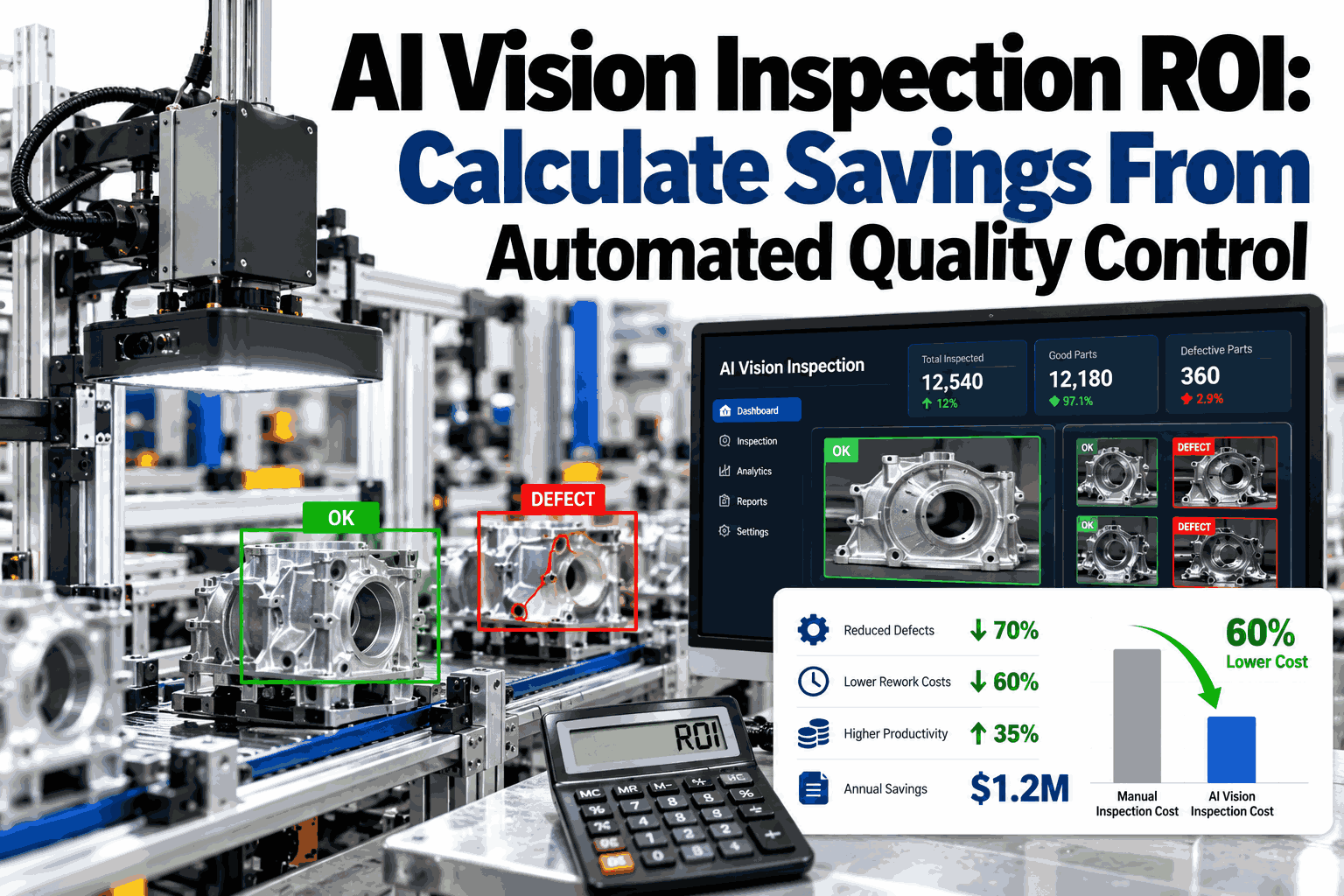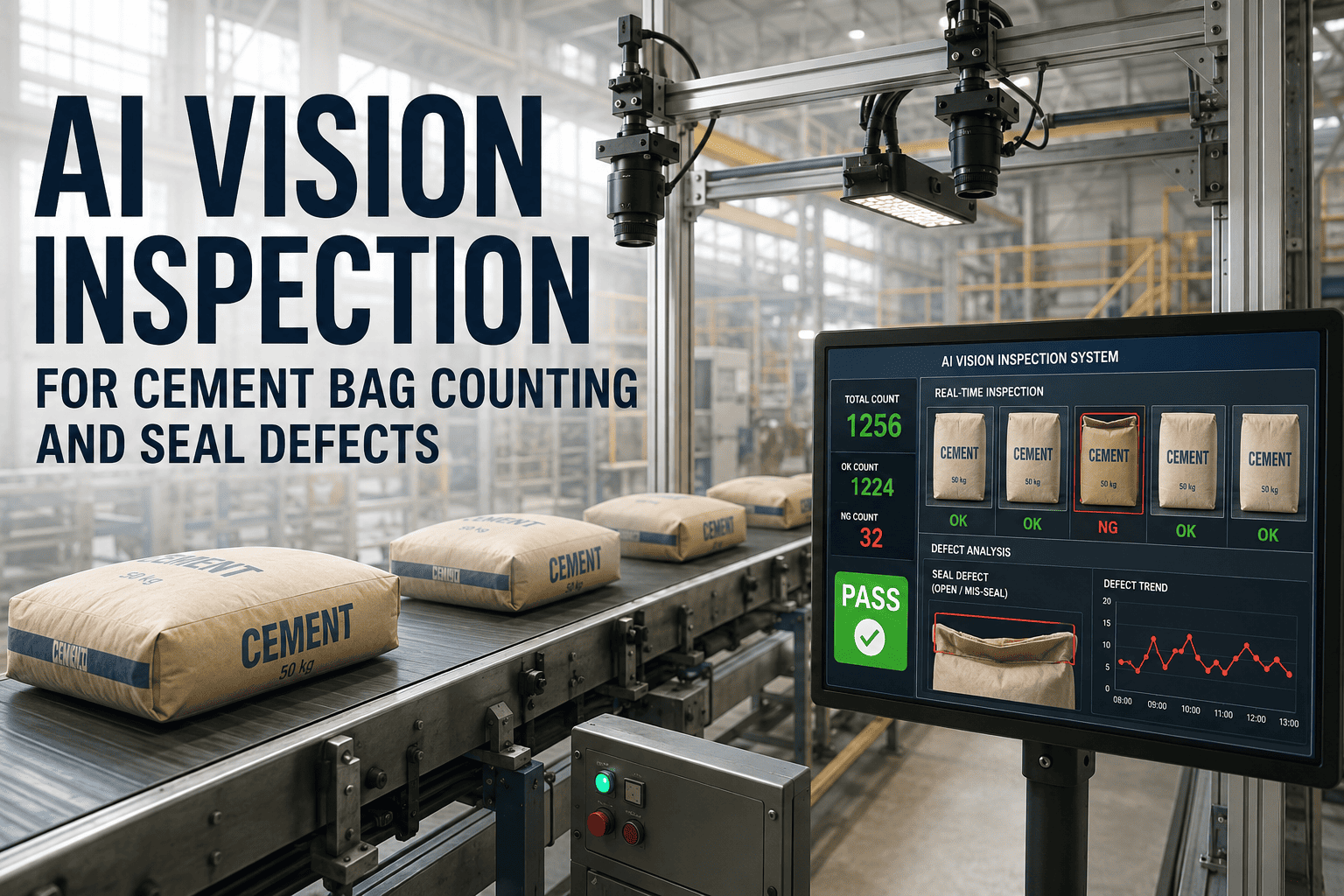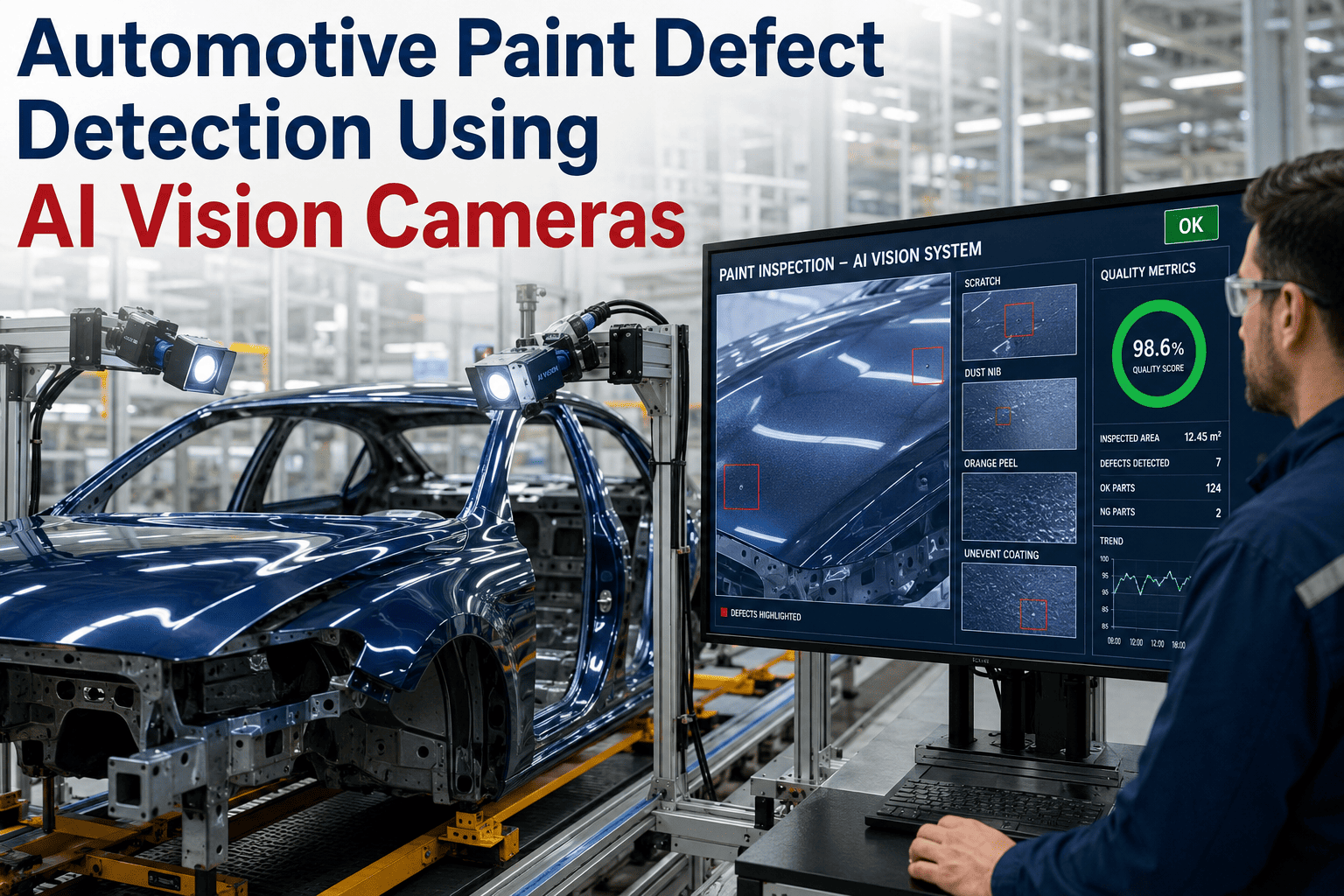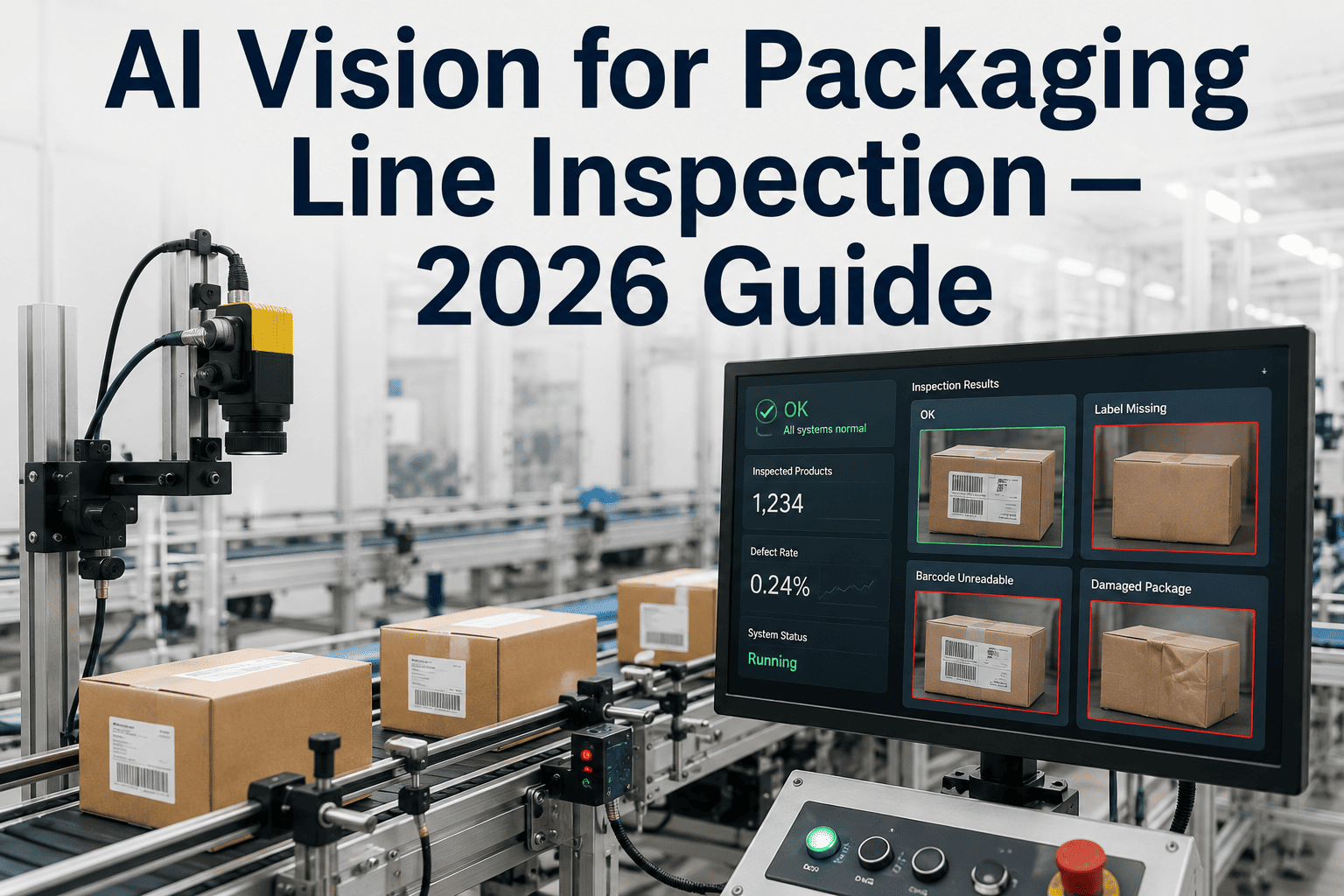
Every second a packaging line runs, it produces a decision point most plants never see: is this seal tight, is this label straight, is this bottle filled to spec. On a line moving 300 to 600 units a minute, a human inspector can catch maybe a fraction of the defects that matter, and by the time a customer complaint or a retailer chargeback arrives, thousands of flawed units have already shipped. AI vision cameras close that gap by inspecting every single unit, not a sample, catching seal failures, label misalignment, and fill-level deviations in real time before cartons ever leave the line. Manufacturers running these systems are reporting scrap reductions near 40% and customer complaint drops of roughly 60% within the first two quarters. If your packaging line is still relying on spot checks, Book a Demo to see how iFactory's vision platform fits your existing conveyor and filler setup.
See Every Unit, Not Just a Sample.
iFactory AI Vision cameras inspect 100% of packages on your line for seal integrity, label placement, and fill accuracy — catching defects before they reach a pallet.
Why Manual and Sample-Based Packaging Inspection Keeps Failing Plants
Most packaging lines built before 2015 were designed around a sampling philosophy: pull one unit off the line every few minutes, check it against a spec sheet, and assume the rest of the batch is fine. That assumption breaks down constantly. A seal head can drift out of tolerance mid-shift because of a temperature fluctuation, a label applicator can slip because of a roll change, and a filler valve can start under-dosing because of a worn gasket — none of which announce themselves between sample checks. By the time a supervisor notices a trend on a paper log, an entire shift of product may already be non-compliant.
The financial exposure is not abstract. A single retailer chargeback for under-filled product, a recall triggered by a compromised seal, or a brand-damaging social media post about a crooked label can cost more than a full year of inspection camera investment. AI vision systems remove the sampling gamble entirely by inspecting every package that passes the camera, flagging deviations in milliseconds, and routing bad units to reject before they reach a case packer.
Seal Detection
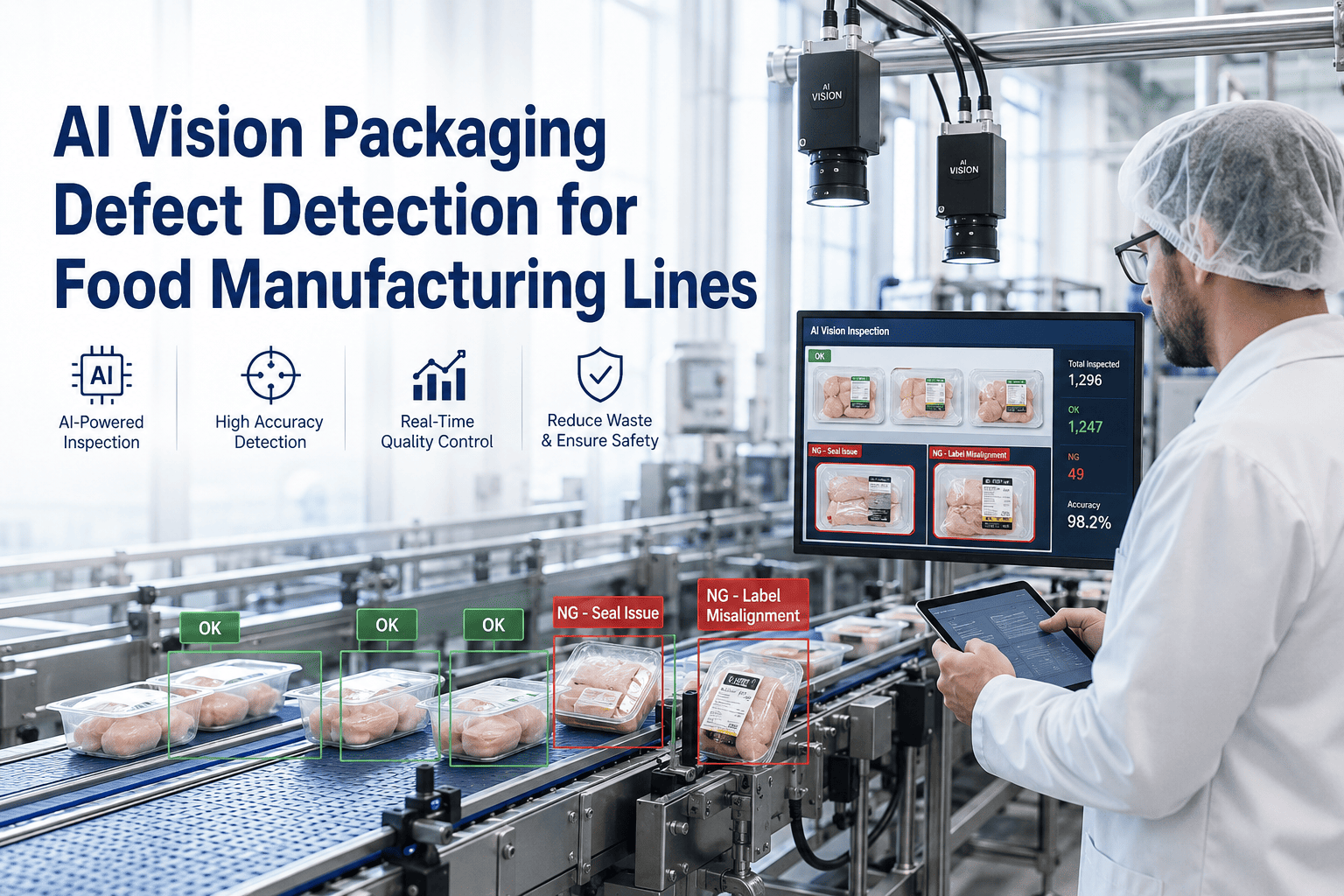
High-resolution cameras scan seal edges for gaps, wrinkles, and incomplete fusion at full line speed.
Label Verification
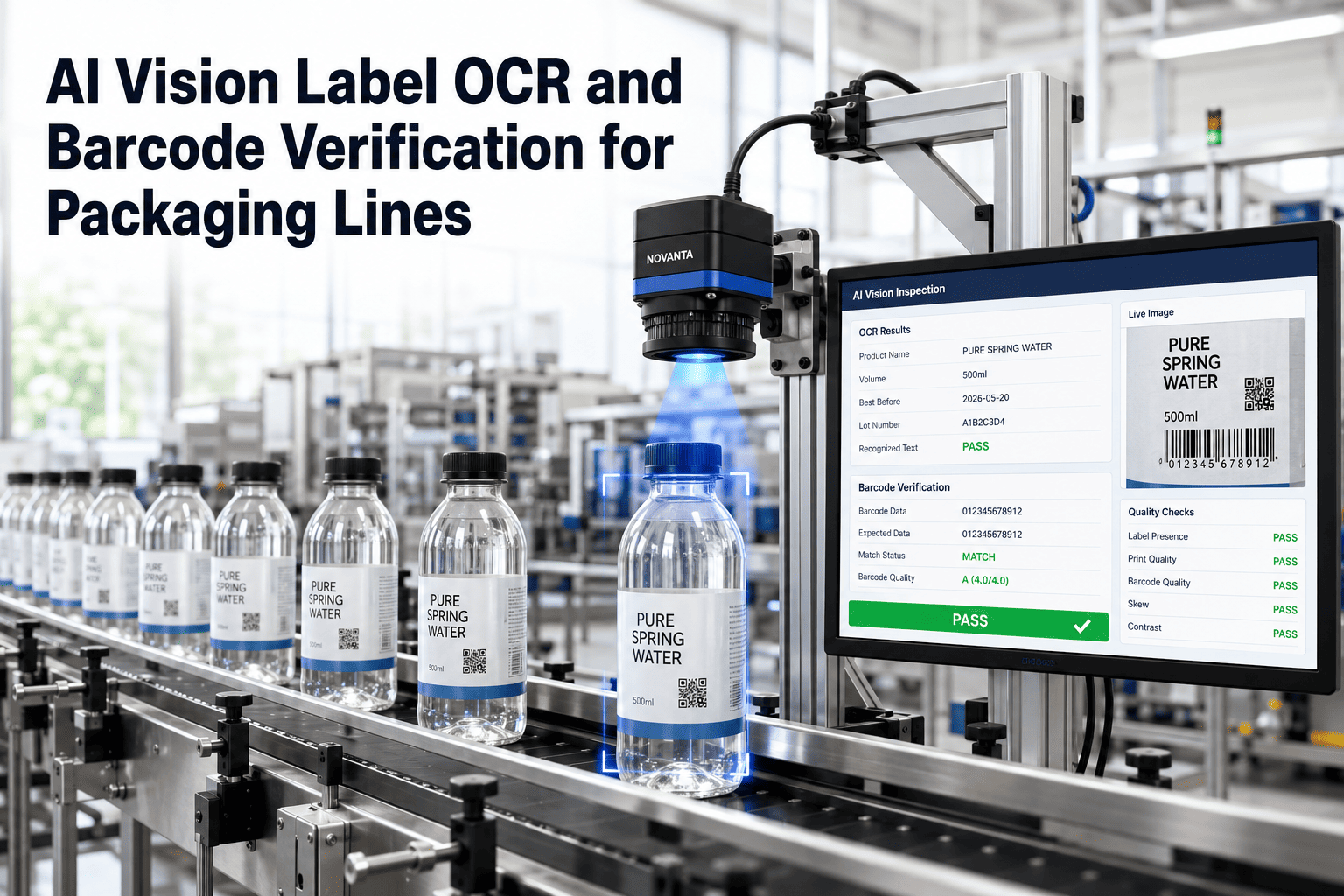
Vision models check label position, skew angle, and print clarity against a reference template.
Fill-Level Check
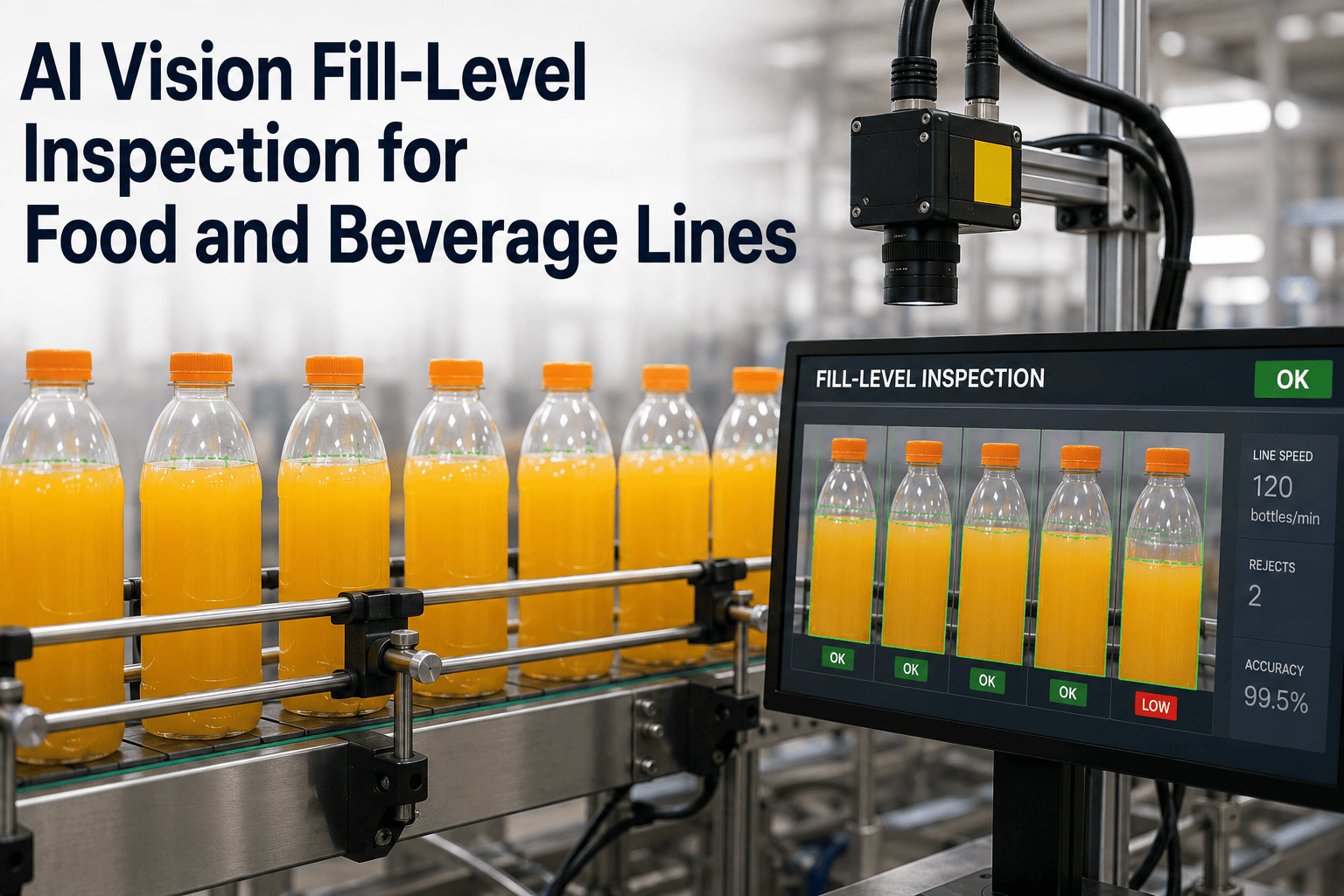
Contour and depth analysis confirms fill height falls within the approved tolerance band.
Reject & Log
Non-conforming units are diverted automatically, and every event is logged for root-cause review.
The Four Defect Categories That Drive Most Packaging Complaints
Across food, beverage, pharmaceutical, and FMCG packaging lines, the overwhelming majority of quality escapes trace back to a small number of recurring defect categories. Understanding where these defects originate helps plant teams decide where to place cameras and which inspection logic to prioritize first.
Incomplete heat seals, channel leaks, and contamination on the seal surface account for a large share of shelf-life complaints and are the leading cause of retailer rejections in flexible packaging.
Skewed, wrinkled, or missing labels create compliance risk when regulatory or allergen information becomes unreadable, and they are among the most visible defects to end consumers.
Underfill triggers weights-and-measures violations while overfill increases material cost directly, making fill accuracy one of the highest ROI inspection points on any line.
Smudged date codes and unreadable barcodes cause downstream scanning failures at distribution centers, generating chargebacks long after the product has left the plant.
Manual Spot Checks vs AI Vision Inspection, Side by Side
The gap between manual and camera-based inspection is easiest to see in direct comparison. The table below reflects the operational differences plant quality teams report after moving from human sampling to continuous AI vision coverage on packaging lines.
| Inspection Factor | Manual Sampling | AI Vision Camera |
|---|---|---|
| Coverage per shift | 1–5% of units checked | 100% of units checked |
| Detection speed | Minutes to hours delay | Milliseconds, inline reject |
| Consistency across shifts | Varies by inspector fatigue | Identical criteria every unit |
| Root-cause traceability | Paper logs, limited detail | Timestamped image evidence |
| Typical scrap reduction | Baseline | Up to 40% reduction |
| Complaint reduction | Baseline | Up to 60% reduction |
How Packaging Lines Get From Pilot to Full Line Coverage
Plants rarely install vision inspection across every line simultaneously, and they should not. A staged rollout de-risks the investment and gives quality and operations teams time to tune detection thresholds against real product variation before scaling to additional lines.
Camera Placement & Baseline Capture
Cameras are mounted at the seal, label, and fill checkpoints on one pilot line, capturing thousands of reference images across normal production variation.
Model Tuning & Threshold Calibration
Detection thresholds are calibrated against your actual defect history so the system flags real issues without generating nuisance rejects.
Live Reject Integration
The system moves from monitoring-only to active reject control, automatically diverting non-conforming units and logging every event.
Multi-Line Scale-Out
Proven configuration templates are replicated across additional lines and product SKUs with a fraction of the original setup effort.
What Plants Report After Installing AI Vision on Packaging Lines
These figures reflect outcomes reported by manufacturers across food, beverage, and consumer goods packaging operations after deploying continuous AI vision inspection in place of manual sampling.
What Quality Teams Should Do Before Their Next Line Audit
If your last three quality escapes trace back to seal, label, or fill defects, the fix is rarely more training or more paper checklists — it is closing the visibility gap that sampling inherently leaves open. Plants that move first on continuous inspection typically do so after a specific chargeback or recall scare, but the ones that get the most value are the ones that act before that event, not after it.
Start with the line that has generated the most complaints or the tightest fill tolerance in your portfolio. A single pilot line with clear before-and-after metrics builds the internal case for plant-wide rollout far more effectively than a broad but shallow deployment. iFactory's team can walk your quality and operations leads through what a pilot looks like on your specific line configuration.
Packaging Line AI Vision — Common Questions
How fast does an AI vision camera need to run to keep up with a high-speed packaging line?
Modern inspection systems process frames in milliseconds, which comfortably keeps pace with lines running 300 to 600 units per minute. The camera and reject mechanism are synchronized so a flagged unit is diverted before it reaches the case packer, with no line slowdown required during normal operation.
Will the system generate false rejects on normal product variation?
Early in calibration some nuisance rejects are expected, which is why the tuning phase uses your actual historical defect data rather than generic thresholds. Most plants reach stable, low false-reject rates within the first few weeks. Our team can walk through the calibration process during a Book a Demo session.
Can one camera system handle multiple product SKUs on the same line?
Yes. Detection templates are stored per SKU, so changeovers simply load a different reference profile rather than requiring new hardware. This is particularly valuable for co-packers and plants running frequent product changeovers on shared lines.
Does this replace our quality team or just reduce their manual workload?
It does not replace the quality team, it changes what they spend time on. Instead of manually sampling units, quality staff review flagged exceptions and trend data, focusing their expertise on root-cause investigation rather than repetitive visual checks.
What kind of packaging formats can be inspected — bottles, cartons, pouches?
The platform supports rigid containers, cartons, flexible pouches, and blister packs, since detection logic is configured per format rather than hardcoded. If you have questions about your specific format, our support team can advise on the right camera and lens configuration.
Stop Shipping Defects You Can't See.
Talk to iFactory's packaging automation team about a pilot deployment on your highest-complaint line — most plants see measurable results within the first month.