Zero-Defect Quality Control: Automated SPC and SQC with Edge AI for Manufacturing Excellence

By will Jackes on March 21, 2026

quality-control-zero-defect-automated-spc-sqc-edge-ai

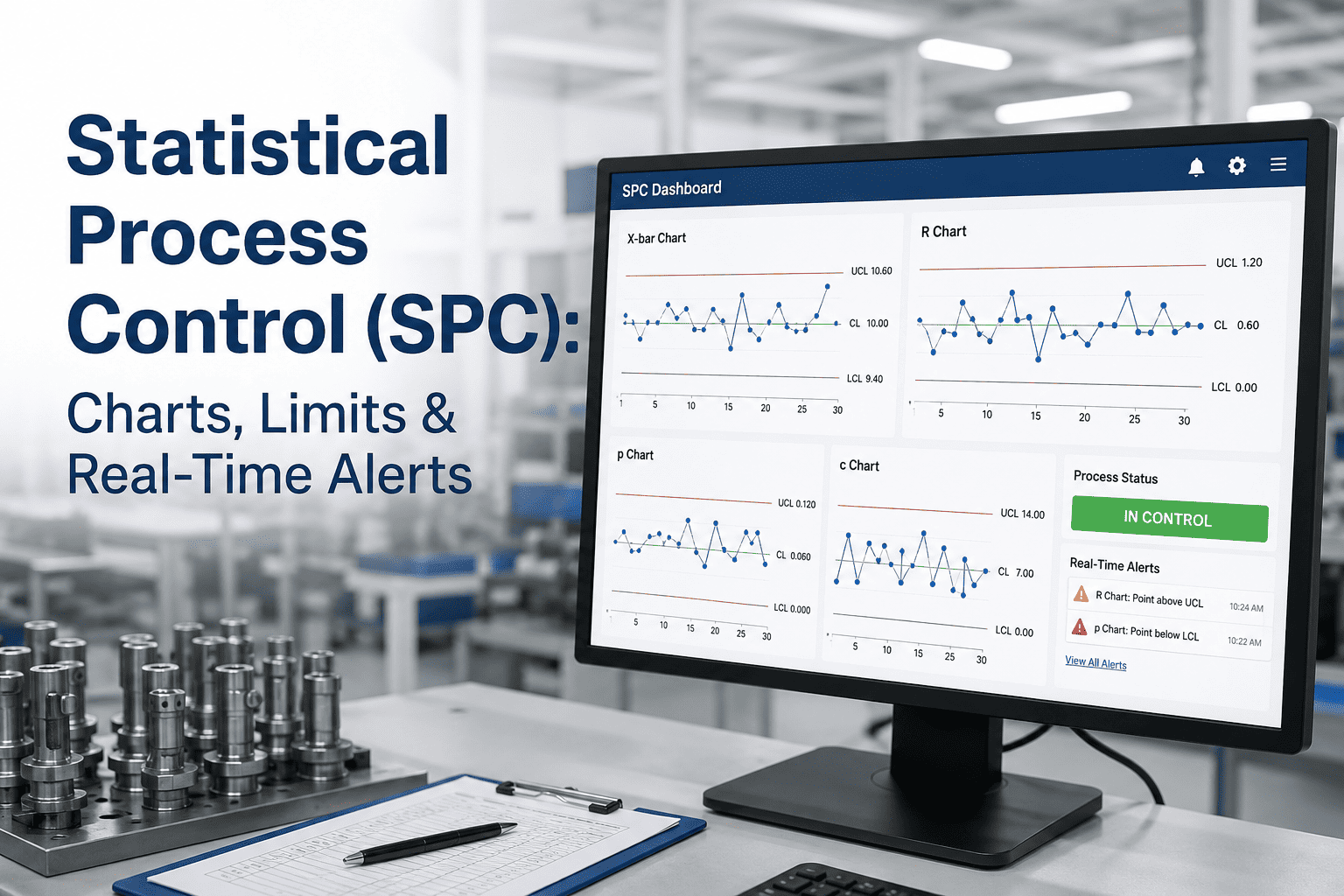
Your quality team is still catching defects after they've been made. That's the fundamental problem with traditional SPC and SQC — control charts tell you what went wrong last shift, not what's going wrong right now. AI changes the game entirely: defect detection rates improve by up to 90% compared to manual inspection, false alarms drop by 40%+, and the system corrects process drift before a single bad part is produced. In automotive, pharma, and semiconductor manufacturing, where a single escaped defect can trigger a recall costing millions, the shift from reactive to predictive quality isn't optional — it's survival. This guide shows how edge AI transforms SPC and SQC from lagging reports into a real-timezero-defect engine. Book a free quality assessment to benchmark your defect escape rate.

Upcoming iFactory Event

AI-Native Digital Transformation for Smart Manufacturing

Join iFactory's expert-led session covering AI-driven quality control, automated SPC/SQC, computer vision inspection, and predictive quality architecture — with live demos and open Q&A for your specific plant challenges.

Register Now — Free Session →

90% Better defect detection with AI vision vs manual inspection Jidoka Tech, 2025

40%+ Fewer False alarms with AI-enabled SPC vs traditional control charts IJSRM Research, 2025

70% Of unplanned downtime traces back to poor quality control Factory AI Research, 2026

25% Quality Gain Quality improvement within 3–6 months with iFactory iFactory Customer Results

Traditional SPC Is Broken: Why Control Charts Can't Prevent Defects

SPC was revolutionary in the 1950s. In 2026, it's a rearview mirror — showing you where defects happened, not where they're about to happen. Here are the 4 fundamental limitations of traditional quality control, and how AI-driven SPC eliminates each one.

1

Static Thresholds Can't Handle Dynamic Processes

Traditional SPC uses fixed control limits calculated from historical data. But manufacturing processes shift — materials change batch to batch, tools wear gradually, ambient temperature fluctuates seasonally. Fixed thresholds either miss slow drifts or trigger constant false alarms that operators learn to ignore.

iFactory Fix: AI-driven SPC uses adaptive machine learning models that continuously recalibrate to process variation, material changes, and seasonal effects. Control limits evolve with your process — catching real drift while eliminating false positives.
2

Single-Variable Charts Miss Multi-Variable Root Causes

A defect is rarely caused by one parameter. It's the interaction between spindle temperature, feed rate, material viscosity, and ambient humidity that creates the defect condition. Traditional X-bar and R charts monitor variables in isolation — they literally cannot see multi-variable correlations.

iFactory Fix: AI models analyze multivariate correlations across hundreds of process parameters simultaneously. When temperature rises AND vibration shifts AND material lot changes — the system identifies the combined pattern that precedes a defect, not just individual out-of-spec readings.
3

Manual Sampling Misses What Happens Between Samples

SQC sampling inspects one part in every 50 or 100. What about the 49 parts in between? At high line speeds, hundreds of defective units can be produced between samples. Sampling-based quality control is statistically valid — but operationally blind to what happens between inspection points.

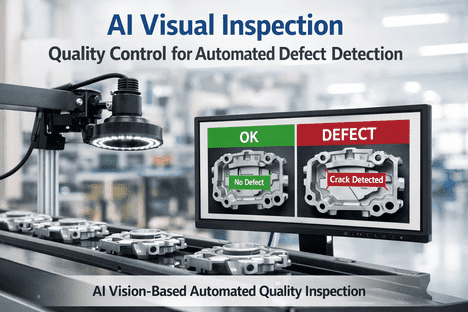
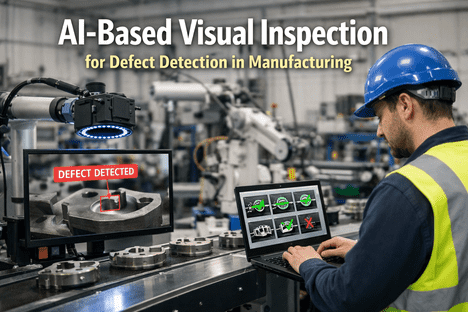
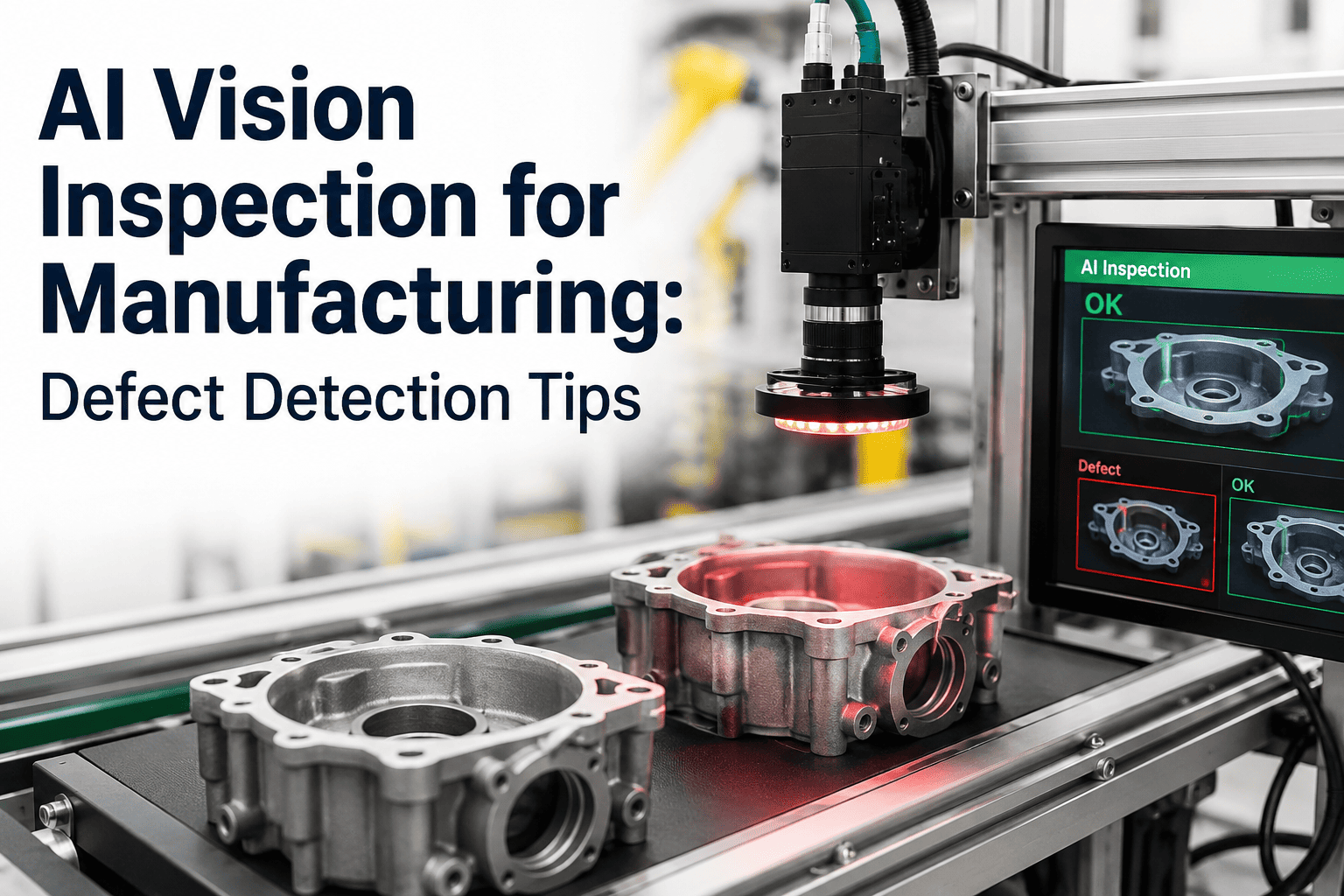
iFactory Fix: AI vision systems and inline sensors inspect 100% of production — every single unit, every single second. Edge AI processes inspection data locally in sub-5ms, making real-time go/no-go decisions at line speed with zero sampling gaps.
4

Detection Happens After the Defect — Not Before

The entire philosophy of traditional QC is detect-and-reject. By the time you find the bad part, you've already wasted the material, the machine time, and the energy to produce it. Predictive quality shifts the paradigm from detection to prevention — correcting process parameters before defects are created.

iFactory Fix: AI models predict quality excursions 2–15 minutes before they manifest as defects. The system adjusts process parameters proactively — protecting quality before a single defective part is produced. Prevention, not detection.

The AI Quality Stack: From Sensor to Zero-Defect Decision

iFactory's quality architecture is a 4-layer stack that replaces manual SPC/SQC with autonomous, real-time quality intelligence. Each layer adds capability — from raw data capture to predictive prevention.

Sense Layer 1 Vision cameras, vibration sensors, temperature probes — 100% inline data capture at line speed
Detect Layer 2 Edge AI classifies defects in sub-5ms — microscopic flaws humans can't see at full production speed
Predict Layer 3 ML models forecast quality drift 2–15 minutes ahead by correlating multivariate process data
Prevent Layer 4 Autonomous parameter adjustment corrects process drift before defects are created
Still running manual SPC on spreadsheets? iFactory replaces end-of-shift quality reports with real-time, AI-driven SPC that catches drift as it happens — not hours later. Get Your Quality Assessment →

How iFactory Delivers Zero-Defect Quality: The 3-Phase Deployment

Zero-defect manufacturing isn't a goal you declare — it's an architecture you deploy. iFactory's 3-phase approach builds quality intelligence layer by layer, delivering measurable scrap reduction at every phase.

01
Phase 1 · Weeks 1-4 · See Everything

Real-Time Quality Monitoring & Automated SPC

Deploy inline sensors and AI vision on your highest-scrap production lines. iFactory replaces manual control charts with live, adaptive SPC dashboards — auto-calculating Cp, Cpk, and process capability in real time. Every quality event is captured, categorized, and visualized instantly.

100% inline inspection — zero sampling gaps Live Cp/Cpk and control chart dashboards Automated root cause Pareto analysis Instant alerts on SPC rule violations
02
Phase 2 · Weeks 5-10 · Predict Before It Breaks

Predictive Quality & Multivariate Correlation

AI models learn the relationships between process parameters and quality outcomes. When a temperature drift, tool wear pattern, or material variation begins trending toward a defect condition, the system alerts operators 2–15 minutes before defects appear — with the specific parameter adjustment needed.

Multivariate process-quality correlation 2–15 minute advance defect prediction Specific corrective action recommendations Continuous model improvement from new data
03
Phase 3 · Weeks 11-16 · Prevent Automatically

Autonomous Quality Control & Closed-Loop Correction

AI agents take autonomous corrective action within bounded parameters — adjusting speeds, temperatures, pressures, and feed rates to maintain quality without operator intervention. Human-in-the-loop governance ensures safety-critical decisions always have oversight. Quality becomes self-correcting.

Closed-loop parameter auto-correction Bounded autonomy with operator override Audit trail for every AI quality decision Compliance-ready for ISO 9001, IATF 16949

Industry-Specific Impact: Where AI Quality Matters Most

AI-based visual inspection increases defect detection rates by up to 90% compared to human inspection. Deep learning systems process 67,000 profiles per second with ±0.03mm precision — catching microscopic flaws humans simply cannot see.

Jidoka TechQuality Control Automation Trends, 2025
Automotive: IATF 16949 compliance demands documented process capability. iFactory automates Cp/Cpk reporting and provides real-time PPAP-ready data packages — eliminating weeks of manual documentation.

AI-SPC systems demonstrated improvements in yield by up to 1.7%, reduced false alarms by over 40%, and shortened mean time to detection by more than 30% compared to conventional SPC methods.

IJSRM / Semiconductor ResearchAI-Enabled SPC for Semiconductor Manufacturing, 2025
Semiconductor: At micron-level tolerances, a 1.7% yield improvement translates to millions in recovered revenue. iFactory's edge AI runs inference locally — keeping proprietary process data sovereign while delivering real-time SPC.

Predictive quality shifts the focus from detection to prevention. Instead of fixed SPC thresholds, ML models adapt to process variation, material changes, and seasonal effects — fewer surprises, lower scrap, faster response.

Azilen TechnologiesAI for Manufacturing Quality Control, 2026
Pharma / Food & Beverage: FDA GMP and HACCP compliance require full lot traceability. iFactory captures every quality data point with batch-level traceability and automated deviation reporting — audit-ready at all times.

Zero-defect manufacturing isn't about perfection — it's about catching every deviation before it becomes a defect. When your SPC adapts to your process in real time, your vision system inspects every single unit, and your AI predicts quality drift minutes before it happens — defects don't escape. They don't even get created. That's what iFactory's quality stack delivers.

Replace End-of-Shift Quality Reports with Real-Time AI

iFactory delivers 25% quality improvement, 90% better defect detection, and compliance-ready SPC — with measurable scrap reduction within 60 days.

Frequently Asked Questions

Does AI replace our existing SPC and quality systems?
No — it supercharges them. iFactory layers AI on top of your existing SPC framework, adding adaptive control limits, multivariate correlation, and predictive capability. Your quality engineers still define specs and review trends — but now they have a system that catches drift in real time instead of at end-of-shift review. All existing compliance documentation workflows remain intact.
Can AI vision inspect our products at full line speed?
Yes. Edge AI processes inspection data locally in sub-5ms — fast enough for the highest-speed production lines. Modern deep learning systems process up to 67,000 profiles per second with ±0.03mm precision. iFactory's edge architecture runs inference on local NPU hardware, so there's no cloud latency delay between camera capture and go/no-go decision.
How does predictive quality actually prevent defects?
AI models learn the correlations between process parameters (temperature, pressure, speed, vibration, material lot) and quality outcomes. When the combination of parameters begins trending toward a known defect pattern, the system alerts operators 2–15 minutes before defects appear — with the specific parameter adjustment needed. In autonomous mode, the system can make the correction itself within bounded limits.
Is this compliant with ISO 9001, IATF 16949, and FDA GMP?
Yes. iFactory's quality module generates compliance-ready documentation including automated Cp/Cpk reports, control chart histories, deviation logs, corrective action records, and full lot traceability. Every AI quality decision is logged with an immutable audit trail. The system supports PPAP data packages for automotive and batch record traceability for pharma. Book a consultation for a compliance architecture review.
How quickly do we see scrap reduction results?
Most iFactory quality deployments show measurable scrap reduction within 60 days. Phase 1 (real-time monitoring) typically delivers 10–15% scrap reduction from visibility alone. Phase 2 (predictive quality) adds another 10–15% through early intervention. Phase 3 (autonomous correction) pushes toward zero-defect operation. Total 25% quality improvement within 3–6 months is the typical trajectory.

Every Defect You Catch After Production Is a Defect You Paid to Make

iFactory's AI-driven SPC predicts quality drift before defects are created — 90% better detection, 40% fewer false alarms, and compliance-ready documentation at all times.

Share This Story, Choose Your Platform!