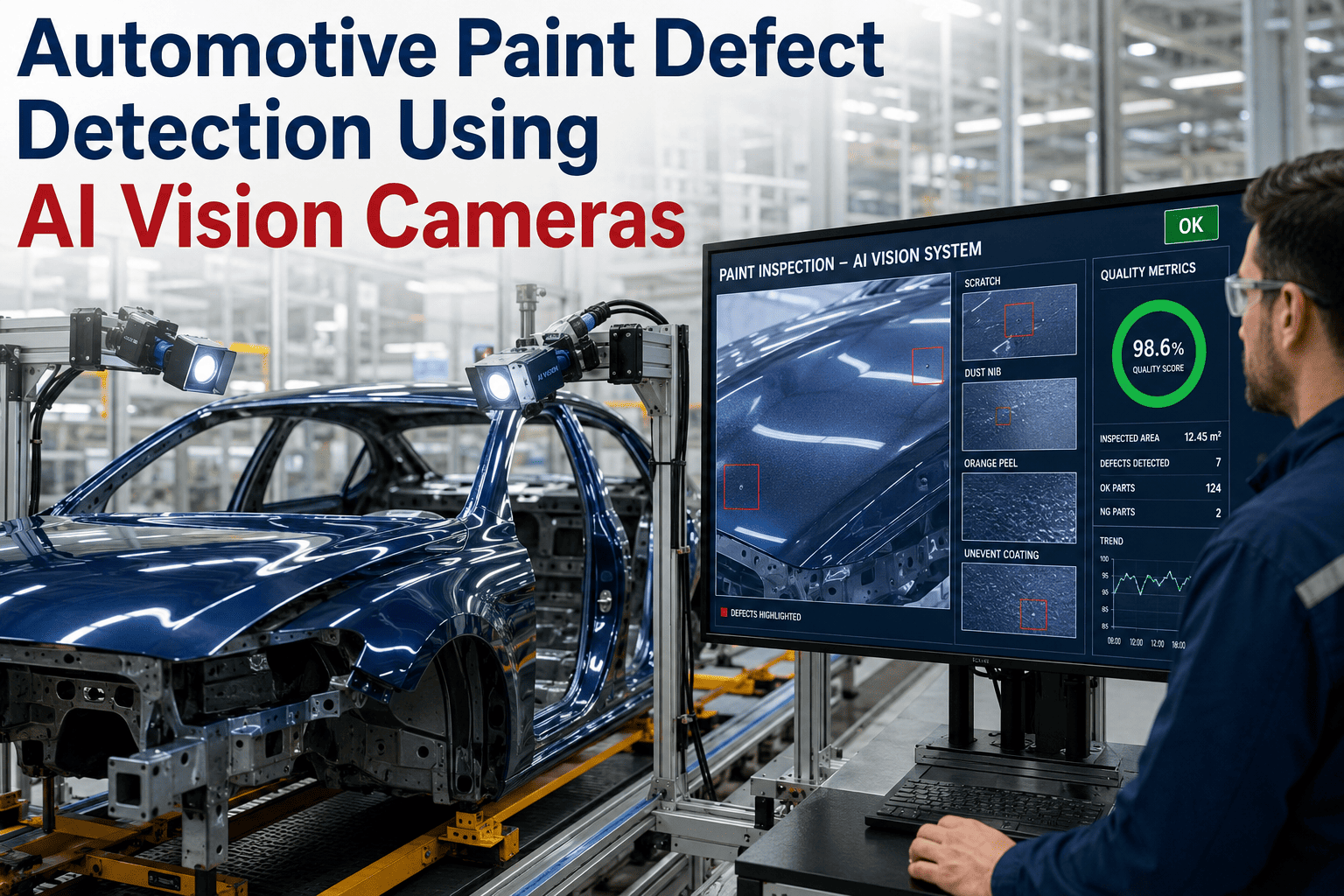
A trained human inspector catches roughly 78 to 84 percent of surface defects on a good day shift, and that number drops noticeably by the later hours of a night shift as fatigue sets in. On a line running 60 to 90 vehicles an hour, those missed percentage points become escaped defects that surface as warranty claims, customer complaints, or costly rework further down the assembly process. AI vision cameras paired with deep learning inspect painted surfaces at line speed, catching orange peel, craters, and micro-scratches invisible under standard booth lighting on every single panel, not a sampled few. Quality teams evaluating this for their own paint shop can book a demo to see live defect classification running against real panel footage.
AUTOMOTIVE MANUFACTURING · AI VISION PAINT INSPECTION
Catch Every Paint Defect Before It Reaches Assembly
AI vision cameras inspect 100% of painted panels at line speed, classifying orange peel, craters, runs, and contamination that fatigue and fixed lighting cause human inspectors to miss.
Manual Booth Inspection
78-84%
Typical defect detection rate on a good shift, declining with fatigue by shift end
AI Vision Inspection
98-99%+
Detection rate maintained consistently across every panel, every shift, without fatigue
Why Late-Stage Paint Rejections Cost So Much More
Somewhere between 5 and 15 percent of vehicles require paint rework, and the cost of that rework multiplies the further downstream a defect travels before it's caught. A crater or contamination spot caught right at booth exit is a quick touch-up, but the same defect discovered after the vehicle reaches final assembly means disassembly, re-paint, and reassembly labor that can run into the thousands of dollars per vehicle.
Defect Types Caught at Booth Exit
Orange Peel
Runs & Sags
Craters & Pinholes
Dirt Inclusions
Color Mismatch
Clear Coat Variation
Micro-Scratches
Adhesion Failure
How Inspection Runs at Booth Exit
1. Full 360-Degree Capture
Multi-camera arrays capture every painted surface as the panel exits the booth, with no manual repositioning required.
2. Deep Learning Classification
Each frame is classified against a defect library trained on your specific panel geometry and paint system.
3. Defect Geo-Located on the Panel
Every flaw is mapped to its exact position, so rework targets the specific spot instead of a full re-sand.
4. Automatic Routing
Critical defects route to reject, major defects to rework, and minor defects are logged and allowed to proceed.
Our inspectors were good, but nobody catches everything on the tenth hour of a night shift staring at the same panels. Since we added vision inspection at booth exit, our late-stage rejections have dropped sharply and the rework we do handle is faster because the system tells us exactly where the flaw sits.
Paint Shop Quality Manager, Automotive Assembly Plant
Frequently Asked Questions
Yes, models are trained on your specific acceptance criteria, distinguishing cosmetic defects that require rework from normal surface texture variation within your OEM specification. This is one of the biggest gaps with older rule-based vision systems, which tend to over-flag acceptable variation and create alert fatigue for inspectors. Sample images from your line can be reviewed ahead of a demo to confirm feasibility for your specific defect types.
Camera and lighting requirements depend on your current booth exit setup and the defect types you need to catch, but many deployments work with high-resolution industrial cameras added at existing inspection points rather than a full booth redesign. A quick equipment assessment during onboarding confirms exactly what your line needs.
Inspection is designed to complete within the normal part transfer window, so it runs at full line speed without introducing a buffering delay. Multi-camera arrays capture full panel coverage in a single pass, and classification happens in milliseconds per frame rather than requiring the line to pause for review.
Yes, inspection results and defect classifications are designed to feed directly into your manufacturing execution system, triggering automatic routing to reject, rework, or pass-through without manual sorting. Every classification is logged with panel ID and defect images for traceability and quality audits. Integration specifics for your MES can be confirmed with support.
Most paint shops see a noticeable drop in late-stage rejections within the first few weeks of full deployment, since defects that previously escaped to final assembly get caught at booth exit instead. The clearest way to size the expected impact for your specific volume and defect history is to walk through your current rejection data during a demo.