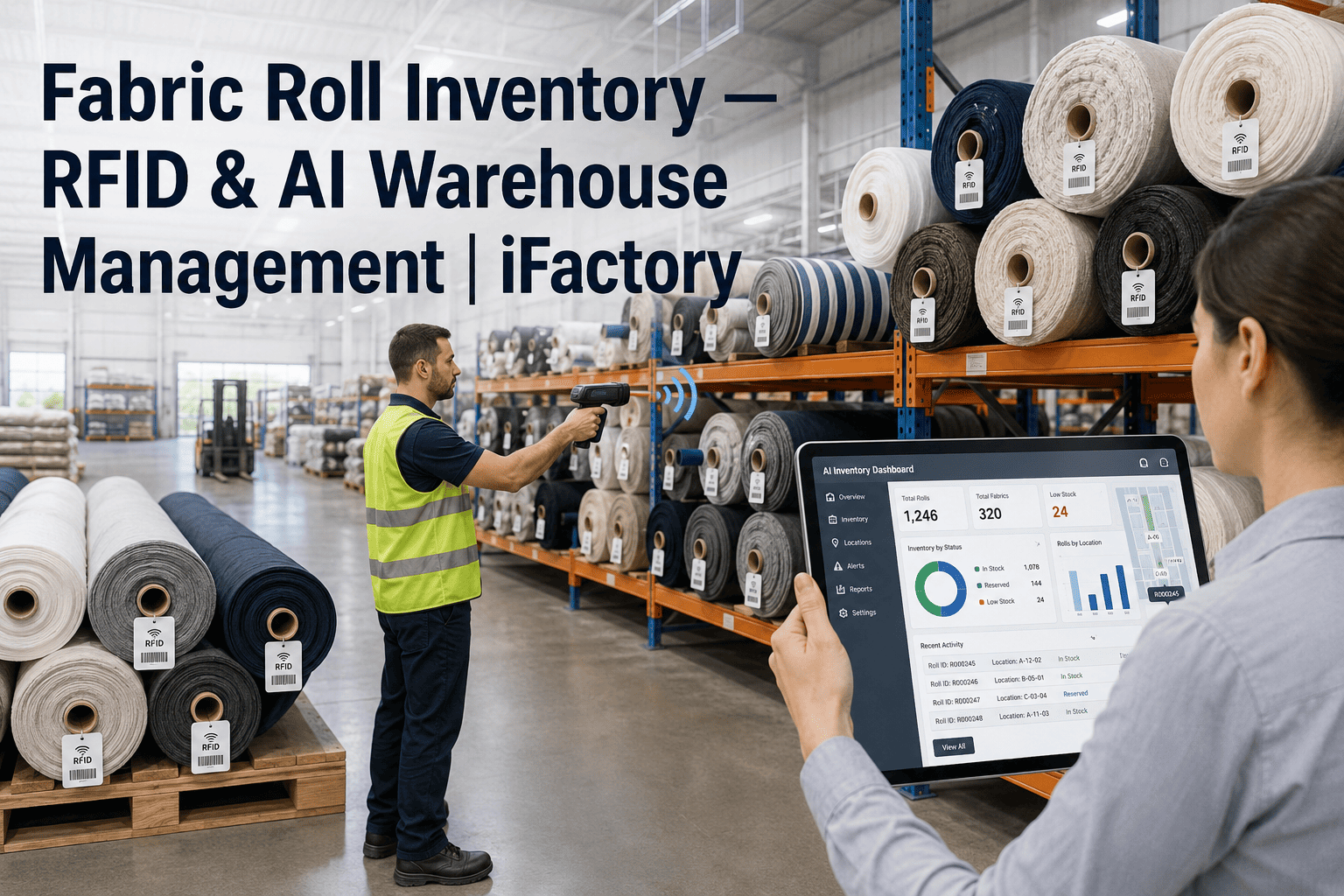
A warehouse operations manager scheduling this quarter's cycle count already knows how disruptive it is: pulling staff off picking and put-away for hours or days to manually walk every rack and reconcile what the system thinks is there against what is actually on the shelf. Manual inventory counting is slow, labor-intensive, and still produces errors, since a miscounted pallet or a misread location label anywhere in the process introduces inaccuracy that compounds over time. AI vision cameras mounted across racks, dock doors, and forklifts can count pallets and verify bin occupancy continuously, without ever pulling a picker off the floor. iFactory's warehouse vision system replaces the periodic cycle count with continuous, automated verification, and you can book a demo to see it count pallets across your own rack layout.
A Cycle Count Tells You What Was There an Hour Ago. A Camera Tells You What's There Right Now
iFactory's AI vision system automates pallet counting, rack occupancy, and bin-level tracking continuously, eliminating scheduled cycle counts and reaching 99.8% inventory accuracy.
Inventory Moves Continuously. A Manual Count Only Checks It Once in a While
A traditional cycle count is a snapshot, and warehouse inventory rarely holds still long enough for that snapshot to stay accurate. Pallets get moved for staging, picked partially, or placed in the wrong bin during a busy shift, and every one of those events introduces a gap between what the warehouse management system believes is on the shelf and what is physically there. Because full cycle counts are labor-intensive, most facilities can only afford to run them periodically, which means inventory accuracy silently degrades in the interval between counts, and the errors that do exist often go undiscovered until a picker reaches an empty bin the system said was full, or a customer order can't be fulfilled from stock that should have been there.
Four Layers of Continuous Warehouse Visibility
Stop Pulling Pickers Off the Floor for a Count
iFactory verifies inventory continuously in the background, so cycle counts stop competing with picking and put-away for staff time.
What Changes When Inventory Is Verified Continuously Instead of Periodically
| Inventory Element | Manual Cycle Count | iFactory Vision Verification |
|---|---|---|
| Count frequency | Periodic, scheduled around labor availability | Continuous, running in the background |
| Staff time required | Pickers pulled from other tasks | No dedicated counting labor needed |
| Accuracy between counts | Degrades until the next scheduled count | Maintained continuously at high accuracy |
| Discrepancy discovery | Often found by a picker at the shelf | Flagged automatically as it occurs |
How Vision Data Actually Reaches Your Existing WMS
Cameras positioned across rack aisles, dock doors, and optionally mounted on forklifts continuously capture pallet position and quantity, feeding that data directly into your existing warehouse management system rather than requiring a parallel inventory record. When a discrepancy is detected, whether a pallet in the wrong location or a bin quantity that doesn't match the system record, an alert is generated for a warehouse associate to resolve, rather than waiting for the next scheduled cycle count to surface the same issue. This keeps your WMS continuously synchronized with physical reality instead of drifting further out of alignment between periodic counts.
Measured Outcomes From Continuous Vision-Based Inventory Tracking
Questions Warehouse Operations Teams Ask About AI Vision Inventory Tracking
Verify Inventory Continuously Instead of Counting It Periodically
iFactory keeps your rack occupancy and pallet counts accurate in real time, without pulling staff off the floor.