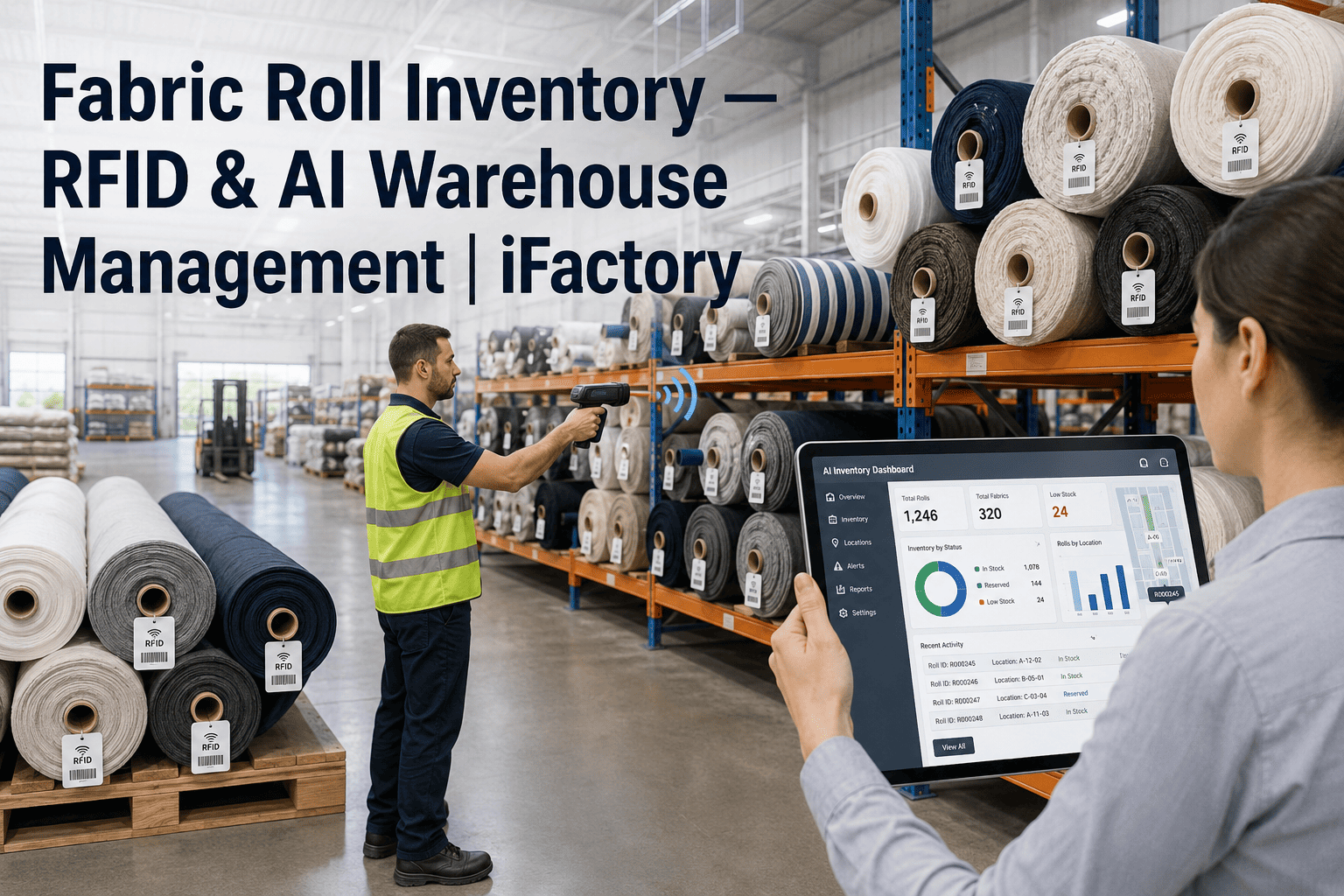
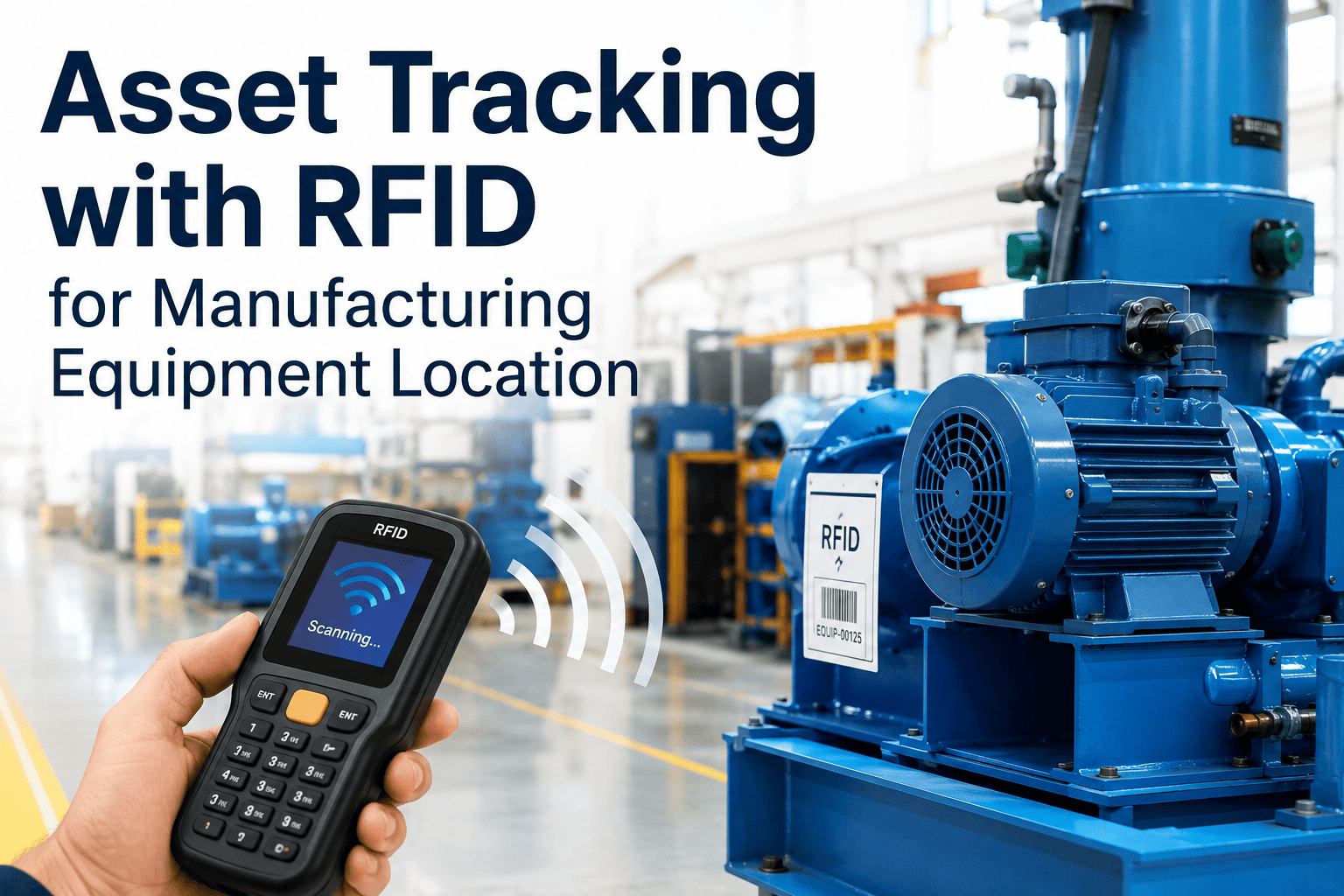
A single fabric roll can sit misplaced in a warehouse for weeks before anyone notices it is gone, and by then a cutting order has already been rescheduled around stock that was there the whole time. Barcode systems only work when a label is scanned in direct line of sight, which fails constantly on stacked, rolled, or shrink-wrapped fabric. RFID removes that dependency, reading tagged rolls through packaging and from several meters away, in bulk, without anyone touching a scanner. Textile warehouses that have made this shift report inventory accuracy climbing from the 80s into the high 90s within the first counting cycle. This page walks through how RFID and AI change fabric roll tracking from receiving to FIFO dispatch, and where the accuracy gains actually come from. See it running on your own roll data by visiting iFactory support.
Textile Manufacturing · RFID Inventory
Every Fabric Roll, Located in Seconds, Not Searched for in Shifts
RFID and AI turn your fabric warehouse into a system that knows where every roll is, how long it has aged, and which one should ship next — without a single manual count.
Roll IDGF-22841
LocationRack B-14-3
Lot Age18 days
FIFO RankDispatch Next
95%
Reduction in inventory count errors after RFID tagging replaces manual and barcode counts
80%
Less time spent searching for a specific roll across storage racks and staging areas
99.5%
Portal read accuracy for single-layer rolls moving through dock doors at normal conveyor speed
6-10m
Typical open-air read range for a single tagged fabric roll with a standard UHF reader
The Roll Lifecycle
What Happens to a Fabric Roll From Dock to Dispatch
Every roll passes through four checkpoints before it reaches a cutting table. RFID reads each one automatically, so the system always knows exactly where a roll is without anyone walking the aisles to check.
Receiving
A roll arrives and is tagged at the dock door. Grade, width, color lot, and greige or dyed status are captured against the tag in one pass.
Bin Allocation
The system assigns a rack location based on fabric type and expected pick frequency, and the assignment is written to the tag automatically.
Aging Tracking
Every roll's time in storage is tracked continuously, so aging fabric surfaces on dashboards before it becomes a quality or FIFO violation risk.
FIFO Dispatch
When a cutting order needs stock, the oldest qualifying roll is flagged first, and the picker is guided straight to its rack location.
Barcode vs. RFID
Why Barcode Scanning Breaks Down on Rolled Fabric
Capability
Barcode System
RFID System
Scanning method
Requires direct line of sight to each label
Reads through packaging, no line of sight needed
Bulk counting
One label scanned at a time
Dozens of tags read simultaneously in one pass
Stacked or rolled goods
Labels on inner rolls are unreadable
Tags read even under stacked or wrapped rolls
Typical accuracy
85–90% in active textile warehouses
98% or higher after full RFID deployment
See Your Own Fabric Warehouse Tracked in Real Time.
iFactory tags, locates, and ages every roll automatically, and flags the correct FIFO pick before your team walks the floor.
Remnant and Short-Roll Management
Where Most Textile Warehouses Lose Real Money
Remnant rolls and partial lengths are the fabric that disappears into a warehouse's blind spots. Each row below is a place iFactory closes that gap.
Length Drift
Roll length is measured continuously during unwind and cutting, so the system's recorded length matches what is physically left on the roll.
Orphaned Remnants
Short lengths under a cut threshold get flagged into a dedicated remnant pool instead of sitting unlabeled in a corner of the warehouse.
Receiving Errors
RFID tagging at intake catches mislabeled lot numbers and color codes before they ever reach a storage rack.
Dyed Lot Mixing
Dye lot data travels with the tag, preventing two different lots of the same fabric from being picked interchangeably on a cutting order.
From the Floor
What Changed After the First Full Cycle Count
Before RFID, our first-of-month cycle count took two people three full days, and we still found rolls we had written off as lost. After tagging, the same count runs in about four hours with a handheld reader, and every roll we thought was missing turned out to be sitting in the wrong bin the whole time. The bigger change was FIFO — we stopped shipping fresher fabric ahead of aged stock simply because the aged roll was harder to find.
— Warehouse Manager, Mid-Size Woven Fabric Mill
Frequently Asked Questions
Fabric Roll RFID — Common Warehouse Questions
Does RFID tagging slow down fabric receiving?
Tagging adds a single scan step at the dock door, which typically takes a few seconds per roll and is faster than the manual data entry it replaces. Because RFID reads happen automatically as rolls pass through a portal, receiving throughput usually improves rather than slows once the tagging station is integrated into the existing dock workflow.
Book a demo to see tagging speed on your own roll volume.
Can RFID tags survive dyeing, washing, or fabric finishing processes?
Tag selection depends on where in the process the roll needs to remain trackable. Greige fabric awaiting dyeing typically uses a removable or process-tolerant tag, while finished goods use a standard surface-mount tag rated for warehouse conditions. Matching tag type to process stage avoids both tag failure and unnecessary tagging cost on rolls that will be re-tagged after finishing.
How does the system prevent FIFO violations on the warehouse floor?
Every roll's intake date and aging status is tracked continuously, and pick instructions surface the oldest qualifying roll first rather than leaving that decision to whichever roll is closest to the aisle entrance. Pickers see this instruction on a handheld device at the time of the pick, which removes the guesswork that causes most real-world FIFO violations.
What happens to remnant rolls that are too short for a standard cutting order?
Remnants below a configurable length threshold are automatically routed into a separate trackable pool rather than remaining mixed with full-length stock. This keeps remnant inventory visible for smaller orders or secondary markets instead of letting it accumulate as untracked, unsellable material in storage.
Is RFID cost-effective for smaller textile warehouses?
Tag cost per roll has dropped enough that even mid-size operations recover the investment within the first few inventory cycles, primarily through reduced search time and fewer write-offs from misplaced stock.
Contact support for a deployment estimate sized to your warehouse footprint.
Stop Searching for Fabric That Was Never Actually Lost
RFID tagging, real-time location, aging alerts, and enforced FIFO dispatch — built for the way fabric actually moves through a warehouse.