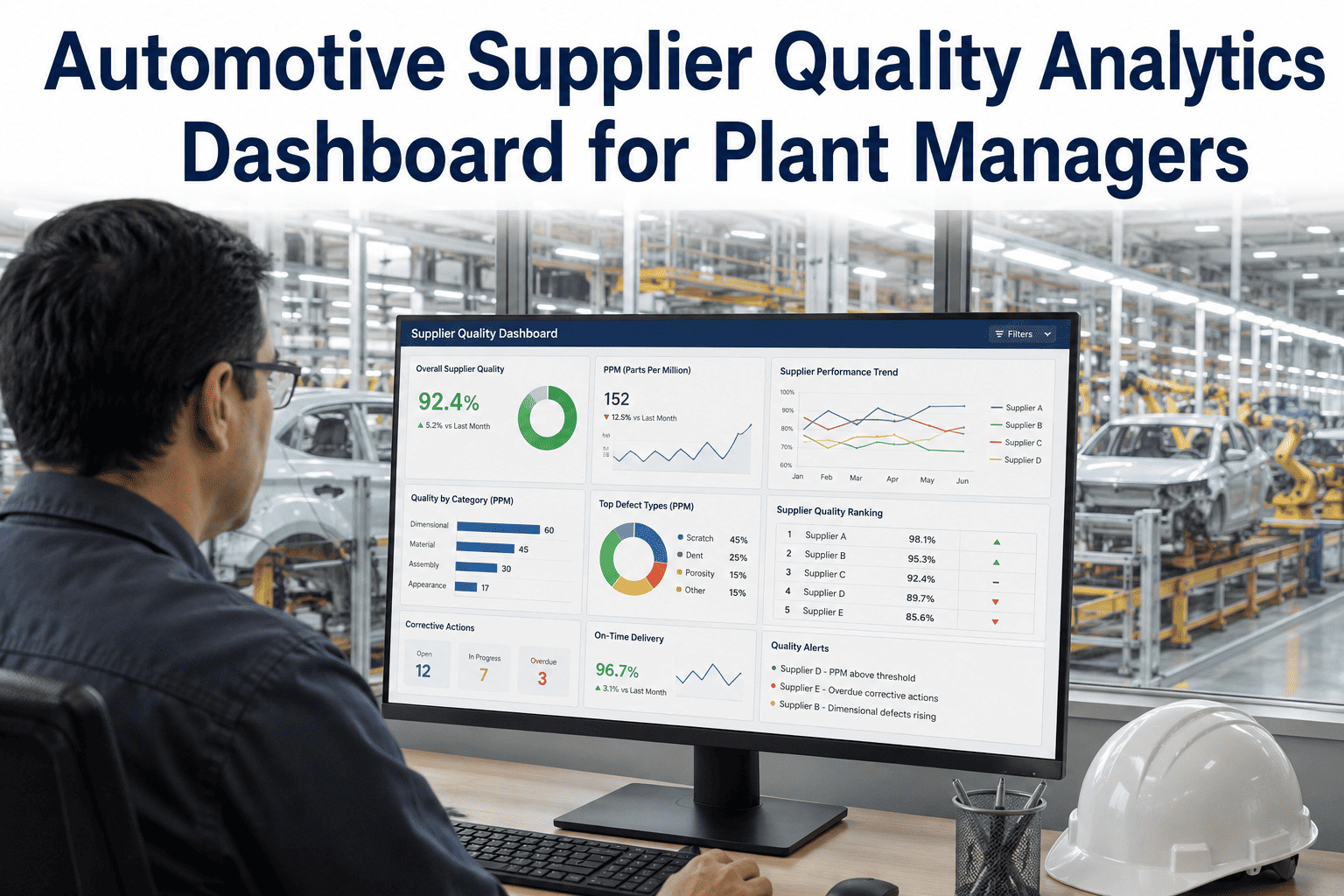
For Tier 1 automotive suppliers, the pressure is not theoretical — it is measured in PPAP submission windows, customer-specific requirement audits, and the kind of containment events that make their way into weekly OEM scorecards. IATF 16949:2016 is the foundation of the global automotive quality management system, but certification alone does not prevent escapes, field returns, or supplier development interventions. What separates compliant suppliers from high-performing ones is the ability to connect real-time production data to the quality system — turning APQP documentation, control plan execution, and process monitoring from periodic paper exercises into live operational intelligence. iFactory's Quality Management platform is built for exactly this gap: connecting shop floor data streams to IATF 16949 compliance workflows, MES-integrated process controls, and audit-ready reporting that does not require a manual data pull the night before a customer visit. Book a demo to see how iFactory maps to your IATF quality system.
Why IATF 16949 Alone Is Not Enough for Tier 1 Performance
IATF 16949 certification tells your customers you have a quality management system. It does not tell them — or you — how that system is performing at 2:47 AM on a Tuesday when a process parameter drifts outside control limits on a high-volume safety part. The standard requires process monitoring, control plan adherence, and corrective action management. But in most Tier 1 facilities, those requirements are fulfilled through separate systems: a paper-based control plan on the line, a quality database updated by hand at shift end, and a corrective action log that lives in a spreadsheet managed by one quality engineer. The result is a compliance posture that survives audits but does not prevent the field returns, warranty exposure, and customer escalations that erode margin and supplier ratings. Real-time data integration closes this gap — connecting what the standard requires to what is actually happening on the production floor.
| IATF 16949 Requirement | Typical Manual Approach | Gap / Risk | Real-Time Platform Outcome |
|---|---|---|---|
| Control plan execution monitoring | Paper check-sheets, shift-end entry | Hours of undetected deviation | Live control plan adherence dashboards |
| Statistical process control (SPC) | Offline charting, weekly review | Out-of-control conditions missed | Automated SPC alerts at process step |
| Corrective action management (8D) | Email chains, shared spreadsheets | Slow closure, repeat escapes | Structured 8D workflow with due-date tracking |
| PPAP documentation package | Manual compilation from multiple systems | Data gaps, submission delays | Auto-generated PPAP from live production data |
| APQP milestone tracking | Program management spreadsheets | Late detection of program risk | Milestone dashboards with escalation triggers |
| Internal audit management | Scheduled, calendar-driven | Risk-blind audit frequency | Risk-based audit scheduling from quality signals |
APQP and PPAP in a Real-Time Quality Environment
Advanced Product Quality Planning (APQP) and the Production Part Approval Process (PPAP) are the structural backbone of Tier 1 new program launches. APQP defines the gates; PPAP documents that the production process is capable of meeting customer requirements before full production begins. In practice, both are documentation-intensive, cross-functional exercises that are extremely vulnerable to data fragmentation. Engineering data lives in PDM systems. Process capability studies live in quality databases. Measurement system analysis (MSA) results live in gauge management software. Control plans live in document control. Pulling these together into a Level 3 or Level 5 PPAP submission on a compressed OEM timeline, while managing four other active program launches, is where Tier 1 quality teams are consistently overwhelmed. iFactory connects these data streams to a unified APQP/PPAP workflow — so every gate review pulls live data, not last week's export, and every PPAP element is linked to its source production record.
Real-Time SPC and Control Plan Execution on the Production Floor
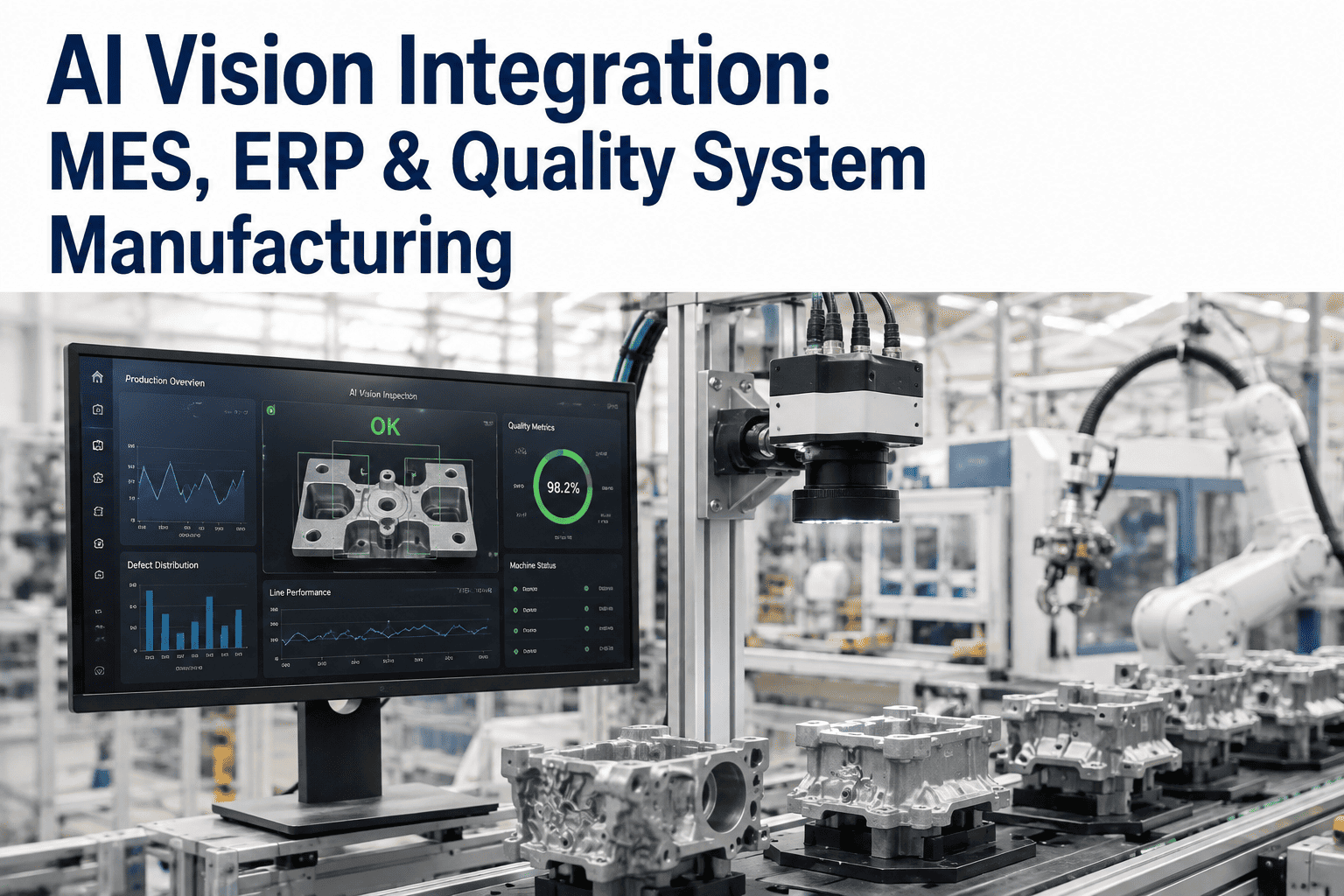
Statistical process control is a mandatory IATF 16949 requirement — and one of the most commonly observed gaps during third-party audits. Most Tier 1 facilities have SPC in some form. The challenge is that the SPC charting software is disconnected from the production execution system, the control plan is a document on a shared drive rather than an active workflow, and the operator on the line has no real-time signal when a process parameter trends toward an out-of-control condition. By the time the weekly quality review identifies a capability decline, hundreds or thousands of parts have run under the drifting process. iFactory integrates SPC directly into the MES-connected production workflow — control limits are enforced in the system, out-of-control signals generate immediate alerts, and the control plan step is locked until the operator records the required measurement. Every data point is traceable to the part serial number, the process step, and the operator — eliminating the retroactive data reconstruction that characterizes most pre-audit preparation cycles.
Legacy Quality Systems vs. Integrated Real-Time Platform: What Actually Changes
The operational difference between a traditional Tier 1 quality system and an integrated real-time platform is not about technology sophistication — it is about where decisions happen and how fast problems surface. A legacy quality system is event-driven: quality data enters the system after the production event. An integrated platform is continuous: quality data is part of the production event. That structural difference determines whether a process drift is caught in real time by an automated SPC alert or discovered three days later during a shift report review. The comparison below maps this difference across the quality activities that matter most during an IATF 16949 surveillance audit. Book a demo to benchmark your current quality system against this framework.
IATF 16949 Audit Readiness: From Annual Event to Continuous State
The single most time-consuming and stress-generating activity in most Tier 1 quality departments is audit preparation — not because the quality system is deficient, but because the evidence of compliance is scattered across multiple systems, formats, and people. A third-party auditor asking for the last six months of process capability data for a critical characteristic should be a two-minute report pull, not a two-day data collection project. iFactory's architecture is designed so that audit evidence is a natural output of normal operations: every control plan execution is recorded, every SPC chart is live, every corrective action has a time-stamped trail, and every PPAP element is linked to its source production record. The result is a quality system that is always audit-ready — not because it prepared for an audit, but because it runs that way every shift.
Expert Review: What the Research and Practitioner Community Documents
The intersection of real-time manufacturing data and IATF 16949 compliance is well-documented in both the quality engineering literature and published OEM supplier development programs. A consistent finding across published case studies in automotive supplier quality management is that the longest cycle times in quality improvement — from defect occurrence to corrective action closure — correlate directly with data latency rather than process complexity. Facilities where quality data entered the management system within the same production shift consistently outperformed facilities with next-day or weekly data entry on corrective action closure time, repeat escape rate, and customer scorecard performance. The 2024-2025 body of work on MES-integrated quality systems in Tier 1 suppliers further documents that integrating SPC directly into production execution — rather than running it as a parallel offline analysis — reduces internal escape rates by 30 to 40 percent on critical-characteristic parts, with the reduction attributable to alert timing rather than methodology change. For suppliers preparing for IATF 16949 third-party audits, the practitioner consensus is that auditors are increasingly examining the connection between documented procedures and evidence of actual execution — and that connection is most defensible when it is a live system output rather than a retroactively assembled record. Contact iFactory to discuss how these findings apply to your specific audit cycle.
iFactory's Quality Management platform integrates with your MES, production data streams, and IATF workflows — delivering live SPC, digital control plans, 8D corrective action, and audit-ready reporting without replacing your existing quality framework.
Conclusion: Compliance That Runs at Production Speed
IATF 16949 is not going to get simpler. Customer-specific requirements are expanding, OEM supplier scorecards are adding quality data visibility requirements, and third-party auditors are increasingly examining the live operation of quality systems rather than the existence of documented procedures. For Tier 1 suppliers, the competitive differentiation is no longer in achieving certification — it is in operating a quality system that runs at the speed of production, surfaces problems before they become escapes, and generates audit evidence as a natural output of daily operations rather than a pre-audit sprint. The technology to do this is available, the implementation timelines are measured in weeks rather than quarters, and the ROI case is well-documented across the supplier base. The question is not whether to integrate real-time quality data with your IATF quality system — it is how quickly you do it before the next surveillance audit, the next customer scorecard review, or the next production launch that cannot absorb a PPAP delay. Book a demo to see iFactory's quality platform applied to your facility.