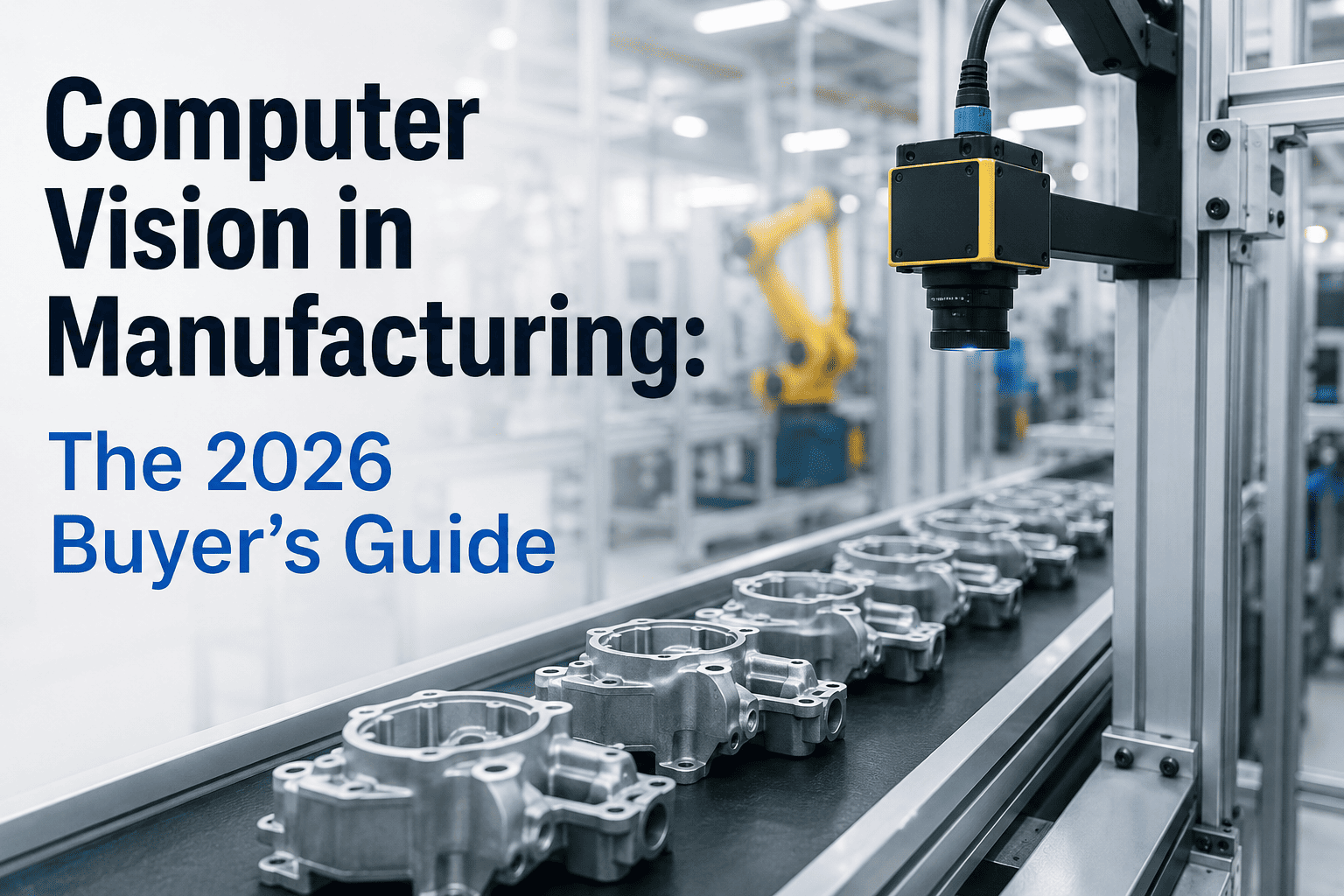
Computer Vision in Manufacturing: The 2026 Buyer's Guide
By Dave on May 7, 2026
Every hour your production line runs without AI vision, it is making decisions a human eye cannot make fast enough — and the defects, miscounts, and safety violations accumulate silently until they surface as chargebacks, recalls, or injury reports. Manufacturers clinging to manual visual inspection in 2026 are not saving money. They are absorbing losses too gradual to trigger an alarm, too consistent to cause a crisis and too expensive to survive long-term. The question is no longer whether computer vision belongs in your facility. It is how much margin you are surrendering while you delay.
iFactory AI Vision Cameras
Computer Vision in Manufacturing: The 2026 Buyer's Guide
Hardware, software, ROI benchmarks, and a proven deployment framework for AI visual inspection — defect detection, counting, measurement, and safety in one integrated platform.
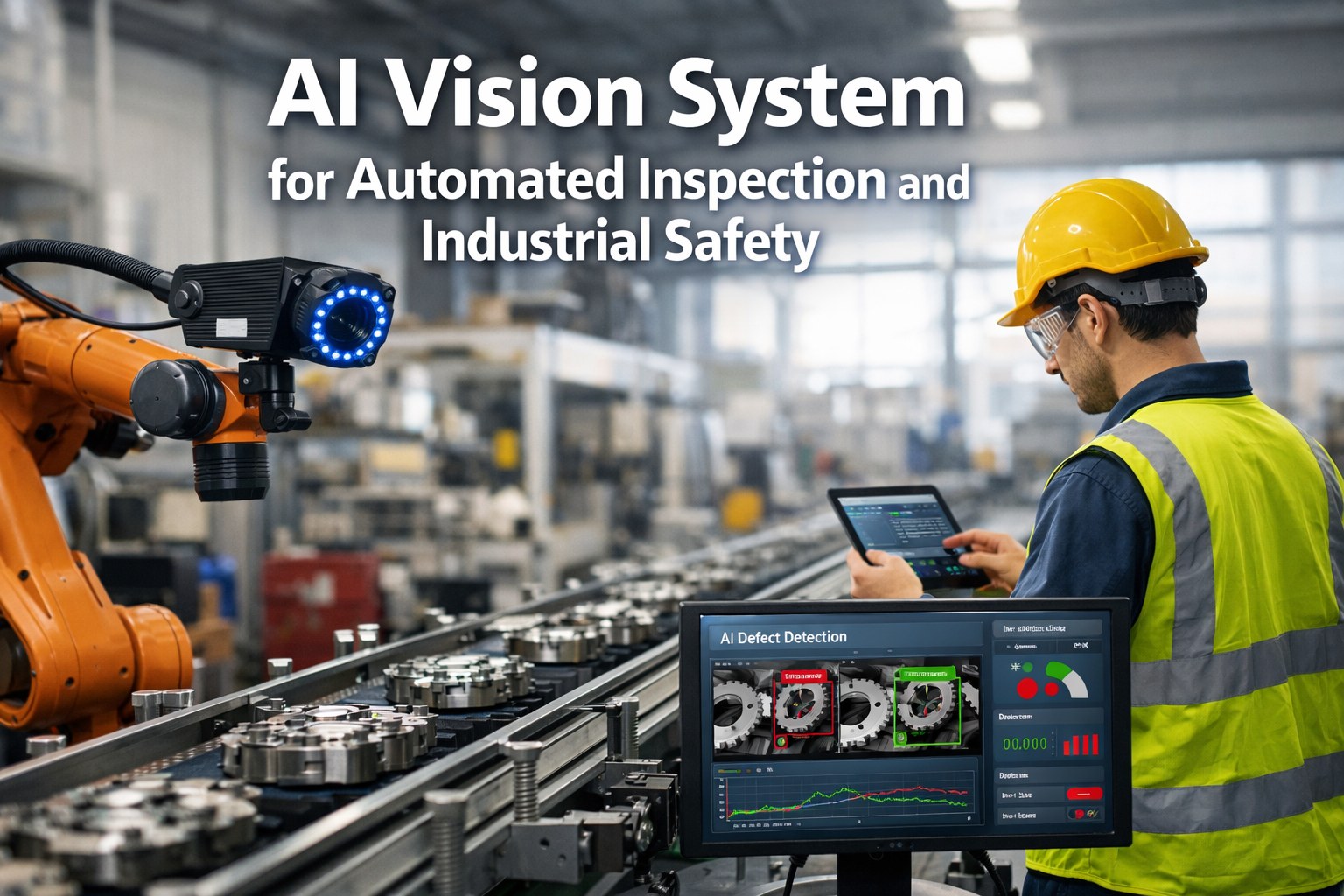
Computer vision is the application of AI-powered cameras and image processing algorithms to automate tasks that previously required human eyes — defect identification, parts counting, dimensional measurement, label verification, and worker safety monitoring. In a modern manufacturing context, vision systems process hundreds of frames per second, classify anomalies against trained models, and trigger automated responses faster than any inspector can react. When integrated with a platform like iFactory, these cameras do not merely flag problems — they feed data into predictive analytics, production dashboards, and maintenance workflows, turning visual intelligence into operational intelligence.
The Cost of Manual Inspection: A Baseline Reality Check
Before evaluating any vision system, executives need an honest accounting of what manual inspection actually costs. Industry benchmarks consistently show that human inspectors miss between 15% and 25% of defects under sustained production conditions — a figure that worsens with shift fatigue, lighting variability, and high-volume throughput. A single escaped defect reaching a Tier 1 automotive customer can trigger chargebacks of $50,000 to $250,000 per incident. A food safety recall triggered by a labelling error missed during manual inspection carries an average cost exceeding $10 million. These are not edge cases. They are the predictable consequence of asking humans to perform a task that physics and biology make impossible to do consistently at scale.
Legacy Friction vs. Optimised Excellence
Inspection Dimension
Legacy Manual Inspection
AI Vision Camera System
Defect Detection Rate
75–85% under ideal conditions
99.5–99.8% at full line speed
Throughput Constraint
Line speed limited by inspector capacity
No throughput penalty — cameras scale with line
Consistency
Degrades over shift duration
Constant performance 24 hours per day
Data Generated
Paper logs, subjective classifications
Timestamped image archives, structured defect data
Response Time
Minutes to escalate and act
Milliseconds — automated line stop or reject
Safety Monitoring
Reactive — after the incident
Real-time PPE and zone violation alerts
Traceability
Incomplete, manual entry errors
Full serialised image trail per unit
Labour Cost
High — dedicated inspector headcount
Minimal — system management only
Four Core Applications of AI Vision Cameras in Manufacturing
Modern computer vision platforms address four distinct operational challenges. Understanding each category helps procurement teams map technology to their specific quality, safety, and throughput objectives.
Defect Detection
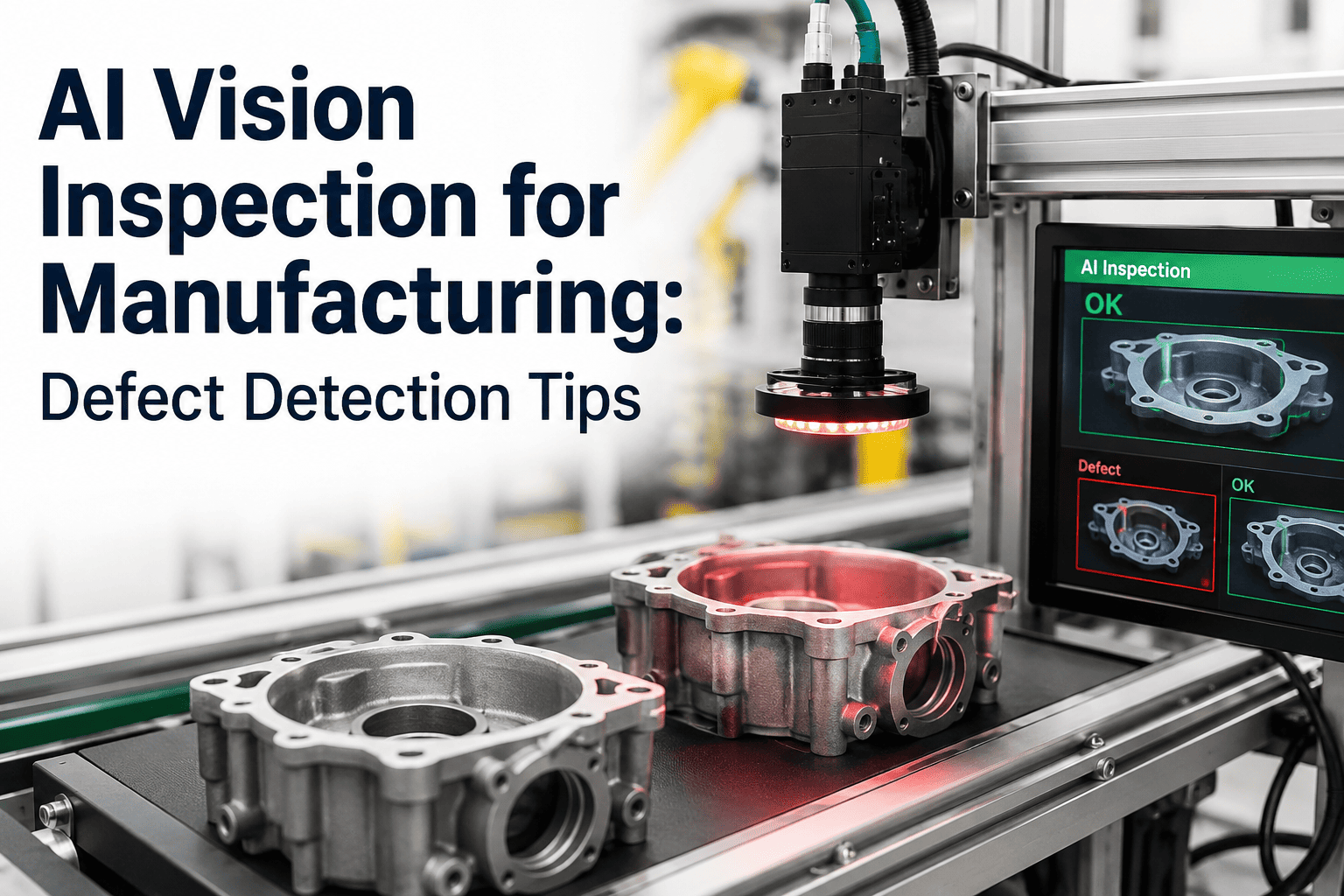
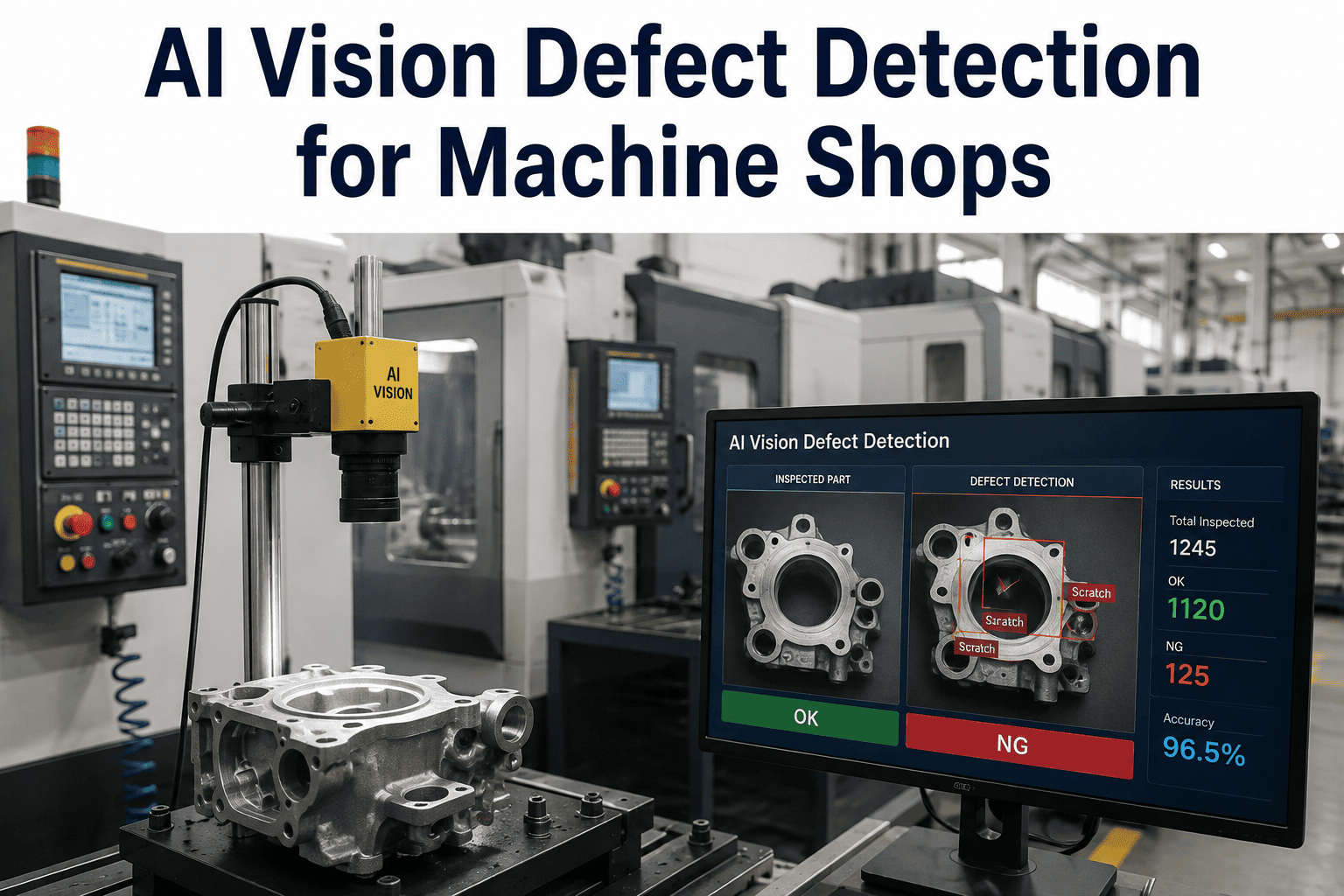
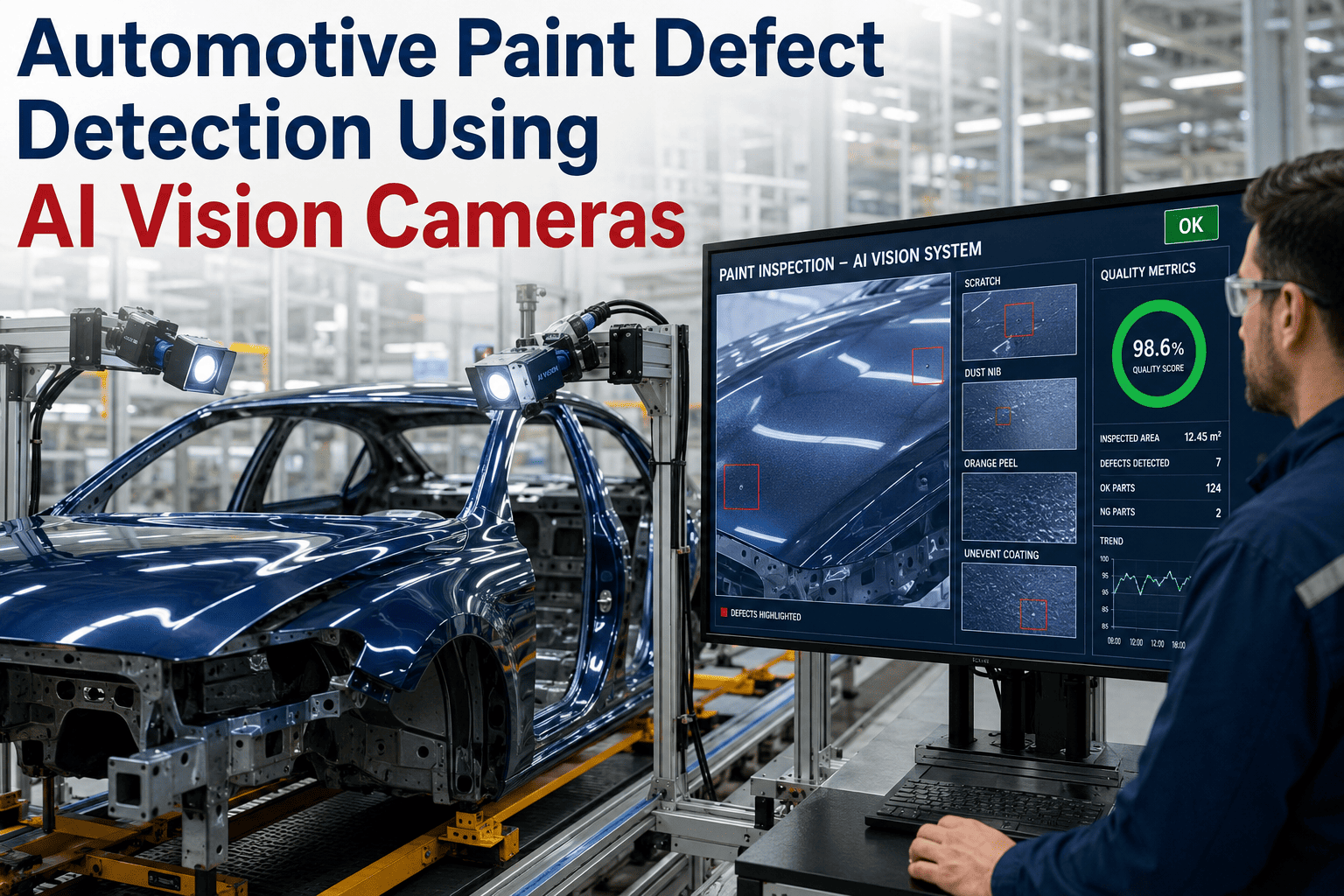
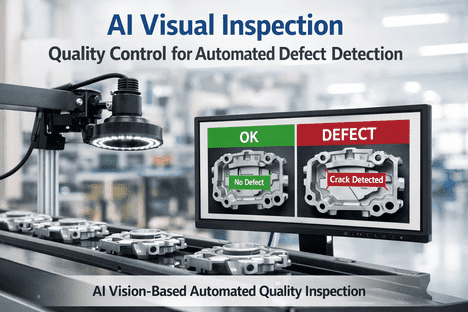
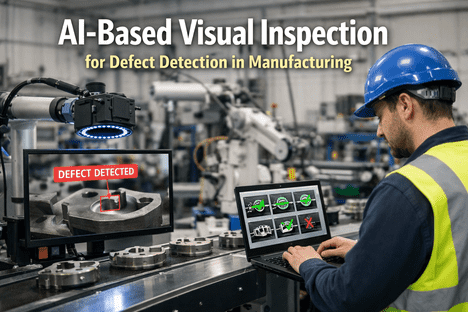
AI models trained on thousands of defect images identify surface flaws, dimensional deviations, foreign material, and colour anomalies at line speed. Graduated severity scoring routes minor deviations to review queues and critical defects to automated rejection — eliminating escaped defects that drive chargebacks and recalls.
Counting and Verification
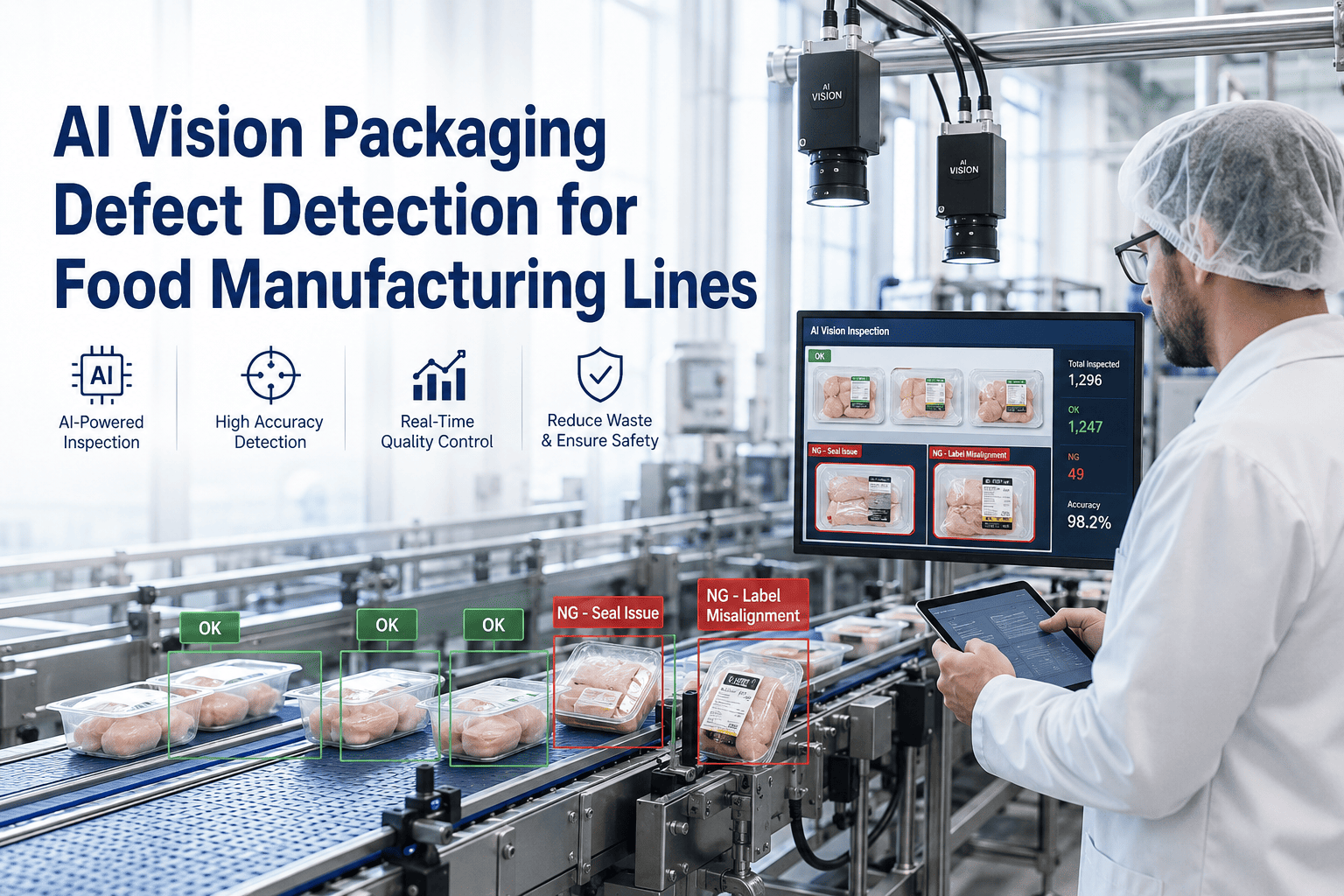
Vision systems count components, verify kit completeness, confirm label placement, and validate packaging fill levels with zero counting error. Applications span pharmaceutical blister pack verification, automotive fastener kitting, and consumer goods packaging compliance — replacing manual counts that routinely produce 1–3% error rates.
Dimensional Measurement
Sub-millimetre precision measurement of parts and assemblies without contact, at production speed. Gauge R&R studies consistently show AI vision outperforming CMM spot-check sampling by covering 100% of production rather than statistical samples — catching process drift before it produces out-of-specification batches.
Worker Safety Monitoring
Real-time detection of PPE compliance, restricted zone entry, and unsafe posture or proximity to moving equipment. Automated alerts to supervisors within seconds of a violation — shifting safety posture from reactive incident reporting to proactive hazard elimination. Documented reduction in recordable incidents of 30–60% in first-year deployments.
Hardware Selection: What Buyers Need to Evaluate
Computer vision deployment decisions involve hardware choices that significantly affect system accuracy, installation complexity, and total cost of ownership. The following factors require evaluation before any platform selection.
Resolution and Frame Rate
Higher resolution catches smaller defects but increases processing demand. Match resolution to the smallest defect specification for your application. Frame rate must exceed twice the maximum line speed to avoid motion blur artefacts on moving parts.
Lighting Architecture
Lighting is the most underestimated variable in vision system design. Structured coaxial, backlight, ring, and dome configurations each suit different surface geometries and defect types. Incorrect lighting causes more false positives than model limitations — get it specified before camera selection.
Edge vs. Cloud Processing
Edge processing — inference running on-camera or at local compute nodes — delivers sub-10ms response times essential for automated line stop and reject. Cloud processing suits applications where real-time response is less critical and centralised model management is preferred. Most enterprise deployments use a hybrid architecture.
Environmental Rating
IP65 or IP67 rating required for food, beverage, and chemical environments. High-vibration applications need shock-rated enclosures. Temperature extremes — foundry, cold storage — require thermally managed camera housings. Specifying IP rating for the environment before vendor selection avoids costly retrofits.
Integration Architecture
Production vision systems must communicate with PLCs for automated reject actuation, SCADA for operational status, MES for production traceability, and quality management systems for defect records. OPC-UA and MQTT are standard industrial protocols. Evaluate vendor integration capability before deployment commitment.
Model Training Requirements
AI vision models require defect image libraries for training. Platforms vary significantly in minimum training dataset size — from 200 to 10,000+ images per defect class. Evaluate whether the vendor provides model training services or requires in-house data science capability. On-site model retraining as defects evolve is non-negotiable for sustained accuracy.
The Business Impact Grid: Where AI Vision Delivers Measurable Returns
Workflow Transformation
Inspection removed from critical path — throughput constraints eliminated
Serialised image trail enables rapid root cause analysis
Shift handover quality data replaces verbal summary
Customer audit documentation generated automatically from vision records
Overhead Reduction
Inspector headcount redeployed to higher-value roles
Chargeback exposure reduced 60–80% within first deployment year
Rework costs cut 35–45% through earlier defect detection
Workers' compensation claims reduced via proactive safety monitoring
Scrap rate reduction of 20–30% through upstream process control feedback
Growth Enablement
Zero-defect quality commitments unlocked for premium customer segments
Line speed increases possible without quality trade-off
New product introductions validated faster through vision-assisted first-article inspection
ESG and traceability reporting automated from quality data streams
Cross-site benchmarking identifies performance gaps between facilities
The iFactory Deployment Framework: From First Camera to Full-Facility Intelligence
Successful vision deployments follow a structured methodology that avoids the most common failure pattern — attempting full-facility coverage before validating system performance on a representative production line. The iFactory phased approach gets buyers to measurable ROI in weeks, not quarters.
01
Application and Infrastructure Audit
Define the 3–5 highest-value inspection points. Assess lighting, mounting positions, network connectivity, and PLC integration requirements. Identify defect image library availability for model training. Document KPIs with current baseline values. Timeline: 1–2 weeks.
02
Pilot Camera Installation and Model Training
Cameras installed at pilot stations. Lighting validated. AI models trained on defect image datasets — iFactory engineers handle model configuration, tuning, and false positive reduction. Initial accuracy validation against known defect samples before live production exposure. Timeline: 2–4 weeks.
03
Live Production Validation
System runs alongside existing inspection for 2–4 weeks. Disagreements between AI and human classifications reviewed to tune model thresholds. First documented defect catches and avoided escapes recorded. Accuracy benchmarked against target specification before human inspection is phased out. Timeline: 2–4 weeks.
04
Integration and Automation Activation
Vision system connected to PLC for automated reject actuation. Defect data feeds into MES and quality management system. Real-time dashboards activated for production supervisors and quality managers. Automated reporting replaces manual shift logs. Timeline: 1–2 weeks.
05
Scale and Continuous Improvement
Coverage expands to additional lines and facilities using validated pilot model as template. Models continuously retrain as new defect variants emerge. Cross-site benchmarking identifies best-practice performance levels. Annual ROI review guides next expansion phase. Timeline: Ongoing from month 4.
ROI Benchmarks: What Manufacturers Are Achieving
Decision-makers evaluating computer vision investments need financial benchmarks grounded in actual deployment outcomes — not vendor projections. The following figures reflect documented results from manufacturing deployments across automotive, food and beverage, electronics, and industrial components sectors.
Stop Letting Defects Leave Your Facility. Start With Three Cameras.
iFactory AI Vision Cameras deliver 99.7% defect detection accuracy from week one, integrate with your existing MES and PLC infrastructure, and scale from pilot station to full-facility coverage without platform replacement. Every deployment includes model training, integration support, and continuous improvement services.